

A Saturday Evening in Xi’an
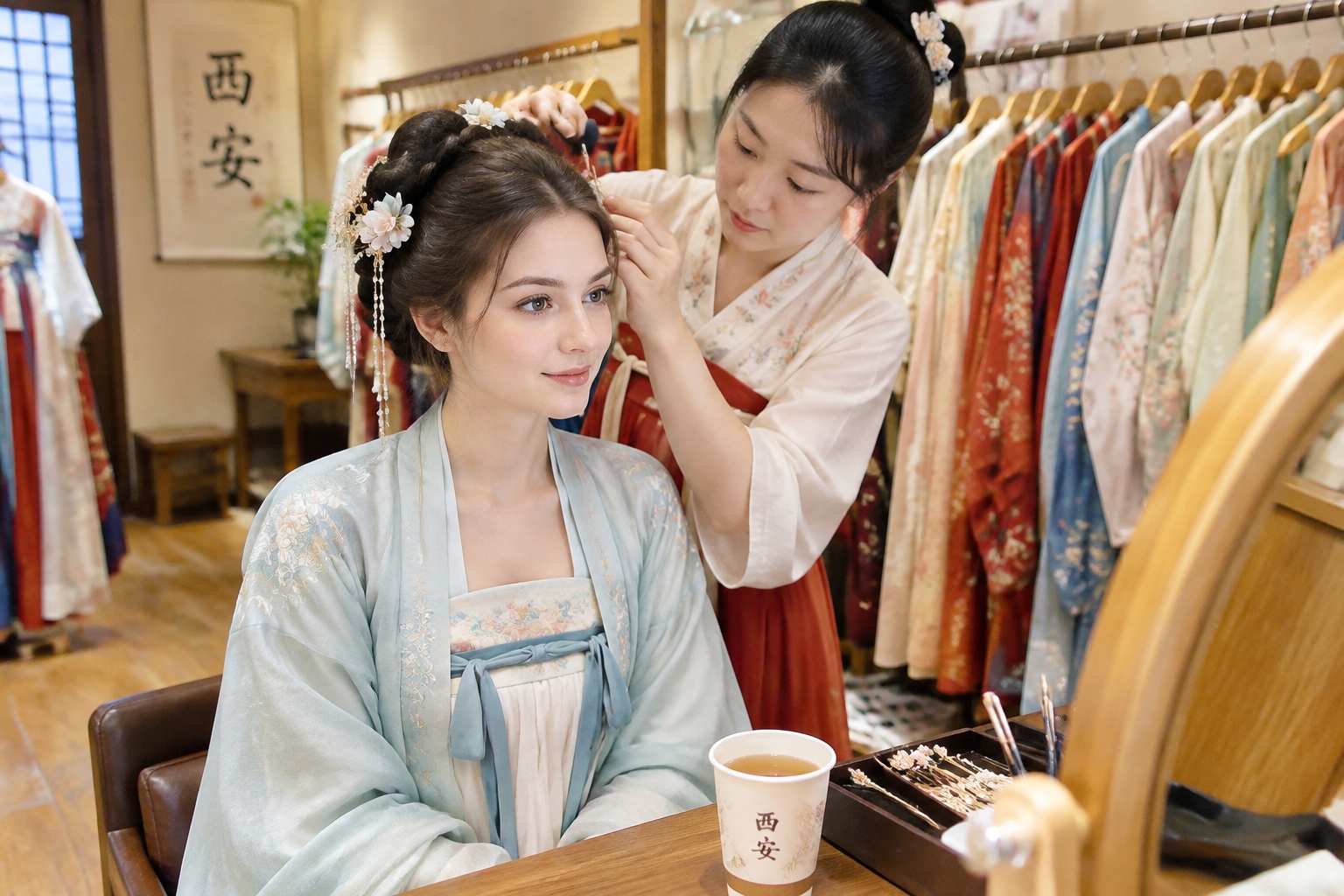
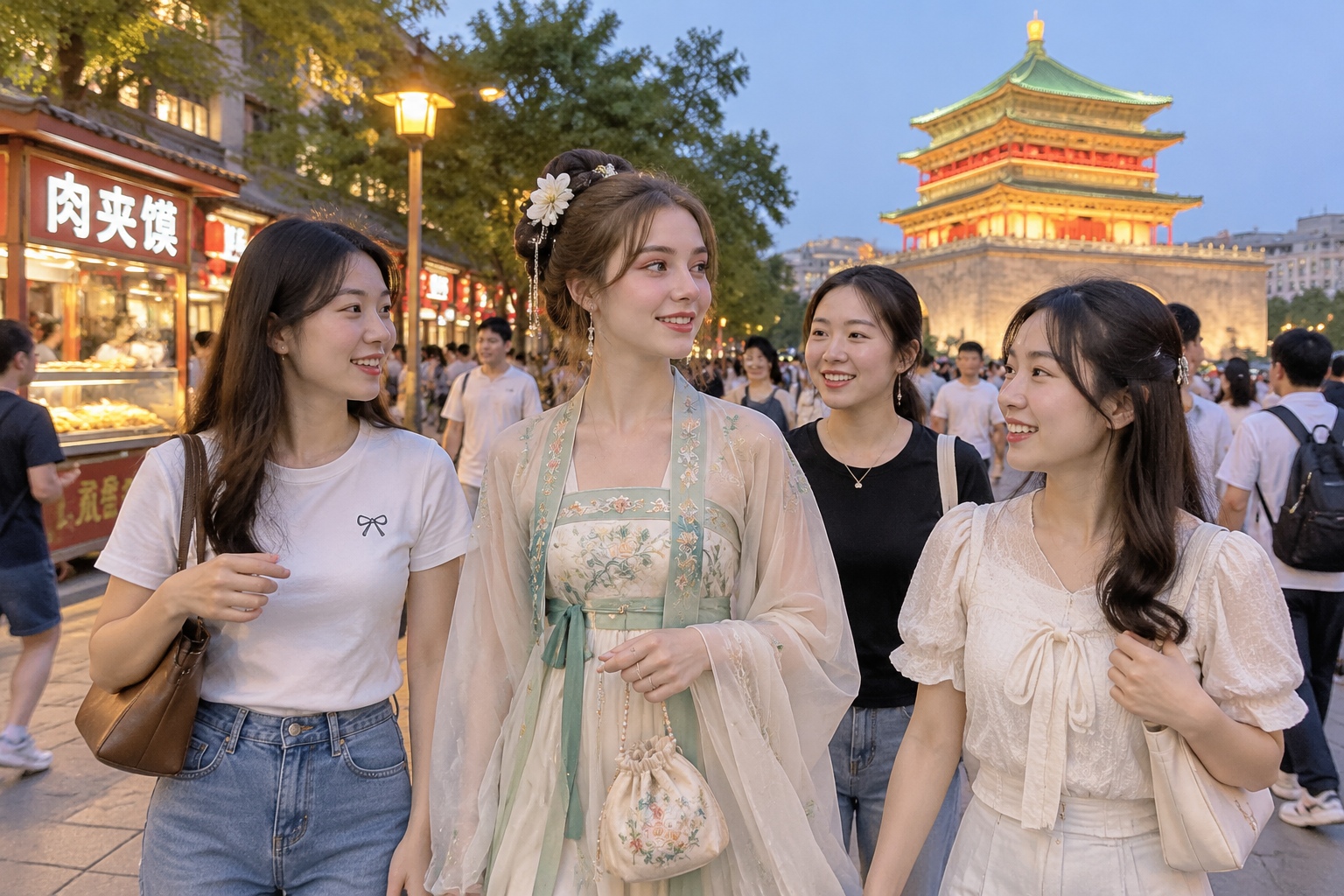
Around six o’clock on a Saturday near the Bell Tower in Xi’an, the sidewalk is essentially a Hanfu parade. Couples, friends and families crowd under the streetlights, dressed in Tang-style gowns with stylized makeup, posing for photos. In the middle of it, a European woman in her early twenties is being guided into position by a photographer holding a phone gimbal. She has spent more than an hour in a small shop nearby, about 150 yuan in total, for the clothes, the hair and the makeup. She looks shy and extremely happy.
Five years ago, this would have been a novelty. Now it is part of a normal weekend in the city. What makes the scene worth writing about is that it points to something larger—and it is not about high-speed rail or mobile payments. The things some foreigners are starting to borrow from China are much smaller and more personal: hot water in a steel thermos, a rented Hanfu, a set of cupping marks, a slow morning routine in a park.
What ‘Living Like a Chinese Person’ Actually Means
Search TikTok, YouTube Shorts, Instagram Reels or Xiaohongshu and you will find a fairly consistent genre: a foreigner, often young, often with no idea what they are doing, trying a Chinese habit and filming the reaction.
The themes are narrow and repeatable:
- Drinking hot water in the morning, sometimes with goji berries in a thermos
- Wearing Hanfu—rented in Luoyang or Xi’an, or borrowed at a local museum
- Trying cupping, tuina massage or moxibustion for the first time
- Joining a group doing baduanjin or tai chi in a park
- Eating hot porridge or soup as a daily breakfast
None of these are new in themselves. What is new is the volume and the tone. These are no longer videos of ‘look at this strange foreigner’ or ‘look at this strange Chinese custom.’ Increasingly, they are videos of someone trying a small daily habit and deciding to keep it.
Why Hot Water Wins
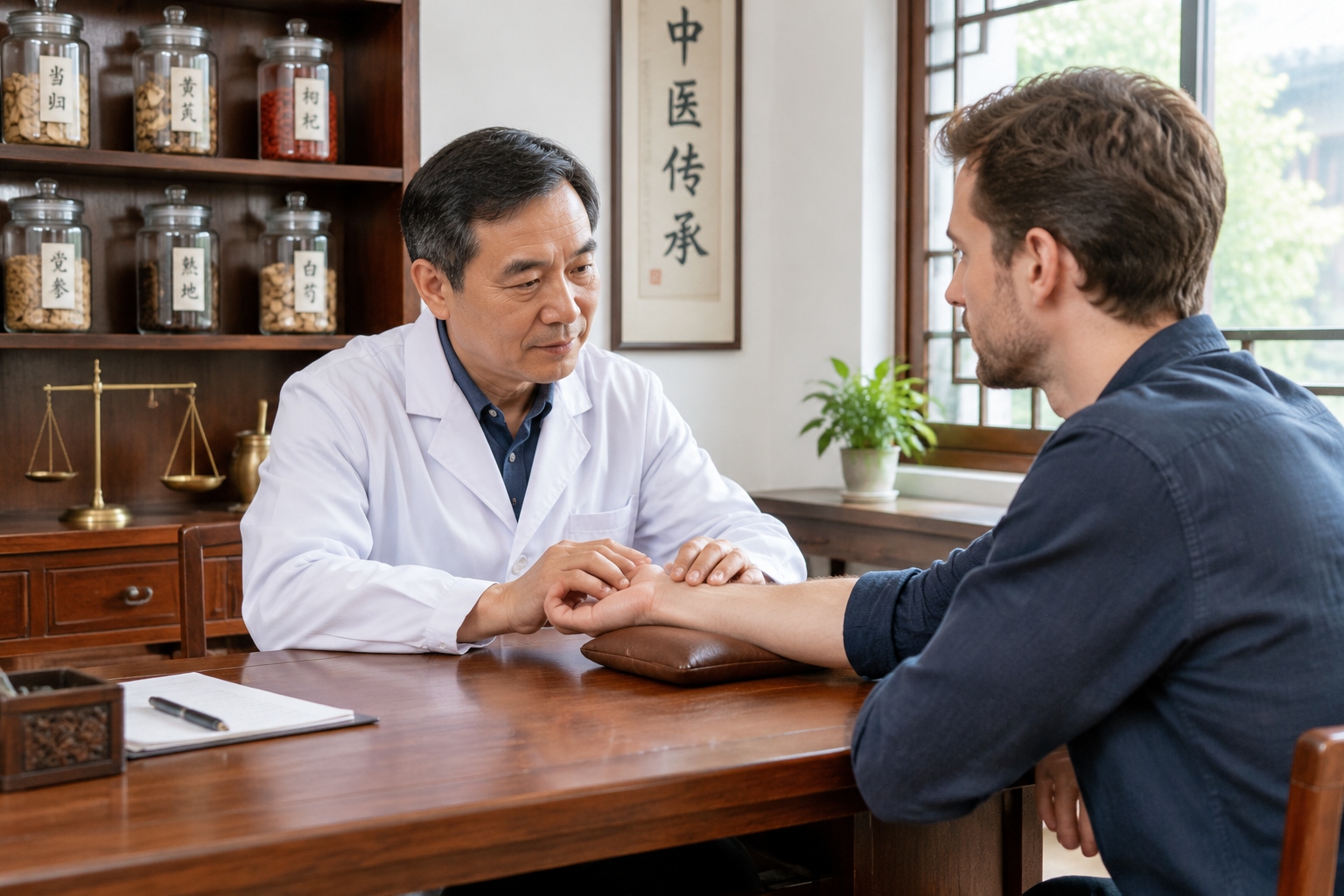
Hot water is the cheapest and most legible entry point. A decent steel thermos costs 40 to 80 yuan in a supermarket or online, lasts for years and requires absolutely nothing else. Hot water is also freely available in Chinese public spaces—airports, train stations, office pantries and many convenience stores—so the habit is almost effortless to maintain.
For many foreigners, the first real encounter with hot water is not in a restaurant but in a Chinese friend’s home or at the office. It does two things at once: it is gentler than ice water, and it makes you feel looked after.
There is a folk-medicine idea underneath it—the TCM notion of ‘cold’ and ‘hot’ affecting the body—but most ordinary people do not treat it as theory. They just find that it makes their stomach feel better. That matters, because it is concrete, testable and something the user can feel for themselves.
Hanfu: Dress-Up or Cultural Participation?
Hanfu rental shops in Luoyang now number in the hundreds, mostly opened after 2022 and clustered around the old town and a few popular sites. Xi’an has a similar scene near the Bell Tower and the Great Tang All Day Mall. The business model is mostly dress rental plus makeup, with prices ranging from a few dozen yuan to several hundred.
Foreign customers are a small but visible slice. They are usually drawn by the same things: the clothes photograph well, they are fun to try on, and they offer a brief sense of stepping into another era.
The question is whether this counts as ‘living like a Chinese person.’ Mostly, it does not. In most cases it is a costume photo session, not ongoing participation. Compared with hot water, it is more likely to stay at the level of curiosity.
But it is not entirely binary. In Luoyang, some foreign visitors walk into museums in Hanfu and listen seriously to the guide. Others have started buying individual Hanfu pieces on Taobao and wearing them back home. Both exist, and flattening them into one story would be a mistake.
TCM: From Cupping Marks to Actually Seeing a Doctor
Cupping is the most photographed TCM treatment on social media because the marks are dramatic. A short video of a foreigner’s back covered in purple circles is almost too easy to share.
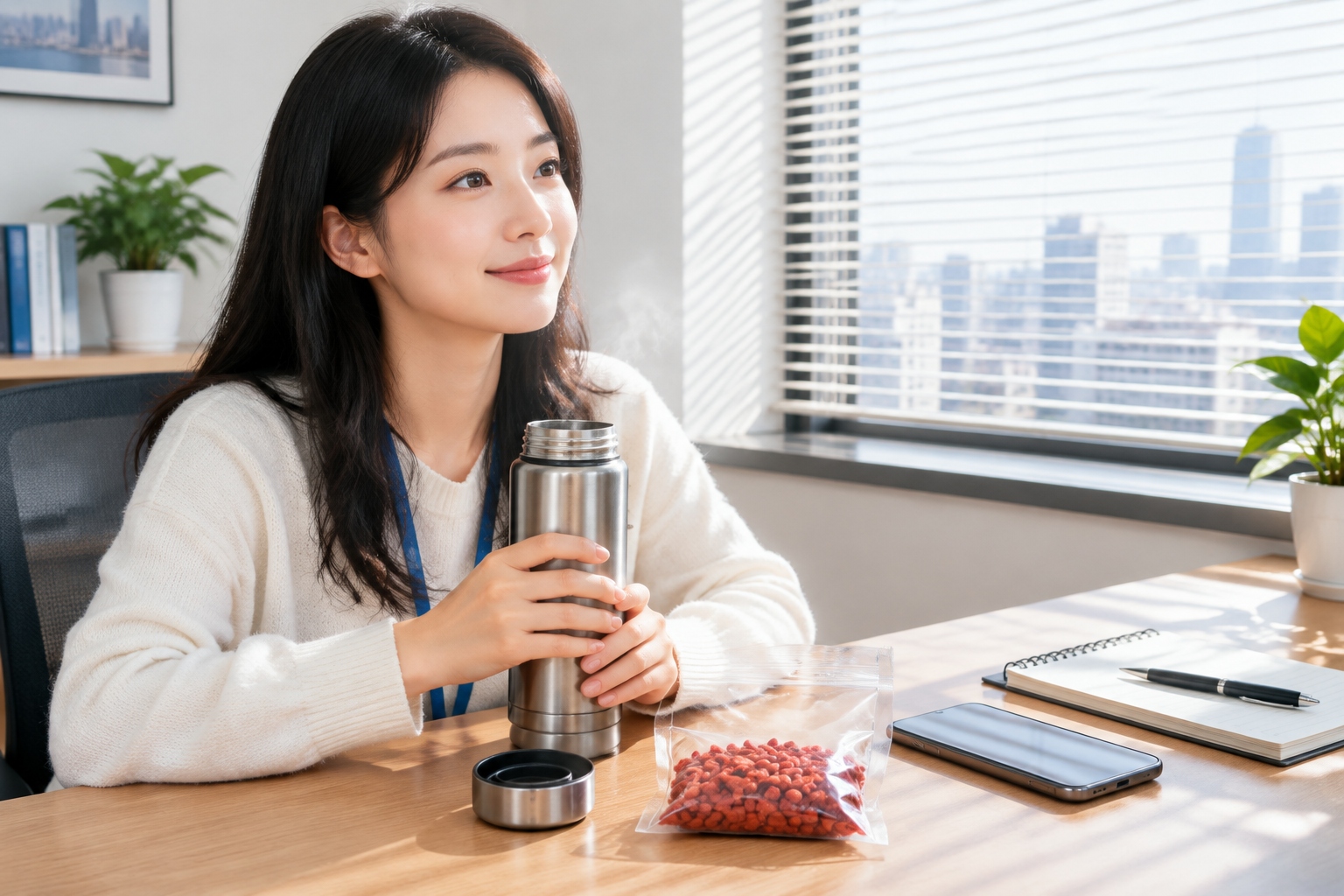
In practice, some foreigners do go back after the first try. Not for the marks, but for specific problems: back pain, sleep issues, digestive trouble. They go to regulated clinics—TCM clinics in China are licensed medical settings, and practitioners need qualifications—rather than to tourist-area ‘experience shops.’
There is also a much smaller group of international students who come to China to study TCM for years at a time. They are few, but they are the ones genuinely participating rather than watching.
Baduanjin and the Park
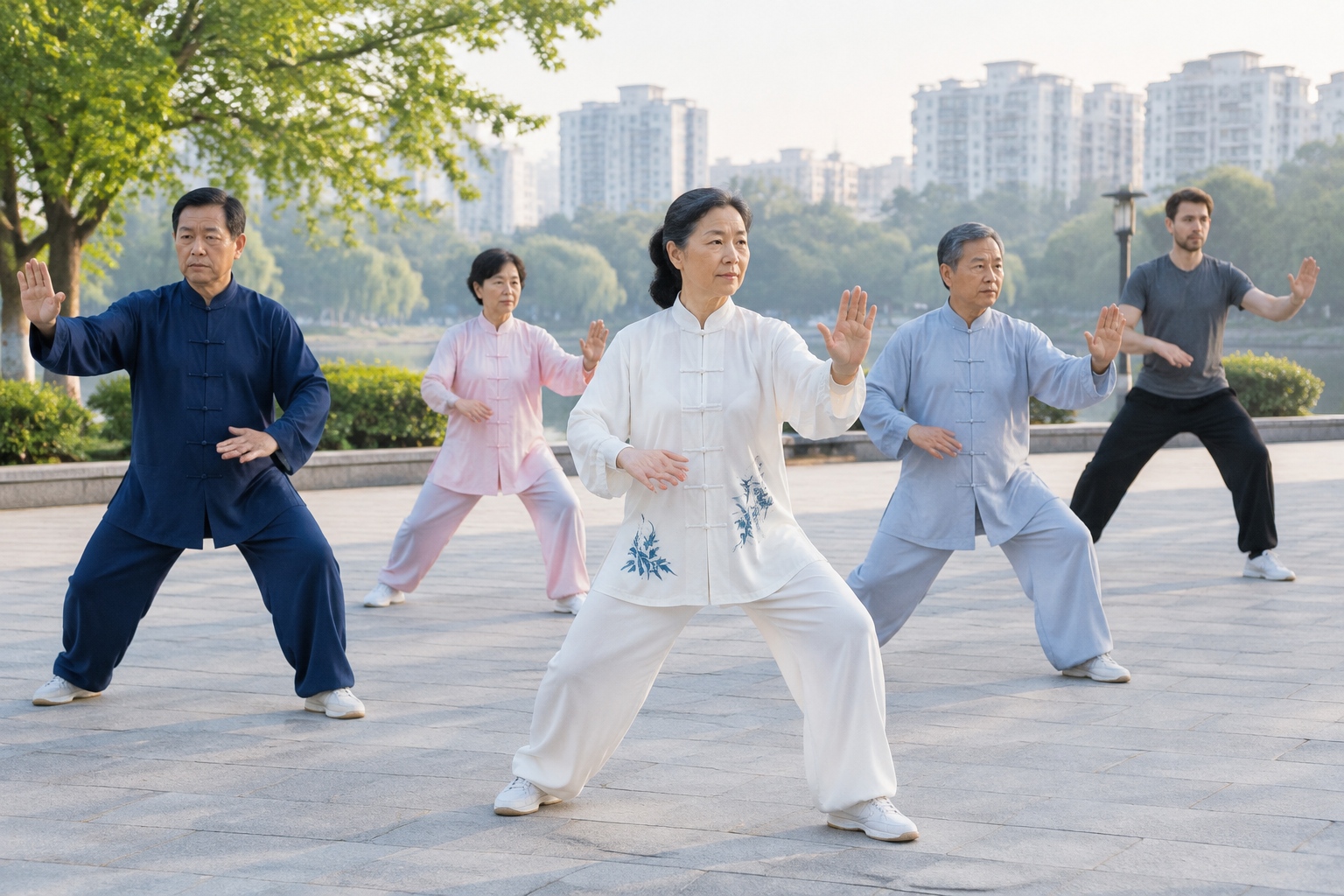
Baduanjin, a set of eight slow qigong movements, has one great advantage: it is completely free, performed in public parks, and open to anyone who wants to join. At seven in the morning in many Chinese cities, you can find groups of middle-aged and older people moving in slow, repeated patterns. Now you can also find younger people at the back of the group, out of sync but still going.
Foreigners who have moved to China brought this to the internet. In the West, yoga is an industry—classes, mats, memberships. Baduanjin has none of that. You walk into a park, join in, and walk away.
Food as the Front Door
Many of these habits are absorbed through food. Hot porridge, soup and herbal tea are the first things a foreigner in China encounters as part of a meal, and they later become a daily choice.
Eating together is also the cheapest form of social contact. Hotpot with friends, or a bowl of hot water handed to you by a host, is one of the most ordinary forms of Chinese hospitality. A foreigner can take part without understanding much—you sit down, you eat, you drink, you are included.
It Is Not Just Foreigners Changing
It would be inaccurate to frame this as one-way cultural adoption. Plenty of young Chinese people are moving in the other direction: iced coffee, Western brunch in shopping malls, Scandinavian-style furniture. The ‘traditional’ lifestyle a foreigner might find appealing is not actually the mainstream for young people in big cities.
So part of this trend is a genuine personal habit, and part of it is highly visible social-media content about the ‘other.’ Both exist at the same time.
What This Tells Us
There is no grand conclusion to draw from a set of videos. What is genuinely interesting is that Chinese daily habits have become cheap to borrow. Not the Great Wall, not high-speed rail, but a thermos, a set of cupping marks, a rented Hanfu and a cup of hot water. These things are inexpensive, easy to imitate and produce a physical sensation.
That is a different way of consuming China than in the past. Before, you looked at China. Now, a growing number of people are trying a small piece of it on.
Start the discussion at forum.chinacomes.com