
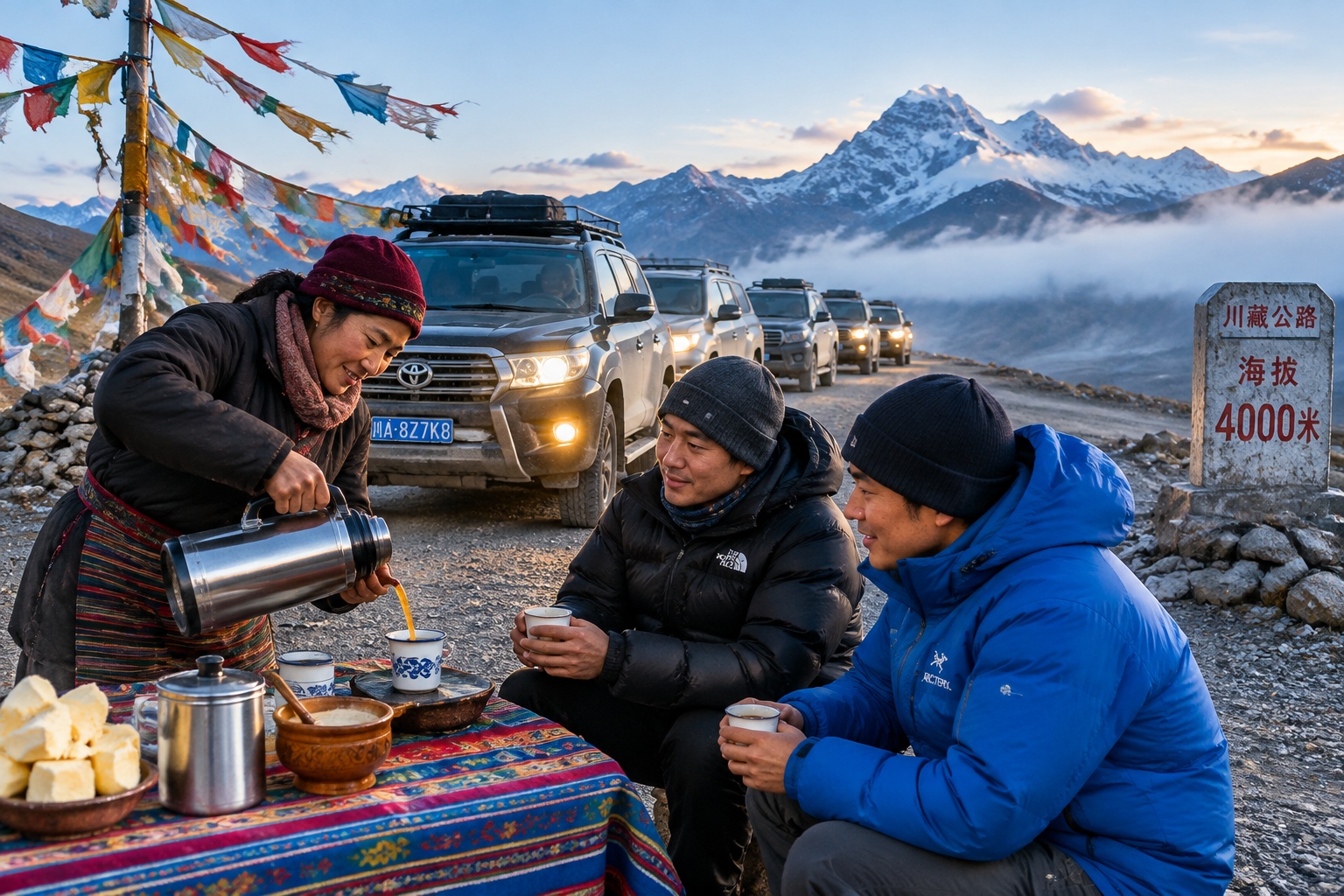

6:20 A.M. at 4,298 Meters
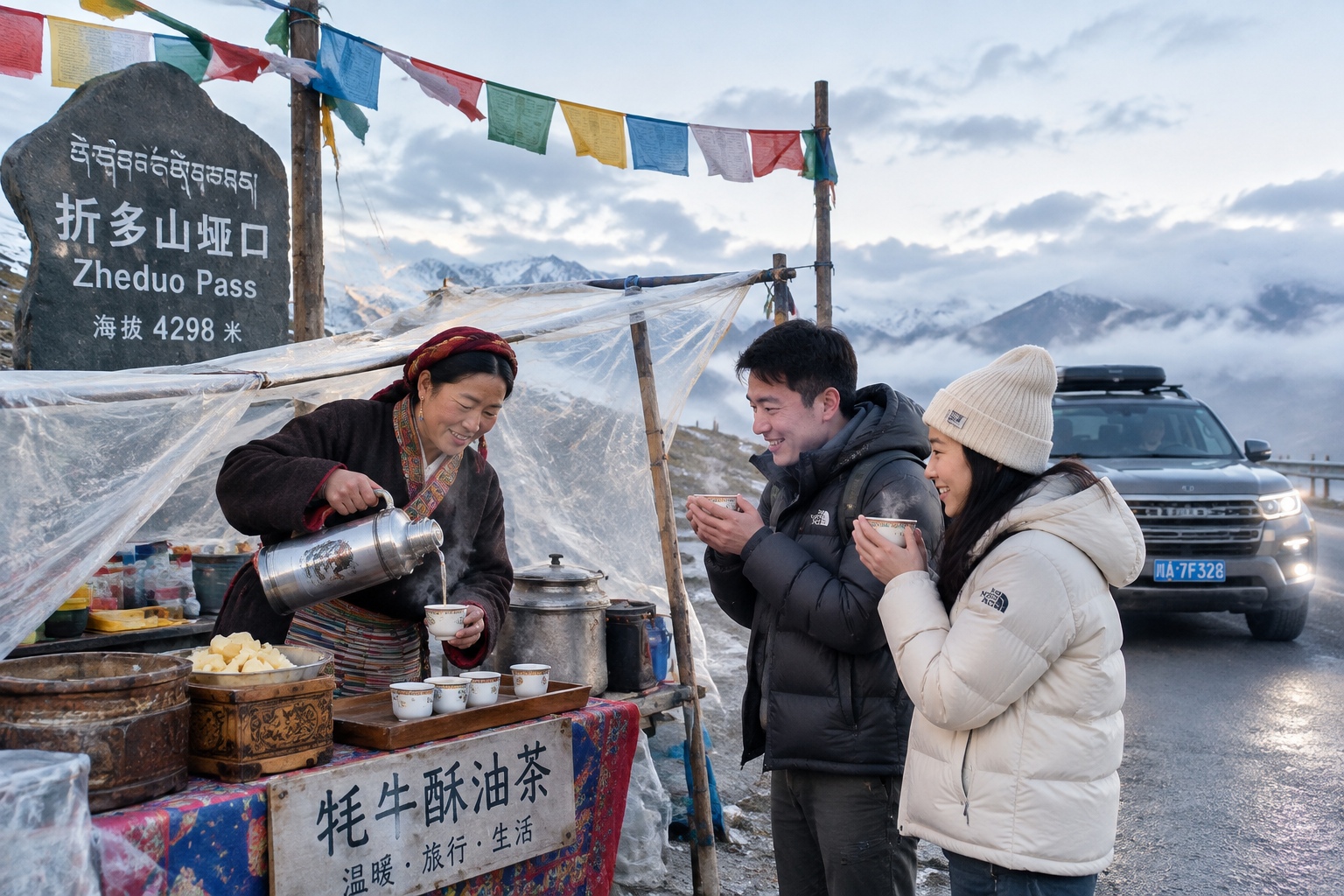
The first thing you notice at Zheduo Pass is not the view. It is the smell: diesel, wet pine, and the sweet, smoky edge of yak butter tea poured from a thermos at a roadside stall. It is 6:20 in the morning, the sky is the color of a knife blade, and the temperature has just cleared freezing. A line of cars noses uphill in second gear, headlights on, wipers pushing at a mist that never quite becomes rain.
Thirty kilometers behind is Kangding, the last town of any size on this stretch of the G318. Ahead lies the first of the high passes that gave China’s western highways their nickname: tianlu, sky-roads — roads that spend more time above the clouds than below them.
What the Sky-Roads Are — and What They Are Not
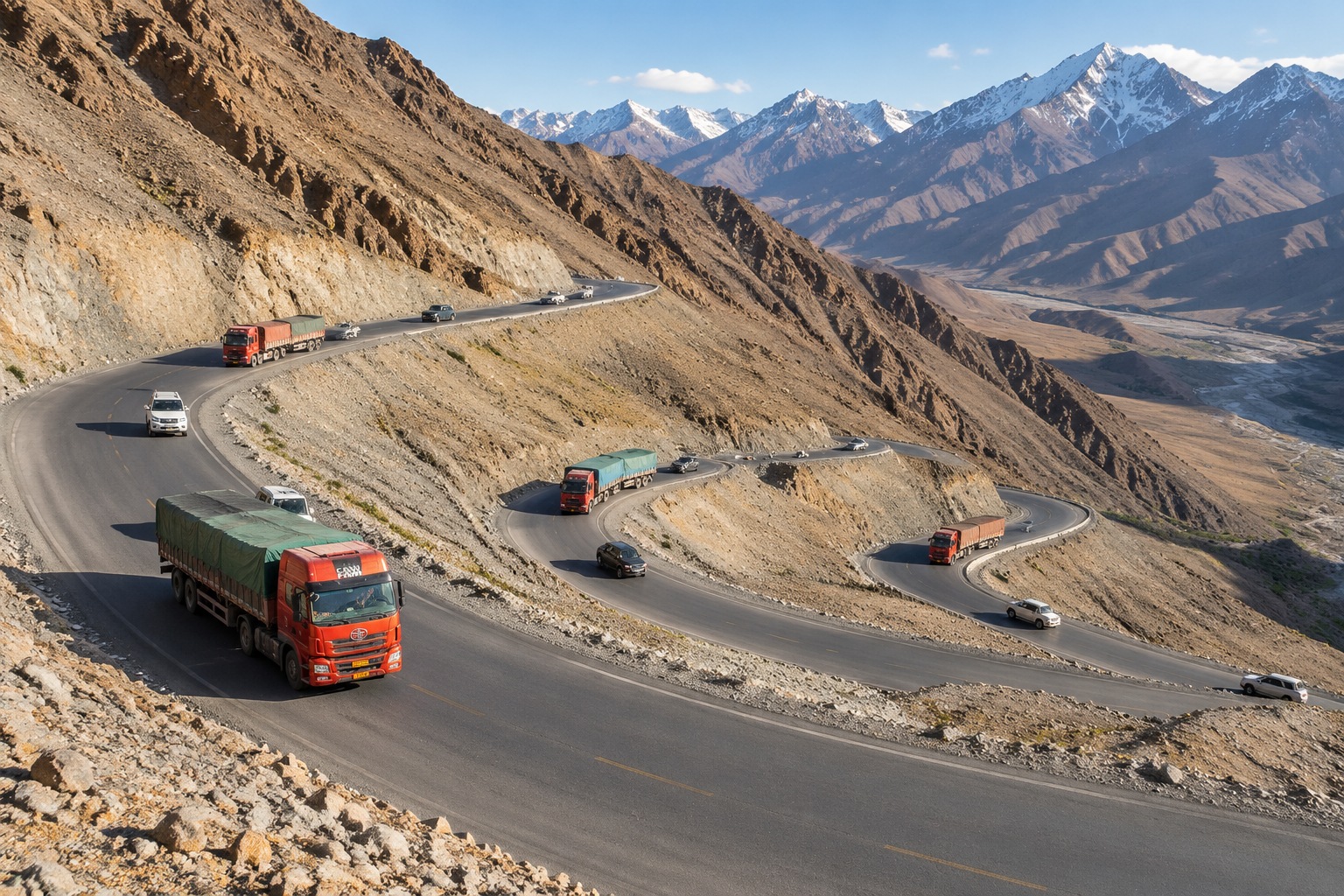
Two roads carry the reputation. The G318 Sichuan-Tibet Highway runs roughly 2,200 kilometers from Chengdu to Lhasa and crosses more than a dozen passes above 4,000 meters. Its highest, Mila Pass in Nyingchi, sits at 5,013 meters, where the air holds about half the oxygen of sea level. The G217 Duku Highway in Xinjiang is shorter — 561 kilometers from Dushanzi to Kuqa — but it slices straight through the Tianshan range, crossing four passes above 3,000 meters.
Both are mostly two-lane. Both are shared with overloaded trucks, tour buses, long-distance cyclists, and herds of yaks or sheep that consider the asphalt theirs. Neither is a theme park. Landslides close sections of the Sichuan-Tibet route most summers; the Duku Highway is shut by snow for seven or eight months a year and, when it reopens, is often restricted to daytime convoys.
The Duku has its own history. About 130,000 soldiers and workers built it between 1974 and 1983, and 168 of them died doing it. There is a memorial on the road. Drive past it slowly.
Before You Turn the Key
The car
Altitude steals power. A naturally aspirated engine can lose a third of its output above 4,000 meters, which is why turbocharged SUVs and small vans dominate these roads. Four-wheel drive is not strictly required on the G318 in summer — plenty of people do it in ordinary sedans — but it matters on the Duku’s gravel shoulders, on wet clay, and for any side trip into grassland or valley. Bring a full-size spare, a tow rope, snow chains even in July, and a 12-volt tire pump. Fuel up whenever a station appears: the stretch between Litang and Batang and the long empty run through the Bayanbulak grassland both punish optimism.
Documents
Chinese citizens need an ID card and a driving license. Foreign visitors need more: a temporary Chinese driving license, which usually means a translated license, a medical check, and most of a day at a vehicle management office in a city such as Chengdu or Urumqi. Independent self-driving inside the Tibet Autonomous Region is not permitted for foreign passport holders — you travel with a licensed agency and a guide. You can, however, drive the Sichuan half of the G318 as far as Batang, and the Duku Highway in Xinjiang, under ordinary tourist rules.
The Border Defense Permit is a separate slip of paper required for certain counties: Medog, Zayu, parts of Shigatse and Ngari in Tibet, and several border areas in Xinjiang. Apply at a public security bureau in your home city before you leave, or through an agency in Lhasa or Shigatse. It is cheap, takes about a day, and gets checked at barriers in the middle of nowhere.
Supplies
Water, food, and cash. Mobile payment works almost everywhere, but phone signal does not. Carry a power bank, an offline map, and enough cash for one night in a guesthouse and one tow. In the medical bag: acetazolamide for altitude, ibuprofen, rehydration salts, and the canned oxygen sold in every pharmacy along the route for 15 to 30 yuan. Nobody thinks they will need it. Many people do.
Reading the Road
Altitude
Altitude sickness is not about fitness. It is about how fast you climb and where you sleep. Kangding sits at 2,560 meters, Xinduqiao at 3,460, Litang at 4,014 — one of the highest towns in the world. A sensible first night is below 3,500 meters. After that, gain height slowly, drink more water than feels reasonable, and skip the celebratory baijiu at the pass. A headache that will not quit, vomiting, or breathlessness while resting means go down, not on.
Corners
On long descents, use the engine rather than the brakes: second or third gear, short gentle taps instead of steady pressure, so the discs do not fade on a 20-kilometer drop. Local drivers tap the horn once before blind curves. Do the same. Do not overtake on a corner, ever, and give uphill trucks room — they are heavy and they cannot stop quickly. Watch the shoulder for cyclists, roadside vendors, and animals that appear from nowhere. Yaks have right of way. So do sheep, goats, and the occasional horse.
Weather
Afternoon thunderstorms are routine in summer, and hail or snow can fall in any month above 4,000 meters. Landslides follow rain, especially on the Palong Tsangpo section and around Tongmai, where the road has been rebuilt repeatedly after washouts. Checkpoints close roads without warning. If police or soldiers tell you to wait, wait. Turning back is a decision, not a failure.
Where You Sleep, What You Eat
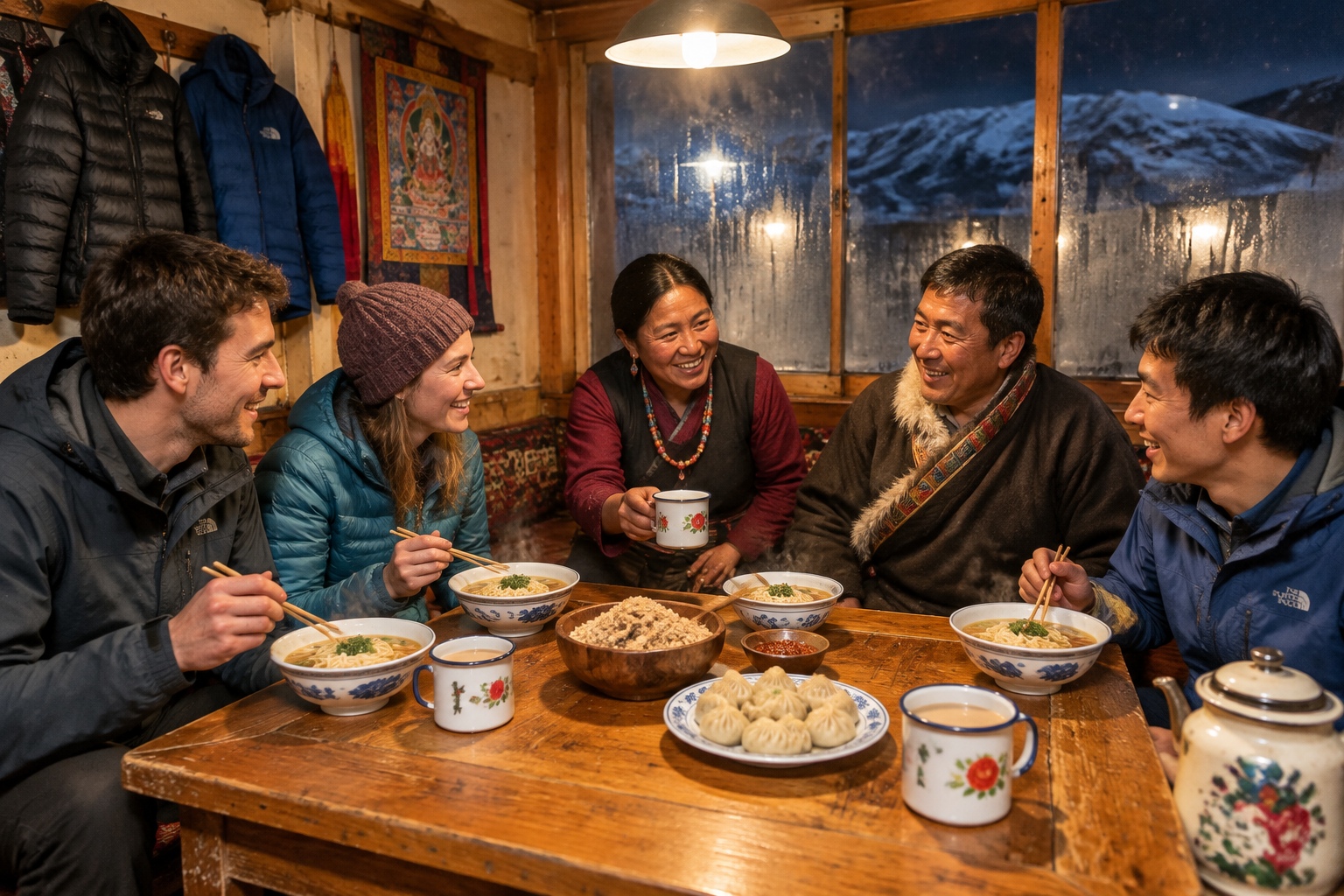
Guesthouses along the route run 150 to 400 yuan a night. Expect an electric blanket, patchy hot water, and a shared bathroom — and also, often, enormous generosity. Litang and Daocheng have Tibetan-run family inns. On the Duku Highway there are yurt stays with Kazakh herders, and in Bayanbulak the rooms fill weeks ahead in July.
Food follows the road crews. Sichuan cooks run most restaurants along the G318, so the default meal is rice, greens, and something chili-hot, whether you are in a Tibetan town or a truck stop. Try yak butter tea once — salty, buttery, genuinely warming at 4,500 meters — with tsampa and Tibetan momos. In Xinjiang the food changes completely: lamb kebabs, hand-pulled noodles, naan baked in a tandoor, polo, and the night market in Kuqa, where 40 yuan buys dinner and a view of the whole town passing by.
You are driving through other people’s homes. Ask before photographing anyone. Walk clockwise around monasteries and mani stone piles, do not touch prayer flags or climb stupas, and leave stones that were placed deliberately. A few words of Tibetan or Uyghur — tashi delek, rahmat — go a long way, and so does patience when a herd blocks the road for twenty minutes.
Leave No Trace on Fragile Ground
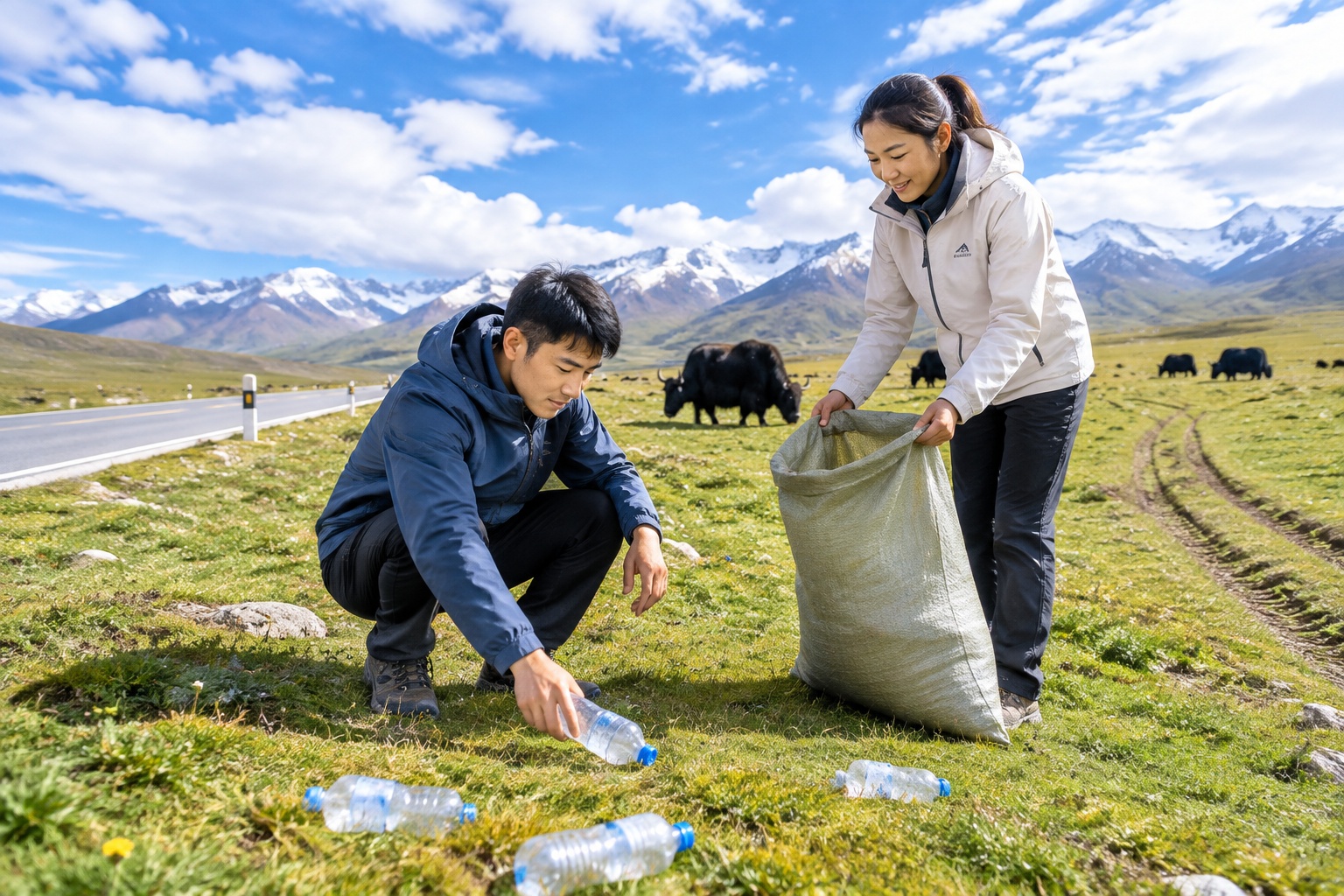
Alpine meadow above the treeline takes decades to recover from a single set of tire tracks. Driving off the road onto grassland is illegal in many protected areas and fined; it also compresses permafrost and kills the root mat that holds the soil in place. The Duku Highway closes for part of the season partly to let the grass come back.
Pack out everything, including fruit peels and cigarette butts. Roadside litter is the one thing that genuinely spoils these routes, and volunteer groups — herders, cyclists, local students — spend their summers cleaning up after drivers. For toilets, carry a trowel, dig a shallow hole at least 50 meters from water, bury it, and take the paper with you; at altitude, nothing decomposes quickly. Do not feed marmots or foxes, do not fly drones near monasteries, checkpoints, or herding camps without permission, and keep the music inside the car.
If You Go: Practical Notes
Best months: May to June and September to October for the Sichuan-Tibet Highway; late June to early October for the Duku, when it is open at all.
Time: Chengdu to Lhasa is usually driven in 8 to 12 days; the Duku Highway in 3 to 4.
Budget: roughly 500 to 900 yuan per person per day for fuel, tolls, food, and lodging, more if you hire a driver.
Emergency numbers: 122 traffic police, 120 ambulance, 110 police. Save them before you lose signal.
Apps: Amap or Baidu Maps for navigation, WeChat for payment. Download offline maps before you leave the city.
One Last Thing About the Beauty
Posts about these roads all show the same shot: a lone car on a ribbon of asphalt, prayer flags snapping, sun melting over a 5,000-meter pass. That moment exists. So does the other version — fog swallowing a corner, a truck taking your lane, a driver who ignored a headache for six hours. People die on these highways every summer, usually in a hurry, usually on a curve.
Drive slowly enough to be passed by cyclists. Stop at the pass, drink the tea, and let the altitude make you quiet. These mountains have been here far longer than any of us, and they do not care whether you reach Lhasa today.
Start the discussion at forum.chinacomes.com