

Welcome to the World’s Most Photogenic Traffic Jam
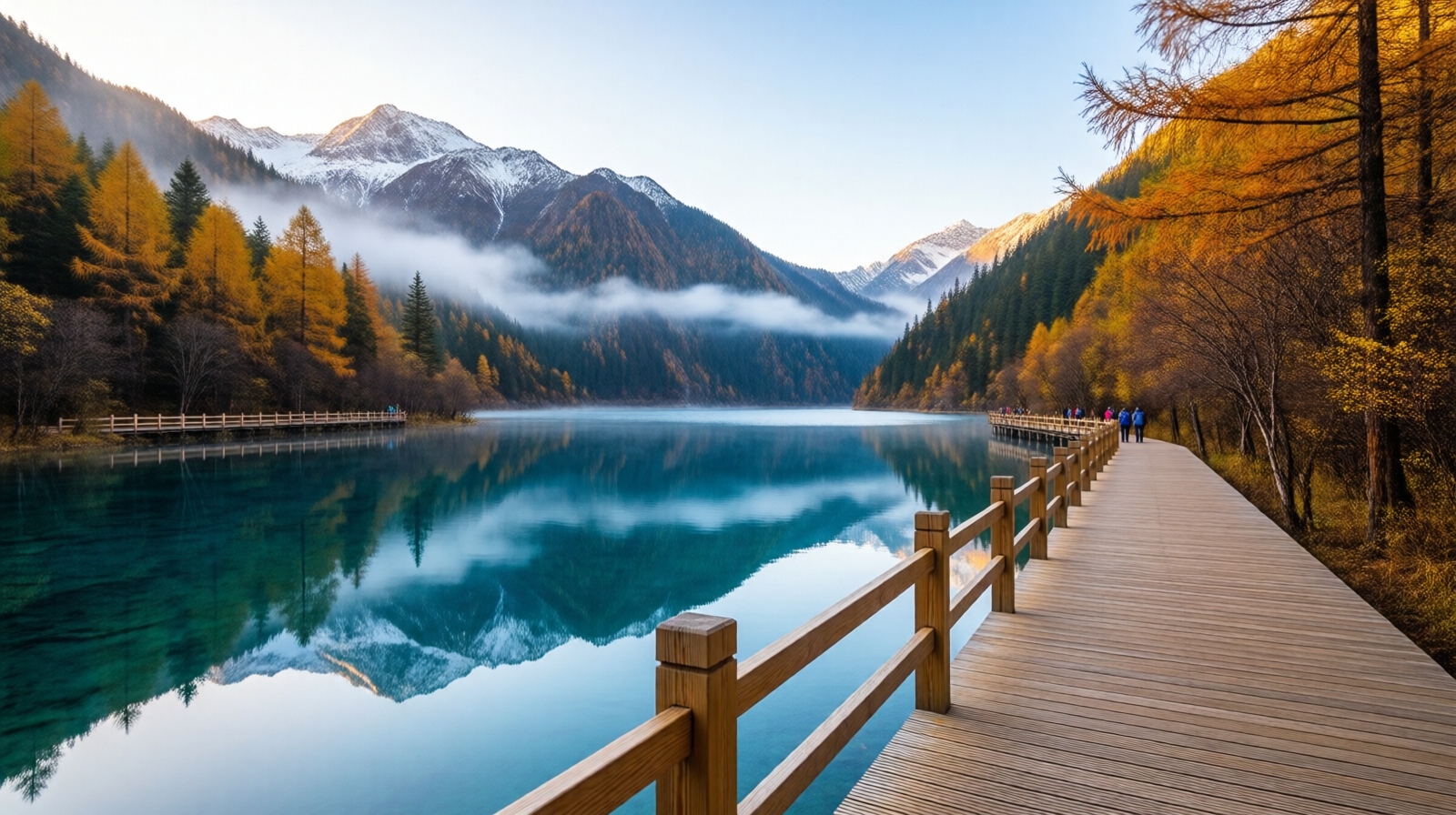
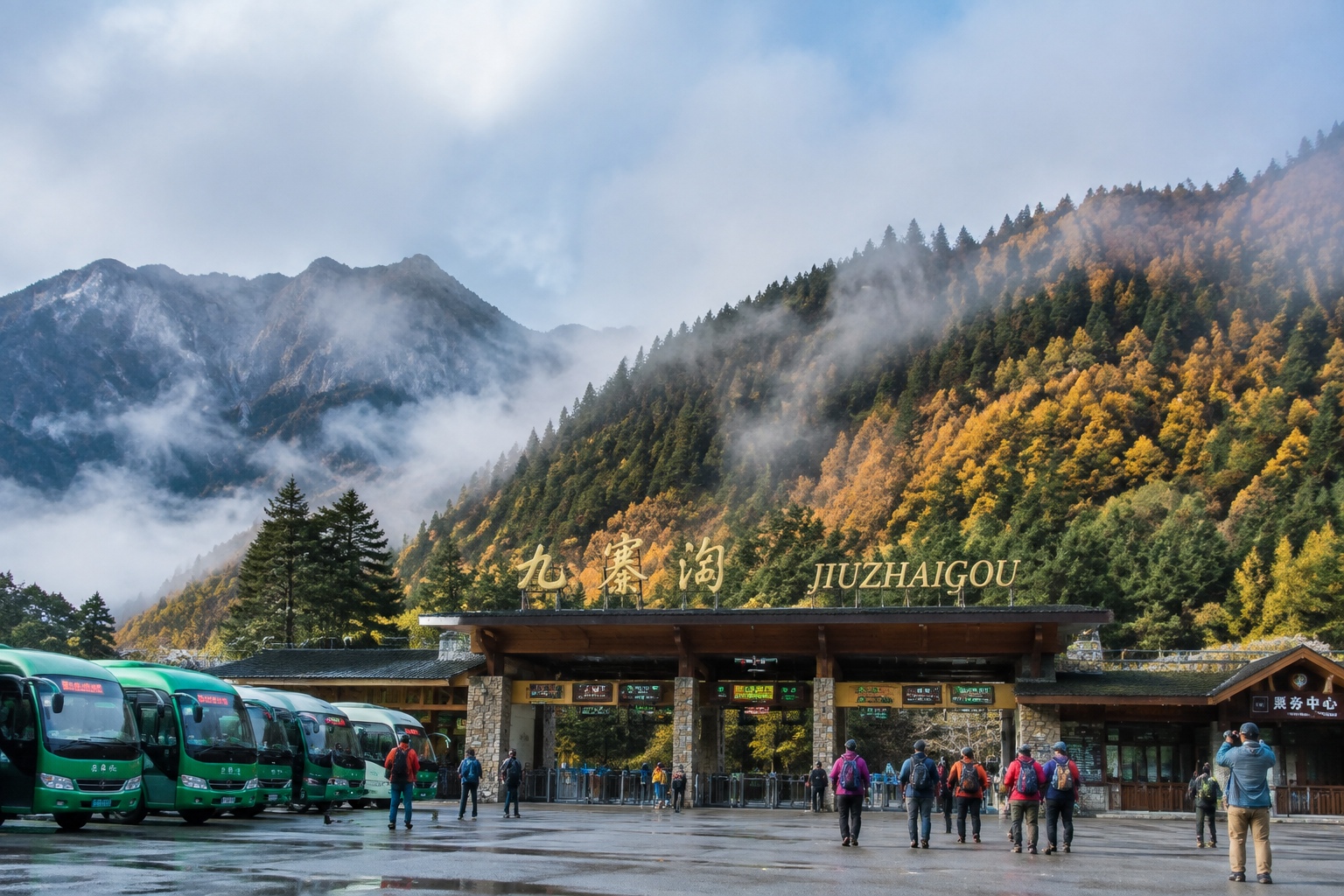
You saw the postcard before you packed. It showed a lake so blue-green and still that it looked like someone had Photoshopped a mirror into the mountains. You flew 10,000 kilometers, told yourself that Sichuan isn’t just about hot pot, and arrived at Jiuzhaigou National Park before sunrise. At the gate, you are not alone. Aunties in bright scarves are doing warm-up stretches next to a row of tripods. A man is yelling into his phone about “the exact color of the water.” You haven’t even seen the water yet, but you’re already in someone’s photo.
Jiuzhaigou, in the Aba Tibetan and Qiang Autonomous Prefecture of Sichuan Province, is one of China’s most famous natural sights: nine Tibetan villages, waterfalls, and dozens of turquoise lakes set in a U-shaped valley. Tourists call it a fairy tale, and they come in fairy-tale numbers. On a sunny Saturday in October, the boardwalk at the Five-Flower Lake can look like a concert crowd waiting for the main act. The “photo army” — 拍照大军, pāi zhào dà jūn — is a loving nickname for the wave of visitors who arrive with professional cameras, silk scarves, and an Olympic-level commitment to getting the best shot.
The good news: you don’t have to join them. I’ve been to Jiuzhaigou twice, learned the hard way, and come back with a bundle of semi-useful tricks. If you’re flexible, you can find empty boardwalks, quiet trails, and even a moment where the only splashing sound is a real waterfall, not someone shaking a bottle to make a splash.
Start at the Wrong End (But Do It Fast)
Everyone wants to begin at the farthest point and work their way back. The shuttle buses at the entrance all go to the same two termini: Long Lake (Cháng Hǎi) in Zechawa Valley, or the Original Forest at the end of Rize Valley. In the first hour after opening, that’s where everyone is heading. If you are also on that first shuttle, you’ll be at the front of a huge, polite herd.
Here’s the trick: get off at the second stop, not the last. Most tourists stay on the bus until the end. You can hop off at a midpoint like the Five-Flower Lake trailhead and walk the boardwalk downhill while the groups are still being transported upward. The direction looks “wrong” to the crowd, which is exactly what makes it right. A light hike of about two kilometers can give you a lake view with only the sound of wind and the occasional bird arguing with itself.
If you want to channel your inner morning person, the other obvious move is to book a ticket for the first time slot and be standing at the shuttle stop when the park opens. At 8am in mid-autumn, the air is cold, the coffee is hot, and the only thing waiting for you is a valley that hasn’t yet been hashtagged.
Walk the In-Between Bits
Jiuzhaigou’s beauty isn’t only at the famous pull-out viewpoints. It’s also along the narrow channels between lakes, where water spills over mossy rocks and the whole thing looks like a Chinese ink painting that learned to move. Tourists often zip between stops on the shuttle, missing the forest paths. These wooden boardwalk trails connect the lakes, and they’re where you can actually lose the crowd.
Try the trail from Sparkling Lake (Huǒhuā Hǎi) down to the Shuzheng Group Lakes. It’s maybe ninety minutes of walking, mostly through shaded forest with little waterfalls. One spring morning, I passed exactly four people around noon. Three of them were locals out walking, and one was a monkey checking my backpack for snacks. The monkey had better photography instincts than I did.
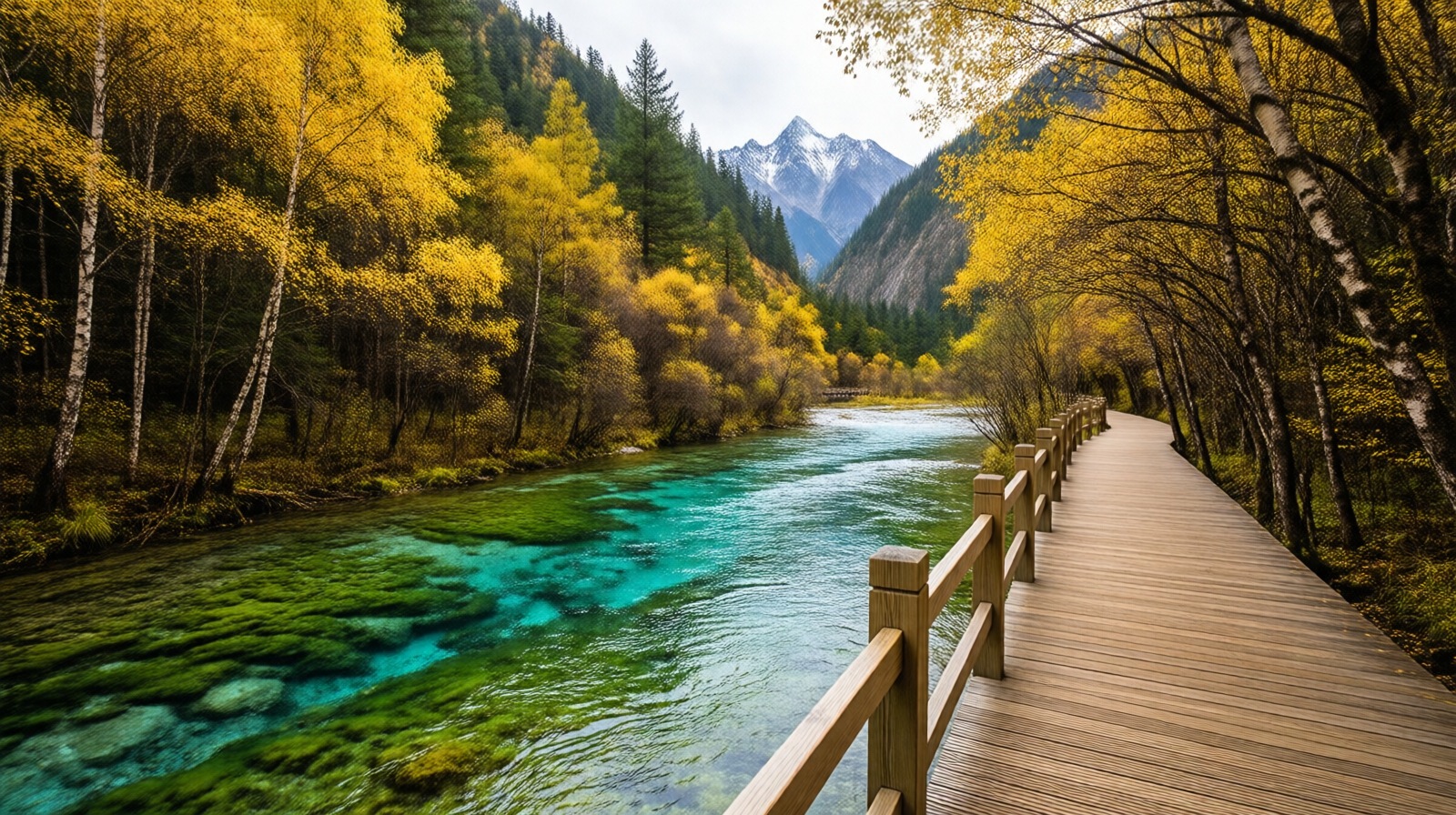
You might also try the Rhinoceros Lake–Bamboo Lake corridor. The shuttles skip a few of these stops because they’re “not worth the time.” That’s the official opinion of people in a hurry. What they miss are boards that cross the quiet water where the reflection of snow peaks appears like a second sky.
Go Where the Buses Don’t (Zharu Valley)
Most visitors spend all day in the two main valleys, Shuzheng and Rize. But Jiuzhaigou has a third arm: Zharu Valley (Zhárú Gōu). It’s quieter, more forested, and completely different in mood. There are no big colored lakes here, but there are waterfalls and long walking paths under fir and birch trees. The bus service to Zharu is less frequent, which is exactly why you should go. It’s where the noisy, selfie-stick version of tourism goes to disappear.
Zharu Valley is also the base for overnight ecological hiking options, but those usually require permits and are arranged separately. For visitors with just a day ticket, the first few kilometers of Zharu offer the feeling of a backcountry trail without the need for an expedition permit. You don’t have to be a hardcore hiker; you just have to be willing to ask, “is this the way to the crowd?” and go in the opposite direction.
Pick the Right Time (Yes, November Counts)
Timing is half the battle. Chinese public holidays, especially National Day Golden Week (October 1–7), turn Jiuzhaigou into human soup. The park also limits daily visitor numbers, and in peak season those tickets sell out. If you can, go in late autumn — mid-to-late October or early November — when the maple and birch trees are still colorful but the crowds have returned to the office. Winter, from December to March, is even quieter, but some parts of the park may be closed or limited due to snow. It’s also freezing, so bring proper shoes and a fierce willingness to sip hot tea in a scenic spot nobody else has discovered.
Within a single day, the lunch hour is your secret weapon. Tour groups stop to eat around 12pm. If you’re walking the boardwalk somewhere between 12:30 and 2pm, you’ll have the place almost to yourself. Carry a packed lunch — a bun, some fruit, water — and take your time. That’s the kind of meal you’ll remember more than the tourist buffet.
Embrace the “Un-Insta” Moment
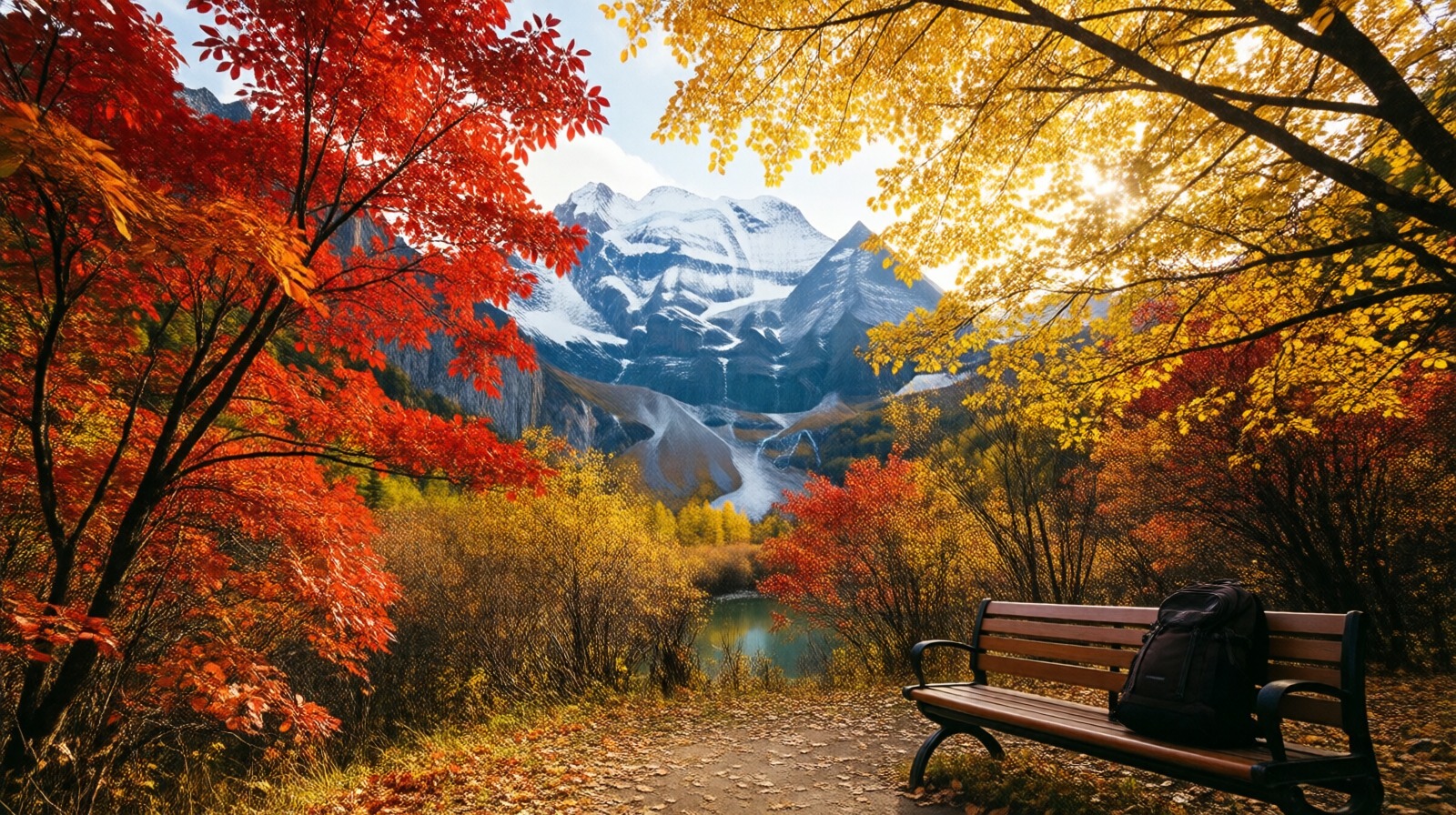
No matter how clever you are, you might still end up sharing a rail with retirees who carry a telephoto lens the size of a small horse. That’s fine. After a while, the crowd becomes part of the story. Wait for 20 seconds between tour groups, or tilt your camera slightly up to catch the branches and the sky. Use the crowd as a mirror of your own determination: they’re also here because they love this place.
The larger truth: the best shot from your trip may not be the iconic lake with a zero-person reflection. It might be a moss-covered tree in Zharu, a rainbow in the mist of a waterfall, or a pair of macaques trying to open someone’s lunchbox. The “un-Instagrammable” moments often become the ones you actually brag about later.
The Practical Bits
A few boring but essential details: buy tickets online through the official Jiuzhaigou app or a major travel platform at least a few days ahead during high season. Bring your passport or Chinese ID for entry. Your entrance ticket usually includes the shuttle bus; confirm exactly what you’re buying as you check out. Download offline maps; service can be shaky in the deep valley. Carry a little cash, but most places now expect WeChat Pay or Alipay. If you’re a foreign visitor, set up your mobile payment before you go — it will save you a lot of unnecessary panic at the noodle stand.
And no, you don’t need to feed the monkeys. They have a diet plan, and it doesn’t include your Doritos.
Jiuzhaigou is magical even when it’s crowded. But with a little planning, a flexible route, and a willingness to get off the well-trodden boardwalk, you can find the version of it that made you book the trip in the first place. That empty reflection? It exists. You just have to earn it.
Start the discussion at forum.chinacomes.com