

A Blue That Stops Travelers
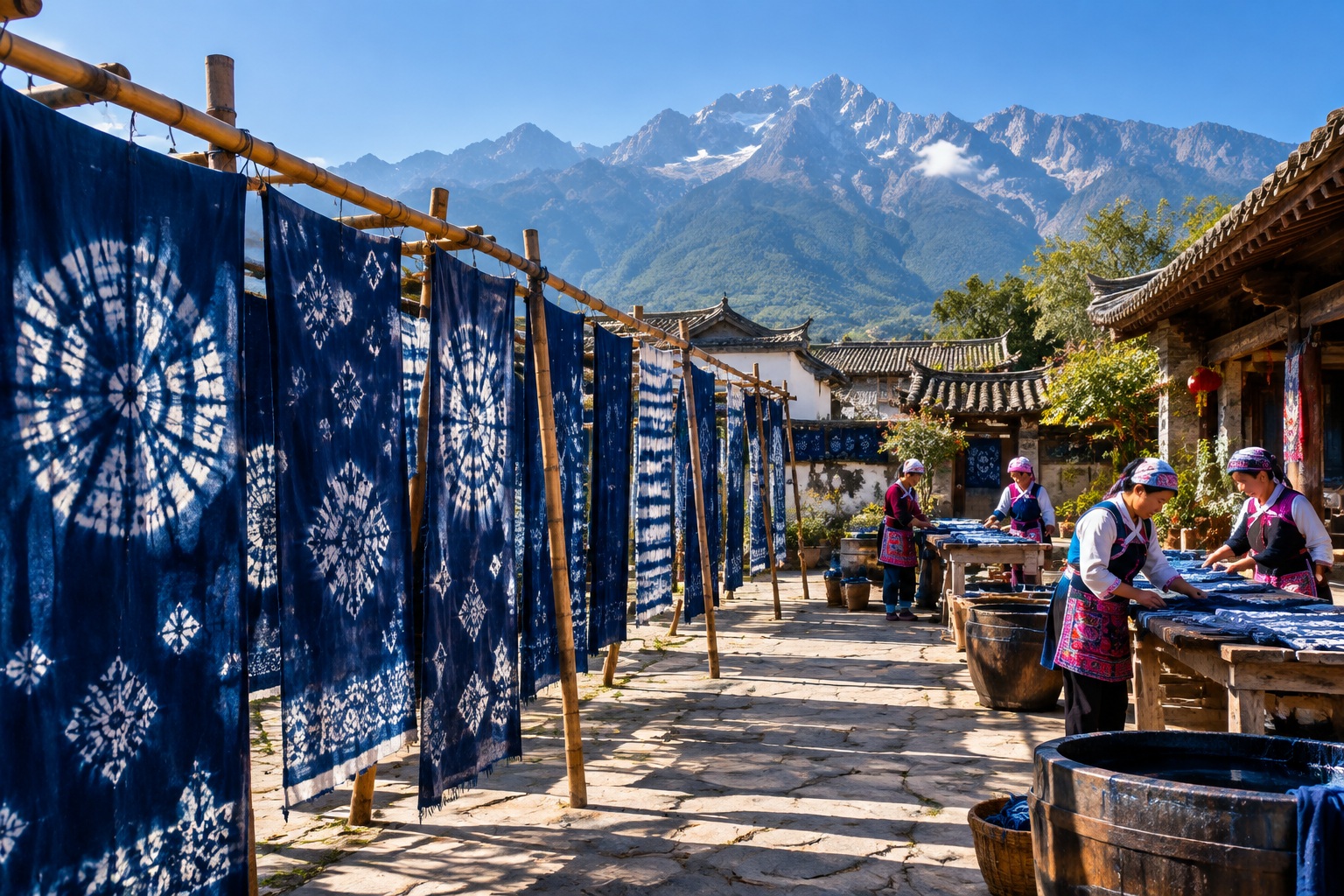
The first thing Elise noticed was the color. Not just any blue, but a deep, living blue that seemed to glow under the Yunnan sun. She had been backpacking through southern China for a week when her bus pulled into a small town called Zhoucheng, outside Dali. Across the courtyard of a traditional Bai house, she saw rows of white cotton cloth freshly dyed and hanging from bamboo poles. Some were decorated with snow-white motifs of flowers, butterflies and Chinese characters. They moved in the wind like slow music.
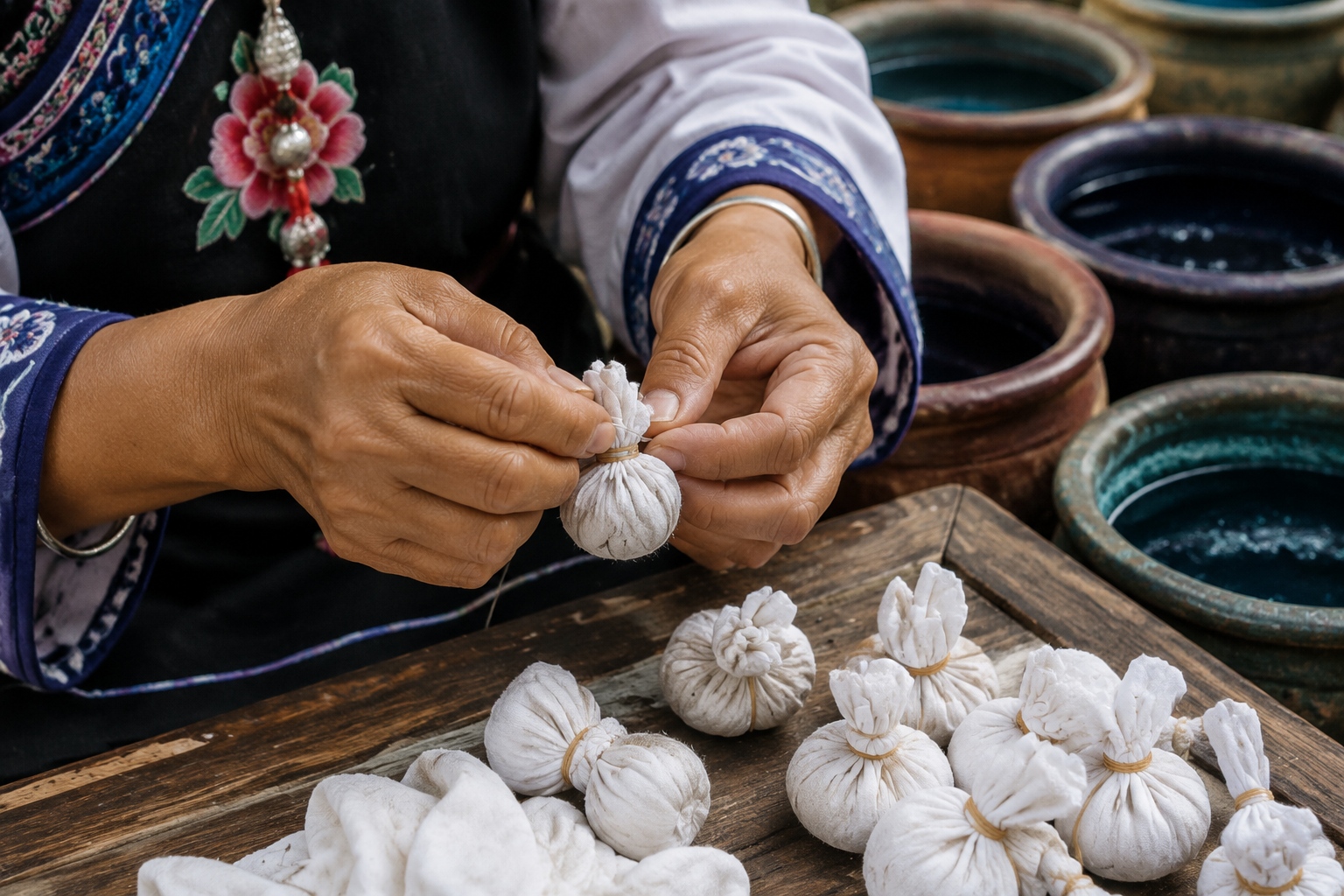
Elise, a 28-year-old fashion designer from Paris, had only planned to use Zhoucheng as a one-night stop. But that evening, she followed a faint earthy smell to a workshop behind the main street. Inside, a group of Bai women in their 50s and 60s were wrapping pebbles and rubber bands around small bundles of fabric. They were tying the cloth so that when it entered the dye bath, the wrapped parts would stay white. Then one woman lowered a bundle into a large ceramic vat filled with dark blue liquid.
"This isn’t the chemical dye I’m used to," Elise told me later. "The smell was almost sour. The color seemed alive."
Zhoucheng: The Town That Lives in Blue
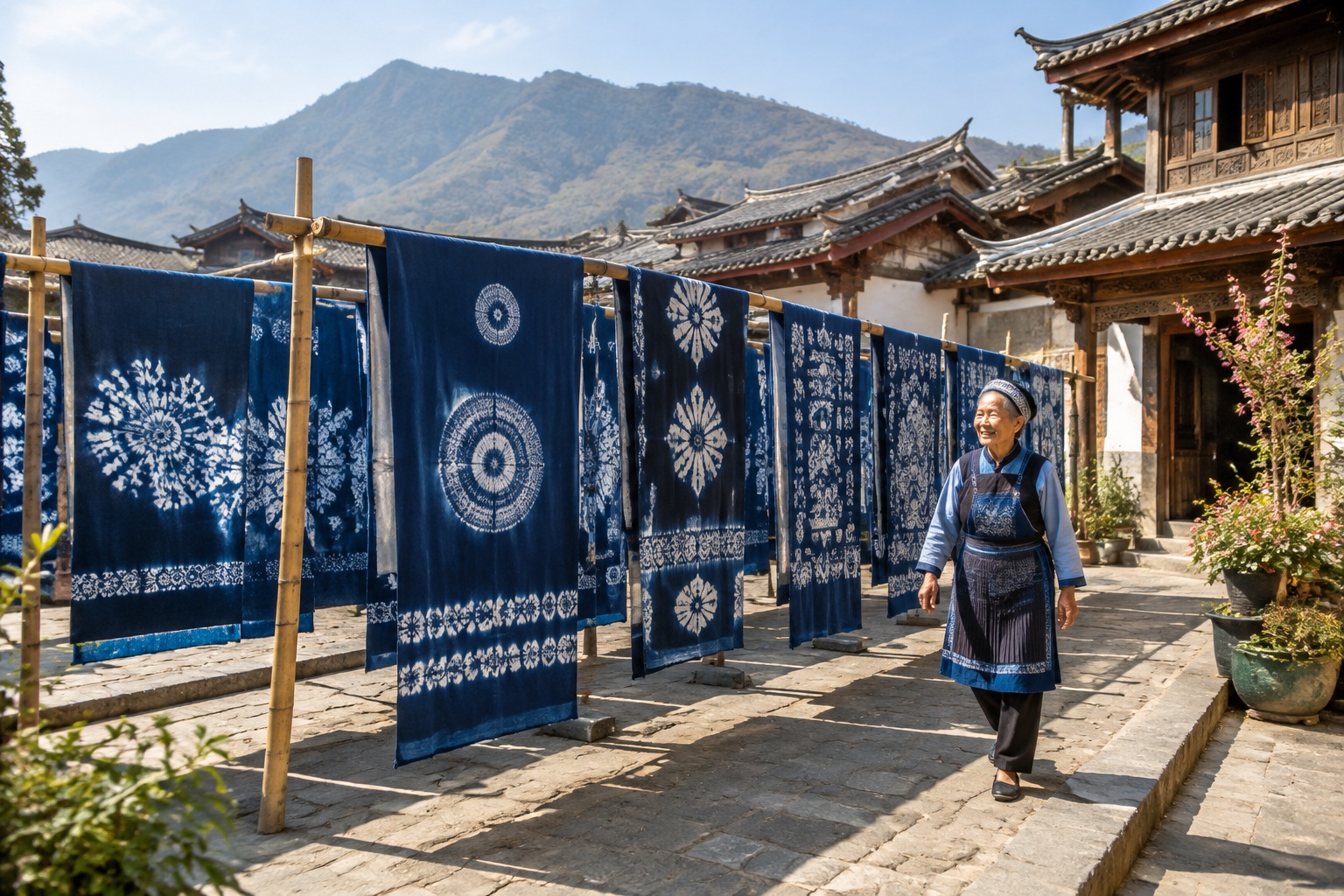
Zhoucheng has been making tie-dye for hundreds of years. The Bai, one of China’s 56 ethnic groups, have passed the craft from mother to daughter since at least the Tang dynasty (618–907 AD). The town sits about 25 kilometers north of Dali in Yunnan Province, surrounded by the Cangshan mountains and the vast Erhai Lake. In Zhoucheng, almost every family has a set of ceramic dye vats in their yard. The fabric is usually cotton or linen. The patterns are tied with thread, rubber bands, plastic wrap, and sometimes needles – anything that can resist the dye.
What makes Bai tie-dye distinctive is its color palette. There is a range of reds and yellows from other plants, but the classic is indigo. The blue comes from sticks, called banlangen in Chinese, which are part of the Isatis family. These leaves are soaked in water, mixed with lime, and fermented for weeks. The liquid turns a deep blue. The fabric is dipped many times to get darker shades, and between each dip it is exposed to the air to allow oxidation. Each piece is opened after washing to reveal a white-and-blue pattern. Because each tie is done by hand, no two pieces are identical. This uniqueness is exactly what draws international buyers who are tired of mass-produced textiles.
The Art of Tying and Dyeing
The process is slow. Women spend years learning how to fold, roll, and tie the cloth so that the white lines form the desired motif. Traditional patterns include butterflies, fish, peonies, clouds and the Chinese character for "good luck". Many designs are passed down through families and carry local stories. For example, the "little tiger" pattern is printed on baby clothes to protect against evil spirits.
There is also an almost scientific side to the dye. After the leaves are collected, they are chopped and left to ferment in a large vat with water. After a few days, the liquid is drained off, and lime is added to create the dye solution. Stirring the liquid once a day, a dyer carefully monitors the color and bubble. If the vat is too cold, the dye won’t take; if too hot, the color will be blotchy. This balance is learned by feel, not by reading a manual.
From Village to Paris Fashion Week
Elise came back to Zhoucheng twice after that first trip. On the second visit, she made contact with a workshop run by a local master named Zhang Sheng, who had been making tie-dye for 30 years. "She knew nothing about our language," Zhang told me, laughing. "But she kept pointing at the indigo vat and asking to try."
Over the next few visits, Elise learned to wrap, tie, and dip. She also realized how hard it is to control the final pattern. In the traditional process, you do not paint the motif; you create it by resist-dyeing. You plan where to tighten the thread, how many times to dip, how long to soak. Only after the cloth is washed and the thread removed do you see the result. "It’s like sculpting, but in reverse," she said.
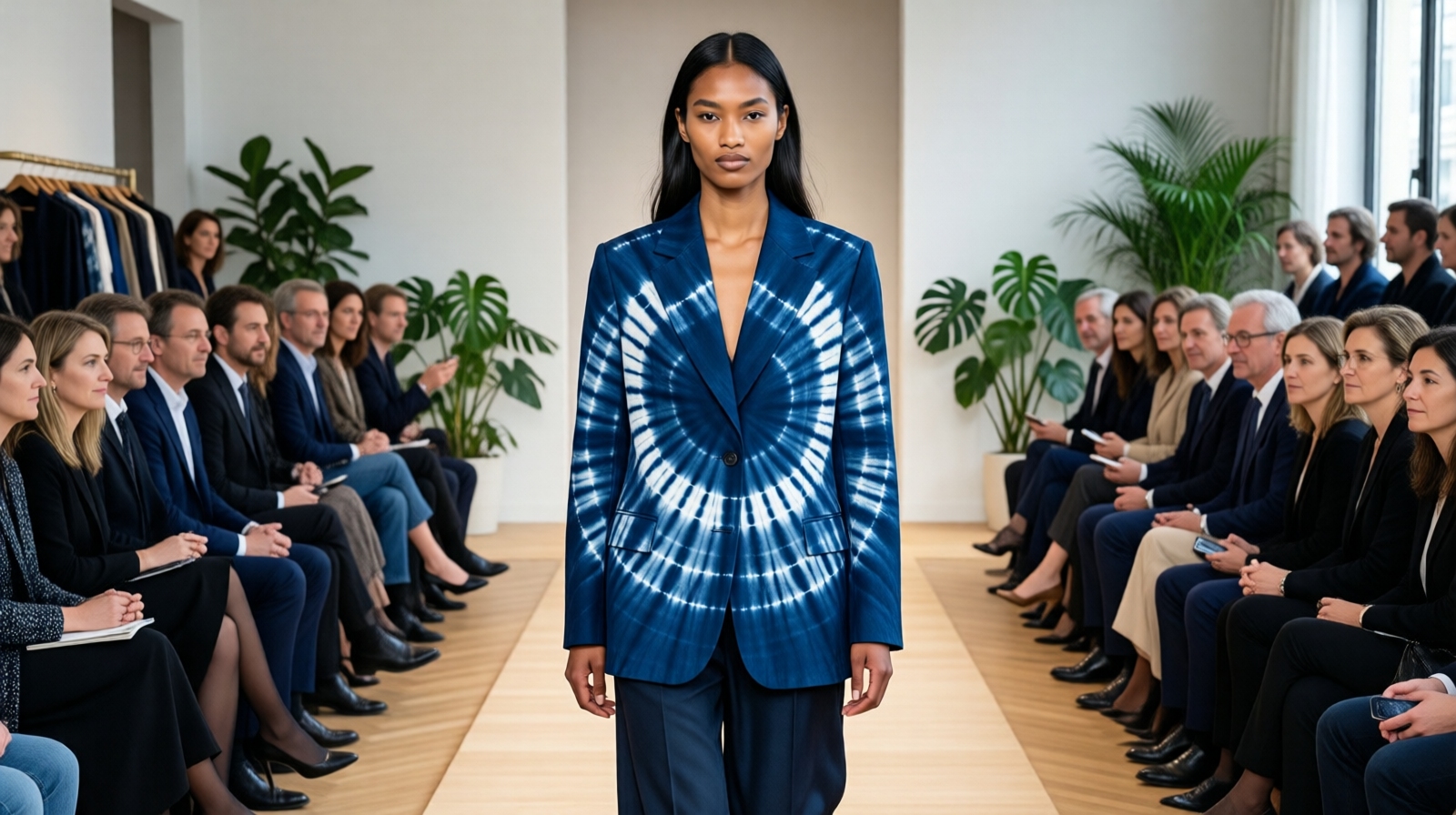
Her persistence paid off. By 2020, Elise had used Zhoucheng’s tie-dye fabric in a small collection for Paris Fashion Week. The collection was inspired by "blue from nature," and each garment came with a QR code linking to a short film about the Bai women making the fabric. The collection didn’t make huge headlines, but it sold out from a concept store in Le Marais. Since then, she has returned for more fabric.
Elise is not alone. In recent years, Zhoucheng has become a quiet stop for international designers, stylists, and even a well-known Scandinavian furniture brand that has used tie-dye as upholstery fabric. Local workshops now receive orders from at least 30 countries, including Japan, Italy, Spain, South Korea, and the United States. The trade is not huge – most workshops still operate as family businesses – but it has changed the town’s economy. Where tourists once bought small sachets as souvenirs, many now return after seeing the craft on Instagram and order custom tablecloths or wall hangings for several hundred dollars.
A Global Digital Marketplace
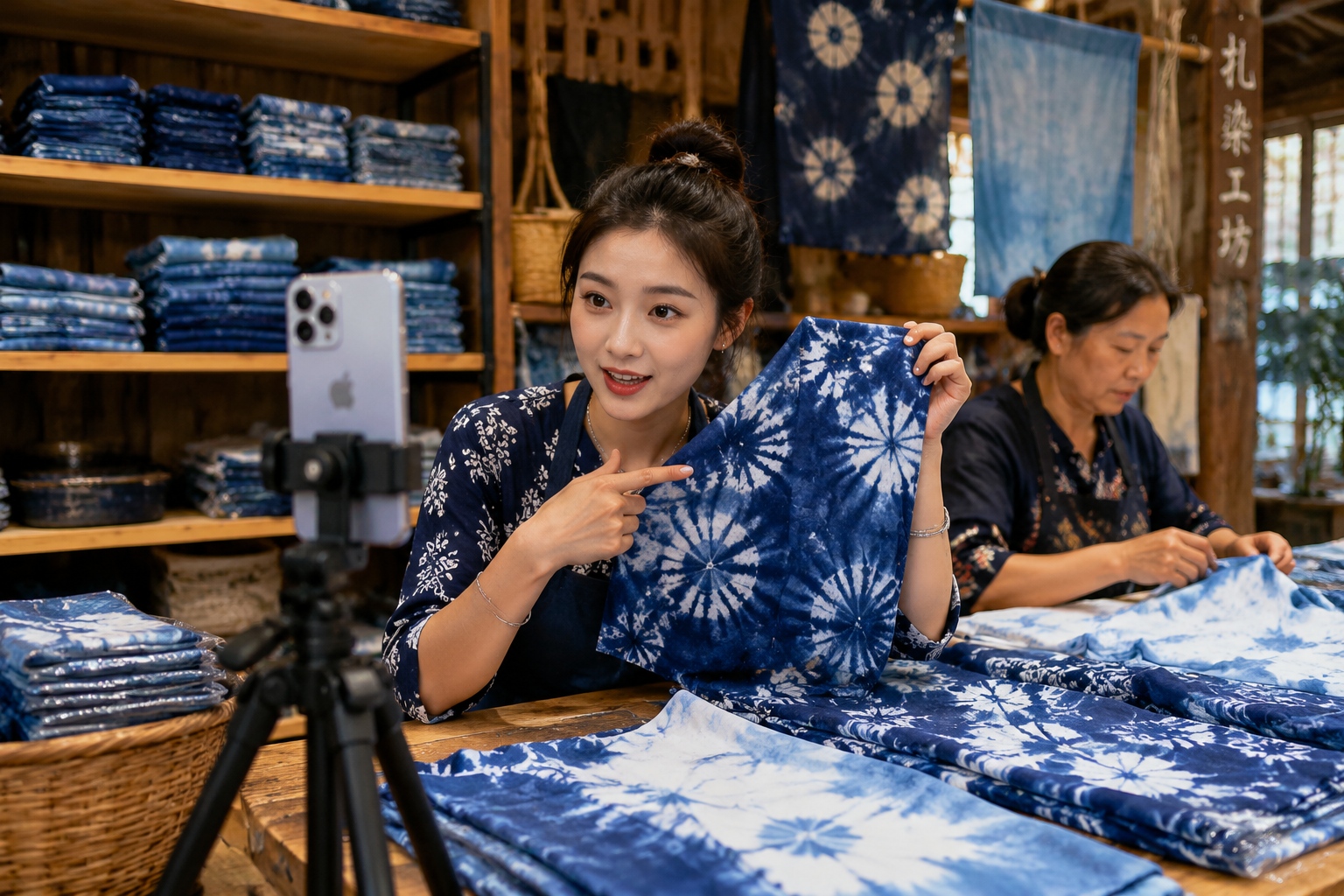
The internet has flattened the distance between Zhoucheng and the world. Many workshops are now on WeChat and Taobao, and several have active English-language pages for overseas buyers. Young people in the village run Instagram accounts and TikTok channels. A single video of the dye bath bubbling can attract hundreds of thousands of views and prompt orders from the United States or Europe.
Zhang Mei, Zhang Sheng’s daughter, is 32. She went to art school in Kunming and now runs the workshop’s Instagram. She told me that her father’s workshop often receives custom orders from abroad – "a customer in Australia asked for a table runner with a map of Tasmania; a Japanese designer wanted fabric with plum blossoms in a color we had never made before." Sometimes the requests are so specific that the workshop has to experiment for weeks before getting it right. But the collaboration has become a two-way learning process. As international designers bring new ideas, some traditional patterns are also being re-discovered by Chinese consumers who want something woven with care.
What Change Feels Like on the Ground
For older residents, the shift is visible in everyday life. In the 1990s, a piece of hand-tied tie-dye could sell for only a few yuan. Today, a well-executed piece can sell for 200 yuan (about $28) or more in a shop, and designer collaborations can push the price into thousands of yuan. But the real difference is not just income. Zhang Mei was the first in her family to attend an art school. When she was younger, she didn’t want to learn tie-dye because it seemed like hard work without a future. Now, when foreign customers send her photos of their apartments with her father’s cloth on the sofa, she feels proud.
Younger millennials and Gen-Zers in Dali are also returning to the craft, but often as content creators rather than artisans. Some make short videos for Douyin and Bilibili about the dyeing process. Others use e-commerce platforms to sell to Chinese customers. The pandemic accelerated this shift; when tourists stopped coming, online orders kept many workshops alive.
Tie-dye’s revival is not without friction. True indigo dyeing is time-consuming and depends on a steady supply of fresh plants. Some workshops, especially those supplying large tourist orders, have switched to synthetic indigo or shortcuts like tying with plastic tape that leaves a looser pattern. This has caused tensions within the community. Cheng Lian, a 44-year-old woman who owns a workshop, is one of the few who still insists on natural dyeing. "Sometimes customers complain that my price is five times higher than the chemical one on the other street," she said. "But after they smell the difference and see the color fade slightly, they come back."
Between Tradition and Trend
Bai tie-dye is still a minority craft. There are perhaps fewer than a thousand artisans who know the full process from plant to cloth. Yet the global interest in natural dyes hasn’t faded. In 2021, China’s Ministry of Culture included Bai tie-dye in the national intangible cultural heritage protection list, which gives the village more government support for training programs and exhibition spaces.
The most hopeful sign, perhaps, is not a fashion show or a trade statistic. It’s the way young designers from places like Chengdu and Shanghai are moving to Zhoucheng for months at a time. They rent rooms from farmers, learn the old techniques, then experiment with new patterns – maps, constellations, QR codes – using the same indigo vat. They are not trying to preserve a dusty relic; they are playing with an ancient material as if it were a living language.
For Elise, this is the real connection: "When I piece a jacket with their cloth, I am not using an ‘ethnic folk garment’. I am using a canvas that carries the hands of women who think deeply about blue. That is a conversation across time."
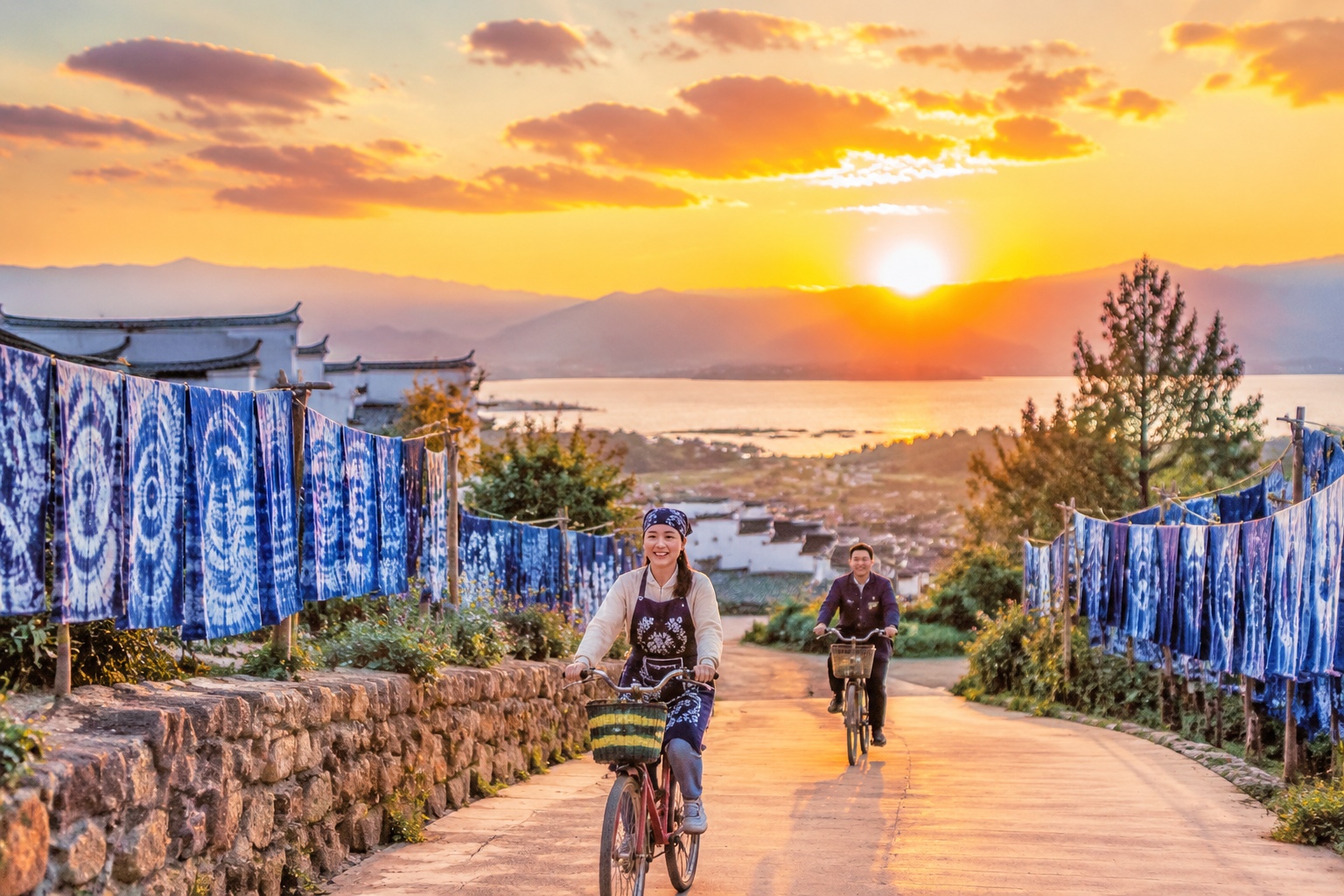
By the time I left Zhoucheng, the sun was low and the rows of hanging fabric had turned from bright blue to deep sapphire. A few local kids rode their bicycles under the cloth, occasionally reaching up to touch it. The town had no big slogan on the wall. It didn’t need one. The blue was already reaching far beyond the courtyard.
Start the discussion at forum.chinacomes.com