

First, Meet the Mountain
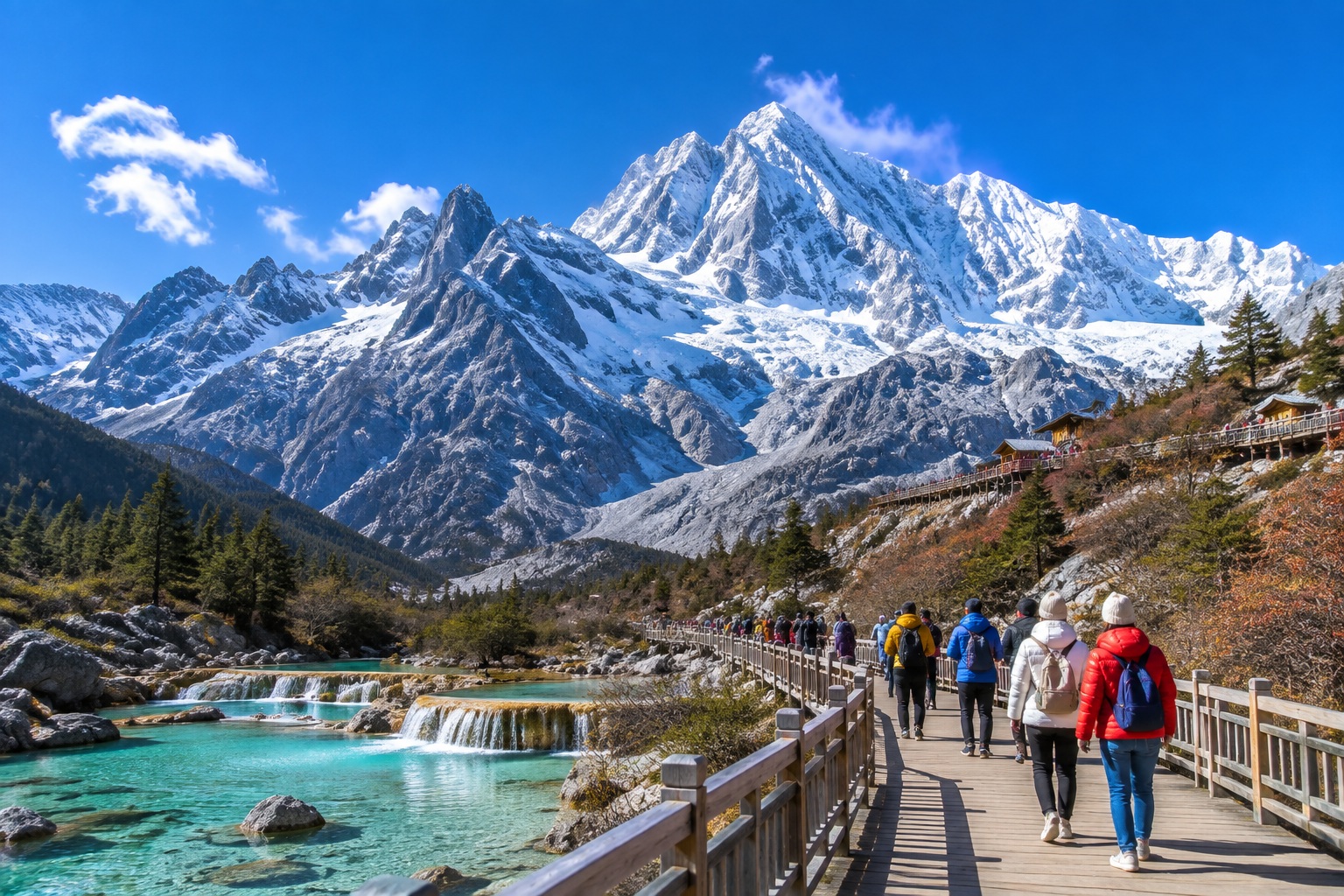
At 8:30 in the morning, a line of visitors snakes through the ticket gate of the Jade Dragon Snow Mountain scenic area, 25 kilometers north of Lijiang’s ancient town. Many are wearing light jackets and carrying only phones and selfie sticks. By the time they reach the upper cable car station at 4,506 meters, some sit on benches clutching their heads, while companions hunt frantically for portable oxygen cans. This happens every single day.
Jade Dragon Snow Mountain is not a single peak but a chain of 13, with the highest, Shanzidou, reaching 5,596 meters. It is one of the southernmost snow mountains in China, and its glaciers and turquoise pools make it a UNESCO-protected site (in fact, it’s part of the Three Parallel Rivers protected area). For most day-trippers, the adventure is a combination of cables and a straightforward boardwalk. But the altitude, which you’ll gain from Lijiang’s 2,400 meters to over 4,500 meters in less than an hour of cable car riding, is responsible for more ruined days than you might think.
This is a practical guide to doing it right. It’s based on numbers: actual altitude, actual oxygen concentration, real timing, and advice from Naxi locals who have worked here for years. The mountain is sacred to them, and they have seen enough visitors rush up and regret it. Follow their advice, and a day trip here can be smooth, comfortable, and genuinely spectacular.
The Hard Numbers: Altitude, Air, and Your Body
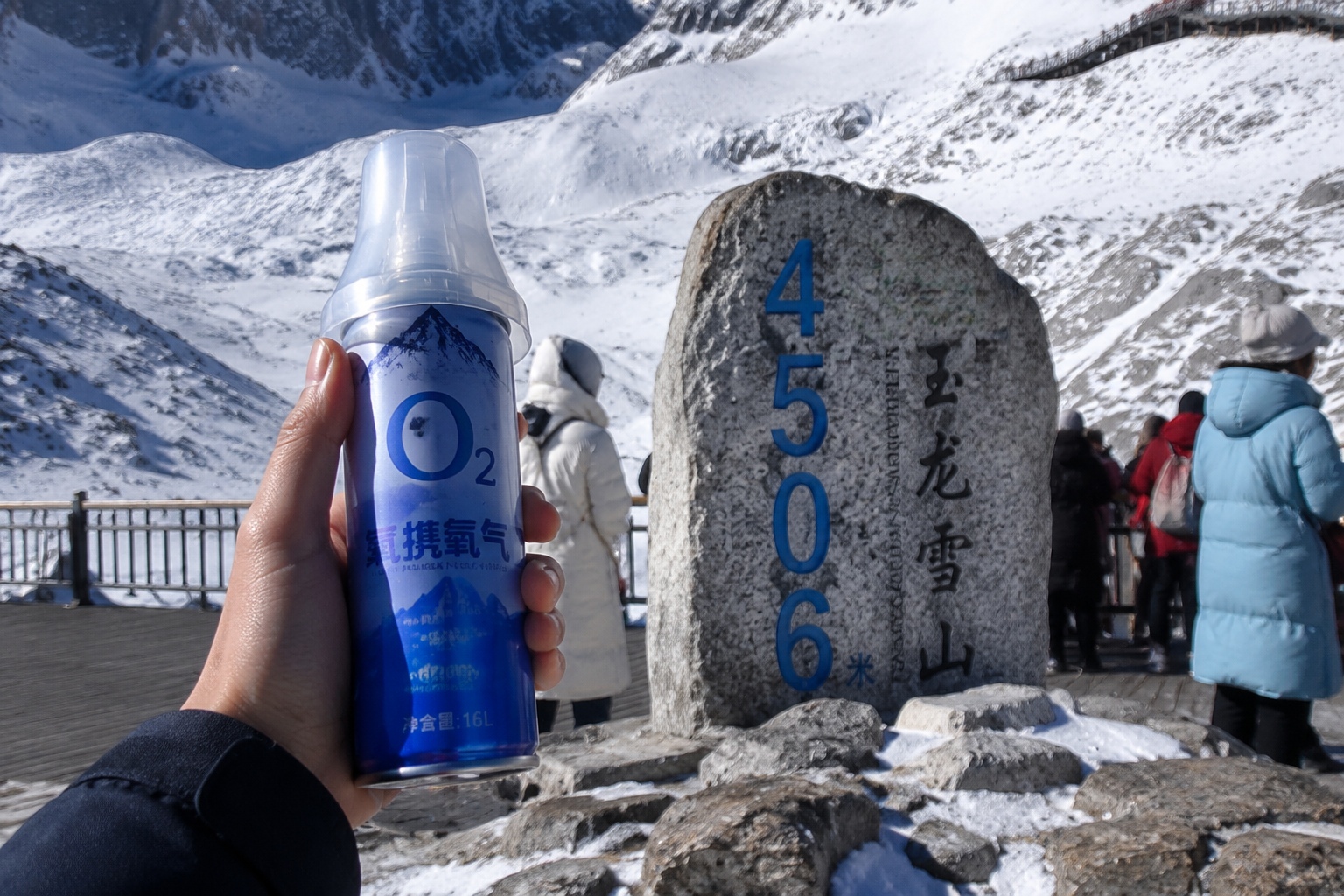
At 4,506 meters, the highest point most tourists reach, the barometric pressure is only about 60% of sea level. This means that every breath carries roughly 40% less oxygen into your blood. The physiological response is immediate: a faster heartbeat, a slight headache, or a giddy feeling when you stand up quickly. These mild symptoms are so common that local mountain guides now call it the “4,500-meter effect.” For most fit people, it’s nothing more than an inconvenience. But if you rush up and then attempt a brisk walk along the boardwalk, it can quickly turn into a nauseating, dizzy mess.
Glacier Park, reached by the Big Cable Car, is the site of the 4,506-meter boardwalk. The cable car itself is the highest in Asia, running from the Ganhaizi plateau (around 3,300 meters) to the upper station in about 15 to 20 minutes. That’s a rapid ascent, and your body doesn’t have time to adapt. Medical tents at the top treat dozens of people every day for altitude headaches. Most are fine after a short rest and a slow descent.
The general rule for high altitude is to climb high, sleep low, and the day-trip version of that is to take the cable car up, spend no more than 40 minutes at the top, and then descend to the meadows at 3,200–3,500 meters for the rest of the day. This is also what the timed ticket system encourages. So the best advice is simple: respect the mountain’s height, move slowly, and don’t skip your water bottle.
A Realistic One-Day Itinerary on the Mountain
The scenic area is designed for controlled visits: you buy a combination ticket that includes a shuttle bus service and the cable cars. Foreign visitors must bring their passport, as it’s required for online booking. The entire area has clear English signs, which makes it quite user-friendly. The daily visitor cap means that advance booking is essential, especially in summer and during Chinese holidays.
Morning: Ride the Big Cable Car to the Glacier
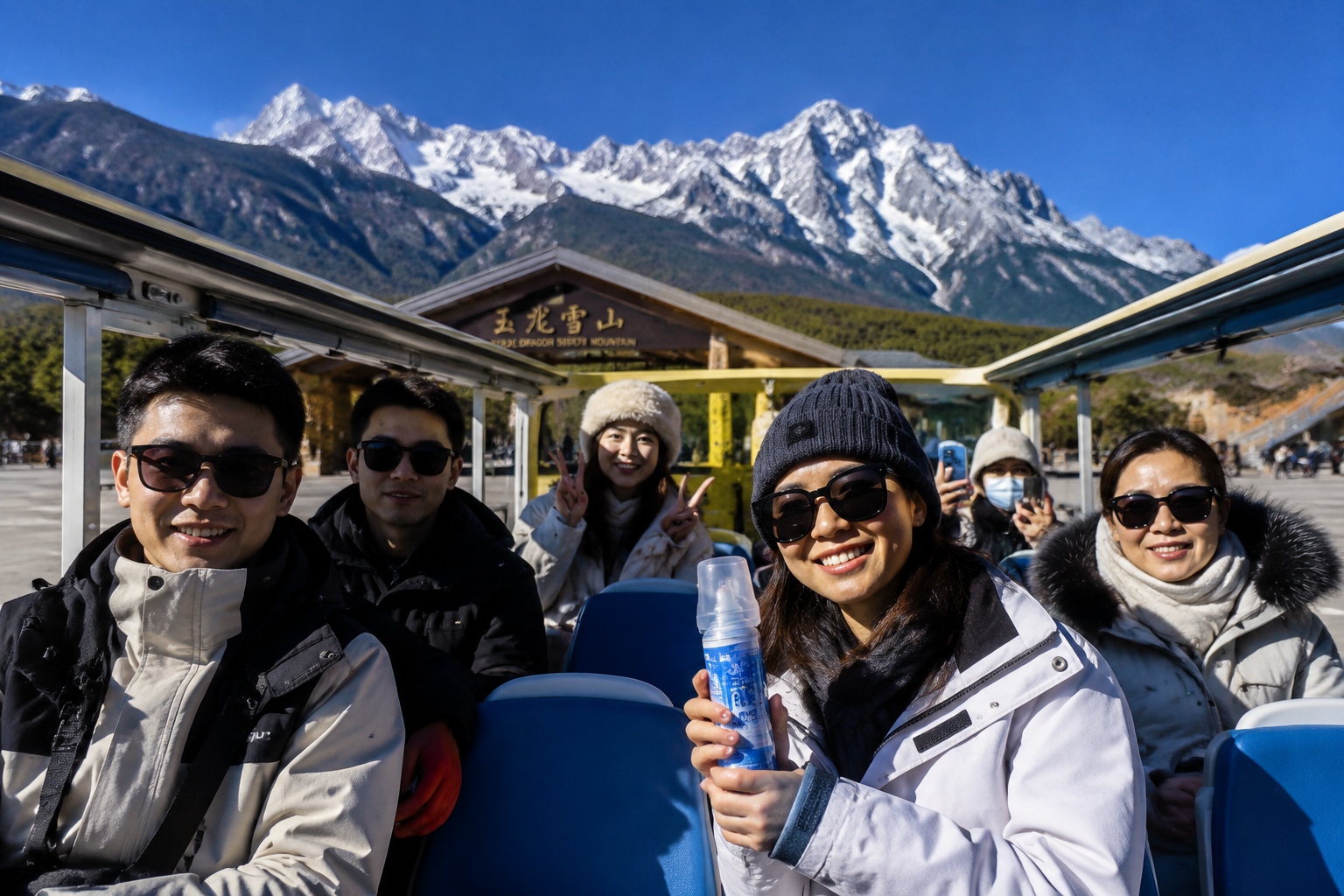
Start early, ideally before 8 a.m., to beat the queues. From Lijiang, it’s a 40-minute taxi or shuttle ride to the entrance. Once inside, take the shuttle bus to the Ganhaizi cable-car station. The shuttle winds through the forest for about 15 minutes, offering occasional glimpses of the mountain. At the station, follow the crowd to the gondolas. The ride is smooth and gives you a dramatic view of rocky slopes and snow patches. When the doors open at 4,506 meters, you’ll feel the cold air immediately. The boardwalk is about 1.5 kilometers (one way) and climbs about 100 meters, but at this altitude, it can feel twice as long. Take it step by step, pause at the viewing platforms, and focus on steady breathing. Some visitors are tempted to run to the farthest viewpoint for a photo; don’t. You’ll have better luck (and better photos) if you stay relaxed.
Midday: Descend Gently to Spruce Meadow
After returning from the glacier, take the shuttle to Spruce Meadow, around 3,240 meters. This is a flat, easy boardwalk through a pine forest with large open areas and grazing yaks. The contrast with the snow is lovely, and it’s a perfect place for a picnic lunch. There is a tourist restaurant near the entrance to the meadow serving simple Chinese staples like noodles, rice bowls, and hot soup. Prices are reasonable (about 30–50 yuan per dish), and the warmth inside is welcome.
Afternoon: Blue Moon Valley
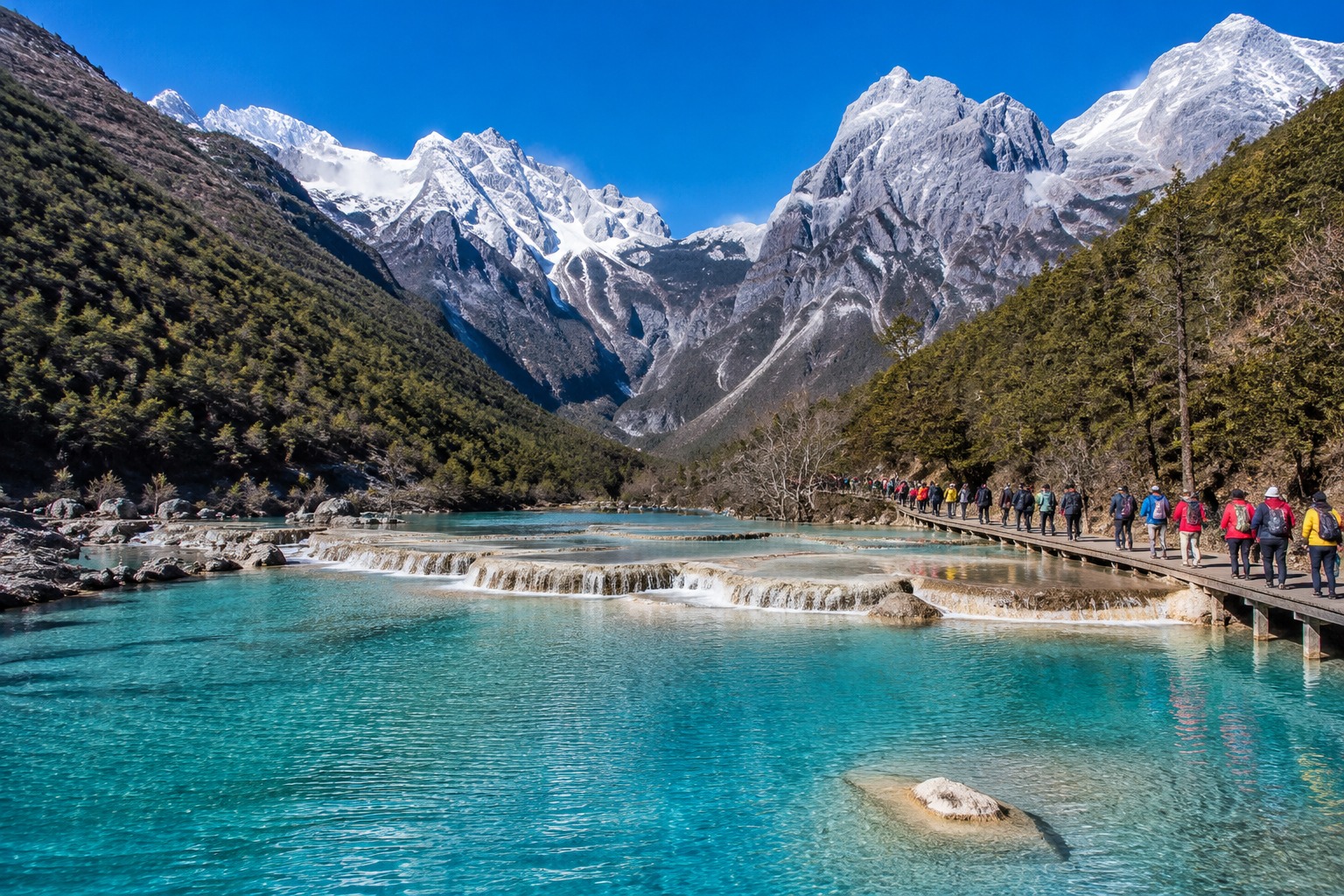
The final stop is Blue Moon Valley, a series of limestone pools filled with turquoise glacial meltwater. The color comes from suspended minerals and is so striking that it looks digitally edited. The walkway is flat, and you can cover the length in about 30 minutes. This area is less about altitude and more about wind and sun, so it’s a gentler finale. From here, the shuttle returns to the entrance, and you’ll likely be back in central Lijiang by early evening, with time to rest and reflect on a day that feels far longer than twelve hours.
Do You Really Need Oxygen? Local Advice
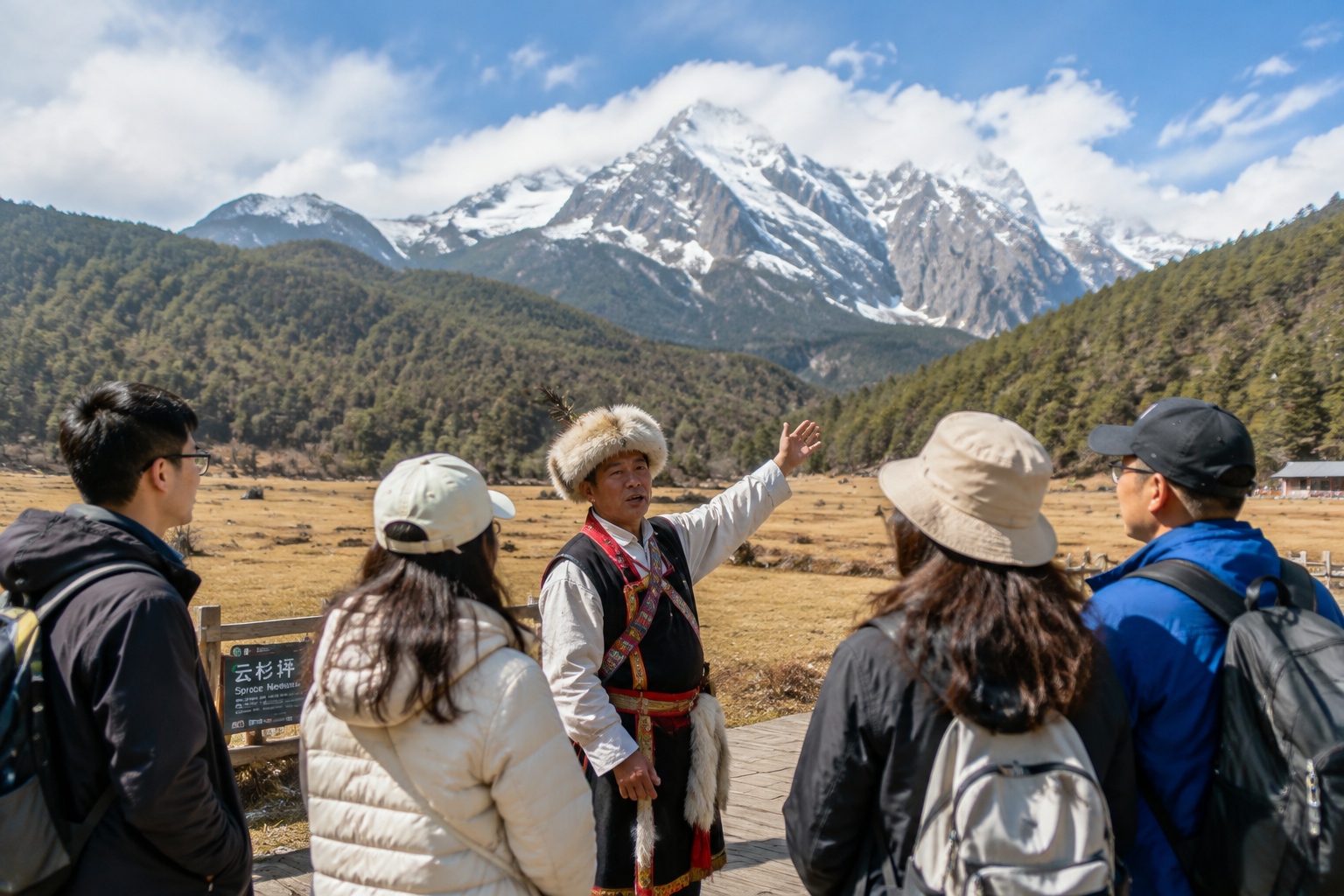
Walk through Lijiang’s streets and you’ll see pharmacy windows stacked with small, spray-can oxygen containers, often plus a few energy drinks. It’s easy to assume you need to buy one. But locals and mountain staff are more measured. “The best way to do it is to rent a warm jacket and invest in a can of oxygen if you are over 50 or have a heart condition,” says Yang, a Naxi guide who has been taking visitors to the mountain for over a decade. “For everyone else, spending your money on a good breakfast and carrying water is more useful.”
Still, oxygen cans are cheap (40–50 yuan, about 6–7 USD) and available at the boarding stations. If you’re unsure, buying one is a low-cost way to reduce anxiety, which itself can worsen symptoms. But using it correctly matters: spray twice into your mouth, then breathe deeply. Many visitors feel the effect instantly. At higher altitudes, taking small sips of glucose water or eating carbohydrate snacks provides extra fuel for your body.
Yak hoof prints on softened grasslands are a sign of seasonal herders, and the local Naxi people practice a tradition of respectful mountain worship. They ask visitors not to shout, not to stray from the boardwalks, and to carry out all trash. The glaciers in the area have lost ground in recent decades, and locals are the first to notice. The more you learn about this subtle interplay, the more you realize that solitude is still possible on busy days, if you wait at the right spot.
Practical Checklist for a Comfortable Day
- Layers: Temperatures at 4,506 meters can hover around 5°C (41°F) even in mid-summer. Lijiang’s old town might feel warm, but the wind on the mountain cuts right through a light jacket.
- Sunscreen and sunglasses: There is no shade on the boardwalk, and the UV reflecting off snow can give you a serious sunburn—on your eyelids, even.
- Water and snacks: Dehydration worsens altitude symptoms. Carry at least 1 liter of water and some carbs like energy bars or fruit.
- Oxygen (optional): A small can at 40 yuan is a security blanket. Not required for everyone, but you’ll be happy you have it if your head starts to pound.
- Quiet mindset: This is a sacred place for the Naxi, and the local guides ask you to treat it that way.
Final Thought: The Reward for Prepared Travelers
Jade Dragon Snow Mountain is often treated as a tourist checkbox, but with one day in hand, it can become the kind of experience that stays with you. The thin air, the snow, the turquoise water, and the local culture add layers that aren’t in the brochure. A bit of planning turns a potentially uncomfortable day into a breathtaking one. And, as the Naxi say, the mountain grants its best views to those who wait—and who take their time on the way down.
Start the discussion at forum.chinacomes.com