

Inside a Chinese Pharmacy
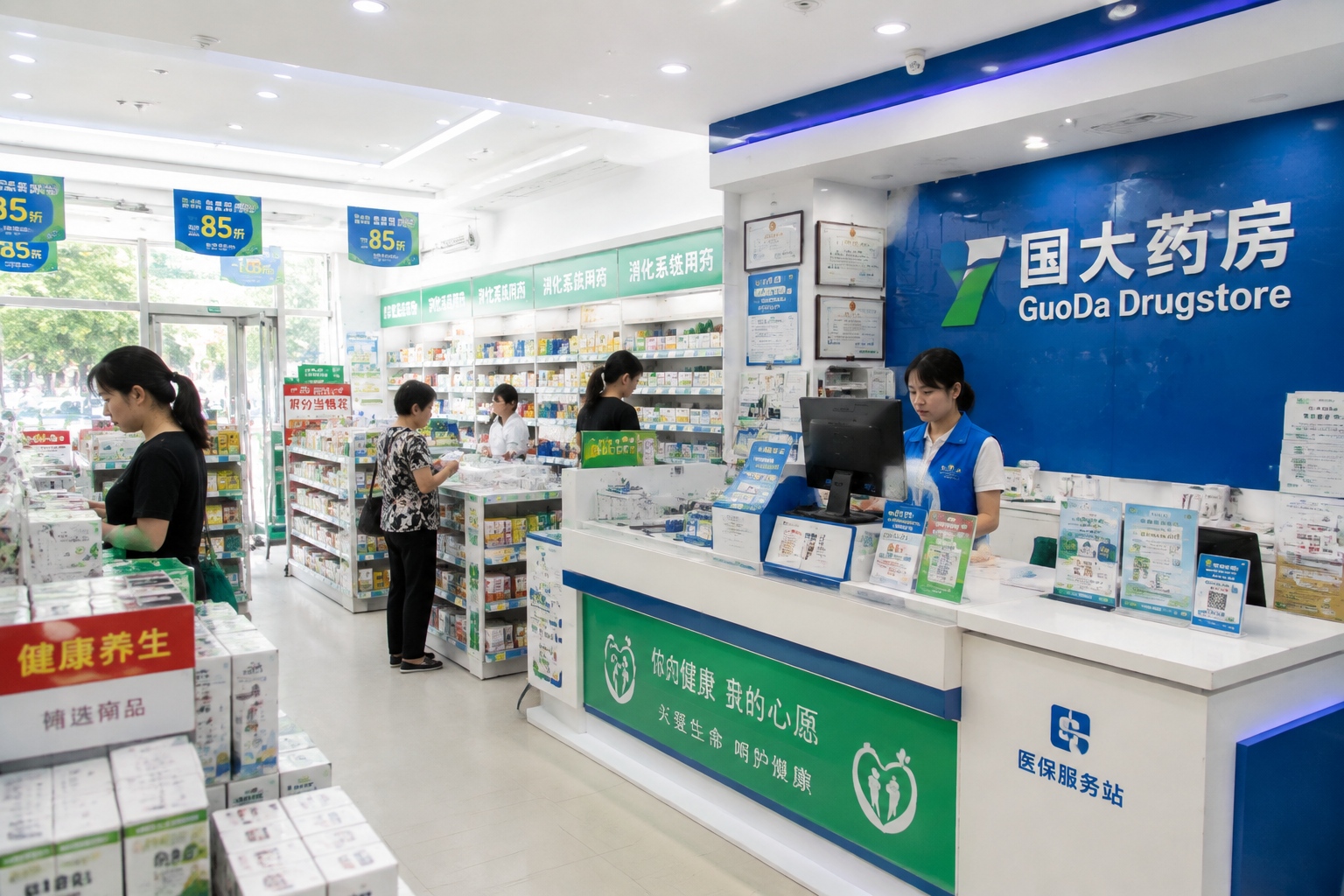
Step into a Chinese pharmacy and the first thing you’ll notice is that it doesn’t look like a typical Western drugstore. It feels more like a mini supermarket with medicine aisles. Some shelves are open, some are locked behind glass counters. A bright green and blue sign with a red cross or a mortar-and-pestle icon hangs above the entrance. Chain stores like 老百姓大药房 (Lao Bai Xing) or 国大药房 (Guoda) are everywhere, from city centers to quiet residential neighborhoods.
Here’s the deal: you don’t need a prescription to buy most everyday medicines in China. Non-prescription drugs, labeled OTC (over the counter), sit on open shelves. You can pick them up and pay at the register like a pack of gum. Prescription-only drugs are behind the counter, and you’ll need a doctor’s prescription from a hospital or clinic to buy them. But for a cold, a headache, a stomach upset, or an allergy, you can usually just walk in and grab something.
How the Store is Organized
Most pharmacies are arranged by treatment category. One aisle focuses on respiratory problems – coughs, sore throats, runny noses. Another is for digestive issues like nausea or diarrhea. There’s usually a section for external use: bandages, antiseptics, muscle rubs, and even anti-itch creams. Traditional Chinese medicine (TCM) often has its own wall, filled with bottles and boxes labeled with herbs like 金银花 (honeysuckle) or 甘草 (licorice).
Labels are in Chinese, but many international brand names appear in English or Latin on the packaging. You might recognize ‘ibuprofen’ or ‘acetaminophen’ amid the characters. Some boxes also carry an official ‘国药准字’ (national drug approval) number, which you can search online to verify.
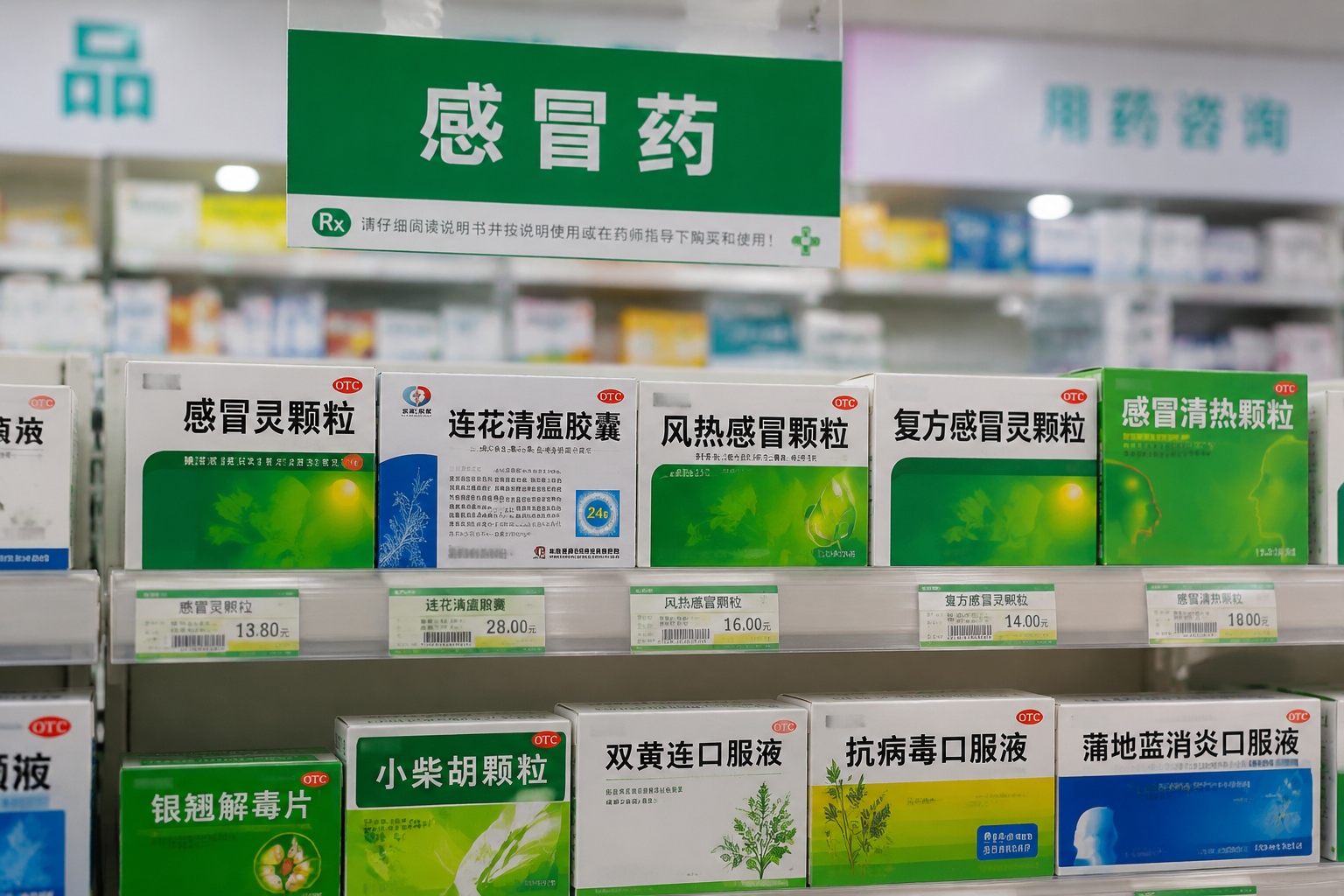
Most importantly, look for the red ‘OTC’ logo. It’s an oval badge with the letters OTC. It means the drug is considered safe for self-medication. Some are ‘Class A OTC’ (red badge) and ‘Class B OTC’ (green badge). Green is generally even safer to self-select, but both are freely available.
The Pharmacist: Your Practical Ally
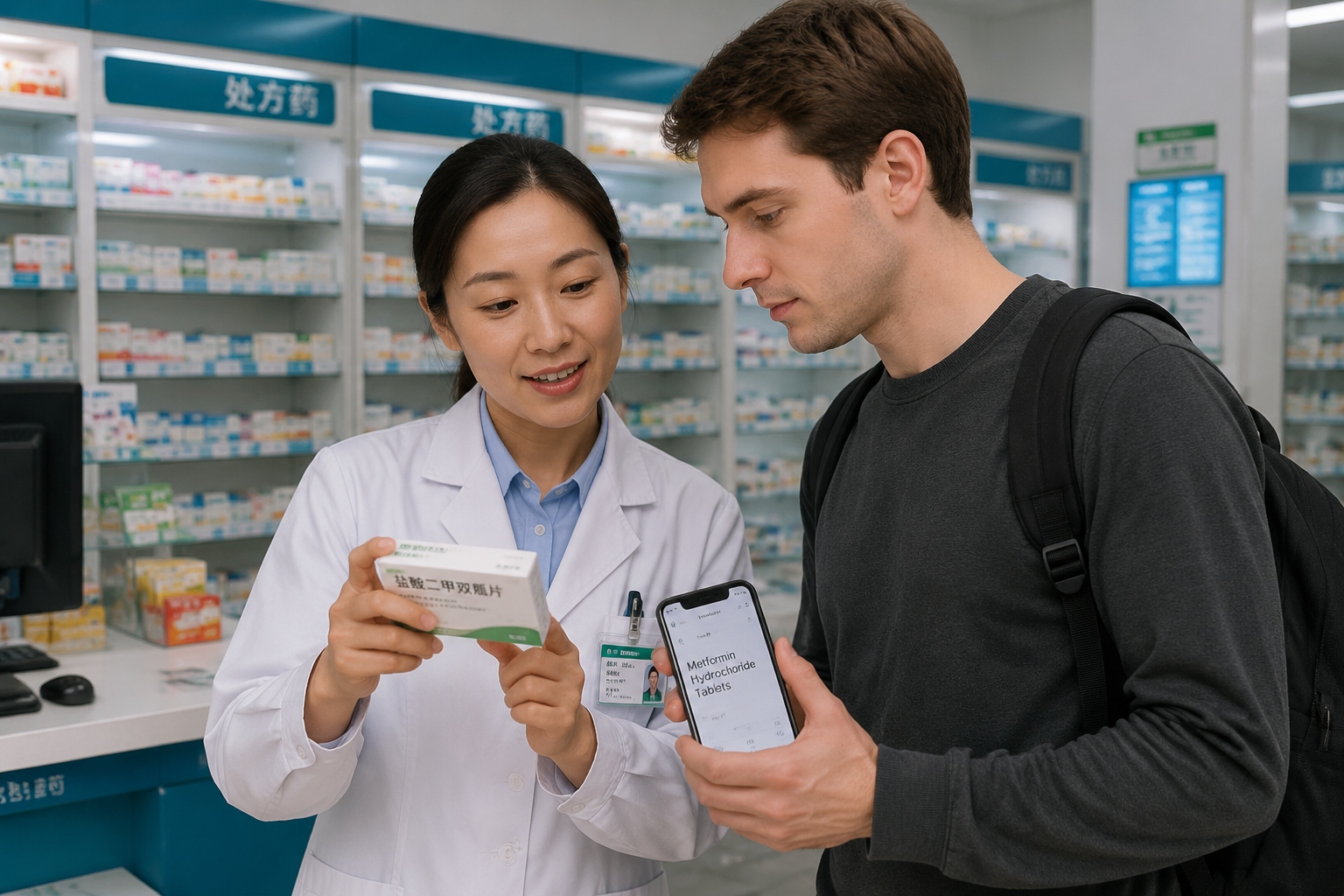
In every pharmacy, there is a licensed pharmacist (执业药师) on duty. Their role goes beyond stocking shelves. They are there to advise you. But don’t expect the long, sit-down consultation you might have in a Western pharmacy. This is a quick, practical conversation across the counter. You can start with a simple sentence like ‘我感冒了’ (I have a cold) or ‘我拉肚子了’ (I have diarrhea). They’ll ask a few follow-up questions: Do you have a fever? Any cough? Are you allergic to any medicine? Then they’ll guide you to a specific product or hand you a box.
Not all pharmacists speak fluent English. In big cities like Beijing, Shanghai, or Guangzhou, many staff have basic English, but in smaller towns you’ll need to be more resourceful. My suggestion: save a few key phrases on your phone in Chinese, or download a translation app before you go. Write down your symptoms, show the screen, and let the pharmacist read it. Often, they’ll appreciate the effort and take extra care to help.
One important note: some chain pharmacies pay their staff commissions for promoting certain brands. So a pharmacist might recommend a pricier, untested brand instead of the standard, effective medicine you know. If you know the active ingredient, use it. For example, say ‘我想要布洛芬’ (I want ibuprofen) or ‘有对乙酰氨基酚吗?’ (Do you have acetaminophen?). That way you get exactly what you came for, at a reasonable price.
Common OTC Medicines at a Glance
Here is a practical cheat sheet for frequently used OTC medicines in Chinese pharmacies. Prices are approximate and may vary by city and brand.
| Category | Common Chinese Name | English Equivalent | Approx. Price (RMB) |
|---|---|---|---|
| Cold & Flu | 泰诺 (Tylenol) | Paracetamol / Acetaminophen | 15–30 |
| Cold & Flu | 芬必得 (Fenbid) | Ibuprofen | 15–30 |
| Sore Throat | 金嗓子喉宝 | Throat lozenges | 10–20 |
| Diarrhea | 蒙脱石散 | Smectite / Diosmectite | 20–30 |
| Allergy | 开瑞坦 (Claritin) | Loratadine | 20–40 |
| Allergy | 仙特明 (Zyrtec) | Cetirizine | 20–30 |
| Digestive | 健胃消食片 | Digestive tablets | 10–25 |
| Antiseptic | 碘伏 | Povidone-iodine solution | 5–15 |
| Muscle Pain | 云南白药膏 | Traditional Chinese medicine patch | 15–25 |
One tip: always check the expiration date printed on the box. Most pharmacies have quick inventory turnover, but it only takes a second. Also, notice whether the package says ‘处方药’ (prescription drug). If it does, you’ll need to go to a clinic – no pharmacist will sell it to you without a prescription.
When the Pharmacy Isn’t Enough
A pharmacy is perfect for minor, self-limiting conditions. But there are clear times when you should put down the medicine box and go to a community health center (社区卫生服务中心). Here are some red flags:
- Fever above 38.5°C (101°F) that doesn’t break after 24–48 hours
- Difficulty breathing, chest pain, or severe wheezing
- Persistent vomiting or diarrhea that leads to signs of dehydration
- Severe allergic reactions that cause swelling, dizziness, or a rash spreading quickly
- You’re not sure what’s wrong, and the pharmacist can’t help you identify it
Pharmacies can’t run diagnostic tests, take your temperature accurately, or examine your chest. They are not equipped for emergencies. They also cannot issue prescription drugs. If you need an antibiotic – for example, amoxicillin – most pharmacists will flat-out refuse to sell it without a prescription. This is a strict rule designed to prevent antibiotic misuse, and it’s a good one. Instead, they’ll direct you to the nearest clinic.
Cost is another reason to skip the pharmacy. A community health center consultation typically costs 10–30 RMB (without insurance), and if you have local medical insurance (we’ll cover that in a future guide), many visits are partially reimbursed. Pharmacies generally fall outside that insurance network for routine OTC purchases. So, for anything more than a common cold, think ‘clinic’ rather than ‘clever pharmacy run.’
Connecting the Dots: From Pharmacy to Medical Care
In China, the healthcare system is structured as a pyramid. The broad base is made up of thousands of community health centers and small clinics. Above that are district hospitals, and at the top are large general hospitals. This is why you’ll often see Chinese people use a pharmacy first for a sniffle, but go straight to a hospital if symptoms escalate.
If your condition requires a doctor, visit the community health center. These centers are usually within walking distance of residential areas, open during business hours, and staffed by general practitioners. If the doctor believes your case is beyond their capacity, they’ll write a referral to a higher-level hospital. That referral helps you skip some of the registration lines and ensures you see the right specialty.
Going directly to a large hospital is possible, but be prepared for long queues, higher registration fees, and a more complex process. So for a minor illness, the chain is: pharmacy → community health center → hospital. Start at the right level.
A few final practical tips:
- Keep a list of your regular medications (in both English and Chinese) saved on your phone.
- Know the address of the nearest community health center to your home or hotel.
- If you’re traveling, carry a basic first-aid kit with your trusted OTC drugs. Common Chinese equivalents may differ in brand name or even active ingredient.
- Use translation apps and be patient – pharmacists in China are generally helpful, and a little kindness goes a long way.
A Chinese pharmacy isn’t just a shop; it’s a primary care partner. With this guide in hand, you’re no longer a lost tourist staring at rows of boxes – you know exactly how to ask, what to look for, and when to move on to the next level.
Start the discussion at forum.chinacomes.com