


Have You Eaten? No, It’s Not an Invitation
The first time a Chinese colleague asked me, “Chi le ma?” — literally “Have you eaten?” — I was caught off guard. Was she about to treat me to lunch? Did I look hungry? As a foreigner new to China, I spent the first few weeks thinking every “chi le ma” was a dinner invitation. I soon learned that it’s just a friendly hello, a verbal nod that says “I see you, you matter to me.” In Chinese culture, food is such a central part of life that asking about meals is a natural way to connect. It’s like asking, “How are you?” — except with more carbs.

“Chi Le Ma?” – It’s Not About Food
“Chi le ma?” is the Swiss Army knife of Chinese greetings. It’s used any time of day, but especially around mealtimes. If you’re walking into the office at 8 a.m., someone might ask if you’ve eaten breakfast. At 11:30, it’s a light way to signal lunchtime. The answer is almost always a polite “Chi le” (I ate) — even if you haven’t, because saying “I didn’t” might invite the next question: “Then let’s go together!” And that’s not necessarily a bad thing, but it’s not the default. The phrase is a social lubricant, not a dinner booking.
This confuses many foreigners. In English, “Have you eaten?” sounds like an actual question about your stomach’s status. In Chinese, it’s a verbal handshake. So when you hear it, just smile and say “Chi le, ni ne?” (I ate, how about you?) — even if you’re queuing for a mystery-meat sandwich at the corner shop.
“Gai Tian Qing Ni Chi Fan” – The Phantom Invitation
Another famous Chinese phrase is “Gai tian qing ni chi fan,” which translates to “I’ll treat you to a meal another day.” In the West, we have the equally vague “Let’s grab coffee sometime” — and we all know that coffee rarely materializes. But in China, this phrase is a special art form. It expresses warmth, generosity, and a desire to stay on good terms, without committing to an actual date. The trick is in the timing. If someone says “gai tian” (another day) without specifying when, it’s usually a polite sign-off. If they say “xia ge yue” (next month) or “zhou er” (Tuesday), now you’re getting closer to a real invitation.
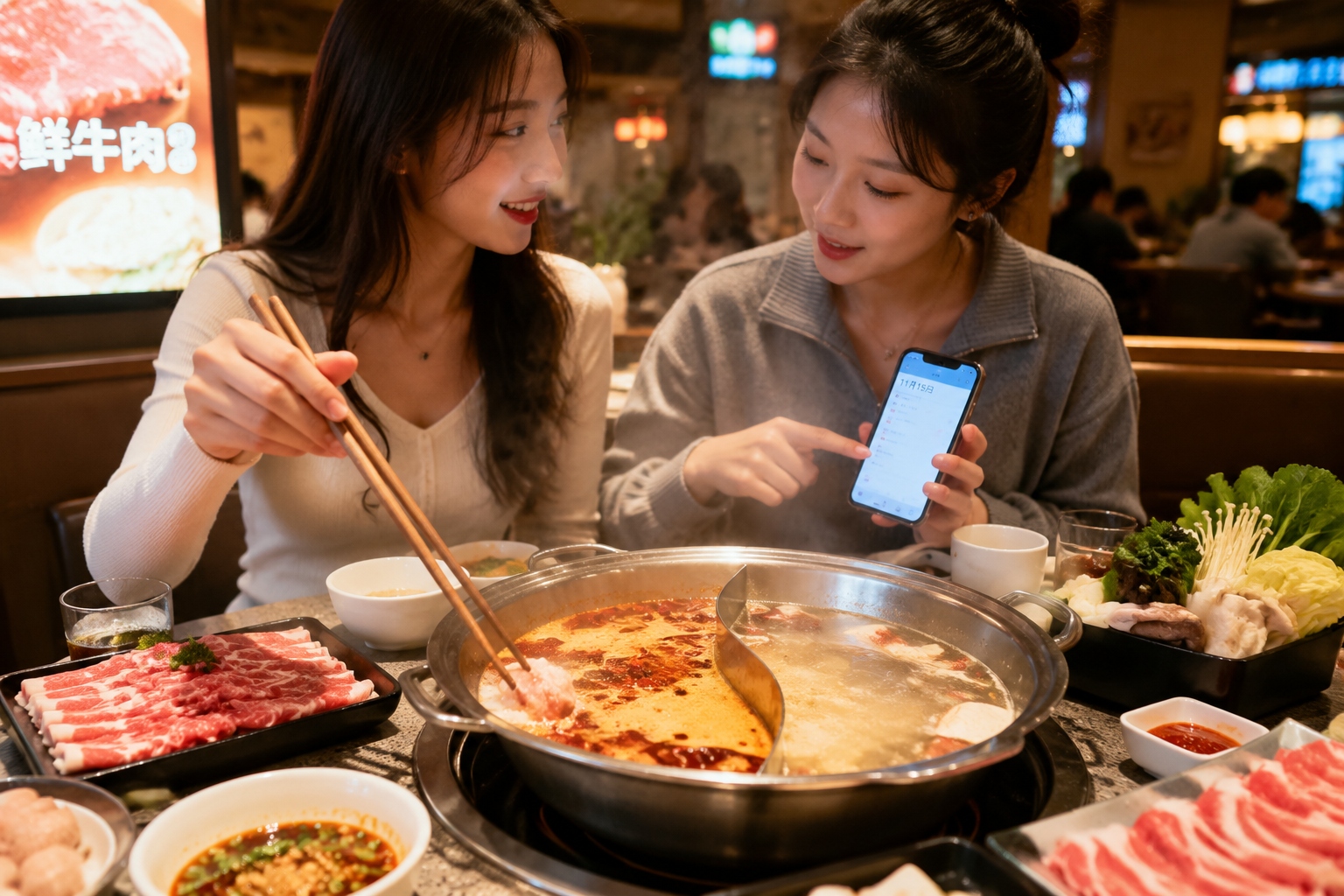
So how do you know if a “gai tian” is real? Look for the details. A genuine invitation often includes a specific restaurant name, a dish they want you to try, or at least a rough date. A phantom invitation is deliberately vague: “Za men gai tian yi qi chi ming tian fan” (let’s eat the restaurant tomorrow) — but tomorrow never comes. The best response? Smile and say, “Hao a, na jiu shuo ding le” (Great, then it’s settled). If the person backtracks, you know it was pure courtesy. If they actually follow through, you’ve just unlocked a real friendship.
“Next Time for Sure” – The Art of Saving Face
Then there’s “xia ci yi ding” (next time for sure). This is the Chinese equivalent of “maybe” or “let’s see,” but it’s wrapped in a warm, sincere tone. It’s used when someone can’t or doesn’t want to commit to something right now, but doesn’t want to hurt your feelings. For example, you invite a colleague to a weekend hiking trip. They smile and say, “Xia ci yi ding!” You know they won’t come, but you also know they appreciate being included. Chinese culture values harmony and face (mianzi), so direct refusal is often softened with a vague promise.
This can be frustrating for foreigners who take “sure” at face value. When I first moved to China, I kept inviting my neighbors to a barbecue. Everyone said “xia ci yi ding,” and I kept waiting. Eventually, I realized they were politely declining. The key is to read the context: if someone is genuinely interested, they’ll suggest a specific time or ask for your phone number. If they don’t, the next time has already passed.
The Sincerity Spectrum: From Polite to Real
All Chinese polite phrases sit on a spectrum of sincerity. At one end, there’s the “chi le ma” greeting — pure social glue. In the middle, there’s “gai tian qing ni chi fan” — a friendly wish that carries no binding promise. Toward the real end, you get phrases like “wo jiao ge pengyou dai ni qu” (I’ll have a friend take you) — still vague, but with action hints. When someone actually says, “Zhe ge xingqi liu, wo qing ni chi huoguo” (This Saturday, I’m treating you to hotpot), you’ve hit the gold standard of Chinese social commitment: a specific date, a place, and an intention.
To navigate this, ask yourself: Does the person propose a concrete time? Do they offer a specific place? Do they follow up with a message or call? If yes, treat it as real. If no, enjoy the politeness for what it is—a genuine expression of goodwill, even if it never materializes.
How to Respond Without Losing Face
So what should you do when you’re on the receiving end of Chinese politeness? First, don’t overthink it. The golden rule is to respond with equal warmth and a bit of vagueness. For “chi le ma?”, just say “chi le” and smile. For “gai tian qing ni chi fan,” reply “Hao a, na jiu shuo hao le” (Great, it’s a deal) — but don’t hold your breath. If you actually want to test the sincerity, you can gently push: “Hao a, xia ge xingqi liu hai shi ri?” (Great, Saturday or Sunday?) A real friend will gladly match you with a date. A merely polite acquaintance might suddenly remember a busy schedule.

Another strategy is to return the favor with your own polite phrase. Say, “Na yinggai wo qing ni cai dui” (Then I should treat you first). This flips the script and shows you’re not a polite consumer but a participant in the game. The result is a warm, easy-going exchange where everyone feels good—without any actual restaurant bills being paid.
The Universal Language of Politeness
If this all sounds strangely familiar, it’s because similar coded phrases exist everywhere. In the US, “Let’s get together soon” often means “I like you, but please don’t hold me to it.” In the UK, “We must do lunch” is famously empty. In Japan, “ato de remasu” (I’ll send it later) can mean “never.” So China isn’t unique in this; it just expresses its politeness with a different flavor. The beauty is that once you learn the code, you can participate in a system that keeps social harmony humming. And you’ll start to notice that behind every “gai tian” is a genuine wish that you’ll someday share a meal, even if “someday” stays as flexible as a noodle in a hotpot.
Next time someone asks if you’ve eaten, take it for what it is: a warm greeting, a tiny moment of connection. And if you get a “gai tian qing ni chi fan,” just smile and reply, “Hao a, wo deng zhe.” Because in China, the best way to deal with a maybe is to let it be a maybe — and appreciate the thought behind it.
Start the discussion at forum.chinacomes.com