
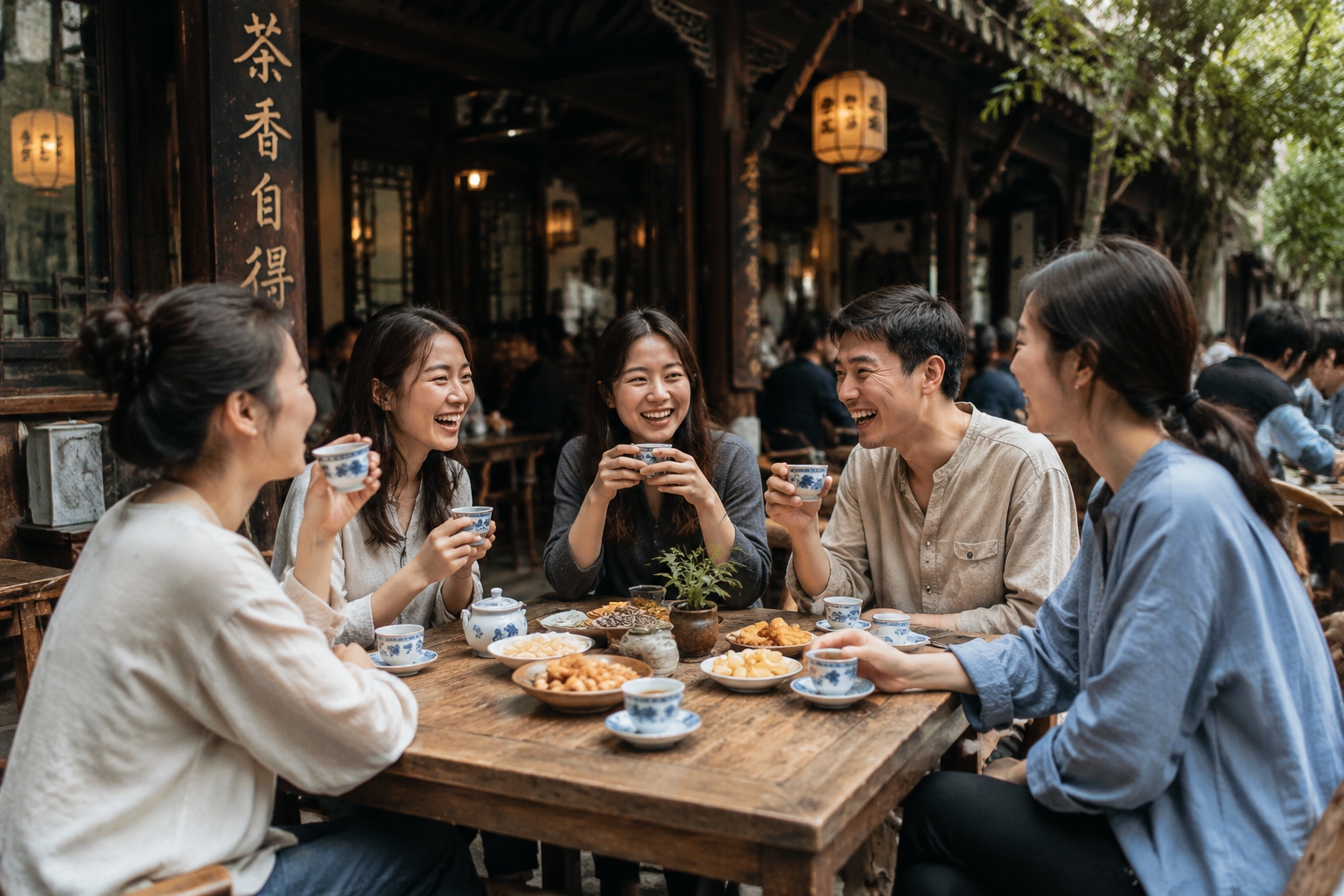

Imagine you’ve just moved to China for work. A new colleague invites you to dinner. When the bill arrives, he insists on paying, saying "Next time, your treat." You feel awkward, but this small moment is your first lesson in two concepts that shape every Chinese relationship: face (mianzi) and relationships (guanxi). Unlike Western friendships, which often celebrate independence and directness, Chinese friendships are built on a delicate web of mutual respect, reciprocity, and social awareness. Understanding these unspoken rules can make the difference between a superficial connection and a lifelong bond.

What Does "Face" Really Mean?
Face, or mianzi, is not about physical appearance. It’s the social image you present to the world—your dignity, reputation, and the respect others show you. In individualistic cultures, self-esteem comes from within; in China, it’s heavily influenced by how others perceive you. When you give someone face, you acknowledge their status and worth. When you make someone lose face, you damage the relationship, sometimes irreparably. For example, openly criticizing a friend’s mistake at a dinner party can be seen as an attack on their character, not just their action.
This isn’t about being superficial. It’s about recognizing that social harmony matters more than being right. In a country where community still plays a central role, maintaining everyone’s dignity keeps relationships stable. One foreign friend of mine learned this the hard way. At a business meeting, he bluntly told a Chinese partner that his proposal had flaws. The partner smiled and nodded, but the deal fell through a week later. When my friend asked what happened, a mutual contact explained: his comments had made the partner lose face, and trust was broken. In China, you can disagree—just do it respectfully and privately.
The Golden Rule: Never Embarrass Someone in Public
If you remember only one rule, remember this: never embarrass a Chinese friend in front of others. Whether it’s your boss, a friend, or a family member, public shame is the fastest way to burn bridges. If you have a concern or complaint, bring it up privately, ideally in a calm and indirect way. For instance, instead of saying "You’re wrong," you might say "I could be wrong, but have you considered this?" In public, always give your friend a way out—a step down from the podium, so to speak.
This doesn’t mean being dishonest; it means being strategic about timing and context. In my own experience, I once corrected my Chinese colleague during a meeting, and though the information was helpful, he seemed upset for days. Later, another friend explained that I had made him lose face. I learned to save such feedback for a one-on-one chat over tea. Since then, our relationship improved, and he even thanked me for caring enough to help him privately. The lesson? Private criticism is seen as care; public criticism is seen as an attack.
Borrowing Things and Returning Favors
In China, borrowing isn’t just a transaction; it’s an opportunity to build trust. When a friend loans you something—a book, a tool, even money—it’s crucial to return it promptly. What sets Chinese etiquette apart is the manner of return. It’s customary to return with a small token of appreciation: a piece of fruit, a cup of milk tea, or a bag of snacks. This isn’t about payment; it’s about showing that you value the friendship more than the item. For example, if you borrow a book, return it with a coffee the next day. The gesture says, "I’m grateful, and I care about our relationship." Ignoring this can make you seem ungrateful or selfish.
This habit is widespread. A Chinese friend once borrowed my power bank and returned it the next day with a juice box. I laughed, thinking it was unnecessary, but she explained: "This is how we show we appreciate the favor." Over time, I adopted the habit, and I’ve noticed that it makes others smile—and it deepens the bond. It’s not about the cost; it’s about the mental note of gratitude.

Gift-Giving and Reciprocity (Li Shang Wang Lai)
This brings us to a cornerstone of Chinese friendship: reciprocity. The phrase 礼尚往来 (lǐ shàng wǎng lái) captures it perfectly—"rites go and come." When you visit someone’s home, bring a small gift: fruits, sweets, or tea. During festivals, like Chinese New Year, gifts are expected, though they don’t need to be expensive. The key is thoughtfulness. A friend who knows you love mangoes will remember that. What’s more, receiving a gift often carries an unspoken obligation to reciprocate—not necessarily with equal value, but with equal sincerity. If a friend gives you a birthday present, you’re expected to do the same, even if it’s homemade. This cycle of giving and returning is the glue of friendships.
In the West, gift-giving can feel transactional or even uncomfortable. In China, it’s simply a language of care. I remember my first Spring Festival in Shanghai. My neighbor, an elderly woman, left a bag of oranges at my door with a note: "Happy New Year." I was touched. A week later, I brought her a small box of pastries from my hometown. She beamed. No words were needed—we had exchanged trust. This doesn’t mean you should keep a mental ledger. It means you should always be ready to show gratitude in a tangible way, and to accept gratitude when it’s offered.
The Layers of Relationships: From Stranger to Lifelong Friend
Chinese social life is organized in concentric circles. On the outer edge are strangers (陌生人, mòshēngrén)—you treat them politely but distantly. Next are acquaintances (熟人, shúrén), like colleagues or neighbors. Friends (朋友, péngyǒu) are those you’ve bonded with through shared meals and favors. At the core are 挚友 (zhìyǒu), or lifelong confidants. Trust is built step by step. You can’t skip from acquaintance to confidant overnight. Invitations to meals, small favors, and attentive listening slowly move you inward.
A common question for newcomers is, "Why do Chinese friends share personal questions like salary or relationships?" In this context, it’s not nosiness—it’s a way of measuring how close you are. The more you share, the deeper the bond. When a Chinese friend starts sharing personal stories, they’re inviting you into their inner circle. Don’t shy away; respond with equal openness. That’s how trust grows.
Another aspect is the concept of "关系" (guānxi) —a network of connections that can help in work and life. But beware: building guanxi isn’t about using people. It’s about nurturing genuine relationships. When you help a friend, they’re likely to help you later, not because of obligation but because your bond is real. It’s like a bridge that takes time to construct.

Common Mistakes Westerners Make (and How to Fix Them)
Even with the best intentions, cultural mismatches happen. Here are three typical mistakes:
1. Being too direct
Westerners often value bluntness, but in China it can feel rude. Adjust by softening your language: "I see your point, but maybe…" or "What if we tried it another way?" Timing matters too. Give negative feedback in private, after praise. It’s not about being vague; it’s about being considerate of the other person’s position.
2. Being too polite
Ironically, over-politeness can create distance. Chinese friends value sincerity and warmth over formal courtesy. If you’re constantly saying "thank you" and "sorry," it can make things feel stiff. Instead, show appreciation through small actions—treating them to a meal or remembering their preferences. A simple "No problem, that’s what friends do" can be more powerful than ten "thank you’s."
3. Missing the subtext
Chinese communication is often indirect. Saying "That might be difficult" can mean "No." Saying "I’ll try" can mean "I doubt it." When a friend says something vague, ask gently for clarity, or wait for a signal. Over time, you’ll learn to read between the lines. For example, if a friend says "I’m busy this weekend" after you’ve asked them out, they might be giving you a polite refusal. Don’t push; just say "Maybe next time."
Conclusion
The takeaway? Approach Chinese friendships with patience and curiosity. The rules aren’t meant to be obstacles; they’re a way of showing care. When you understand face and guanxi, you’re not just making friends—you’re entering a social world where respect is the currency and trust is the prize. Yes, it takes effort, but the rewards are deep connections that last a lifetime. So next time someone insists on paying for your meal, smile and say 谢谢 (xiè xiè). And remember—it’s your turn next time.
Start the discussion at forum.chinacomes.com