
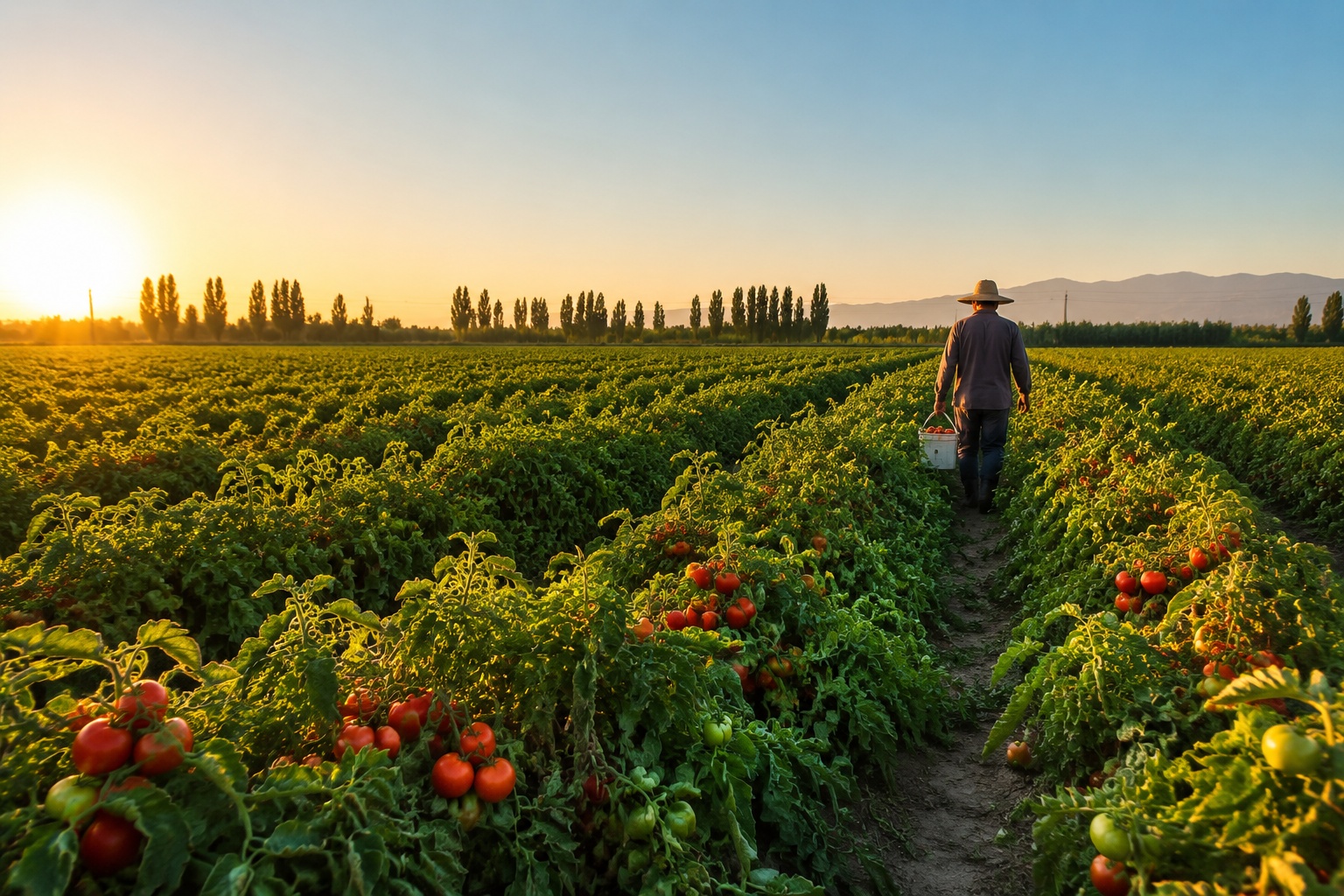

Morning in the Tomato Fields
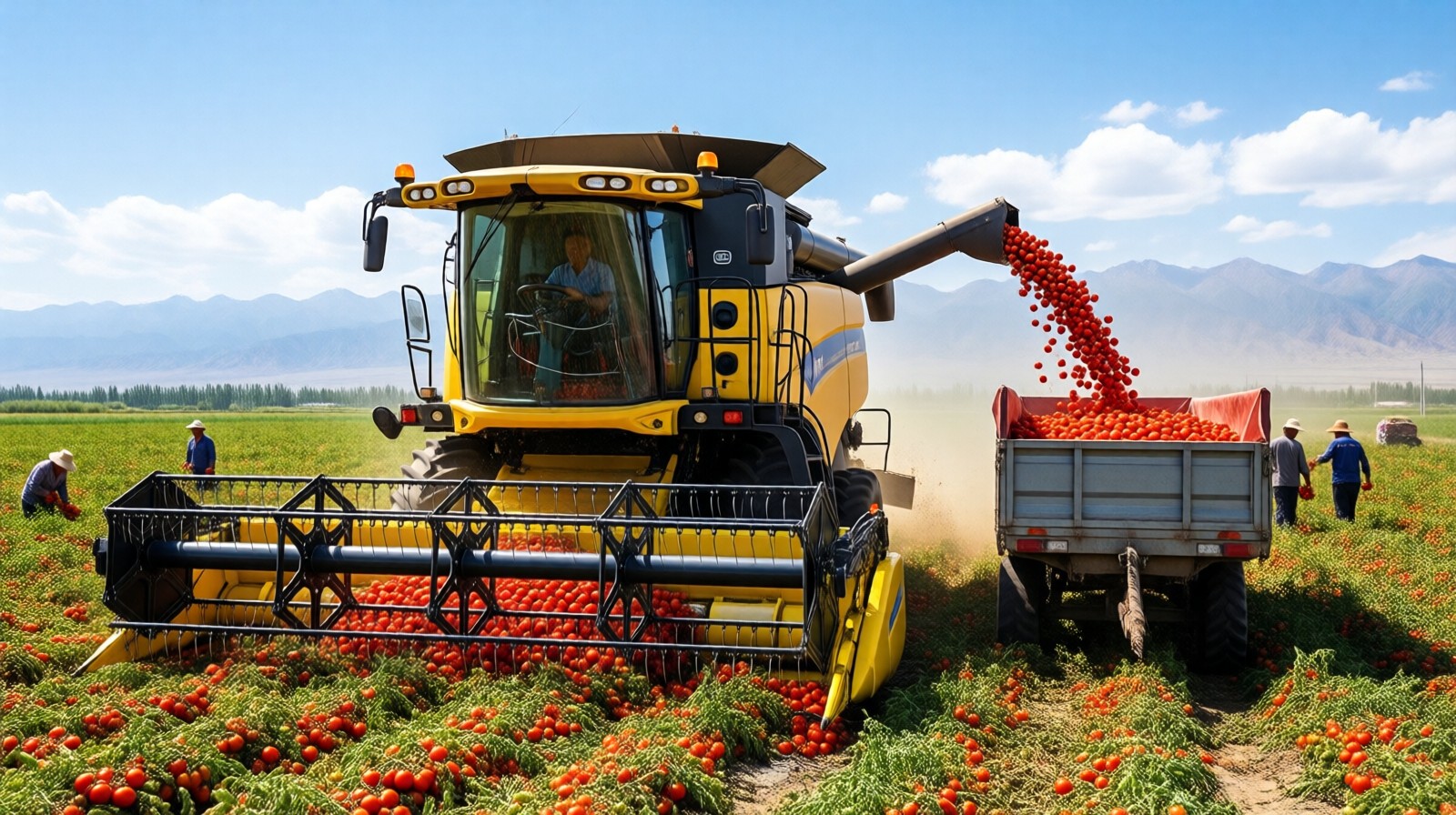
At 6 a.m., the sun has just risen over the plains of Changji Hui Autonomous Prefecture, Xinjiang. Li Hong, a 45-year-old farmer, is already in his plot of processing tomatoes. He quickly checks the plants, bends down to pick a ripe red fruit, and squeezes it gently. “This one has good brix,” he says, referring to the sugar content that determines the price. His 20 mu (about 1.3 hectares) of tomatoes will be harvested over the next two weeks by machines and seasonal workers.
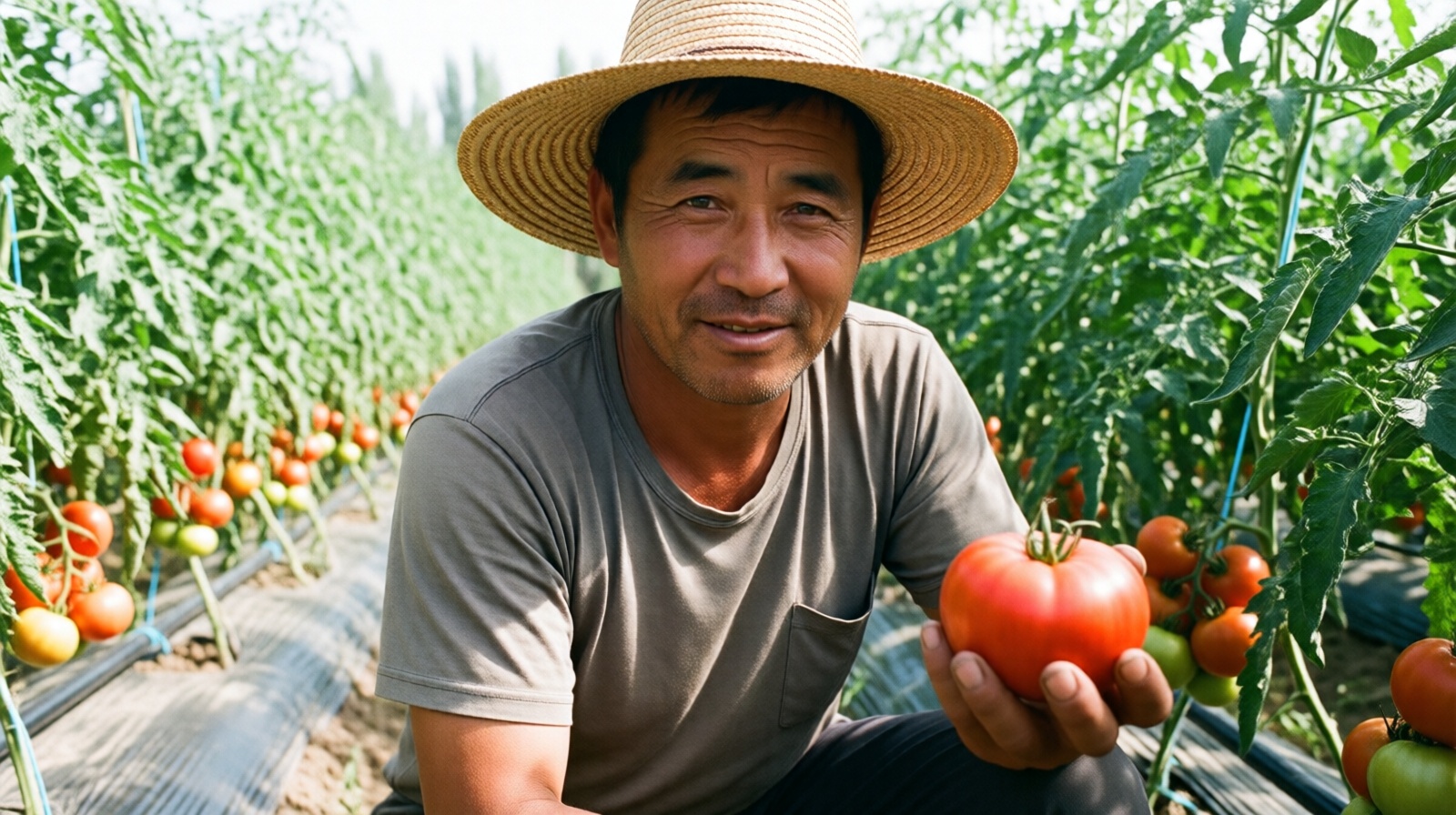
Why Xinjiang Tomatoes Matter
Most people know Xinjiang for cotton and raisins, but this vast northwestern region is also China’s tomato powerhouse. It produces about 90% of the nation’s processed tomatoes, and a significant share of the world’s tomato paste. The dry climate, abundant sunshine, and large temperature swings create ideal conditions – the tomatoes are dense, flavorful, and naturally high in lycopene.
But what does that mean for the people who actually grow them? Like farmers everywhere, their income depends on a simple equation: yield per mu, price per kilogram, and the costs of production. Let’s look at Li Hong’s ledger for the 2024 season.
Costs: Where the Money Goes
Li Hong grows processing tomatoes, not the fresh-market ones you find in supermarkets. These tomatoes are small, thick-skinned, and harvested for making paste, sauce, and other industrial products. He signed a contract with a local processing plant before planting, which gives him a guaranteed price and access to technical advice.
His expenses for one mu (667 square meters) of land break down like this:
- Seedlings and planting: 280 yuan (about $39) – includes seeds, raising seedlings in a nursery, and replanting.
- Drip irrigation and water: 220 yuan – Xinjiang is dry, so every drop counts. Li uses under-mulch drip irrigation, a system that saves water but requires films and pipes.
- Fertilizer: 460 yuan – a mix of base fertilizer and water-soluble fertilizer applied throughout the season.
- Pesticides and herbicides: 150 yuan – usually applied only when pests appear, thanks to integrated pest management.
- Machinery: 180 yuan – for tilling, transplanting, and harvesting. Harvesting machines are rented from cooperatives.
- Labor: 320 yuan – mainly for pruning, clearing weeds, and supervising irrigation. Many farmers hire helpers from nearby villages.
- Plastic mulch and other materials: 140 yuan – the film that covers the soil to retain moisture.
Total cost: about 1,750 yuan per mu. This does not include land rental, because Li Hong owns his land through China’s collective land system.
One thing that keeps costs down is government support for water-saving infrastructure. Li’s drip irrigation pipes were installed with a 60% subsidy from the local agricultural bureau. The water fee itself is only 0.1 yuan per cubic meter, much lower than the real cost, because the government covers the rest.
Revenue: What the Harvest Brings
This year, his tomato harvest averaged 7.2 tons per mu – a good yield, but not exceptional. The contract price at the processing plant was 0.42 yuan per kilogram. That gives him:
7,200 kg × 0.42 yuan = 3,024 yuan per mu
Subtract the costs: 3,024 – 1,750 = 1,274 yuan net profit per mu.
But this is not pure income. The net profit is what Li Hong makes after a full season of work. “Many people think Xinjiang farmers are rich because we grow so much. But the machines, water, and fertilizer are not free,” he says with a wry smile.
Upside and Downside
Li Hong’s profit of over 1,200 yuan per mu is better than some years. The price of processing tomatoes in China has been volatile. In 2020, it dropped to around 0.30 yuan per kilogram, leaving many farmers with little or no profit. In 2023, it rose to 0.45 yuan due to a poor harvest in global producers like California. So the average net profit over the past five years is closer to 800–1,000 yuan per mu.
There are also hidden costs that don’t appear in the ledger. For example, Li Hong has to pay for the depreciation of his drip irrigation equipment, and he often spends extra on repairing machinery. He also worries about weather: a hailstorm in early July destroyed a nearby neighbor’s entire crop.
To manage these risks, Xinjiang has expanded agricultural insurance. Li Hong paid about 60 yuan per mu for insurance, which is subsidized by the government. If a natural disaster hits, he receives compensation based on the stage of crop loss. “It won’t make us rich, but it keeps us from going bankrupt,” he says.
Changes in the Tomato Industry
The biggest change Li Hong has seen is consolidation. Ten years ago, many small plots were farmed by individual families. Today, cooperatives have taken over much of the planting and harvesting. Li Hong himself joined a cooperative that negotiates higher prices and rents machines at lower rates. He still decides what to do on his own land, but the cooperative provides a safety net.
Another trend is the rise of domestic tomato paste consumption. In the past, most of Xinjiang’s tomato paste was exported to Europe, Africa, and the Middle East. Now, Chinese food chains like hot pot restaurants are buying more, which stabilizes prices. In 2024, China’s tomato paste exports reached a record volume, but domestic demand grew even faster.
The processing plants have also become more sophisticated. Many now use automated sorting lines that measure color and sugar content. Li Hong remembers a time when he had to manually sort tomatoes by hand. “Now the machine does it better and faster. It tells us exactly what quality we brought in.”
What It Really Means
So, how much does a Xinjiang tomato farmer earn from one mu? After costs, about 1,200 yuan in a good year, or roughly 800 yuan on average. That’s around $110–170 per mu (0.16 acres). For a family managing 20 mu, that’s 16,000–24,000 yuan ($2,200–3,300) a year from tomatoes alone – and most families also grow cotton or wheat.
The numbers are humble, but they tell a bigger story: modern Chinese agriculture is no longer just about rural labor. It’s about water-saving technology, brand-building, and efficient supply chains. The tomato farmer’s ledger is a window into how China feeds itself and sells to the world – one kilogram at a time.
Start the discussion at forum.chinacomes.com