


An early morning at Riyue Bay
At six in the morning, the air over Riyue Bay is still cool. Groups of surfers are already paddling out through the shorebreak, their boards silhouetted against a peach-colored sky. Among them is Max, a 24-year-old from Australia who came for a week and ended up staying two months. ‘The waves are consistent, the water is warm, and my rent is less than half of what I paid back home,’ he says, waxing his board. This is Wanning, a small city on Hainan Island’s east coast that has quietly become one of Asia’s most exciting surf towns.
Wanning is not a name you often hear in surf travel blogs. But over the past decade, this stretch of coast—especially Riyue Bay on the edge of the South China Sea—has transformed from a quiet fishing area into a hub for domestic surfers and a growing number of international ones. It’s not just about the waves. It’s about how a Chinese seaside town has built an entire lifestyle around a sport that barely existed here twenty years ago.

Why Wanning? Three reasons surfers are showing up
First, the ocean conditions. Riyue Bay faces south and picks up swell from the South China Sea almost year-round. During summer, the waves are smaller and friendly for beginners; in winter, typhoon swells and seasonal wind generate chest-to-head-high barrels that attract experienced surfers. The water temperature rarely drops below 20°C (68°F), even in January, so thick wetsuits are not needed. Compared to northern China’s cold waves or crowded beach resorts in other Asian towns, Wanning offers a rare combination of accessibility and quality.
Second, the infrastructure has caught up. Wanning is only a two-hour drive from Sanya’s international airport and not far from Haikou’s new high-speed rail connection. The local government has invested in roads, boardwalks, shower areas, and viewing platforms along the bay. There are now more than a hundred surf schools, board rentals, and hostels clustered around Riyue Bay and nearby Shimei Bay. International competitions, including the Hainan Surfing Open and the China Surfing Championship, have put Wanning on the professional map.
Third, policy made it easier. Hainan Island offers visa-free entry for visitors from more than 50 countries, and the island’s duty-free shopping has attracted travelers who might not have considered surfing before. In 2022, Wanning was designated as one of China’s first national sports tourism demonstration zones, which means more funding for training programs and events. For an international surfer, this means fewer visa hassles and better facilities than before.
A day in the surf town: from dawn to late night
Life in Wanning revolves around the ocean. A typical day starts before sunrise. Locals and travelers walk past the coconut trees and onto the sand, surfboards under their arms. The first sessions are often the best—clean, glassy waves and uncrowded lineups. By 8 a.m., coffee shops like Grom Surf Shop and Summer Time open their doors, serving strong lattes and avocado toast to wet-suited customers.
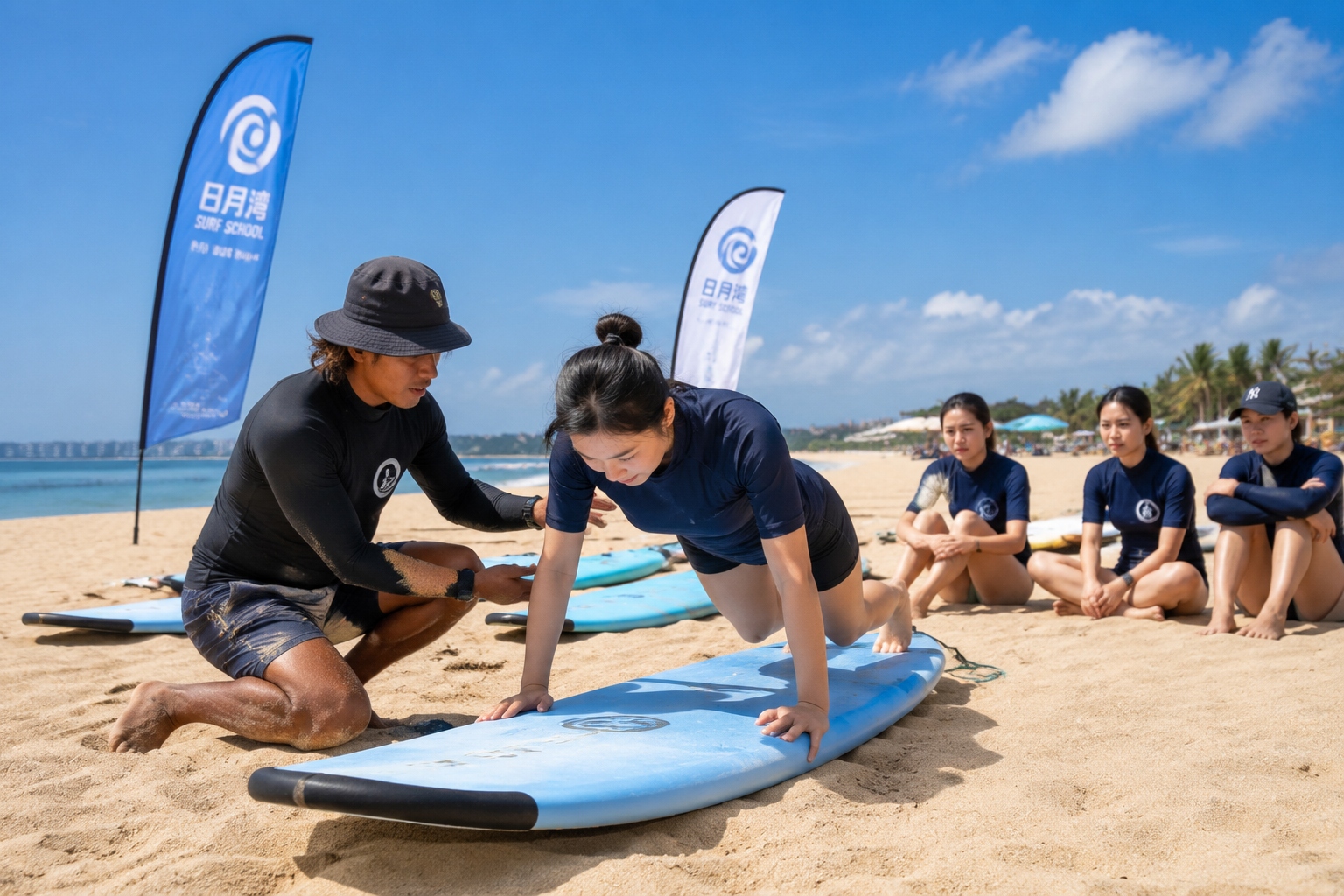
Surf lessons are the main draw for first-timers. Chinese surf schools have sprung up everywhere, and many are staffed by young coaches who learned to surf just a few years ago. ‘When I started, there were maybe five surfers in the whole town,’ says Xiao Chen, a 28-year-old coach from Inner Mongolia. ‘Now on a summer weekend, the bay looks like a floating panda party—black and white wetsuits everywhere.’ The schools offer bilingual instructors, video feedback, and guidance for complete beginners. A two-hour private lesson costs between 300 and 500 yuan (about 40 to 70 USD), far less than typical prices in Australia or California.
In the afternoon, the lineup fills with more experienced riders. After dark, the scene shifts to evening gatherings at local restaurants and open-air bars. There are surf movies playing in hostels, beach barbecues, and occasional live music sessions. The vibe feels more like a small Portuguese fishing town than a Chinese tourist resort—a mix of salt air, plastic chairs, and people who talk about swells instead of stock prices.
New faces, new business: how locals built a new economy
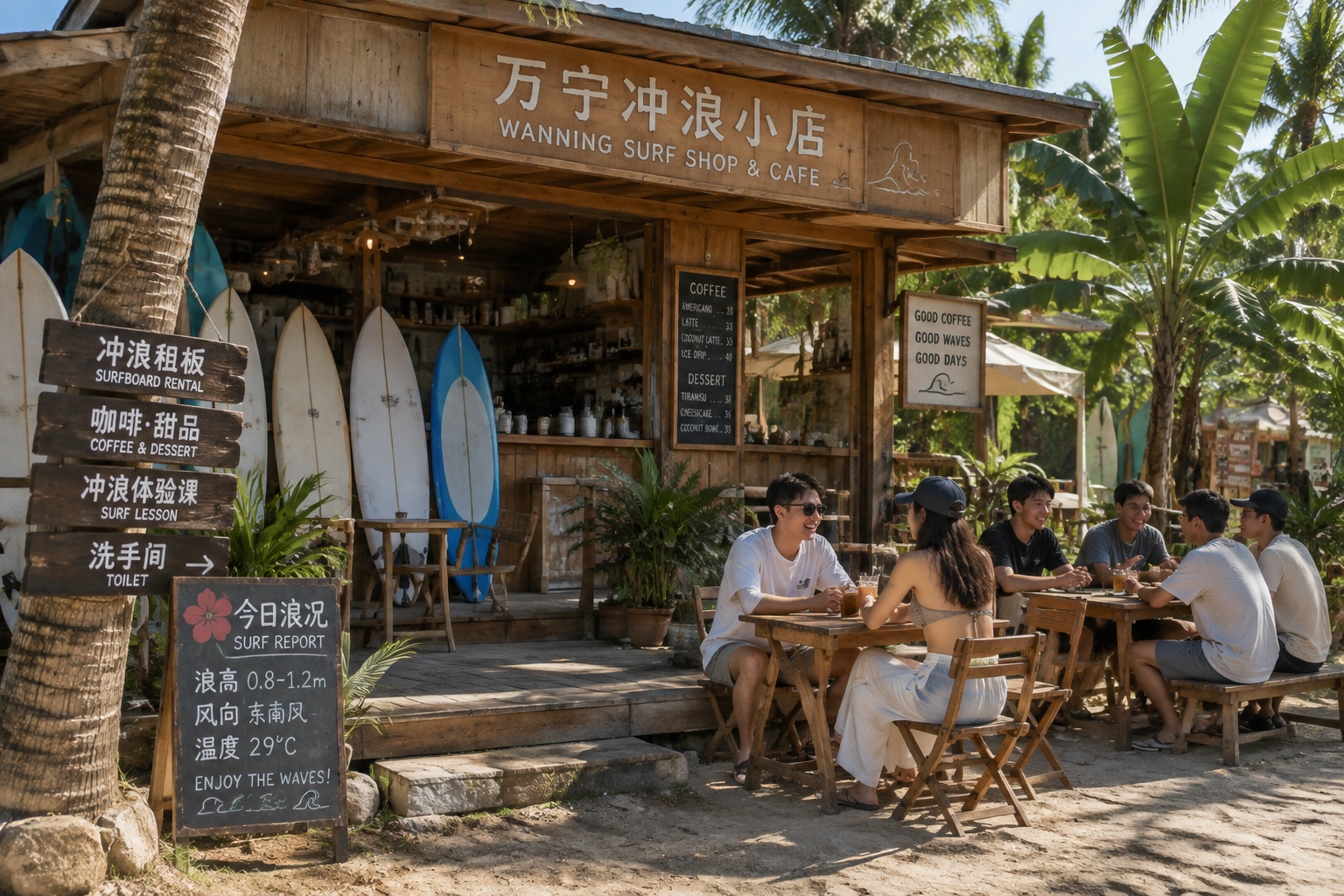
Ten years ago, most people in Wanning made a living from fishing or farming. Today, many have traded nets for surfboards. Some locals rent out room space to travelers or open small noodle shops near the beach. Younger residents are becoming certified surf coaches, earning far more than traditional jobs. The tourism boom also attracted outsiders: graphic designers from Shanghai, café owners from Chengdu, and even a former banker from California who opened a surfboard factory in a nearby industrial park.
This new economy is still small, but it is visible. Drive the two kilometers from Riyue Bay to the village and you will see brand-new guesthouses with surfboard racks on their balconies, laundromats that handle wetsuit cleaning, and tiny restaurants cooking Hainan chicken rice alongside burrito wraps. Many shops are run by couples who met while surfing. Their Instagram and TikTok accounts show the daily reality: perfect peelers, sunburned shoulders, and the occasional monkey stealing food from a café table.
Not every local is a surfer, though. Some older residents feel that the development has changed their town too quickly, and land prices have risen sharply. But many appreciate the jobs and the energy. ‘Before, young people left to work in cities like Shenzhen,’ says a local fisherman’s daughter who now manages a beach rental stand. ‘Now they come back because it feels like home and still offers opportunity.’
How Wanning compares to famous surf spots abroad
For international surfers, Wanning is often compared to Bali or Taghazout, but it has its own character. The biggest advantage is cost. Accommodation, food, and board rentals are noticeably cheaper than in Indonesia’s surf hotspots, and much cheaper than in Hawaii or Australia. Public transportation is good, and the visa-free policy for many nationalities makes spontaneous trips easy.
Wanning also has something many established surf towns have lost—space. Although the bay can get crowded on weekends with Chinese tourists taking selfies, the actual lineup is still far less packed than, say, Uluwatu at sunset. The vibe is friendly and informal; most surfers greet each other in the water, regardless of nationality.
The main trade-offs are the lack of consistent surf during flat summer months and the fact that English is still not widely spoken outside the surf community. Also, the night-life is limited compared to Bali. But for surfers who value warm water, cheap living, and a still-exploring frontier, Wanning is hard to beat.
What’s next: the challenges ahead
Success brings problems. Environmental pressure is growing—more beach parking, more waste, and occasional sewage issues after heavy rain. Local authorities have started regular beach cleanups and installed recycling bins, but long-term sustainability remains a question. There is also the risk of over-commercialization. Some locals worry that Wanning may become a copy of every beach town: generic bars, high prices, and lost charm.
The good news is that the surf community itself is invested in protecting the place. A group of surf schools has formed a ‘clean wave’ alliance, organizing monthly trash patrols. Some international surfers are also helping by teaching eco-friendly practices, like using reef-safe sunscreen and carrying reusable water bottles.
For the near future, Wanning is aiming to host international events. In 2023, the Chinese Surfing Championships were held there, and there are plans to build a surf museum and a training center for youth athletes. With Hainan’s free-trade port policy developing, Wanning’s profile will only grow.
Final thoughts
Wanning is still not a household name for most travelers. But it is a perfect example of how a Chinese town can reinvent itself around an unexpected passion. For foreigners who want a taste of a new surf frontier without sacrificing comfort, Hainan’s east coast offers something special. You don’t need to be a professional surfer to feel it—just show up at dawn, grab a board, and paddle out into the warm, salty water.
Whether Wanning becomes the next Bali or stays a humble surf village depends on how it handles growth. For now, it is a place where international surfers are not just visitors but part of a community being built. And that, perhaps, is the real ride.
Start the discussion at forum.chinacomes.com