

A Cup of Hot Water
In a typical office in Beijing, you’ll often see a white-collar worker pour hot water into a thermos flask with a handful of dried red berries inside. It’s a ritual as common as a morning coffee in the West, yet for many foreign visitors, it’s oddly fascinating. Those berries are goji berries, or gouqizi in Chinese, and for centuries, they’ve been a cornerstone of Chinese herbal medicine and daily wellness.

Fast forward to today, and this humble dried fruit has transformed into a global superfood with premium price tags in health food stores from London to New York. At the heart of this transformation lies a region called Ningxia, a remote province in northwest China that produces the majority of the country’s best goji. This is the story of how a traditional Chinese remedy became an international business—and what you’ll notice if you look closer.
Why Ningxia?
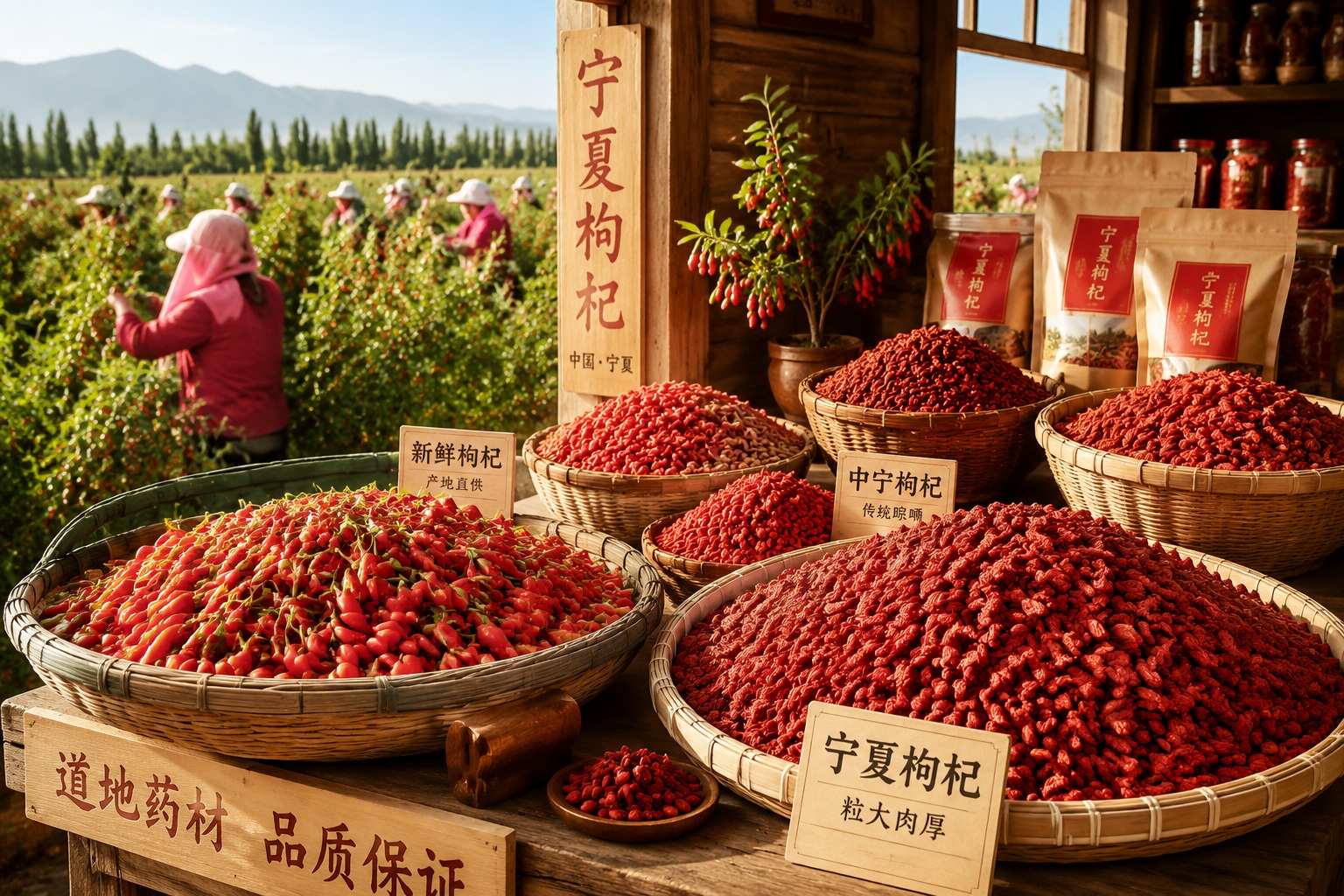
Ningxia is China’s leading goji-producing area, and for good reason. Located on the Yellow River’s alluvial plain, surrounded by deserts and mountains, it enjoys long hours of sunlight, a significant temperature difference between day and night, and calcareous soil that drains quickly. These conditions produce goji berries that are plump, sweet, and packed with polysaccharides, antioxidants, and vitamin C. In 2023, Ningxia’s goji planting area exceeded 430,000 mu (about 28,667 hectares), yielding over 140,000 tonnes per year. The region is officially protected as a geographical indication by the Chinese government, similar to how Champagne is protected in France.
But the goji berry isn’t native only to Ningxia. In fact, you can find wild goji across China and even in parts of Europe and Central Asia. Yet, the Ningxia variety, known as Lycium barbarum, has earned a distinct reputation for its quality. Here’s a quick comparison Western buyers may appreciate: if wild goji is like foraged crab apples, the Ningxia goji is the Honeycrisp apple—bred, coaxed, and perfected by specific growing conditions.
Two Cultures, Two Ways of Eating
In the West, goji berries are typically marketed as a superfood: sprinkle them over yogurt, mix them into smoothies, or snack on them like raisins. The focus is on high antioxidant content, immune support, and anti-aging properties. The berries are often sold as dried fruits, in juice blends, or powdered in supplements.
In China, the story is different. Goji is deeply embedded in the philosophy of shiyao tongyuan—the idea that food and medicine share a common origin. It’s not just a snack; it’s a herbal remedy that ‘nourishes the liver and kidneys, improves vision, and boosts vitality.’ The classic way to consume it is to soak it in hot water or cook it in soups and porridge. You might add goji to a chicken soup, make a tea with chrysanthemum, or simply chew a handful as a convenient eye-care habit. This cultural contrast is one of the first things foreign visitors notice: for Chinese people, goji is not an exotic powder—it’s as familiar as a blueberry muffin at home.
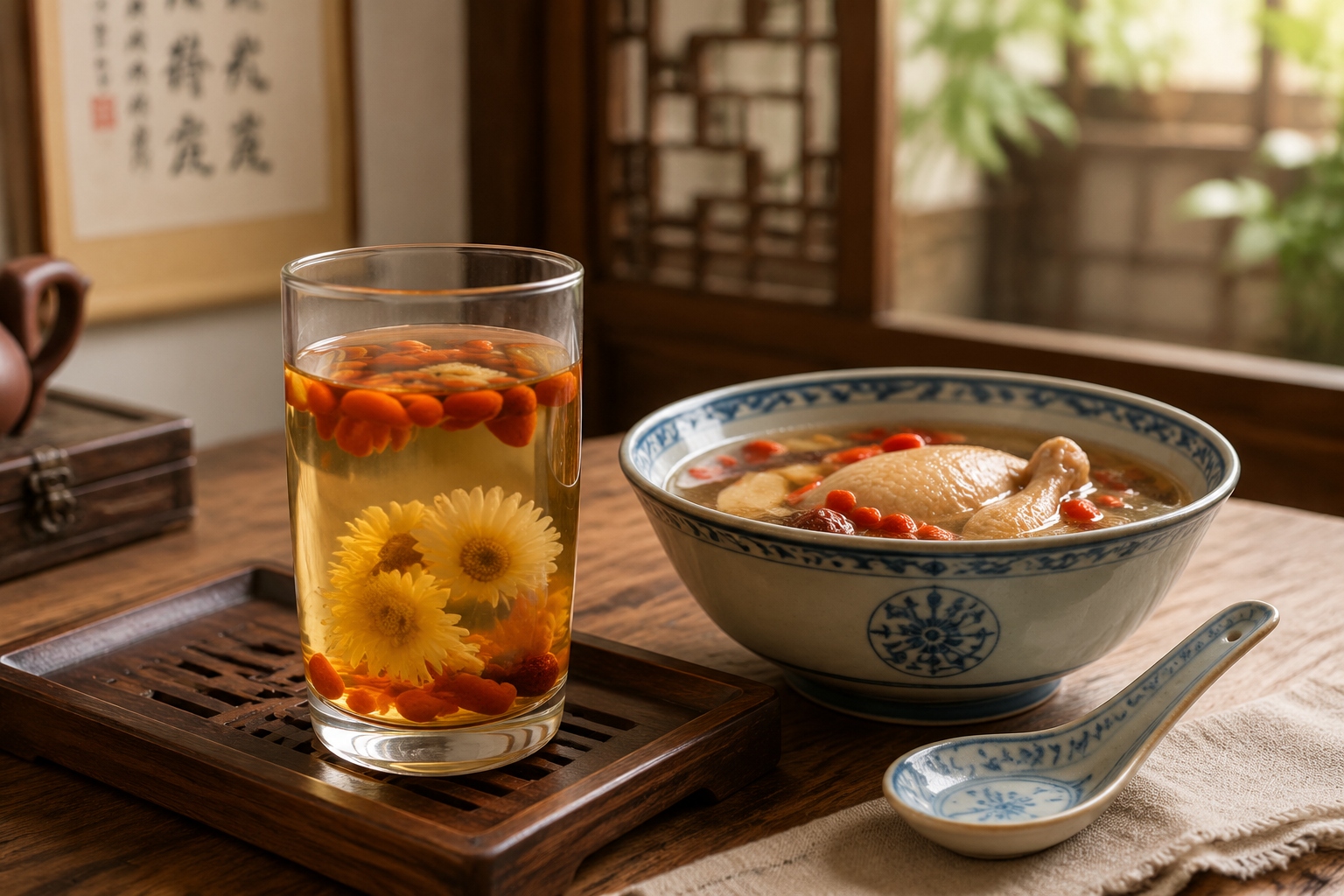
And nothing captures this better than the famous ‘thermos with goji’ phenomenon. In recent years, the image of a middle-aged Chinese professional carrying a thermos full of goji water has become a meme, a way of poking fun at the country’s growing ‘health preservation’ culture. But the meme reflects a real shift: even young people, who once considered goji an old person’s habit, are now joining the trend. They’re buying ‘goji berry tea packs’ or ‘thermos floats’ with clever designs to make their daily intake fun. This mainstream embrace has created an enormous domestic market, but it’s the international expansion that’s catching the headlines.
From Dried Berries to High-Tech Wellness
Goji used to be a commodity. Farmers would pick, dry, and sell the berries in bulk, and most of the margin was eaten up by intermediaries. The breakthrough came when agriculture met industrial upgrading. Over the past decade, Chinese agri-tech companies in Ningxia have launched a wave of value-added goji products that go far beyond dried fruit.
Here are a few examples you’ll find in today’s Chinese supermarkets:
- Goji juice and pulp: Instead of drying, fresh goji berries are juiced under low temperature to preserve active ingredients. A 50-milliliter bottle of goji pulp drink can cost five times more than a bag of dried berries.
- Freeze-dried powder: A modern take on the classic herb—ideal for smoothies, just like a kale powder.
- Capsules and tinctures: Standardized extracts standardize the dosages, appealing to consumers who prefer supplements over food.
- Cosmeceuticals: Goji extract is used in creams and serums, riding the antioxidant wave.
- Local spirits and wine: Goji wine is a favorite in Ningxia, a light and fragrant beverage for meals.
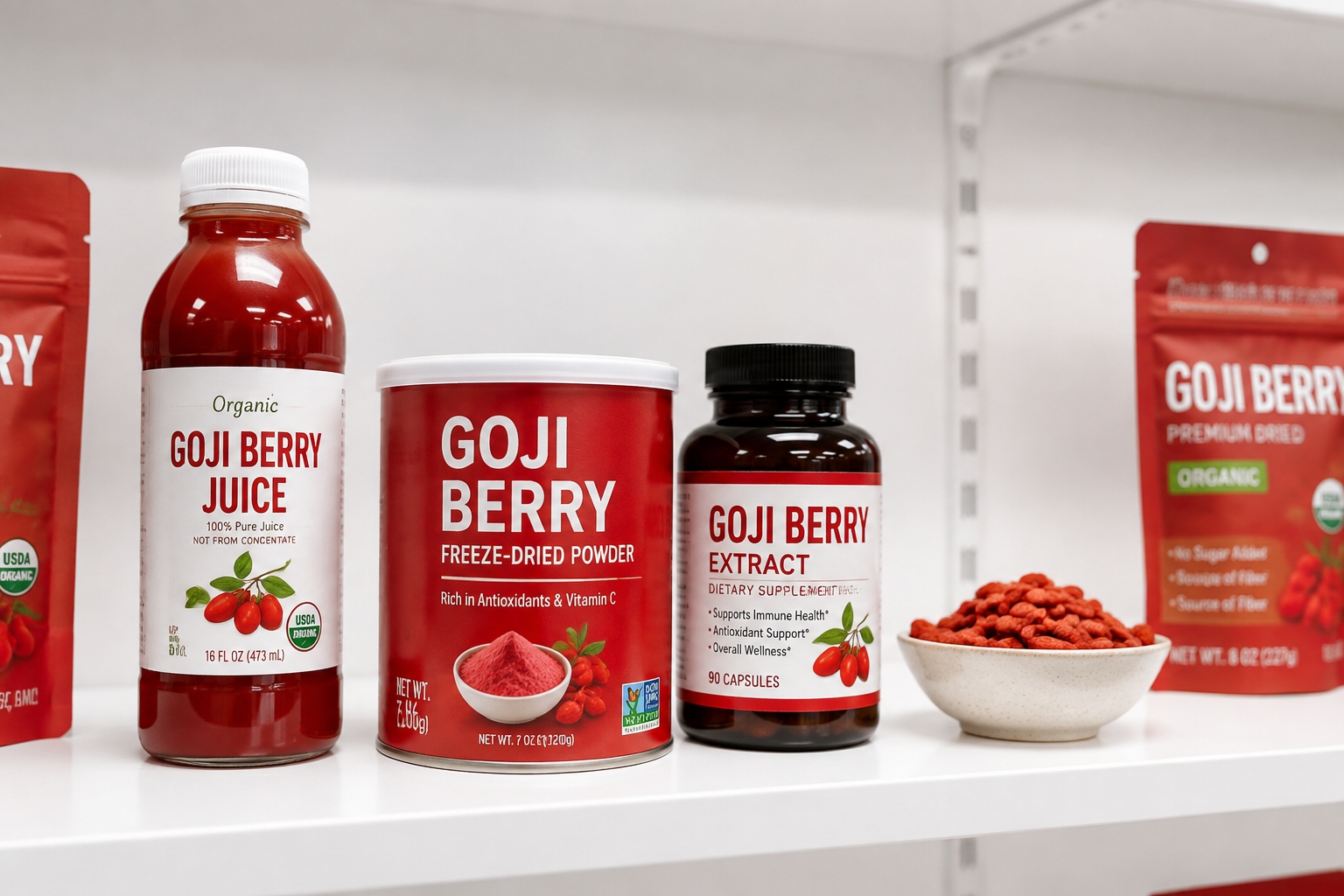
Companies like Breruiyuan and Early Healthy have established vertically integrated supply chains, controlling everything from seed breeding to retail. They’ve invested heavily in certifications such as organic, Export Orchards, and ISO, making their products acceptable to demanding markets like the EU, the U.S., and Japan. In 2024, China’s goji exports reached an estimated $380 million, increasing 12% year-on-year, with new growth coming from Europe and the Middle East.
What’s driving this upgrade? First, the domestic demand for healthy foods has exploded. Chinese consumers are now as label-conscious as their Western counterparts, and they are willing to pay a premium for safety and traceability. Second, international buzz around goji—fueled by countless health magazines and celebrity endorsements—has made it one of the most recognizable ‘Chinese superfoods’ abroad, alongside green tea and yuzu. Yet, many Western consumers aren’t aware that the goji berries they buy in health stores are often from Ningxia, even when not labeled as such.
If You’re from Abroad, What Will Strike You Most?
Let me tell you what surprised a friend of mine from Canada. He had bought goji berries in Toronto and remembered them as a pricey health snack. When he visited me in Yinchuan, the capital of Ningxia, he saw local farmers selling fresh goji by the kilogram in open-air markets—for a quarter of the Toronto price. And the taste, he said, was incomparably better: sweet, tender, and slightly tart, like a cherry tomato crossed with a cranberry.
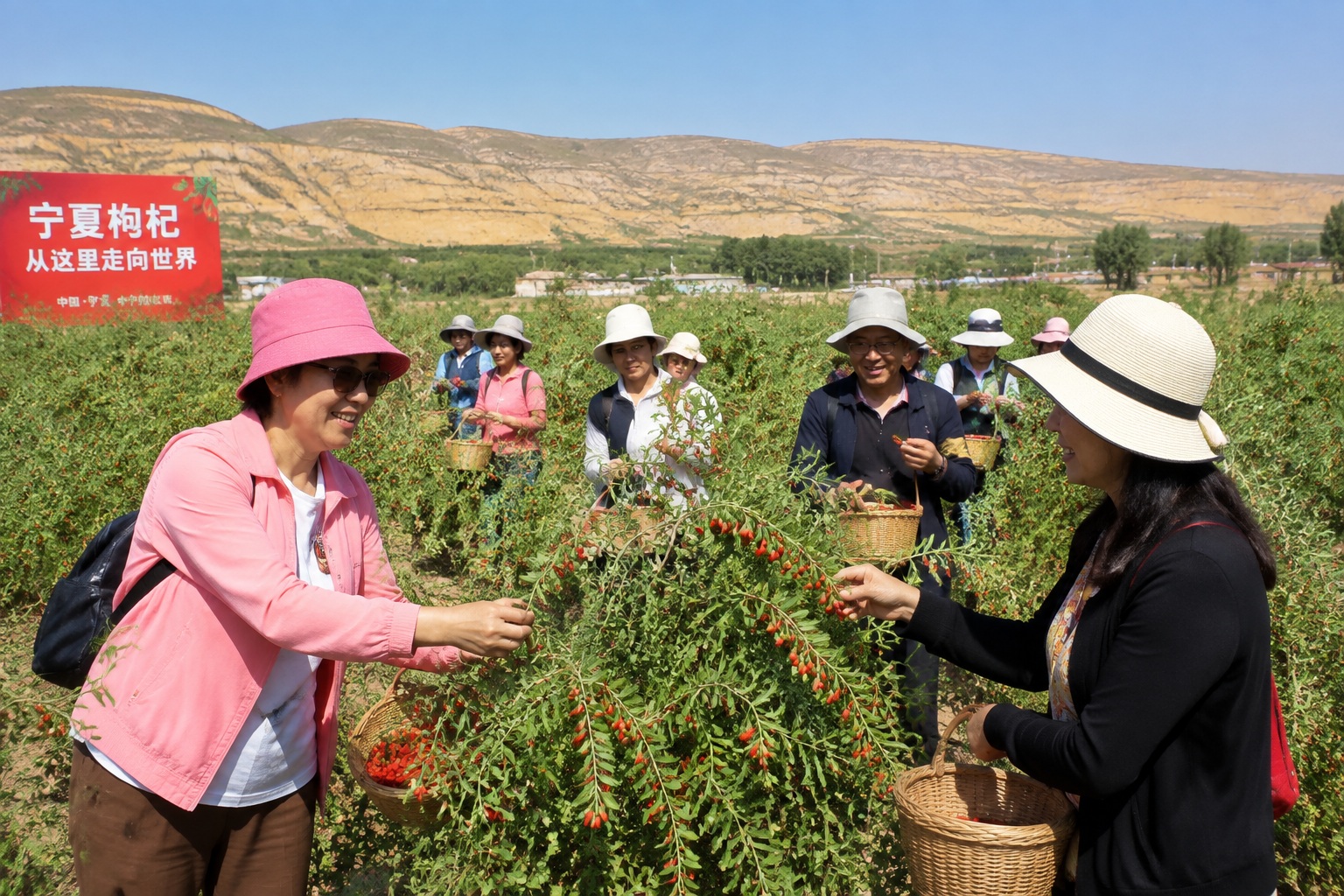
The experience gave him a new perception of how a superfood can be just another crop for the locals. He also realized that the goji he ate in Canada was often packed with sulfites to preserve color, while fresh Ningxia goji has a natural, earthy red. For visitors to Ningxia, a typical itinerary includes visits to goji farms where you can pick berries directly off the branches, taste goji honey, or even attend a goji-themed banquet.
Ningxia also promotes goji through tourism. The ‘Goji Harvest Festival’ is held each summer, drawing tourists and buyers alike. Farms have become experience centers, where city dwellers and international guests learn to recognize high-quality goji by its shape, color, and taste. This agro-tourism model is part of China’s push to revitalize rural areas, creating jobs and preserving local traditions.
A Practical Guide to Buying Ningxia Goji
If you’re looking to try authentic Ningxia goji, here are some tips:
1. Check the geographical indication label
Legitimate producers use the ‘Ningxia wolfberry’ regional logo, usually printed on the package. This ensures the product meets official quality standards and origin requirements.
2. Look at the color and taste
High-quality dried goji berries have a dull red color, not overly bright. A bright red often indicates added dye or sulfites. Taste one: it should be sweet at first, with a slight sourness and a woody aftertaste.
3. Choose the right grade
Goji is graded by size: the largest berries (usually 280 per 50 grams) are the most expensive and sold as gift sets, while the smaller ones are perfect for cooking. For daily snacking, a mid-grade is the best value.
4. Try fresh if you can
Fresh goji has a short shelf life and is rarely exported, but if you visit Ningxia in July and August, you must try them. They’re not as sugary as dried, but they have an amazing juicy texture.
5. Beware of imitations
There are many non-Ningxia goji berries on the market, especially from neighboring areas. They may look alike but have weaker flavor and lower active ingredient content. Always buy from reputable brands or certified retail shops.
The Road Ahead: Challenges and Potential
Despite its global reputation, the Ningxia goji industry faces real challenges. For one, the supply chain is still fragmented; many small farmers lack the capital to upgrade their processing facilities. The industry is also accused of environmental issues, such as excessive water in a dry region. However, the local government is promoting green practices, including drip irrigation and organic farming.
International market access remains another hurdle. The EU and U.S. have strict pesticide standards, and some Ningxia enterprises have struggled to meet them. But the trend is positive: more producers are adopting self-regulation and getting international certifications. The future likely lies in building stronger brands, not just selling raw ingredients. As a Chinese saying goes, ‘The guest is looking for a trademark, not just a berry.’
For entrepreneurs, the goji industry offers lessons in how a traditional tonic can be repositioned for modern life. It’s not about erasing tradition—it’s about packaging it in a way that resonates globally. In that sense, the little red berry from Ningxia is a mirror of China itself: deeply rooted, yet rapidly evolving.
So the next time you see goji berries in a health-food aisle, take a closer look. You might be holding a piece of quiet Chinese wisdom that has traveled thousands of miles, from a thermos to your table.
Start the discussion at forum.chinacomes.com