
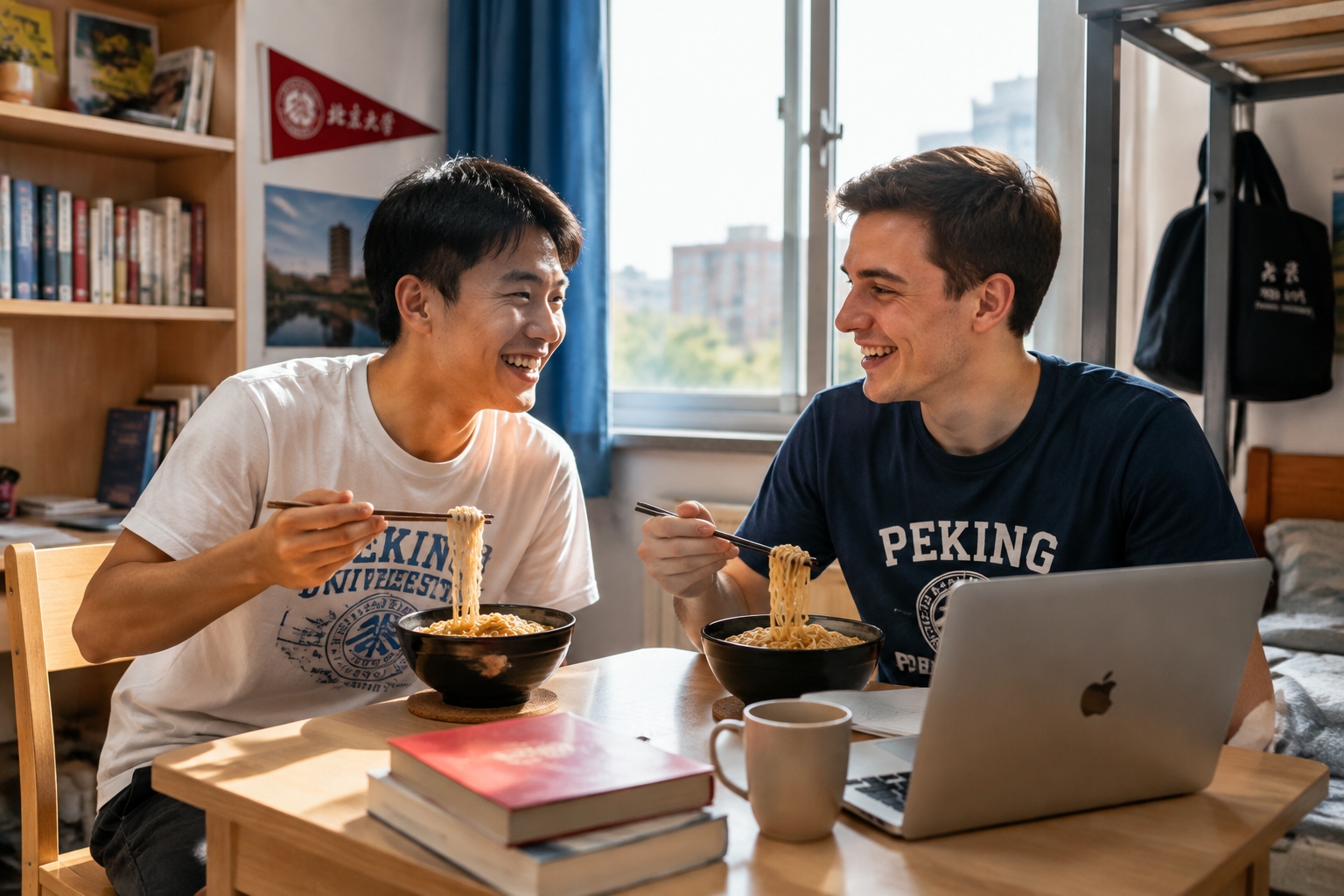

On my first evening in the Beijing dormitory, my new roommate, Wang Hao, greeted me with a bowl of beef noodles from the campus canteen. “Eat first,” he said, pushing a pair of chopsticks into my hand. “We can talk later.” That was my introduction to Chinese hospitality, and also to a friendship that taught me more about the country than any lecture ever could.
Wang Hao is a computer science major from a small town in Henan province. He plays video games after class, talks about algorithms with his classmates, and has an uncanny ability to find the best street food within a five-kilometer radius. He is also the reason my assumption that Chinese people are shy and reserved collapsed within a week.
The Language of Food
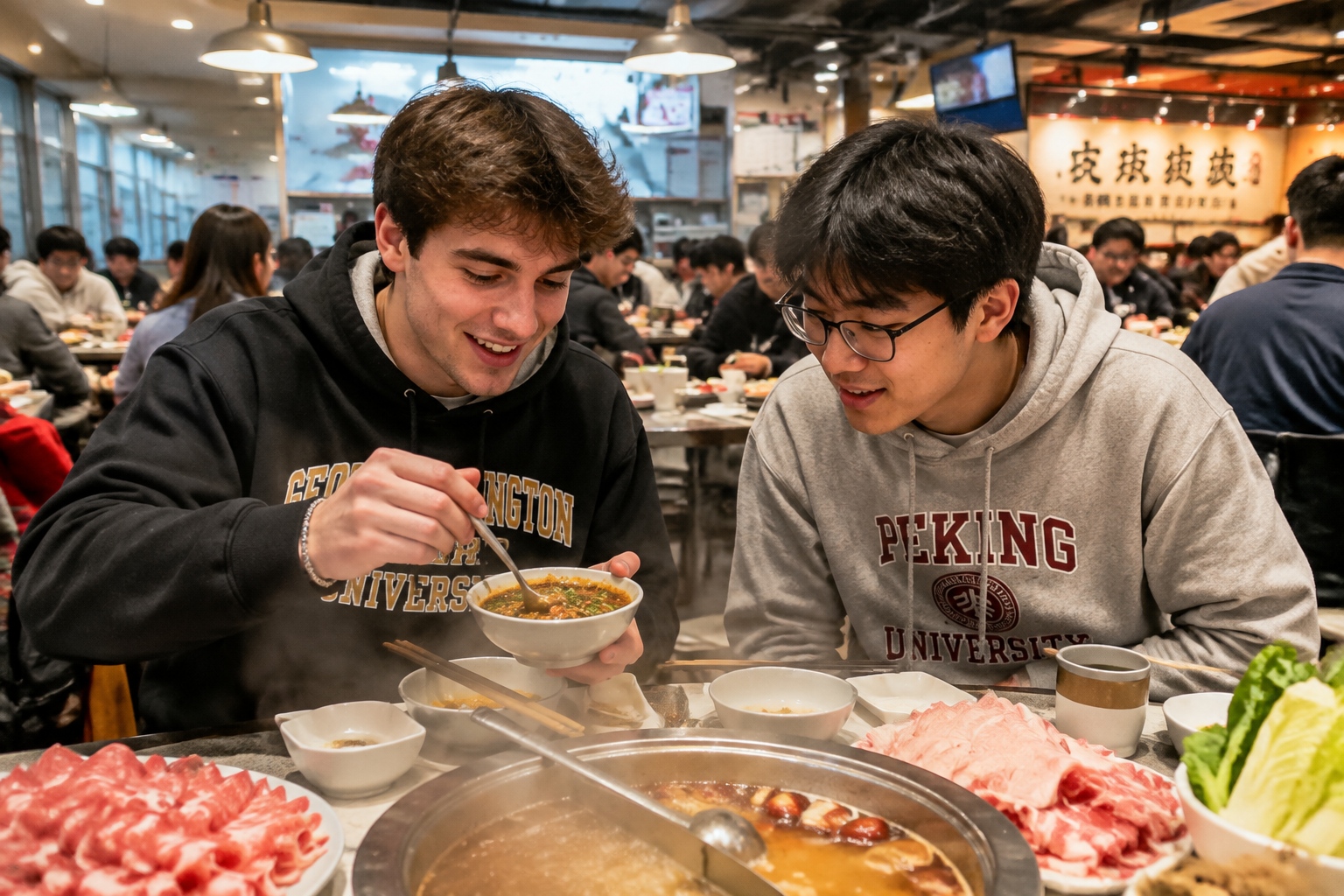
Our first real bonding activity was dinner. He took me to a hotpot restaurant near the east gate, a place packed with students and thick with the smell of chili and Sichuan pepper. “You need to mix your sauce,” he instructed, pointing to a table of condiments. “Sesame paste, crushed garlic, a little oyster sauce, and a splash of vinegar – but not too much.” He watched me dip a slice of beef, nodded approvingly, and then said, “Now try it with raw garlic. It’s better.”
From that night, food became our shared language. He taught me how to eat dumplings in the right order – first the ones with chives, then the pork and cabbage, to appreciate the difference. How to peel a boiled egg by tapping it on the table and rolling it gently. How to order at a roadside barbecue stall: lamb skewers first, then chicken wings, and always order a few things “for the table” to share. He explained that in China, sharing dishes is a way of showing trust. “If you don’t want to share, you don’t eat together,” he quipped.
When his mother sent him a box of homemade pickles and dried sausage, he split it with me as if it were a treasure. “This is the taste of home,” he said, his voice softening. “My grandmother made these. She says pickles need time, like friendships.” I chewed a piece of sausage, strong and savory, and felt something click. Food here isn’t just about nutrition; it’s a code for everything – memory, community, and affection.
Everyday Life Hacks
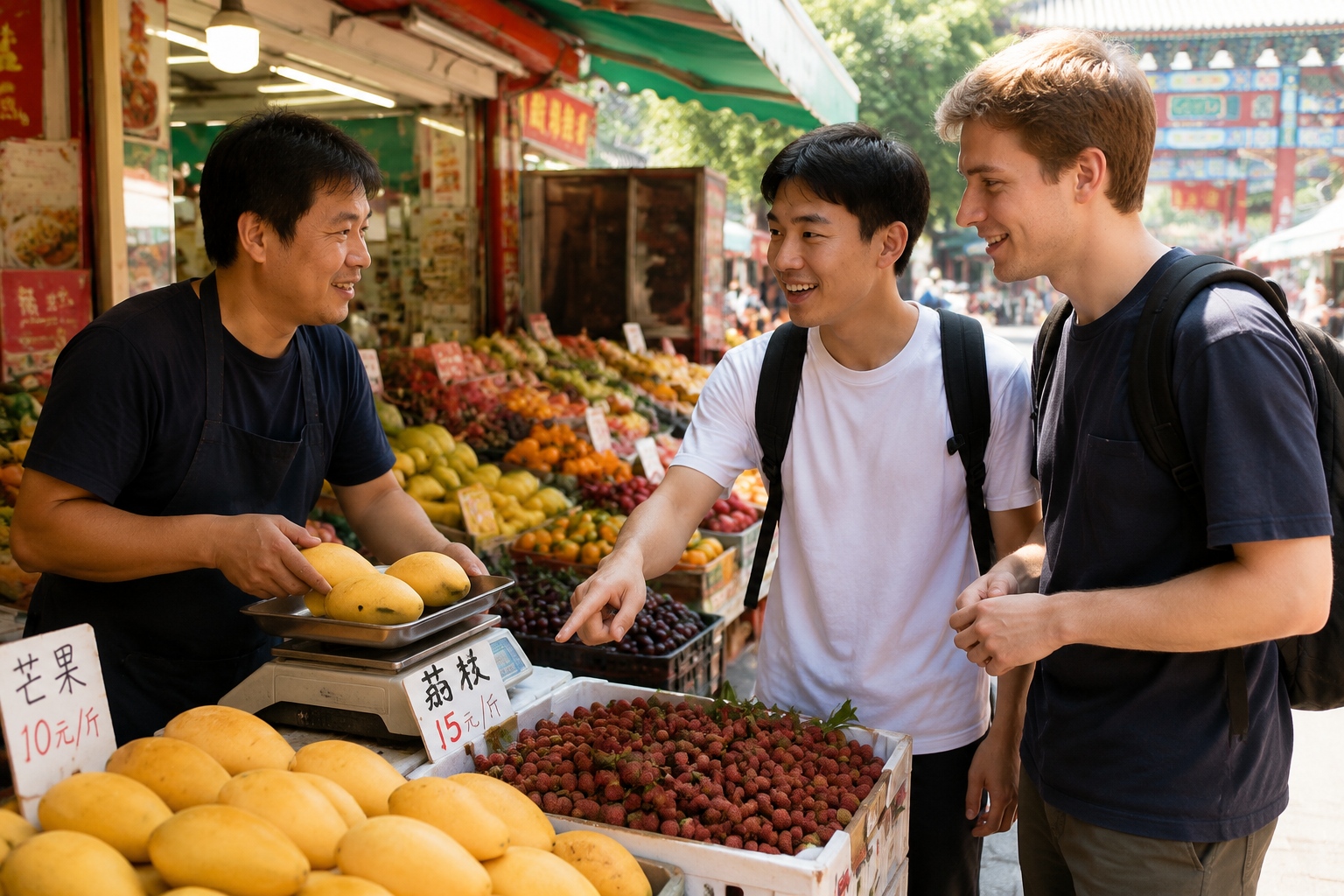
Wang Hao also acted as my translator for the invisible rules of Chinese daily life. The first time I went to the fruit shop alone, I paid whatever the seller asked. When I got back, he laughed. “You got ripped off,” he said, examining the bag of mangoes. “The price for locals is always lower.” The next day, he took me back. He spoke to the shopkeeper in rapid Mandarin, gesturing at the mangoes, and somehow ended up with an extra bag of lychees thrown in for free. “You have to be friendly but firm,” he explained. “The seller is not your enemy. It’s like a game. You both want a fair deal.”
He also taught me practical things: how to scan the QR code on the shared bike, how to order food delivery with a few clicks, how to use a map app that shows which bus arrives first. One evening, he helped me set up mobile payment and then transferred me a few yuan – “So you can try it,” he said. These small gestures made me feel less like a tourist and more like someone learning to live.
Friendship and Money
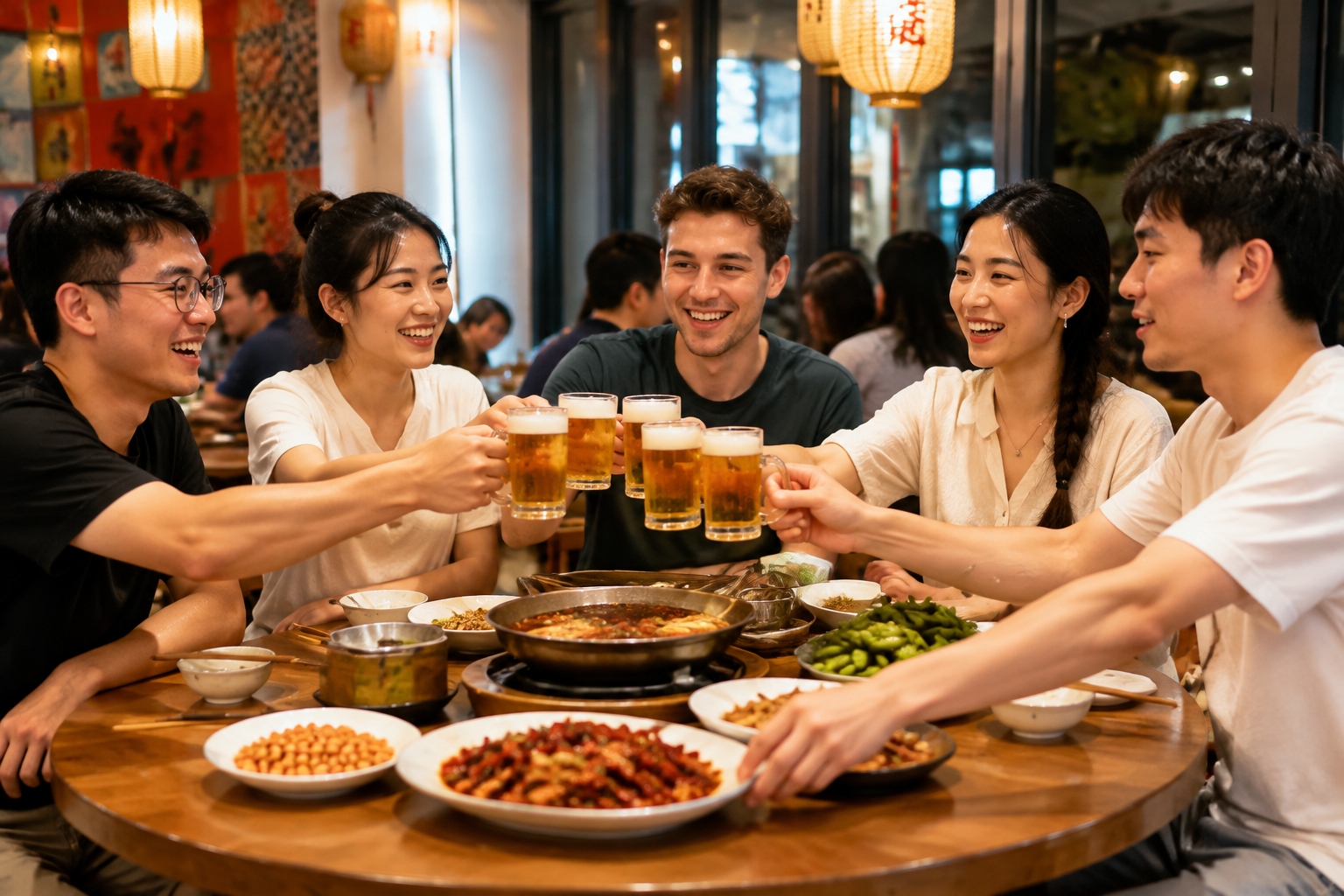
One of the biggest cultural shocks came when I tried to split the bill at a dinner with his friends. Wang Hao gently stopped me. “In China, when friends eat together, we take turns paying,” he said. “It’s not about equality on a single meal. It’s about a long balance.” His friends nodded. Over the following weeks, I watched them argue jokingly over who would pay for the next drink. It wasn’t stinginess; it was a ritual of belonging. I eventually learned to say “I’ll get this one” with the same enthusiasm.
He explained that this system reflects a deeper value: relationships are built on mutual support, not transactional fairness. “If I pay this time, you pay next time. Or maybe you help me move my boxes. That counts too.”
Family Ties
Perhaps the most surprising lesson was about family. Every evening, without fail, Wang Hao called his mother. He would speak in his local dialect, sometimes laughing, sometimes serious. At first, I assumed he was a bit homesick. But then I realized it was a non-negotiable habit. “My mom worries,” he told me once. “This is the easiest way to make her happy.”
Before the winter break, he showed me the pile of gifts he had bought for his family: a jacket for his father, skincare products for his mother, and a toy robot for his younger cousin. “I saved half of my scholarship for this,” he said casually. I was stunned. At 21, many of my friends were still spending their parents’ money. But Wang Hao felt a sense of responsibility that I later saw echoed in many of his classmates. It didn’t feel heavy; it felt like a quiet, natural extension of love.
What Changed in Me
Living with Wang Hao changed how I see China – but more importantly, it changed how I see people. I came here expecting ancient temples and fast-growing cities. I found those, too. But the most memorable part of Beijing turned out to be the small, everyday moments: the steam rising from a bowl of noodles, the laughter at a crowded hotpot table, the late-night conversations about our families and dreams.
On the last day of the semester, Wang Hao gave me a parting gift: a small bottle of sesame paste. “For your future hotpots,” he said, smiling. “Don’t forget to add vinegar.” I haven’t. And every time I cook at home now, I think of him – the roommate who taught me that a meal is never just a meal.
Start the discussion at forum.chinacomes.com