

A French Designer’s Discovery in a Mountain Workshop
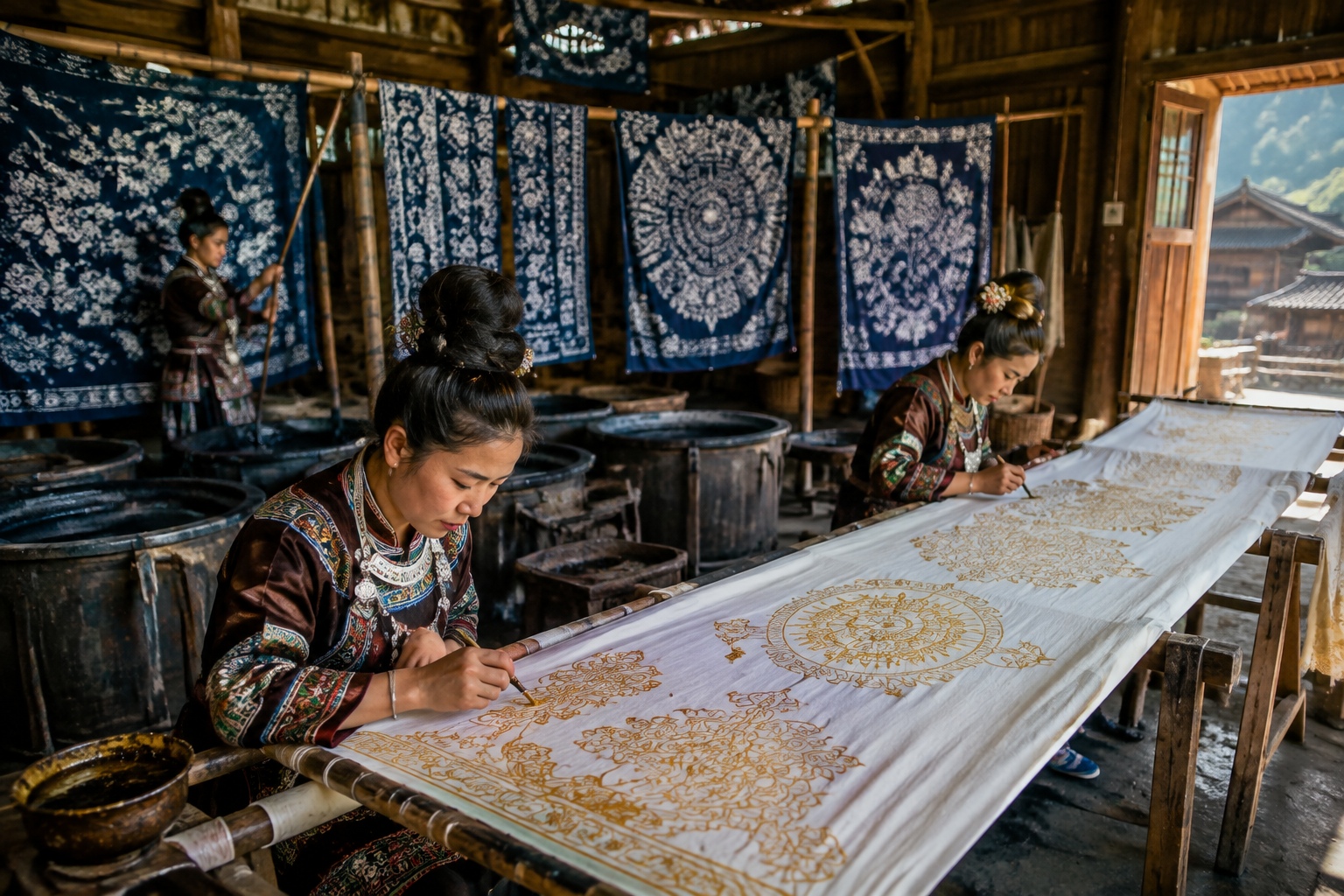
On a drizzly morning in Danzhai County, Guizhou, a French fashion designer named Claire was running her fingers over a length of indigo-dyed cotton cloth. The pattern—an ancient swirl representing the river spirit in Miao cosmology—caught her eye. Around her, women in embroidered aprons dipped bamboo combs into bubbling beeswax, then traced new designs onto white cloth with slow, careful strokes. Claire had come to China looking for fabric techniques her clients had never seen. She did not expect to find an entire village doing this every day.
This is not a curated exhibition for tourists. It is a working co-op called Ninghang Batik, one of a growing number of small workshops in Guizhou where traditional crafts—especially handmade paper and batik—are now finding serious buyers abroad.
Two Crafts, One Province
Guizhou province sits on the Yunnan-Guizhou Plateau in southwestern China. It is one of the country’s poorest provinces by GDP per capita, but also one of the most ethnically diverse. Over 40 million people live here, a significant number belonging to the Miao, Dong, Buyi, and other minority groups who have long maintained distinct textile and paper-making traditions.
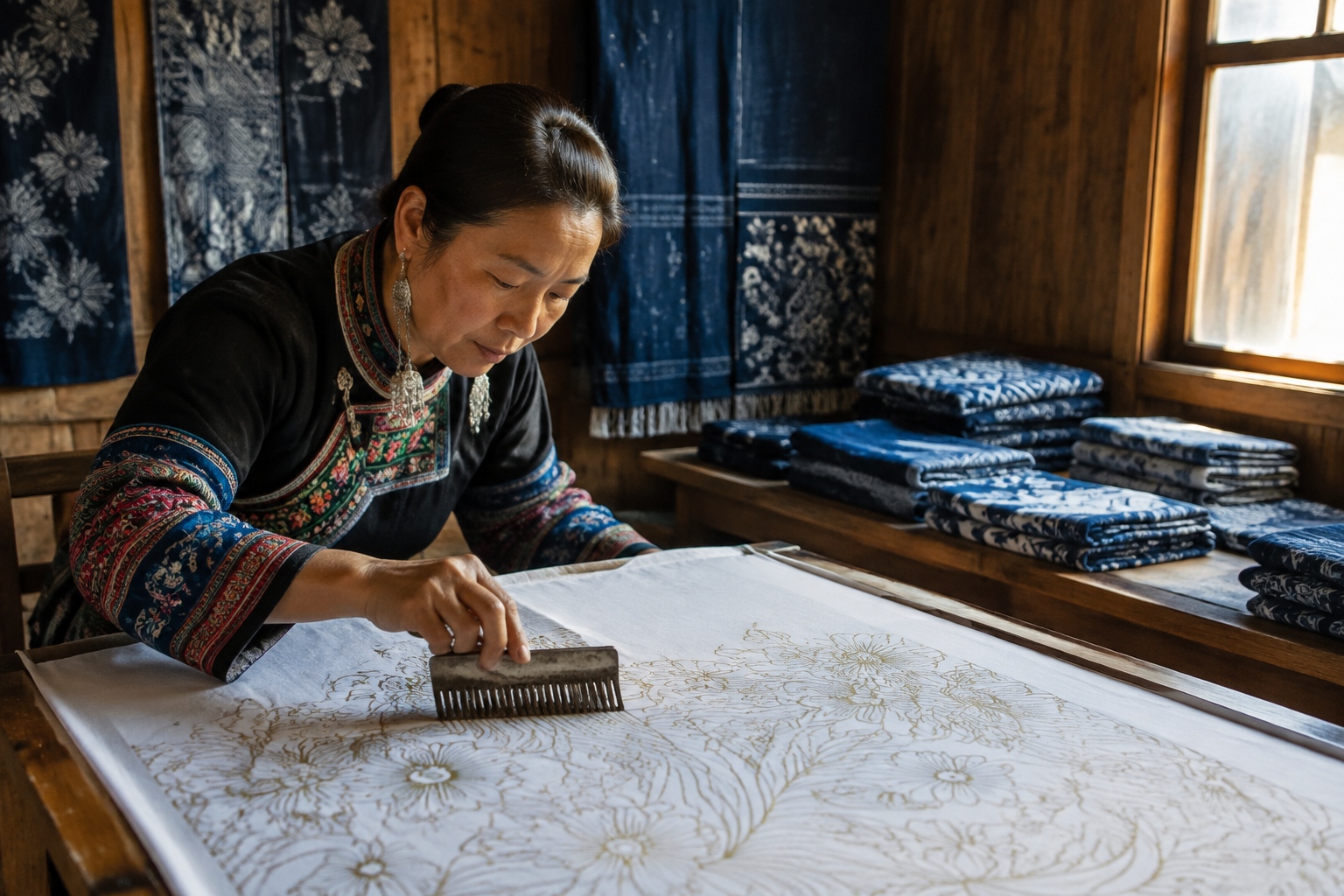
Batik, known as laran in Chinese, involves drawing patterns on cloth with melted beeswax, then dipping the cloth into a vat of indigo dye. The wax resists the dye, leaving white lines after the wax is removed. Villages like Danzhai and Tongren have practiced this for centuries, originally making clothes, baby carriers, and funeral cloth for community use.
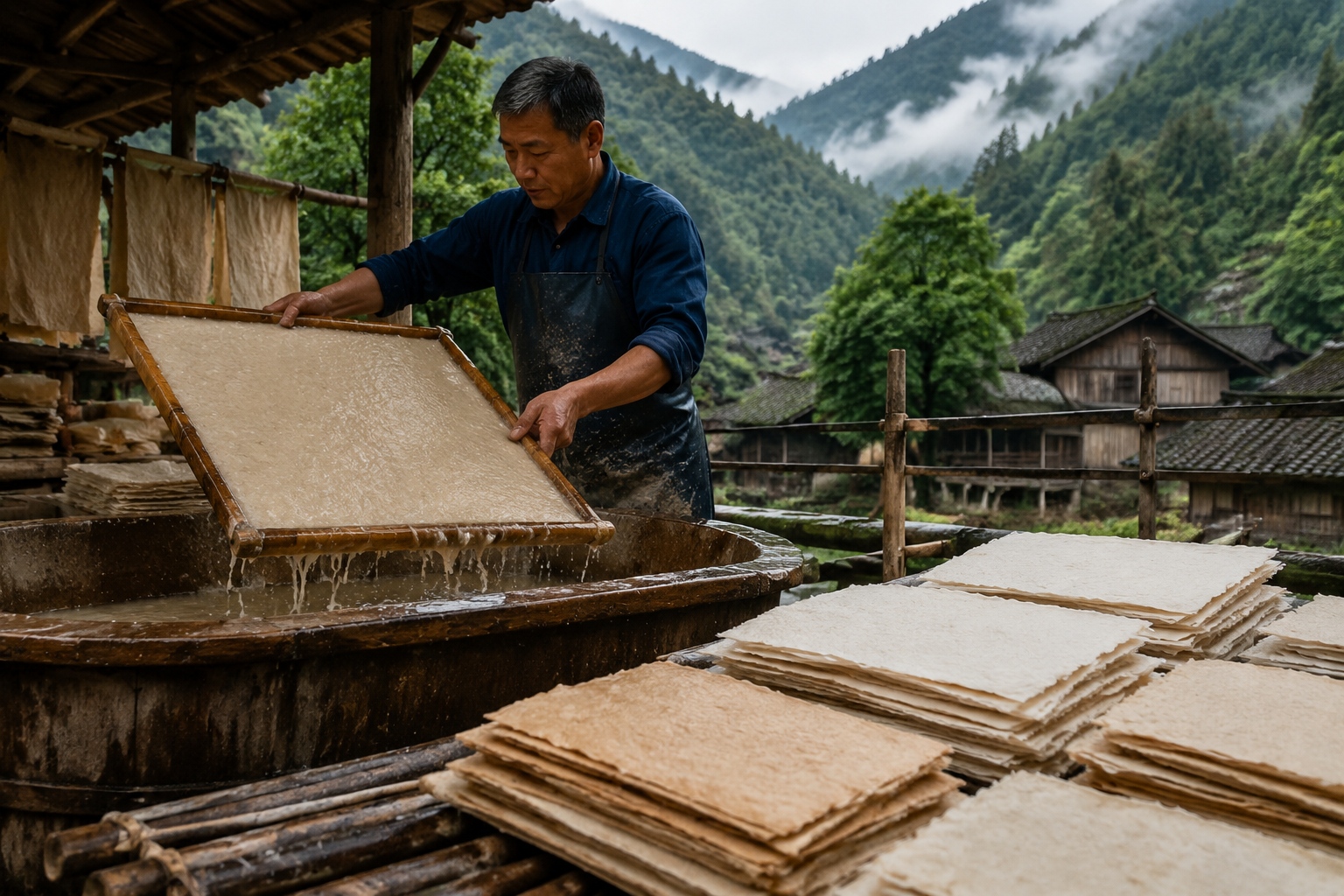
Ancient paper-making, on the other hand, survives mainly in Shiqiao village, near Kaili. Here, craftspeople still use methods almost identical to those recorded in the Han Dynasty over 1,800 years ago. The bark of the paper mulberry tree is soaked, pounded, mixed with plant mucilage, and then lifted from a water vat on a bamboo screen to form sheets. The result is a tough, absorbent fiber paper that has been used for calligraphy, book repair, lanterns, and even banknote paper in earlier eras.
How the World Found Them
The journey from remote mountain villages to international markets did not happen by accident. In the late 1990s, local governments began promoting ethnic tourism, which brought domestic visitors but few foreign buyers. The game changer came after 2010, when e-commerce and social media made it easier for small workshops to be discovered.
Take Shiqiao paper. A paper workshop here now exports to at least seven countries, including the United States, Italy, and Japan. Art restoration studios in New York and Kyoto order the paper because its long fibers are strong yet flexible—ideal for repairing centuries-old books. Japanese stationery brands use it for specialty notebooks and wedding invitation cards. A single sheet of high-grade Shiqiao paper can sell for more than 30 yuan (about $4), and a skilled worker can make around 50 sheets a day, producing a decent income by local standards.
Batik has followed a similar path. Online platforms like Taobao, JD.com, and more importantly international sites like Etsy and Instagram—with some help from Chinese exporters—now list hand-drawn batik scarves, cushions, and wall art. Independent fashion labels in Paris and Tokyo have bought batches of cloth to make limited-edition dresses. One Miao co-op in Danzhai told me they now fulfill multiple export orders every month, each ranging from dozens to a few hundred pieces.
The People Behind the Patterns
What makes these crafts attractive to foreign buyers is not just the finishing quality, but the intimate process behind each piece. Unlike factory-made textiles, every batik cloth carries small irregularities—a slightly wobbly line, a shade variation in the indigo—that testify to the human hand.
Take Wang Xiaomei, a 43-year-old batik artist in the popular tourist town of Loushang. Wang learned the craft from her mother when she was 12. For decades, she used it only for her own family’s clothes. Now she co-leads a cooperative of 12 women, selling through a local cultural company that handles overseas orders. “Many of us used to worry that batik would die because young people did not want to learn it,” she says. “But when we saw buyers from other countries excited about our patterns, we realized these are not old-fashioned things—they are our identity.”
Younger creators are also joining. Several university graduates have returned to their hometowns to launch modern lines that combine traditional dyeing with minimalistic design—see, for example, backpacks with a single batik panel, or business card cases made from Shiqiao paper. They use WeChat and Douyin (the Chinese version of TikTok) to document the making process, which has unexpectedly drawn attention from fans in Southeast Asia and European countries.
Challenges That Refuse to Fade
Not everything is smooth. The craft economy still faces serious hurdles. First, production is slow by modern standards—a piece of high-quality batik can take days to finish. This naturally caps the scale of income. Second, young people in remote villages often prefer to migrate to cities for better-paying factory jobs. Many co-ops struggle to retain artisans under 35.
The pandemic also dealt a heavy blow, cutting off international travel and many offline exhibitions. Some workshops pivoted to live-streaming sales, but internet infrastructure in mountainous areas remains patchy, making this an incomplete solution.
Still, there is resilient optimism. Government poverty-alleviation programs have funded training centers where older masters teach younger apprentices. Craft brands are partnering with universities to improve design and packaging. And a handful of international NGOs have supported fair-trade certifications to help ensure that artisans receive a stable share of the final price.
Not a Trend, A Life
For many foreign consumers, buying Guizhou handicrafts is not just about owning an exotic possession. It is a quiet investment in cultural survival. When a French designer uses Miao batik for a spring collection, or a Japanese bookbinder repairs a 17th-century manuscript with Shiqiao paper, the financial transaction carries a quiet statement: that these centuries-old techniques still have relevance in a world of mass production.
As Claire, the French designer, told me before leaving the workshop: “I came here to find something different. What I found is not just a product, but people who live with the patterns they make. That is what my clients are paying for.”
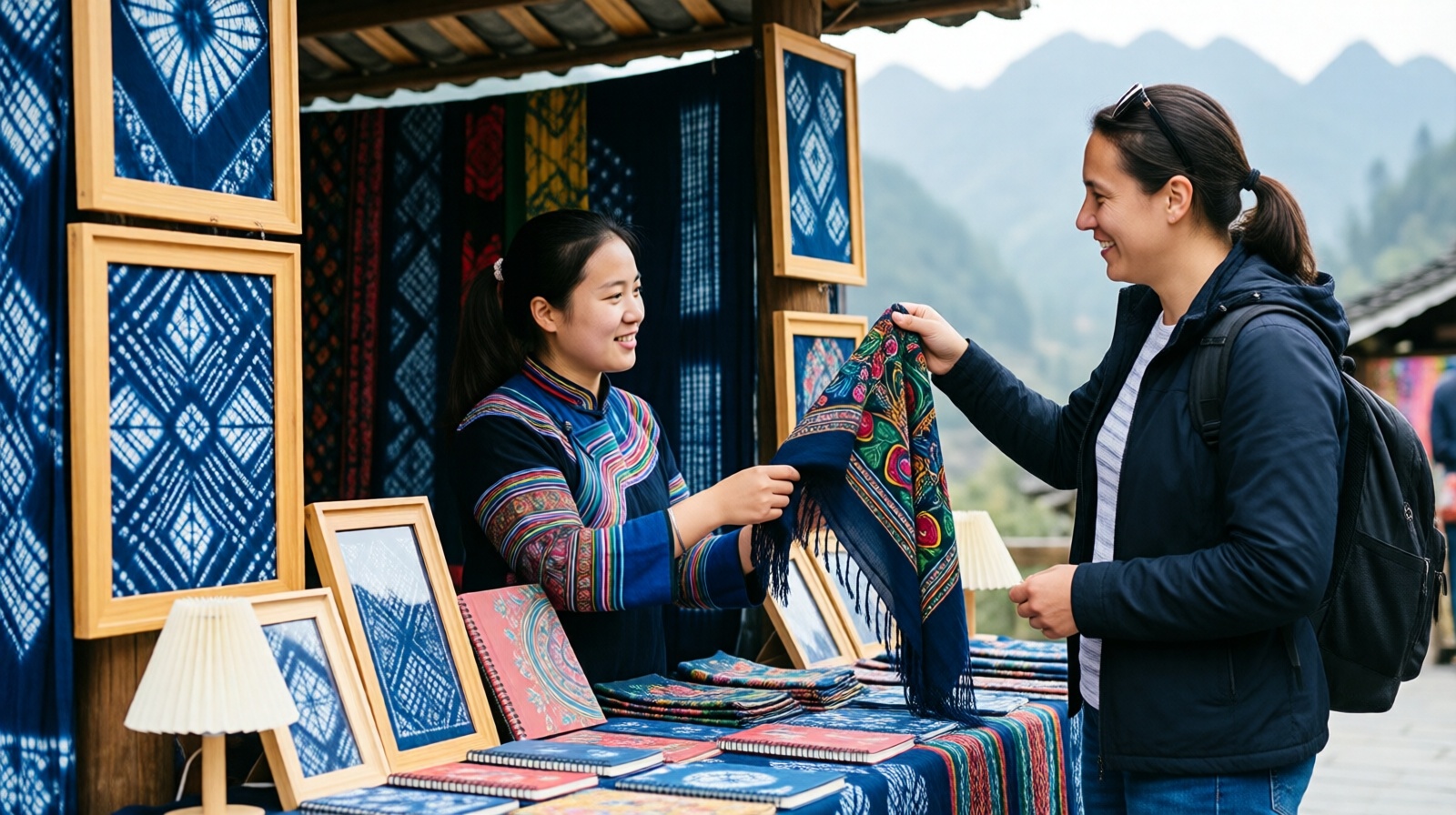
Guizhou’s ancient crafts are still traveling. With better logistics, smarter marketing, and a purpose-driven audience, this journey is likely to continue for many more years.
Start the discussion at forum.chinacomes.com