
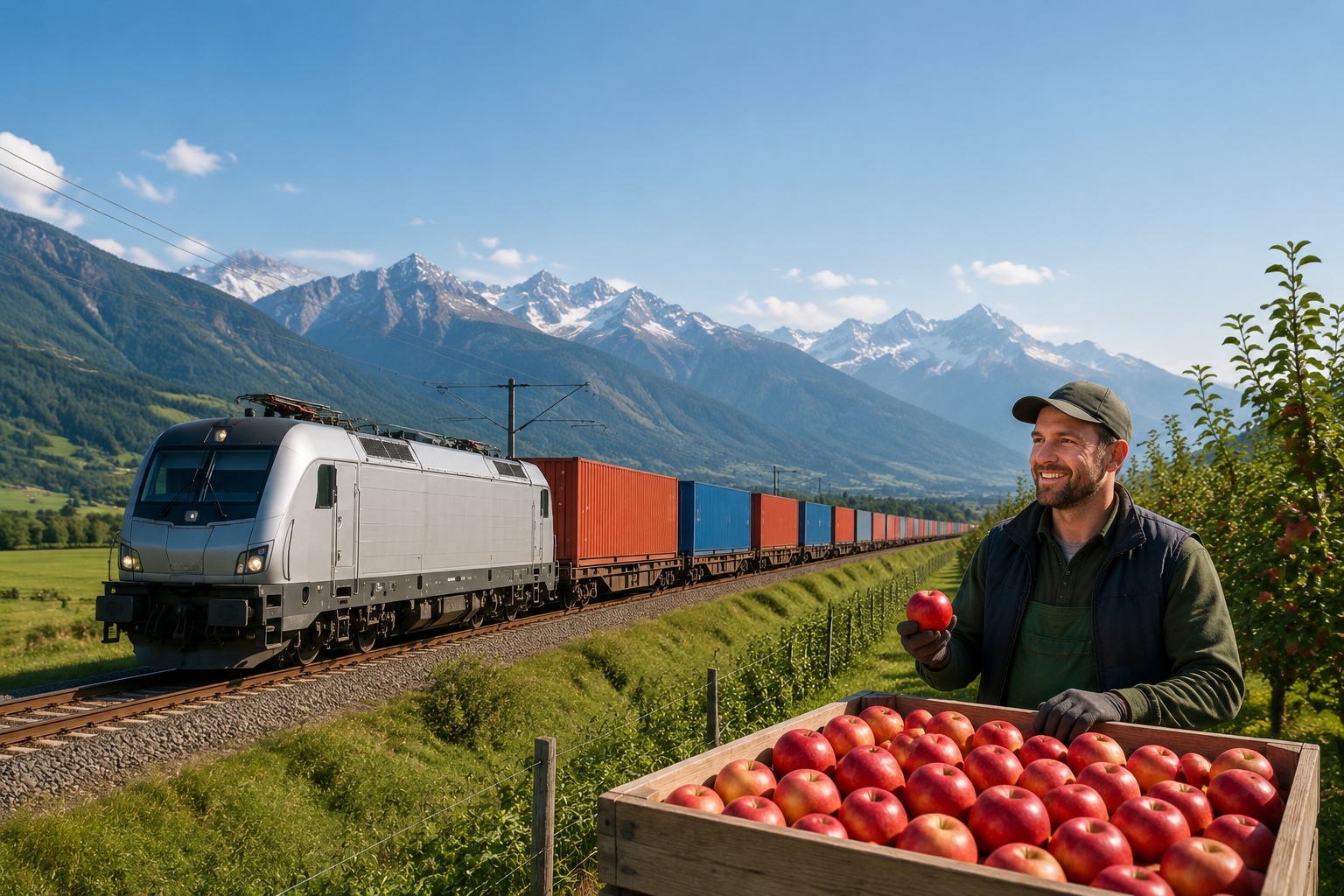

The Apple’s Journey Begins
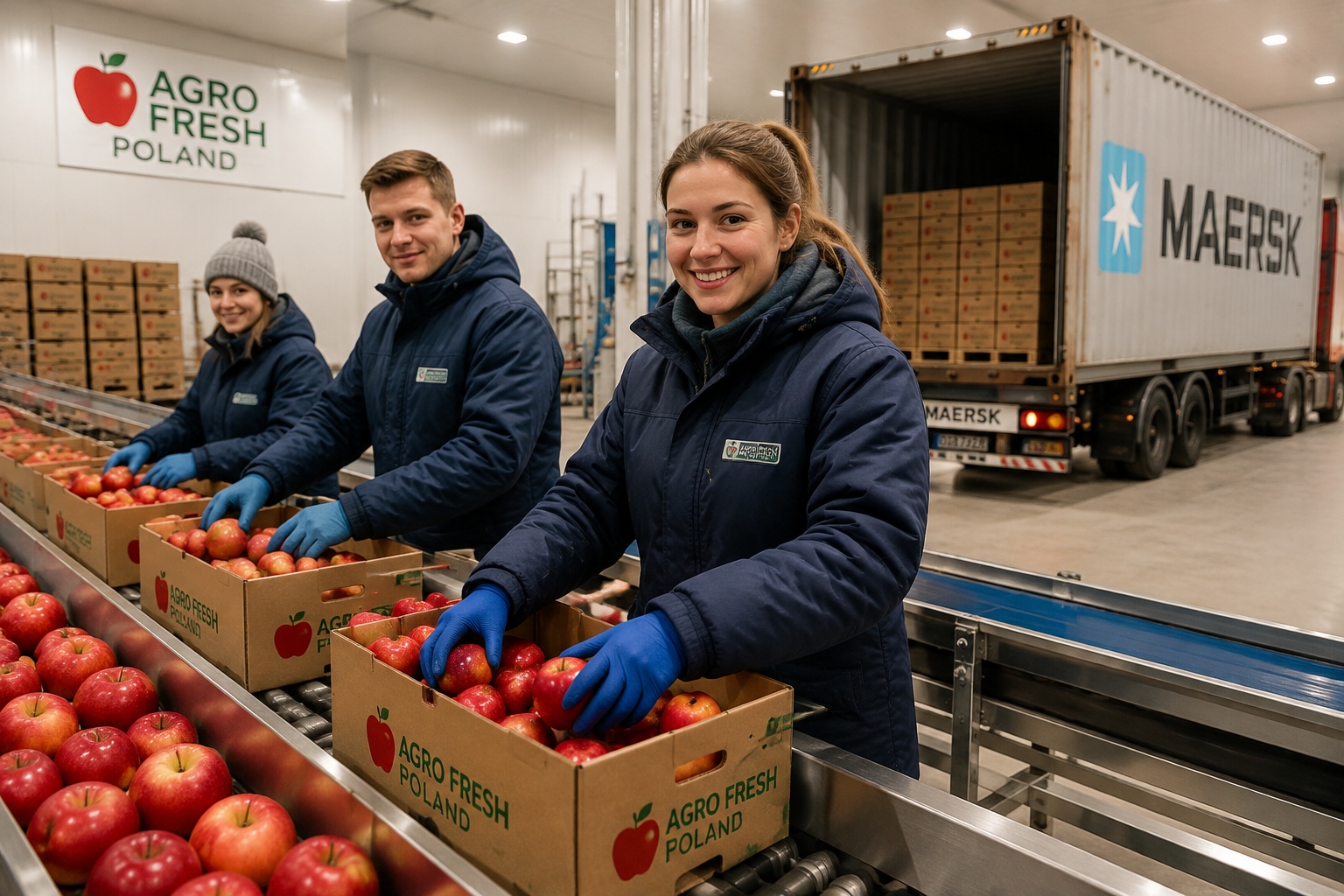
Inside a cold storage warehouse near Warsaw, workers in fleece jackets sort bright red Golden Delicious apples into cardboard boxes. Each box is then sealed with a label written in Chinese, marking the destination as a supermarket chain in Chengdu, a city of over 20 million people in southwest China. Sixteen days later, those same apples sit on a shelf in a brightly lit store, priced at twice the rate of local fruit.
This is not a one-off stunt. It is a small but visible example of how the China-Europe Railway Express, a network of freight trains connecting dozens of Chinese cities with European hubs, has transformed from a novelty into a commercial artery. And the apple is only half the story.
The Rise of a Continental Rail Network
Over the past decade, the China-Europe Railway Express has grown at a pace that almost no one expected. In 2011, the first train from Chongqing to Duisburg opened a route once thought impossible for freight. By 2023, more than 17,000 trips were made in a single year, carrying over 1.8 million twenty-foot equivalent units (TEUs) of cargo. The trains travel along routes that pass through Kazakhstan, Russia, Belarus, and Poland, covering distances of 8,000 to 12,000 kilometers.
Why would a company choose rail when sea freight is cheaper and air freight is faster? The answer lies in the middle ground. A train takes about 16 to 20 days, which is roughly half the time of a ship and a fraction of the cost of a plane. This makes it especially attractive for goods that are too time-sensitive for the ocean but too heavy or bulky for the air, from automotive parts to fresh produce.
But a freight train is not a one-way ticket. For the economics to work, the containers must come back full. This is where the apple comes in.
Why Poland’s Apples Found a Market in China
Poland is Europe’s largest producer of apples, with an annual harvest of over four million tons. For decades, a significant share of that crop went to Russia. Then, in 2014, Russia imposed an embargo on many European food products, including Polish fruit. The result was a surplus of apples and a painful search for new buyers.
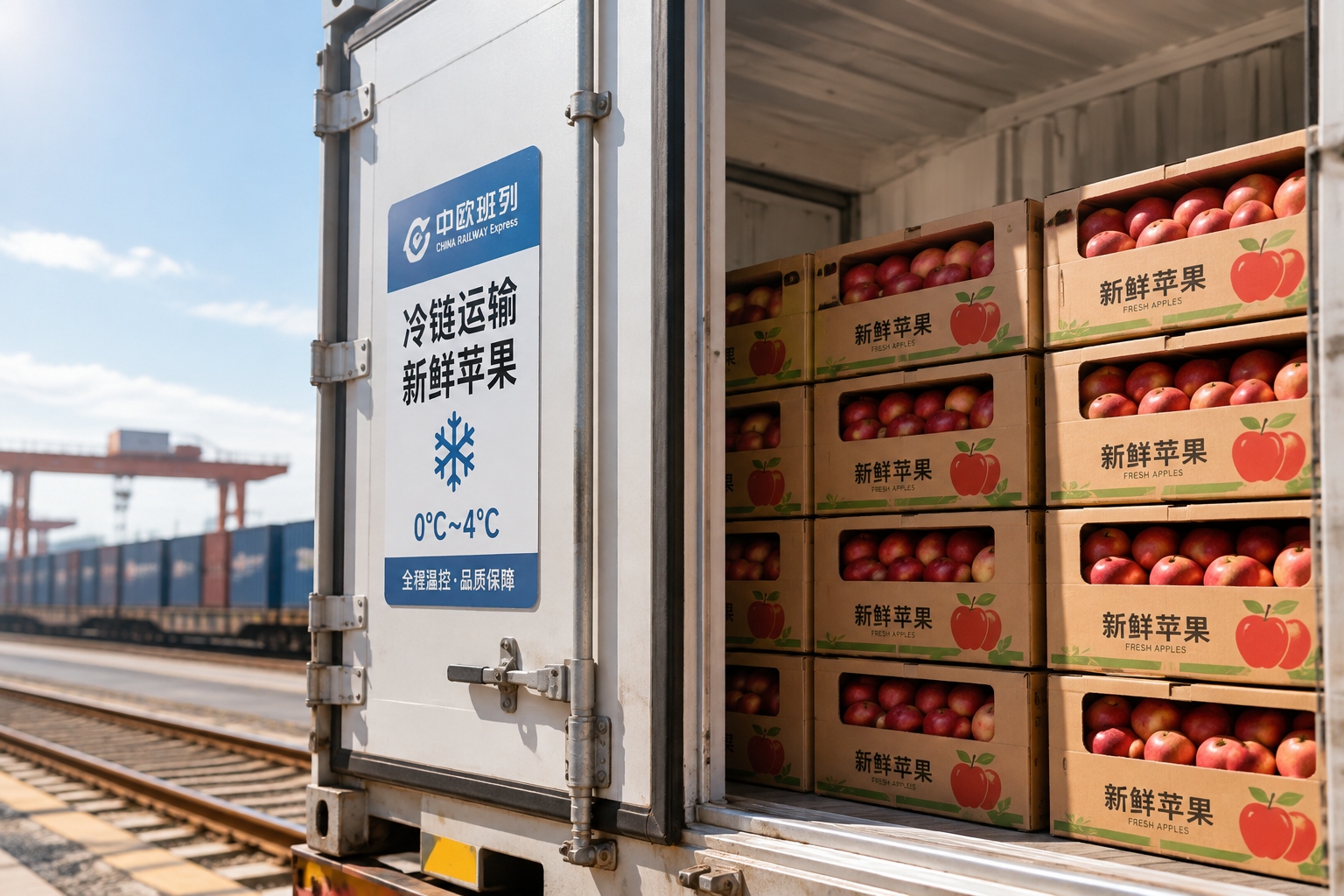
China, despite being the world’s largest apple producer, has a growing appetite for imported fruit. Chinese consumers perceive foreign apples as safer, tastier, and more consistent in quality. In recent years, Polish apples have received approval from Chinese customs authorities, and the rail connection has made the trip feasible. In a controlled atmosphere container, the apples can endure the 16-day journey without losing quality. The first pilot shipments arrived in Chengdu and Xi’an, selling out quickly in premium grocery stores.
The numbers are still modest compared to China’s overall apple imports, but the trend line is clear. According to the Polish Chamber of Commerce, exports of apples to China have grown steadily since the rail service became regular. At the same time, European dairy and wine producers have also started using the same route, hoping to break into the Chinese market.
The Return Trip: Chinese Goods Head West
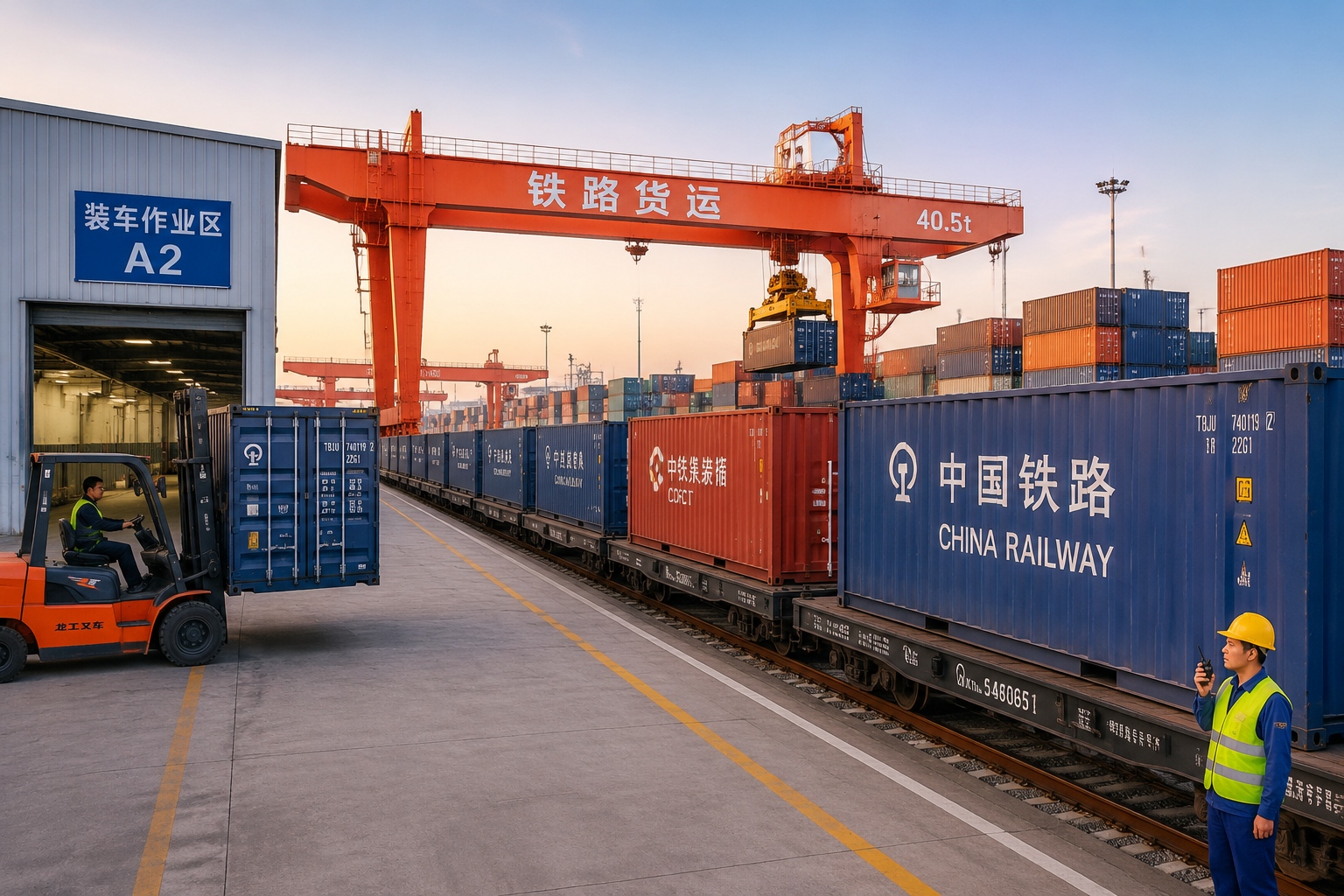
If the apple represents Europe’s newfound access to Chinese consumers, the eastward-bound trains are only half of the trade. The same containers that deliver Polish fruit are loaded with Chinese-made products for the ride back to Europe. At the Chengdu international railway port, one can watch a train being loaded with laptops, machine parts, clothing, and even furniture. In 2023, the China-Europe Railway Express carried over $31 billion worth of goods both ways.
This two-way flow is not accidental. Railway operators and freight forwarders actively work to balance the loads. When a container arrives in Chengdu from Warsaw, it is quickly assigned a new cargo for the westbound journey. Electronic components made in Chongqing, home appliances from Guangdong, and electric vehicles built in Shanghai all travel by rail to European distribution centers.
“At first, many trains returned empty because Europe had little to sell to China,” says Li Wei, a logistics manager at a freight company in Xi’an. “Now we see trailers of wine from Spain, cheese from the Netherlands, and apples from Poland all lining up for the eastbound leg. It’s a completely different picture from five years ago.”
The westbound cargo also enjoys the same cost-time advantage. A shipment of electric car batteries from China to Germany takes only 18 days by rail, compared to 35 to 45 days by sea. This speed allows European factories to keep lean inventories, which became especially valuable during the pandemic disruptions to ocean shipping.
Challenges Along the Track
Of course, the apple’s journey is not always smooth. Fresh produce requires refrigerated containers, called reefers, which are more expensive to maintain and operate. Customs checks on both sides of the border add hours that can make the difference between a ripe apple and a wasted one. For that reason, rail logistics operators have developed special procedures. Containers are pre-cleared, and temperature is monitored remotely via sensors. Some trains even run on a fixed schedule, so that the “cold chain” is never broken.
There are also external risks. The geopolitical landscape along the northern routes can shift, as with any overland trade link. In response, China has launched sea-rail combined routes that bypass certain border crossings, and plans are underway to expand the middle corridor through Central Asia. The rail network is still evolving, but its value is proven by the variety of goods it carries.
What This Means for Ordinary People
For consumers, the practical impact is visible. In a Chengdu supermarket, Polish apples sell for about 25 yuan (3.5 USD) per kilogram, which is considered a premium but not an unattainable luxury. In a Warsaw electronics store, a Chinese-made smartphone might arrive by rail, costing less than the same model shipped by air. Small producers and retailers, who cannot fill a ship or a plane, can now use a single container to send their products across half the world.
This is the essence of the New Silk Road trade: not a highway of giant deals, but a rail line of everyday goods. The apple on your kitchen table or the phone in your pocket might have ridden the same tracks. And each train that rolls into a station carries with it a simple truth: distance is no longer the barrier it used to be.
Start the discussion at forum.chinacomes.com