

Morning on the Plateau
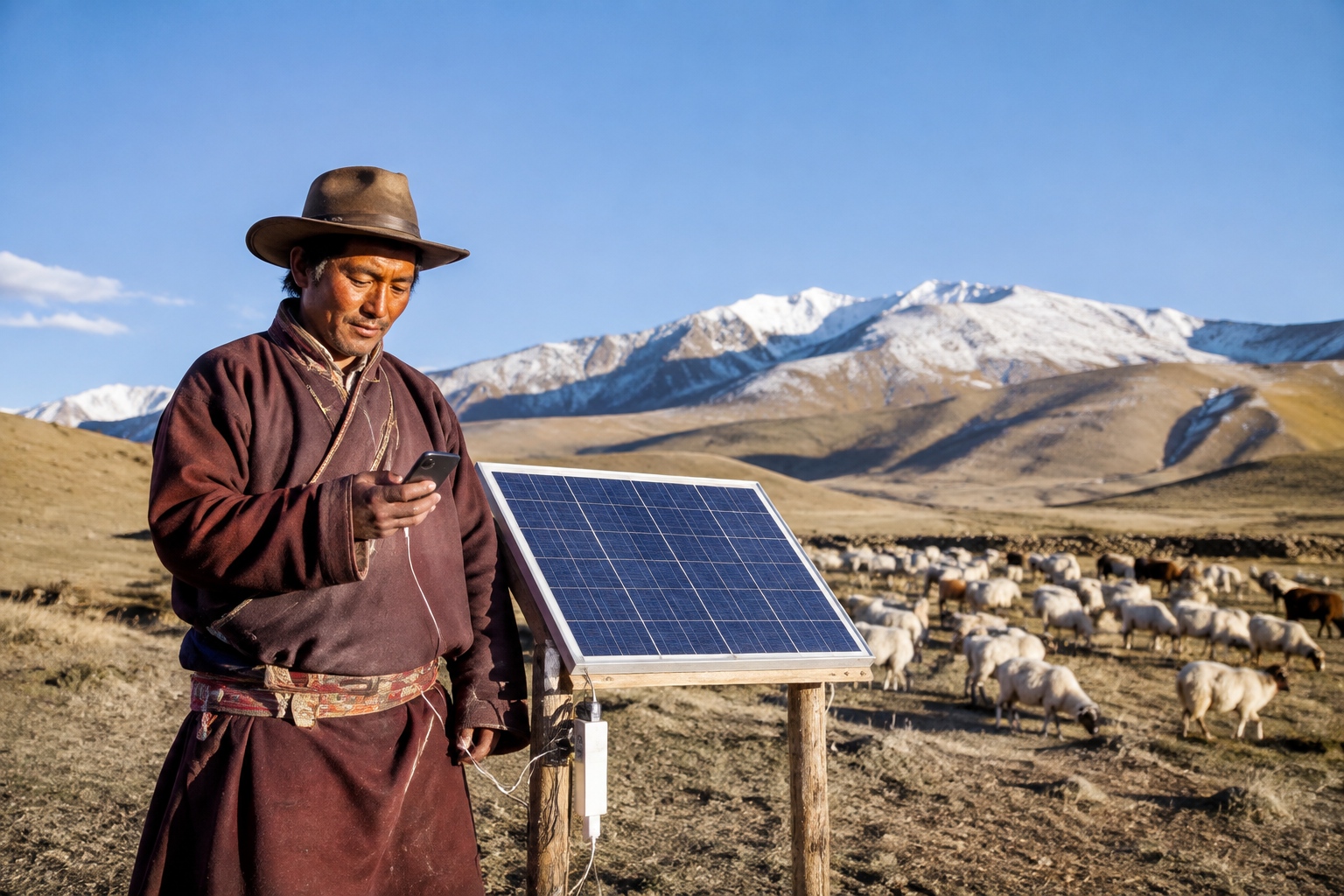
At 4,500 meters above sea level, the air is thin and the sun is fierce. In a remote pasture near Ali, Tibet, a Tibetan man named Tashi wakes up before sunrise. The first thing he does is walk to a small blue panel set on a wooden frame, brush off the night’s frost, and plug his phone in. Within an hour, the battery icon, which showed 12% the night before, is climbing steadily. Nearby, a small solar-powered pump hums quietly, lifting groundwater into a trough where his fifty sheep drink their fill.
This scene, unimaginable just a decade ago, is now routine for Tashi and thousands of herders living in China’s most remote areas. The same energy system that powers his phone also keeps his tent lit, runs a small radio, and makes sure his livestock never go thirsty.
Why Ali? One of the Toughest Places to Live
Ali Prefecture in northwest Tibet is the least populated area in one of the least populated regions of China. The average altitude is over 4,500 meters, winters are long and brutally cold, and oxygen levels are only about 60% of those at sea level. For decades, building a traditional electricity grid here was almost impossible – transmission lines would have to cross frozen soil, mountains, and vast empty basins.
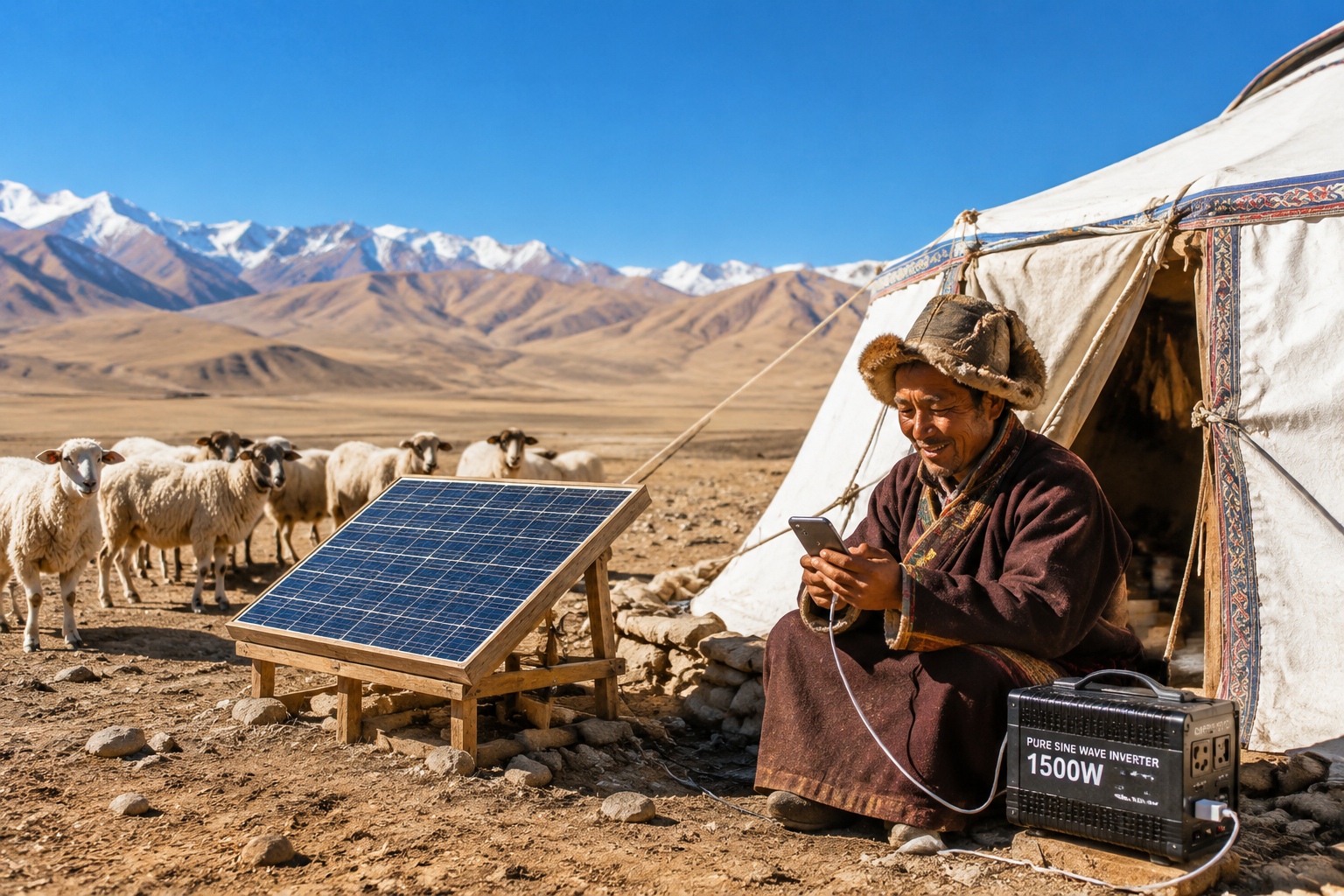
Most herders lived with no electricity at all. Kerosene lamps and butter lamps provided dim light. Mobile phones, when they arrived, were a problem: there was no way to charge them. Tashi remembers riding three hours on horseback to the nearest town just to charge his phone for an hour. He would tie his horse at the charging station, wait, and then ride back in the dark.
Solar Panels as a Game Changer
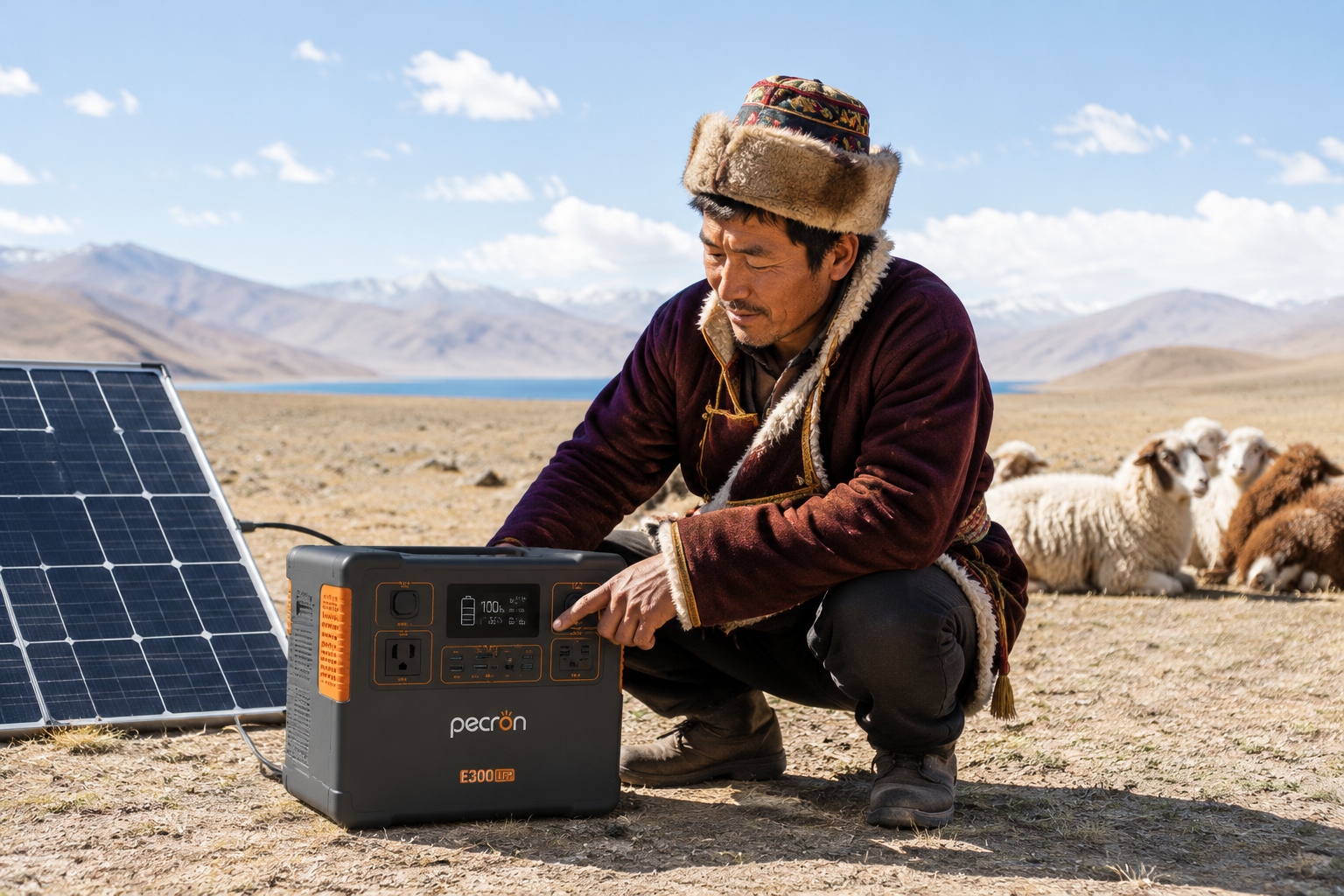
The turning point came with the spread of affordable solar photovoltaic (PV) systems. China has invested heavily in distributed solar for off-grid areas, especially in Tibet and other western provinces. Tashi bought his first 600-watt panel system three years ago with a government subsidy of 40% – he paid about 1,800 yuan for the whole setup, including a battery bank, inverter, and a solar pump.
The numbers are simple: on a clear day, his panel generates about 2.5 to 3 kilowatt-hours (kWh) of electricity. That’s enough to charge two phones, power five LED bulbs, run a small TV for three hours, and keep the water pump running for half an hour. In winter, when sunlight is weaker, he still gets 1.5 to 2 kWh, enough to cover his basic needs.
From Charcoal to Clean Energy
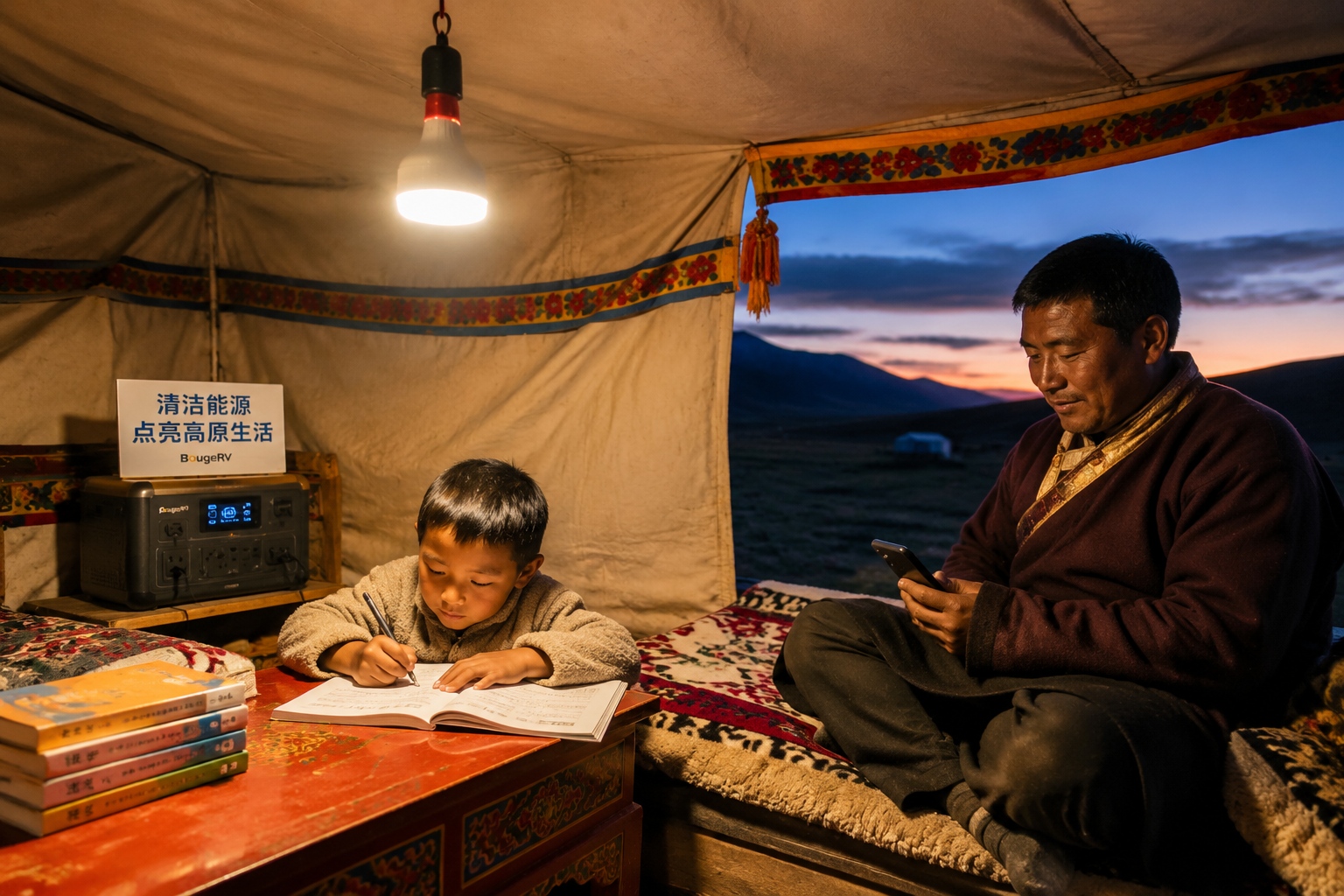
Before, cooking often involved cow dung or charcoal, and lighting came from a kerosene lamp that filled the tent with smoke. Now, Tashi’s wife uses an electric pressure cooker, his son does homework under a bright LED lamp, and the tent stays clean and warm. The family can also keep a small refrigerator running, storing meat and vegetables for weeks.
“The most important thing is communication,” Tashi says. “My phone is always charged now. I can call my daughter who works in Lhasa, check the weather forecast, and even buy supplies online from the county town.”
The Sheep That Benefit Too
The fifty sheep are more than just livestock – they are the family’s bank account, food supply, and pride. But in this arid highland, getting water for them was the hardest daily chore. In winter, Tashi had to break ice from frozen streams; in summer, he would lead the flock to distant water sources. It took hours every day.
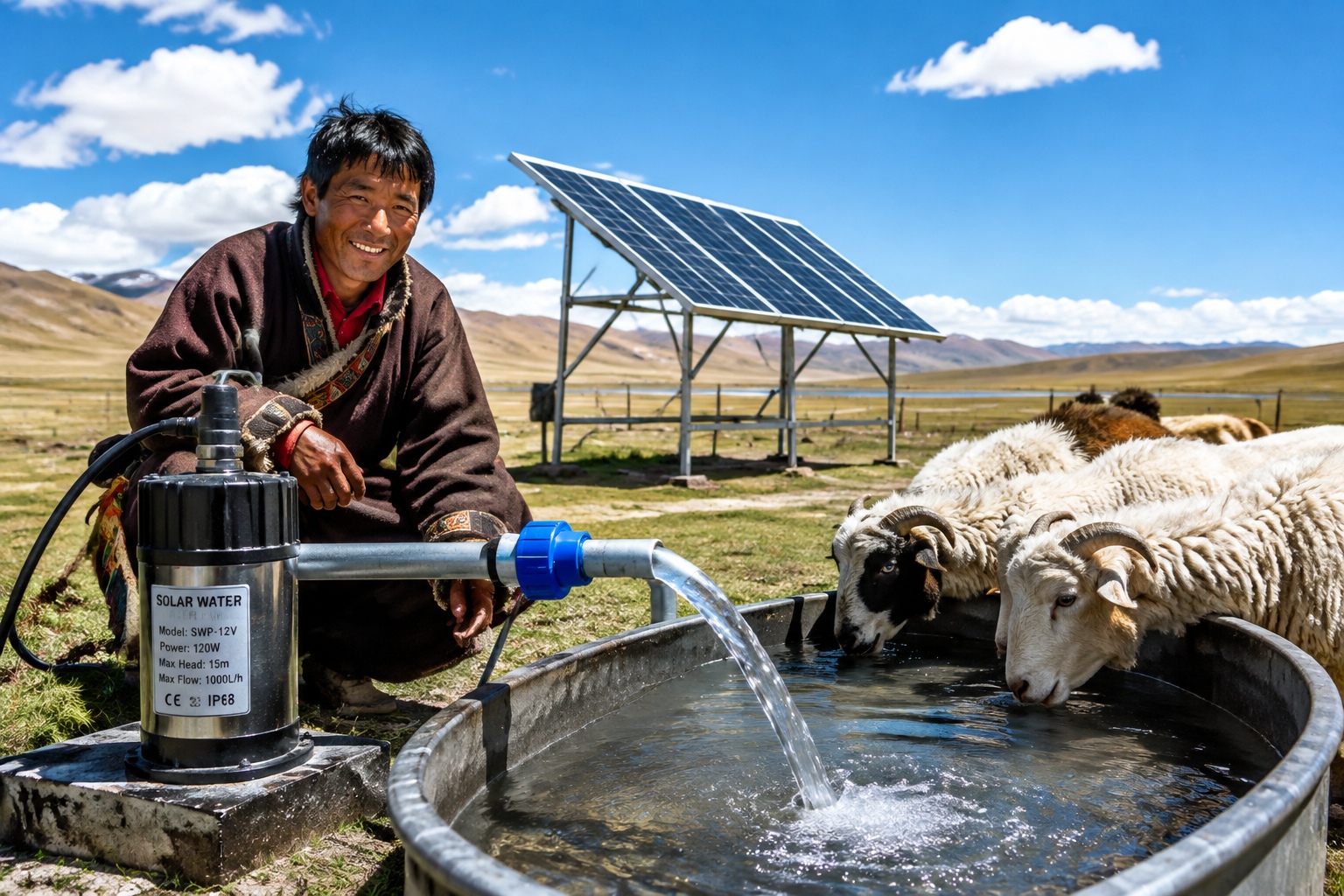
Now, a 120-watt solar submersible pump does the work. It pulls water from a well about 10 meters deep into a large tank, then feeds the drinking trough automatically. The sheep drink whenever they want, which has visibly improved their health. Lambs are heavier, and the wool is thicker. Tashi estimates he saves at least four hours of labor every day – time he now spends on other things, like checking pasture conditions with a drone he can also recharge from the same battery.
A Small Farm, A Big Impact
For a family like Tashi’s, the solar system has reduced the cost of living too. They no longer buy kerosene or candles, and they rarely need to drive to town for basic services. In a year, Tashi calculates he saves about 2,000 yuan in fuel and energy costs – a significant amount for a pastoral family whose annual cash income might be around 30,000 to 40,000 yuan.
This exact scenario is repeated across Tibet and beyond. Government data shows that by 2020, China had achieved full electricity access for all residents, including those in the most remote pastoral areas. In places like Ali, that often means off-grid solar systems rather than connected power lines.
What This Means for China’s Renewable Push
Tashi’s story is not just a feel-good anecdote; it’s part of a larger energy transition. China is the world’s largest producer of solar panels, and also a leading installer. Distributed solar systems – ranging from rooftop panels in cities to standalone systems in the countryside – are making renewable energy accessible to every citizen.
For the Qinghai-Tibet Plateau, solar energy is a natural fit. The region receives more than 3,300 hours of sunshine per year, one of the highest numbers in the world. High altitude and clear skies mean strong solar radiation. Harnessing this resource doesn’t just help individual herders – it also contributes to carbon reduction goals and protects fragile ecosystems by reducing dependence on wood and dung.
Challenges and Realities
Of course, solar life has limits. Batteries lose capacity in extreme cold, so winter performance drops. The system requires maintenance, and dust or snow can block the panels. Tashi has learned to clean them every few days and angle them correctly for the season. When there are several cloudy days in a row, he has to ration power – lights only for a few hours, no TV, and the pump runs only once a day.
Yet even with these limitations, the improvement is life-changing. Tashi compares his current setup to the old days: “Before, we were cut off from the world after dark. Now we can watch the national news, study online lessons, and call doctors for advice. Our sheep are healthier, and so are we.”
A Future Powered by the Sun
As solar technology improves and storage capacity grows, more herders are adding panels and batteries to their systems. Some are even using solar-powered electric fences to control grazing zones, reducing the need to physically watch the sheep. Others are experimenting with solar water heaters for bathing.
For Tashi, the next step is buying a bigger battery to get through extended cloud cover, and perhaps a satellite internet terminal to access online education for his son. These may sound like small conveniences, but in Ali, they represent enormous progress.
The image of a Tibetan herder using solar panels to charge his phone while his fifty sheep drink water pumped from the ground is not a postcard from the future – it is happening right now. It shows how clean energy, when combined with policy support and real needs, can transform the most unlikely places.
Conclusion: The Sun Is the Equalizer
In the world’s highest inhabited region, the sun is no longer just a source of warmth and light – it’s a source of opportunity. Tashi’s solar panels are a small-scale example of China’s efforts to bring modern living to every corner of the country. They prove that development doesn’t always require giant infrastructure; sometimes, a simple panel and a good idea are enough.
When you talk to Tashi, you don’t hear grand theories about climate change or carbon neutrality. You hear about the joy of seeing your child study under a bright lamp, the security of a fully charged phone, and the satisfaction of watching your sheep grow fat. That is the real face of renewable energy in China today.
Start the discussion at forum.chinacomes.com