
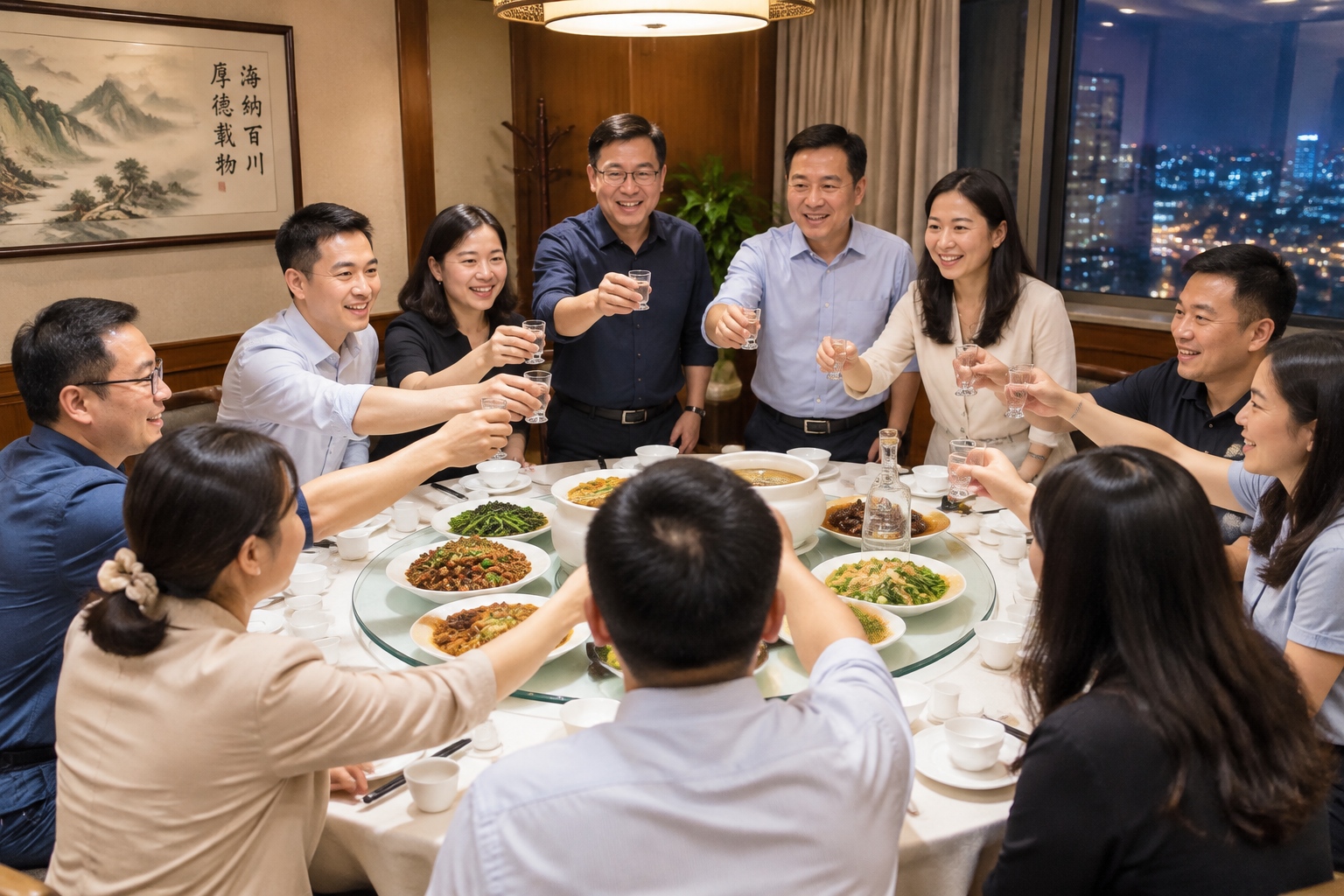

A table, twelve people, one small glass
It is 7:40 p.m. in a private room on the third floor of a restaurant in Chengdu. The table is round, big enough for twelve, with a lazy Susan in the middle and a plate of cold appetizers already set out. A man in his fifties — the host, you have been told — stands up and lifts a glass roughly the size of a thimble. He says something you do not catch. Eleven people rise with him.
You are the only foreigner. Your glass is full. Nobody is looking directly at you, which is exactly how you know everyone is looking at you.
Do you empty it? Sip it? Wait?
That single decision will be read by the room with more precision than anything you say for the next two hours. This is not because Chinese business culture is mysterious. It is because a Chinese business dinner is not a meal with drinks. It is a meeting with a different rulebook, and baijiu is the mechanism that runs it.
Why baijiu, and why it is not really about the alcohol
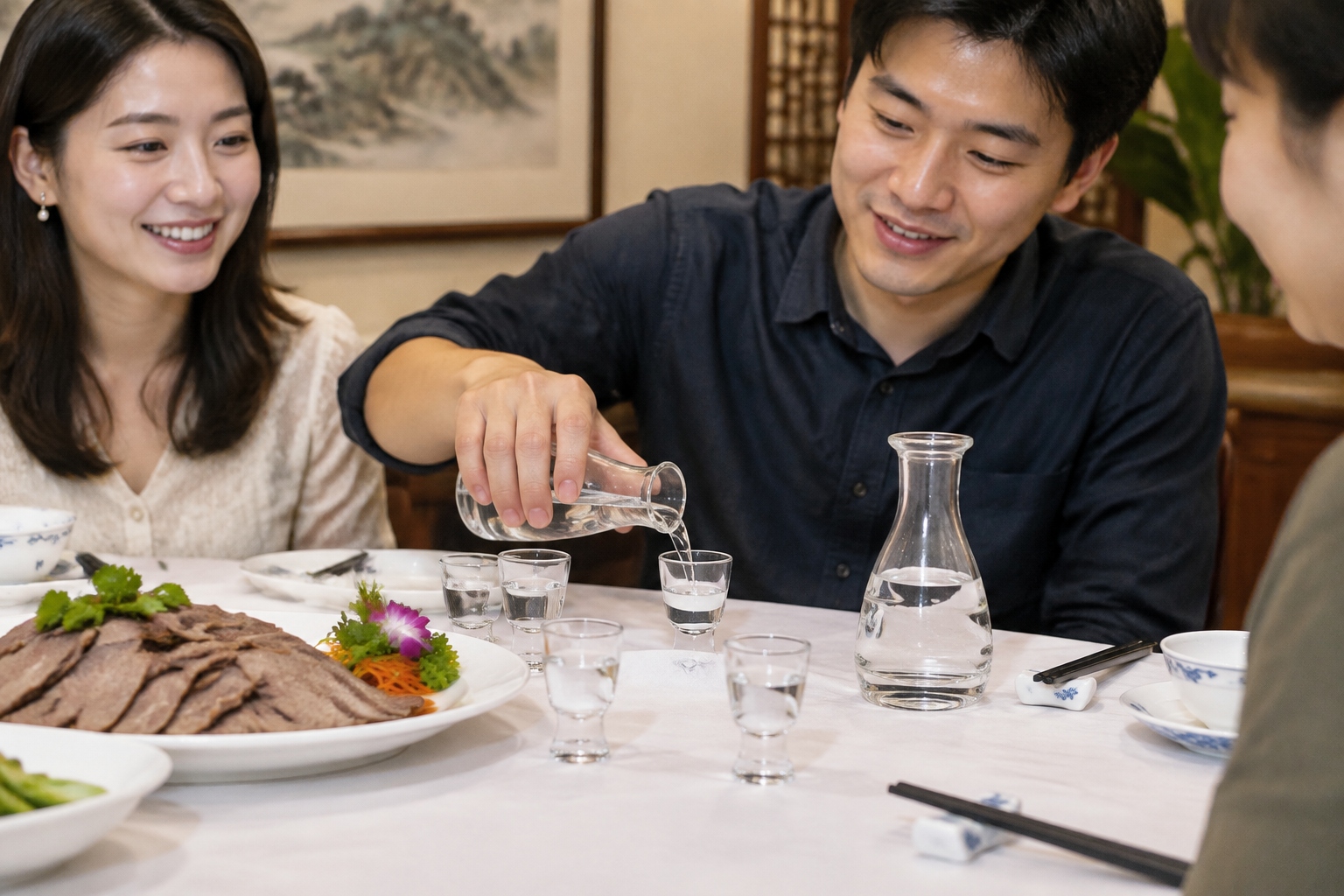
Baijiu — literally “white liquor” — is a grain spirit, usually sorghum, typically between 38 and 60 percent alcohol by volume. It is served in glasses of 10 to 15 millilitres. The tiny size is not mercy. It is a counter. Ten small glasses equal a serious amount of alcohol, and the glasses make the count visible to everyone at the table.
In a society where the line between “inside” and “outside” is drawn sharply, sharing a physical discomfort is a shortcut to signalling trust. The discomfort is the point. It works the way hosting someone overnight in your home works, or the way staying up all night with a colleague before a deadline works: it costs you something, and the cost is the message.
There is a practical layer too. Formal meetings in China tend to be structured and role-bound — the agenda is set, everyone speaks in turn, junior people keep quiet. The dinner is where those roles loosen. Deals are not signed at the table, but a great deal of informal negotiation, troubleshooting, and relationship repair happens there.
The phrases you will actually hear
感情深,一口闷;感情浅,舔一舔
Roughly: “Deep feelings, finish it in one; shallow feelings, just take a lick.” It is said with a grin while someone is urging you to empty your glass. It is a joke with a hook in it — if you sip, you have publicly rated the relationship as shallow. The usual way out is to laugh, take a genuine drink, and hand the same line straight back to the person who said it.
我干了,你随意
“I will finish mine. You do as you like.” This sounds like permission. It usually is not. It is a test of whether you will reciprocate, and the more senior the speaker, the less optional the reciprocity. If a vice president says this to you at the eighth glass, the socially safe answer is to drink — but not necessarily to match him. Say in advance that you have a limit, and then follow it.
随意随意
“As you like, as you like.” Said by a host early in the meal, before anyone has drunk much, it is genuine. Said later, by someone who has just emptied his own glass while looking at yours, it is not.
养鱼呢?
“Are you raising fish?” — a jab at the amount of liquid still sitting in your glass. It is teasing, and it is a nudge. Accepting the joke without draining the glass is entirely possible: raise it, drink a real sip, and put it down.
以茶代酒
“Substituting tea for liquor.” This is a legitimate move for medical reasons or because you are driving, and it is widely accepted. The rule is: say it once, early, with a reason, and then do not wobble. Announcing it at the tenth glass looks like an excuse.
一起走一个 / 打一圈
“Everyone take one together” is the group toast — often three in a row at the opening. “打一圈” or “通关” means one person toasts every other person at the table, one by one. It is expensive for whoever does it, physically and socially. It is usually the boss, the host, or the person with something to sell.
Seating, order, and the shape of power
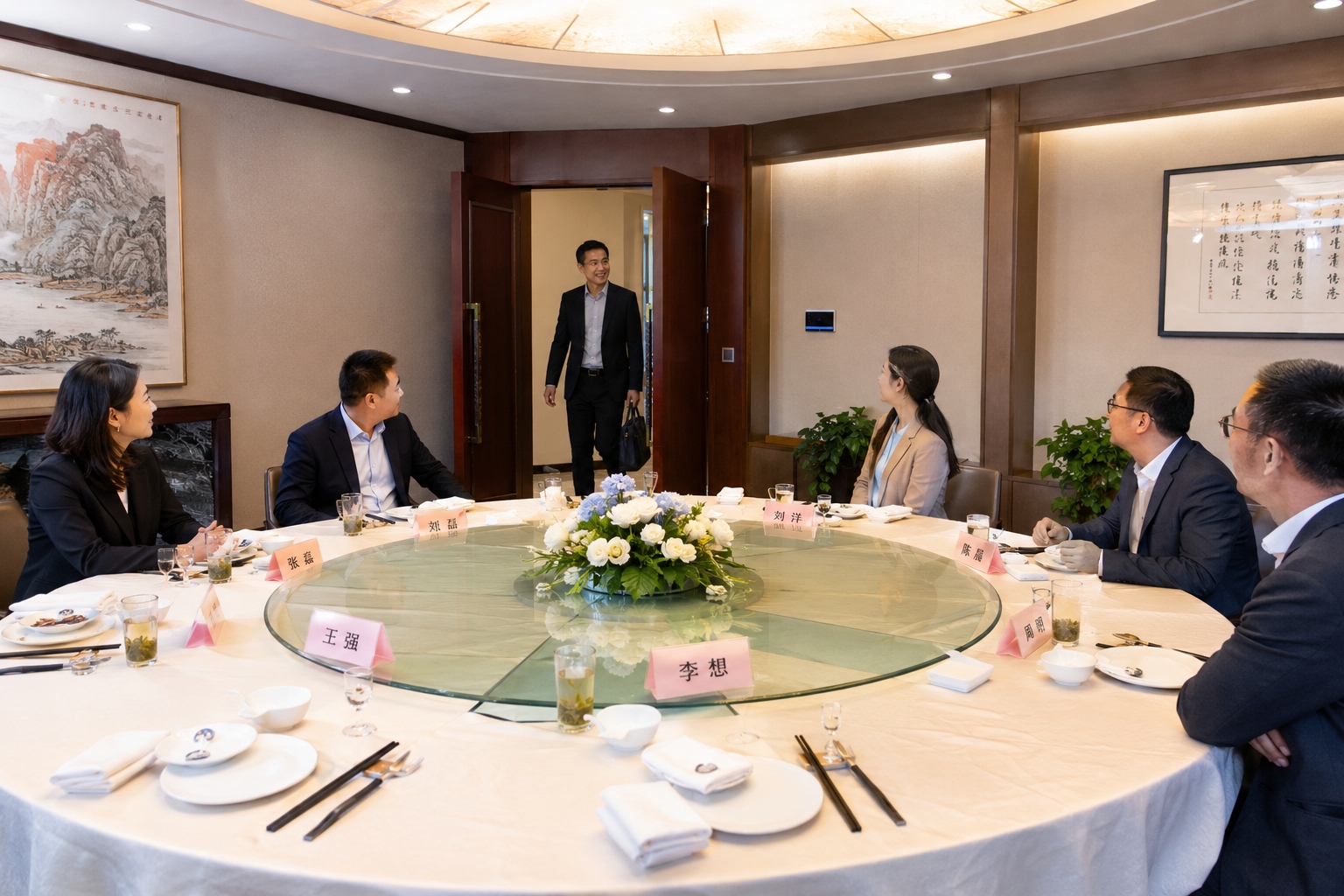
In a formal setting, the table is round and the seating is not random. The host sits facing the door — partly for the practical reason that he can see who comes in, mostly because the seat controls the room. The guest of honour sits to his right, or directly opposite him in the more elaborate Shandong style, where a “main host” and a “deputy host” face each other and the guests are interleaved between them.
The universal rule is simpler than the variants: the further from the door and the closer to the host’s right hand, the more senior the seat. Your place will have been decided before you arrive. If you are unsure, stand and wait to be told. Sitting in the wrong chair is a real error, not a charming one.
Toasting follows the same logic. The host toasts the guest of honour first, then works down the rank. Juniors do not leapfrog upward. Two small physical details carry a lot of weight: hold your glass with both hands, or support its base with your left hand; and when you clink, touch your rim below the other person’s rim. It costs nothing and it is noticed immediately.
One more: do not pour your own glass first. Pour for the people beside you — someone will pour for you. At a formal table there is usually one younger person whose unofficial job is to keep every glass filled. If that person is you, it is a compliment, not a punishment.
The night the table turned
A composite case, drawn from situations foreign managers in China describe again and again. Daniel, a Dutch supply-chain manager based in Suzhou, spent his first Chinese business dinner in 2019 drinking everything that was put in front of him. He finished the evening in the restaurant bathroom, and the Chinese partner finished it managing him — arranging a car, apologising to the restaurant, quietly deciding that this foreigner needed supervision. Nobody was impressed. He had mistaken the game for a contest.
Three months later, with the contract still unsigned, he prepared differently. He asked a Chinese colleague to walk him through the guest list: who outranked whom, who was likely to push, who actually ran quality control. He set one rule for himself and said it out loud at the opening toast: “我酒量一般,但是感情真” — my tolerance is average, but my sincerity is real. Then, every time he did drink, he attached a specific reason to it. “This glass is for your QA team — three shipments last year, not one delay.” Specificity, it turns out, buys more goodwill than volume.
The moment that mattered came near the end, when the vice president raised his glass and said “我干了,你随意.” Daniel drank, then immediately refilled the older man’s glass and asked him a real question about a supplier he was worried about. Attention moved off the alcohol and onto the problem.
The contract was signed two weeks later. The vice president’s summary: “你懂规矩,但你不装” — you understand the rules, but you are not pretending. That is the highest compliment available at a Chinese business dinner.
How to stay clear-headed and still be in the room
Eat before you go, and eat during. Baijiu on an empty stomach gives you about twenty minutes. The food is not decoration; it is your defence.
Do your homework. Ask a Chinese colleague beforehand who is coming, who matters, and what will be expected of you. Ten minutes of preparation changes the entire evening.
Declare a limit early and hold it. “我最多喝三杯” — three glasses, maximum — said with a smile at the start, is respected. Said at glass six, it is not.
Make your toasts specific. One well-aimed toast — to the engineer who fixed the line, to the team that shipped on time — lands harder than five generic ones.
Learn the two-hand hold and the low clink. Free, instant, and read by everyone.
Use the exits that already exist. Since 2011, drink-driving in China has been a criminal offence at 80mg per 100ml of blood, with licence suspension and a criminal record attached. “我开车来的” — I drove here — is close to bulletproof. So is a genuine medical reason, said once, early, without apology.
Water and food, every round. Alternating a glass of water with every glass of baijiu is not a sign of weakness; it is the standard practice of the Chinese drinkers who survive these dinners for thirty years.
Refusing a glass is not refusing a person. Touch the glass to your lips, thank them, give your reason. The gesture is what is being exchanged. Only the gesture is being exchanged.
The table is changing
None of this is fixed law. It is local, generational, and negotiable — and it has shifted a lot in the last decade.
The 2012 rules against official extravagance cut deep into the banquet economy. By industry association figures, national baijiu output fell from roughly 13.6 million kilolitres in 2016 to under 4.5 million in 2023. At the same time, premium brands such as Kweichow Moutai kept posting record revenues. Fewer bottles, more expensive ones, and much of the growth coming from personal purchases and gifts rather than corporate tables.
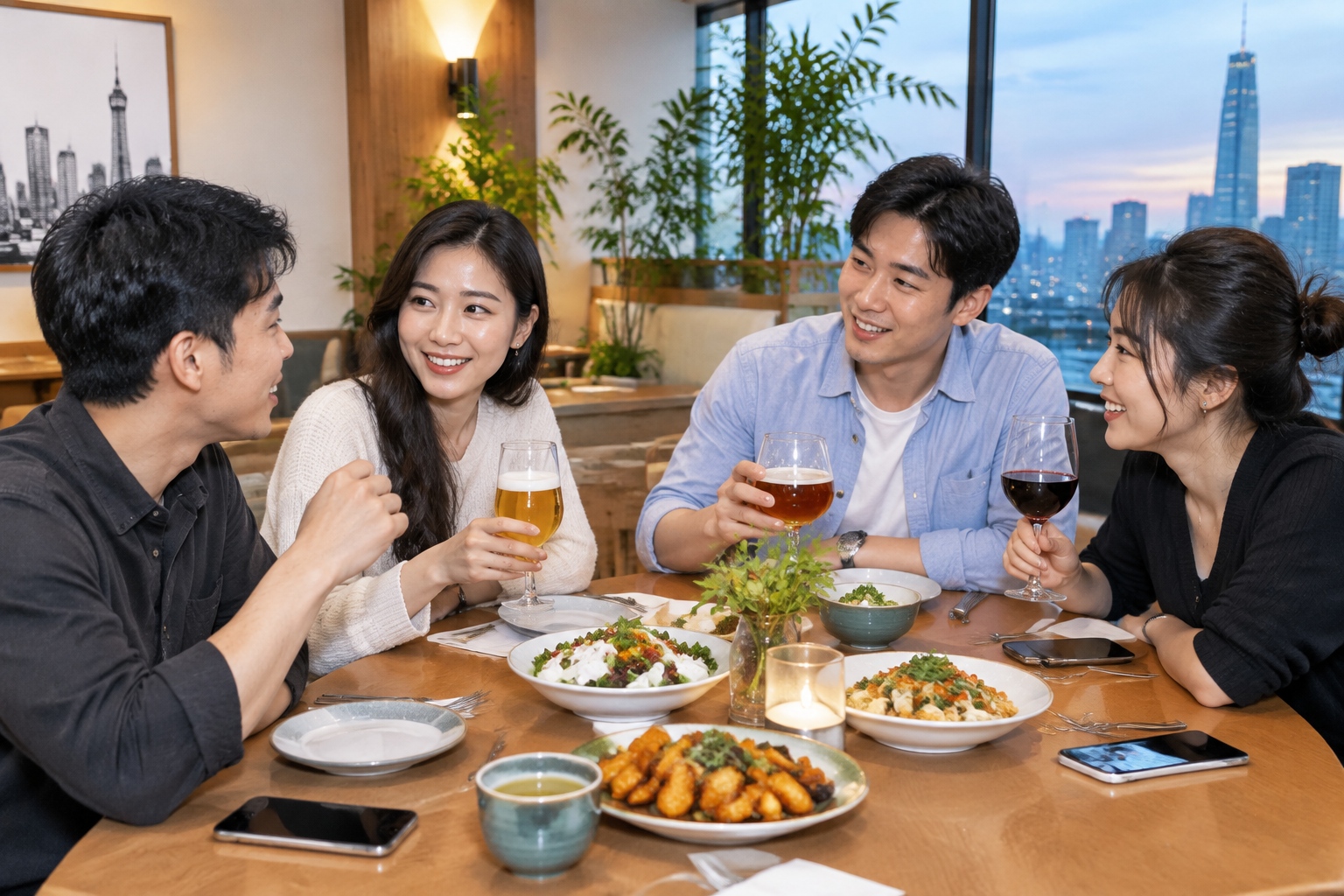
Younger urban professionals drink less than their parents, and talk about it openly. 酒桌文化 — “drinking-table culture” — is a contested phrase online in China, and a lot of young Chinese describe it as something to escape rather than master. In tech companies, startups and multinational offices, dinners increasingly run on wine, craft beer, or nothing at all. Regional differences matter too: Shandong and the northeast are heavier, Guangdong and Shanghai more relaxed, and Inner Mongolia has hospitality rituals fierce enough to surprise anyone.
So the first skill is not knowing the rules. It is reading which table you are at.
What the hidden language is actually saying
Strip away the folklore and the point of the game is narrow. A glass raised toward you is a small gift of face — a public statement that you matter to the person raising it. Not responding is a small withdrawal. That is all.
Understood that way, the practical move is not to drink more. It is to return the gesture with something real: a specific compliment, a favour, a phone call the next morning that proves you remembered the conversation.
Go in treating it as a drinking contest and you will lose, one way or another. Go in treating it as a social contract written in very small glasses, and you can participate at whatever level your liver allows — and be remembered, which is the actual objective, as someone who understood.
Start the discussion at forum.chinacomes.com