
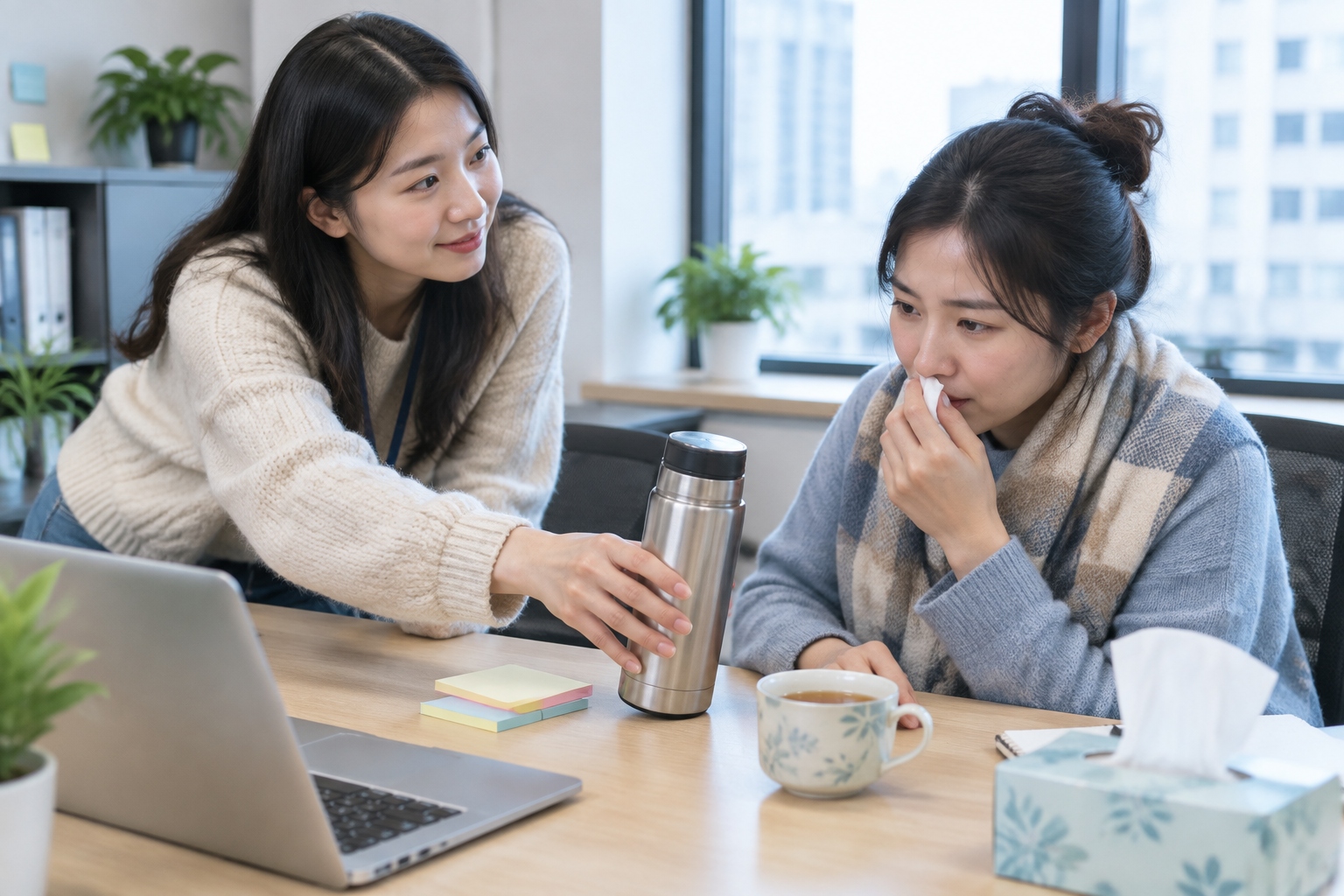

A Thermos Slides Across the Desk
You are three days into a new job in Hangzhou. During a meeting you cough once — just once. By lunch, a colleague has pushed a stainless steel thermos across the desk toward you and said four words: 多喝热水 (duō hē rè shuǐ). Drink more hot water.
To plenty of newcomers, this lands as a brush-off. Not a question about whether you are okay. Not a suggestion to see a doctor. Just water. Warm water. As if a beverage could fix a lung.
Stay a few months, though, and the same four characters start to sound different. It is not a diagnosis. It is a hand on the shoulder, delivered in the most practical language Chinese people have.
Why Hot Water at All?
The traditional medicine layer
In Traditional Chinese Medicine (TCM), the body is a system that prefers balance and warmth. Cold drinks, especially over ice, are thought to shock the stomach, slow digestion and drain what TCM calls 阳气 (yángqì) — roughly, the body’s warming, active energy. Hot water, by contrast, is believed to keep things moving, ease cramps and help the body do its own work.
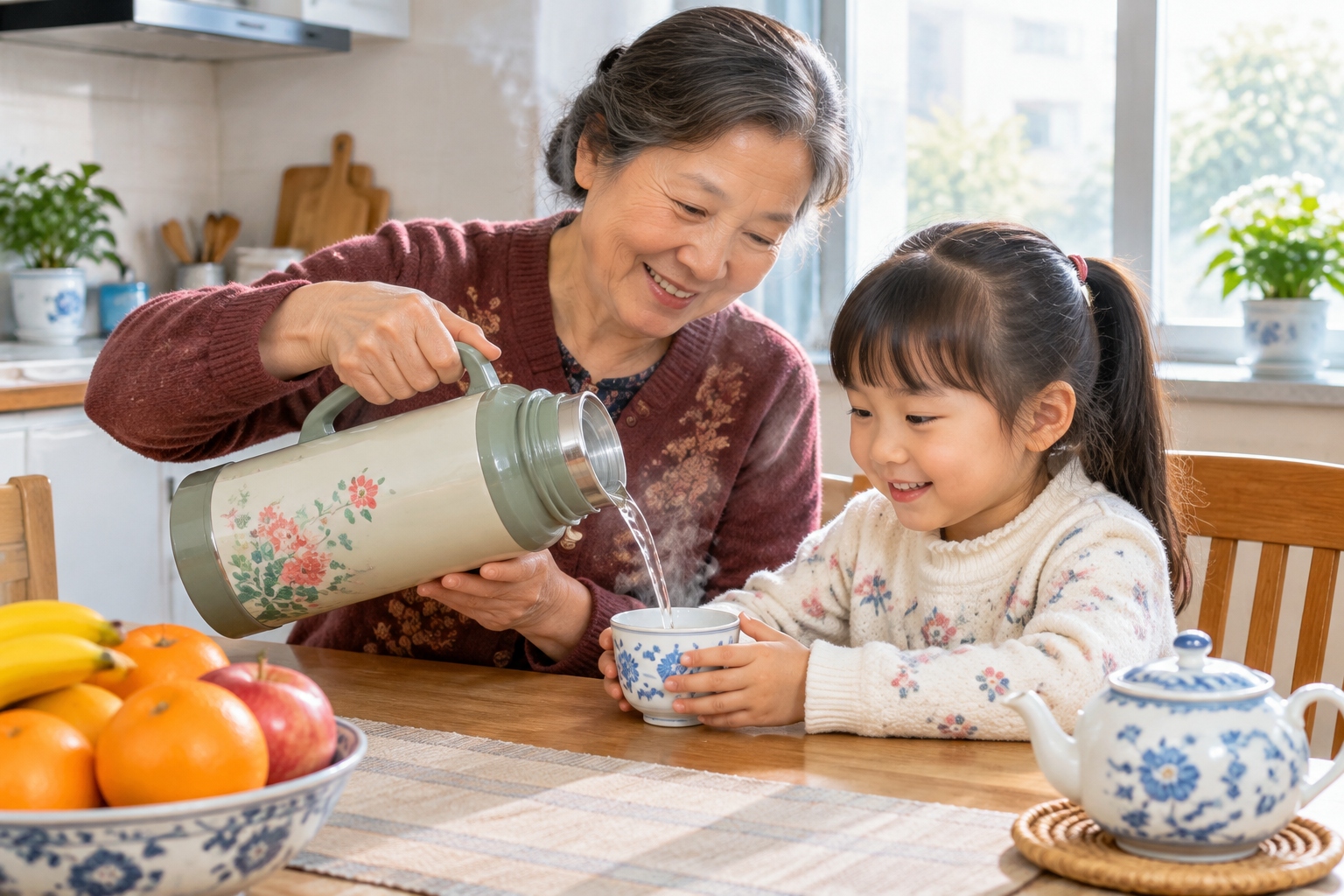
You do not have to accept the theory to notice its reach. It shapes habits in obvious places: women are told to skip iced drinks during their period; new mothers eat hot soups and avoid cold food for a month (坐月子, zuò yuèzi); grandparents pour hot water into a grandchild’s cup with the confidence of someone prescribing medicine.
The public health layer
There is a less mystical reason too, and it is the reason the habit outlived its origins. For much of the twentieth century, drinking water in China was not reliably safe. From the 1930s onward, and especially after 1949, public health campaigns pushed one simple instruction: boil your water. Boiling kills cholera, typhoid and other waterborne diseases. The thermos — 暖水瓶 (nuǎnshuǐpíng) — became standard household equipment, sometimes given as a wedding gift.
So drinking hot water is part folk medicine, part muscle memory from a time when hot water meant safe water. Two very different reasons, one daily habit.
What Hot Water Culture Looks Like in Daily Life
Once you start noticing, you see it everywhere.
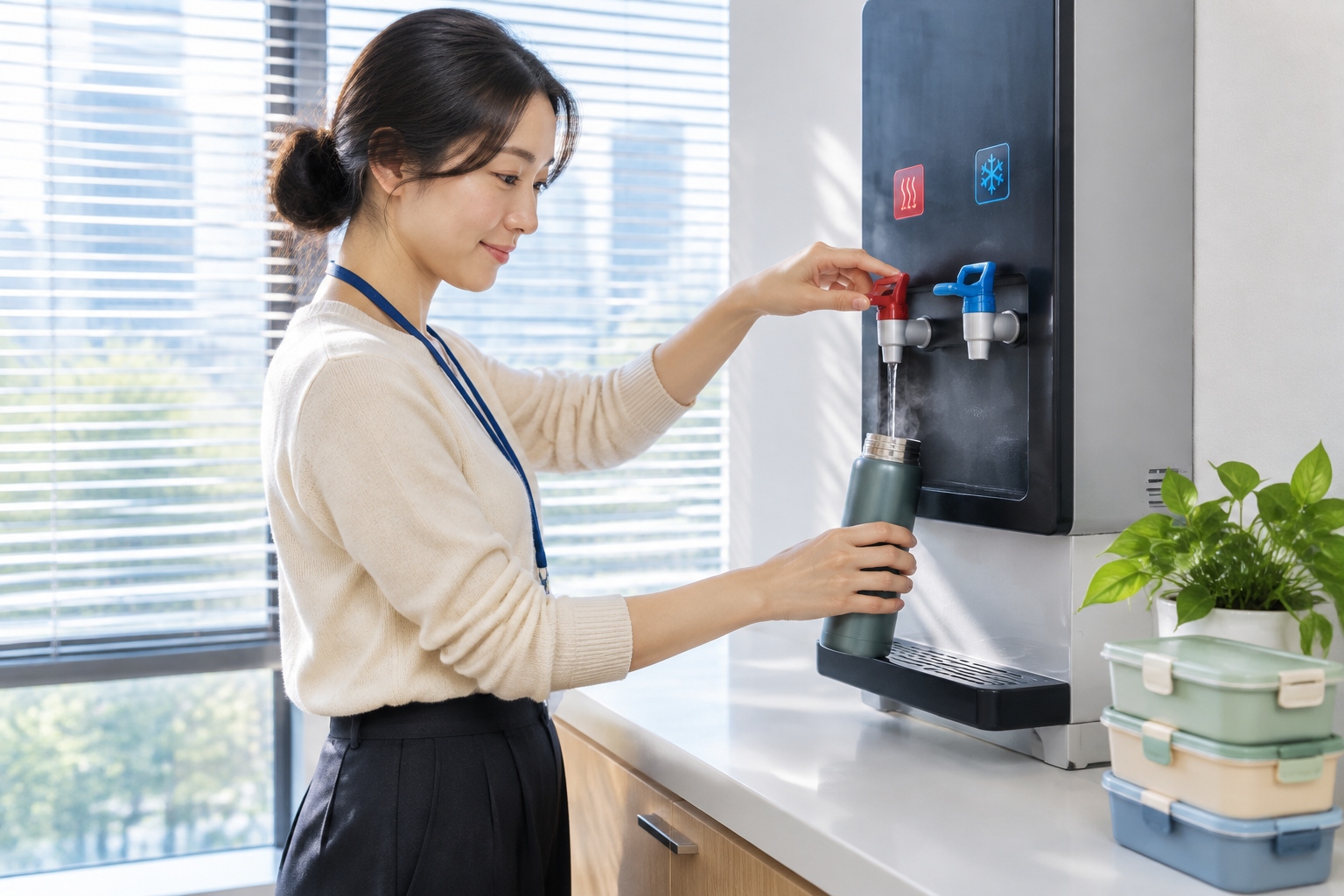
- Office water coolers have a red tap and a blue tap. Plenty of people never touch the blue one.
- Convenience stores shelve room-temperature water (常温, chángwēn) right next to the chilled bottles, because that is what many customers reach for.
- Every carriage on a Chinese high-speed train has a hot water dispenser at the end. Passengers bring their own tea or instant noodles.
- Restaurants ask whether you want 常温 or 冰 — room temperature or iced. Asking for no ice is completely normal, not fussy.
- Airports, hospitals, libraries and railway stations provide free hot water taps. Regulars carry their own cup.
- The insulated tumbler (保温杯, bǎowēnbēi) is a daily accessory for people of every age, not just middle-aged men with goji berries.
Chinese travellers abroad feel this gap sharply. In a Paris hotel, asking for hot drinking water at breakfast can genuinely confuse the staff, who may offer tea instead. Chinese tour groups have been known to bring their own electric kettles for exactly this reason.
How a Sincere Phrase Became a Meme
Here is where the story turns. The same phrase grandmothers use with real tenderness became, in the 2010s, one of the most reliable punchlines on Chinese social media.
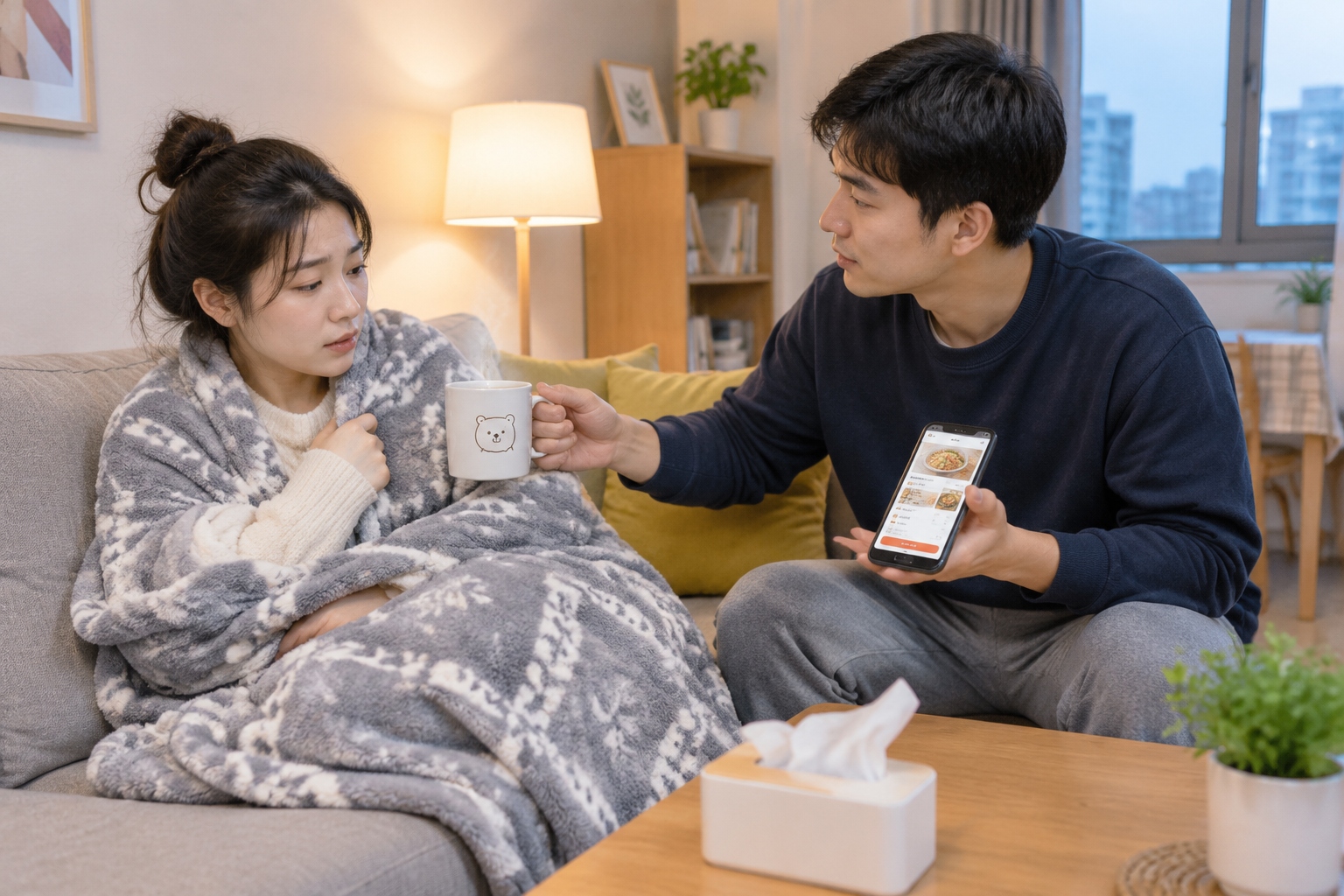
The setup is usually a relationship. A woman texts her boyfriend: I feel awful, my stomach hurts. He replies: 多喝热水. Screenshots circulate. People groan. The phrase became shorthand for the boyfriend who is technically present but emotionally somewhere else — the guy who offers four characters instead of attention.
There is even a name for the type: 直男 (zhínán), the well-meaning but tone-deaf straight man. Not cruel. Just not paying attention.
The joke works precisely because the phrase is sincere somewhere else. They are the same four characters your mother sends at 7 a.m. From a stranger about a headache, it is lazy. From your mother, it is love. The meme lives in that gap.
What Foreigners Hear vs. What Chinese People Mean
This is the part that causes real friction in international relationships, friendships and workplaces.
Many Western readers hear drink more hot water as a way of ending a conversation. To them, a health complaint deserves either sympathy (that sounds rough) or action (let us get you to a clinic). A beverage suggestion lands as dismissal, especially from a partner who is supposed to care.
Chinese speakers usually mean something closer to: I cannot fix this, but I can do something small, and I would rather do something than nothing.
That logic runs through a whole family of phrases:
- 多穿点 — wear more layers.
- 早点睡 — go to bed earlier.
- 吃饭了吗 — have you eaten?
- 别熬夜 — stop staying up so late.
- 注意身体 — take care of your health.
Notice that none of them ask how you feel. Chinese care is often expressed as instruction. It is closer to here is a thing you can do than here is how I feel about your suffering. If you are waiting for a Chinese friend or partner to say I am so sorry, that must be hard, you may wait a long time — and meanwhile, they have already ordered you soup.
How to Read It — and Use It — Without Getting It Wrong
A few practical rules if you live in China or are close to Chinese friends and family.
1. Treat it as a check-in, not a prescription
The phrase is usually an opener, not a closing statement. It means I noticed you are not okay. Respond to that, not to the water.
2. Send something back
In Chinese, care is often a two-way exchange. A short 谢谢,我喝了一点 (thanks, I have had some) keeps the loop open. Silence can read as coldness.
3. If you are the one saying it, add a second sentence
多喝热水 alone, from a partner, is exactly what the memes make fun of. Add action: 我给你点个粥 (I will order you some congee) or 我下班过来 (I will come over after work). The water is fine. Water plus action is better.
4. Do not fight the water
You do not need to believe in TCM to accept a cup of hot water from someone’s grandmother. It costs you nothing, and refusing can land as rejecting the person rather than the theory.
The Phrase Keeps Updating Itself
Language moves faster than tradition. On Chinese social media today, 多喝热水 shows up as stickers, as irony, as half-affectionate teasing between friends.
Around it, a whole vocabulary of self-aware health anxiety has grown. There is 保温杯里泡枸杞 (goji berries in the thermos), a self-mocking image of young people doing damage control. There is 朋克养生 — punk wellness — staying up until 3 a.m. and then drinking a herbal tonic, which is funny because it is accurate. The 2019 craze 秋天的第一杯奶茶 (the first milk tea of autumn) took the same instinct — send a small, warm, edible thing to say I am thinking about you — and turned it into a nationwide gift-giving moment.
And the original survives. Chinese students abroad still get WeChat messages from their mothers that say nothing but 多喝热水. Some screenshot it and roll their eyes. Some drink the water.
A Four-Character Window
If you want to understand how care works in China, 多喝热水 is not a bad place to start. It is warm, practical, slightly blunt, and it assumes that doing something small beats saying something big.
It is also a reminder that translation is not only about words. Drink more hot water is what the sentence says. What it means is: I noticed. I am here. Take care of yourself.
So next time someone hands you a thermos, take it. And when a friend in China tells you they are exhausted, hand one back.
Start the discussion at forum.chinacomes.com