
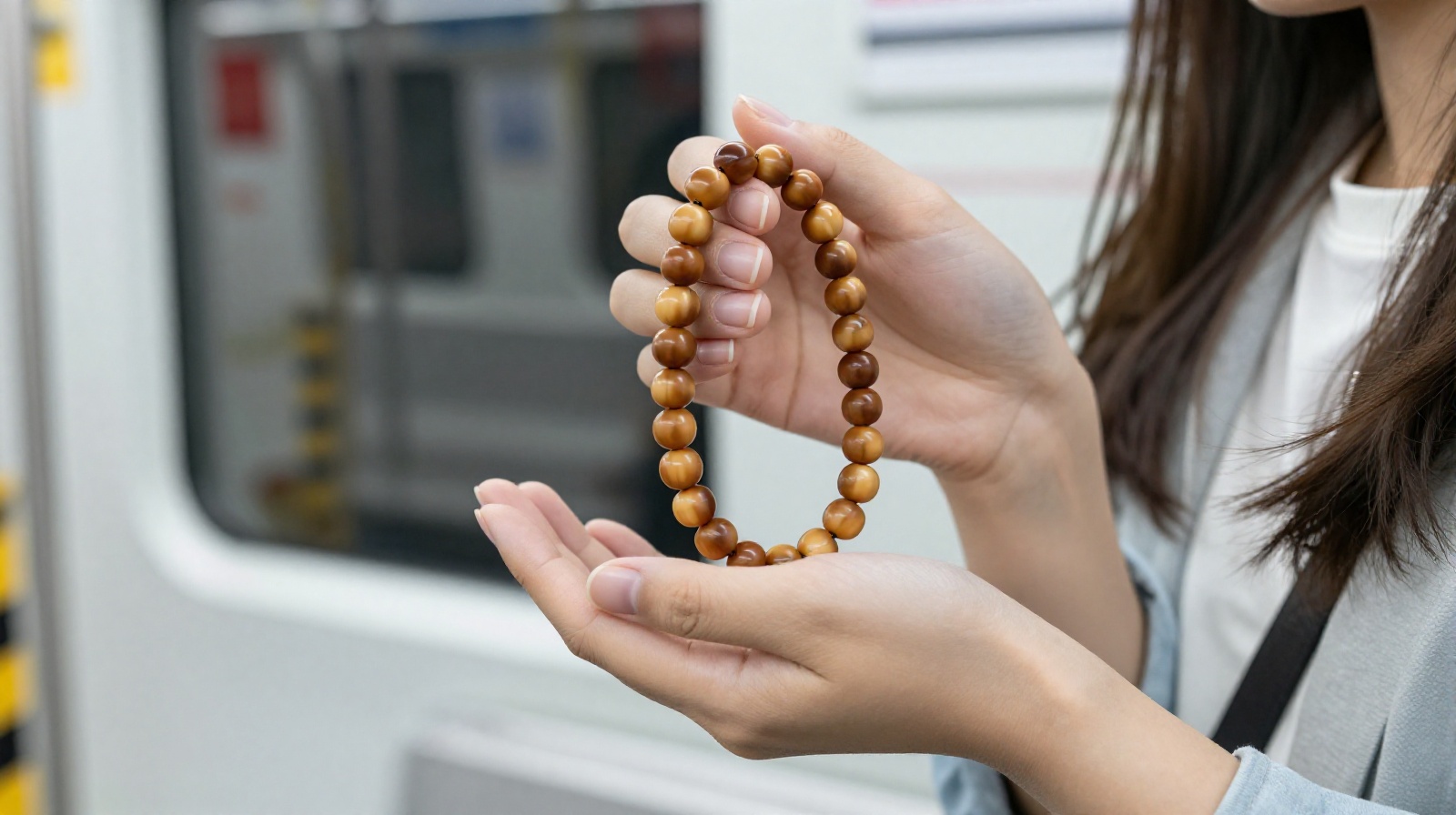

A New Obsession in the Subway
On a crowded subway car in Beijing, a young woman in a hoodie pulls a small cotton bag from her backpack. Inside is a string of Bodhi seeds. She begins to roll each bead between her thumb and index finger—slowly, methodically. Passersby glance, then look away. This is no longer an unusual sight in China’s cities. Thousands of young people, aged 18 to 35, have embraced the ancient practice of ‘pan’—polishing beads with your bare hands until they develop a rich, oily patina.

What Exactly Is ‘Pan’?
‘Pan’ (盘) literally means ‘to coil’ or ‘to rub.’ In the context of beads, it’s the repetitive motion of rolling a seed, nut, or wooden bead between your fingers. Over weeks and months, the friction transfers natural oils from your skin to the bead, gradually darkening its color and creating a glossy, amber-like surface called ‘baojiang’ (包浆). It’s the same technique used to polish antique furniture or jade—only now, it’s a daily ritual for stressed-out Gen Zers.
The term ‘greasy’ (油腻) might sound negative in English, but in Chinese bead culture it refers to this desirable patina—a sign of time, care, and a close relationship between owner and object. A ‘greasy’ bead is a well-loved bead.
Why Beads? The Psychology of Fidgeting
To understand the appeal, I sat down with Chen Wei, a 24-year-old graphic designer in Shanghai. He started playing with beads six months ago during a stressful project. ‘I kept refreshing my phone or tapping my desk. A colleague suggested a fidget spinner, but it felt too loud. Then I saw someone with beads online—it was quiet, tactile, and strangely soothing.’
Chen Wei’s story echoes a broader search for analog comfort in a digital age. Psychologists note that repetitive hand movements can lower cortisol and improve focus—similar to stress balls or worry beads. But the beads offer something extra: visual progress. ‘Every week I see the color change,’ Chen says. ‘It’s proof that small, consistent effort leads to something beautiful. That’s rare in my work.’
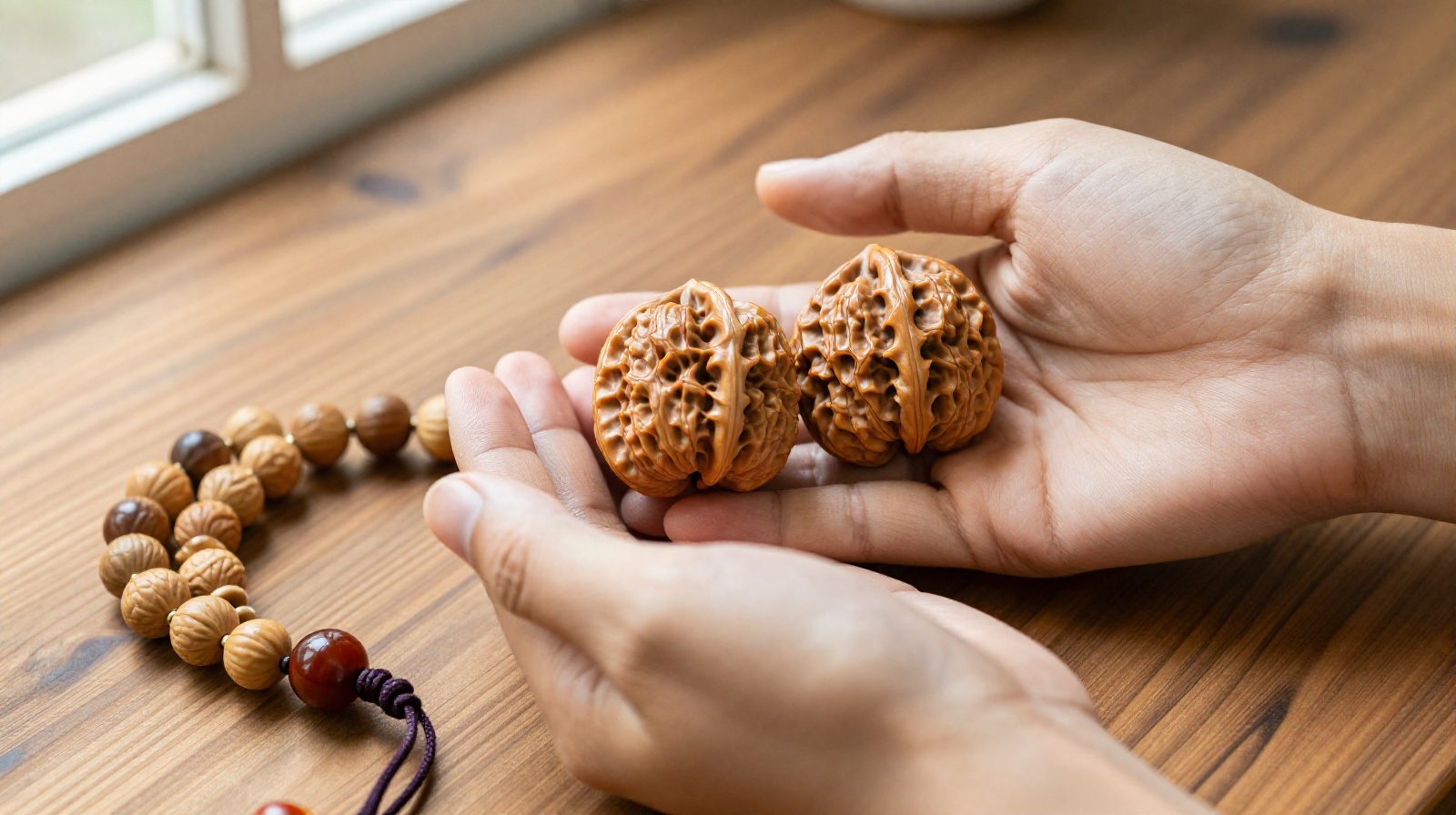
From Grandfathers to Grandchildren
Bead polishing has long been associated with retired men in parks, whiling away hours with walnut-shell spheres. But social media flipped the script. On Xiaohongshu (Little Red Book), the hashtag #盘串 has over 500 million views. Young influencers share before-and-after photos of beads, along with ASMR-style videos of the clicking sounds. E-commerce data shows that sales of Bodhi seeds, gourd pendants, and walnut pairs to the under-35 demographic jumped 300% in 2023.
The shift is also cultural. In a society obsessed with efficiency and output, panning is deliberately slow. It’s an act of resistance against the fast pace of Chinese urban life. ‘My parents don’t get it,’ says Chen. ‘They think I’m wasting time. But I feel like I’m reclaiming time—one bead at a time.’
A Double Meaning: The Literal and the Metaphorical
The Chinese word ‘pan’ also carries a colloquial meaning: to work on something persistently until you achieve mastery—like practicing a skill or completing a difficult project. Young people have embraced this double entendre. They say they are ‘panning their beads’ as a metaphor for ‘panning their lives’—patiently shaping themselves through daily effort.
This linguistic twist gives the hobby a layer of quiet philosophy. It’s not just about owning a shiny trinket; it’s about cultivating patience, attention, and a sense of accomplishment that comes from slow, tangible progress.
The Strange Fusion of Tradition and Modernity
What makes this trend fascinating is how it bridges ancient craftsmanship and contemporary anxiety. The beads themselves are often made from traditional materials—Bodhi seeds (from the same tree under which Buddha is said to have attained enlightenment), ox horn, red sandalwood, or common walnut shells. Yet they are sold in minimalist packaging, marketed with Instagram-friendly photos, and reviewed with five-star ratings on delivery apps.
Some young people even treat bead selection like sneaker culture: they study grain patterns, density, and origin. Online forums host heated debates over ‘dry vs. oil-polishing’ techniques. Yet the ultimate goal remains the same as it was for Qing dynasty scholars—to achieve a perfect, translucent patina.
Is It Just a Fad?
Critics dismiss bead panning as just another millennials-in-crisis trend, fading as quickly as fidget spinners. But I’m not so sure. The ritual touches something deeper—a need for slowness, for tactile pleasure, for a connection to natural materials in a hyper-digital world. As Chen Wei put it: ‘When I hold my beads, I’m not scrolling. I’m just here. It’s a small rebellion.’

Conclusion: The Bead That Reflects a Generation
So why are young Chinese obsessed with polishing greasy beads? Because in a society that demands constant output, they’ve found a quiet input that costs nothing but time—and gives back a tangible sense of progress. The beads may get greasy, but that’s the point. Each oily patina tells a story of patience, presence, and a generation learning to slow down.
Perhaps the next time you see someone rubbing beads on a subway, you’ll understand. It’s not weird. It’s wisdom.
Start the discussion at forum.chinacomes.com