

Why Fanjingshan Is Called China’s Last Cloud-Shrouded Paradise
At 4:30 a.m., the alarm cuts through the damp air in a small guesthouse at the foot of Fanjingshan. Outside the window, it’s still dark, and thick fog wraps the mountainside. By the time I step out onto the street, the only sound is water dripping from the eaves and the soft shuffle of a few other early risers heading toward the gate. This is the moment you realize: Fanjingshan is not just a mountain. It’s an island in the sky, a place where clouds and stone have been negotiating for millions of years.
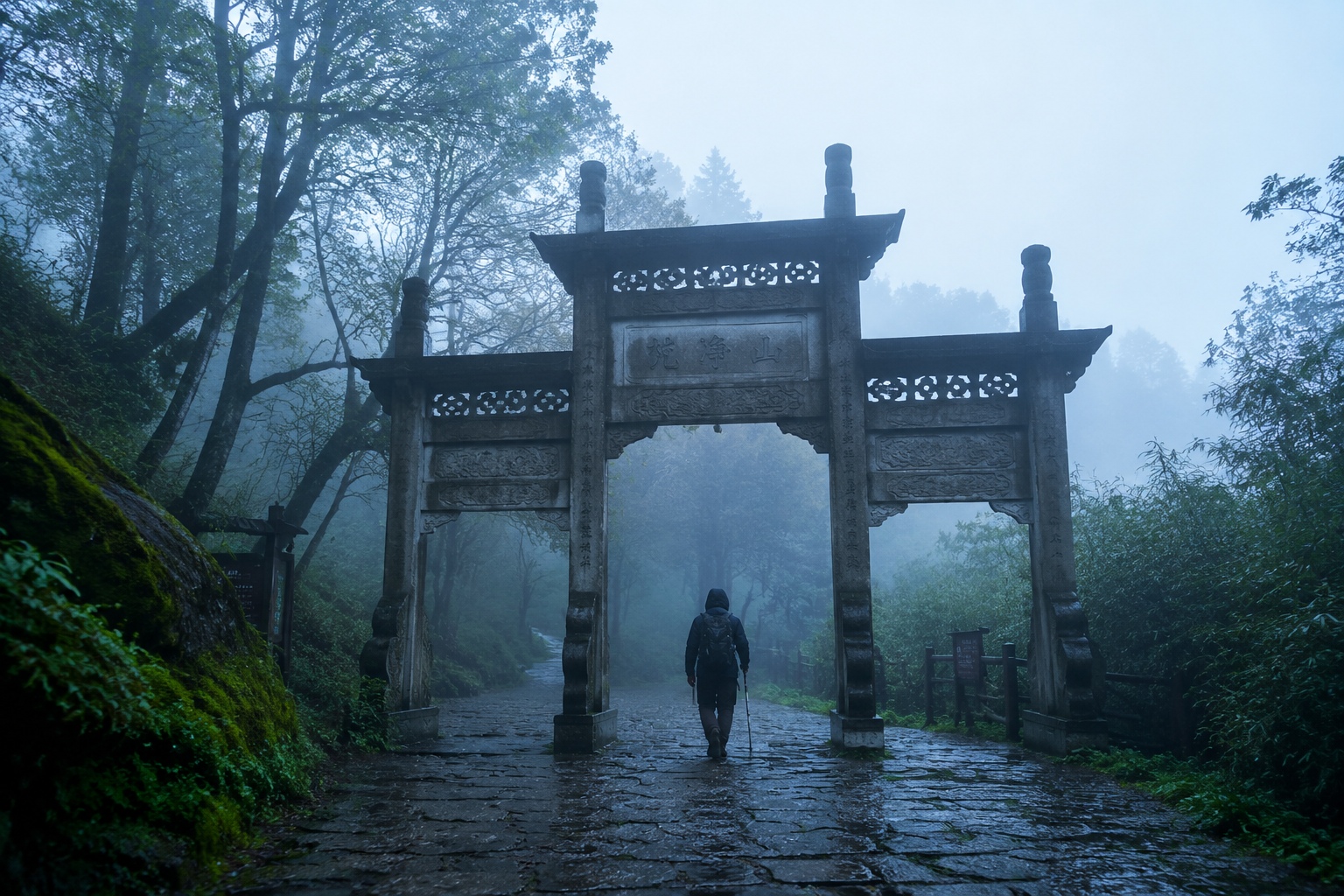
Located in Tongren city in southwest China’s Guizhou Province, Fanjingshan is the highest peak of the Wuling Mountains, rising to 2,570 meters. In 2018, it was listed as a UNESCO World Heritage Site for its exceptional biodiversity and dramatic rock formations. Unlike many famous Chinese mountains, Fanjingshan has a mysterious, almost otherworldly character. Its name literally means “Buddhist Mountain of the Pure Land,” and its temples poised on narrow rocky spires seem to float in the mist. Locals call it the “last untamed cloud realm” — a place where you can still feel what it’s like to walk above the weather.
Getting There: From the Bus Station to the Base of the Clouds
Fanjingshan has two main entrances: the east gate near Jiangkou and the west gate near Yinjiang. Most first-time visitors take the east gate, which is better connected by public transport. From Tongren railway station, buses depart regularly for Jiangkou county, and from there it’s a short taxi ride to the visitor center. I went in mid-week in late spring, when the mountain is draped in a fresh green cloak and the rhododendrons are still blooming in the lower valleys.
Admission is 100 yuan (about 14 USD) in the high season, plus 20 yuan for the shuttle bus that takes you from the gate to the cable car station. The cable car costs another 160 yuan for a round trip. It might sound like a lot, but the entire journey — from entering the gate to reaching the summit area — would take over six hours on foot. The cable car is your first chance to plunge into the mist.
For fit hikers, the west gate offers a less commercial alternative. There, you can climb the “old road” — 8,000 stone steps snaking up through primeval forest without the help of any machine. It’s grueling but unforgettable. In my case, I chose the east gate for speed, planning to hike the final stretch to the summit from the cable car drop-off point.
Into the Clouds: A Walk Along the Ridgeline
Once the cable car lets you out at 2,000 meters, the world changes instantly. You are above the low clouds, and the air tastes of pine resin and damp rock. The boardwalk path is carved into the mountainside, winding between ancient rock formations and low, wind-bent shrubs. Every few metres you stop to catch your breath — not just from the thin air, but from the view.
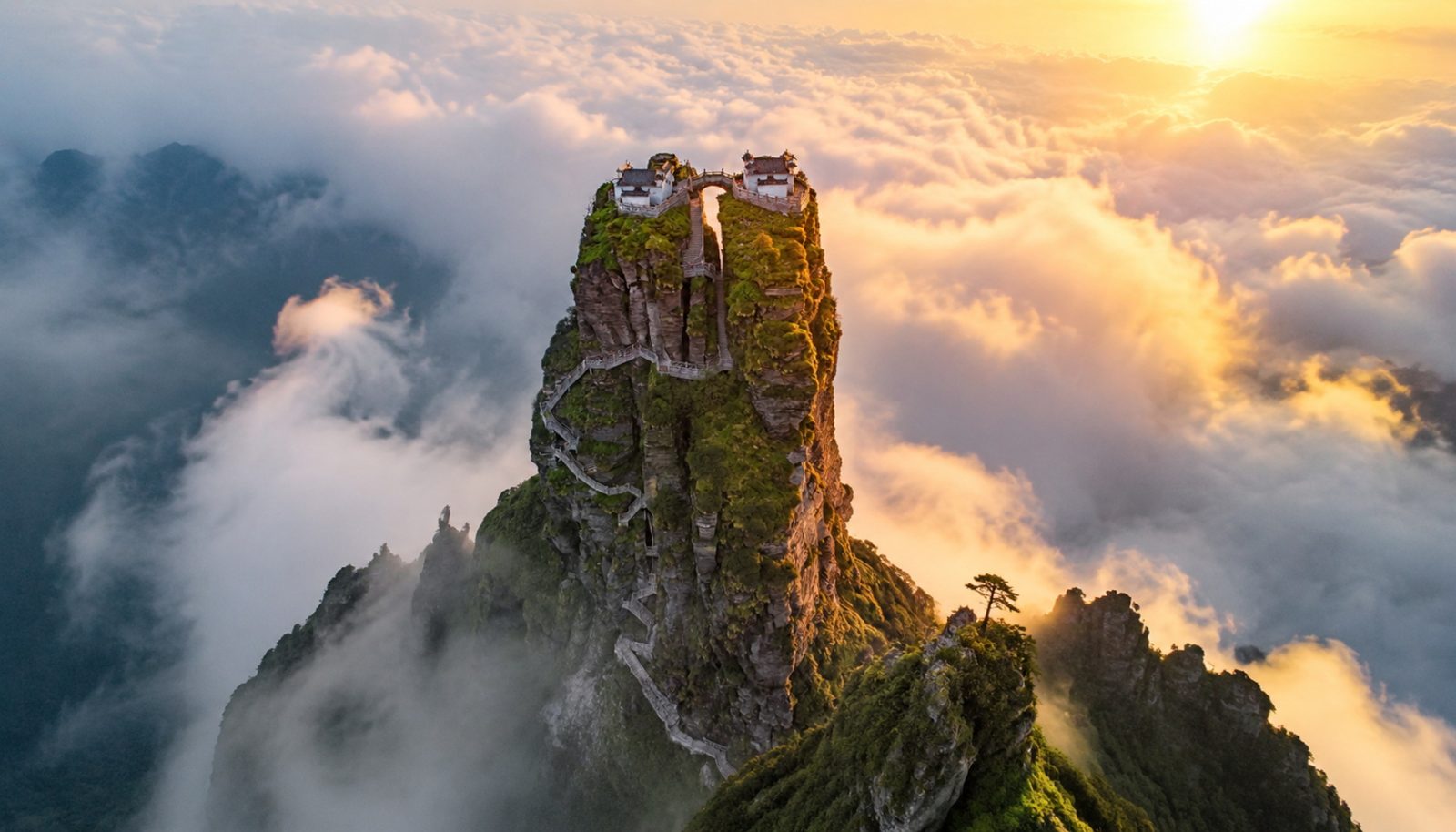
The highlight is the hike to Red Cloud Golden Peak, a 2,336-meter spire so narrow that you have to climb it using iron chains bolted into the rock. The final ascent is a literal scramble up a 90-degree crack. When you reach the top, two small temples are balanced on the summit, one on each separate blade of stone. This is the postcard image of Fanjingshan, but seeing it in person — with the wind roaring and clouds boiling below you — is something else entirely.
On the way, I spotted a ranger collecting a piece of plastic wrapper that someone had carelessly dropped. He didn’t say anything; he just picked it up and put it in his backpack. The mountain is sometimes called an island of life because it shelters numerous species found nowhere else on Earth.
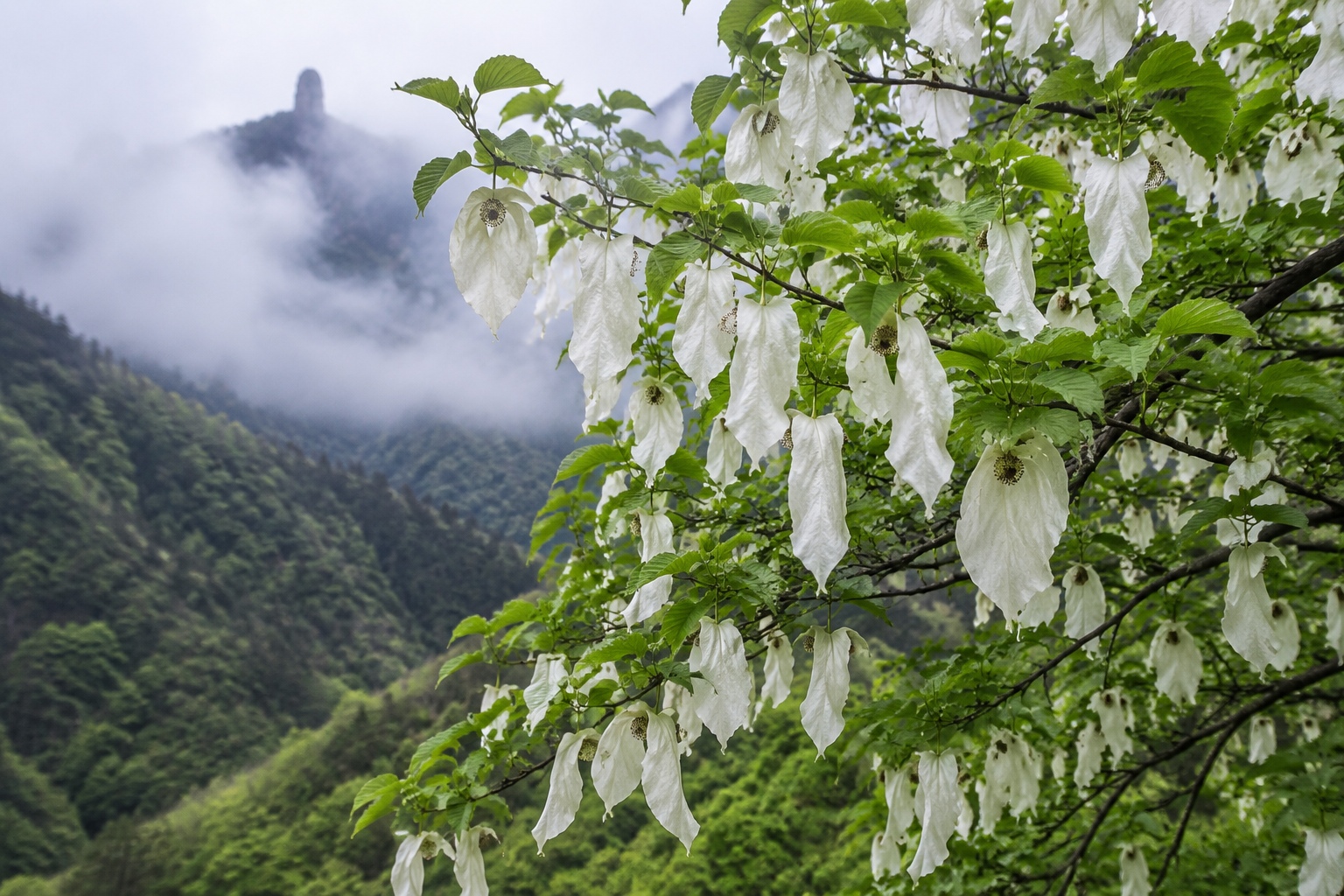
The most famous is the Guizhou golden snub-nosed monkey, a rare primate whose population is estimated at fewer than 800 individuals, all living in a small area on Fanjingshan and nowhere else. I never saw one on this visit — they’re skittish and live at higher altitudes than most tourists prefer to linger. Instead, I saw the “dove tree” (Davidia involucrata), whose white bracts flutter like white doves among green leaves. Locals call it the “pigeon tree” because when the wind blows, it looks like a flock of birds is landing on the branches.
The People of the Mountain: Keepers, Carriers, and Fellow Walkers
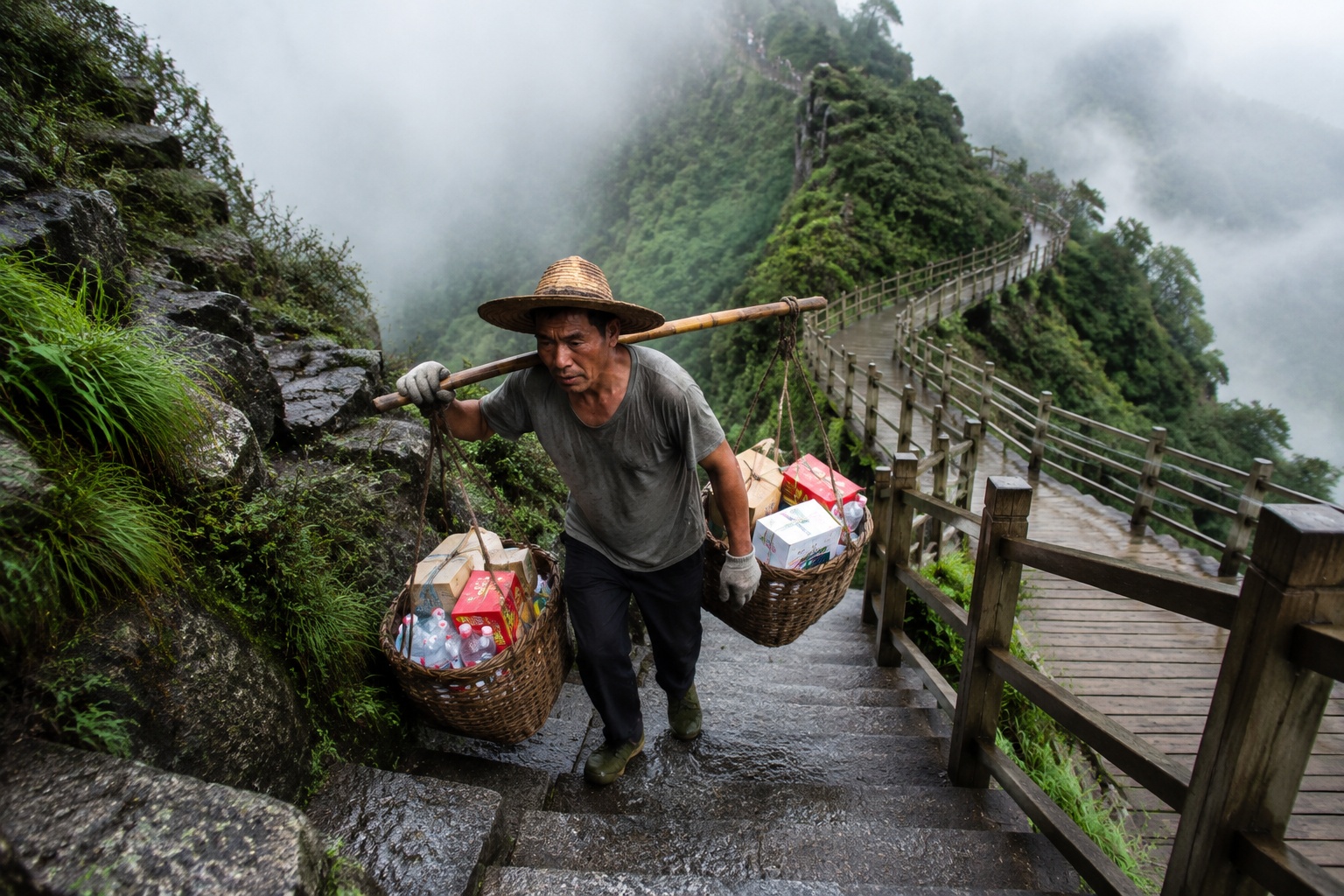
The mountain isn’t empty. It’s supported by a human ecology that runs quietly underneath the tourist flow. On the steep sections, I met a team of “carriers” who haul boxes of supplies — water, vegetables, even cooking gas — to the small hotels and shops on the summit. They use bamboo poles, the same method their grandfathers used. One of them, a 55-year-old man named Wang, told me he makes the two-hour trip twice a day, carrying up to 60 kilograms each time. He earns about 300 yuan (41 USD) per load. “It’s hard work,” he said, wiping sweat from his forehead. “But it puts my daughter through university.”
At the small temple on the upper peak, I met a young guardian who has lived on the mountain for seven years. He showed me how he gets water from a natural spring and how he prays before every sunrise. He wasn’t preachy — just matter-of-fact about a life most people would consider harsh. “The cloud is my neighbor,” he said with a smile. “Every morning, I open the door and check if it’s still there.”
Below the Mist: Zhai Sha Village and the Rhythms of Local Life
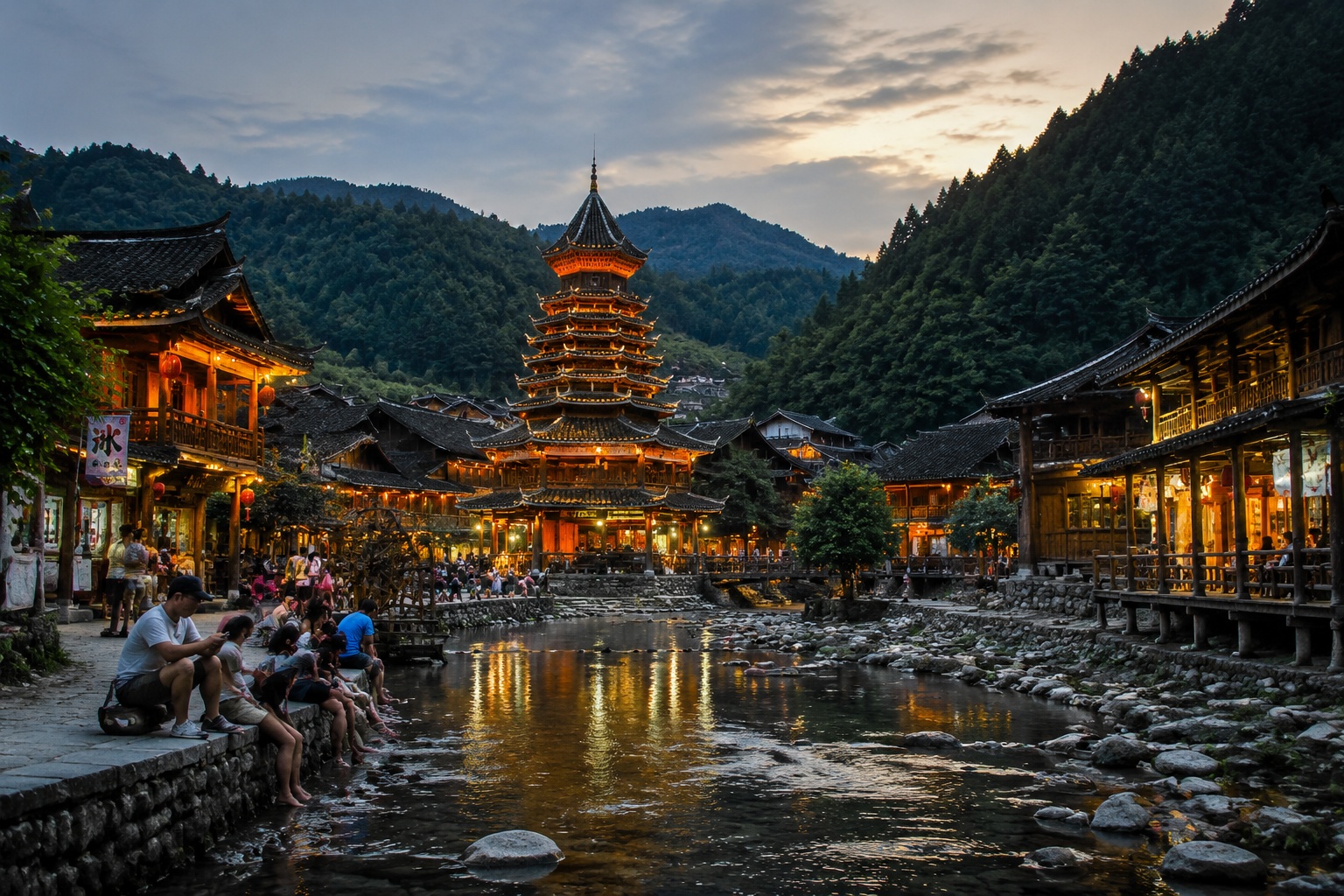
Descending from the clouds, I spent a night at Zhai Sha, a Dong ethnic village tucked in a valley just 20 minutes from the east gate. Here, the traditional watchtowers (drum towers) pierce the evening sky, and wooden houses line a clear stream. The Dong people are famous for their grand songs and intimate polyphonic singing — something you might be lucky enough to hear if you stay overnight.
The village has clearly been shaped by tourism. Many families have converted their ground floors into restaurants and guesthouses. But the transformation hasn’t erased the local culture. In the evening, I watched women embroider intricate patterns, and played a casual game of woodball with some village boys who had skipped homework to join me. Tourism has brought Wi-Fi and a stable income, but it has also created tensions — the price of a bowl of rice noodles sometimes feels steeper here than in the nearby city, and you can hear locals grumble about the noise of construction.
Balancing Protection and Access: Can Both Win?
Fanjingshan faces a classic dilemma: how to show off a fragile ecosystem without destroying it. The mountain’s heritage status has led to strict rules. Visitors must book online in advance, with daily caps set at around 8,000 visitors. Wooden boardwalks keep walkers off sensitive soil, and every piece of trash is carried out by workers or tourists. There are no large hotels at the summit, only modest seasonal shelters. In 2020, the mountain also switched to a “one-way” loop system to reduce bottlenecks on the narrowest paths.
These measures have made the experience more pleasant and less chaotic than on many other Chinese scenic spots. But they also mean you can’t just show up and expect to climb the mountain. At peak seasons like National Day holidays, tickets sell out weeks in advance. Even on normal days, the weather can change in minutes—a clear sky can become a white wall of cloud, making the summit invisible.
The Verdict: Is Fanjingshan Worth It?
Yes — if you go with the right expectations. Fanjingshan isn’t a smooth, Disney-fied attraction. It’s a mountain that demands patience, physical effort, and a good dose of humility. The crowds may feel heavy at times, and the cost adds up. But when the clouds part and the red tower of the temple emerges from the white ocean below you, you’ll understand why the Chinese call it “the last pure land on earth.”
Some practical tips from my trip:
- Book your ticket at least three days ahead if traveling on weekends.
- Bring both a lightweight rain jacket and sunglasses. You’ll need both, often within the same hour.
- Skip the food stalls at the summit if you’re on a budget. They’re overpriced and mediocre.
- Take the west gate if you crave solitude and don’t mind sore legs.
- Spend a night at Zhai Sha village—it’s worth more than the day trip crowd assumes.
Fanjingshan isn’t just a beautiful destination. It’s a living example of how a place can be both sacred and wild, protected and accessible. As I rode the cable car down, the mountainside vanished into the clouds behind me, and I felt that I had truly visited another world.
Start the discussion at forum.chinacomes.com