
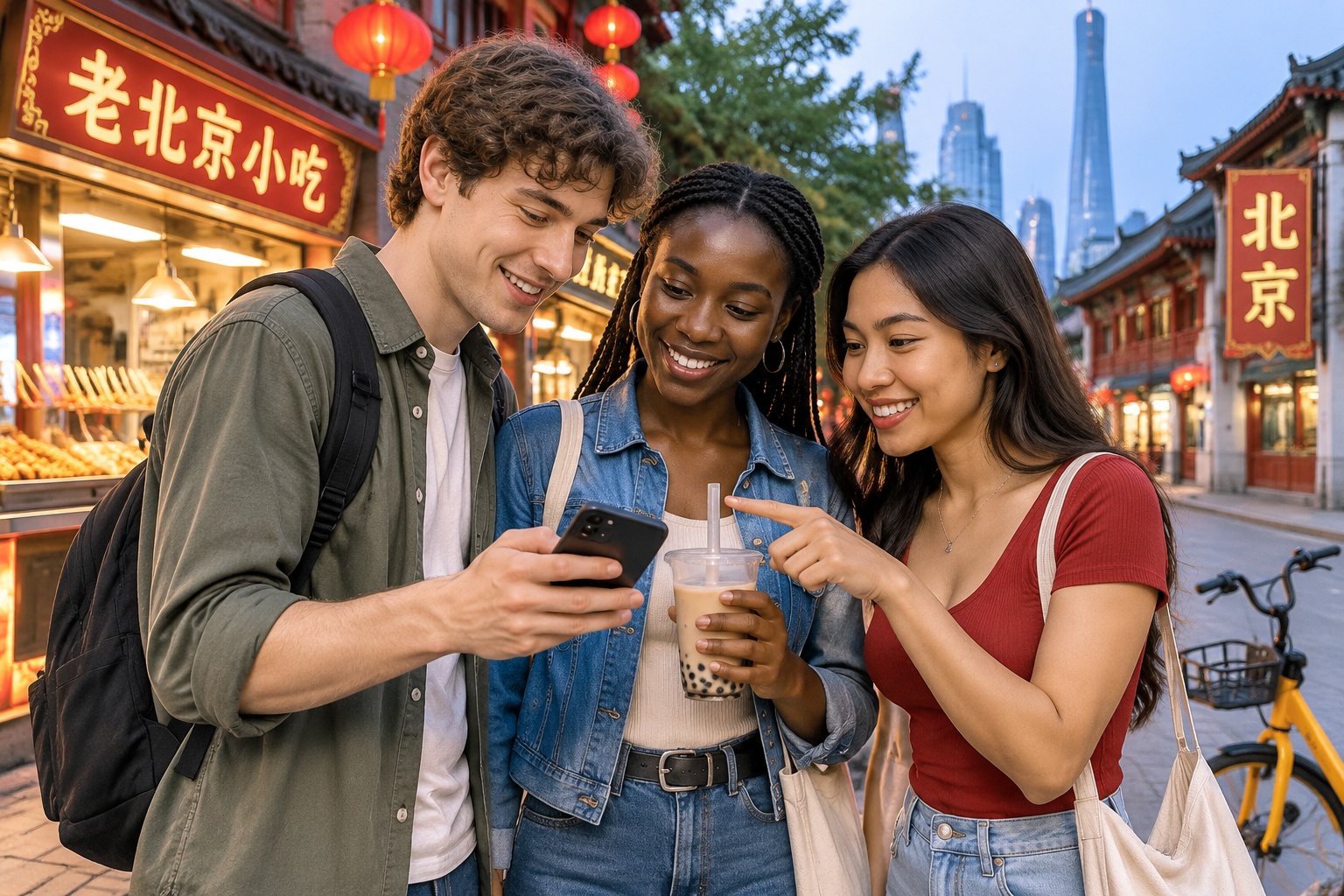

Jack Morrison came back to New York after a year in Shanghai. The first time he took the subway, he stood at the turnstile with his phone out, looking for a QR code. “I tried to scan it before I remembered this is the States,” he says with a laugh. Jack is one of many Western students and workers who return home from China carrying a set of new habits and small shocks. This is not a story about artificial intelligence or space stations. It’s about ordinary things—how you pay for coffee, what time you can eat dinner, how easily you can rent a bike—that quietly change the way you see your own country.
We spoke to three former internationals: Jack, an American who studied in Shanghai; Eva, a Swedish student in Hangzhou; and Paul, a German engineer in Chengdu. Here’s what they brought back.
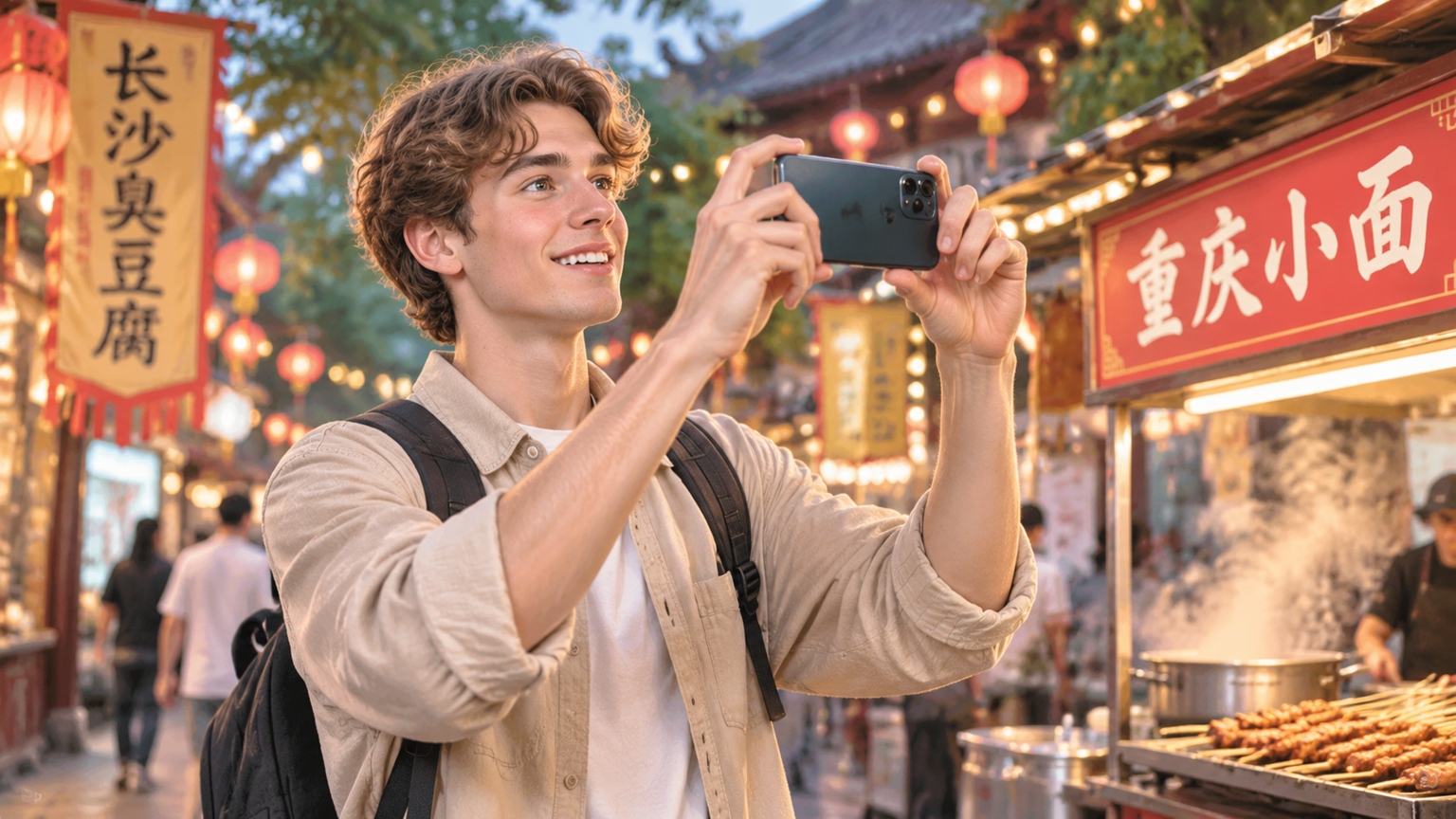
The Other Side of the Counter: Cashless Everything
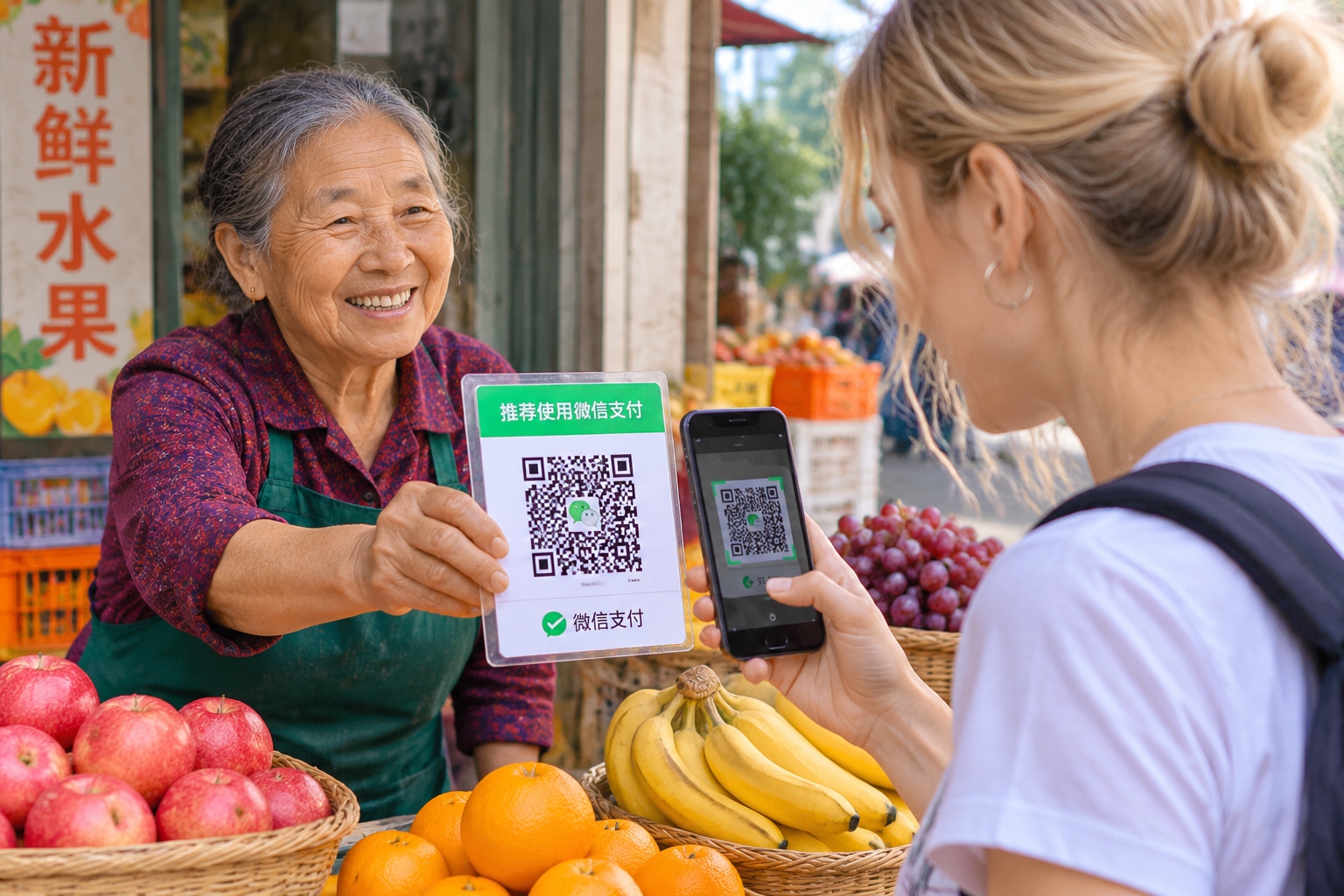
In most Western countries, paying with your phone still means adding a card to a wallet app. In China, the QR code is universal. You don’t need a credit card reader—a small black-and-white square printed on paper works. At a bakery in Beijing or a fruit stall in Kunming, you scan, type the amount, and walk away.
“The first week I found it confusing,” says Eva. “Every vendor had a different code, and I never knew which app to open. But after a few days, I realised it’s always Alipay or WeChat. Even my 75-year-old host grandma used it at the market.”
What impressed Eva most was how the system erases small friction. No cash in your pocket, no waiting for change, no paper receipts. “When I got back to Sweden, I tried to pay at a food truck with my mobile app. They pointed at the card machine. I felt like I had stepped back in time.”
The City Never Closes: Delivery and the Night Economy
Chinese cities run late. Food delivery apps like Meituan and Ele.me still show restaurants open at 1 a.m., with delivery times around 25 to 35 minutes. At 2 a.m., you can order hot noodles, a milkshake, or a charger for your phone. This isn’t a limited Shanghai feature; it’s normal in any city of a few million.
“In Germany, everything is closed by 8 p.m., even in Berlin,” says Paul. “I was working late in Chengdu and at midnight I ordered a hotpot and a phone charger. The charger arrived in 20 minutes. The hotpot was steaming when the driver knocked. That would never happen at home—not because people don’t want it, but because there’s no infrastructure for it.”
The delivery system works because of a chain that stays open late: restaurants with smart interfaces, riders who know every shortcut, and guards at residential gates who accept parcels. For Paul, the most surprising habit was feeling the city alive all night. “At 3 a.m., the delivery riders are still going. It makes you feel less alone.”
Trains That Respect Your Time
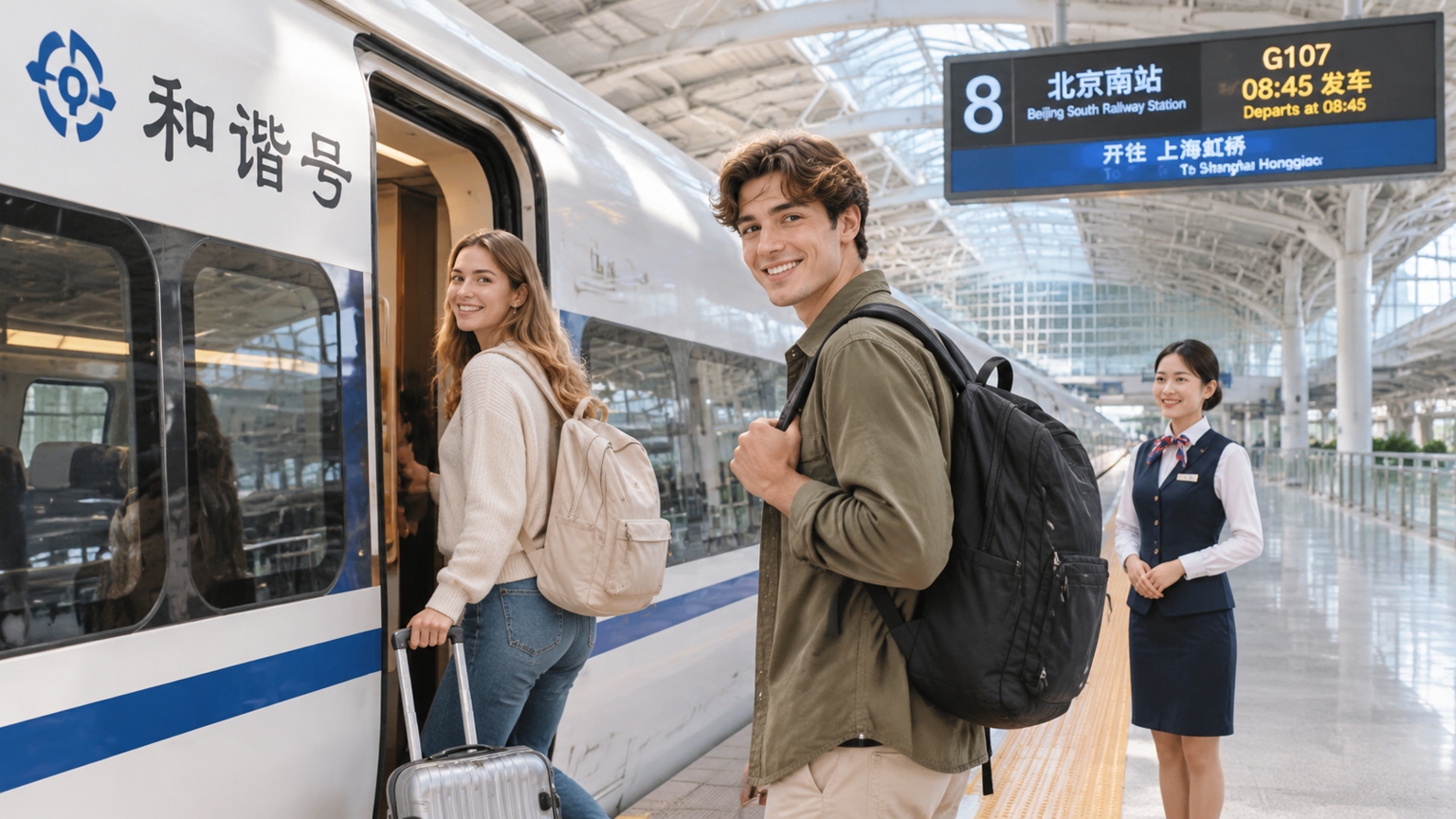
China’s high-speed rail network stretches over 40,000 km. It connects almost every city with more than 200,000 people. Trains run frequently, delays are rare, and tickets live on your phone. No paper ticket—just scan the QR code at the gate.
“In the US, I took Amtrak twice in my life,” says Jack. “In China, I took the bullet train somewhere almost every weekend. From Shanghai to Nanjing is about 90 minutes. The station is always clean, boarding is smooth, and there’s free Wi-Fi. A second-class seat costs around $40—cheaper than a comparable trip in Europe.”
But it’s not just speed. It’s the certainty. When a train says 10:37, it leaves at 10:37. You learn to trust the system. That predictability about public transport is something visitors carry home with them.
The Neighborhood as a Living Room
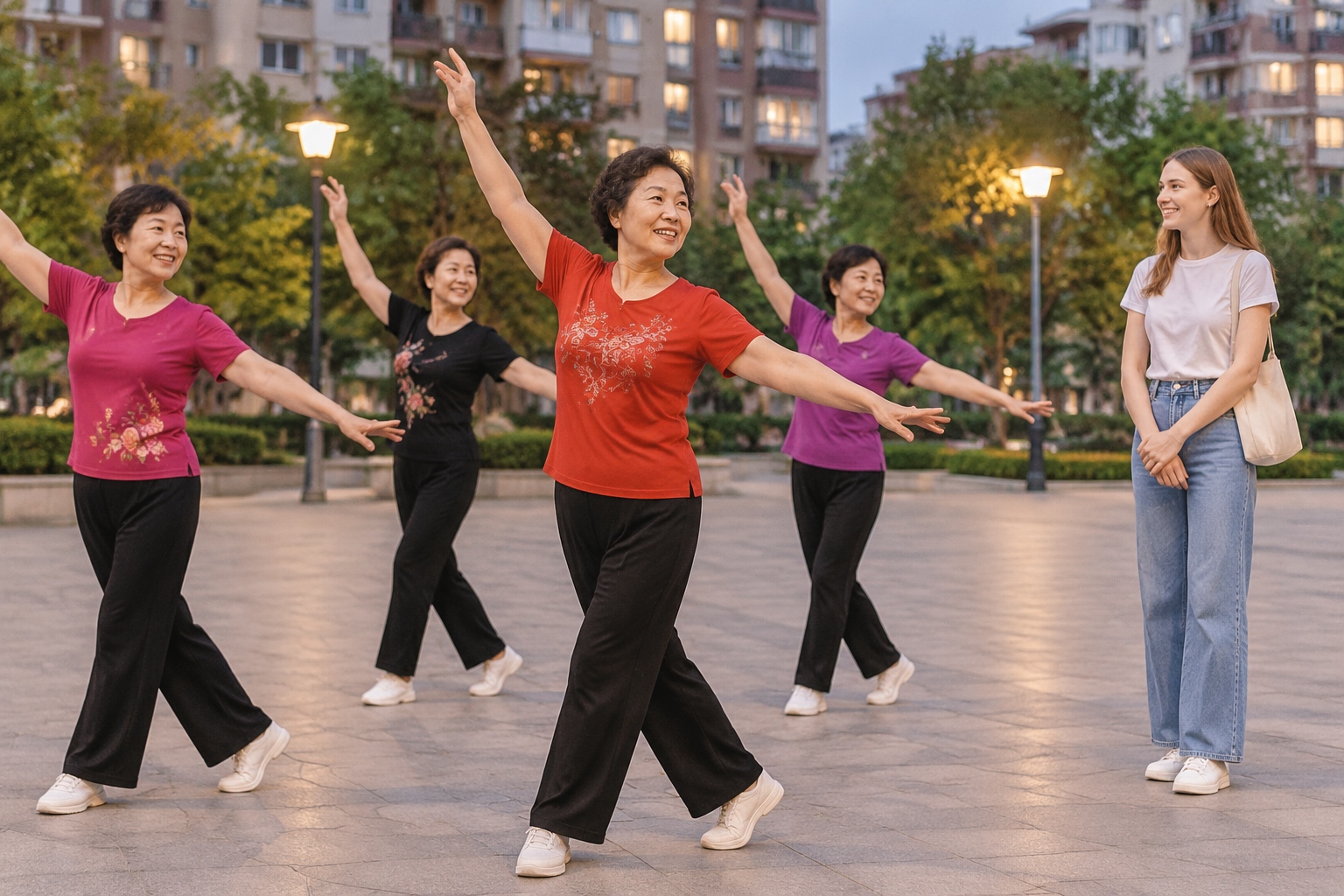
Many Chinese residential communities are built around a central courtyard. There are benches, fitness equipment, and children’s slides. The street outside is lined with small shops: fruit, fried chicken, laundry, pharmacy. In the evening, older people dance together; in the morning, some practice tai chi.
Sophie, a French architecture student who was an intern in Shanghai, remembers feeling uneasy about the noise at first. “There was always someone talking, music playing, a dog barking. In Paris, the streets are quiet after 8. But here, at 9 p.m., the square was full. Later I saw it as a kind of social safety net. You’re never far from other people. Someone will help you find an address, even walk you there.”
Her favourite memory is of a group of older women dancing while a boy on a scooter weaved through them. “It looked unplanned, but there was a rhythm. That’s Chinese city life: a lively, unscripted public space you rarely see in Western capitals.”
Small Services, Big Convenience
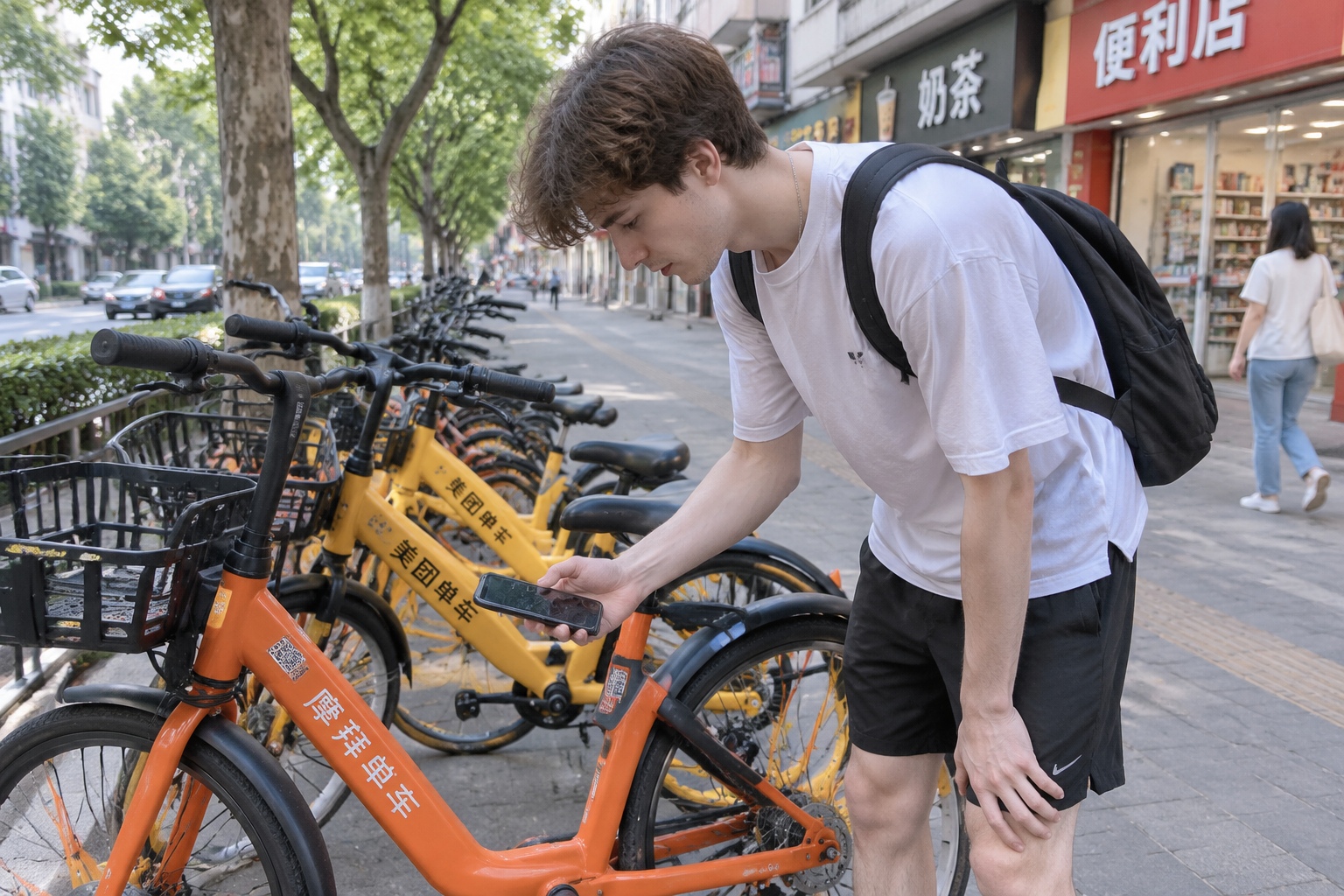
Another thing that strikes many internationals is the range of tiny services that make urban life easier. You can rent a shared power bank at a café, pick up a shared bike from almost any corner, and get a phone screen repaired in under an hour. In China, the “sharing economy” didn’t begin with big platforms; it grew out of dense streets and a mobile-first society.
In many Western cities, you might wait for a bus or call a taxi. In China, you open DiDi and a car arrives in two minutes; you scan a shared bike for the last kilometre; you use a WeChat miniprogram to order tea, pay for parking, or book a doctor’s appointment. The smartphone is the remote control for daily life.
“The QR codes are not just for payments,” says Sophie. “They connect you to everything. I scanned one to unlock a bike, another to see a menu, another to get into a museum. In Paris, I’d need five different apps.”
The Gray Areas: What Wasn’t Perfect
The students were careful to point out that not everything was smooth. They mentioned smoking in restaurants, loud phone calls on speakers, and queues that sometimes look like a crowd. They also noted that some of their initial worries about surveillance faded as they got used to the practical benefits—like a face scan at the building entrance.
“I won’t pretend there weren’t times when I felt far from home,” says Eva. “But the daily reality was richer than any headline. People who were suspicious of a foreigner at first became friends. The country is not a stereotype.”
Paul adds: “In Chengdu, I met people critical of the government and others who were patriotic—just like in my own country. The difference is that in Europe, we often hear only one story about China. Living there forces you to hold multiple ideas at once.”
Coming Home with New Eyes
After time in China, coming home feels like waking from a dream where everything was faster and more connected. You look for QR codes that aren’t there. You try to order delivery at midnight. You miss the breakfast stall lady who knew your regular order.
“The most important lesson is that a society can work in a completely different way,” says Jack. “China gave me a new reference point. When I see problems here, I think they could be solved differently, maybe not perfectly, but with more flexibility.”
The real takeaway for many Westerners isn’t a political theory. It’s the texture of daily life—the taste of fresh soy milk, the laugh of a noodle vendor, the speed of a train, the warmth of a crowd. What you don’t know about a country could fill a whole other life.