
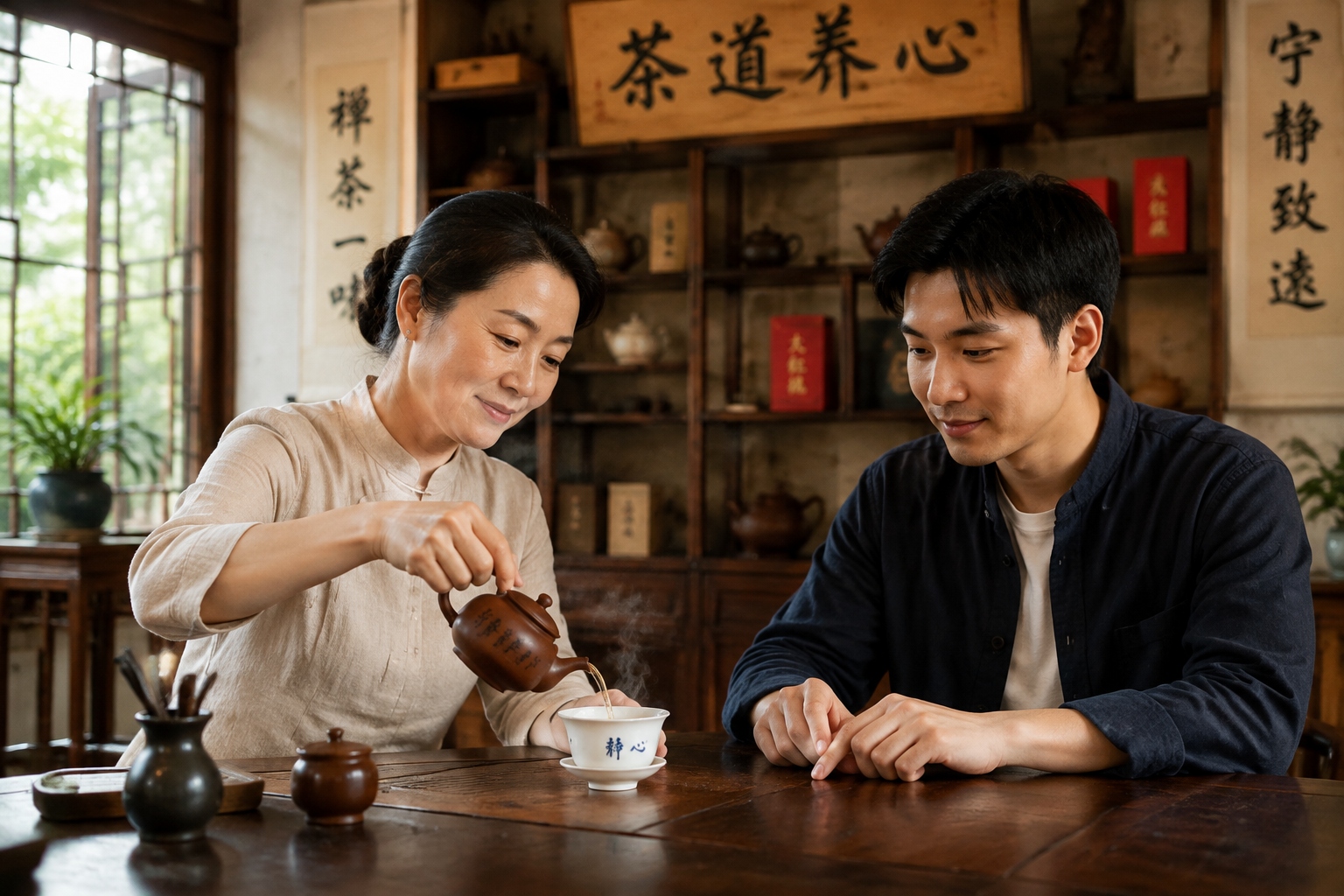

Picture this: you’re sitting in a tea house in Chengdu. The teapot is small, the cups are even smaller. A friend’s grandmother, across the table, leans over to refill your cup. You open your mouth to say “thank you” – then stop. Nobody at the table is saying it. They just tap their fingers lightly on the table. Tap, tap. The conversation keeps flowing.
That’s a well-known piece of Chinese tea etiquette called 叩指礼 – kòu zhǐ lǐ – which you might hear translated as the “finger kowtow” or simply the “tea tap.” It is a silent way to show gratitude when someone fills your teacup, and mastering its three small variations will help you feel at home at any Chinese tea table.
Why tap the table instead of saying “thanks”?
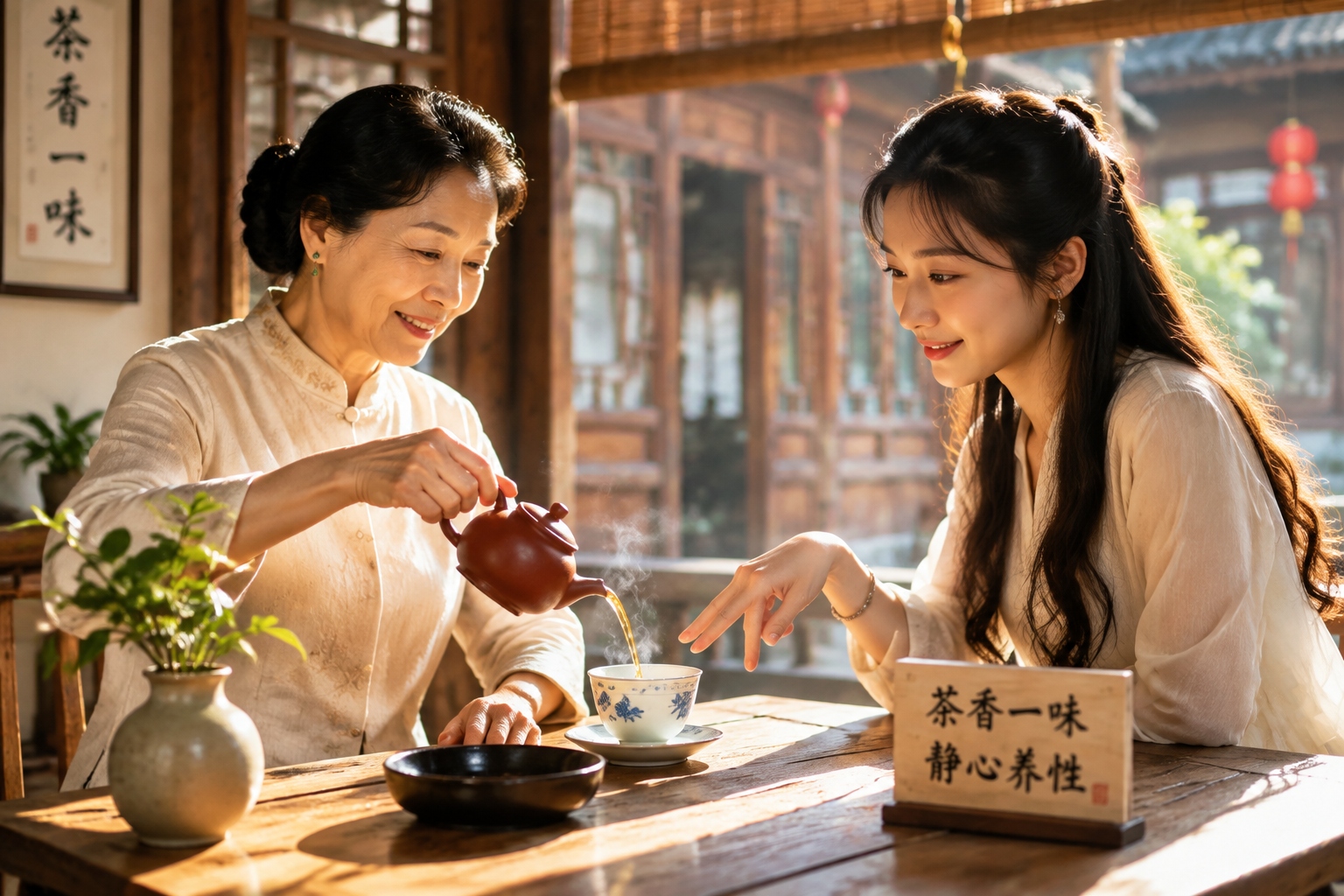
Tea culture in China, especially the traditional gongfu tea ceremony, moves slowly. Water boils, leaves are rinsed, the aroma fills the room. In that kind of atmosphere, a loud “thank you” can feel a bit jarring. A soft table tap is perfect: it acknowledges the person pouring without breaking the rhythm, and it can be done without pausing your conversation.
The gesture also solves the practical problem of constantly being thanked. At a Cantonese dinner, tea is topped up every few minutes. Imagine saying “thanks” out loud a dozen times – it would make the meal sound like a broken robot. The tap keeps things tidy.
But there is another layer: in Chinese etiquette, the way you respond to tea depends on who you are relative to the pourer. That’s why the tea tap has different “hand postures.” Don’t worry – the logic is actually easy to remember: the more respect you owe, the more your hand bows down.
The three tea taps: which fingers should you use?
Imagine your hand as a small, polite person. If that person meets a highly respected figure, it bows low. If it meets a friend, it nods. If it meets someone younger, it smiles. Your fingers do exactly the same.
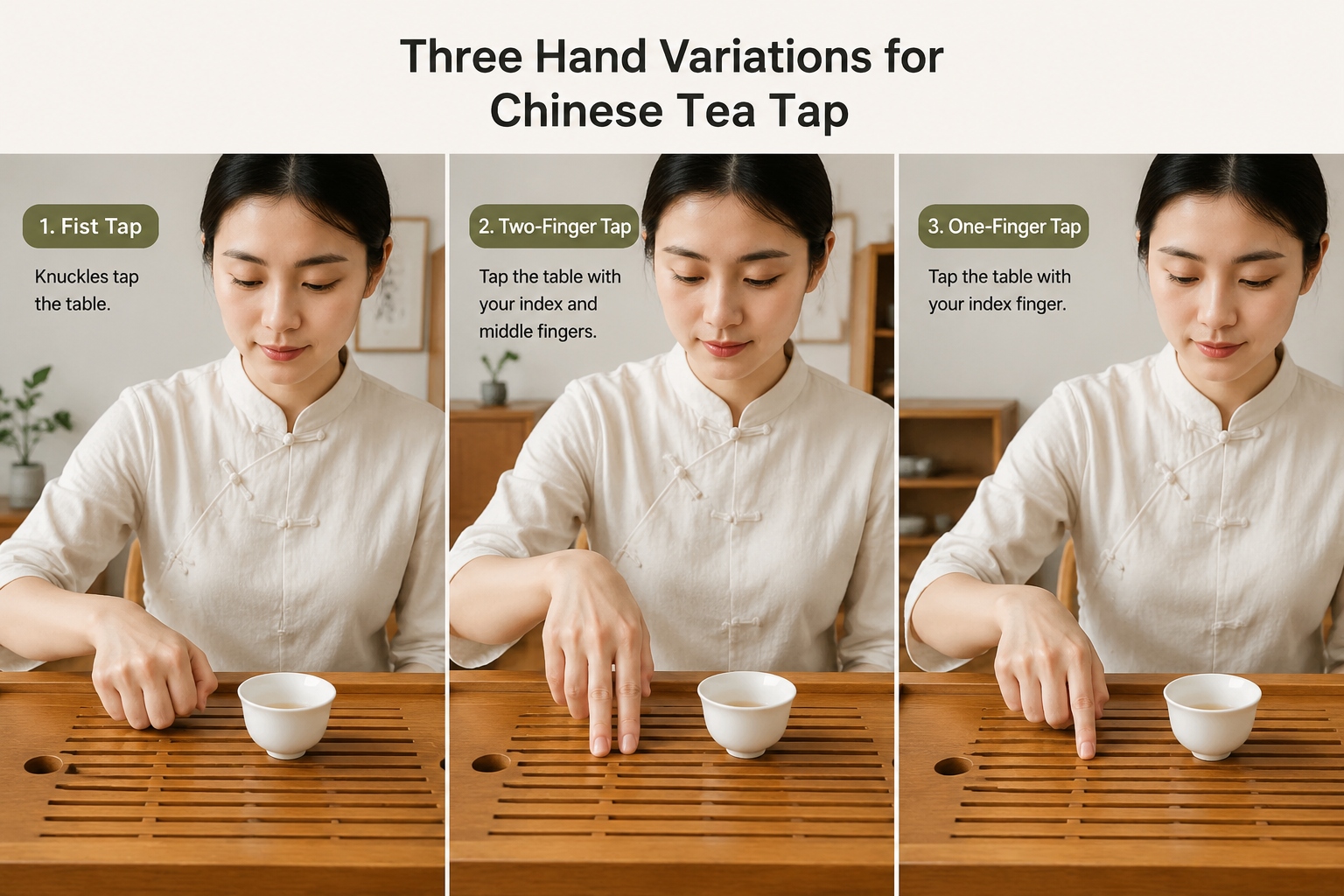
1. When a senior, parent, or boss pours for you – use a soft fist
Curl your fingers into a loose fist and place your hand on the table. Tap the table two or three times with the knuckles of your index and middle fingers. Do not bang the table or use your whole wrist. The movement is light, like a quick heartbeat.
Behind this gesture is the image of the old imperial kowtow, a full kneeling bow with your forehead to the ground. In daily life, nobody expects you to bow that way for a cup of tea. The fist knuckles are a symbolic stand-in. If you are a student, an employee, or the youngest person at the table, this is a graceful response when an elder serves you.
2. When a friend or someone of your generation pours for you – use two fingers
Hold your index and middle fingers together, pointing down toward the table. With your fingertips, tap the table twice or three times. This is the most common version you will see in everyday China. It has the feeling of a handshake between equals – a simple “cheers, got it.” If you want to learn only one version, learn this one. It works well in about eight out of ten situations, from a lunch with classmates to a meeting at a startup office.
3. When a younger person or staff member pours for you – use one finger
If someone younger (a niece, a junior colleague or a restaurant worker) fills your cup, you don’t need to bow. Just use your index finger alone, tap once or twice. A single finger suggests a light nod: “I see it, thank you, no need for extra ceremony.” Only the index finger – never the middle one. If you are the elder at the table, one index-finger tap is warm and unpretentious.
How many knocks and how much force?
There is no exact legal rule about the number. Older people may tell you three knocks represent “three bows” and are most respectful. Others tap twice to avoid appearing like an insult. The safest practice is two or three soft taps, never more than three. The sound should be small, like your fingernail gently touching wood, not like someone using a door knocker.
Another small detail: try to tap with the pads of your fingers or the first knuckle, not with your fingernails. Nail impact makes an irritating click. And remember, the gesture is meant to be discreet. If the people at the next table notice you, you’re probably doing it too loudly.
Where does the tea tap come from? The Qianlong legend
The most popular story takes us back to the Qianlong Emperor of the Qing dynasty, who reigned in the 1700s. Like many rulers, he was curious about how ordinary people lived. According to folklore, he often traveled through southern China in disguise. On one trip, he went into a tea house with a group of officials.
For some reason – maybe to test their loyalty, maybe just to play a small joke – Qianlong picked up the heavy teapot and served tea to his own ministers. The men could not kneel and perform a kowtow: that would instantly reveal that the man holding the teapot was the emperor. But showing no gratitude at all was impossible. So one clever minister curled his fingers and knocked his knuckles on the table. The shape of the hand was like a body bent forward, and the knock stood in for the sound of his head touching the ground.
The emperor got the message and laughed. The others copied the movement, and the custom later spread among locals. Historians have not found hard evidence for this legend, but it remains the story people love to tell. Whether true or not, it explains the soul of the gesture: a quiet way of saying, “I would bow to you, but I can only do it with my hand right now.”
Where will you encounter this tradition today?
You might assume that this is only practiced in antique-style tea rooms. In fact, the tapping habit appears in daily life all over China, and it crosses into the dining table. Here are some typical moments:
- A colleague pours tea from a shared pot in your office’s break room.
- Your uncle refills your cup during a family dinner, while everyone is talking about your job.
- A friend at a hot pot restaurant tops up your beer with a small glass – yes, beer, too.
- A waitress in a Cantonese dim sum restaurant adds tea to your cup when it gets low.
If you are from a culture where eye contact and a clear “thank you” feel more direct, the tapping may seem strange at first. But it’s useful to understand that in China, many social kindnesses are acknowledged with small body signals rather than words. The body signal still carries warmth.
Is it mandatory everywhere? Not at all
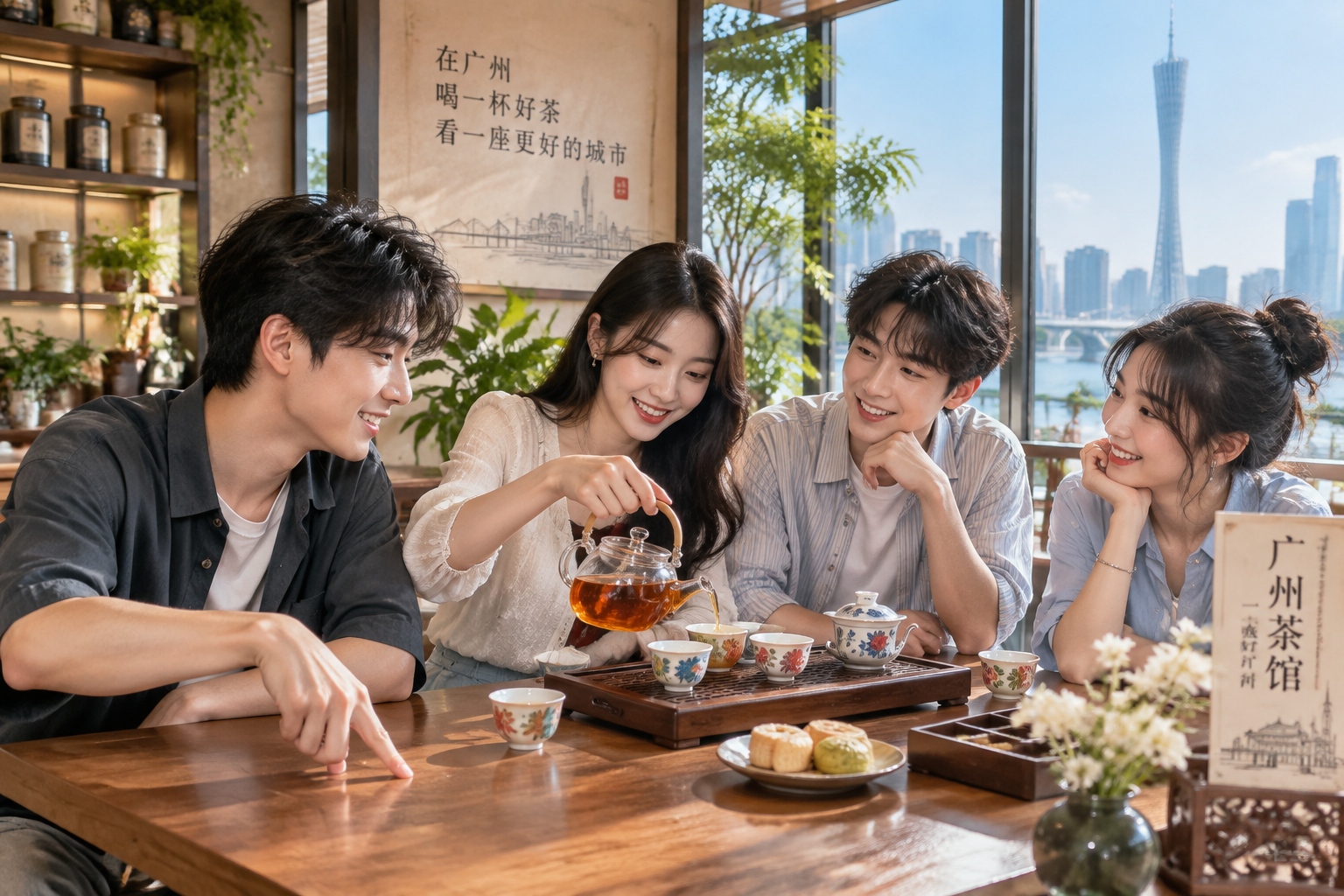
China is a huge country, and habits differ by region and by generation. In northern cities, you will hear plenty of “谢谢” during mealtimes. Many young urban people only know the two-finger tap, and older tea lovers may skip it at home. The etiquette is flexible; it’s a social shortcut, not a strict loyalty test.
If you forget or simply don’t feel like doing it, a quick verbal thank you, a smile, or lifting your cup slightly is always accepted. The finger tap is a bonus, not an exam question.
Little habits that make the tap feel natural
There are a couple of details that locals tend to notice:
- Tap only when the pourer is still pouring or has just finished. Don’t wait ten seconds until they’ve turned away and then tap the table – it would confuse them.
- Don’t tap when you are in the middle of holding your cup to your lips. You can simply nod.
- When the pourer is older, it is polite to lightly hold your cup with one hand while tapping with the other, if you can.
- If you are the one pouring tea, it’s traditional etiquette to fill cups only about 70% full. This old saying means there is room for friendship to flow, but that’s another story.
For practical practice, try it next time you have a cup of tea with a friend. At first the movement will feel deliberate, but after two or three taps it becomes second nature. You will soon appreciate having a quiet way to say thanks that does not interrupt the conversation – and you’ll start noticing how many tiny gestures make up the language of Chinese politeness.
A final tip for visitors
If you’re traveling in China and you join a tea gathering, the simplest move is to wait and watch what the locals do. If they all curl two fingers when the host pours, follow their lead. If they stay still, stay relaxed too. Chinese tea etiquette is not about being perfect; it’s about reading the table and showing goodwill. The finger tap is just one of many ways to say, in a soft voice that only the table can hear: “I’m here, and I’m grateful.”
Start the discussion at forum.chinacomes.com