

Cameras and Chopsticks: A Night at a Trendy Zhejiang Restaurant
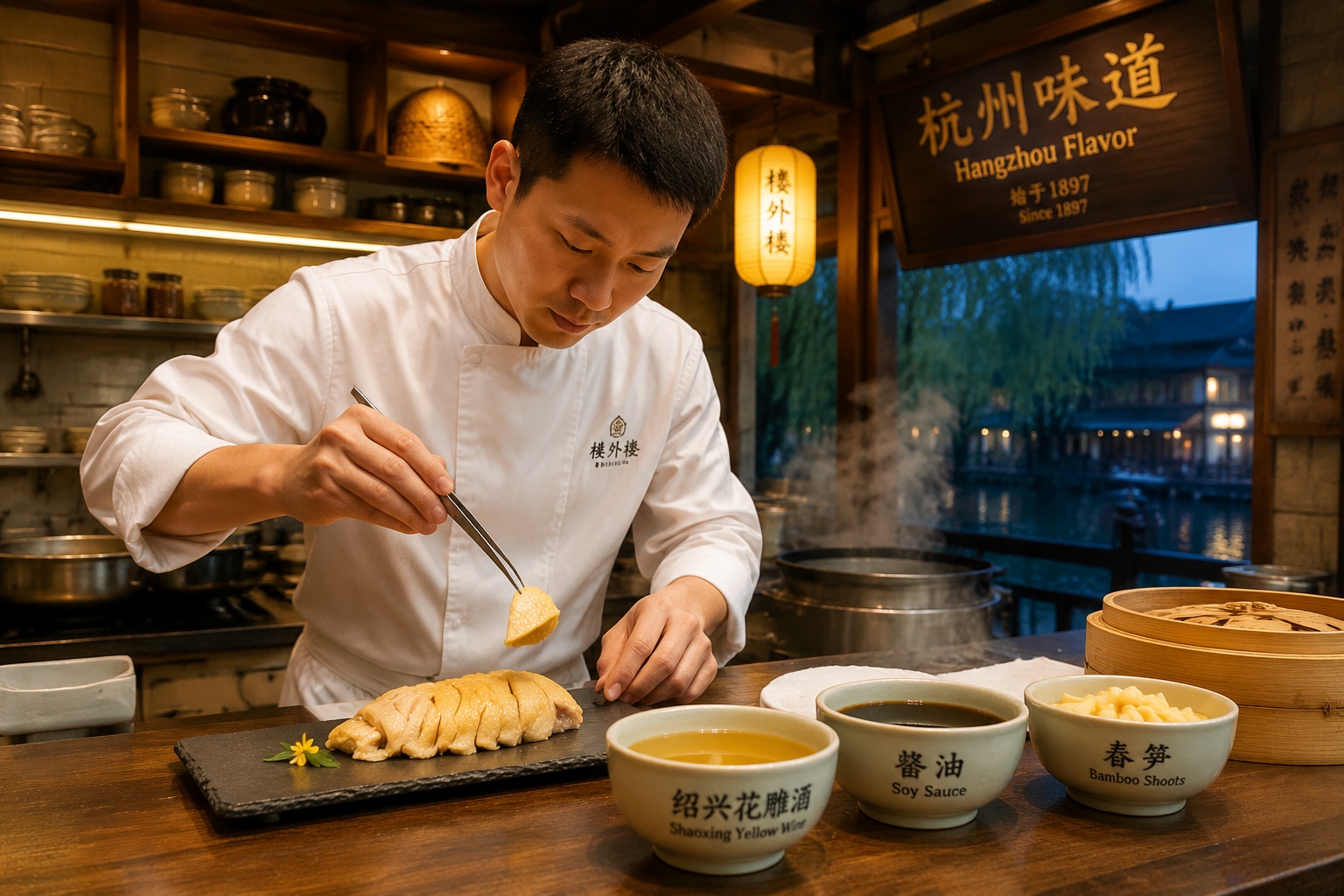
At seven in the evening, a narrow lane in Hangzhou’s old town is dotted with young people holding phones. They’re waiting outside a three-storey building where warm light spills from windows onto a queue that curls around the corner. The air smells of soy sauce braised pork and a whiff of drunken crab. A waiter opens the door, carrying a white plate that could pass for minimalist art: neat circles of river shrimp rest on a stroke of pale green foam, scattered with two or three coral-red goji berries. The woman filming it laughs and asks her friend, ‘Does this still count as Zhejiang cuisine?’
This is a common scene in cities across the Yangtze River Delta. Zhejiang cuisine — one of China’s eight great culinary traditions — is known for its light, fresh flavors and fine use of local ingredients like bamboo shoots, river fish, and aged Shaoxing wine. But in today’s hyper-connected food scene, many young chefs are turning those classics into visual spectacles for social media. The question is whether all this creativity helps preserve a cuisine that dates back centuries, or slowly erases it.
Inside the Kitchen: Where Tradition Gets a Makeover
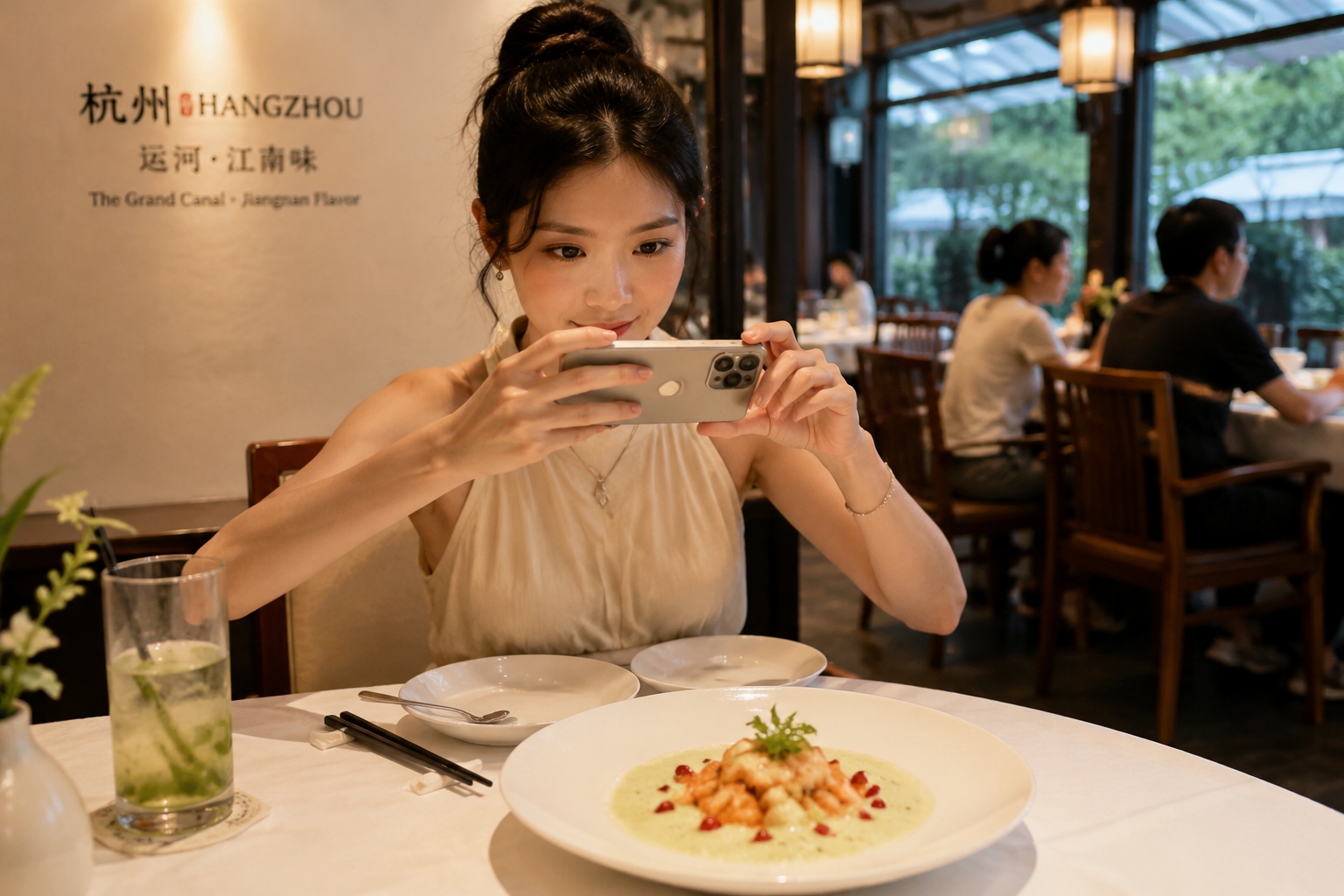
I met the chef behind this restaurant, 31-year-old Chen Yu, inside his compact open kitchen. He was sliding a portion of fermented rice into a small wok, adjusting the flame until a fine blue tongue licked the metal. Around him lay bowls of dark soy sauce, a jar of thirty-year-old shaoxing wine, and fresh bamboo shoots cut into diamonds. Chen trained for eight years under a master in Dongpo, then spent another two in Bangkok working at a modern Asian fine-dining place. Back in Hangzhou, he wanted to do something that felt both of his hometown and of his time.
One of his signature dishes is “drunken chicken, three ways”. He uses free-range chicken from a village outside Shaoxing, cures it for 36 hours in yellow wine and ginger, then poaches it at 74°C in a temperature-controlled water bath. The chicken comes out impossibly tender, with a faint sweetness that comes from the wine and a few drops of aged vinegar. Instead of serving it in a traditional porcelain pot, he arranges each slice on a long slate, with dots of ginger oil and a pile of preserved lime zest on the side.
That may sound like a foreign technique, but Chen insists the heart remains traditional. “I’m not inventing new flavors. I’m just changing the stage,” he said, wiping his hands. “My grandfather used to marinate chicken in this same yellow wine. I simply control the temperature more precisely and plate it so a 25-year-old wants to take a photo of it.”
Local Products, New Patterns
His menu still respects the geography of Zhejiang. Tiny razor clams from Ningbo are quick-steamed and finished with a drizzle of green tea oil, not the usual garlic butter. Jinhua ham, cured in the hills of the province’s mid-west, becomes a seasoning for hand-pulled rice noodles topped with a slow-cooked egg yolk. Even the ubiquitous “stinky” tofu from Shaoxing is fried until its surface crackles, then matched with a quenelle of fermented tofu ice cream — a risky mash-up that draws both giggles and second helpings.
Why Young Chefs Are Reimagining Zhejiang Cuisine
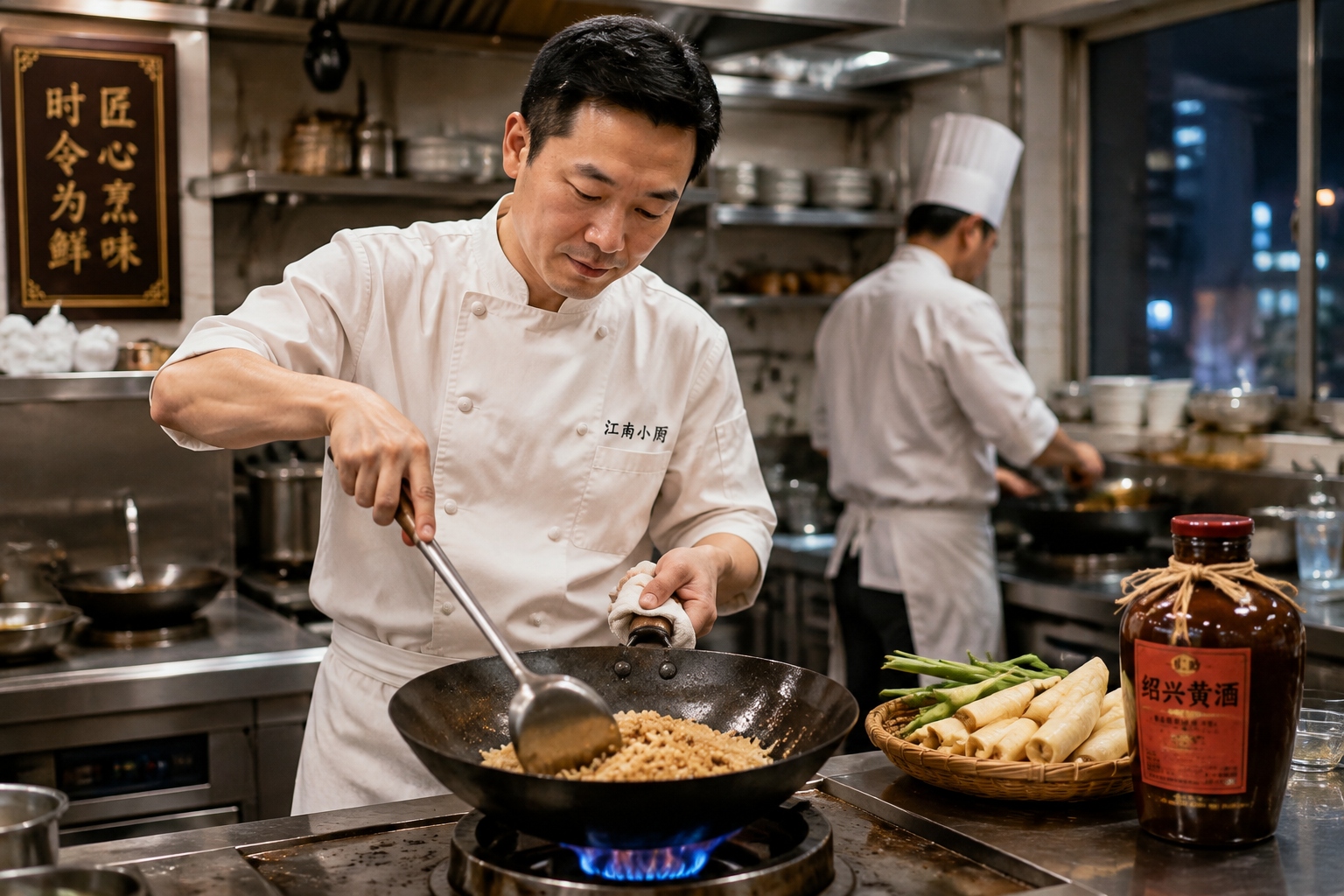
Chen is not alone. In Shanghai, Ningbo, and even the less-visited cities of Zhejiang, a small cluster of young chefs is turning heritage recipes into ‘new Jiangnan’ plates. They train in classical Chinese kitchens, often under masters who demand exact wok movements, and then move on to stages in Copenhagen, Paris, or Tokyo. When they return, they bring a habit of breaking down every element.
“In a traditional Chinese kitchen, you learn rules by heart: this must be cut long, that must be quick-fried at high heat,” says another chef, Zhou Lan, who opened a 12-seat counter spot in Suzhou not long ago. “But after I worked in Europe, I started asking ‘why this rule?’ The real reason is to keep the ingredient’s natural texture and umami. If I can achieve that with a different plate shape or a light gin-based broth, does it matter?”
This question splits food old-timers. Some argue that the essence of Zhejiang cuisine lies not only in flavor but in rituals — a proper xifan (starter) should include cold appetizers served in lacquer trays, not on ceramic tiles. Others welcome the shift, noting that the province’s food has never been static. “Hangzhou used to be a capital full of merchants, and chefs borrowed ideas from all over China,” explains Luo Shuhua, a food historian at Hangzhou University. “Today, the internet has replaced the Silk Road. It’s natural that young chefs travel the globe through videos and stage placements.”
What Diners Really Think: Locals vs. Tourists
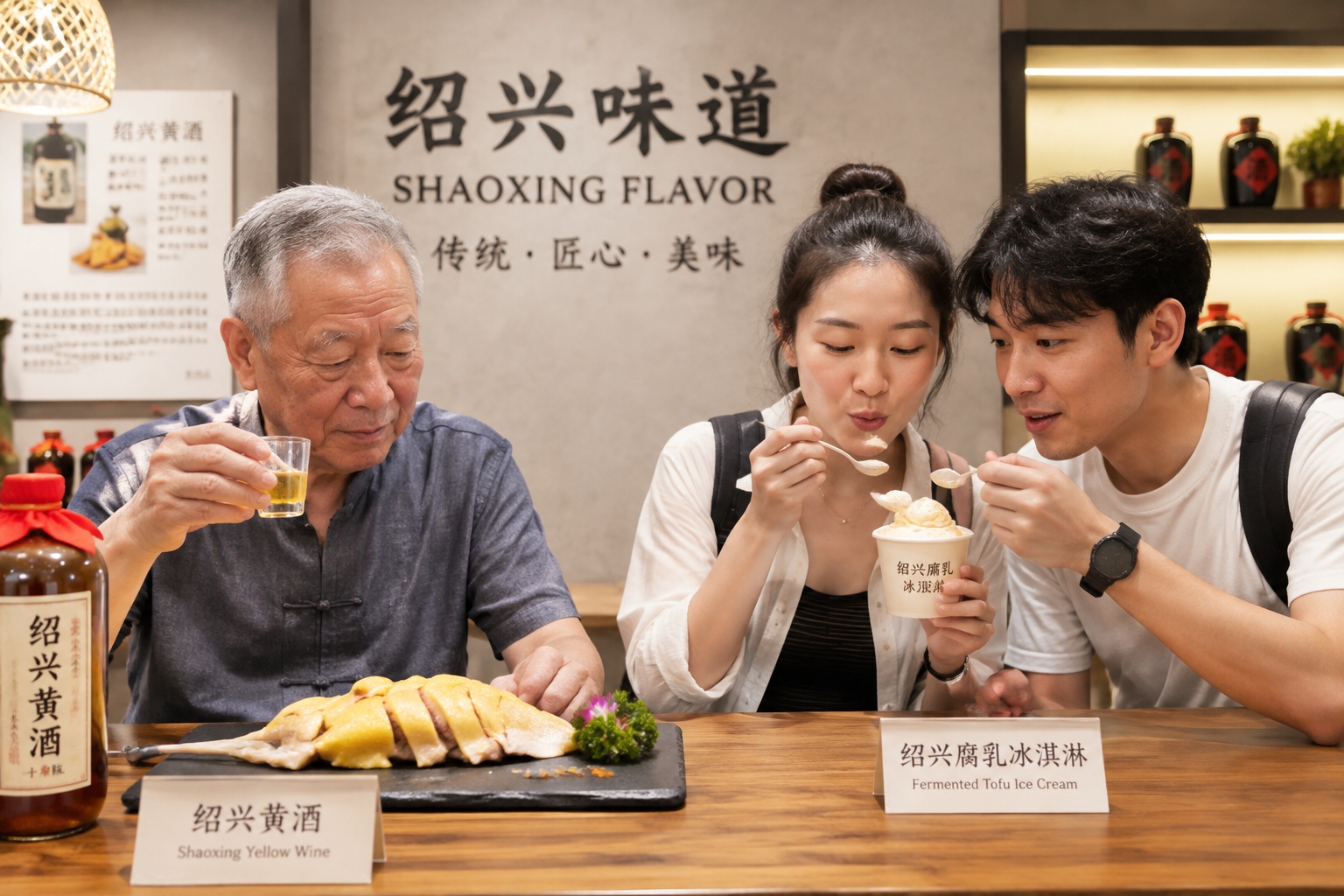
At the restaurant’s bar counter that night, a retired Hangzhou native named Xu Deming was nursing a cup of warm yellow wine. He comes once a month, and still grumbles about the “drunken chicken three ways” after eating it. “I’m from Shaoxing. At my house, chicken is poached in wine and cut into chunks, no fanfare. The taste is right, though,” he admitted, dipping his chopsticks into the chicken dish. “At least the yellow wine is not fake. Where do they get this high-quality product?”
On the other side of the room, a group of college students from Chengdu were filming the dessert — a snow-white scoop of fermented tofu ice cream topped with smoked chili threads. One of them, Zou Han, said he had never tried Zhejiang food before coming here. “I thought it would be bland, but everything is so layered. The ice cream is a bit sour, a bit savory, and then the spice kicks in. It makes me curious about the original dish.” After the meal, a few of them said they planned to visit a traditional “old-woman” restaurant the next day.
Data from the local dining platform shows that restaurants like Chen’s receive roughly 40 percent of their reservations from diners under thirty, half of whom are out-of-province visitors. The question is whether these click-driven clients become lasting fans of the food itself.
The Attention Economy: Can Trendy Restaurants Sustain a Cuisine’s Legacy?
Not all experimental seafood restaurants survive. In Shanghai, a batch of “modern Jiangnan” eateries opened between 2019 and 2021 with dramatic lighting and tasting menus. Several have already closed after their Instagram moments faded. “The diners’ social buzz sharpens a restaurant’s reputation, but it also inflates demand under pressure,” says Fan Xiaoping, a restaurant consultant who tracks the sector. “If young chefs use the internet only for viral marketing, they will lose their roots. But the ones that last have a solid product and a point of view.”
Chen’s restaurant, which opened three years ago, is still booked out on weekends, but weekdays are calmer. He does not rely on paid influencers anymore. Instead, each season he takes a few regulars to a mountain market to buy new-season bamboo shoots, and the restaurant social media account shares short, raw clips of the sourcing journey. Regular customers appreciate the transparency.
“The real challenge is convincing people that tradition is alive,” Chen told me as he cleaned the wok with a soft cloth. “If I only served grandma’s recipes, the restaurant might be a tourist trap. But if I let people see where each ingredient comes from and how each technique is connected to the old way, then they understand why I’m pushing boundaries.”
Conclusion: Food Is a Flowing Memory of Home
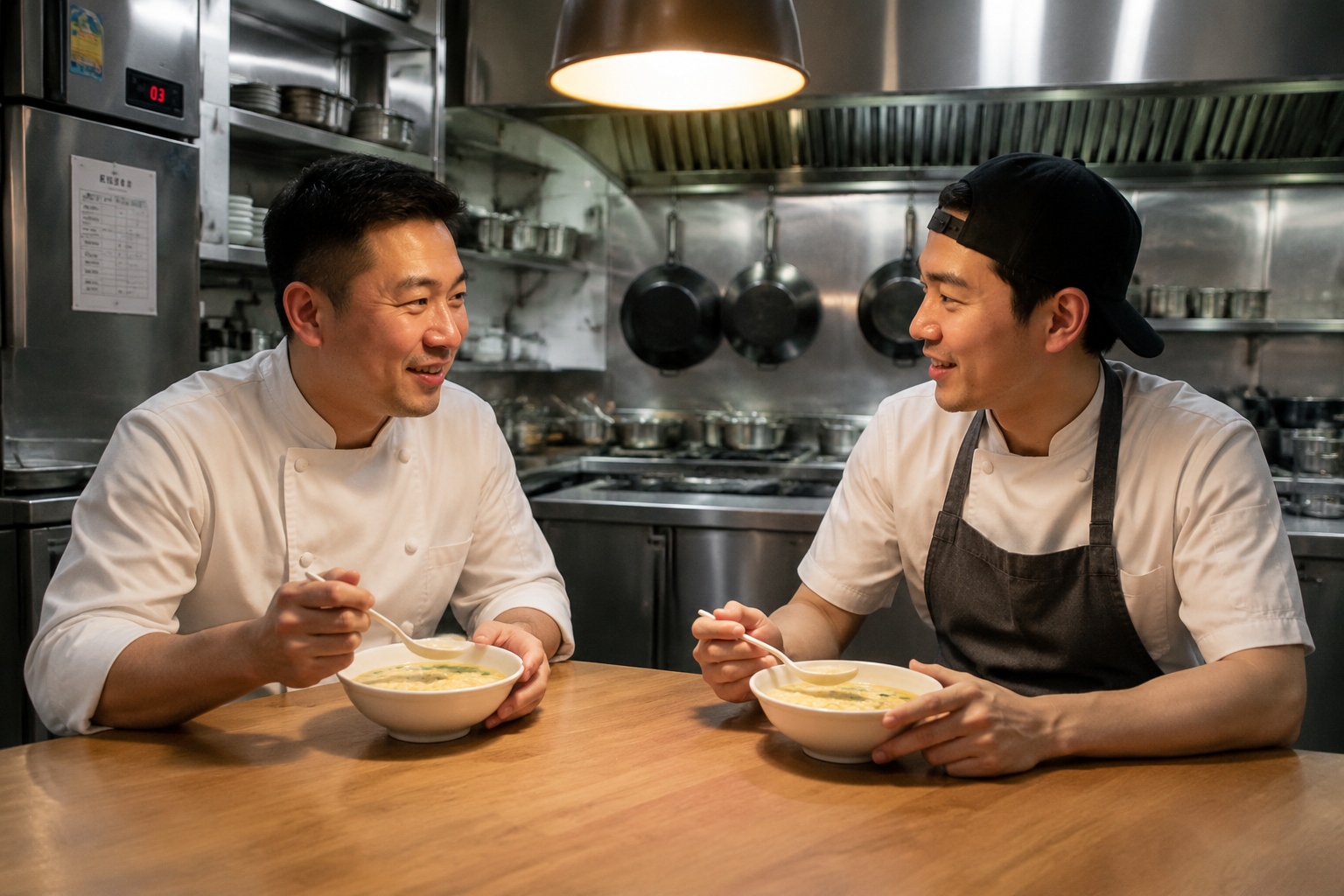
By midnight, the last diners had left. The kitchen gleamed under cold white lights. Chen and his sous-chef sat at a wooden table with two bowls of leftovers: a simple tomato egg drop soup, made with the same fermented rice he had used earlier. “This is what I cook when I’m tired,” he said. “It’s not for social media.”
That small bowl embodies the spirit of my visit: Zhejiang cuisine is not a fixed monument but a living argument. Young chefs are using every tool available — new methods, global references, online visibility — to keep it relevant. Some experiments fail, some become signatures. But as long as a chef can still taste a childhood’s memory in a sip of yellow wine or a bite of spring bamboo, then the cuisine has found its next chapter.
Start the discussion at forum.chinacomes.com