

The Smell That Says You’ve Arrived
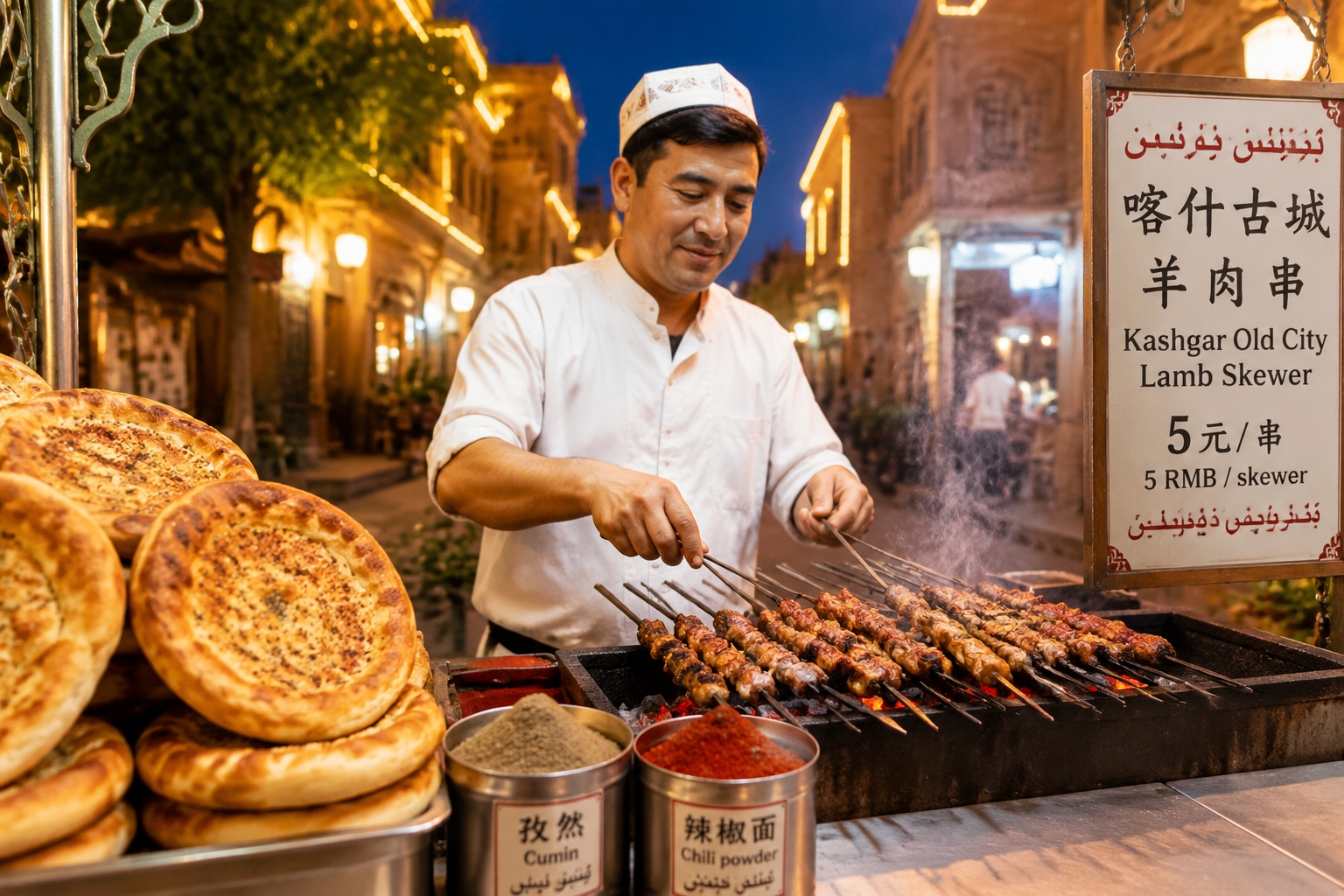
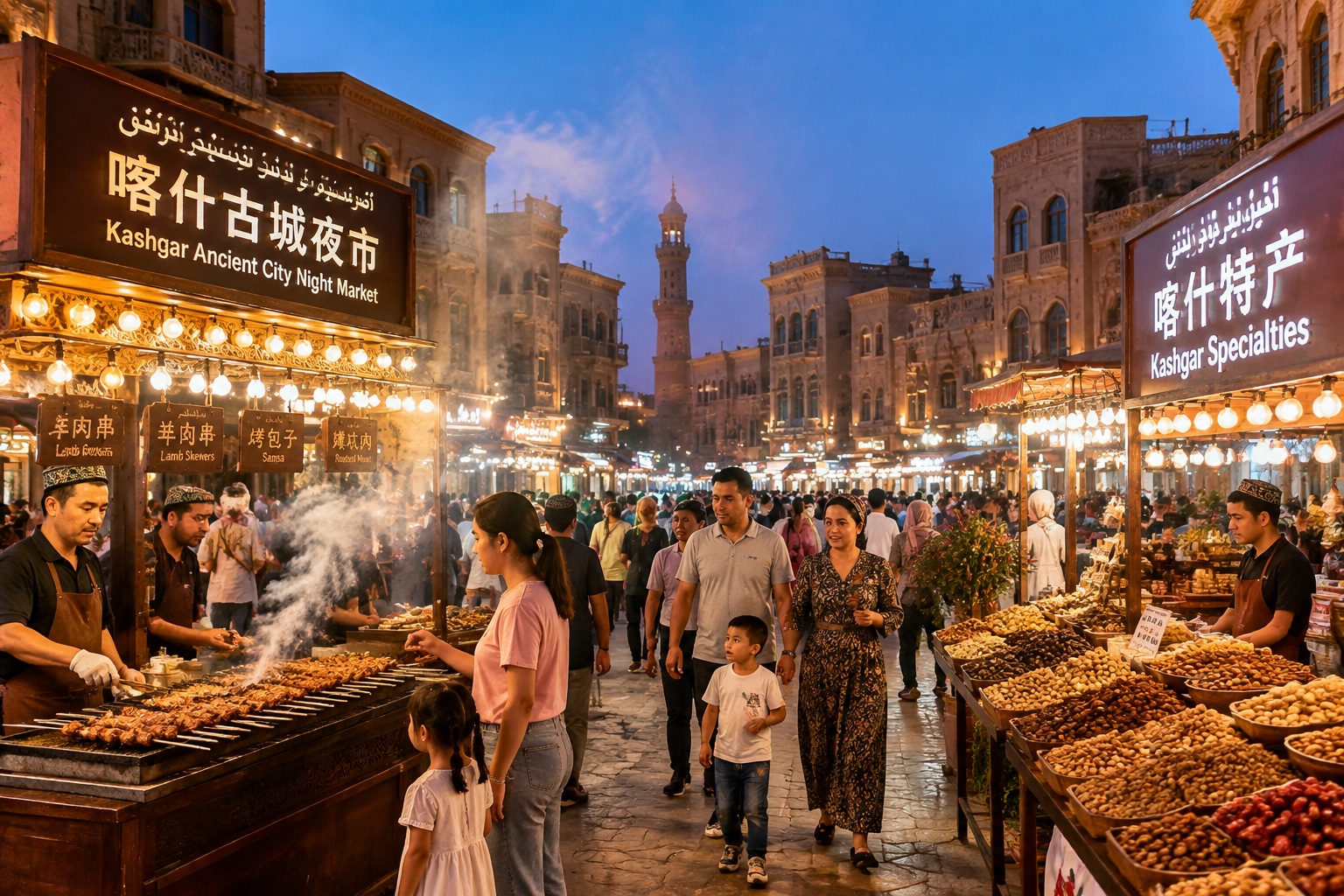
Stand at the edge of Kashgar’s old town in the early evening and the wind will smell like charcoal, lamb fat, cumin and warm bread. A grill vendor pulls a skewer of red-willow lamb off the fire, shakes coarse chilli flakes over it, and slides it onto a torn piece of naan. He does not hand you a menu. He just points at the pile of skewers.
This is Xinjiang, a far-western region of China where Uyghur, Chinese and Central Asian kitchens have been feeding each other for centuries. For travellers who read neither Chinese nor Uyghur, the food stalls can feel both exciting and hard to decode. This guide is the map I wish I had on my first visit: what to eat, how to order, what to pay, and where to find the most memorable plates in Urumqi, Kashgar and beyond.
What Makes Xinjiang Food Different?
If you flew here from eastern China, the first meal will probably surprise you. There is very little stir-fried sweet-and-sour food on these tables. The everyday language of Xinjiang cooking is built around lamb and beef, wheat, onions, peppers, tomatoes and dairy.
Sitting on the Silk Road for centuries, the region absorbed ideas from Central Asia and the Middle East. You eat naan, you eat kebabs, and you eat rice that reminds you of Central Asian pilaf. Because most local residents are Muslim, pork never appears in Uyghur, Kazakh or Hui restaurants. Alcohol is rare in traditional Uyghur places, and it is best to follow that rule.
Must-Order Snacks: Your Xinjiang Food Map
The best strategy for a visitor is simple: order one dish at a time, share, and let the vendors guide you.
Red-Willow Lamb Kebabs
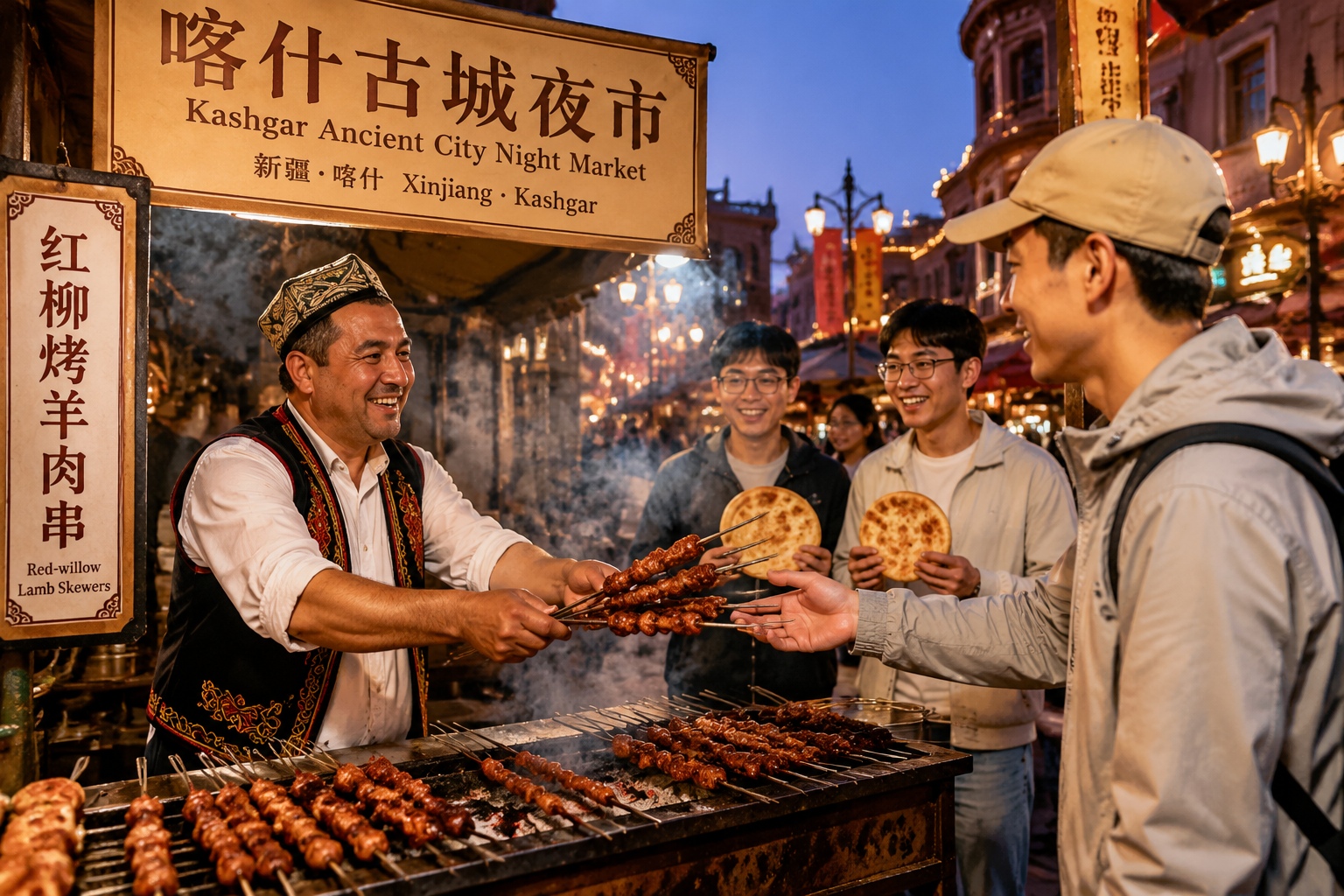
Ask for lamb on a red-willow skewer, often called hong liu kao rou. The branch adds a subtle smoky note, and the charcoal grill gives the fat edges a perfect crisp. Most stalls use generous pieces of local mutton, seasoned with cumin and dried chilli. Start with one or two skewers. If you are not used to heat, say bu la, or wei la for mild, before the chilli goes on.
Naan, but Not the Bread You Know
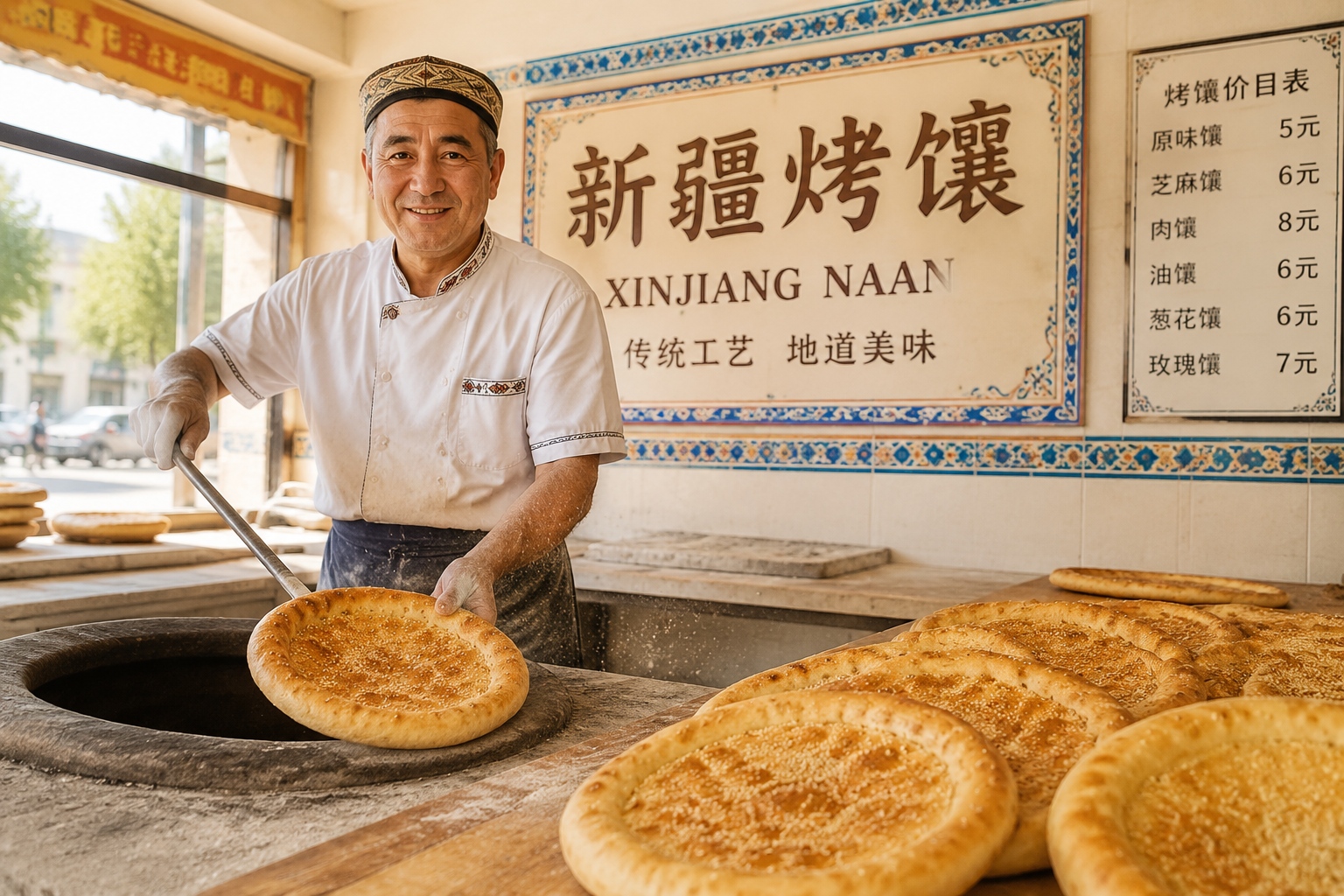
Xinjiang naan, pronounced nang, is a tandoor-baked flatbread with a golden crust and a satisfying chew. It is the closest thing the region has to daily bread, but more versatile. A basic sesame naan costs about 3-6 RMB. Look for thicker girde versions, sesame-crusted edges, and modern stuffed ones with rose-petal jam. The best time to buy is when a fresh batch comes out of the clay oven, still crackling.
Samsa: The Crispy Baked Lamb Pie
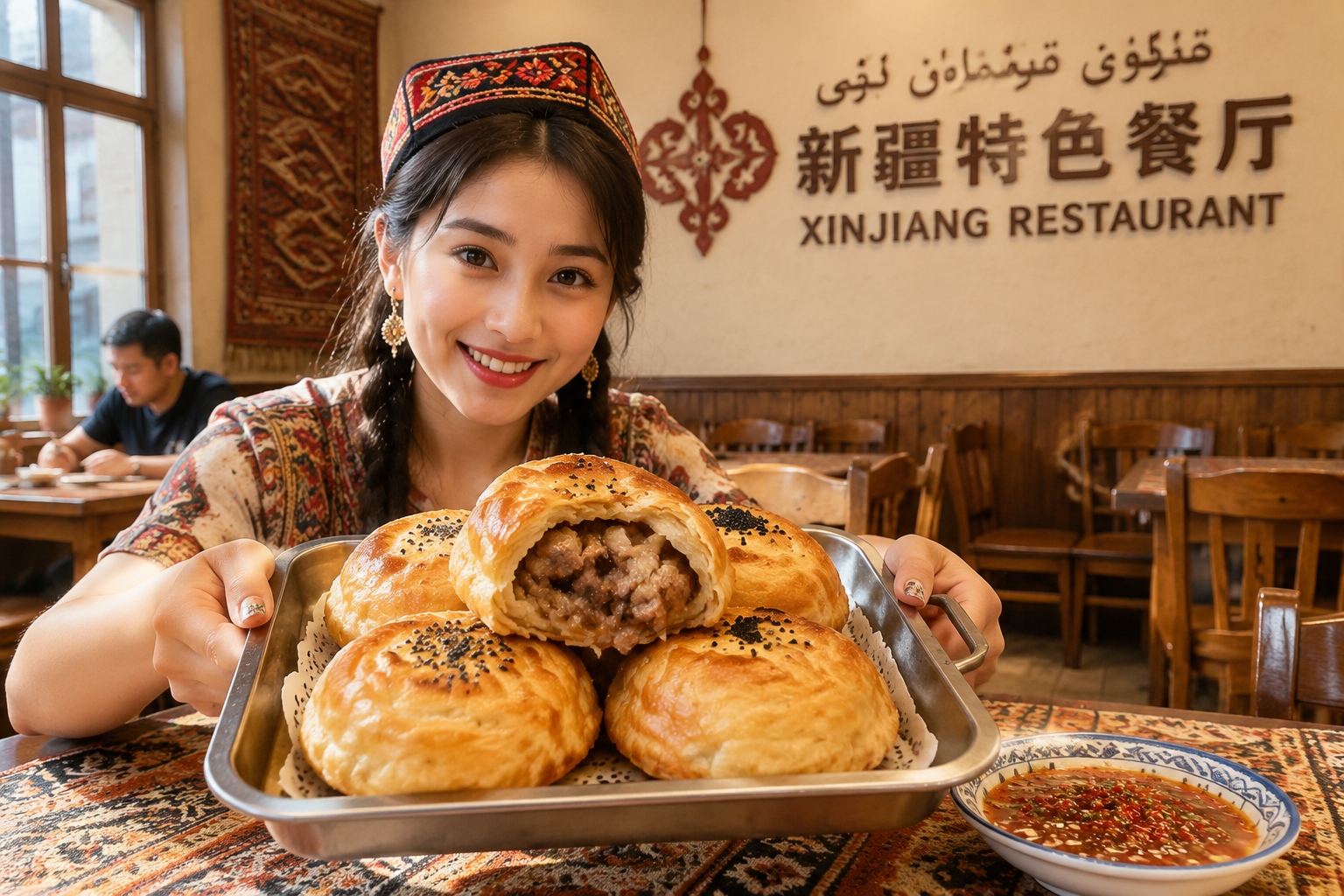
Samsa in Uyghur, or kao baozi in Chinese, is a crisp pie filled with minced lamb and onion. It is baked in a tandoor until the shell turns golden brown with dark spots. Eat it almost straight from the oven while the juice inside is still very hot. Dip the top into a little vinegar and chilli, or just bite in. One samsa is a snack; three make a meal.
Polo and Laghman: The Daily Meals
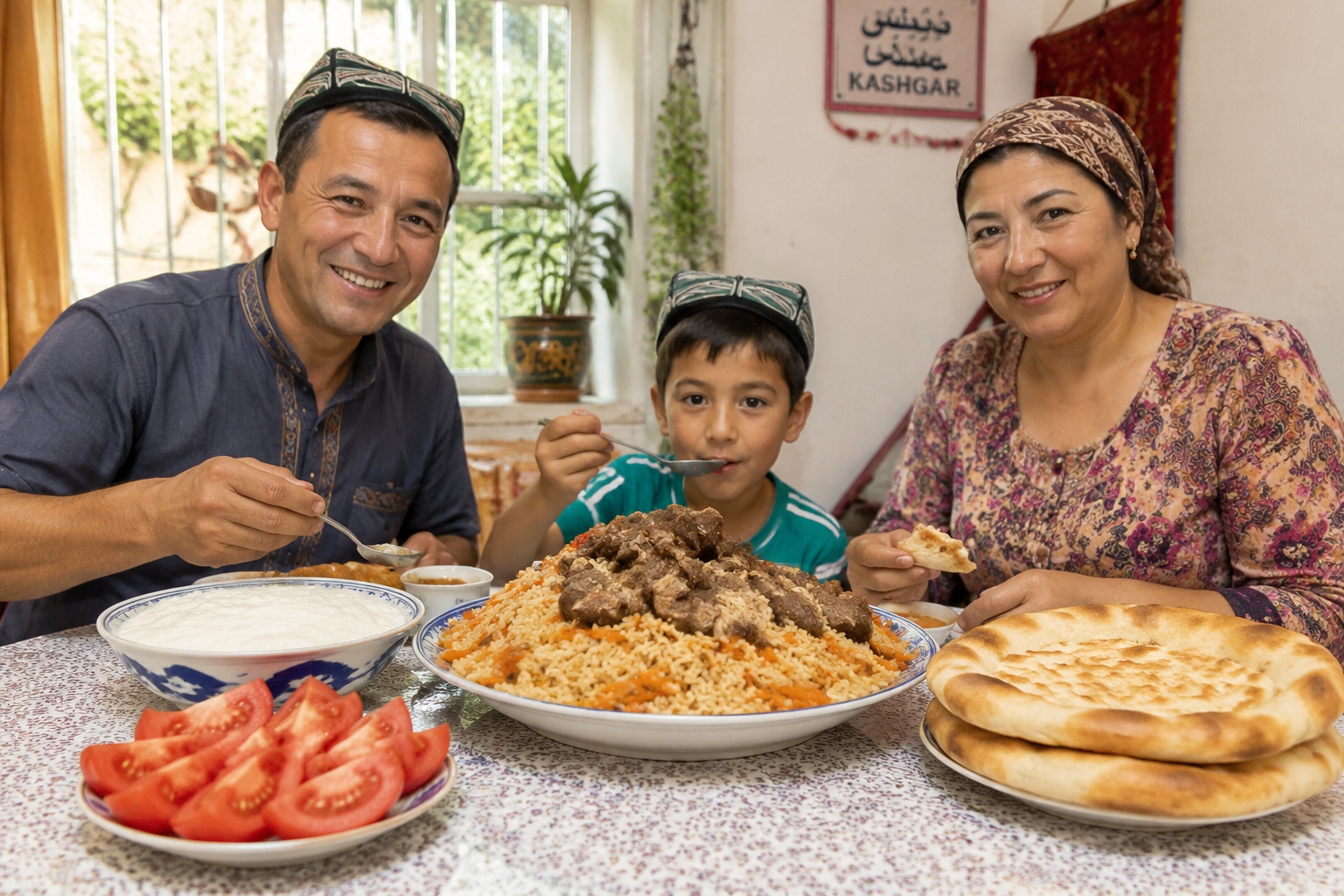
If kebabs are street food, polo is the home-cooked centrepiece. Lamb and carrot rice is cooked slowly in a large iron pot, sometimes with raisins. Many restaurants serve it all day. Ask for a small plate if you want to leave room. The side of plain yogurt is not dessert; it helps to cool the richness.
Laghman is another everyday comfort: hand-pulled noodles stir-fried with beef or lamb, peppers, tomatoes and cabbage. Some places serve it as a soup. In both forms, it is what locals line up for at lunch.
Traditional Yogurt and Handmade Ice Cream
Traditional Uyghur yogurt is sour, thick and served without sugar. It resets your taste buds between heavy dishes. For dessert, look for handmade ice cream stalls around bazaars. They use whole milk, eggs and sugar, churning it until it is unusually soft.
How to Order When Nobody Speaks Your Language
Outside big hotels, English is still hit-or-miss. But Xinjiang food is mostly visual. Point at what the person next to you is eating; that is a normal and welcome technique. If the menu has no photos, use your phone calculator for numbers, and write bu la or wei la on your phone screen. A few romanised phrases work well in Chinese-speaking contexts:
- Bu la / not spicy
- Wei la / mild
- La / hot
- Yi ge / one, liang ge / two
- Duo shao qian? / how much?
- Zhe ge / this one
Prices and Portions: Check Before You Choose
Street food is cheap, but prices are often listed per skewer, per piece or per kilogram. In a larger restaurant, confirm how the dish is priced before ordering. A lamb skewer usually costs 5-15 RMB; samsa run 3-8 RMB each; a plate of polo is about 15-30 RMB. If a market price feels too high, say tai gui le and walk away.
Where to Eat: A City-by-City Xinjiang Food Map
Each city has a slightly different food personality, and part of the fun is eating your way between them.
Urumqi
The capital is huge and full of restaurants that make life easy for a first-timer. Grand Bazaar has a famous food street, but smaller Uyghur places around Erdaoqiao often feel more local. You can taste most of the classics in one evening.
Kashgar
Kashgar feels closest to the old Silk Road. In the old city, follow local eaters to evening stalls around Id Kah Mosque. This is the best place to look for old-style red-willow kebabs and naan straight from the tandoor.
Ili (Yining) and the North
The Ili Valley is greener and more Central Asian in atmosphere. Around Yining, look for richer dairy snacks, fresh fruit from local orchards, and dishes shaped by Kazakh cooking. Adventurous eaters can try horse sausage, a local specialty; if that is not for you, the yogurt and apples will keep you happy.
A Few Things to Know Before You Dig In
Most Uyghur, Kazakh and Hui restaurants are halal, so do not bring outside pork or alcohol into them. It is also practical to choose busy stalls with a fast turnover and clean preparation surfaces. In summer, drink bottled water rather than tap water at market stalls.
Meals usually start with tea and a piece of naan. If a place is busy, sharing a long table with strangers is common. Tipping is not expected.
Final Word: Let Food Be Your Translator
Xinjiang food is not a stage show. It is how families eat, how festival nights end, and how neighbours stay close. The menu may not be in English, but a hot skewer and a warm piece of naan translate perfectly. Let the food lead the way, and the region will start to feel familiar.
Start the discussion at forum.chinacomes.com