

One Night, a Village Lit Up
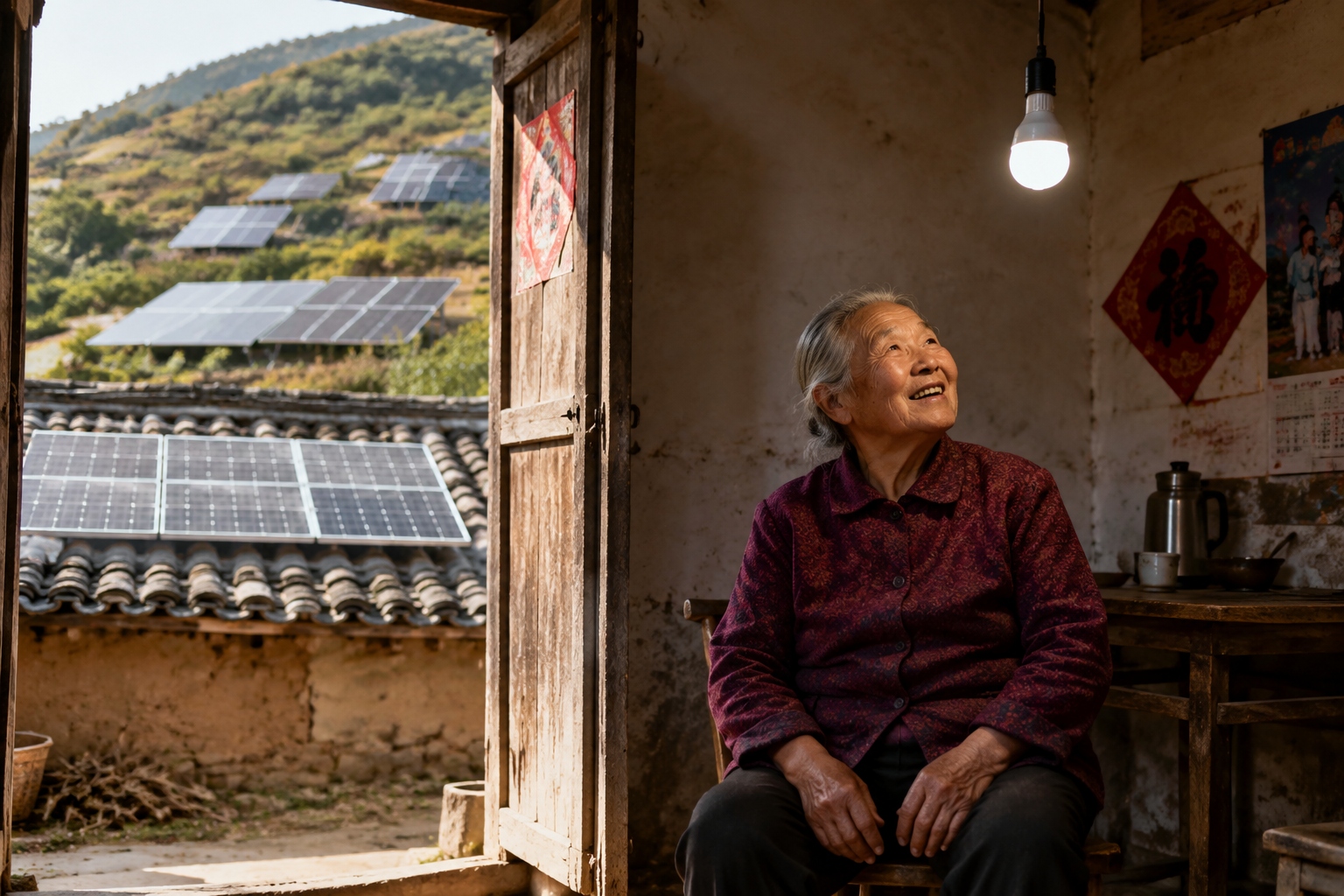
Can you imagine life without electricity? Not just without a smartphone or a fridge—but without a single light bulb after sunset. That was the reality for 78-year-old Yang Guozhen, who lived in a small mountain village in Yunnan province, southwestern China, until two years ago.
“I remember the first time they turned on the lights,” Yang told me through a translator. “We all gathered in the square. The kids screamed. The old ladies cried. It was like watching a miracle.”
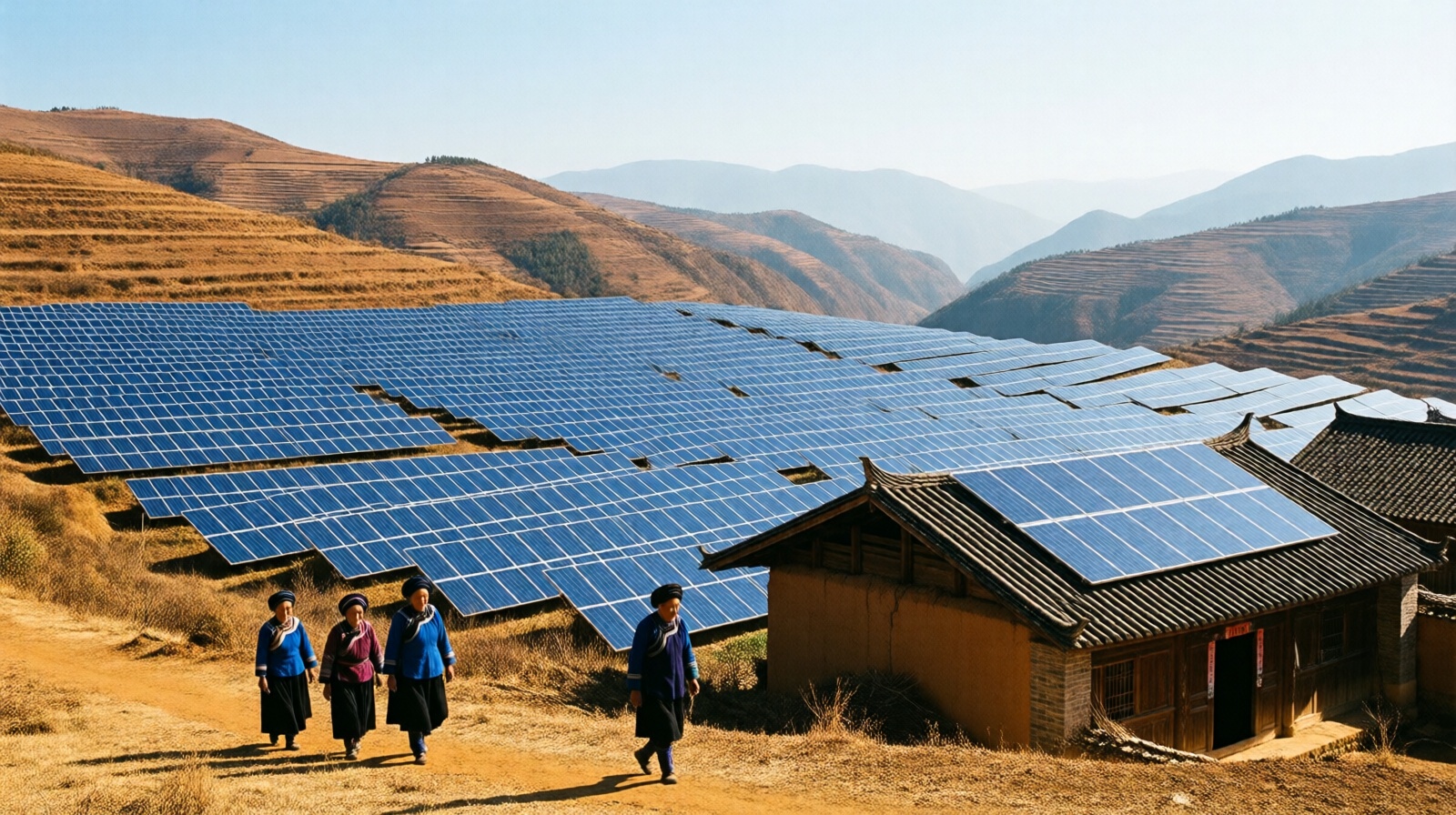
That miracle came in the form of hundreds of solar panels spread across the once-barren hills surrounding the village. Local officials call it the “blue sea” project—a nickname that stuck because from a distance, the dark blue photovoltaic panels look exactly like an ocean spreading over the brown earth.
How Solar Changed Everything
Before solar, the village relied on kerosene lamps and small diesel generators that ran for only two hours a day. The nearest power grid was 30 kilometers away, crossing deep valleys and steep slopes. The cost of extending the grid was simply too high for a settlement of just 200 people.
“We calculated that building a traditional power line would cost about 1.5 million yuan (roughly $210,000) per kilometer,” said Li Wei, a local engineer with the State Grid’s rural electrification team. “For these villages, that’s impossible. But solar? We can install a 50-kilowatt system for under 500,000 yuan, and it works for 25 years.”
Li’s team has installed solar mini-grids in more than 30 villages across Yunnan, Guizhou, and Sichuan. The systems include battery storage so that power is available 24/7, even on cloudy days. The result is life-changing: kids can study at night, clinics can store vaccines, and small businesses can process agricultural products.
“The Internet Changed Our Village More Than the Lights”
But electricity alone wasn’t the end of the story. Once the solar panels were up, the village also got internet access through a satellite broadband connection that the solar system powers. For many young people, that made the biggest difference.
“My parents were happy about the lights. I was happy about the Wi-Fi,” laughed 19-year-old Chen Xiaoyu, who now runs a small online shop selling dried mushrooms and tea leaves from her village. “Before, I had to walk two hours to the town to use a computer. Now I can livestream from my kitchen.”
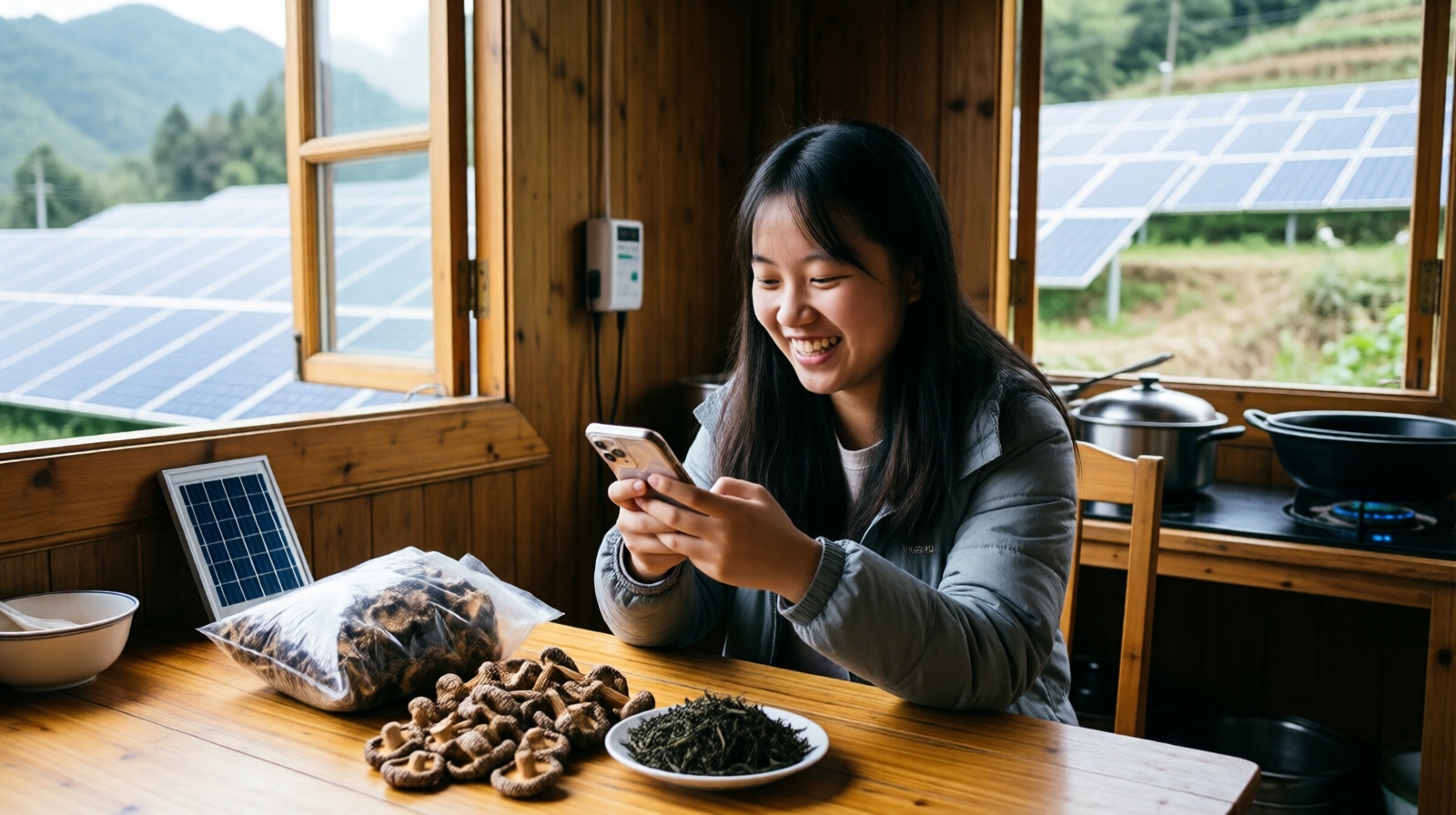
Chen’s story is not unique. Across China’s remote areas, the combination of solar power and internet access is enabling a quiet digital revolution. Farmers use weather apps to plan planting. Children attend online classes during rainy days. Village doctors consult specialists via video calls.
From Barren Hills to Blue Seas—A National Trend
What started as a pilot project in Yunnan has now become a national campaign. China’s National Energy Administration reported that by the end of 2023, more than 280,000 remote households had gained access to electricity through off-grid solar systems. The “blue sea” of solar panels is gradually covering the country’s poorest mountain regions.
“We call it ‘ecological poverty alleviation with a twist’,” said Professor Zhang Ming, an energy expert at Tsinghua University. “The barren hills are useless for farming. But they are perfect for solar—lots of sun, no shade, and cheap land. It’s a win-win.”
The twist is that the solar farms also create local jobs. Villagers are hired to clean the panels, monitor the batteries, and maintain the network. In some cases, the land beneath the panels is used for growing shade-tolerant herbs, adding another income stream.
What’s Next? Smart Solar Villages
Looking ahead, China is piloting “smart solar villages” where the solar system is integrated with AI-driven energy management, electric vehicle charging stations, and even small-scale bitcoin mining using excess power. “The goal is to make these villages not just self-sufficient, but net contributors to the energy grid,” Li Wei told me.
For Yang Guozhen, the old lady who saw the first light, the future is simple: “I want my grandchildren to stay here, not go to the city. Now maybe they will.”
That, in the end, might be the most powerful change solar brings—not just volts and watts, but the choice to stay home.
Start the discussion at forum.chinacomes.com