
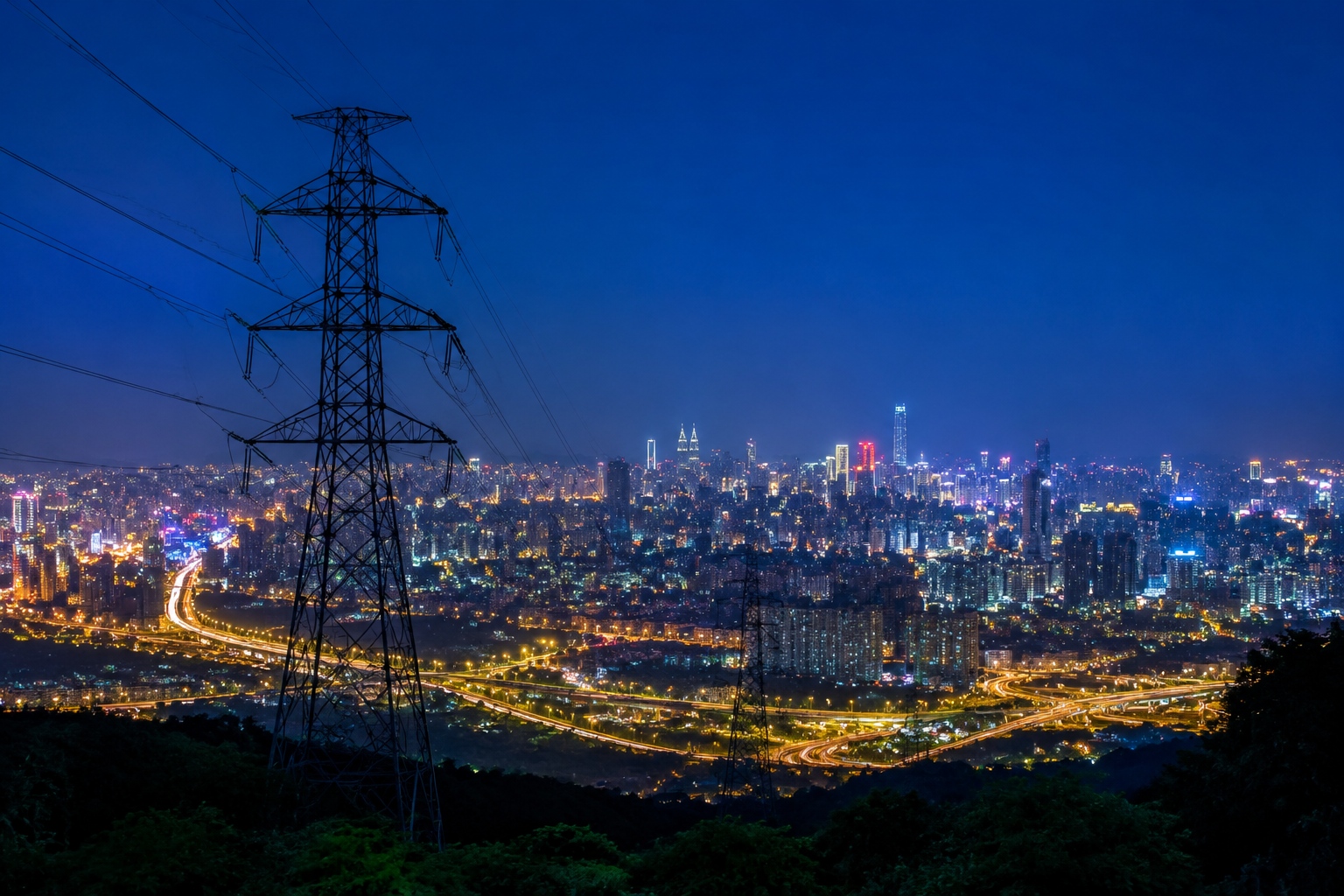

It’s 8 PM in Shanghai – and nobody notices the lights
In a typical Chinese city apartment, the evening routine is a quiet symphony of power: a fridge hums, an air conditioner cools the bedroom, a teenager streams a drama on a tablet, and the microwave beeps to heat leftovers. Multiple devices, all running at once, without a flicker. That’s what a stable grid looks like – invisible, taken for granted.
But this wasn’t always the case. Twenty years ago, rolling blackouts were common in many parts of China, especially in summer when air conditioners pushed demand beyond capacity. Factories would be forced to shut down on a rotating schedule. People kept candles and flashlights handy. So how did China go from ‘brownouts’ to a power system that now serves 1.4 billion people with 99.9% reliability?
The ultra-high voltage highway
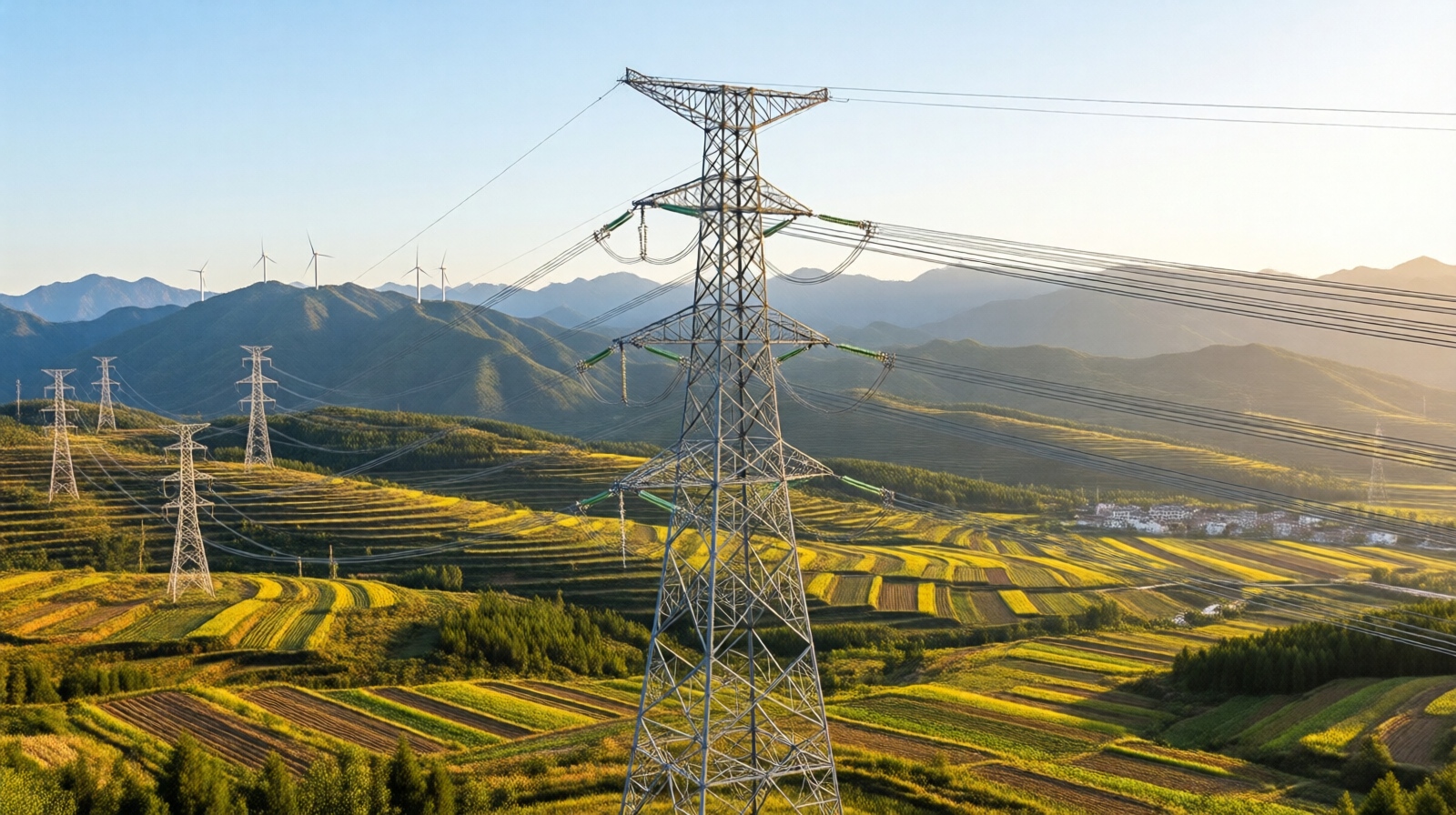
China’s energy resources are not where its people are. Coal mines are in the northwest, hydroelectric dams in the southwest, and solar and wind farms in the vast Gobi desert. But the big cities are on the eastern coast, thousands of kilometers away. The solution: build the world’s longest and most powerful ultra-high voltage (UHV) transmission lines.
Think of UHV as an interstate highway for electricity. Instead of losing power over long distances, these lines carry electricity at 800 kV or more – far higher than typical lines – with very little loss. China now has over 30,000 km of UHV lines, enough to circle the Earth. They move gigawatts of power from faraway renewables to megacities, balancing supply and demand across time zones.
For ordinary people, this means that even if the wind isn’t blowing in their province, the lights still stay on, because power can come from a solar farm a thousand miles away.
A dispatch center that thinks like a brain
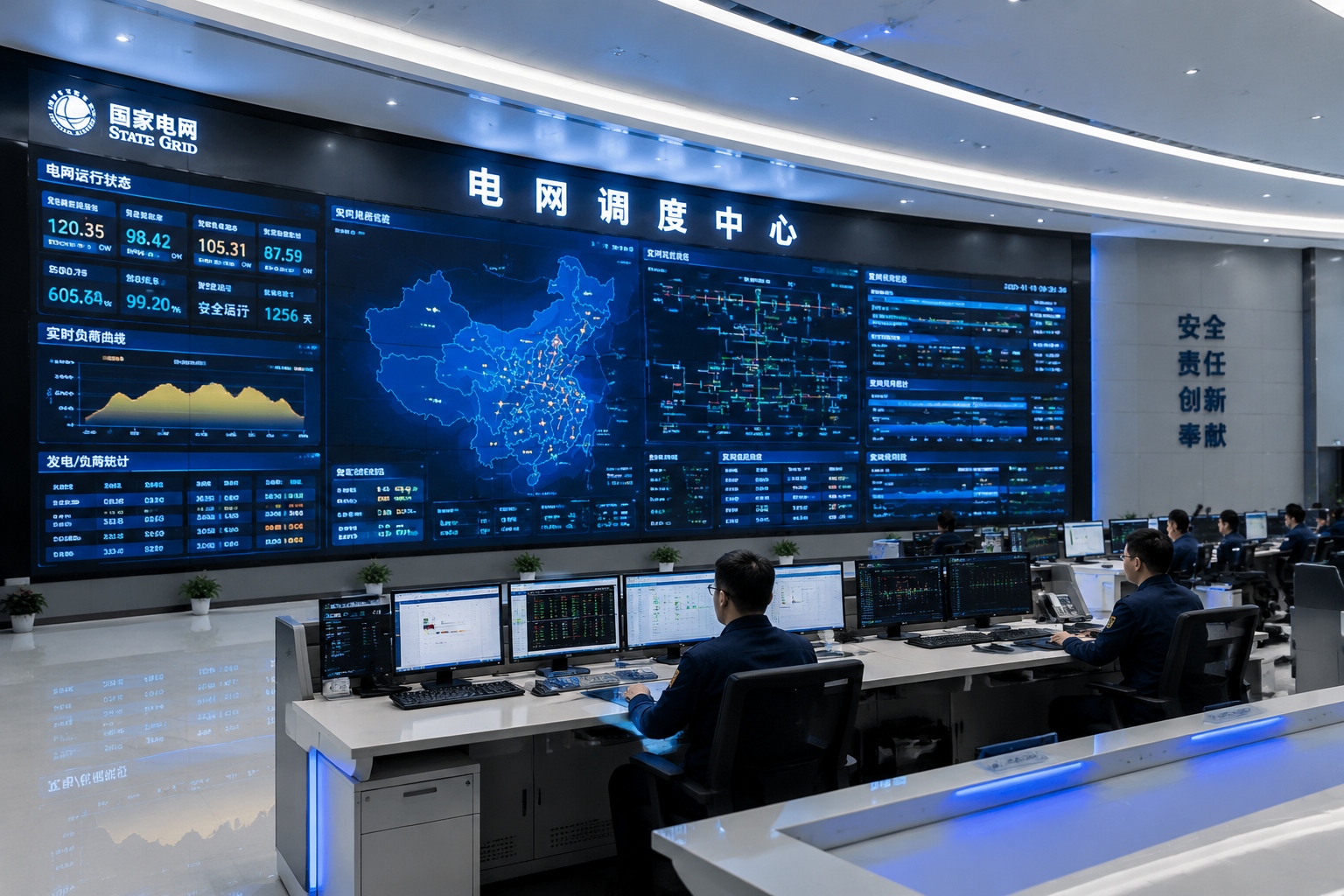
Managing a grid that spans 9.6 million square kilometers and serves 1.4 billion people is like running the world’s largest air traffic control. Every second, the State Grid Corporation of China’s national dispatch center monitors thousands of substations, predicts demand down to the minute, and adjusts generation from coal, nuclear, hydro, solar, and wind.
Artificial intelligence helps. In 2023, a pilot AI system in the east China grid reduced power waste by 1.2% just by optimizing the flow – a small number that translates to saving a city’s worth of electricity every year. The system can also detect faults and reroute power in milliseconds, so most outages, if they happen, last only a few seconds.
For a family in a small town, this means the power rarely goes out even during storms. The grid ‘heals’ itself before they notice.
Renewables: not just a trend, but a real shift
China is the world’s largest producer of renewable energy, and the grid is being redesigned to handle it. In 2024, renewable sources accounted for over 30% of total electricity generation, and the number is rising fast. But wind and solar are intermittent – the sun doesn’t always shine, and the wind doesn’t always blow.
To smooth this out, China has built massive pumped-storage hydro plants, battery storage farms, and smart grid software that can predict weather patterns and adjust the mix. For example, the Zhangbei renewable energy base in Hebei uses a combination of wind, solar, and storage to supply clean power to Beijing’s Winter Olympics venues – and now to millions of homes.
For the average citizen, the shift is felt in their electricity bill: renewable energy has helped keep prices relatively stable, even as fuel costs fluctuate globally. And in some rural areas, solar panels on rooftops have turned houses into mini power plants, generating income for families.
What about the dark days? Challenges remain
No system is perfect. In 2021, a coal shortage caused temporary power cuts in several provinces, reminding everyone that China’s grid still depends heavily on coal (about 60% of generation). Upgrading transmission lines in remote areas and integrating more renewables remain tough tasks. And as electric vehicles multiply, charging demand will strain local grids.
Yet the progress is real. The World Bank’s Enterprise Surveys show that China’s electrical reliability has improved from 73 (out of 100) in 2005 to 96 in 2020. The average number of power outages per year dropped from 10 to less than 1 in most urban areas.
For a foreign visitor, the big takeaway is this: You can charge your phone, turn on the AC, and cook dinner all at once, without worrying about a blackout. That’s not an accident – it’s the result of two decades of relentless engineering, planning, and investment.
Conclusion: A grid that’s both a machine and a promise
Electricity in China has become so reliable that people rarely think about it. That’s the ultimate compliment. The grid is a machine, yes, but it’s also a promise: that the lights will come on, every time, for everyone. And as the world watches China’s next steps – from a carbon-neutral grid by 2060 to smart city integration – the story of its power system is really a story about how a country learned to serve its people, one kilowatt at a time.
Start the discussion at forum.chinacomes.com