
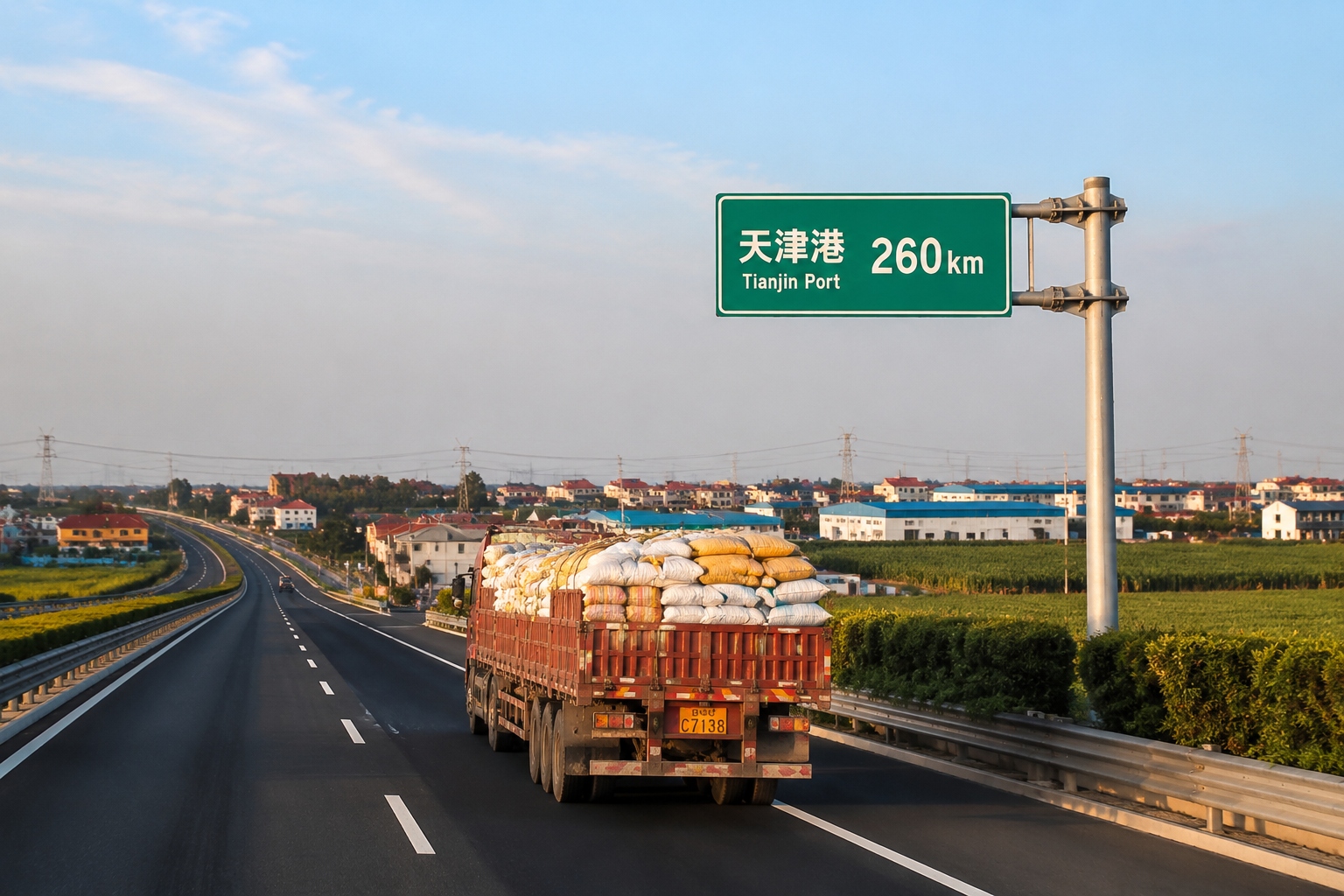

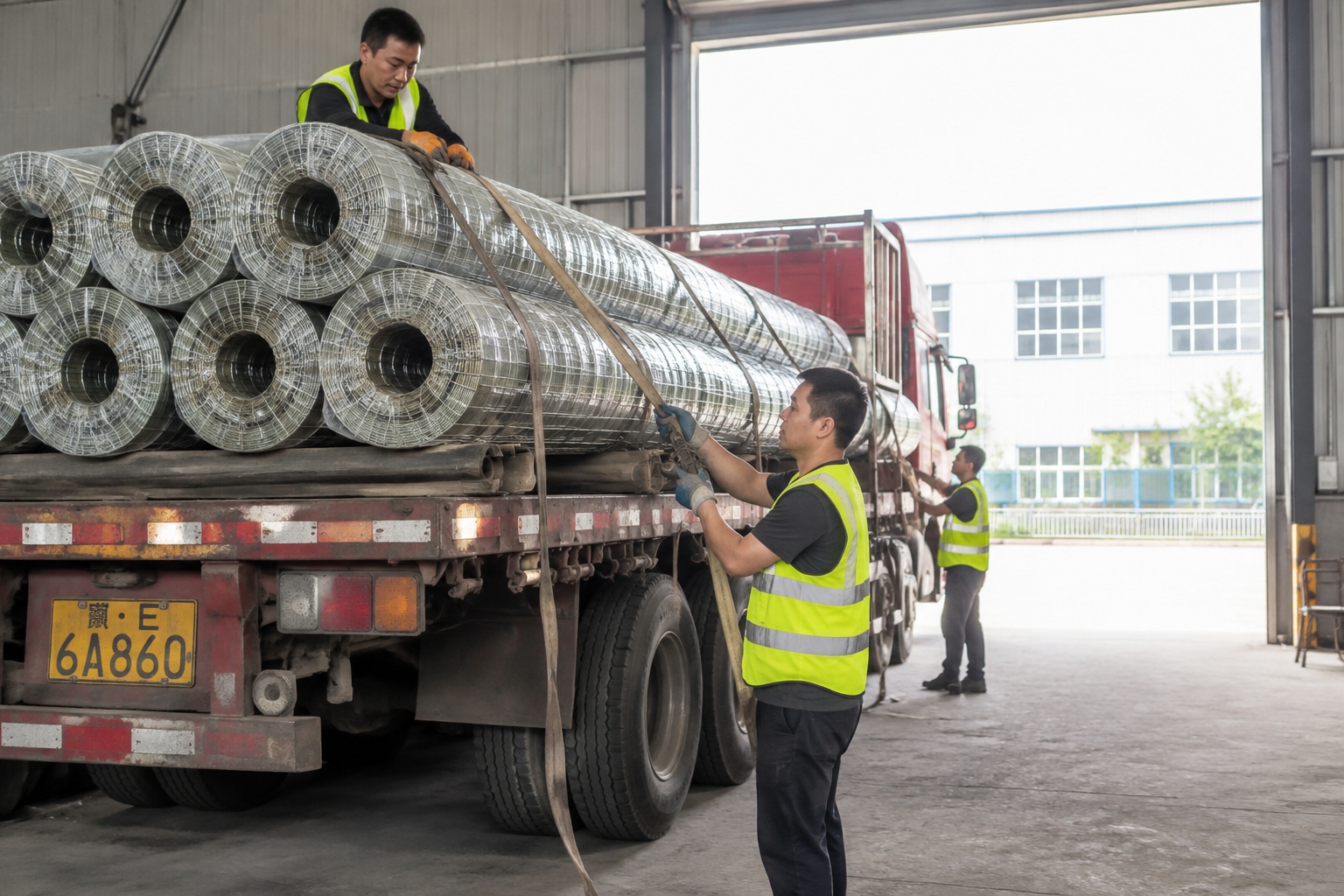
On a cold morning in Anping County, northern China’s Hebei Province, workers at a wire-mesh factory load rolls of stainless-steel filter mesh onto a flatbed truck. The packing list includes an order from a precision-parts workshop in Kyoto, requiring 3.5 tons of industrial filter mesh. The driver, Li Qiang, climbs into the cab and starts the engine. He will take a short county road to the nearest expressway entrance, merge onto the national expressway network, and head toward Tianjin Port. In total, the trip covers about 270 kilometers. If the traffic is smooth, the drive takes under four hours. At the port, a crane will lift the container onto a ship bound for Osaka. By the time the sun sets in Japan, the mesh will be on the Pacific.
Forty years ago, the same route was a day-long grind over narrow two-lane roads, crowded with tractors and handcarts. Li Qiang, who has been driving trucks since the 1990s, remembers those days. “You could not guarantee arrival time. We called it ‘rustic travel,’ because you always got stuck behind something.” Today, the truck hums along a six-lane expressway where the only stops are toll booths and service areas. “The highway turned my job from an adventure into a routine,” he says. “Now the biggest topic in the cab is which song to play, not which pothole to avoid.”
A Network Built in Forty Years
Anping is one of the world’s largest production bases for wire mesh, with over 13,000 related enterprises and exports to more than 190 countries. Many orders come from Japan, Germany, and the United States. But the factories that fill these orders are mostly small — family workshops and mid-sized plants that do not own shipping fleets. Their ability to compete globally depends on something unglamorous: the national expressway system.
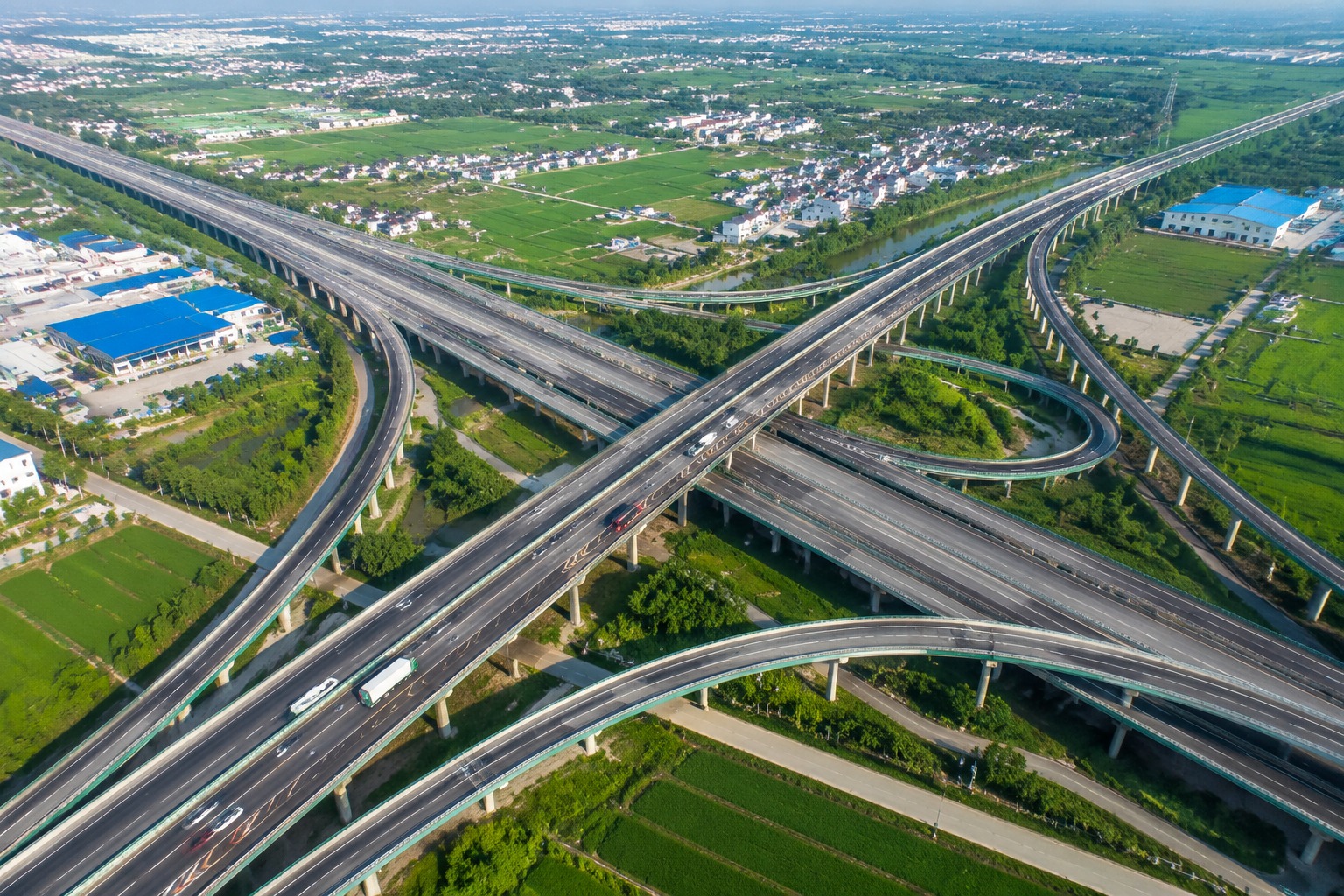
By the end of 2023, China’s expressway network had reached 177,000 kilometers, the longest in the world, according to the Ministry of Transport. That is enough to circle Earth more than four times. More importantly, the network connects every province and covers about 95 percent of population centers with more than 200,000 people. In the eastern coastal region, expressway density is similar to that of Japan and Germany.
The scale is remarkable, but what impresses logistics managers is the design. Expressways are not isolated ribbons; they are tightly woven into rail freight yards, inland ports, and airport cargo hubs. A truck leaving Anping can reach any of the 10 largest container ports in China within 24 hours. That means a parts order from a Kyoto factory can be processed in the morning, loaded onto a truck by noon, and reach Tianjin Port before midnight.
How Highways Cut the Cost of Distance
The direct benefit of expressways is time saved. Li Qiang’s four-hour drive to Tianjin Port replaces a journey that once took ten hours. Lower time costs reduce the final price of goods. Yet the economic effect goes deeper. Expressways allow factories to shift from “inventory-based supply” to “road-speed logistics,” which means they do not need to stockpile raw materials or keep large warehouses. For a small wire-mesh workshop in Anping, steel wire can be delivered from a supplier in Handan the same day, and finished mesh can leave the next morning. This “small batch, high frequency” system is one reason Chinese county towns can respond quickly to overseas orders.
Data from the Chinese logistics sector show that the total cost of logistics as a share of GDP fell from about 18 percent in 2008 to 14.2 percent in 2023. Expressways account for a major part of that improvement, especially in less-developed regions that once relied on slow, winding roads.
A shipment that used to take days now takes hours
Take a genuine example: Anping to Tianjin. A 20-foot container of wire mesh, weighing 20 tons, costs about 1,200 yuan (around 165 U.S. dollars) for trucking, including tolls and fuel. In 2000, the same move cost more and required two nights on the road. Now a factory manager can email a buyer in Kyoto, confirm the order, and schedule the pickup for the same afternoon. The road has shrunk the distance not just in kilometers, but in commercial time.
The “last mile” that made it work
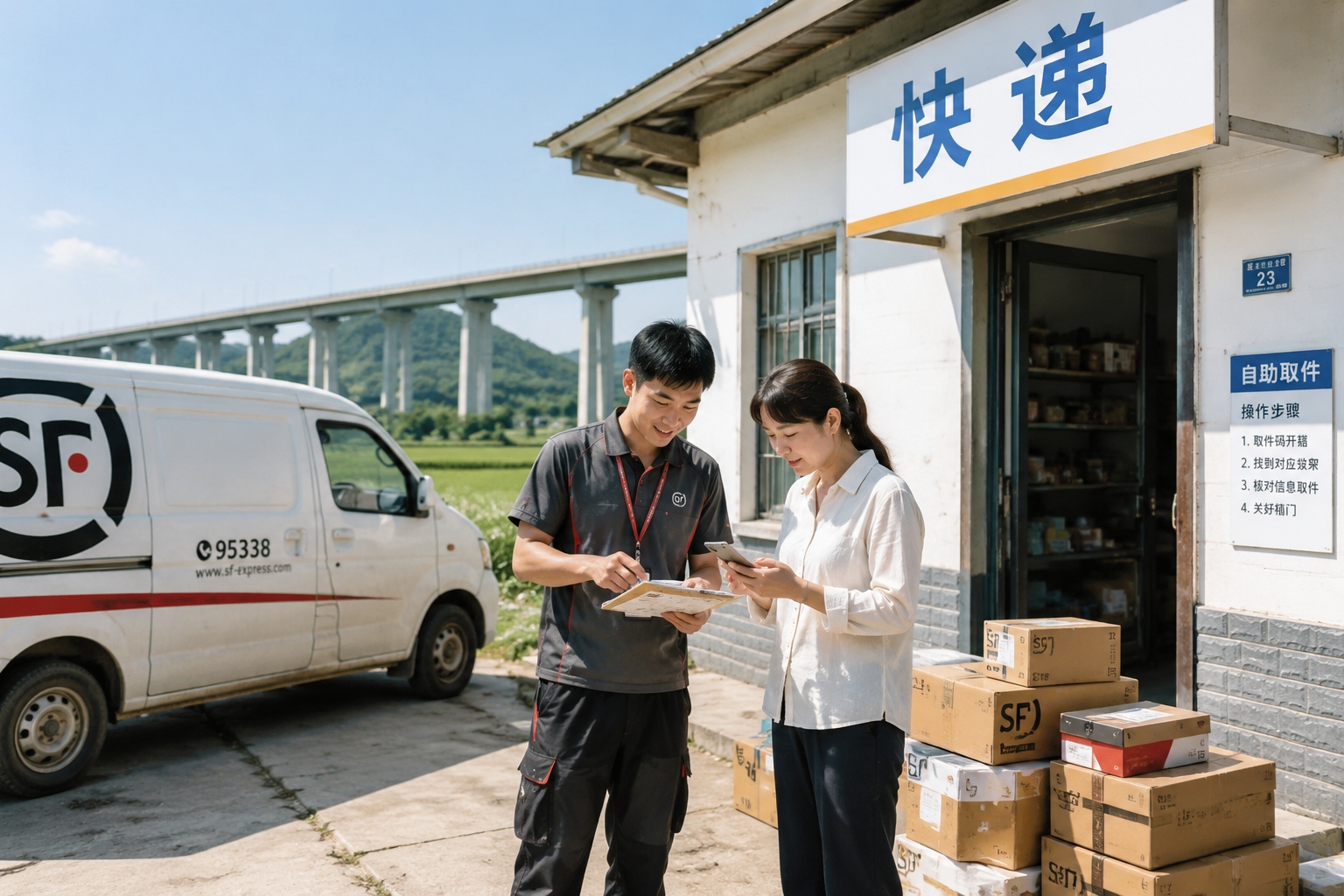
Expressways would be of limited use if they ended at county borders. That is why China also invested heavily in connecting roads. By the end of 2023, more than 99 percent of administrative villages had paved roads, according to the Ministry of Transport. These feeder roads channel products to the nearest expressway entrance. In Anping, many factories are within 10 kilometers of an interchange. In rural areas, courier vehicles now reach almost every township, so products from small farming communities can enter national expressway networks within the day. This combination of high-speed trunk lines and dense local roads is what turns inaccessible corners into export nodes.
The Quiet Logistics Revolution
The impact of highways shows up in ways that have nothing to do with shipping. Millions of people now live in small county towns but work in provincial capital cities, commuting by car or bus on expressways. In the Pearl River Delta and the Yangtze River Delta, “morning in the city, evening in the county” is a normal pattern. A 2023 study by the China Academy of Transportation Sciences found that more than 40% of intercity passenger trips under 300 kilometers are made by road. This flexibility is reshaping housing choices and business location decisions. For county town residents, the expressway is the stethoscope that connects them to a bigger heartbeat.
E-commerce is another major beneficiary. A farm in a mountainous county can now ship fresh lychees to a consumer in Shanghai via a mix of county roads, expressways, and delivery depots. The highway makes it possible to move perishable goods overnight. Cross-border e-commerce is also rising: packages from county towns now travel by truck to Asian neighbors like Vietnam and Kazakhstan through newly built expressway corridors. So the “connection to the world” is not only through ports; it is also through contiguous land routes.
Maps Still Have Blank Spots
None of this means the network is perfect. China is large, and in the west, expressway density remains lower than in the east. Some remote counties in Tibet and Xinjiang still rely on national highways with limited coverage. Extreme weather can close mountain roads for days. The central government has acknowledged this gap and has continued to pour funding into western expressways, but the construction costs in mountainous terrain are high, and some projects are not profitable. As a result, the benefits of highway connectivity are uneven. The world sees the bright spots like Anping; it should also know that many rural townships in the west are still waiting for their first direct link to the national grid.
This nuance is important. Expressways are a necessary condition for integration, but not a guarantee. A road does not create industry by itself. Anping’s success was built on decades of manufacturing skills and trade networks. The highway amplified what was already there. In places without such foundations, the road might simply be a way to leave.
The Road as a System
So what does the highway network really mean? It is a circulatory system that lets goods, ideas, and people move with a speed that was previously unthinkable for small towns. It has made China’s economy denser, more flexible, and more tightly knit to global markets. For the driver Li Qiang, the road to Kyoto passes through Anping’s gates. For the workshop owner in the county, the world arrives in the form of an order that can be shipped in hours, not weeks. For the overseas customer, the road is invisible — they see only the price and the delivery date. That is perhaps the highest praise: the best infrastructure disappears into the background, allowing others to take it for granted.
From a county in Hebei to Kyoto, four thousand kilometers apart, the road is not paved with gold. It is paved with concrete, toll booths, and a nationwide will to move things forward. And that, arguably, is a more reliable connection than any promise of faster growth. It simply makes world trade a little more ordinary — for everyone.
Start the discussion at forum.chinacomes.com