
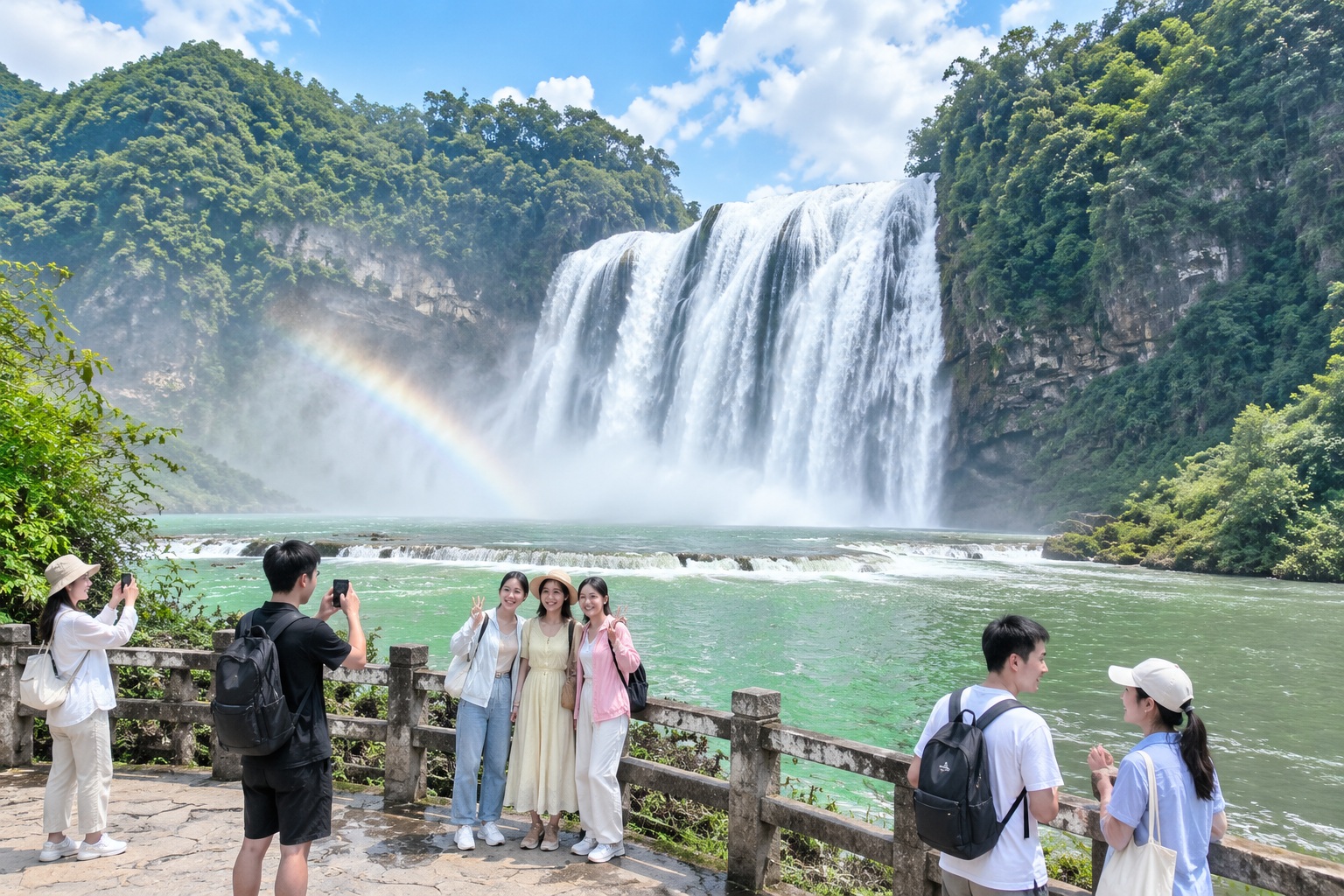

It begins with a phone screen. Somewhere on a Chinese short-video platform – Douyin, if you want the local name — a drone hovers over a narrow valley. Water bursts from a crack in a cliff face, like a giant faucet left on. The caption reads: ‘Sourang Waterfall, the last secret in Guizhou.’ No one has heard of it. Within two days, 40 million people have watched it, and around 12,000 have decided they need to see it in person. That’s how a small waterfall in one of China’s most mountainous provinces became an overnight celebrity.
A Quiet Little Corner of Guizhou
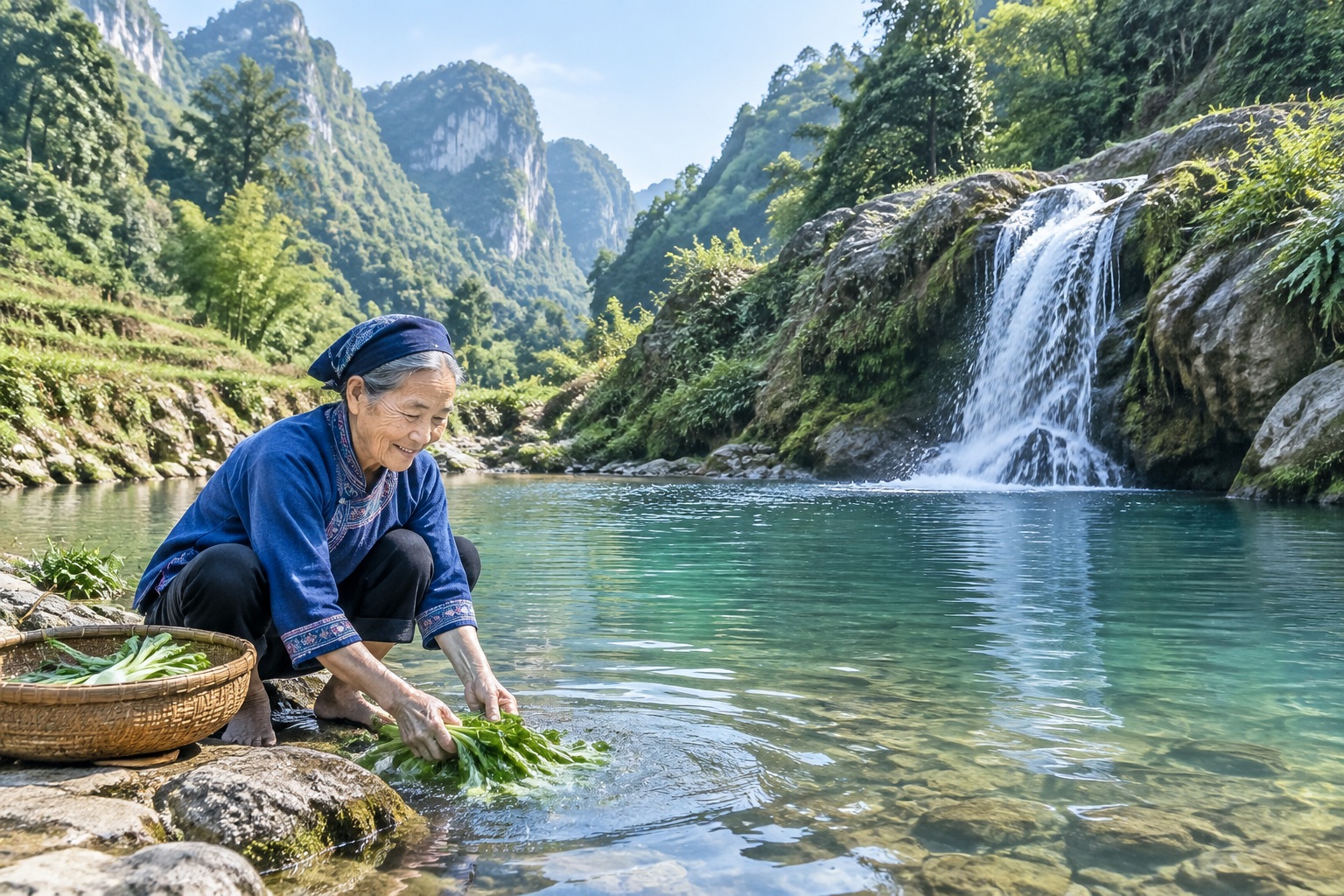
Before the cameras arrived, this waterfall was the kind of place you’d find only if you got lost. Local villagers used the pool below for washing vegetables and occasionally bathing. A few curious hikers knew the trail, but there was no entrance sign, no ticket booth, no parking lot. The only sound was water slapping the rocks, plus maybe a cow or two.
Guizhou is not short of waterfalls. Huangguoshu, the famous one, is featured on postcards and draws busloads of tourists. But the charm of a ‘little’ waterfall is precisely that it’s not famous. You feel like you’ve discovered something. That’s also what social media loves: the illusion of a secret.
The 15-Second Fame Machine
In China, travel trends now move at the speed of a ‘like’ button. A single short video can turn a forgotten valley into a weekend destination. Platforms like Douyin (TikTok’s Chinese cousin) and Xiaohongshu (RED, a lifestyle app) are the new travel agents. They mix beautiful visuals with user-generated recommendations, and suddenly a city or a scenic spot goes viral.
This isn’t a small niche either. Over 800 million people use short-video apps in China. When a location gets tagged in a trending video, a chain reaction begins: more creators come, then bloggers, then families with selfie sticks.
When the Crowds Arrive
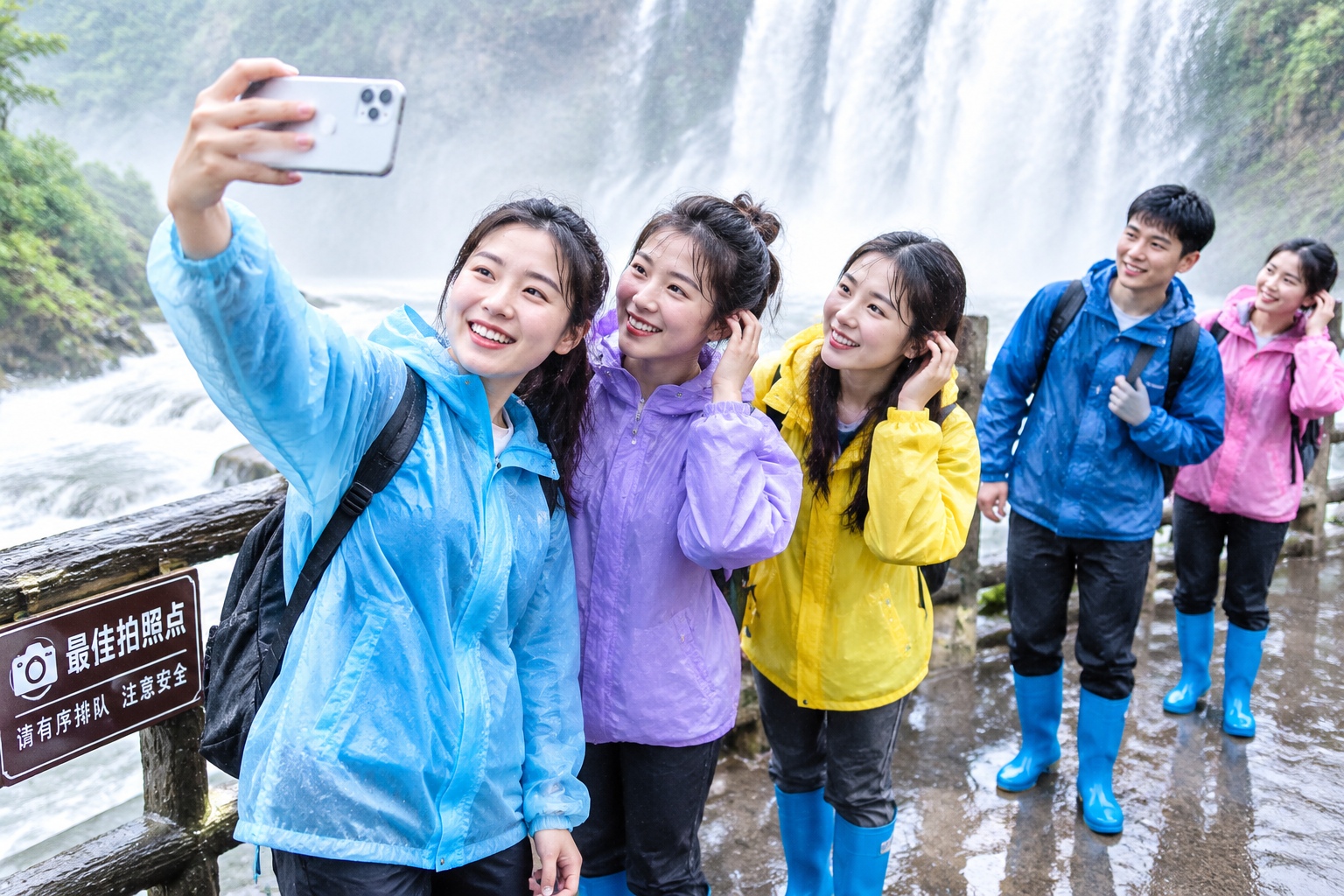
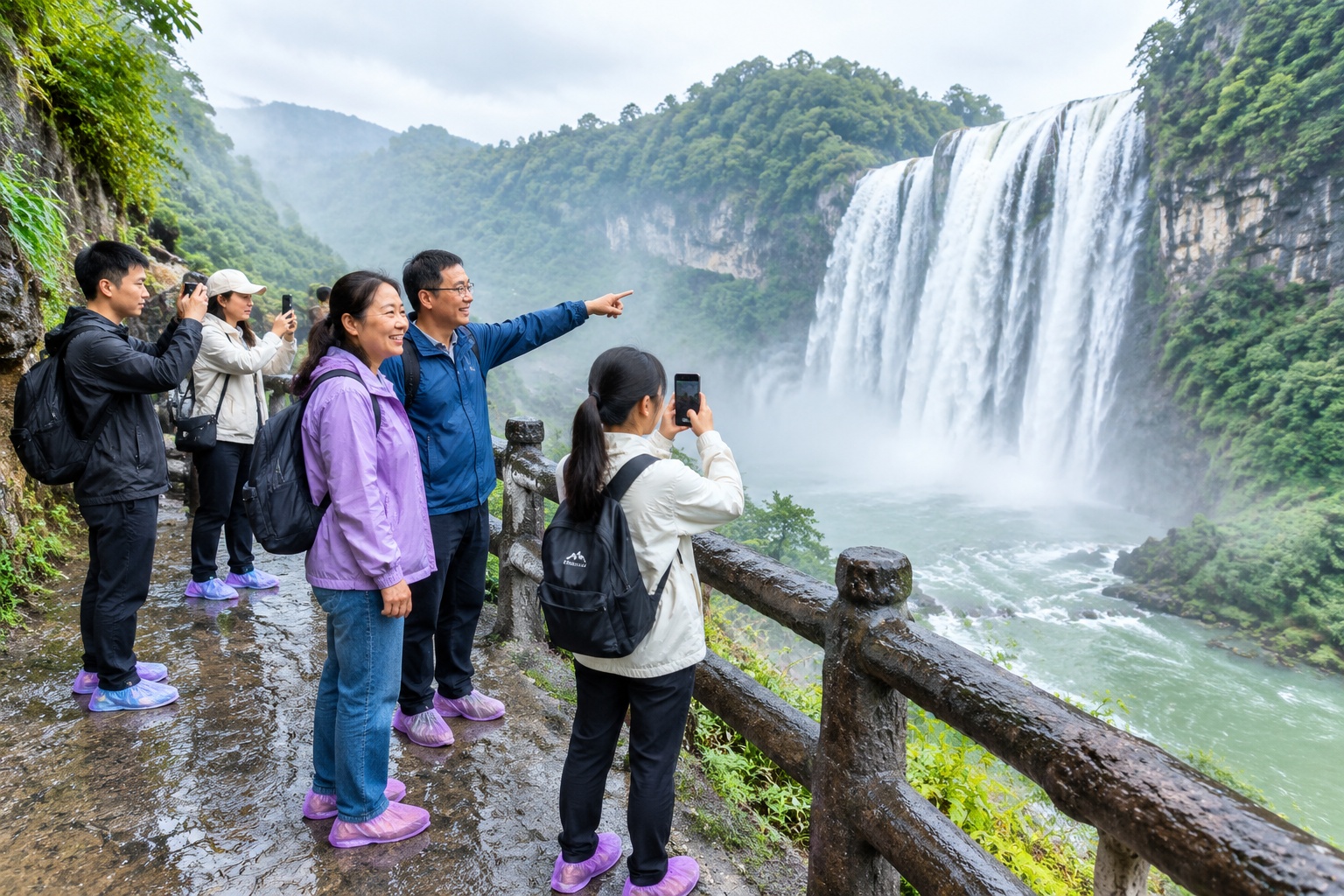
By the time we visited, the dirt path had been widened into a proper stone stairway. There were handrails, warning signs in Chinese and English (‘Stay off the wet rocks!’), and even a guy hiring rubber boots for 5 yuan a pair. On the day we arrived, the line for the best photo spot was about 40 people long. Everyone was holding a phone, waiting for their 10-second shot of water splashing into emerald green water.
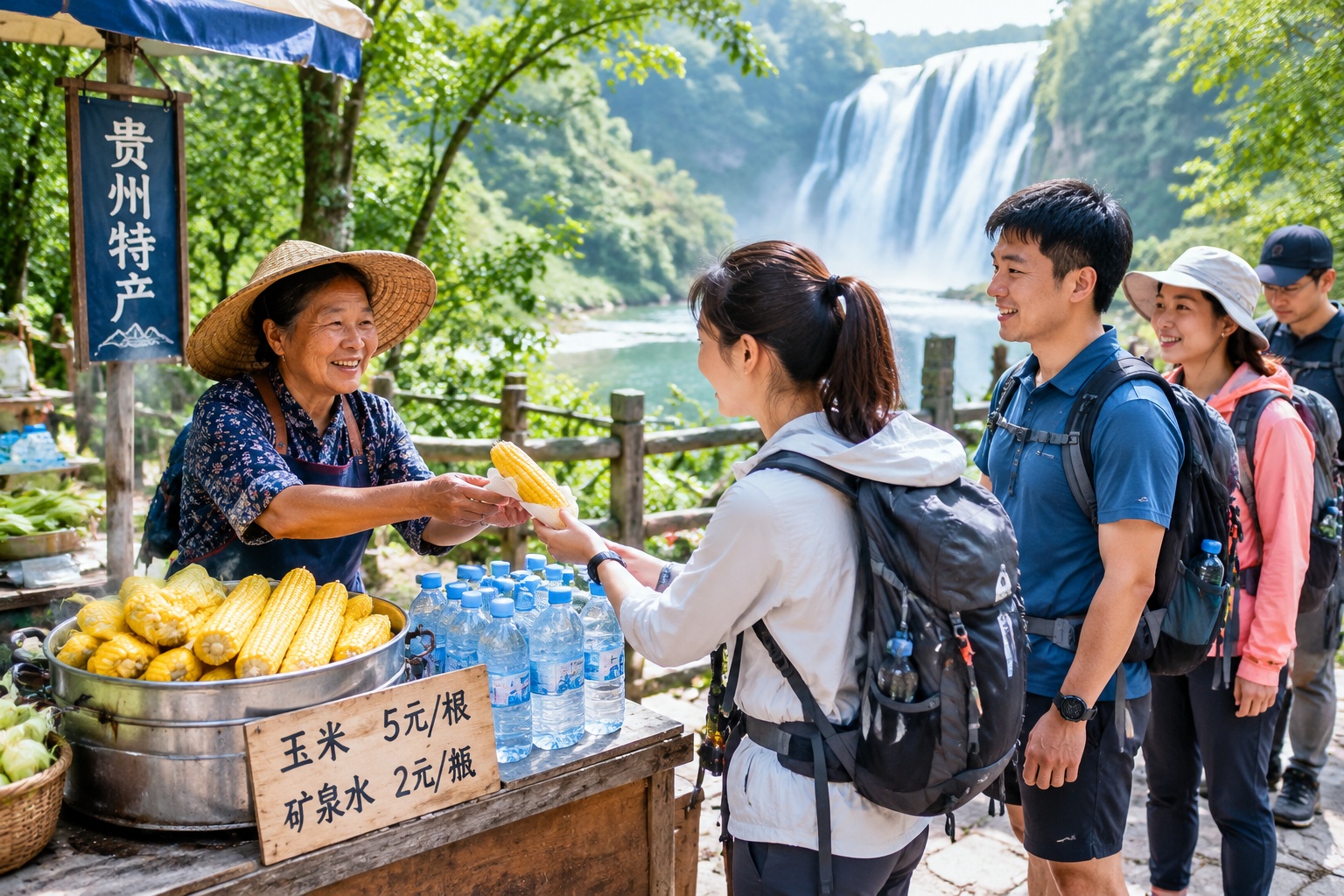
The atmosphere was less ‘mystical forest’ and more ‘theme park opening day.’ A grandmother had set up a stall selling corn on the cob. Two teenagers carried plastic chairs and offered visitors a seat for 2 yuan while they waited. A local man with a loudspeaker explained the waterfall’s ‘legend,’ which according to him involved a dragon, a maiden, and a very large rock.
The Waterfall Economy
It’s easy to make fun of this kind of tourism, but the change it brings is real. For the village, a constant stream of visitors means something more than inconvenience. Young people who had moved to the city for work have returned to run homestays or drive shuttle vans. Farmers now earn extra money selling snacks and rain ponchos. A coffee shop opened nearby, which in China means there’s now a ‘waterfall latte’ — even though the milk is powdered.
Village officials, quick to catch on, built toilets, a car park, and even a small observation deck. They also set up a traffic control system: if the parking lot is full, new cars are asked to wait or go elsewhere. It’s not glamorous, but it’s organized.
Reality, With Filter
Let’s talk about the gap between the screen and the scene. On social media, that waterfall looked like a hidden cathedral of blue and white. In reality, it’s smaller, but still striking. The cave mouth is dramatic, yes, but the crowd of people in tourist vests makes it feel more like a flash mob in a forest.
Some visitors were clearly disappointed. ‘It’s not as big as in the video,’ I heard a man complain to his girlfriend, who was too busy trying to find the exact angle to respond. But others took it in stride. One young woman, waiting in line, told me she’d ‘seen hundreds of videos’ but wanted to feel the mist on her face. ‘The video is a suggestion,’ she said, laughing. ‘The real thing is the proof.’
In a way, the real attraction is the shared experience. People take photos, but they also take selfies with strangers, share umbrellas, and joke about the loud water that makes conversation impossible. The waterfall isn’t just a destination; it’s a social event.
The Double-Edged Selfie Stick
Of course, this kind of popularity has a shadow. Garbage, traffic jams, and the occasional careless visitor who tries to climb the wet rocks. Environmental groups worry about sensitive karst landscapes getting damaged. And not every village wants to become a tourist trap. Some waterfalls, slower to promote, are trying to avoid the chaos by limiting visitor numbers or requiring booking.
But China is pragmatic about tourism. Local governments see it as a way to reduce poverty and boost the rural economy. That’s why the ‘beautiful village’ policy has poured money into roads, Wi-Fi, and clean toilets. For many small waterfalls, becoming an online sensation is not just a lucky break — it’s a lifeline.
Why We Keep Going
After the car ride home, through the endless tunnels of Guizhou’s mountains, I thought about what draws people to a temporary celebrity waterfall. It’s not just the scenery. It’s the sense of being part of something new, arriving before the place becomes another attraction on a bus tour. It’s the hope that nature can still surprise us, even when we’ve seen everything on our screens.
And let’s be honest: there’s a strange joy in standing beside forty strangers, all trying to take the same perfect picture. It’s like a flash mob of wonder.
The Next Sunrise
Weeks after our visit, I opened Douyin and saw a new video from the same waterfall. This time, a self-proclaimed ‘local guide’ was offering a private tour to a ‘hidden secondary falls’ that’s ‘totally untouched.’ I laughed. Whatever it looks like, small waterfalls in China have become characters in a never-ending story, blowing up, getting overrun, and sometimes finding a quieter rhythm again.
If you find the courage to visit one, expect lines, instant noodles, and maybe a man with a loudspeaker. But look past that, and you’ll still see what made the video so powerful: water falling, endlessly, as it has for centuries.
Start the discussion at forum.chinacomes.com