


The Saturday Morning Ritual
On a crisp Saturday morning, Beijing’s Olympic Forest Park becomes a river of neon sportswear. By 7 a.m., hundreds of runners have assembled at the south gate. Some are stretching, others laughing as they catch up on the week’s news. They divide into groups by pace—5-minute-per-kilometer groups, 6-minute groups, and a relaxed 8-minute group that talks more than it runs. On their phone screens, the Keep app shows the day’s plan: a 10-kilometer loop with a few speed intervals.
This is just one of hundreds of running clubs that meet across Chinese cities every weekend. Urban sports communities have moved from the margins to the mainstream. The rise of marathon culture, followed by the explosive popularity of frisbee, signals a deeper shift: Chinese residents are using sports to build friendship, relieve stress, and escape the digital world.
Marathon Fever: The Lottery that Could
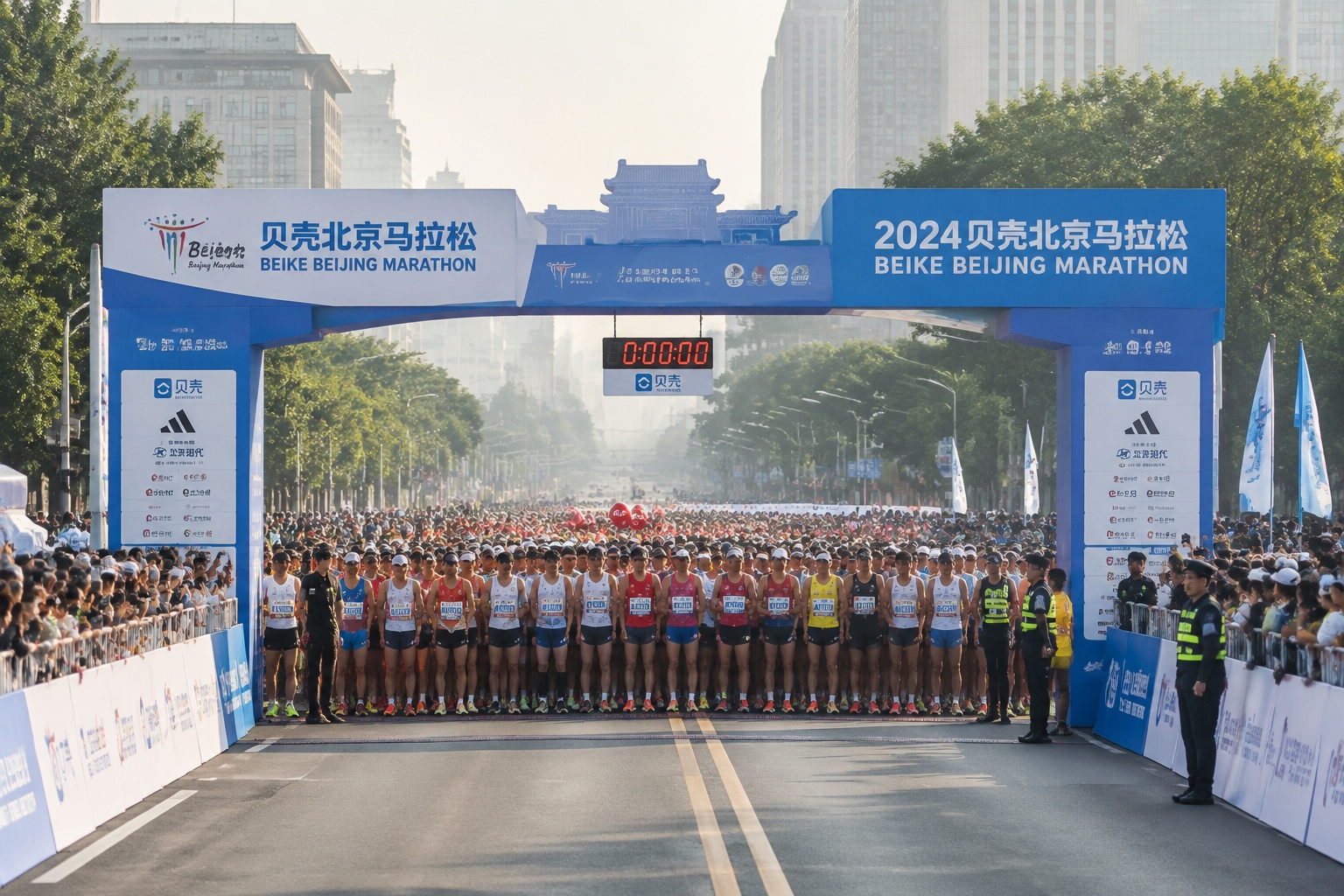
The marathon is the ultimate badge of urban endurance in China. But entering one has become as much a matter of luck as fitness. The Beijing Marathon is a case in point. In 2023, the race attracted more than 180,000 applicants for about 30,000 spots—an acceptance rate of only 16%. The Shanghai Marathon is even more selective: 15,000 places for over 120,000 applicants, a 12% chance. With such astronomical demand, the organizers have adopted a lottery system, similar to the New York City Marathon.
If you lose the lottery, there are alternatives. Charity entries are one popular route. For 2,000–5,000 RMB ($280–$700), you secure a guaranteed bib, and the money goes to local charities. Another strategy is to run smaller city marathons first. Races in Chengdu, Wuhan, and Nanjing often have higher acceptance rates, and some even offer direct entry to runners who complete them. Some veterans accumulate “loyalty points” by volunteering at official events, which improves their odds in subsequent lotteries.
Running Apps: Your Digital Gateway to the Community
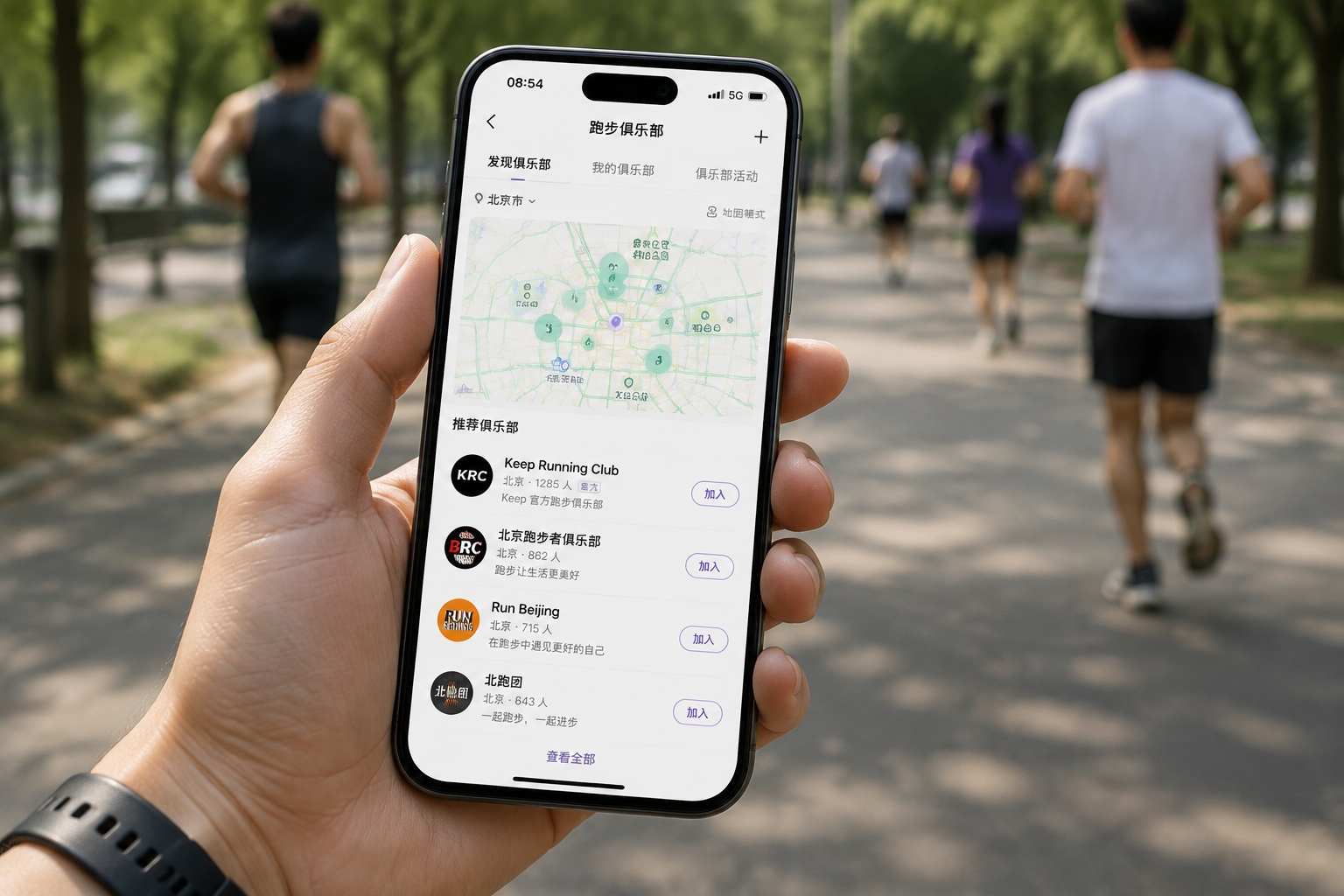
For most runners, the journey into a club begins with an app. Keep and Yue Dong Quan are the most established platforms. Both offer a “run club” (跑团) section that uses GPS to show clubs near you. You can preview their next event, see the number of members, and even check the average pace. Once you tap “join,” you’re in. The app sends you notifications for weekly activities, and you can chat with fellow runners directly in the app.
I remember my first run with a Beijing club I found through Keep. The club had 1,200 members and organized three runs each week. On the morning of my first event, I was slightly nervous, but a friendly woman named Li greeted me at the start. She introduced me to the group, and by the third kilometer, I was chatting with a software engineer who had just finished his first marathon. By the end, I had gained six new WeChat contacts and a clear training schedule for the upcoming half-marathon.
Yue Dong Quan, as its name suggests, is more dedicated to running. It offers detailed pace tracking, virtual races, and a robust club system with year-round training plans. Many serious runners use it to monitor their progress and join local squads. The app’s social features are also strong—you can give virtual “cheers” to other runners and compete in weekly challenges.
WeChat Mini-Programs: The Secret to Finding Any Group
While apps are designed for runners, WeChat is the universal key to every sport community. In China, WeChat is not just a messaging app—it’s the operating system of daily life. Sports groups thrive inside its ecosystem. Open the search bar, type “Beijing run club” (北京跑团) or “Shanghai frisbee” (上海飞盘), and you’ll instantly see dozens of result. Many are mini-programs, which are light applications that run inside WeChat, offering event lists, registration, and even payment collection.
For example, a typical frisbee mini-program will show you a calendar of pick-up games, each with a location, player cap, and entry fee (usually 20–40 RMB). You can register with one tap, and the host will add you to a group chat. There’s no need to download a separate app—it all lives in WeChat. This frictionless experience is a major reason why sports communities have grown so rapidly.
Another popular mini-program is “Yueban” (约伴), which translates to “find a partner.” It covers everything from running to climbing. You set your sport and location, and it suggests local groups or people with similar interests. The interface is simple, and most events allow you to RSVP and pay directly, making it a one-stop shop for the socially active.
Frisbee: The New Social Sport
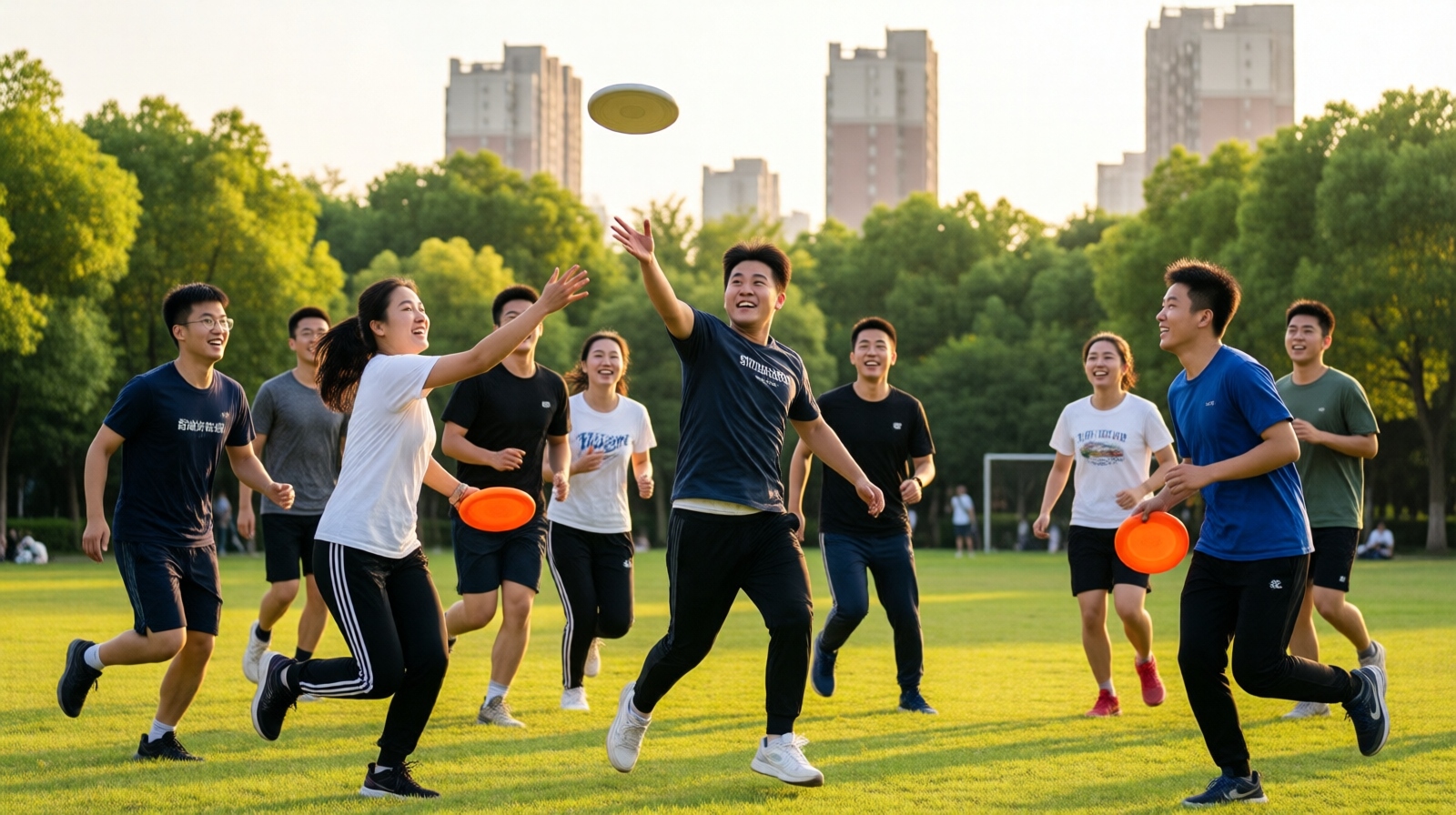
If marathons are the old guard, frisbee is the new wave. In Shanghai’s Xuhui Riverside Park, on any evening from April to October, you’ll see clusters of young professionals tossing discs with laser-like precision. Frisbee—often called “flatball” by locals—has taken China’s tier-1 cities by storm. Its low barrier to entry (you only need a disc and a pair of running shoes) and its mixed-gender nature make it a perfect social catalyst.
Most frisbee groups are formed organically, with a few experienced players setting up a WeChat group and spreading the word. To join, simply search for “城市+飞盘” (city + frisbee) in WeChat. You’ll find open invitations, often tagged “newbie-friendly.” On the day of the game, the host gives a quick 10-minute crash course on throwing and catching, then the game begins. It’s not uncommon for total strangers to end up as teammates within minutes.
I spoke with a young woman named Chen who started playing frisbee in Shanghai last year. “I moved here for work and knew no one,” she said. “Frisbee gave me a community within two weeks. We play every Wednesday, then we go for hotpot together.” Her story is repeated across cities. Some groups even organize weekend trips to the countryside for tournaments or beach frisbee, deepening the bond beyond the field.
From Couch to Community: A Step-by-Step Playbook
So, how can you tap into this vibrant scene? Here’s a practical guide that works for both locals and expats.
1. Identify your sport. Running is popular and has the most structured clubs. Frisbee is more casual and social. There are also basketball, badminton, and cycling clubs, but the discovery process is the same.
2. Load the essential tools. For running, install Keep or Yue Dong Quan. For any sport, make sure WeChat is on your phone. If you don’t have a Chinese bank card, ask a friend to scan a QR code for WeChat Pay—most group fees are collected online.
3. Search with the right keywords. In WeChat, combine “city + sport” (e.g., “Beijing marathon training” 北京马拉松训练, “Guangzhou frisbee” 广州飞盘). In the early stage, join two or three groups to see which has the most welcoming vibe.
4. Show up and be specific. When you RSVP, mention that you’re new. Most groups will assign a “buddy” to help you get started. Bring water, a small towel, and wear appropriate shoes. For frisbee, cleats are helpful but not required on most fields.
5. For marathons: play the longer game. Register for the lottery as soon as it opens (usually 6–8 months before race day). If you lose, consider a charity entry or a lower-tier marathon. Join a training club to raise your confidence and network.
The Bottom Line
Urban China’s sports scene is no longer just about exercise; it’s about connection. The infrastructure—from GPS running apps to WeChat mini-programs—makes discovering a community easier than almost anywhere in the world. The numbers speak for themselves: millions run, play, and sweat together each week. The only barrier is your first step. So lace up, download an app, and join the movement. You’ll find that in China, sport is the fastest shortcut to a friend.
Start the discussion at forum.chinacomes.com