
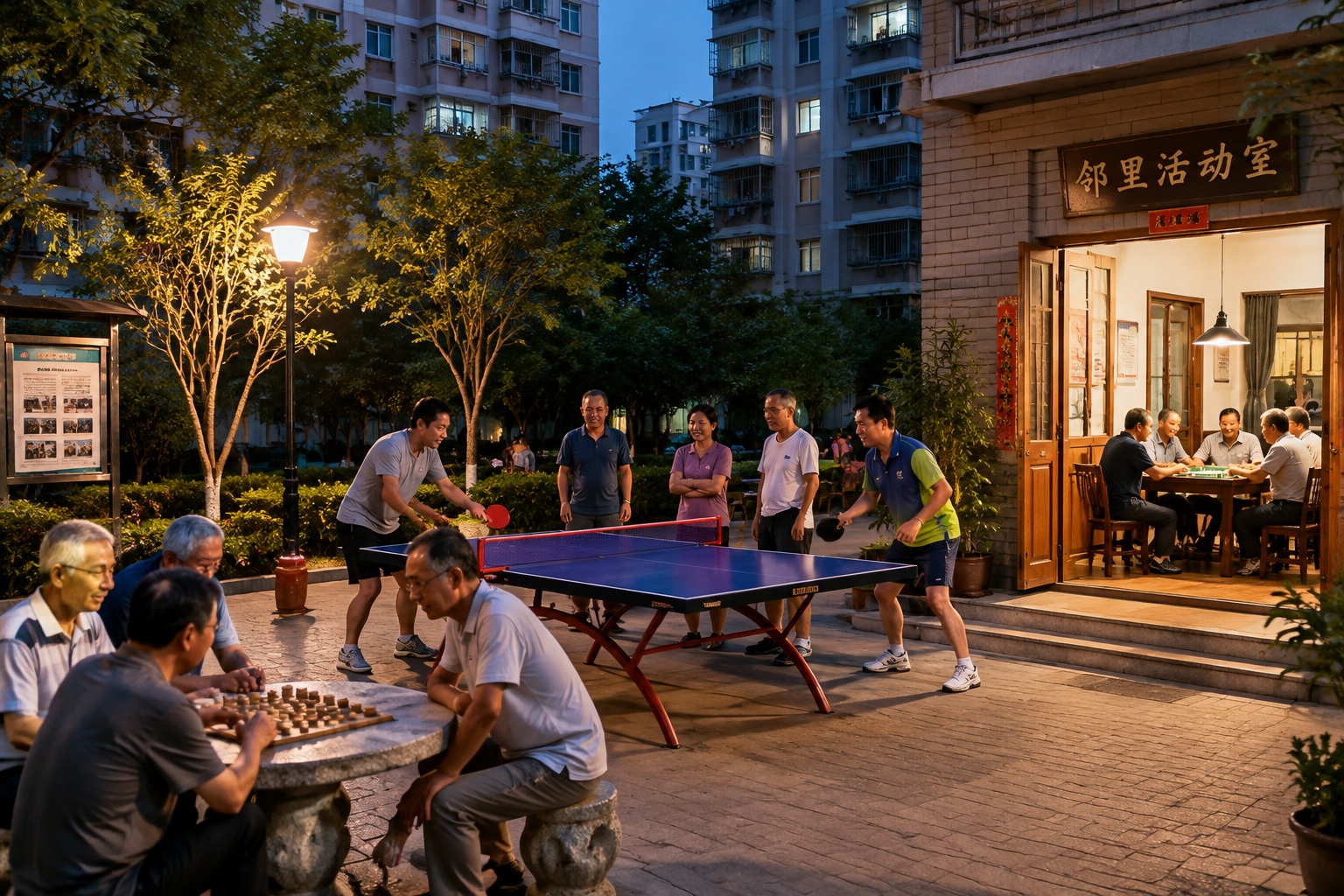

Scene: A Summer Evening in a Chinese Compound
On a warm summer evening in a typical Chinese residential compound, the sound of a ping-pong ball echoing off the pavement is as familiar as the evening news. By the basketball court, a mix of teenagers and retirees take turns at a concrete table, their paddles clacking in a rhythm that seems to orchestrate the whole block. Under a nearby tree, a circle of men in undershirts studies a chessboard, occasionally breaking into a murmur. From the open doors of a community center, the unmistakable click-clack of mahjong tiles mixes with laughter. If you’re new to China, these scenes are charming, but they can also feel a little intimidating. How do you join in? What are the rules? In China, understanding the social currency of games is key to unlocking neighborhood life.
Games here aren’t just entertainment; they’re a tool for building community. Each one comes with its own set of unwritten rules, and mastering them can turn you from an outsider into a regular.
The Neighborhood as Living Room
In China, most people live in what’s called a “xiaoqu” (小区), a residential compound of apartment buildings surrounded by walls or fences. Unlike the wide lawns of American suburbs, the shared space here is compact and purposeful. There are playgrounds, exercise zones, and of course, game tables. Since apartments are often small, these common areas become an extension of the home. You’ll see people eating, napping, and playing cards outside. This is why the game tables are so important—they’re the anchors of the neighborhood’s social life.
Ping-Pong: The Fastest Way to Make Friends
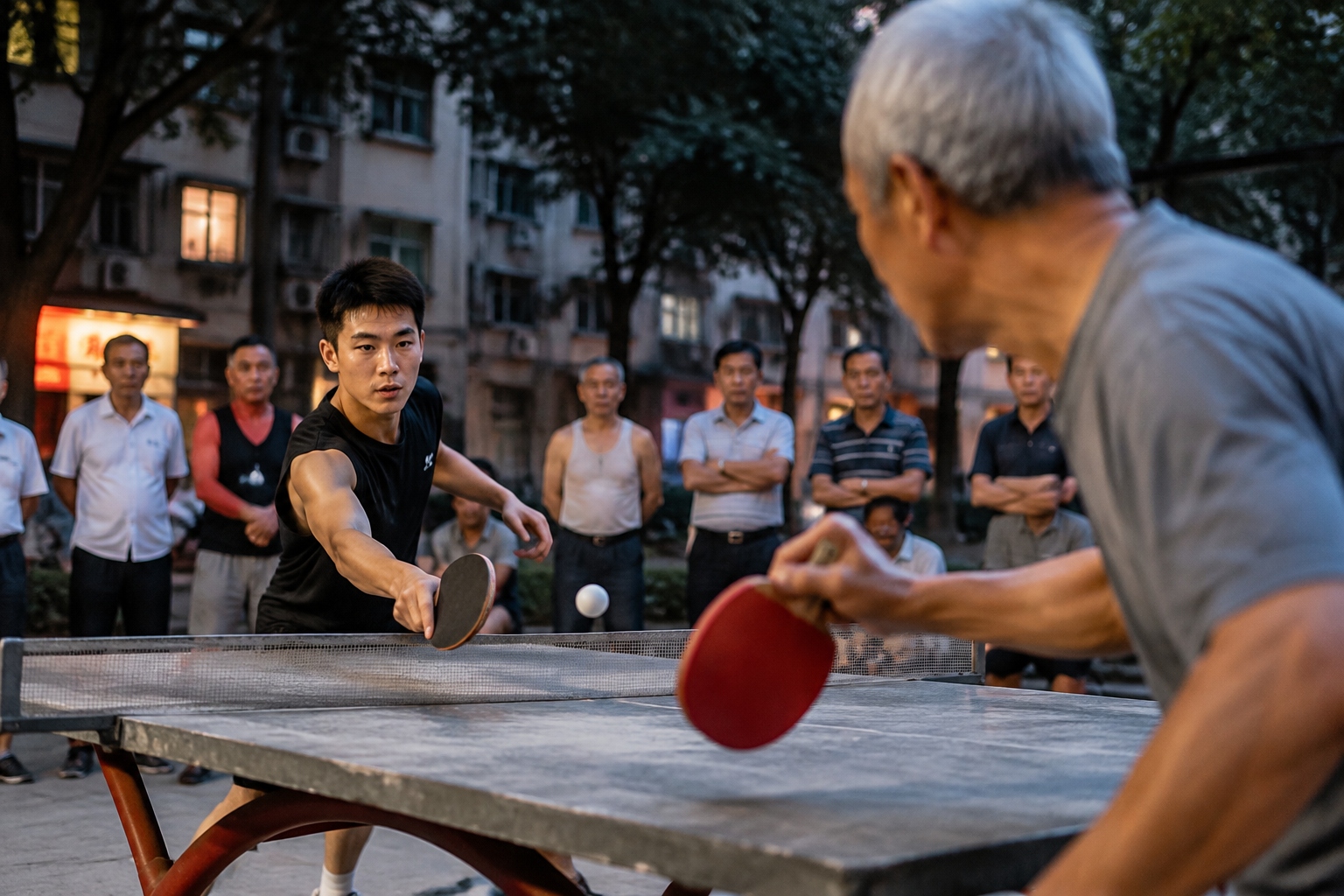
The ping-pong table is the most accessible social hub. It’s usually occupied by all ages, from kids with foam paddles to grandpas with backhand smashes. The rule of thumb is simple: winner stays, loser rotates out. Often it’s not strictly enforced—people just rotate to give everyone a chance. But the principle is: don’t hog the table. If you want to get in, stand near the table and make eye contact with the players. When someone finishes a game, they’ll often look around and nod at the next person. That’s your cue.
In doubles, communication is key. You’ll hear partners shout “Mine!” or “Go left!” in Chinese. Pairing up comes down to a glance and a nod. And if you manage to hit a spectacular shot—a trick serve or a powerful smash—expect a chorus of “好球!” (good ball) and applause. Your response? Just smile and nod like it was nothing. That’s the signature of a seasoned player.
One evening, I saw a foreigner freeze at the edge of a table, unsure of the protocol. A grandma noticed, handed him a paddle, and said, “打一场?” (Play a round?) Within minutes, he was laughing and high-fiving the others. The paddle had become a bridge.
Chess: The Art of Watching in Silence
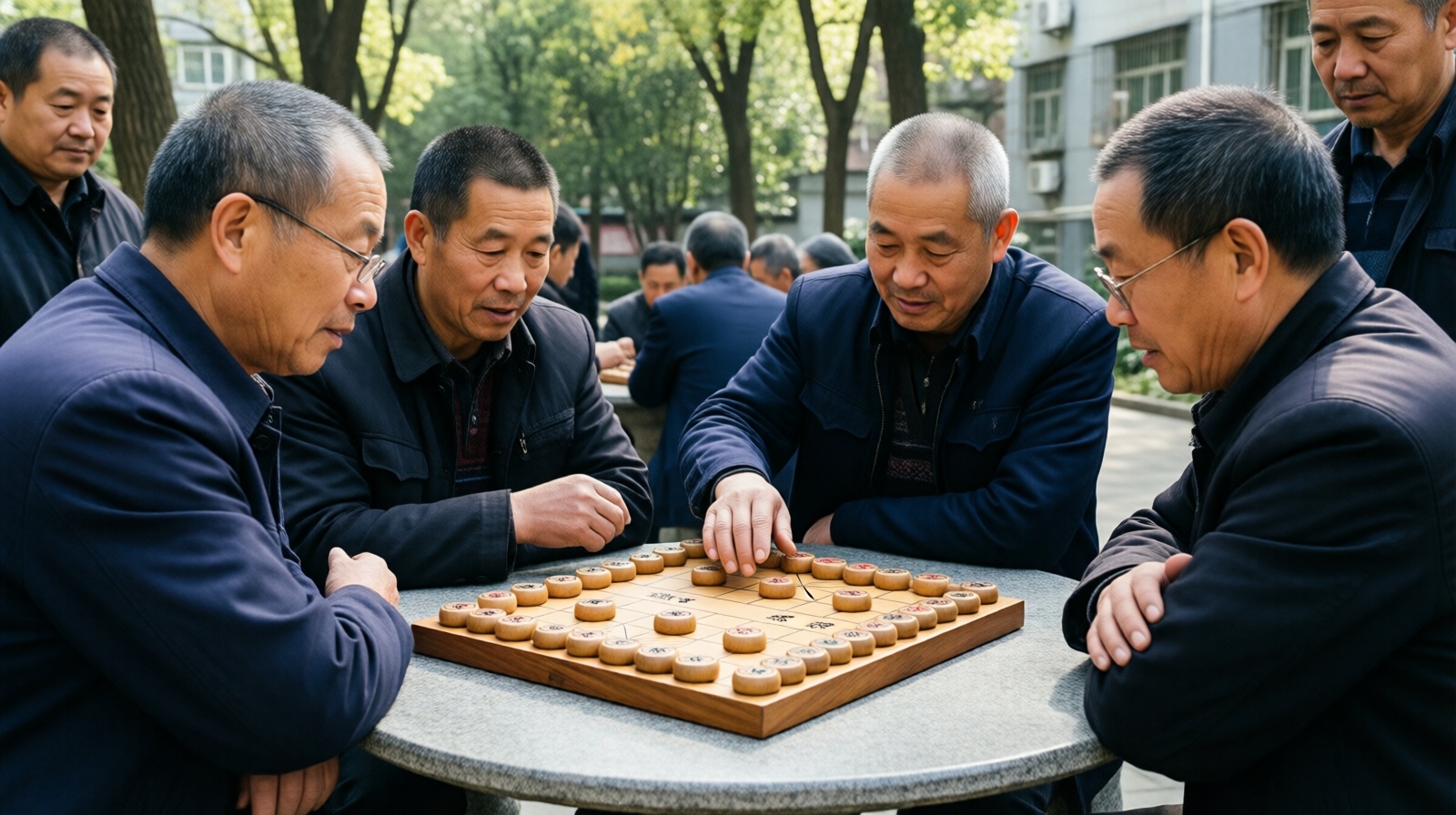
Chinese chess, or xiangqi, is a different beast. The players are often older men, and the atmosphere is intense. Unlike ping-pong, there’s no waiting in line—you join by standing at the edge and watching. Etiquette is strict: while a game is in progress, nobody speaks. Not a word. If you accidentally blurt out “Oh, that move is a mistake,” you’ll get glares that could melt ice. Chess is a mental duel, and commentary is seen as interference.
Once the game ends, the tension breaks. Players replay key moves, discussing what went wrong. That’s your moment to comment or ask questions. You might say, “The middle game was exciting” or, if you know the rules, “Why didn’t you move your horse there?” Keep it respectful. To get a game, wait for a player to look up, make eye contact, and say, “下一盘我来?” (Next round, I’ll play?) The veterans will likely welcome a new face. Even if you’re a complete beginner, just watching with interest earns you approval—many players are also teachers at heart.
Mahjong: The Invitation You Can’t Miss
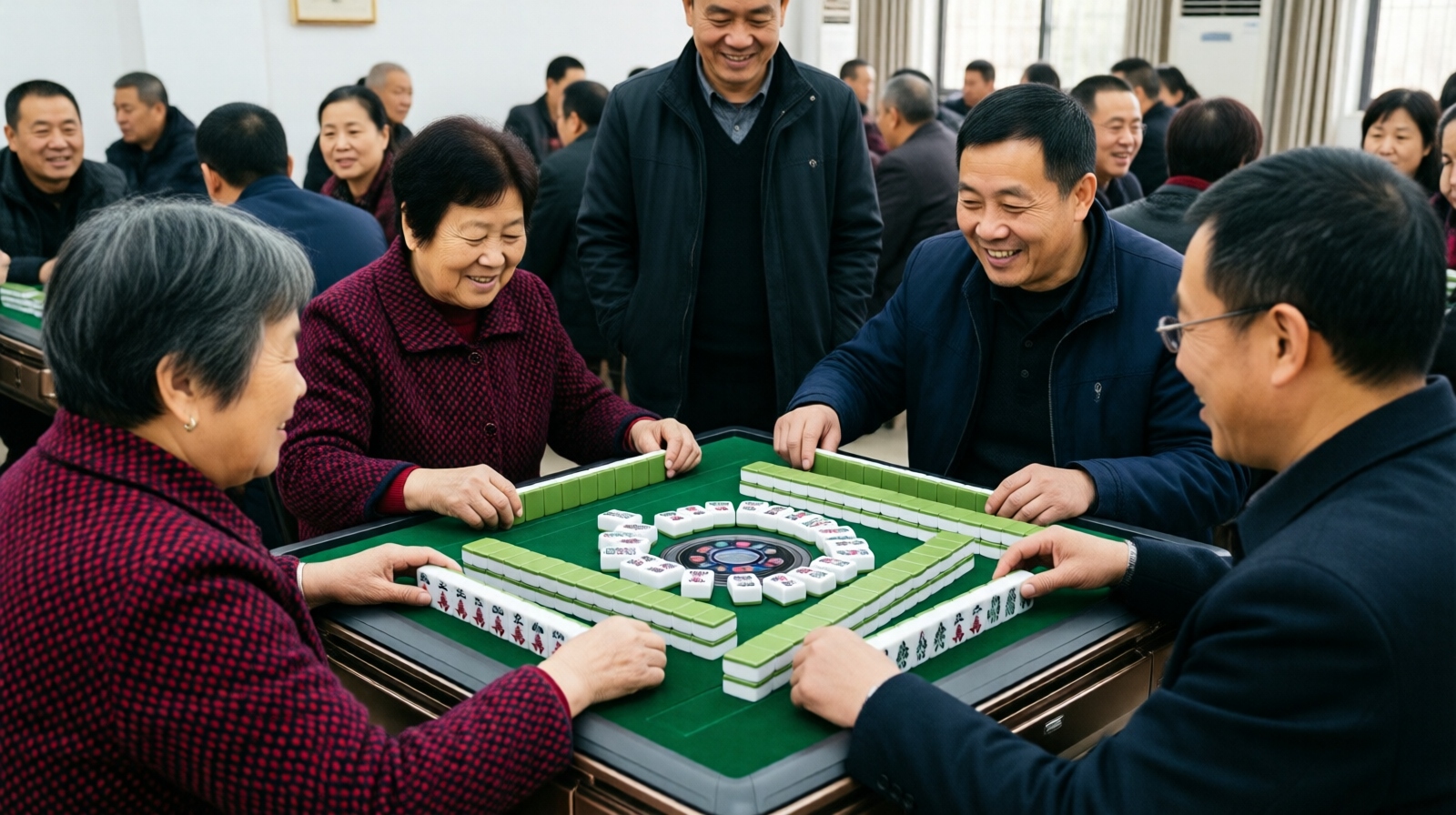
Mahjong is arguably the most social and the most exclusive. It’s a four-player game, and the table is a tight circle. But there’s a magic phrase: “三缺一” (san que yi), meaning “three people, one missing.” When a table has three players and needs a fourth, you’ll hear it called out. That’s your golden ticket. Answer with “我来补上” (I’ll fill in). If you want to join an already-full table, wait for a break and politely ask, “请问可以加一个吗?” (May I join?) Be ready to learn quickly. Mahjong variations differ by region, and if you’re a foreigner, players will likely be happy to teach you—as long as you bring a good attitude and maybe some snacks to share. Some compounds even host formal mahjong nights, where neighbors bring food and play until the evening sky fades. It’s a ritual as much as a game.
How to Be a Good Spectator: Where to Stand and How to Cheer
Even when you’re not playing, you can be part of the social exchange. Watching is perfectly acceptable, but you need to know the rules. For ping-pong, stand a few meters back to avoid blocking the ball’s path. For chess, position yourself behind the player you support. For mahjong, stand behind the player you’re curious about, but keep a respectful distance. When cheering, don’t overdo it. A simple “漂亮!” (beautiful) or “太厉害了” (amazing) works. Avoid taking sides too aggressively—you don’t want to alienate the other players. And never, ever touch the pieces or tiles. It’s a major faux pas. The goal is to blend in: laugh when the rookies laugh, shake your head when the veterans do, and you’ll quickly feel like part of the group.
Why These Games Matter
In the end, these games are social glue. In a country where community life often revolves around shared spaces, they create a sense of belonging. A single ping-pong match can dissolve the awkwardness of a new apartment complex. A chess game can connect a student with a retiree. A mahjong session can turn neighbors into friends. For a foreigner in China, learning to navigate these tables is like picking up another dialect. It shows respect for the community’s rhythm. So next time you see a crowd around a table, don’t just walk by. Pause, watch, and wait for the nod. That nod is your ticket into the heart of neighborhood life.
Start the discussion at forum.chinacomes.com