
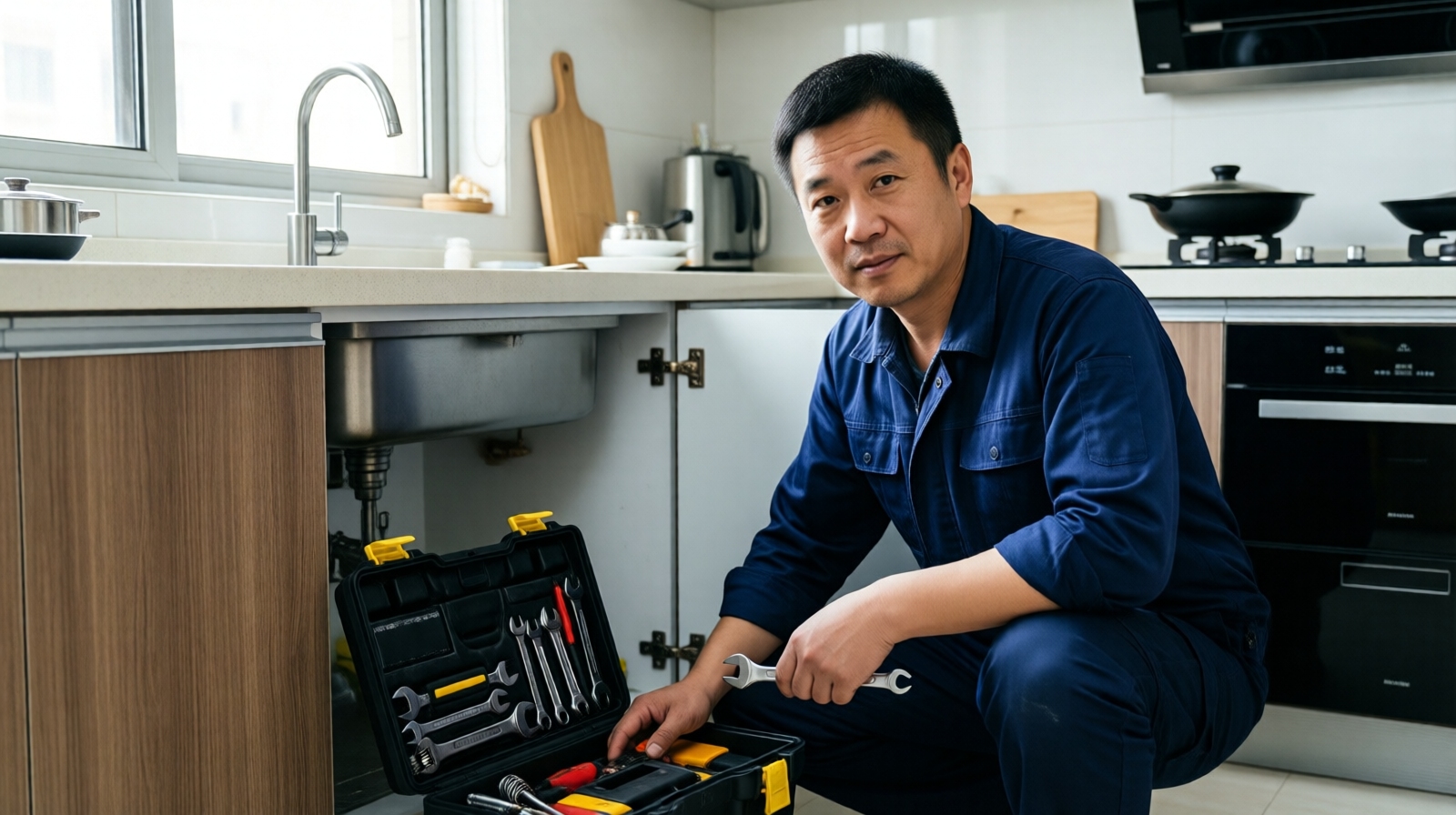

On an ordinary Tuesday evening, a steady drip from under my kitchen sink turned into a puddle. Annoying, but not exactly a crisis. In many countries, that puddle means booking a plumber days in advance, paying a hefty hourly rate, and scheduling a window of time while you wait. Here in China, it went differently. I opened Meituan, typed in ‘sink repair,’ and within minutes saw a list of nearby masters with scores, reviews, and distance. I picked one, confirmed a two-hour window, and went back to my dinner.
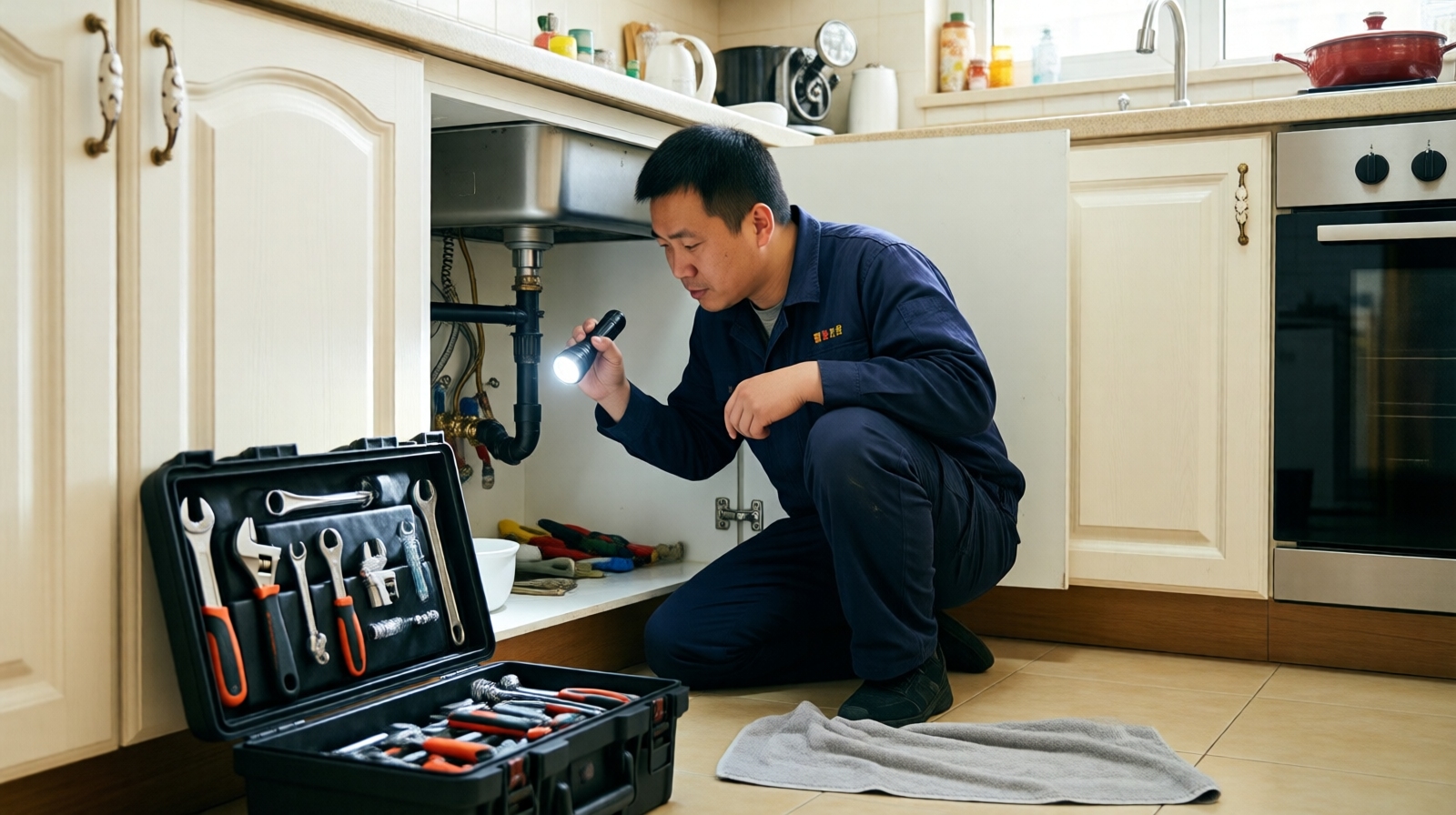
Two hours later, a soft-spoken man in his forties arrived at my door, carrying a worn but neatly organised toolbox. He slipped on shoe covers without being asked, asked me to show him the problem, and knelt under the sink. Twenty minutes later, the drip was gone. The bill, surprisingly, was just 90 yuan (about 12 US dollars) — including a 40-yuan ‘door fee’ and material.
How to Find a Repairman in China: Apps, Ratings, and Speed
The first thing to know is that in urban China, you rarely need to save contact numbers for plumbers, electricians, or appliance technicians. Instead, you use services like Meituan, 58 Daojia, and Ali’s ‘Dadai’ (生活服务) section. These are one-stop marketplaces that connect you with certified tradespeople who operate in your neighbourhood. You search for the category you need — pipe repair, electric wire, appliance maintenance, even furniture fixing — and immediately get a list of available ‘masters’ (师傅, shīfu). Each profile includes years of experience, a rating out of five stars, the number or jobs completed, and often a thumbnail photo of the person. You can filter by distance or price and book instantly.
The speed surprises many newcomers. In American or European large cities, a simple plumber appointment can take three to five days. In Beijing, Shanghai, or Chengdu, the response time is often hours. The master might call you within ten minutes of your order to confirm the arrival time. And because most jobs are close by, they can fit in quick repairs between other bookings.
What It Costs: Door Fees, Materials, and No-Surprise Bills
The pricing model is refreshingly transparent compared with some western freelancer quotes. Most companies or individual masters charge a standard ‘上门费’ (door fee) — usually between 20 and 60 yuan (3-9 USD) in a second-tier city, maybe a little more in first-tier ones. That covers the trip and the initial inspection. Materials such as a replacement valve, a meter of pipe, or a set of wall anchors are priced separately, often at retail plus a moderate markup. Labour itself tends to be a flat fee for the job rather than a per-minute charge. For example, fixing a leaking toilet connector costs about 60-100 yuan (9-15 USD) in total. Clearing an unclogged drain might run 80-120 yuan.
While you can often get a quote when you book, the final cost may change if more problems are found. A good master will discuss the upgraded price with you before starting. I have had electricians fix small wiring problems for less than 50 yuan (7 USD). Many will even give you a quick ‘free check’ if you mention a related issue — although you should not expect a full house inspection for free.
Inside a Typical Repair Call: From Booking to Completion
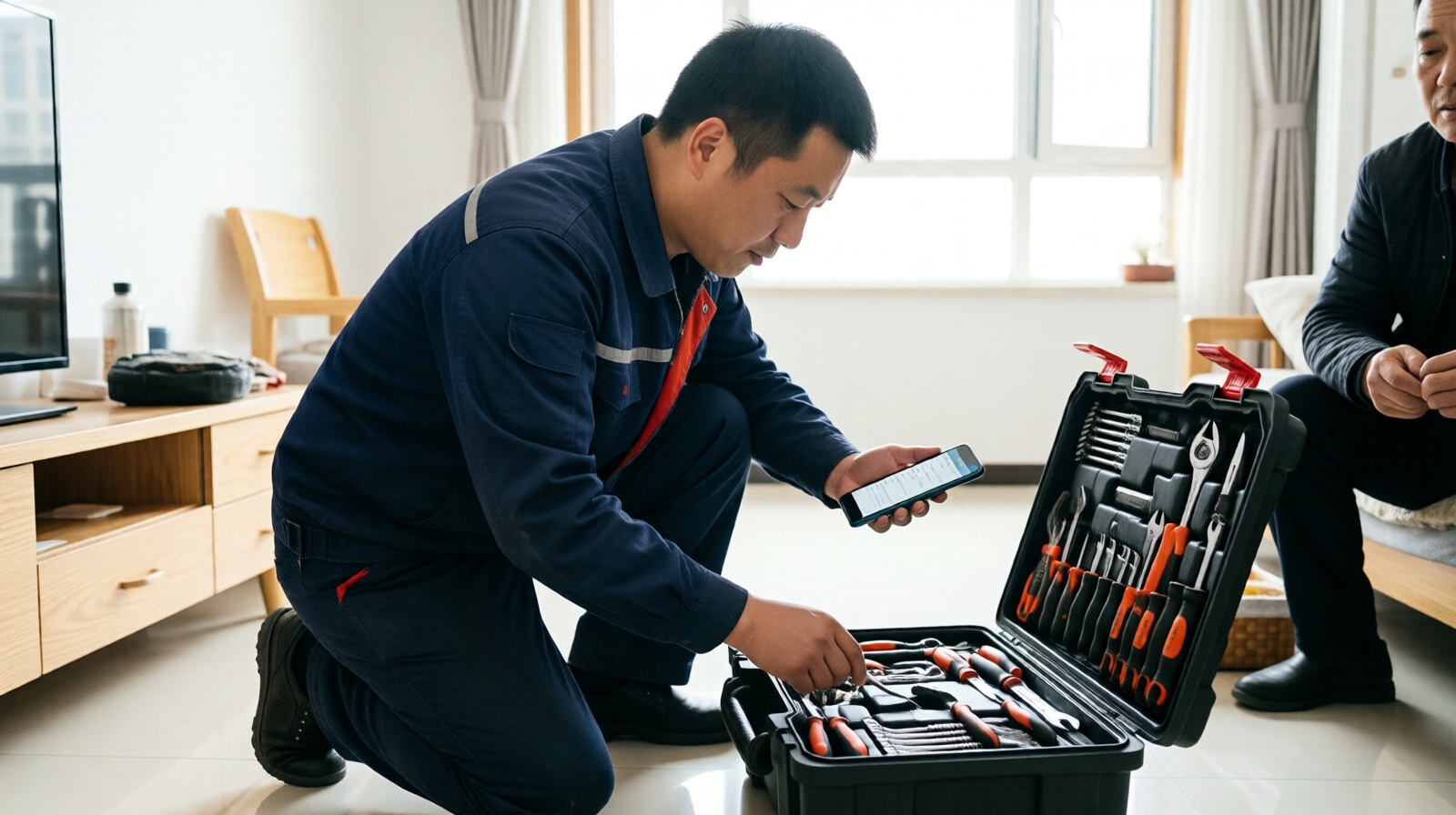
Here is how the process usually goes. You place the order on the app with a short description of the problem and a few photos. Within half an hour, a master accepts the job and calls you. He asks for details, confirms a time, and promises to arrive on schedule. When he gets to your floor, he might call from the building entrance in case the name plate is unclear. He arrives with a toolbox and sometimes a spare part carrying bag.
Before touching anything, he listens, asks questions, and gives a rough estimate. If the price feels too high, you can still cancel without a penalty. Small talk happens while he works: where you are from, how long you have lived here, whether he has children. Many shifu have been on their feet for decades. One elderly pipe-repairman once told me, ‘I know every valve in this building, they are all the same as my own home.’
Once the repair is done, the master will test everything, clean up the dust and scraps, and even give you maintenance tips. He then shows you the cost breakdown in the app, invoice or receipt included, and takes payment via mobile. All that remains is for you to rate him and leave a short comment. Good reviews keep his phone ringing.
‘Have Some Water, Master’ — The Human Touch That Makes It Different
Repair calls in China are rarely cold transactions. There is an unspoken social ritual: you offer the master a glass of water, tea, or sometimes a cigarette. If the job takes longer than an hour, a bowl of fruit might appear. The master may wave it off politely, then accept with thanks. This small gesture both shows respect and creates a comfortable atmosphere. The word ‘shifu’ itself — literally ‘master’ or ‘teacher’ — already carries warmth.

These informal exchanges often leak into meaningful chats. An air-conditioning technician might tell you about his daughter preparing for the college entrance exam. An electrician might get a sudden call from a worried customer, and you instantly become a kind of temporary companion. It is a form of urban social glue. It also explains why so many people in China still call the repairman for tiny issues instead of buying a new appliance — it is not only economical but also reassuring to have someone handy at your kitchen table.
The Masters Themselves: Gigs, Income, and Reputation
Most on-demand repair professionals are self-employed entrepreneurs rather than employees of the platform. They work on their own schedule, owning their tools and sometimes driving a small e-bike or van loaded with spare parts. Their income depends on order volume, skills, and speed. In a large city, a busy plumber might complete 4-6 jobs a day during the peak season, earning a net income somewhere between 10,000 and 20,000 yuan a month (roughly 1,500-3,000 USD) before expenses like transport and phone. But it’s not easy money: they often work 10-hour days, including weekends, and need to pay the platform a commission that usually ranges from 10 to 20 percent.
Reputation is everything. A few bad reviews can kill a business, so the good masters are disciplined about arriving on time, offering clear quotes, and cleaning up. The platforms also provide basic training and insurance for some categories, but the day-to-day quality rests on the shoulders of these individuals. As a result, you will find proud professionals who take real pride in a clean job. One veteran appliance repairman said to me, ‘If I don’t dry the water rings after fixing a sink, I can’t sleep at night.’
Compared With the West: A New Repair Economy
In many Western countries, hiring a plumber or electrician feels almost like a luxury. The hourly rate might be high enough to make you consider buying a new machine instead. You often call several numbers, leave voicemails, battle with online booking forms, and wait for a return call. And the welcome can be curt if you’re not ‘worth the trip.’ In China, the app-based model has flipped that logic. Small tasks are still worth doing because the labour cost is modest in relative terms. The result is a repair culture that is more accessible, more immediate, and more human.
Of course, the system has its limitations. Since attention is short, the first available master may not be the top rated one. Prices can surge at peak times, like during rainy months when roofs leak or right after winter when heating systems need service. And the range of services can be narrower than in a country where specialty trades are common. But for everyday problems, the match-up is incredibly efficient.
So the next time a fuse blows in China, remember: you don’t need to manage a directory of vetted handymen. Just open the app, choose a shifu, and put the kettle on. By the time the tea is warm, the master is at your door — and he’ll probably tell you a story while his toolbox clicks open.
Start the discussion at forum.chinacomes.com