

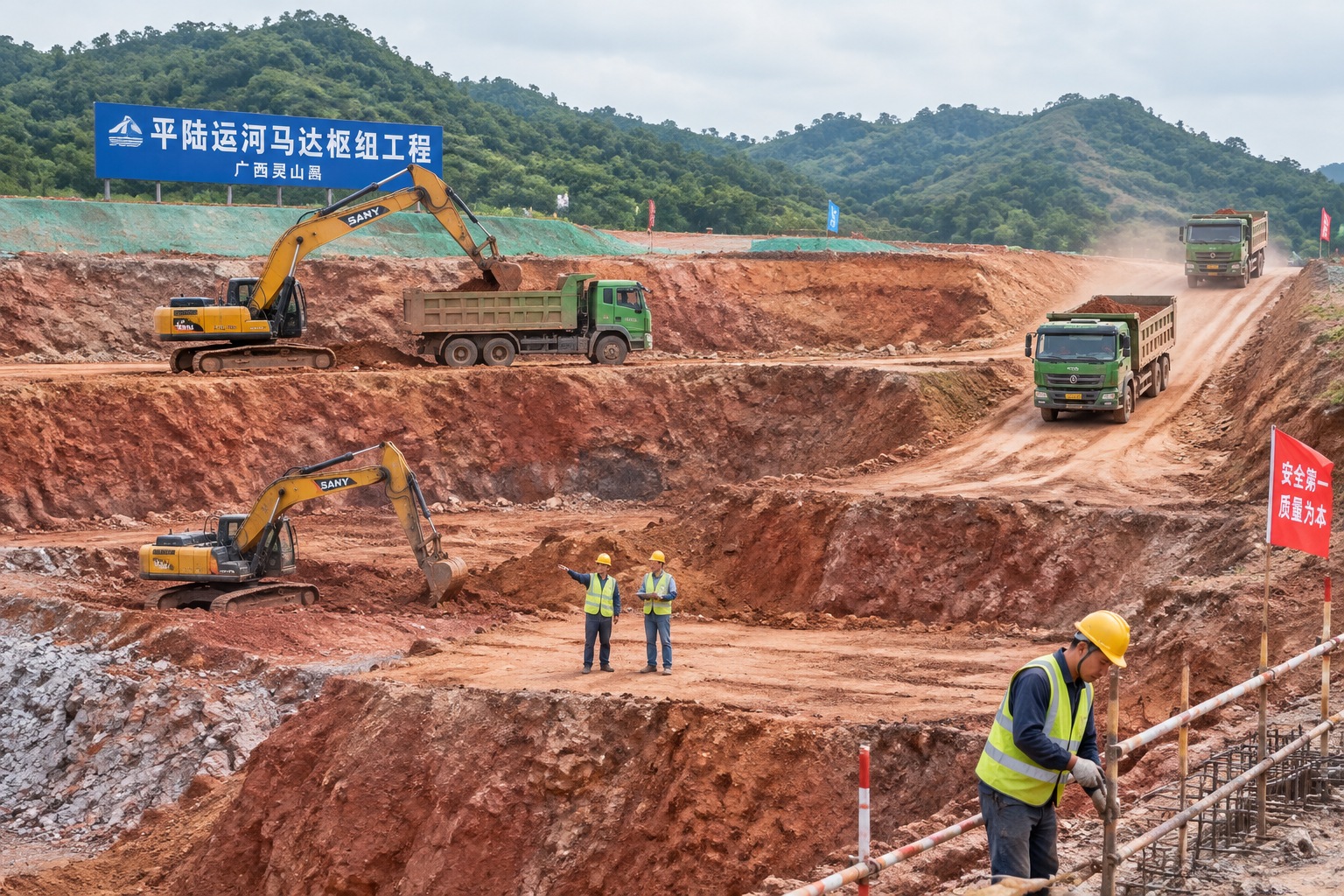
At the Mada Junction, 4 p.m.
Red dust hangs over the pit at Mada, in Lingshan County, Guangxi. Trucks spiral down a rammed-earth ramp through the middle of the excavation, and excavators work along terraced platforms, their tracks sunk deep in wet clay. Above them, a conveyor belt keeps feeding spoil onto a growing pile.
This is the northernmost of three lock-and-dam steps on the Pinglu Canal. The waterway starts at the Xijin Reservoir in Hengzhou, just outside Nanning, cuts south through Lingshan County, joins the Qin River near Luwu town, and empties into the sea at Qinzhou Port. Its length is 134.2 kilometers. It is designed for vessels of up to 5,000 deadweight tons — river ships, not container giants. Construction began in August 2022, the published investment is about 72.7 billion yuan (roughly $10 billion), and the official target is to open the canal by the end of 2026.
The number officials cite: goods from China’s southwest would reach the sea about 560 kilometers shorter than by following the Xi River east to the Pearl River Delta and then doubling back along the coast.
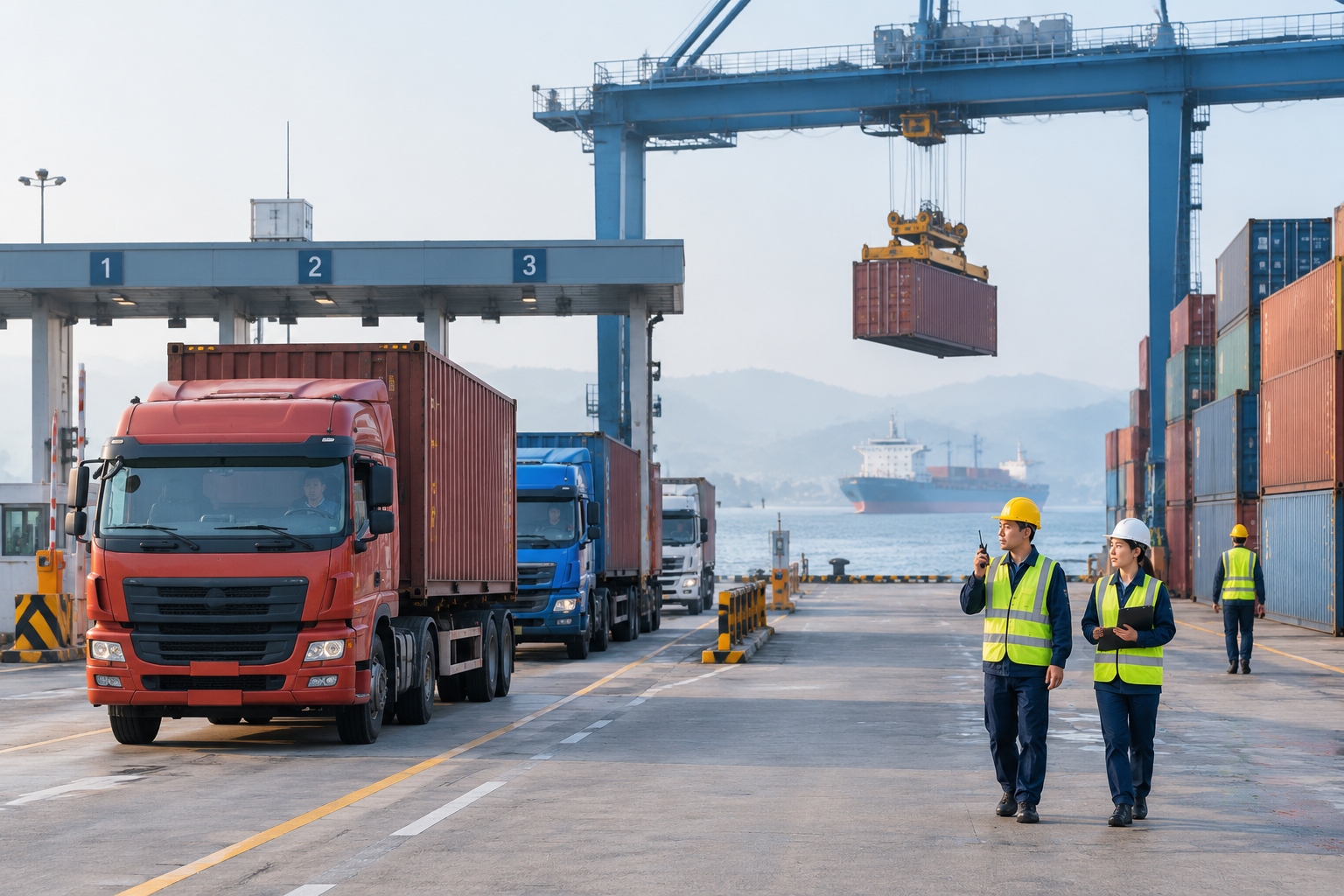
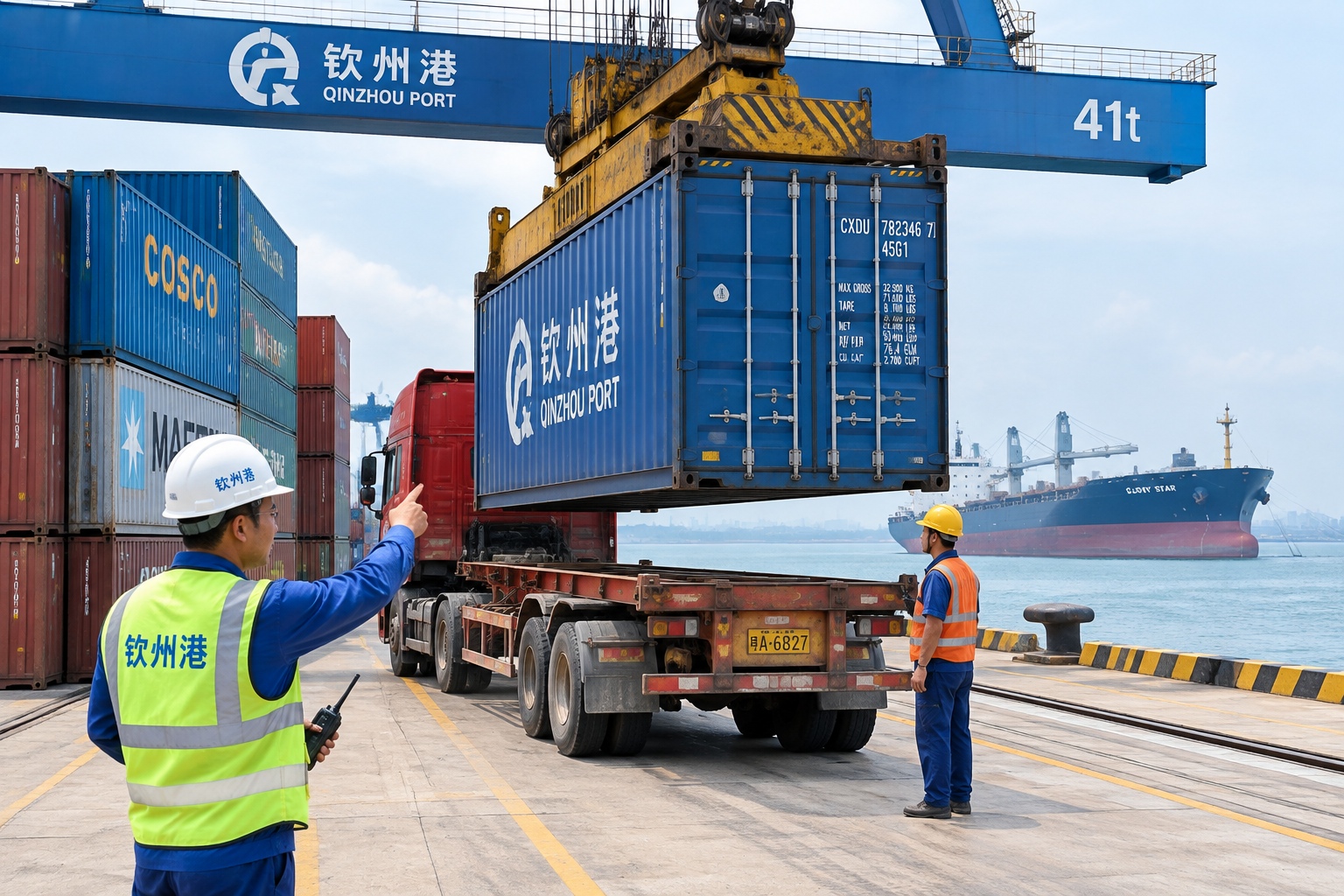
The Port Arrived First
Qinzhou is not a sleepy town waiting to be woken by a canal. Since the 1990s, local authorities have been dredging channels and building berths. Qinzhou Port now has crude oil terminals of around 300,000 tons, container berths of 100,000 tons, a refinery that processes 10 million tons of crude a year, a large pulp and paper mill, and a ship repair yard. The China-Malaysia Qinzhou Industrial Park occupies a broad stretch of reclaimed land behind the docks.
In 2023, the Beibu Gulf port cluster handled more than 8 million TEU of containers, and Qinzhou accounted for most of them. By any measure, this is southwest China’s fastest-growing gateway to the sea.
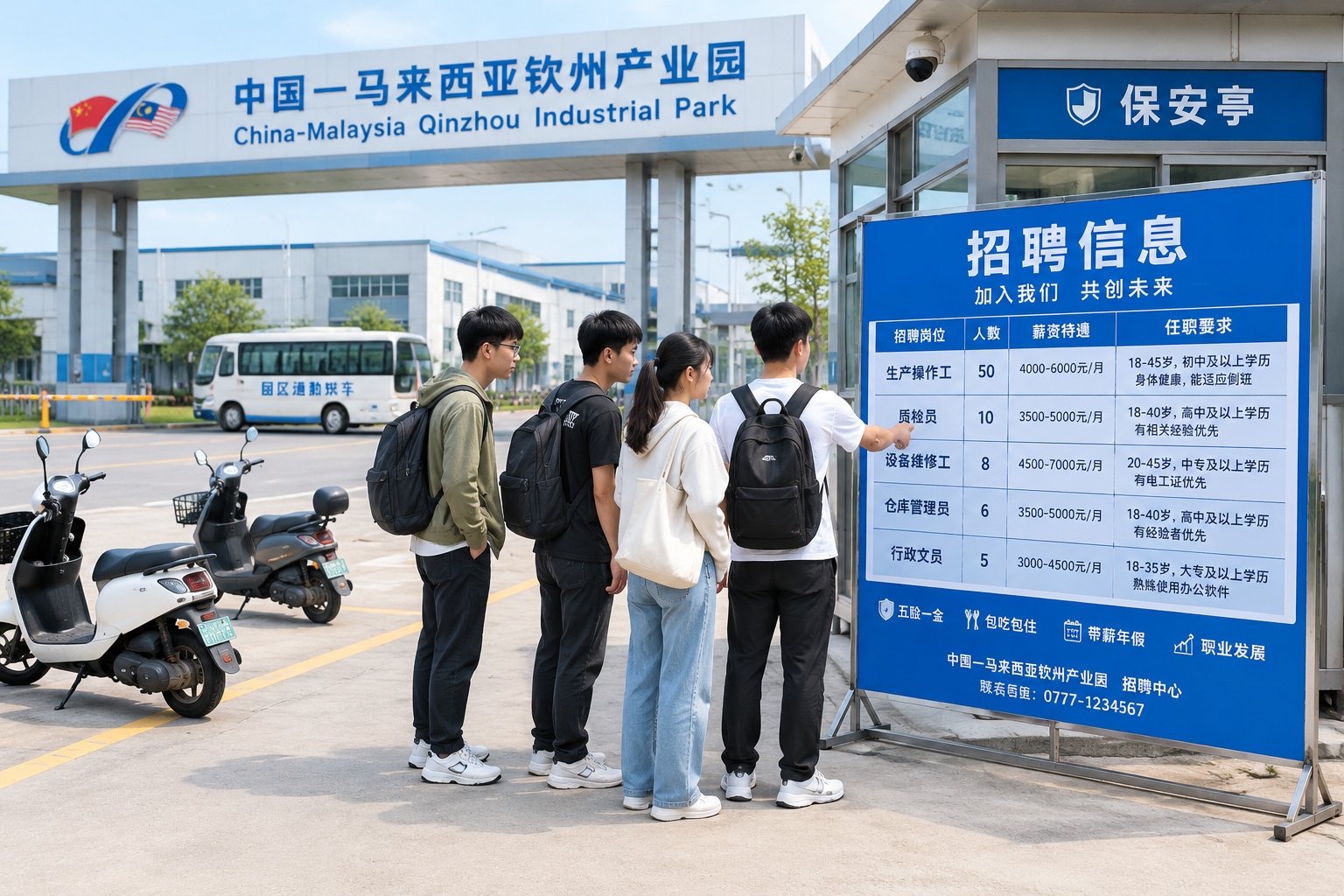
Hiring Boards, Dormitories, and the Early Bus
At the gate of the Qinzhou Industrial Park, the blue hiring boards go up at the same spot every morning around 7:30: assembly workers, quality inspectors, forklift drivers. Probation pay, 4,500 to 6,000 yuan a month, housing included. A young worker who signs a contract moves into a park dormitory, four or six to a room, air conditioning and hot water standard.
That is what the local job market looks like before the canal opens. Filling a production line is not the hard part. Keeping someone past the first year is. Ports and petrochemicals are capital-heavy: a 10-billion-yuan refinery might need a few hundred operators, not a few thousand. The jobs that absorb people in bulk come from paper, ship repair, electronics, logistics, packaging, and the small firms that feed, clean, and drive for the bigger plants.
What It Takes to Be a City, Not Just a Zone
Qinzhou municipality as a whole — including the farming counties of Lingshan and Pubei — has about 3.3 million residents. The strip where the port meets the main urban area holds far fewer. If a 2-million-person port city is going to appear along the canal, the bottleneck will rarely be the docks. It will be the other things: enough schools, a hospital without a queue out the door, a restaurant still open at 8 p.m., a sidewalk you can push a stroller along.
The port district sits roughly 30 kilometers from the old city center. In the morning, shuttle buses run bumper to bumper toward the docks. In the evening, the traffic reverses. It is a pattern common to industrial cities everywhere. The question is whether it stays permanent or slowly dissolves as the urban area fills in around it.
Not Everything Follows the River
A few things will set the timetable. Water is one: the canal depends on the Yu River for recharge, and dry-season flow is tight. Lock capacity is another — three stepped locks mean a queue at each one. Cargo is the third: what will actually float down? Guangxi has sugar, cement, sand and gravel, alumina. Yunnan and Guizhou goods may come south one day. All of it competes with Zhanjiang, Fangchenggang, Beihai, and the old route out through the Pearl River Delta.
Then there are people. Villages were relocated. The river’s course changed. Fish farmers raised concerns about water quality. None of that is small. It just rarely appears in an investment brochure.
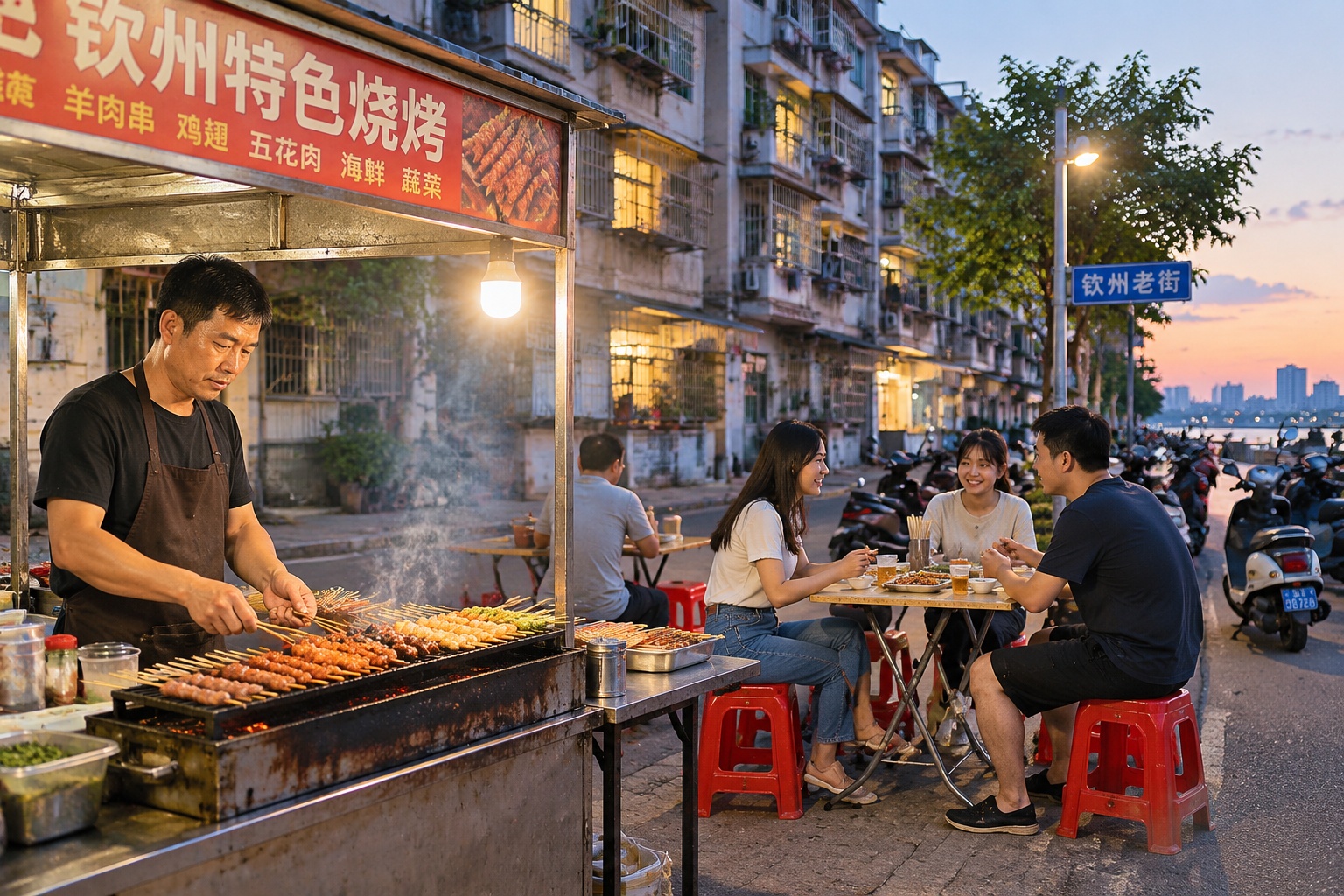
Friday Night on a Qinzhou Street
At 6:30 in the evening, a barbecue stall in Qinzhou’s older quarter has its coals going. The customers include young people in work uniforms and parents who picked up their kids and stopped for dinner on the way home. A bowl of rice noodles costs a little over ten yuan; a pitcher of beer costs a few more. For someone who just finished a week of night shifts at the port, this is how you reset your body clock.
What a canal city finally looks like may not be decided by its bridges or its container cranes. It may be decided by evenings like this one. The water won’t flow until 2026. By then, the picture will be clearer.
Start the discussion at forum.chinacomes.com