
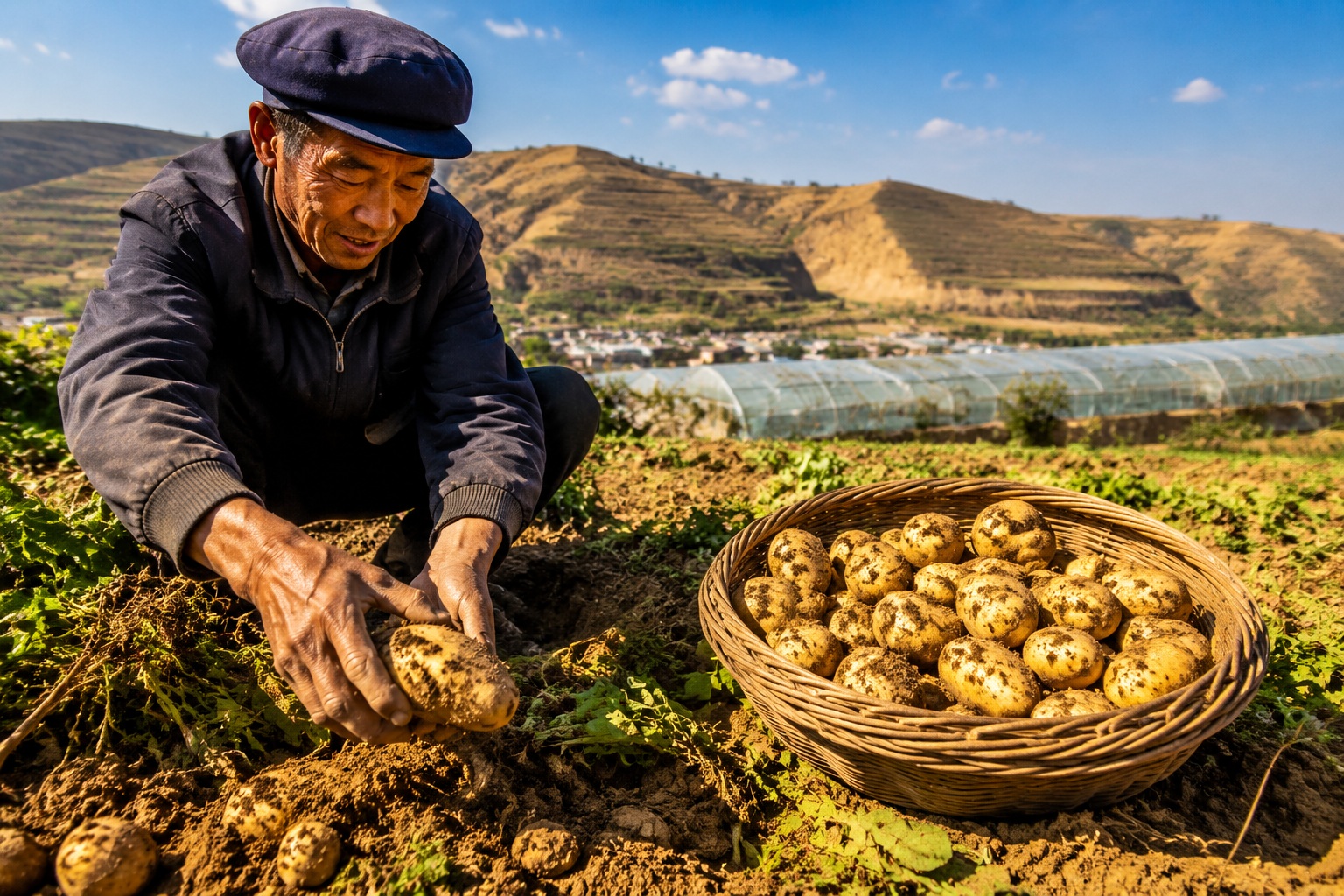

On a cold October morning, Old Wang is bending over his potato field in Dingxi, a city in Gansu, the poor northwestern province where dry, yellow hills stretch to the horizon. He digs into the hard soil, pulls out a potato, and wipes the clay off with his sleeve. “It’s a good size,” he says with a smile. The potato in his hand looks exactly like the potatoes his father dug out of the same land decades ago. But where those potatoes went is a completely different story.
Today, many of Wang’s potatoes are not boiled at home. They are loaded onto trucks, sent to modern factories, and turned into crispy, flavored chips inside glossy packages. Some end up in online live-streaming sales videos that young people watch on their phones. The same crop that once saved the region from hunger has become a trendy snack.
For outsiders, this may sound like a small local detail. But it is a quiet signal of how rural China is changing. To understand why, let’s start with a little history.
The Potato That Once Meant Survival
Gansu is one of China’s driest, toughest regions. The soil is loess, a fine, pale-yellow sediment that feels like dry dust. In the 20th century, many families in Gansu lived at the edge of hunger. Wheat failed first. Corn was too sensitive. But the potato could survive in poor soil and produce edible calories even in dry years.
Older residents still call the potato “life-saving grain.” In the 1960s and 1970s, when food was scarce, whole villages lived on potatoes cooked in every imaginable way. They were boiled for breakfast, mashed for lunch, baked in hot ashes for dinner, and grated into noodles when someone was sick. A local saying goes, “Potato is our mother.” Children were taught to never waste a single piece of skin.
During the long winter months, families stored potatoes in dark caves under the courtyard. If the cave stayed cool and dry, they could keep eating until spring, a small security against famine. For generations, the potato was not seen as delicious. It was simply what kept you alive.
Why Gansu’s Dirt Is Actually Good for Potatoes
It may seem strange that such a poor region is now a national potato powerhouse. The reason is partly in the ground. Gansu lies on the arid Loess Plateau, with abundant sunshine, cool nights, and loose, well-drained soil. These are almost perfect conditions for potatoes to develop high starch content. In fact, Dingxi is often called “China’s Potato Capital.” It is one of the country’s largest areas for growing potatoes, and it produces a large share of the seed potatoes used by farmers across northern China.
But for a long time, this natural advantage did not translate into better lives. Farmers saved seed potatoes from last year’s harvest, generation after generation. Those seeds were weak and loaded with viruses, so plants died early and tubers were small and ugly. Water, too, was a constant problem. Without irrigation, the harvest usually came down to luck with rain.
The Quiet Agricultural Revolution
In the late 1990s, the local government and agricultural research stations started to do something different. They began to produce virus-free “mini potatoes” in clean laboratory rooms, then multiply them in high-altitude fields that were naturally isolated from pests. These healthy seed potatoes changed everything.
Wang remembers the first time he planted them. “The leaves were big and dark green. I thought, these are not the potatoes I knew,” he recalls. The plants survived heat and drought, and the tubers came out big and smooth. He also learned to cover the soil with plastic film to keep water below the earth, combined with drip irrigation tubes. The yields doubled, then tripled.
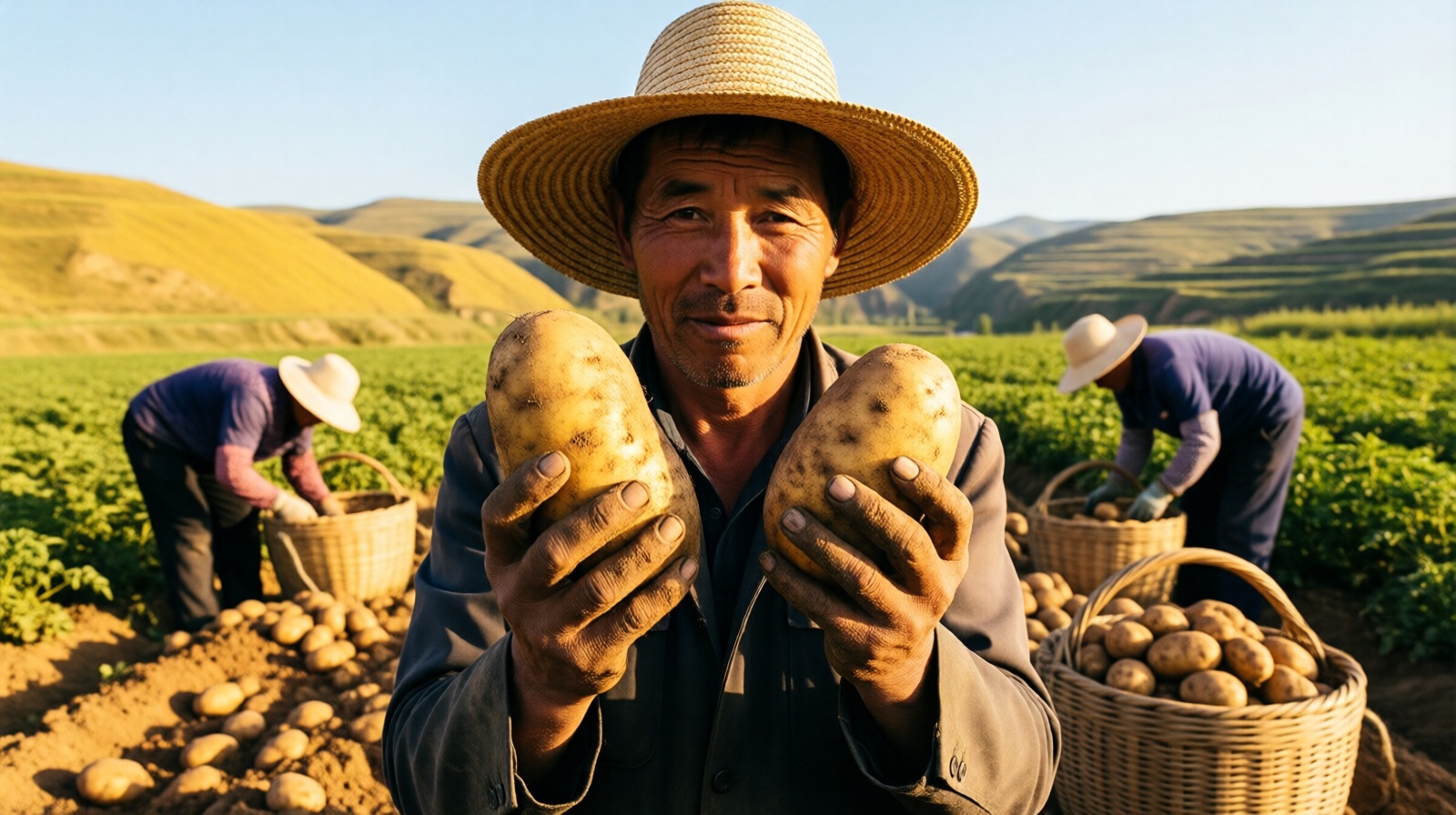
At the same time, the government encouraged the creation of potato cooperatives and food-processing companies. Farmers no longer had to sell their potatoes at the roadside for a few yuan a bag. Instead, they could sign contracts with local factories that bought the harvest at a guaranteed price and turned it into potato starch, frozen french fries, and chips.
From Boiled Potatoes to a Bag of Chips
Today, the transformation is visible as you drive through the plains outside Dingxi. Next to the endless potato fields, you’ll see large industrial buildings, silver grain silos, and trucks waiting to be filled with sacks. Inside these plants, potatoes are washed, peeled, cut into thin slices, fried, and seasoned. Gansu now supplies potato chips and potato starch to food producers across China.
One of the most successful products is not even a chip. It’s potato starch noodles, called fensi in Chinese. These glassy, translucent noodles are used in hotpot, stir-fries, and cold salads. Gansu’s dry climate is perfect for making fensi, which needs to be dried slowly. For years, fensi was sold only in bulk at traditional markets. Now you can find it in national supermarket chains, packaged with a bright label saying “From the potato capital of Dingxi.”
The Street Snack That Never Got Away
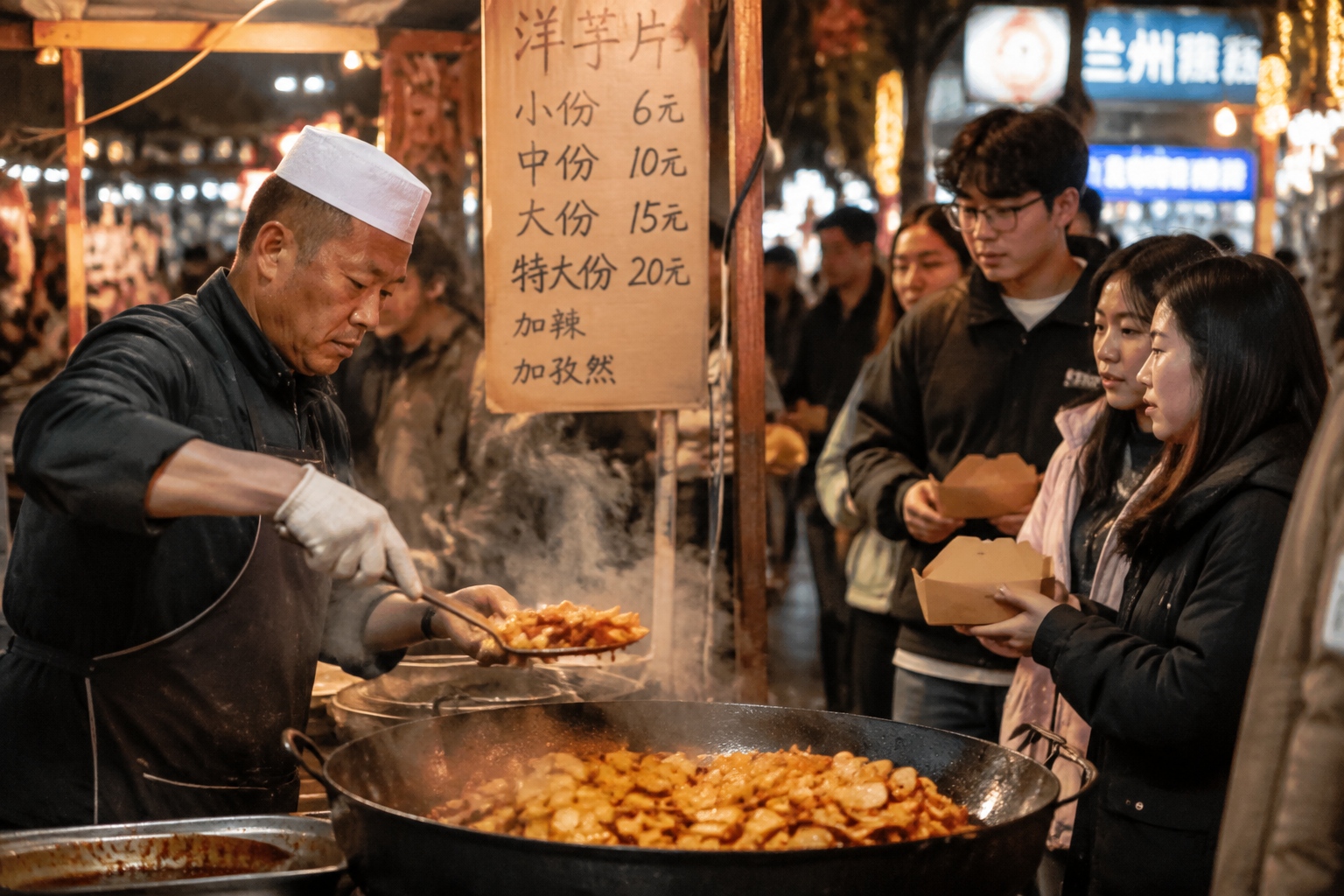
In Lanzhou, the capital of Gansu, you can still taste the old potato in its most streetwise form. On a busy evening, a small stall in a night market sells yang yu pian, literally “potato slices.” Thin slices are dropped into a huge wok of bubbling oil, stirred with a metal ladle, then scooped out and mixed with chili powder, cumin, and a little salt. The seller wraps the shiny, spicy slices in a piece of cardboard, and customers eat them on the spot, shaking their fingers to cool down.
This is not gourmet food. It’s cheap, loud, and deeply local. And for Gansu’s young people, it brings a special memory of school gates and weekend outings. It’s also the perfect starting point for the chip industry: if you’ve ever fallen in love with street-fried potato, you’re already curious about a bag that promises the same flavor in a more convenient form.
The Online Chip Craze
In the last few years, Chinese e-commerce and social media have created a huge new channel for regional foods. Short-video platforms like Douyin (the Chinese version of TikTok) and delivery apps have turned small-town snacks into nationwide products. Gansu potato chips are a prime example.
On Douyin, food celebrities record themselves visiting the potato fields, then taste-test the first batches of chips. They talk about the dry climate, the high altitude, and the stubborn farmers who kept growing this crop through hard times. The camera zooms in on the golden, crispy slices. Viewers can tap the screen and order immediately. The result is instant sales and a new kind of “terroir” story.
Young consumers in Beijing, Shanghai, and Guangzhou may not know where Dingxi is, but they know what a spicy, cumin flavor tastes like. They also know the “underdog” narrative. Buying a bag of Gansu potato chips feels a bit like supporting the little guy. Some brands even print the name of the producing village on the bag, along with the farmer’s signature.

More Than Just a Bag of Chips
For young people, the snack is not only about taste. It’s a small piece of identity. The rise of “local pride” and nostalgia, combined with live-streaming shopping, means that a $2 bag of potato chips can make a farmer 1,000 miles away feel connected to a trend-setting consumer in Shanghai.
A 19-year-old university student in Lanzhou told me she used to think potatoes were boring. “Now I post photos of the chips on my social feed, with the yellow hills behind the product. It’s kind of funny. People comment, ‘Is that really from Gansu?’ and I say yes.” Her mother, who grew up eating boiled potatoes, finds the photo cute. “She never imagined that her daily food would one day become a viral photo.”
What This Story Really Tells Us
The potato’s comeback in Gansu is not a perfect fairy tale. The processing plants still rely on seasonal labor, and the profits are not huge. The province’s economy is still weaker than the coastal regions, and young people continue to leave for inland cities. Climate change is also a threat: rising temperatures and more frequent droughts could hurt the harvest.
But the change is real. It’s not just about the potato becoming a popular snack. It’s about a rural region starting to capture more of the value of its own products, instead of just exporting raw materials. A crop that once was the last thing a hungry person wanted to see has been turned into a badge of local identity.
Standing in his field at the end of the harvest, Wang puts a few potatoes in a basket. He says he still eats boiled potatoes a few times a week, but mostly because he doesn’t want to forget that taste. “Potatoes kept us alive when we had nothing. Now they’ve bought us a new life.” He picks up one more potato, holds it to the light, and says: “It’s heavier than it used to be – in every possible way.”
Start the discussion at forum.chinacomes.com