
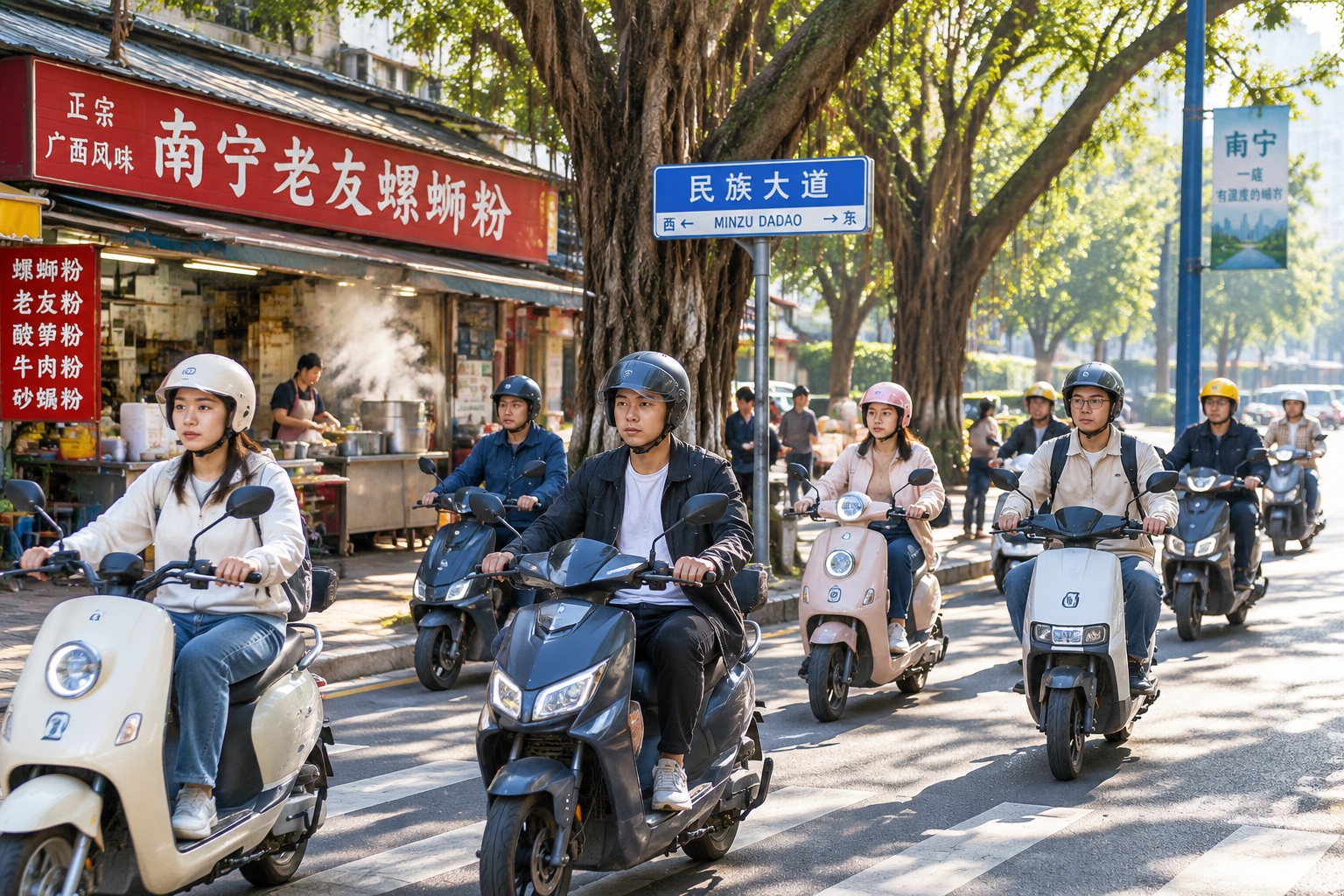

Before Sunrise in Liuzhou: The First Bowl of Luosifen
At 5:40 a.m. in Liuzhou, a city in China’s southern Guangxi region, the air inside Huang Xiuying’s small noodle shop already smells of fermented bamboo shoots—sharp, sour, unmistakable. She lifts a lid from a ceramic jar. The bamboo shoots, submerged in brine for nearly two weeks, release a smell that first-timers often describe as pungent. Locals call it the soul of luosifen, the rice noodle dish that has become Liuzhou’s most famous export.
Huang, 52, has run this shop for 18 years. She arrives before dawn to check the fermentation, boil the river snail broth, and prepare the toppings: pickled green beans, fried peanuts, dried tofu skin, fresh scallions. By 6:30, the first customers are already seated on low plastic stools, slurping loudly. A bowl costs 12 yuan, roughly $1.70.
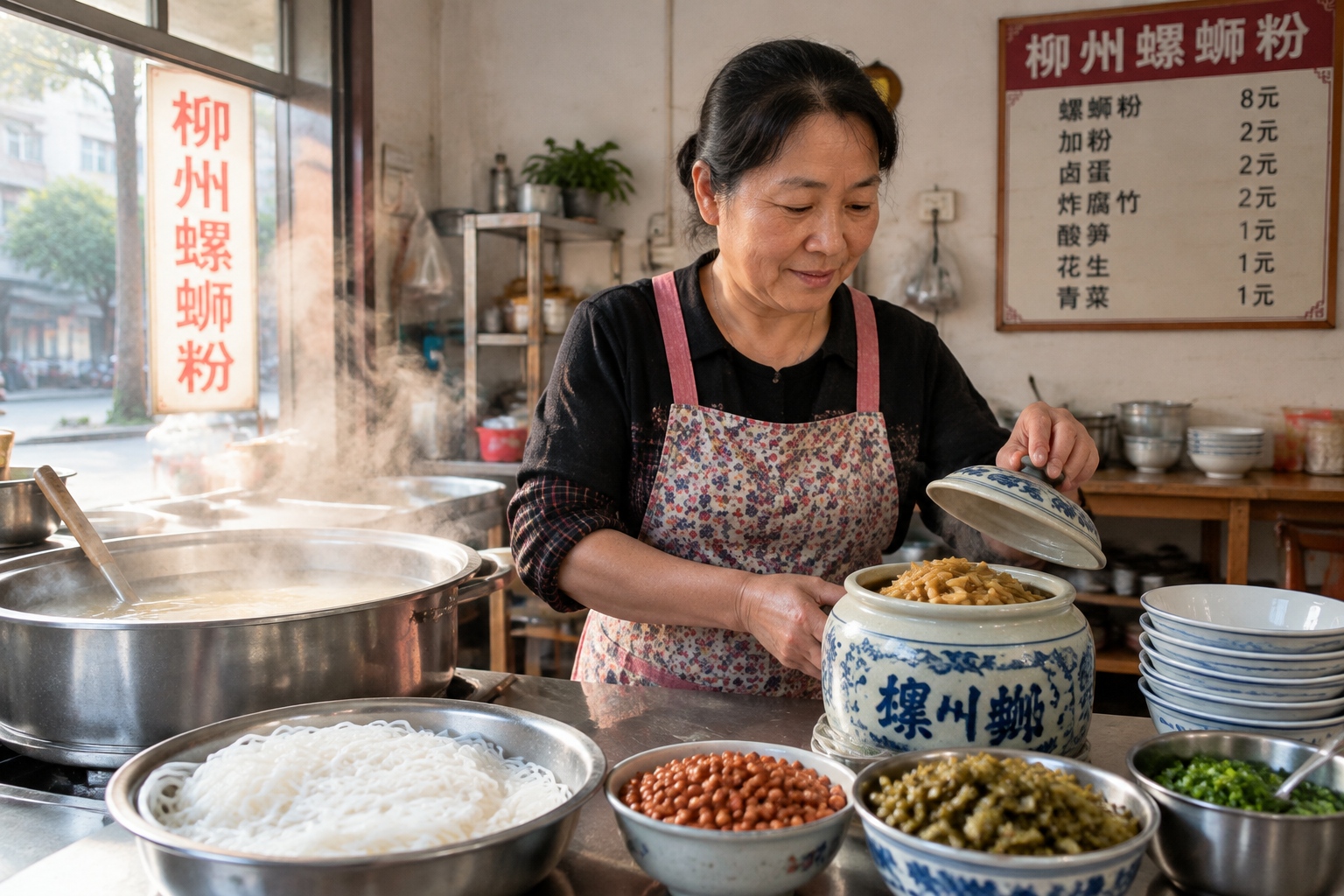
“The smell drives some people away,” Huang says, laughing. “But those who stay become regulars for life.”
Luosifen’s rise from a regional street food to a national phenomenon is recent. Vacuum-packed versions now sell on e-commerce platforms across China, generating billions of yuan in annual revenue. But in Liuzhou, the dish is still a morning ritual, not a trend.
Why Rice Noodles Are a Way of Life in Guangxi
Guangxi is one of China’s major rice-producing regions, and rice noodles—known locally as fen—appear at every meal. For breakfast, there is plain rice noodle soup. For lunch, a bowl with braised meat. For late-night snacks, stir-fried rice noodles with vegetables.
The region’s large Zhuang ethnic population has influenced the local palate. Zhuang cooking often favors sour, fermented, and pickled flavors—techniques developed historically to preserve food in a humid subtropical climate. Sour bamboo shoots, pickled mustard greens, and fermented beans all trace back to this tradition.
“Rice noodles are not just food,” says Wei Jianhua, a food historian at a university in Nanning, the regional capital. “They are how Guangxi people connect to home. If you live outside the region, the first thing you miss is a bowl of fen.”
Nanning at 8 A.M.: The Electric Scooter River
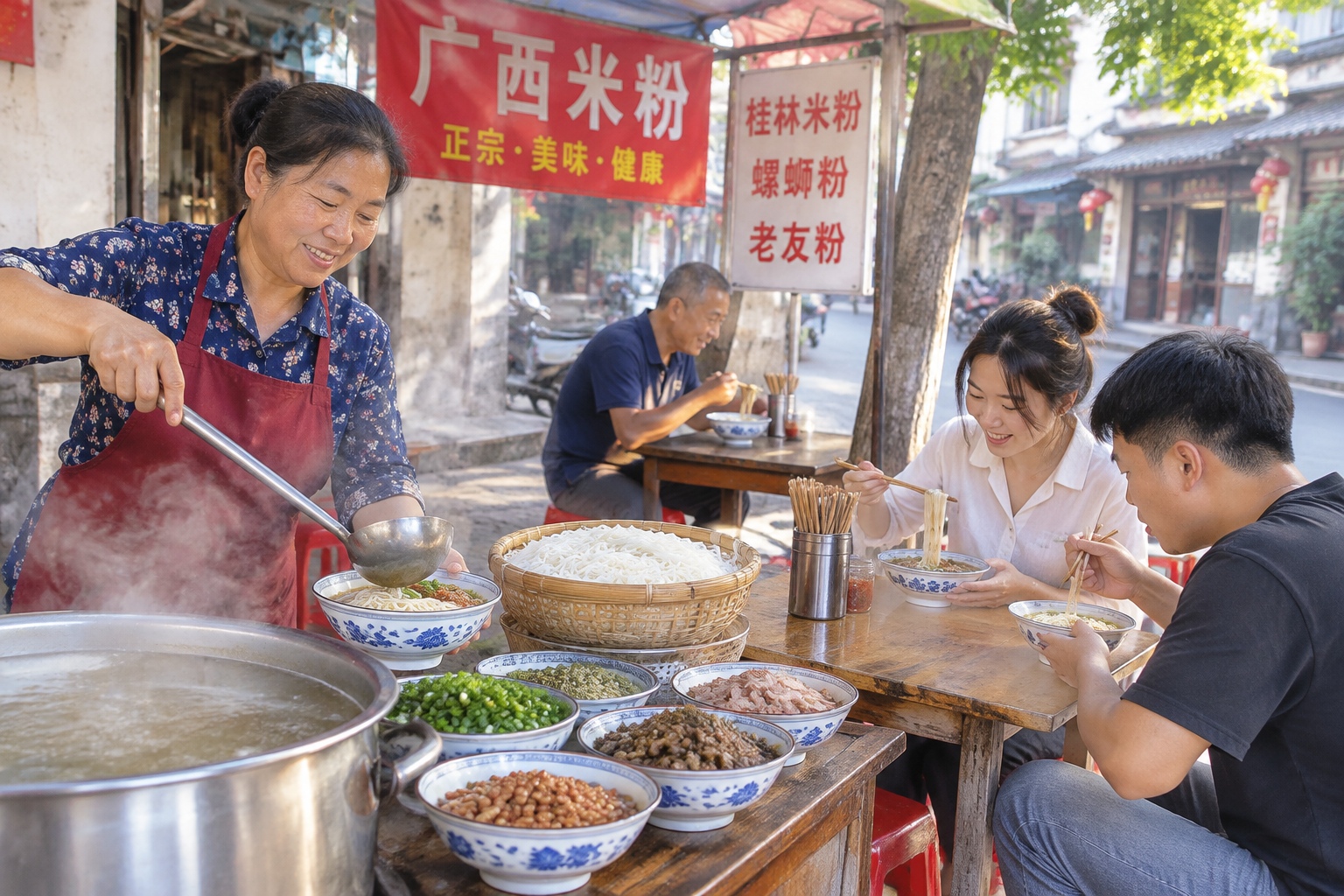
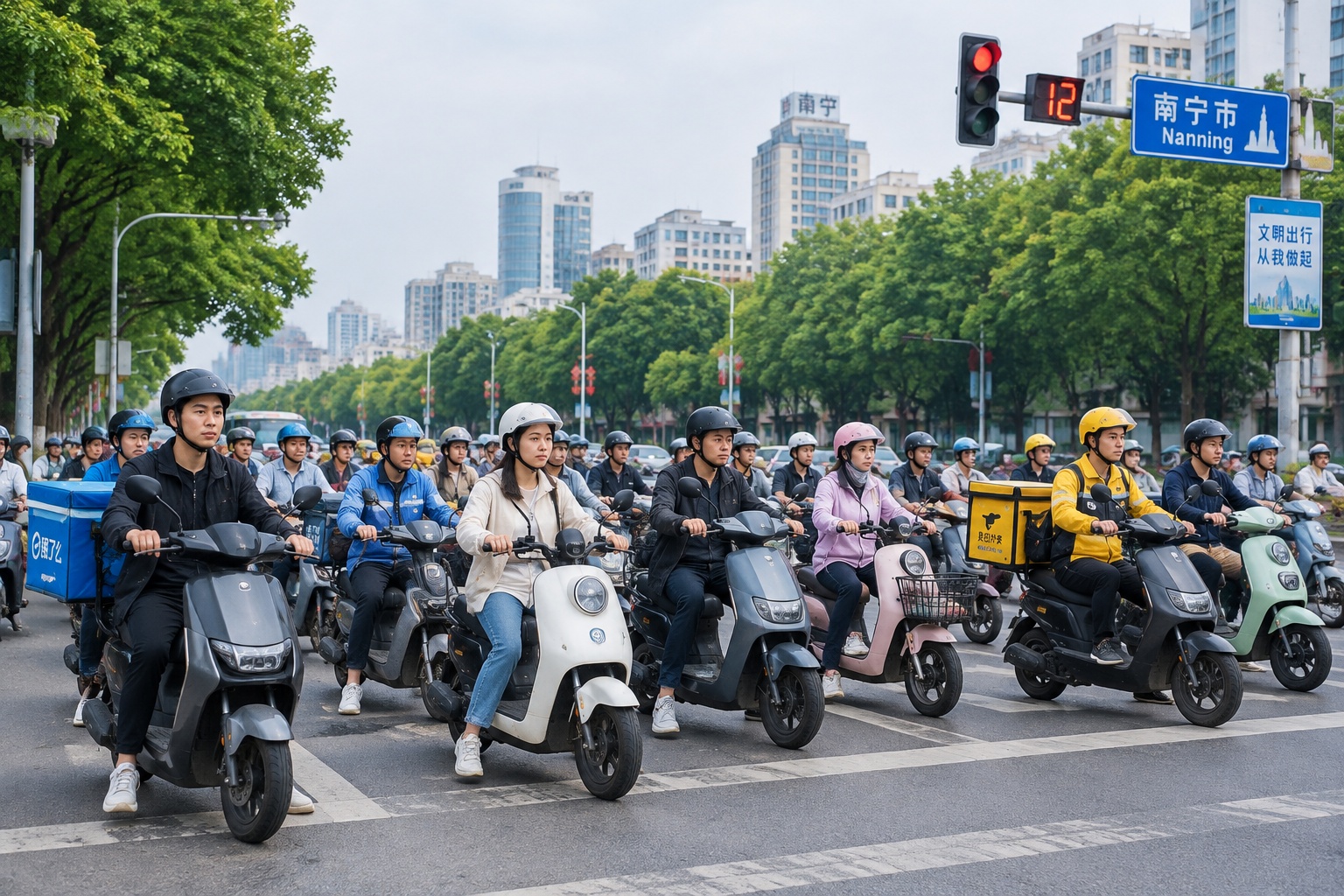
Two hundred kilometers southeast of Liuzhou, Nanning wakes up to a different rhythm. At the Minzu Avenue intersection, hundreds of electric scooters wait for the green light. When it changes, they surge forward like water released from a dam—silent, fast, and astonishingly coordinated.
Nanning has over 3 million registered electric scooters, often called diandongche. For many residents, they are the primary mode of transport. They cost between 1,500 and 3,000 yuan, need no license plate in most cases, and can be charged at home or at public charging stations for a few yuan.
“Driving a car in Nanning is expensive and slow,” says Li Wei, a 28-year-old office worker who rides a white scooter with a pink helmet. “With my electric scooter, I can get anywhere in 20 minutes. Parking is free. Charging costs me 30 yuan a month.”
At 6 p.m., the same intersection fills again. But this time, many riders are heading to night markets—open-air streets lined with food stalls selling grilled skewers, fruit cups, and, increasingly, bowls of luosifen. The scooters park in dense rows, their mirrors and handlebars forming a temporary metallic forest.
Singing by the River, Streaming to the World
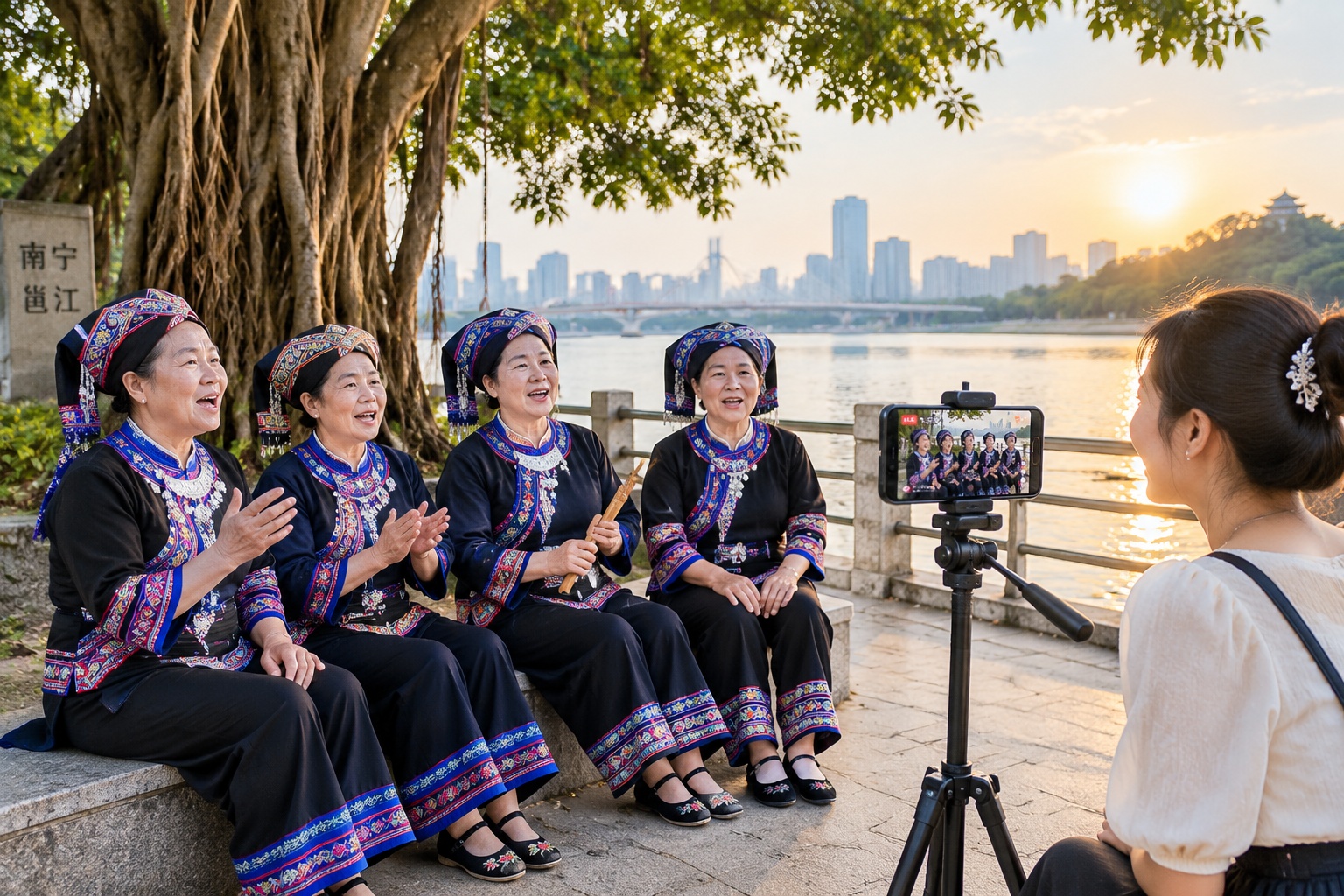
On a Saturday evening along the Yongjiang River in Nanning, a group of older women gathers under a banyan tree. They begin to sing shan’ge—traditional mountain songs, often improvised, call-and-response style. The melodies are ancient, passed down through Zhuang communities for centuries.
But something has changed. A young woman in her early twenties stands nearby, holding a smartphone on a tripod. She is livestreaming the performance to an audience of thousands on Douyin, China’s version of TikTok.
“My grandmother sang these songs,” says the woman, who gives her name as Xiao Qin. “I want my followers to hear them too. Some of my viewers are from other provinces—they’ve never heard Zhuang music before.”
The livestream comments scroll quickly: “What language is this?” “So beautiful.” “Can you translate?” Xiao Qin reads some aloud, and the older singers smile, continuing without pause.
How a Bowl of Noodles and Two Wheels Keep Guangxi Moving
Liuzhou and Nanning are different cities. Liuzhou is industrial, known for steel and now for luosifen. Nanning is administrative, greener, and more relaxed. Yet both rely on simple, affordable systems that ordinary people can access.
In Liuzhou, the luosifen industry employs tens of thousands of people—from bamboo shoot farmers to factory workers to delivery drivers. In Nanning, electric scooters support a vast informal economy: food delivery, courier services, market vendors.
Neither system is glamorous. Both are practical. And both are deeply rooted in local culture—fermentation techniques passed down through generations, and a preference for flexible, low-cost mobility.
For visitors, the lesson is simple: to understand Guangxi, don’t just look at the skyline. Sit on a plastic stool and eat a bowl of noodles. Rent an electric scooter and join the morning rush. Listen to the songs by the river, even if you don’t understand the words.
The region’s heartbeat is not in grand monuments. It is in the sour smell of bamboo shoots at dawn and the quiet hum of a million electric motors at dusk.
Start the discussion at forum.chinacomes.com