

Morning Tea in a Place With No Permanent Residents
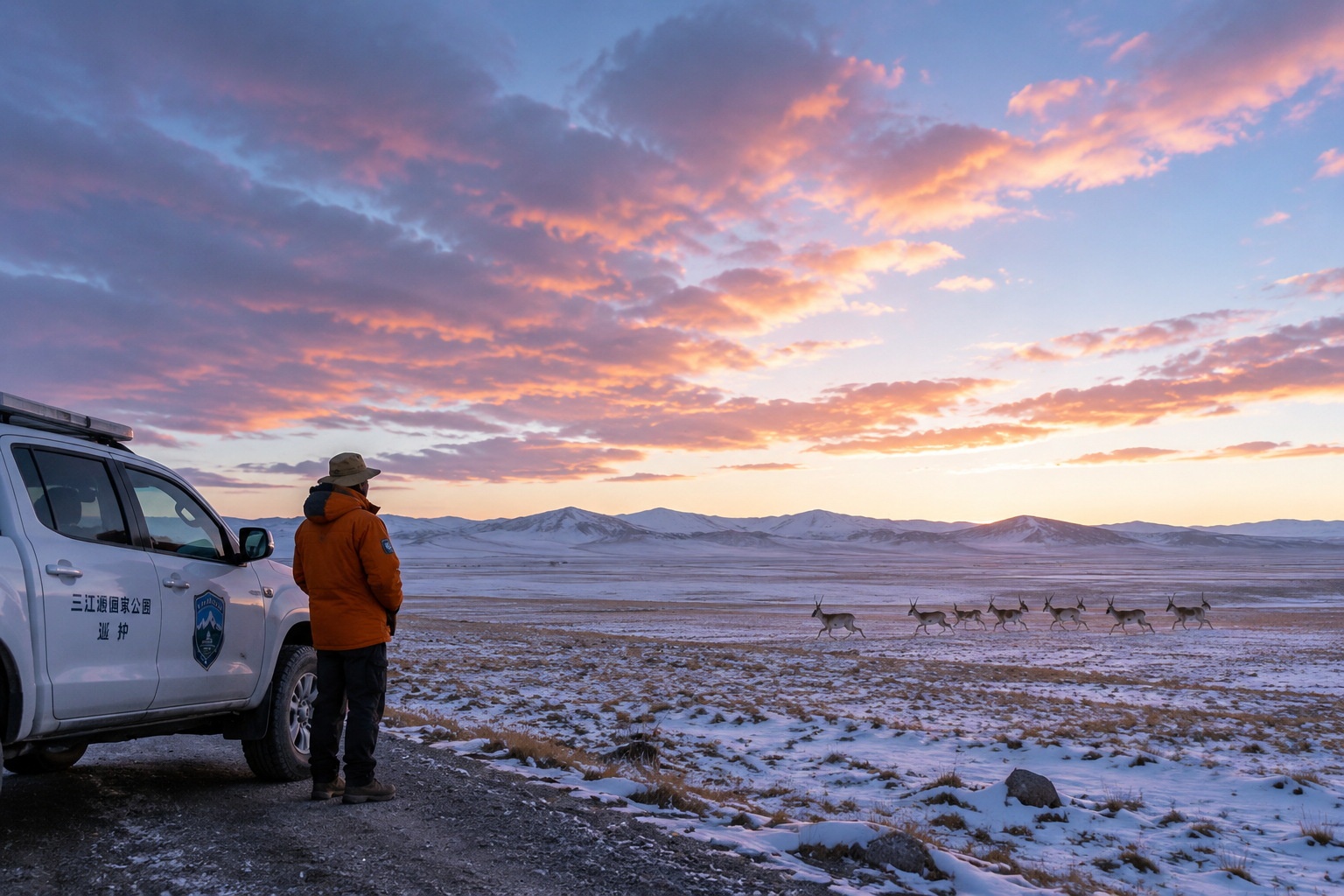
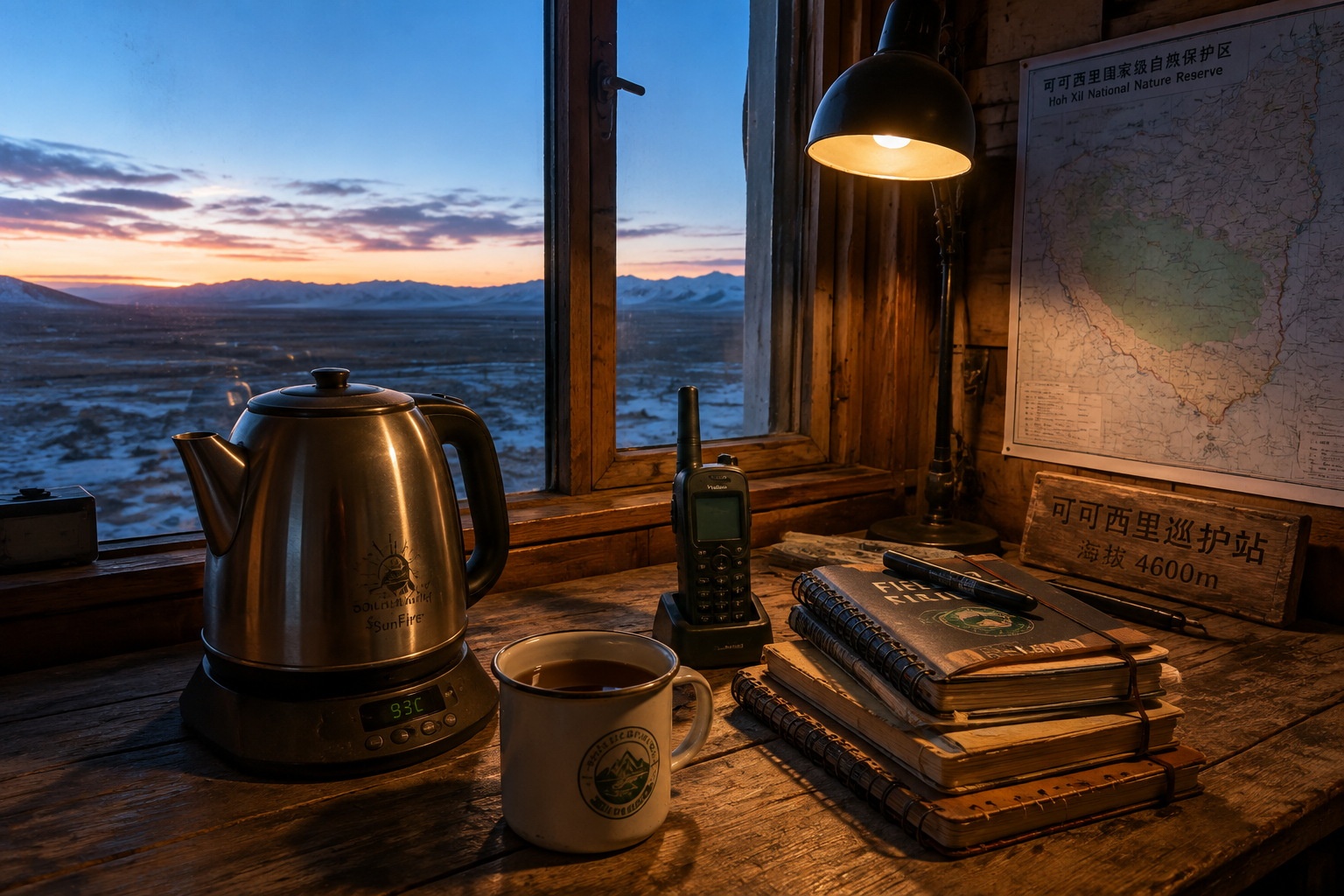
At 4,500 metres above sea level, the tea in Dorje’s mug still has a few ice crystals floating in it. The solar-powered kettle had just boiled, but the freezing air won the race. Dorje is a ranger at Sonam Dargye station in Hoh Xil, a plateau wilderness on the edge of Qinghai province that covers roughly 45,000 square kilometres—about the size of Denmark. Most maps label it “uninhabited,” and yet a small group of people choose to live and work here all year round.
This is the kind of place the outside world usually treats as empty, a blank spot on an economic map. So what is a no-man’s land worth? The answer is not what you might expect.
A No-Man’s Land With a Price Tag
Hoh Xil’s value is rarely counted in mines, timber or fossil fuel. Instead, the region is increasingly seen as a provider of ecosystem services. The alpine grasslands and peatlands store carbon; the glaciers and lakes store fresh water; the open steppe is home to Tibetan antelope, wild yaks and brown bears. These are assets that do not appear on a traditional balance sheet, but they support economies far outside the reserve.
Since around 2015, Chinese researchers and officials have been experimenting with “Gross Ecosystem Product” (GEP), a way to assign monetary value to such services. In a place like Hoh Xil, the biggest numbers are likely to be water retention and carbon storage. Even if those numbers are rough, they pull the world’s largest national park system toward the same logic as any other asset manager: you need to know what you would lose if it disappears.
The Rangers Who Live on the Roof of the World
Dorje has worked at Sonam Dargye for nine years. Like several colleagues, he is the son of herders who once used the eastern edge of Hoh Xil as winter pasture. “My father remembers the roads shaking when a herd of Tibetan antelope passed near the camp,” he told me one evening. “Now we count them with drones.”
The station is not luxurious. There is satellite phone access, a few solar panels, and a heavy truck with a winch that has towed stuck vehicles out of frozen mud more times than anyone can count. In winter, temperatures can drop to -40°C. Dorje says the hardest part is not the weather, but the monotony of staying alert for weeks at a time.
Still, the job has become one of the few stable sources of employment in nearby towns. Rangers receive a modest but regular salary, and many say it is better than trading livestock at the county market. Conservation, in other words, is already creating jobs.
From Bullet Shells to Camera Traps
The station is named after Sonam Dargye, a county official killed during a 1994 anti-poaching operation. In the 1980s and 1990s, Tibetan antelope were under intense pressure because of shahtoosh wool, sold abroad as rare luxury scarves. At the time, patrols sometimes found hundreds of antelope carcasses with their pelts removed in a single weekend.
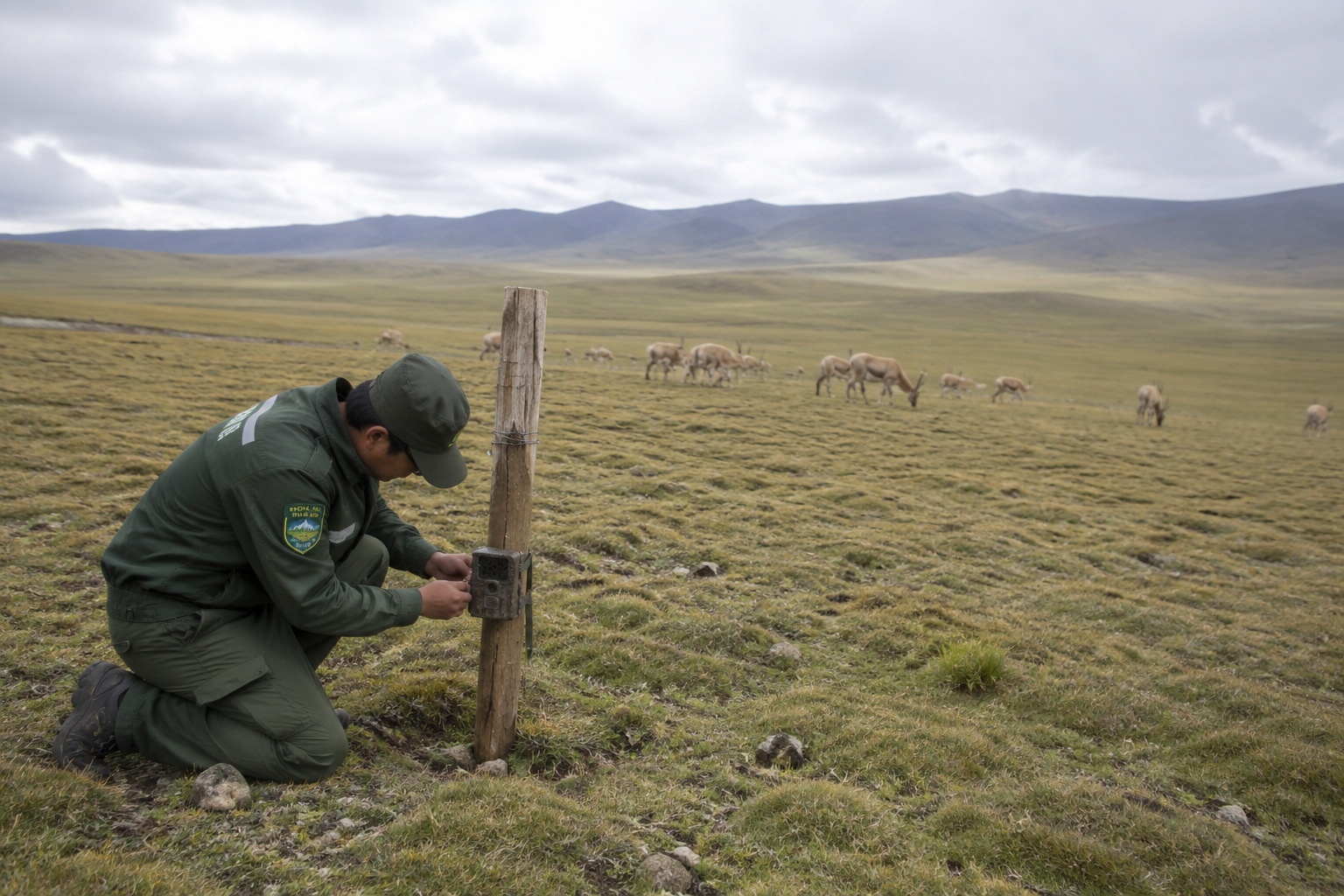
Today the situation is different. Widespread bans on trade have worked. Rangers mainly handle illegal fishing in the lakes, stray mining equipment left decades ago, or tourists illegally entering remote areas. They also set up camera traps, repair signs, collect plastic waste that has blown across the plateau, and monitor the health of wild animals. In 2017, Hoh Xil was listed as a UNESCO World Heritage site, a recognition that has shifted the world’s gaze from its beauty to its fragility.
The Invisible Exports
It is easy to forget that Hoh Xil contains one of the largest concentrated supplies of fresh water in Asia. Its glaciers and lakes feed the headwaters of rivers that supply cities as far away as Lanzhou and Xi’an. When environmentalists describe a place like this as the “water tower of Asia,” they are not using a poetic metaphor. If the glaciers shrink quickly, the consequences will be measured in city water bills, crop insurance claims and hydroelectric output.
That is why the economic case for protecting Hoh Xil is not simply sentimental. A 2021 academic study of the Qinghai-Tibet Plateau estimated the annual value of grassland ecosystem services in the region at hundreds of billions of yuan, mostly from soil conservation, water cycling and carbon binding. Critics can argue about the exact assumptions, but the direction is clear: the most valuable output of Hoh Xil is not extracted or exported. It stays in the ground, in the ice and in the gene pools.
Conservation Faces Real Trade-offs
Not everyone finds the new economy easy. People in the surrounding grassland towns occasionally complain that stricter national-park rules placed limits on herding in buffer zones. Some of those communities were encouraged to switch to tourism or services instead, but not everyone has the skills or capital to do so. Rangers admit compensation has improved, but they also say the system is still learning.
What surprises many visitors is how informal everyday life feels inside a protected area. Rangers exchange videos on their phones, play chess after dinner and argue about who must get up at dawn to feed the dogs. The reality of living in a no-man’s land is less about heroic solitude than about ordinary people doing a remarkable job in extreme conditions.
Can You See It Without Destroying It?
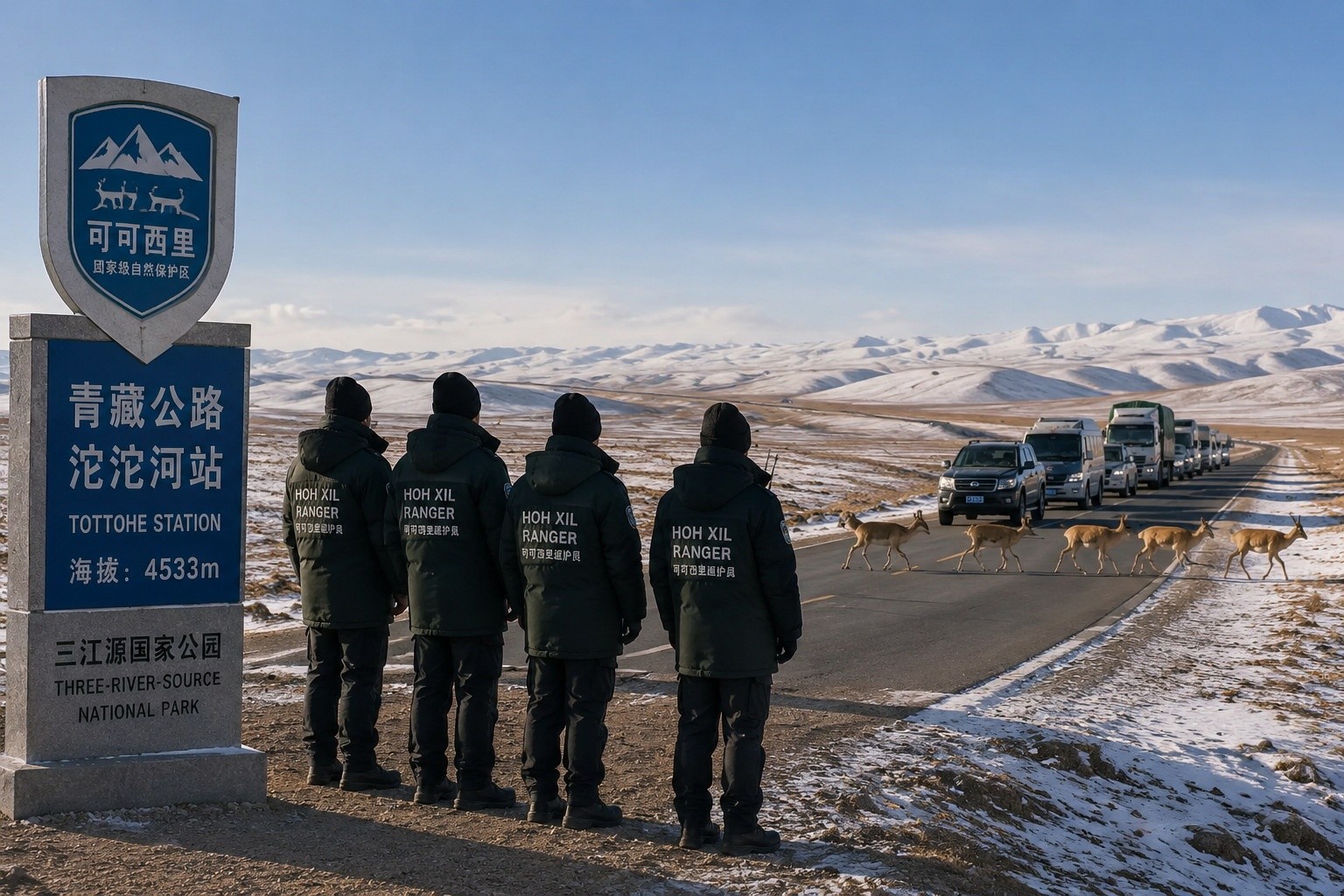
Hoh Xil itself is not a mass tourism destination. The core zone is closed to the public. A few designated viewpoints along the Qinghai-Tibet Highway allow people to see the landscape from a distance, and an educational exhibition at the eastern gate tells the story of the antelope and the rangers. If you ask Dorje whether the reserve should be opened to more visitors, he shrugs. “Some people say tourism brings money. But if we let everyone in, we’ll need more rangers to clean up after them. I would rather stay busy.”
What the Outside World Should Understand
Hoh Xil is sometimes described as a contradiction: a place with no people, no industry and no market, yet one of the most important pieces of the country’s natural infrastructure. The rangers do not think of themselves as stand-alone heroes. They are a management team for an asset bigger than any factory: a water supply, a carbon store, a wildlife bank and a living laboratory for climate change.
The next time you hear the phrase “no-man’s land,” it may be worth asking who is quiet about its value. The answer is almost always the same—the people who have chosen to stay, boil tea at -10°C and count wild animals with camera traps, while the rest of us benefit from what they are protecting.
Start the discussion at forum.chinacomes.com