

A Morning Among the Panels
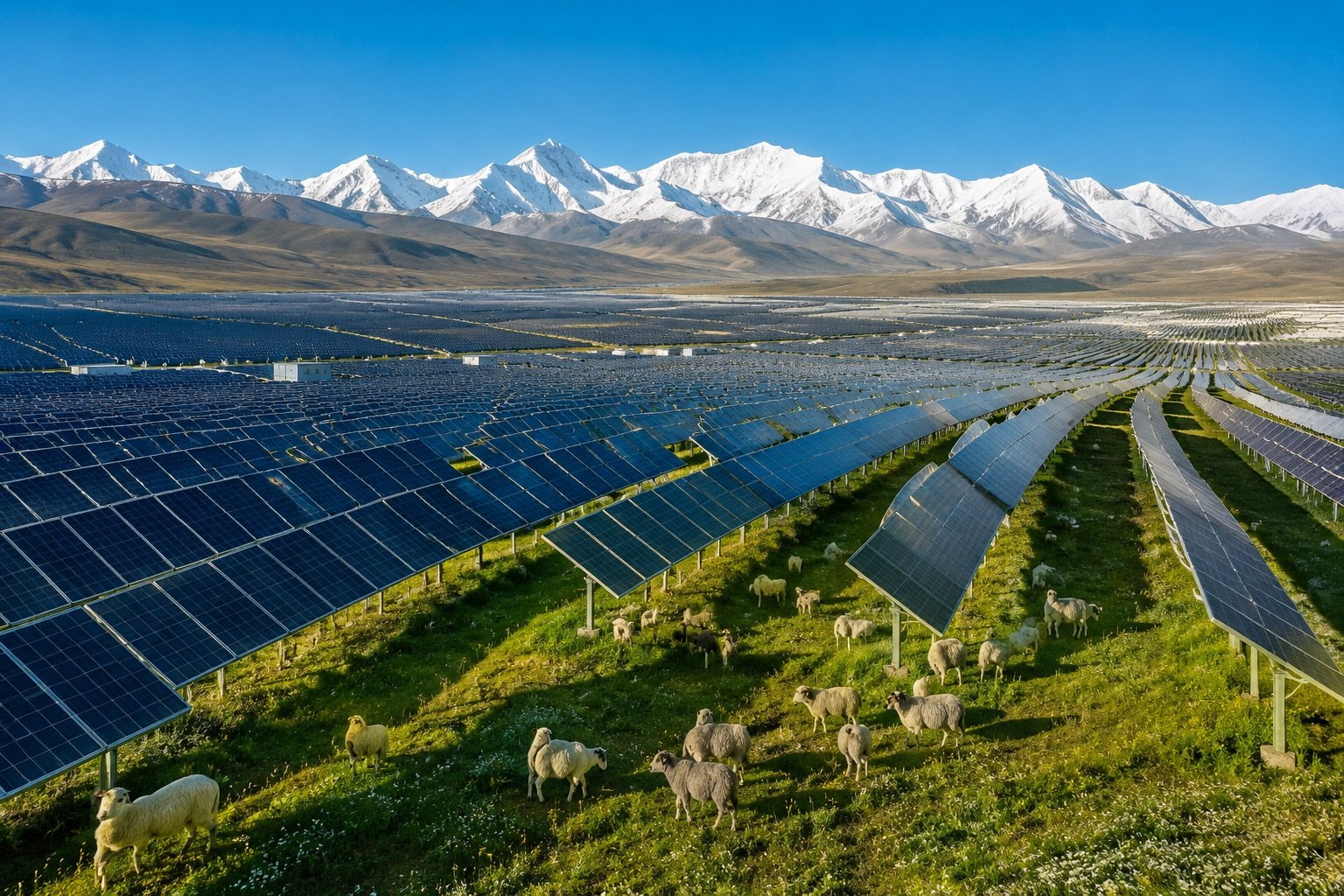
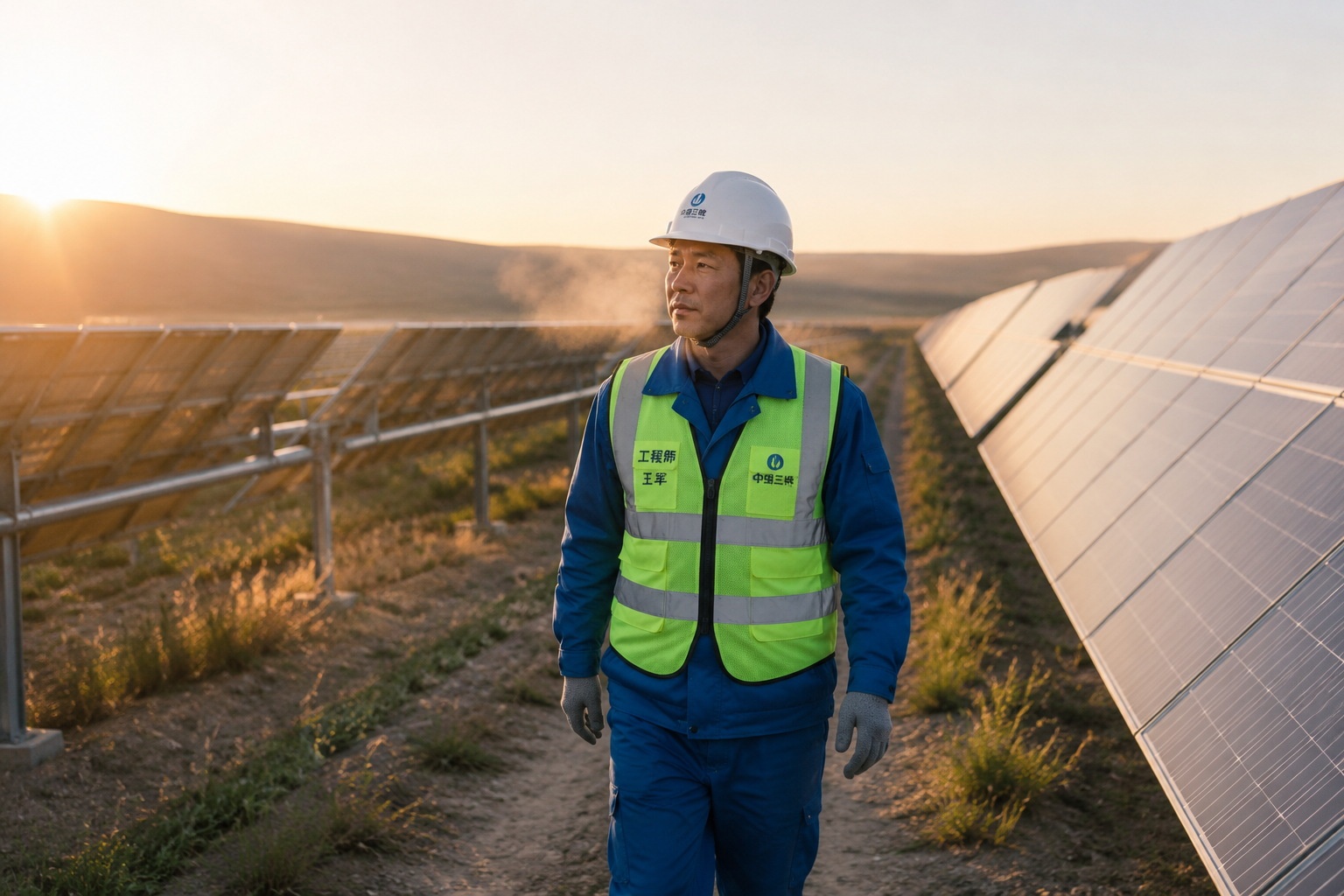
At 7:30 in the morning, engineer Wang Jun steps onto the maintenance path between two rows of solar panels. His boots sink into soft sand. The sun has just cleared the eastern mountains, and the blue-black panels throw a second dawn onto the ground. Behind him, row after row of panels stretch to the horizon like a metallic ocean, each one tilting upward to catch the thin, high-altitude light of the Qinghai-Tibet Plateau.
Wang works for the Hainan Solar Park, one of the largest photovoltaic power plants in China, built on a stretch of desert called Talatan in Gonghe County, Qinghai Province. The site covers roughly 600 square kilometers – an area about the size of many small countries. More than seven million solar panels are installed here. For Wang, this is not just a place to generate electricity. It is a living experiment in how desert, technology and human labor can be knitted together.
Ten years ago, this area was nearly lifeless. Talatan means ‘barren salt flat’ in Mongolian. On days when the wind picked up, sandstorms buried the roads and turned the sky a dark yellow. Herders often said it was impossible to raise livestock there, because the ground could not hold water. Yet today, walking between the panels, you see something unexpected: grass covering the ground in green patches, wildflowers in summer, and often a flock of sheep moving slowly along the rows.
A Desert That Needed a Second Chance
Talatan sits on an ancient plain at an altitude of around 3,000 meters. The land is flat but harsh: annual rainfall is only about 300 millimeters, while evaporation is ten times that. Soil erosion turned large areas into shifting sand dunes. Local herders had to travel dozens of kilometers to find pasture. Many young people left to find work in cities.
In the early 2010s, the Chinese government began to develop large-scale solar power in the west. The combination of strong sunlight, low humidity and vast empty land made Talatan an ideal location. The first solar parks were built in 2012. Over the next decade, more companies arrived. Today, the ground is covered by hundreds of blocks of photovoltaic arrays, each containing thousands of panels.
How Solar Panels Transformed a Harsh Landscape
Slowing the Wind, Keeping the Rain
The panels do more than capture sunlight. They function as a giant physical shield. Facing the ground, they shelter the soil from strong winds, which used to carry away the top layer of sand. The elevated panels also reduce the speed of the wind near the surface, allowing dust and particles to settle. At the same time, the panels block a large share of direct sunlight from reaching the ground, which lowers soil temperature and reduces evaporation. When industrial water is used to wash the panels, a small amount trickles down to the soil – enough to help grass seeds survive.
According to local monitoring, the vegetation coverage inside the solar park has risen from almost zero in 2012 to about 60 percent today. The surface soil moisture has increased significantly. In some areas, dunes have been stabilized and the ground feels firmer, not like dry sand but like ordinary soil.
Grass Returns Under the Panels
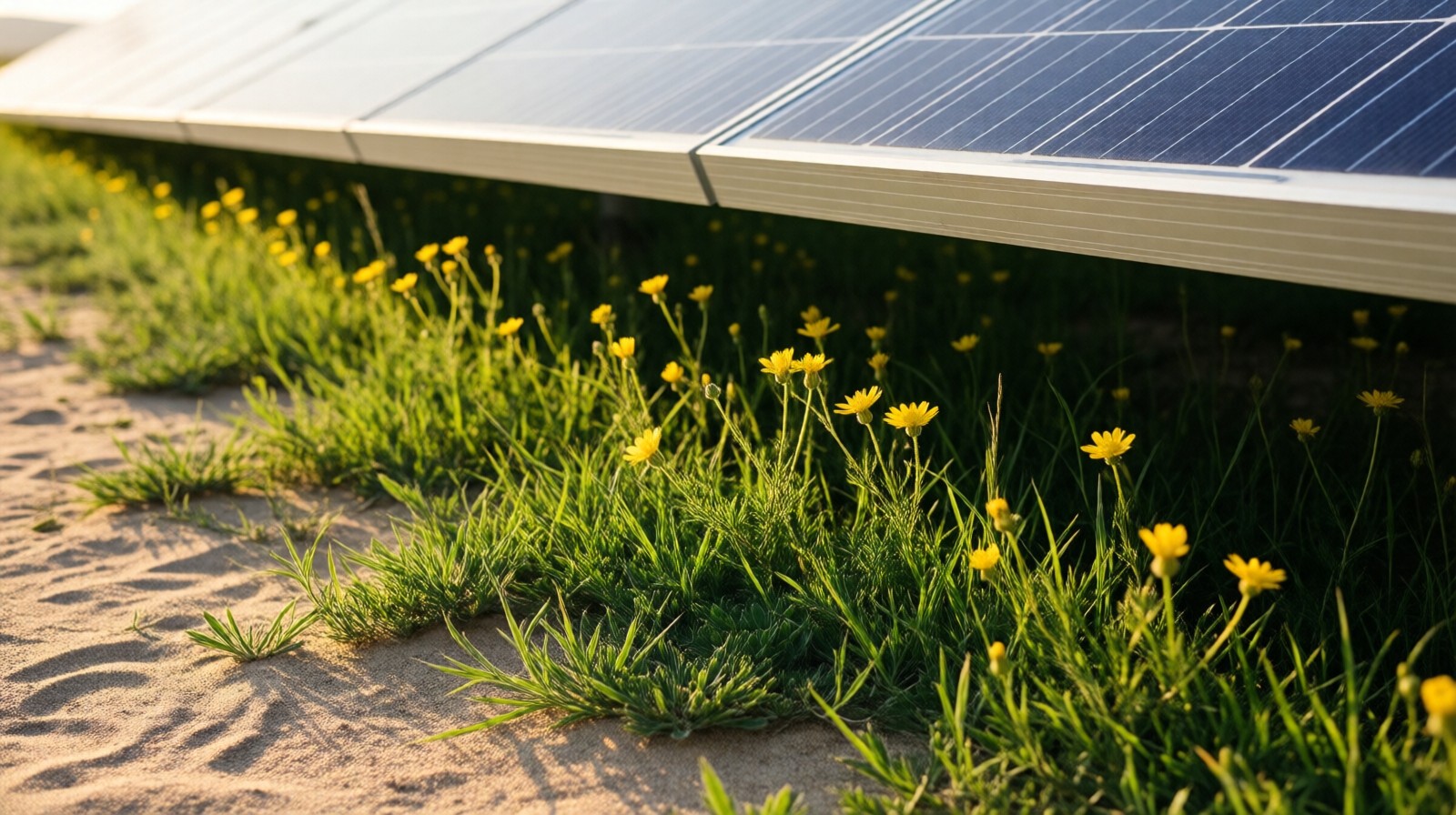
The change in vegetation is visible not just in coverage, but in species. Botanists have recorded more than 50 plant species in the park, including grasses such as needle grass and astragalus, as well as shrubs. In summer, bright yellow flowered plants stretch beneath the panels. This is not a luxurious landscape, but it is a clear sign of ecological recovery in a place where nothing grew for decades.
Sheep: The Four-Legged Lawn Mowers
Maintaining the vegetation is a problem in itself. If the grass grows too high, it blocks sunlight from the panels. Removing it by machines would be expensive and might compact the soil. The solution came from the herders themselves. Instead of keeping sheep out, the solar park invited the animals in. The sheep graze on the grass, keeping it low and fertilizing the soil with their droppings.
One of the herders is Drolma, 42, who used to spend months roaming the grassland around Gonghe with a small flock. In 2015, she signed an agreement with one of the solar companies to manage a section of the park. Her sheep stay underneath the panels, eating a mix of grass and herbs. She can calm the flocks with a simple whistle. She now looks after about 400 sheep and earns a steady income from meat and wool sales, as well as a management fee from the power plant. ‘The panels give me shade in the summer and shelter in the winter,’ she says. ‘They are like a big roof.’
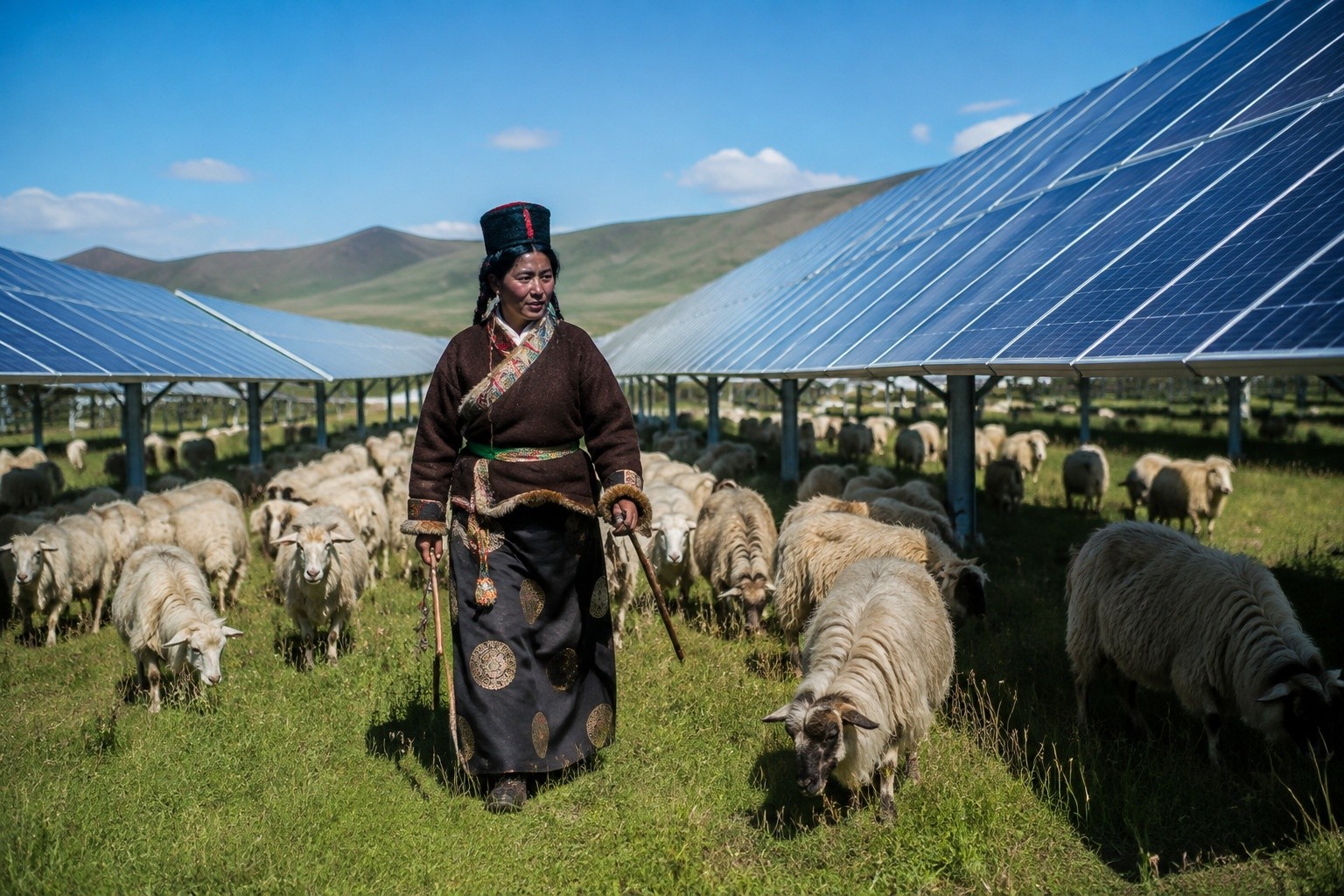
This ‘solar + grazing’ model is now widely used in the park. Researchers have found that controlled sheep grazing improves grass quality and reduces fire risk, while the animals help distribute seeds.
Who Maintains This Sea of Glass?
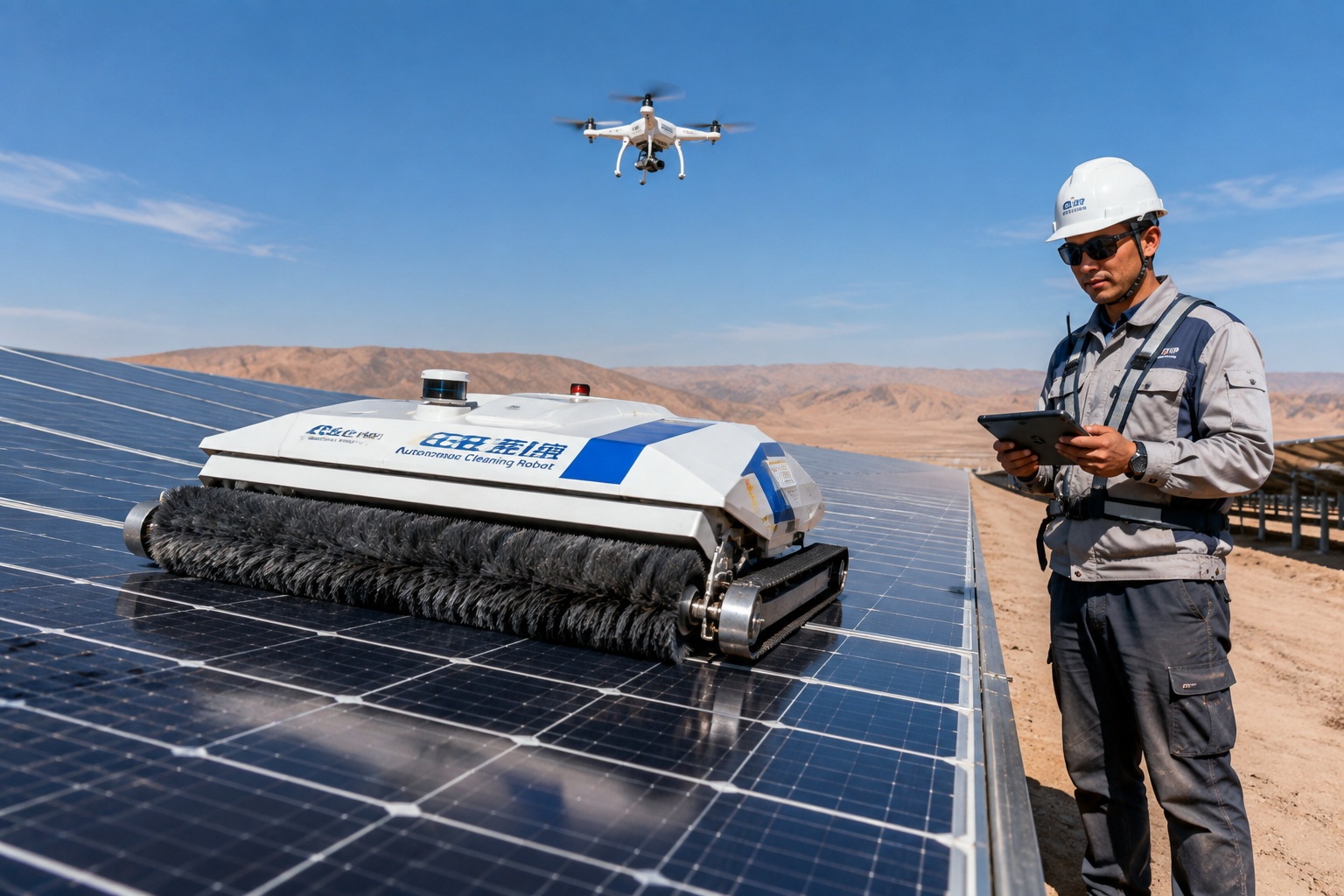
Keeping a solar park this large clean and functional is not easy. The dry, sandy environment means dust accumulates quickly on the panels. If the panels are not cleaned, their conversion efficiency can drop by 10–15 percent. In Talatan, cleaning used to be done by hand. Workers walked long distances, using cloth and water. Today, robots do part of the job. A self-driving cleaning vehicle moves down each row, brushing the surface with a soft roller. Drones inspect the arrays from above, using thermal cameras to detect broken cells or wiring problems. Wang Jun’s job, for example, has shifted from scrubbing panels to analyzing data from sensors.
Cleaning with Drones and Robots
The park has invested in a fleet of cleaning robots and around 50 drones. Each drone covers about 20 kilometers of inspection route per day. The data is transmitted to a central control room, where engineers can zoom in on a single panel from a high-resolution image. This reduces the time needed to find faults from days to hours.
Jobs for Local Herders
The solar park also created direct jobs. More than 3,000 people work there, roughly 70 percent of them from local communities. Many were former herders who had lost grazing land due to desertification. They are now trained as technicians, maintenance workers or security guards. In addition to their monthly salary, they receive insurance and housing subsidies. Some, like Drolma, still keep their sheep but coordinate their grazing schedule with the park’s maintenance staff.
Delivering Power Across China
Talatan’s electricity is used thousands of kilometers away. Several ultra-high-voltage direct current (UHVDC) transmission lines connect Qinghai to provinces in central and eastern China, such as Henan and Shandong. The power from Talatan helps those regions reduce their reliance on coal-fired plants. Already, more than 15 gigawatts of solar capacity are installed in the Talatan area, making it one of the largest solar bases in the world. On a clear day, the park can generate enough electricity to power a medium-sized city for an entire day.
The Other Side of the Story
It would be dishonest to portray Talatan as a perfect solution. Building a solar farm in a desert has environmental costs. The production of photovoltaic panels requires energy and raw materials, and their life cycle is not yet completely circular. Water is scarce in the plateau, and the park uses a significant amount for cleaning panels, even if some effort is made to recycle it. The installation of the panels also changed the land surface – something that could alter local wind patterns and heat balance.
Scientists are still studying the long-term effects. For example, the shade of the panels changes the daily temperature cycle of the soil, which might affect microbial communities. Some birds have adapted to the area, but others have lost their habitats. The park management, therefore, tries to reserve ‘ecological corridors’ between blocks of panels and reduce the use of pesticides near the vegetation.
Despite these complications, Talatan shows what is possible when renewable energy is planned with a sense of place. It used the desert’s main problem – an excess of wind – as an advantage. It gave local people a reason to stay. And it turned a barren landscape into an energy base that also cultivates life.
What Talatan Teaches Us
For many readers around the world, the image of a desert covered by solar panels may sound like a high-tech fantasy. Talatan makes it real. This is not a utopia, but a practical, evolving ecosystem, where panels, grass, sheep and people all need each other. It is a reminder that the clean energy transition is not just about installing hardware. It is also about understanding local conditions, working with communities, and accepting that every solution comes with trade-offs.
As Wang Jun continues his morning walk, he points to a patch of grass by his feet. ‘When I first came here, this area was just sand,’ he says. ‘Now we have something green. That’s what I want to see.’ The sun climbs higher over the endless rows of panels. The sheep are still grazing. The lights are on in the control room. In this remote corner of China, a small miracle is repeating every day.
Start the discussion at forum.chinacomes.com