
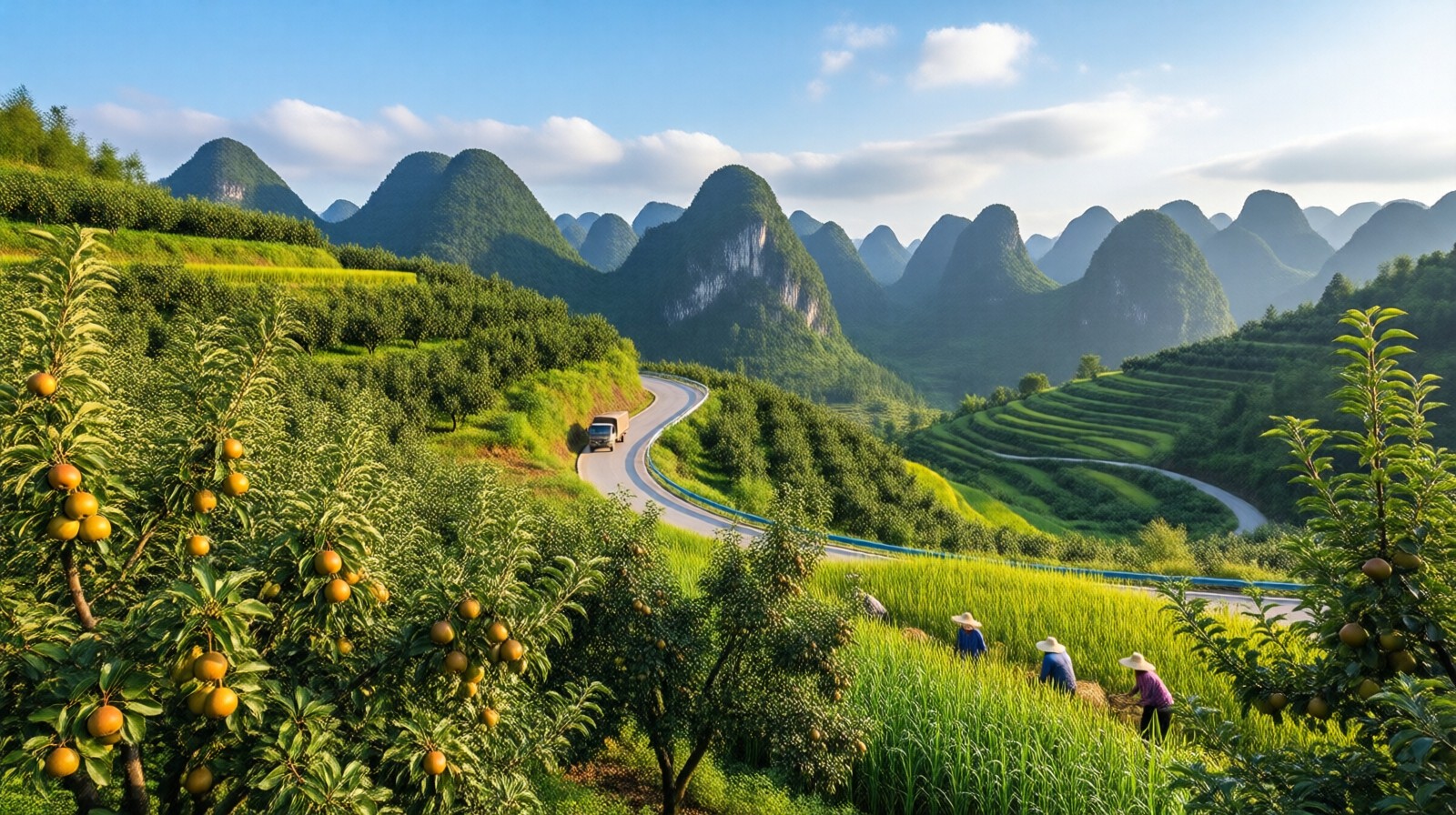

A Wild Berry Makes a Living
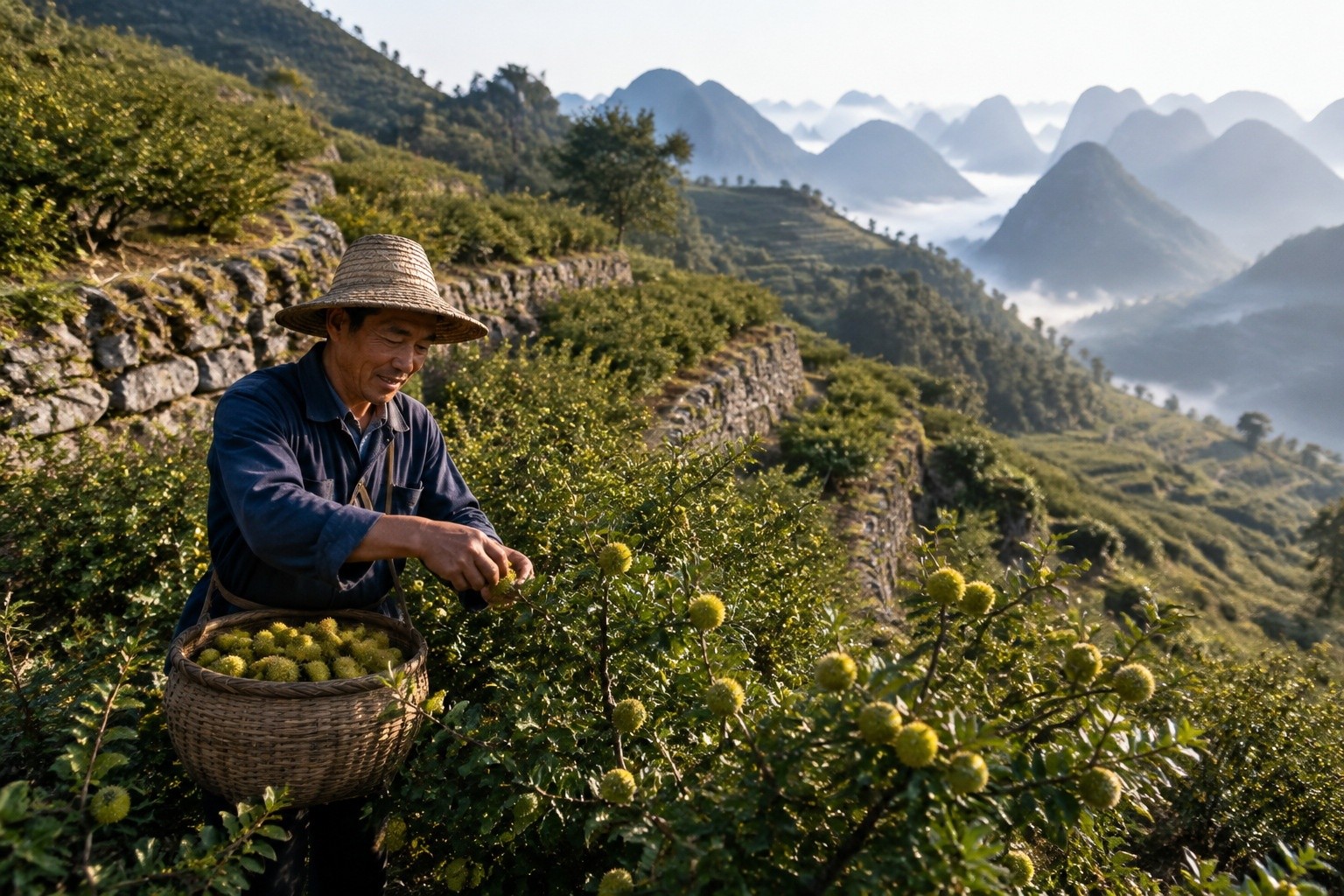
On a misty morning in Pingba, a small town in Guizhou province, a farmer named Li Guihua pushes through thorny branches to pick bright yellow-green fruit. For decades, her family treated these spiky berries as wild shrubs — good for keeping livestock away. Now, each kilogram sells for enough money to buy two meals in a city restaurant.
Li is part of a quiet transformation sweeping China’s mountainous southwest. In Guizhou, one of the country’s poorest provinces, a new agricultural revolution is not based on huge, flat farmlands. It is built on small, rocky plots, and on crops that thrive where rice and wheat struggle: thorny pears (cili) and a grain called coix seed, or Job’s tears.
Why Mountains Matter
Guizhou is the only province in China without a single plain. Around 90 percent of its land is covered by hills and mountains, and the soil is the famous limestone karst, thin and prone to erosion. Farmers once had to choose between corn on steep slopes and rice in narrow valley bottoms. Both gave low yields and damaged fragile land.
But the same too-steep-to-plow countryside is ideal for other crops. Thorny pears are naturally adapted to poor, rocky soil and harsh sunlight. Coix seed, a domesticated grass related to maize, copes well with humidity and high altitudes. These plants were not so much discovered as rediscovered, after decades of being ignored by mainstream agriculture.
From Wild Shrubs to Superfood Shelf
Thorny pear, known locally as cili, carries a surprising nutrition label: it has vitamin C levels roughly 30 to 50 times higher than a lemon, and also contains antioxidant compounds called flavonoids. For most of the twentieth century, this fruit was used mainly for animal feed or hedges. Farmers complained because thorny pear bushes spread fast and were hard to kill.
Around 2010, the provincial government decided to treat cili as a strategic crop. The first step was to stop the practice of burning hillsides to clear land for grazing. The second step was to train villagers to prune, manage, and carefully harvest these wild plants. Planting area expanded gradually, from uneventful backyard plots to whole orchards.
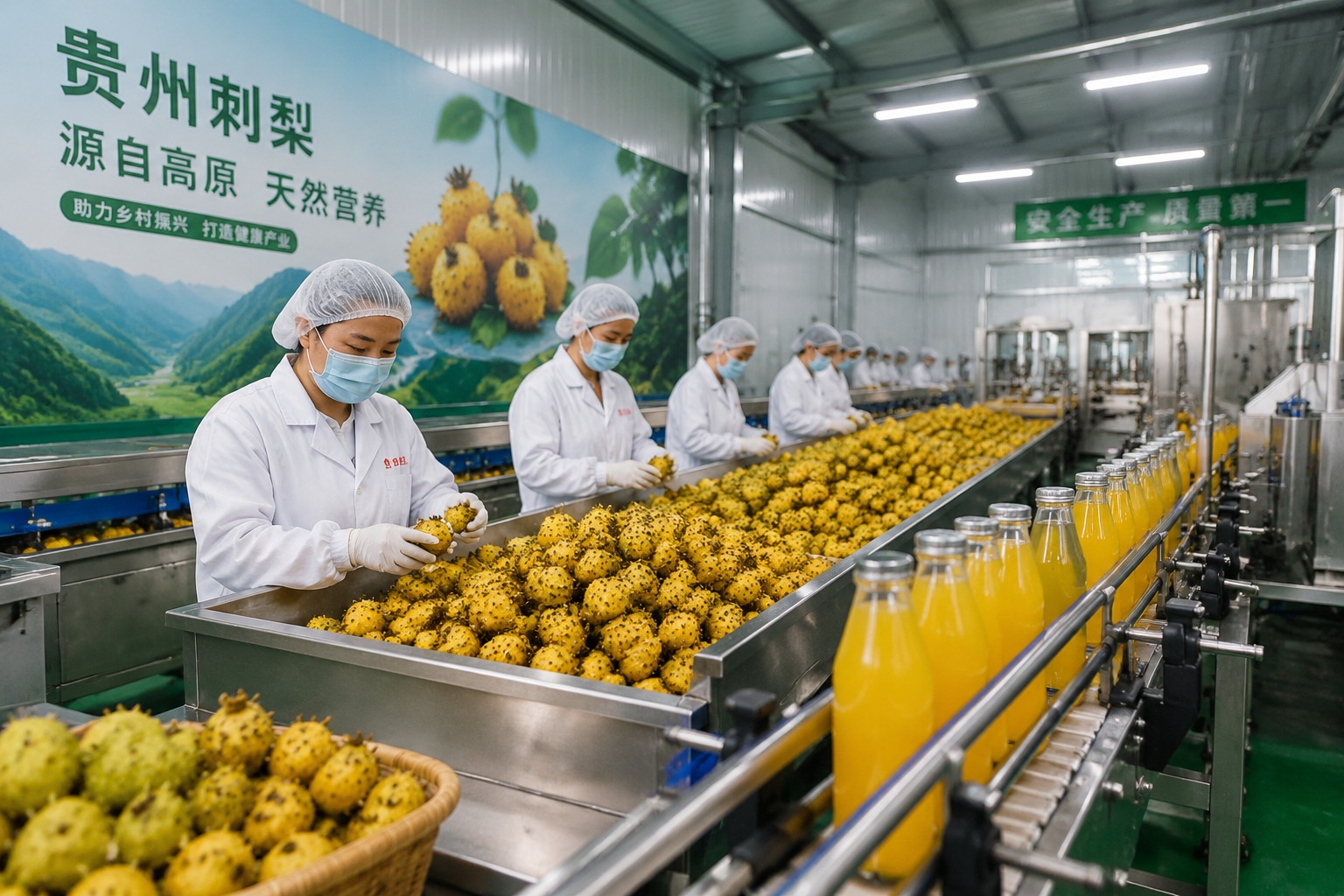
Today, Guizhou has more than 2 million mu (about 133,000 hectares) of thorny pear. That number is often quoted by local officials, and it is true that you cannot drive ten minutes in many counties without seeing the bushes on terraces. Processing plants have mushroomed around the growing areas. Their first products were simple juices and dried snacks, sold at local supermarkets.
Then came more sophisticated processing: cili fruit powder, effervescent tablets, and even crisp chips made from the fruit. A local company in the city of Liupanshui, called Xingyang, now markets cili juice in small single-serving bottles, aiming directly at the health-conscious urban consumer in Beijing and Shanghai. Inside these stores, the bright yellow juice sits next to lemon water and kombucha, and the labels shout “vitamin C” rather than “mountain specialty.”
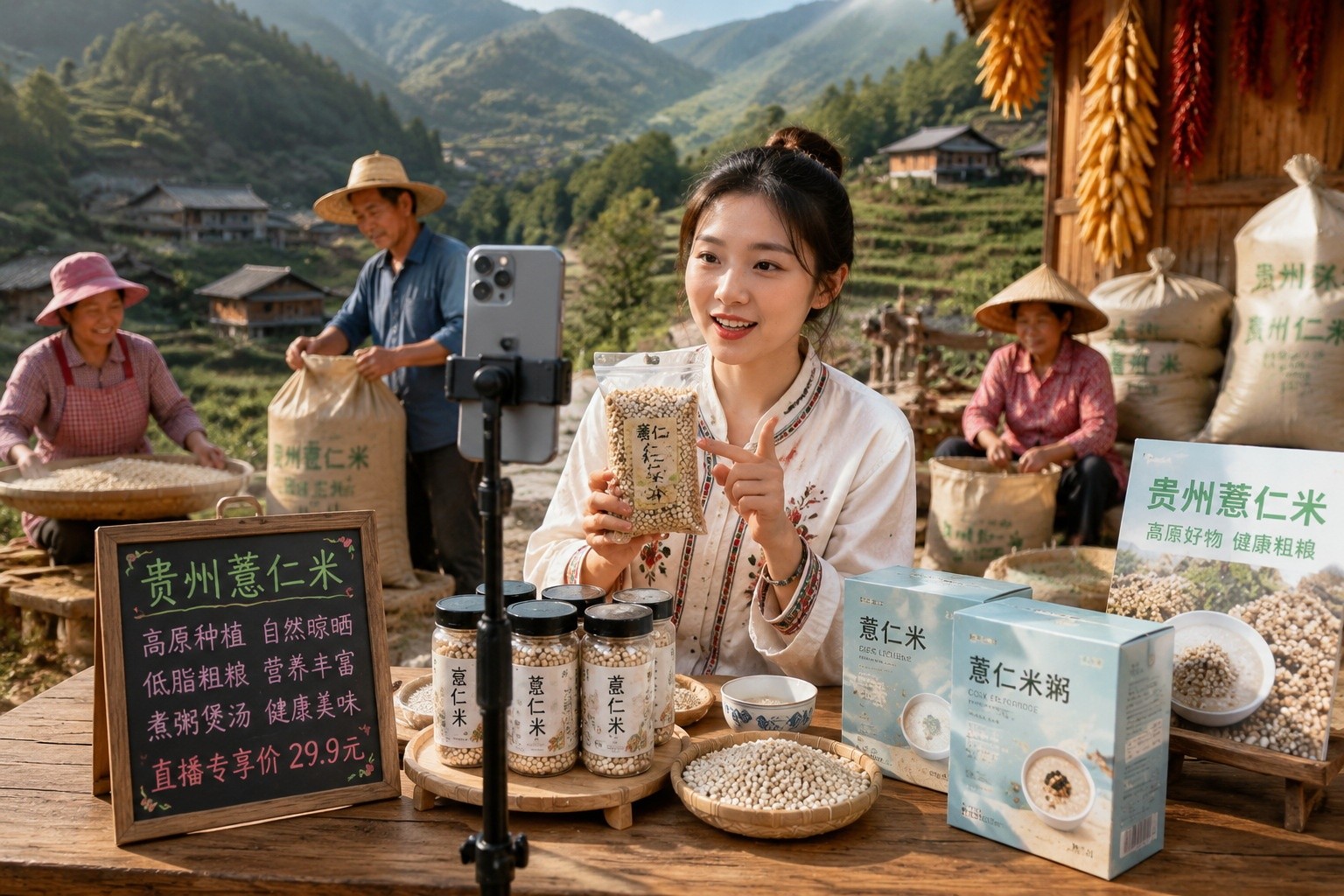
Coix seed has a different story. Historically, coix seed was a staple in rural Guizhou, turned into a thin porridge or mixed with rice. Outside the province, few knew the name. But in the mid-2000s, Chinese cosmetics and beverage companies began using coix seed extract as a “whitening” ingredient in skincare products and plant-based milks. Overnight, a cheap mountain grain became a rising star.
Xingren County alone now produces about 70 percent of China’s coix seed. The county government set up a dedicated trading center, where prices are broadcast on a LED screen, just like a stock exchange. Local families are contracted by companies to grow the grain on small plots, and the harvest is sorted, polished, and packed in modern factories before being shipped across the country.
Roads, Cold Chains, and Streaming Apps
Getting these products out of the mountains is not easy. A decade ago, it could take six hours of bumpy minivan travel from a village in Guizhou to the nearest major city, and many small harvests simply rotted before reaching a market.
The infrastructure push changed that. Since 2015, Guizhou has built one of the densest highway networks among western Chinese provinces, including spectacular viaducts across deep valleys. Travel time from most villages to a provincial expressway is now less than an hour. Cold-chain logistics companies have placed small trucks and shared cold rooms in rural towns. A cili harvest can be picked in the morning, pressed into juice by the evening in a factory two towns away, and loaded onto a refrigerated truck in the middle of the night.
E-commerce has done the rest. China’s major platforms — Alibaba’s Taobao and Tmall, JD.com, and the short-video app Douyin — have started regional “rural support” channels that reduce fees and advertise products for free. Douyin’s livestreaming has been particularly powerful. A 40-year-old farmer in a straw hat, standing next to a pile of fresh coix seed, can sell hundreds of packages in a single afternoon.
One well-known example happened in June 2020, when a local official in Xingren City joined a livestream inside a warehouse. In two hours, he sold more than 40,000 bags of coix seed porridge, about the same volume the county used to sell in two weeks through offline shops. The official later said that the real win was not the sales, but the new names the viewers learned.
Numbers That Explain the Change
Official data shows that the total output value of Guizhou’s specialty fruit industry, including cili, exceeded 7 billion yuan (about $1 billion) in 2022, and the target for 2025 is much higher. The coix seed sector follows a similar pattern. Xingren’s coix seed processing capacity has grown from 30,000 tons to over 100,000 tons per year in a decade.
For local people, these numbers translate into concrete changes. In Jianhe village, a 55-year-old farmer who gave his name as Yang Ming says his annual income from selling cili has risen from almost nothing to about 15,000 yuan (around $2,100). That is roughly equal to the local average income per person. He now uses the cash to repair his house and to pay for his grandson’s high-school education.
Young people have started to come back too. In 2021, a college graduate named Zhou Ling moved back to her hometown in Xingren to manage the marketing account for her family’s coix seed farm. In an interview with a provincial newspaper, she said she could not make much money in the city, and here she is earning more while sleeping in her childhood room.
Challenges No One Ignores
No revolution is without friction. One issue is brand confusion. The country’s national food market now has dozens of “cili products,” some from provinces that have only recently planted the bush. Guizhou producers complain that free riders are using low-quality fruit and driving down prices.
Another issue is standardization. Fresh cili has a short shelf life, and its taste is sour and astringent. Some first-time buyers are disappointed. To make the fruit more like a modern snack, food technologists are experimenting with enzymes to reduce acidity and with freeze-drying methods that keep the shape while improving flavor.
For coix seed, the difficulty is the opposite — it is considered a plain grain, and consumers do not see much difference between the cheap import from abroad and the certified Guizhou product. Building a brand takes time, and many firms in small counties spend more money on fighting for shelf space than on advertising.
What the Future Holds
Guizhou’s mountain agriculture is not just about two crops. From kiwis and tea to medicinal herbs, the region is building an identity as a “high-quality natural pantry” for China’s growing healthy-eating market. The provincial government is promoting a concept called “ecological industrial chain,” where every valley has its own specialty.
Advanced tools are entering the scene. Local agencies have used satellite images to map planting areas and predict harvest volumes. AI-based image recognition can spot the early signs of disease in cili orchards. Drones spray fertilizers in places where people cannot easily climb.
But the real difference is attitude. For a long time, farming in the mountains was seen as a dead end. Now, many villagers call their small piece of rocky land “a deposit box.” The new crops give them a reason to stay, and even to come back.
What happened in Guizhou is a reminder that rural development does not always require big flat fields. With the right choice of crops, the right logistics, and the right digital tools, even a mountain province can feed the appetite of a modern nation.
Start the discussion at forum.chinacomes.com