
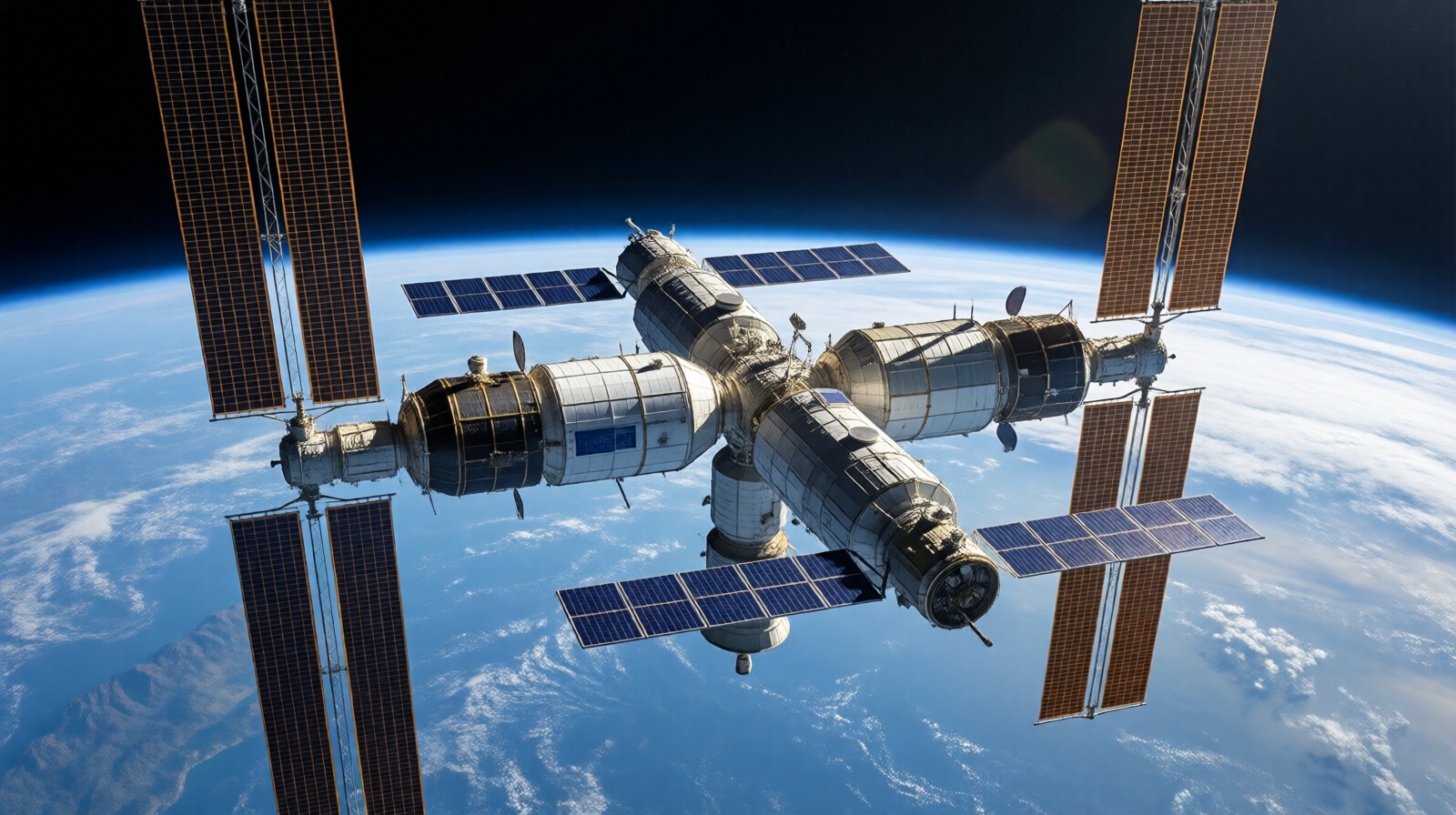

Earth’s Newest Space Destination
In 2021, when the first module of China’s Tiangong space station launched, many Western observers were skeptical. “It’s just a prototype,” some said. “China can’t sustain a crewed station.” Today, Tiangong is fully built, with three astronauts living on board throughout the year. Chinese astronauts have performed multiple spacewalks, conducted hundreds of experiments, and even delivered a science lecture from orbit. Yet one question keeps coming up at press conferences and on social media: when will foreign astronauts step inside Tiangong?
What Exactly Is Tiangong?
Tiangong, which translates to “Heavenly Palace,” is a space station built by China and operated by its Manned Space Agency. It consists of three modules: Tianhe (the core living area), Wentian, and Mengtian (both laboratory modules). The complete assembly weighs roughly 70 metric tons—about one-sixth the mass of the International Space Station (ISS). It orbits at an average altitude of 390 kilometers, similar to the ISS, and is designed for a lifespan of at least 10 years.
Unlike the ISS, which is divided among many countries, Tiangong is entirely controlled by China. That has advantages: faster decisions, unified operations, and no complex power-sharing. But it also raises questions about access. China has repeatedly said that Tiangong is open to all nations, but until recently, that openness had not been tested with actual humans.
Science Without Borders: Tiangong’s International Payloads
Before astronauts, Tiangong welcomed international experiments. In 2019, China and the United Nations Office for Outer Space Affairs (UNOOSA) selected nine projects from 17 countries and 23 institutions. These include studies on cancer cells, microgravity fluid dynamics, and space combustion. The projects come from India, Japan, Russia, Italy, Mexico, Saudi Arabia, and other nations. Some have already been launched and are returning results. This is a practical starting point for international collaboration.
Additionally, China has signed agreements with Russia, France, Italy, and the European Space Agency (ESA) on astronaut training and joint missions. ESA astronaut Samantha Cristoforetti even trained with Chinese astronauts and later tweeted a Chinese greeting from the ISS, hinting at closer ties. But official cooperation has wobbled: ESA decided not to fund further Chinese missions after its 2023 budget review. This illustrates how geopolitics can interfere with space partnerships.
Why the ISS Comparison Matters
The ISS is the product of a 15-nation partnership, including the U.S., Russia, Japan, Canada, and several European countries. It was built cooperatively, with each partner responsible for a module or components. Tiangong, on the other hand, is like a national flagship that is inviting guests on board. This difference matters. In a partnership, joint ownership often means joint decision-making. In China’s more centralized model, access depends on Chinese policies, which can change.
But there’s another side: the ISS will likely retire by 2030 or 2035. When it goes, Tiangong may be the only continuously crewed space station in orbit—unless private stations appear first. That would give China enormous leverage in setting the rules for space cooperation. For many countries, flying on Tiangong might be the only way to continue human spaceflight research in low Earth orbit.
Barriers: What’s Keeping Foreign Astronauts Waiting?
Several hurdles remain between today’s cooperation and the first non-Chinese astronaut on Tiangong. Let’s look at the biggest ones:
- Language: Chinese is the working language of Tiangong. Astronauts must learn at least survival Mandarin to communicate with mission control and compatriots. Pinyin keyboards and Chinese labels on buttons are a challenge.
- Technical compatibility: While Tiangong uses standard docking ports based on the Russian design, other systems—like spacesuits, urine processing, and life support—may not fit space agencies’ existing hardware. Crew rotation is done by the Shenzhou spacecraft, which requires training on Chinese systems.
- Political will: Some governments, especially the U.S., have legal restrictions on cooperation with China’s space program. The Wolf Amendment prohibits NASA from using government funds for bilateral agreements with China, even though exceptions can be made. This prevents American astronauts from flying on Tiangong without a major policy shift.
- Selection and training: China has not yet officially opened a selection call for international astronauts. It has said it will “in the near future,” but the timeline remains vague. Training at the Astronaut Center of Beijing takes years—usually two to three—so we may need to wait.
What China Has Said
Chinese officials have been encouraging. In a 2023 press conference, the China Manned Space Agency (CMSA) stated that “we are preparing to select and train foreign astronauts” and that “many countries have expressed interest.” They also mentioned plans to invite foreign astronauts to fly on China’s space station as part of shuttle safety cooperation. The head of CMSA said in an interview with foreign media that the first foreign astronaut could fly “before the end of this decade.” That would put a target around 2028 or 2029.
Russia’s relationship with China in space is particularly close. Roscosmos has signed roadmaps for manned spaceflight, including possible joint missions. Some Russian cosmonauts have expressed interest in flying on Shenzhou. Given Russia’s long experience with space, a Russian cosmonaut might be first. At the same time, Chinese officials have emphasized that they want variety, not just a single partner.
Who Might Fly First?
Let’s look at the most likely candidates:
- European astronauts: Italy, France, and Germany have active space programs. Italy has a long-standing relationship with China on space science. In 2022, Italian astronaut Samantha Cristoforetti said she would like to fly on Tiangong. Politically, European countries are more flexible than the US. An ESA astronaut could be selected if Europe’s budget allows.
- Russian cosmonauts: Russia is China’s closest space ally. They have already cooperated on lunar exploration plans. A joint crewed flight to Tiangong would be a logical next step.
- Astronauts from developing countries: China has been building relations with Pakistan, Saudi Arabia, and ASEAN nations. It might choose a Pakistani astronaut to symbolize solidarity, similar to how the Soviet Union flew a Syrian cosmonaut in 1985.
Day in the Life: What a Foreign Astronaut Would Experience
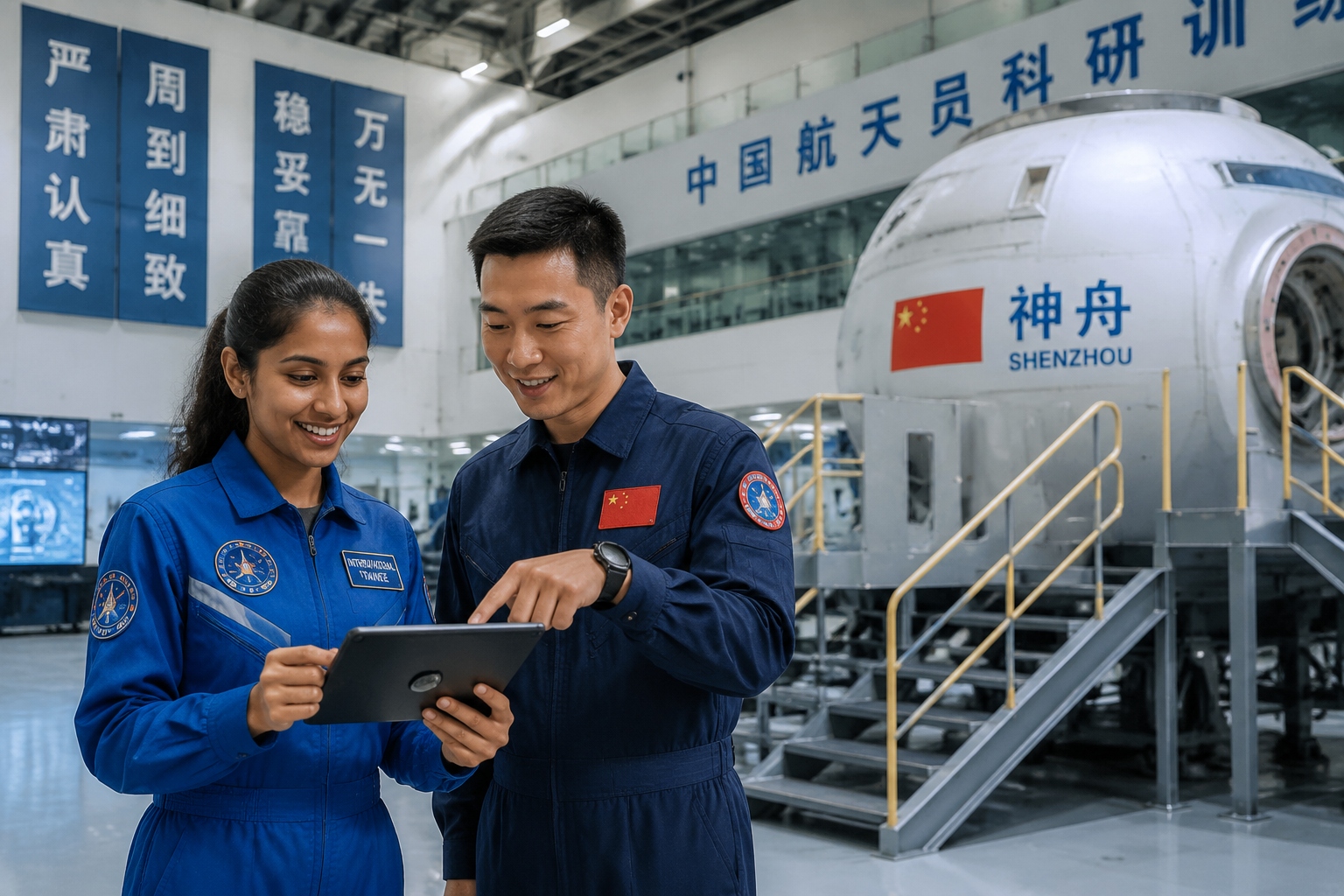
Imagine you are an astronaut from Italy or South Africa, selected for a six-month mission to Tiangong. You would train in Beijing for about two years. You’d practice in mockups of the Tianhe module and the Shenzhou spacecraft. You’d study the systems in Chinese, and you’d learn to use chopsticks in zero-gravity.
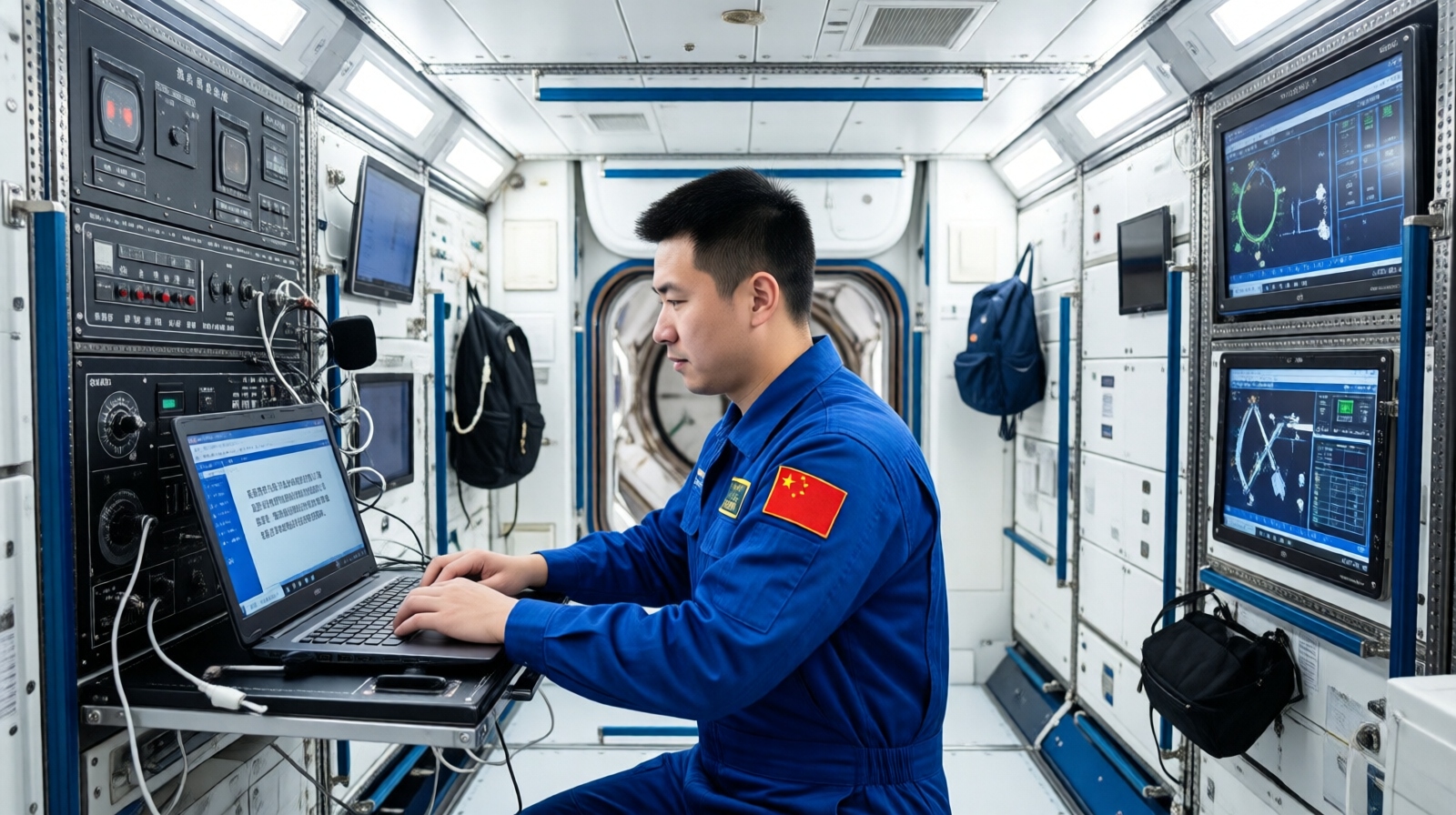
Once on board, you’d find a compact but well-organized space. The station has a large observation window, which astronauts say is the best feature. You’d sleep in a crew cabin with a view of Earth. Meals would include Chinese favorites like sweet and sour pork, spicy tofu, and mooncakes. For exercise, you’d use a treadmill and resistance bands. Science time would focus on experiments chosen by your country and by China.
Communication with Earth would go through Chinese relay satellites, meaning you’d stay in constant contact with the China Manned Space Agency control center. The experience would be more “Chinese” than living on the ISS, where every module has its own native language. But after training, most astronauts say the adjustment is manageable.
When Can We Expect a Footprint?
Realistically, the first foreign astronaut could board Tiangong between 2025 and 2030. A late-2020s timeline seems most probable. Official announcements about the selection process may come in 2024 or 2025. If a mission is assigned, the astronaut would need 2-3 years of training. So an early flight toward 2027-2028 is possible, but 2029 might be more likely.
Several factors could speed this up: a stronger push from the UNOOSA, a new partnership with a European country, or even a competition between nations. The arrival of the first foreign astronaut would be a major media event, likely broadcast globally. But the exact date depends on political decisions as much as engineering.
Why This Matters for You
Space stations are not just flags and national pride. They are laboratories for technology that can change life on Earth. The data from microgravity research can help develop drugs, improve materials, and understand our own physiology. Opening Tiangong to global scientists and astronauts increases the pool of ideas and reduces the cost of exploration.
Moreover, sharing space is a way to build trust between nations. In a time of rising tension, having an arena where scientists and astronauts from rival countries can cooperate is valuable. Tiangong might not be a United Nations space station, but it could become a stepping stone toward a more inclusive future in space.
So the next time you see a photo of Tiangong, look at the flag on the spacesuit. It may soon not be the only flag.
Start the discussion at forum.chinacomes.com