

Dawn at the Pier
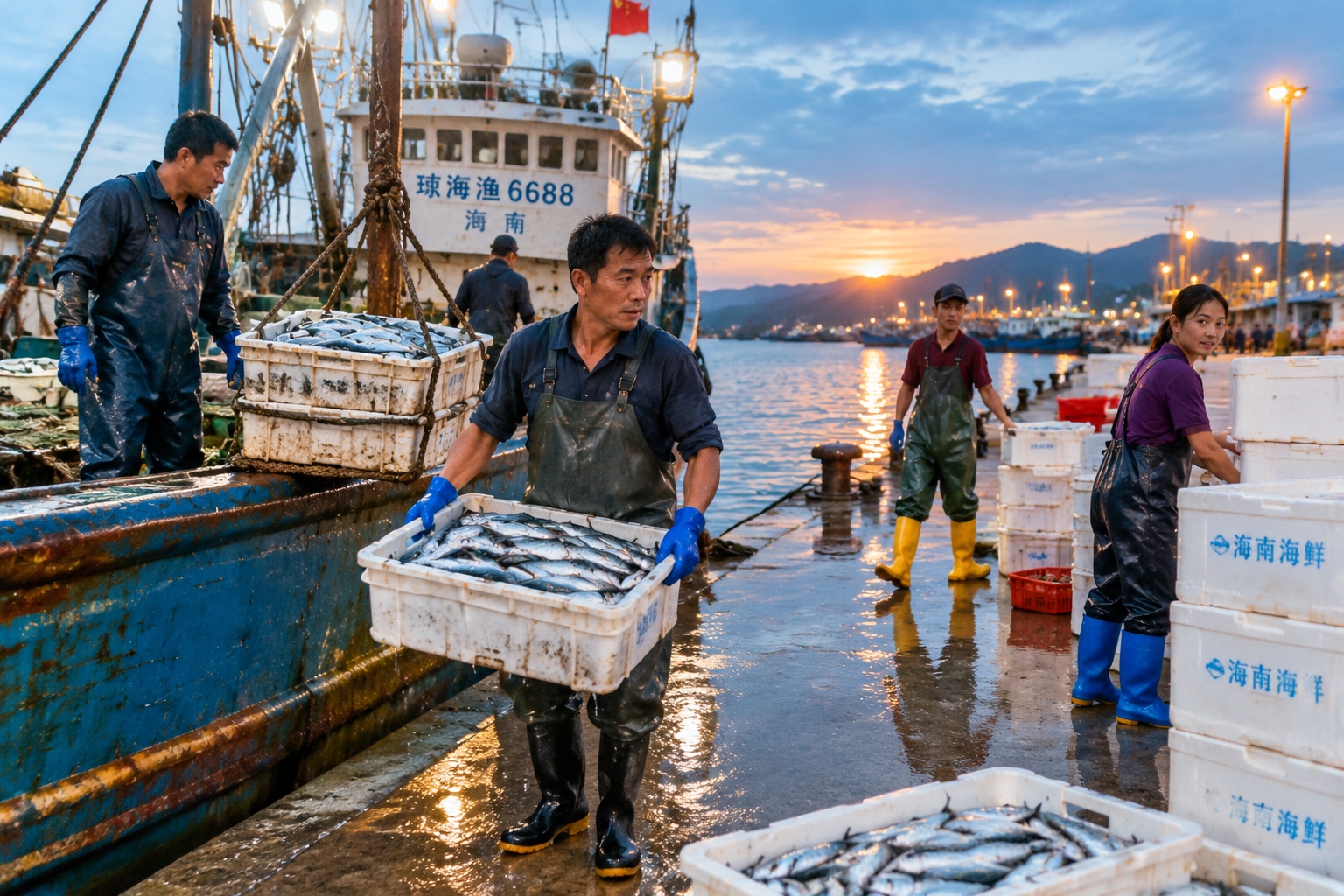
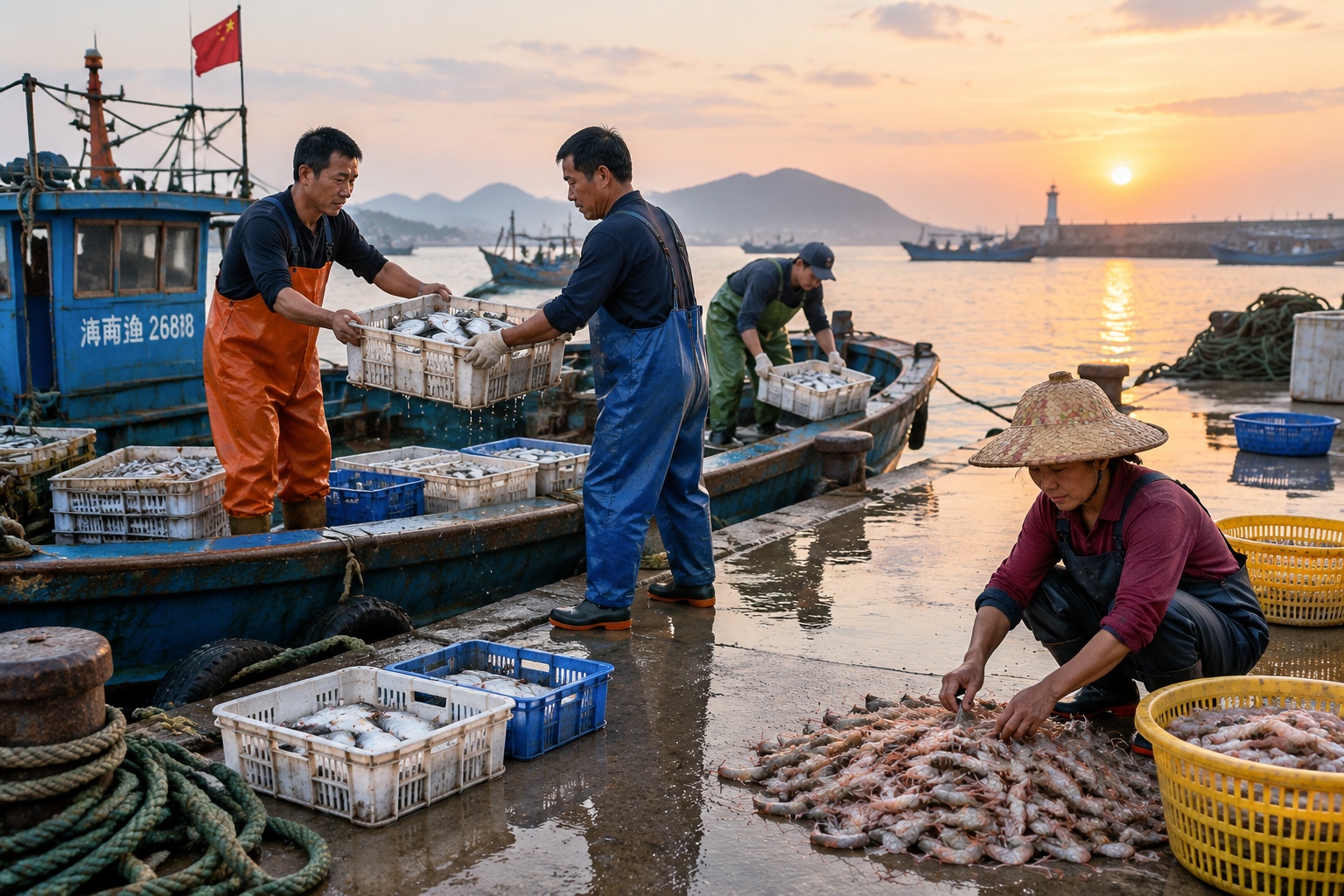
It’s 4:30 in the morning in Hainan, and the harbor lanterns cast a yellow glow over the wet concrete. A fishing boat, its hull still dripping, ties up to the pier. Fishermen in rubber boots lift crates of silver fish onto the dock. The air smells like salt and diesel. A woman in a straw hat kneels beside a pile of shrimp, sorting them by size with practiced hands. This is the moment when Hainan’s seafood markets come alive — not in the bright halls of supermarkets, but here, in the half-dark, where the first transaction of the day is about to begin.
Hainan is China’s southernmost province, an island known for its tropical beaches and, just as importantly, its seafood. For locals, fish isn’t an occasional treat; it’s a daily protein, a measure of the day’s rhythm. The markets here are not just places to buy food; they’re social stages, where the ancient art of bargaining holds its own against smartphones and digital payments.
The Island’s Seafood Culture
Hainan’s relationship with the sea goes back centuries. Fishing villages dot the coastline, and many families have lived off the catch for generations. In local cuisine, seafood is central: a breakfast congee may be topped with fresh shrimp, a lunch spread always includes a steamed fish, and the famous “Hainan fish hotpot” draws food lovers from across China. The morning market is where this culture begins. It’s not unusual for a home cook to wake up before dawn to buy the freshest possible ingredients, because in Hainan, freshness is non-negotiable.
The island’s fishing fleet ranges from small, family-owned sampans to larger trawlers that stay out for days. The boats that pull in before sunrise are usually day-trippers, netting whatever swims close to the shore. That’s why the morning catch is so varied: one crate might hold sleek mackerel and sardines, another spiny lobsters and crabs. It is in these unassuming crates that the flavors of a Hainan day are hidden.
Early morning is also the time to see Hainan’s authentic street life. The market is a sensory overload: the shine of ice, the flapping tails of fish that are still alive, the sound of knives scaling dozens of fish per minute. It’s also the most democratic place on the island. Here, a retired professor and a hotel chef stand shoulder to shoulder, both using the same trick to test a fish’s freshness — lifting the gill cover and taking a quick sniff.
The Pier: Where the Catch Meets the Buyers
At the pier, there are no price tags. Buyers — restaurant owners, market stallholders, and home cooks who woke up early — gather around the crates. They inspect the gills, press the flesh, and ask the fisherman: “How much?” The fisherman names a price, always a bit high. The buyer shakes his head, turns away, then comes back with a counteroffer. This is not a simple transaction; it’s a small performance, a dance of gestures, glares, and sudden smiles.
“Sixty yuan per jin,” says a fisherman, holding up a large grouper. The buyer, a middle-aged woman surnamed Chen, laughs. “Forty, and I’ll take three.” They go back and forth for two minutes. Finally, they settle at fifty, and Chen tosses the fish into her foam box. “You have to show you know the price,” she tells me. “If you just pay what they ask, they’ll think you’re a tourist and won’t respect you.” Bargaining, in her mind, is not about squeezing every yuan; it’s about signaling that you belong, that you understand the rhythm of the market.
At some piers, the strongest buyers form a loose “syndicate” and decide among themselves who gets first pick. It’s not a formal rule, but it keeps the early hours orderly. The fishermen, in turn, have their own strategies. They will throw in a few extra small fish to sweeten a deal, or set aside a special catch for a customer who buys every day. These unspoken agreements are the foundation of the market’s social fabric.
Inside the Market: A Living Network
By six, the pier’s buyers have carried their purchases to the nearby market halls. Here, rows of stalls display everything from grouper and prawns to spiny lobsters and colorful reef fish. Each stall is a small enterprise. The stallholder arranges the fish on crushed ice, keeps the oysters wet, and stacks crabs with their claws tied. Prices are still negotiable, but the dynamic is different: the seller and buyer often know each other, or at least recognize each other from previous mornings.
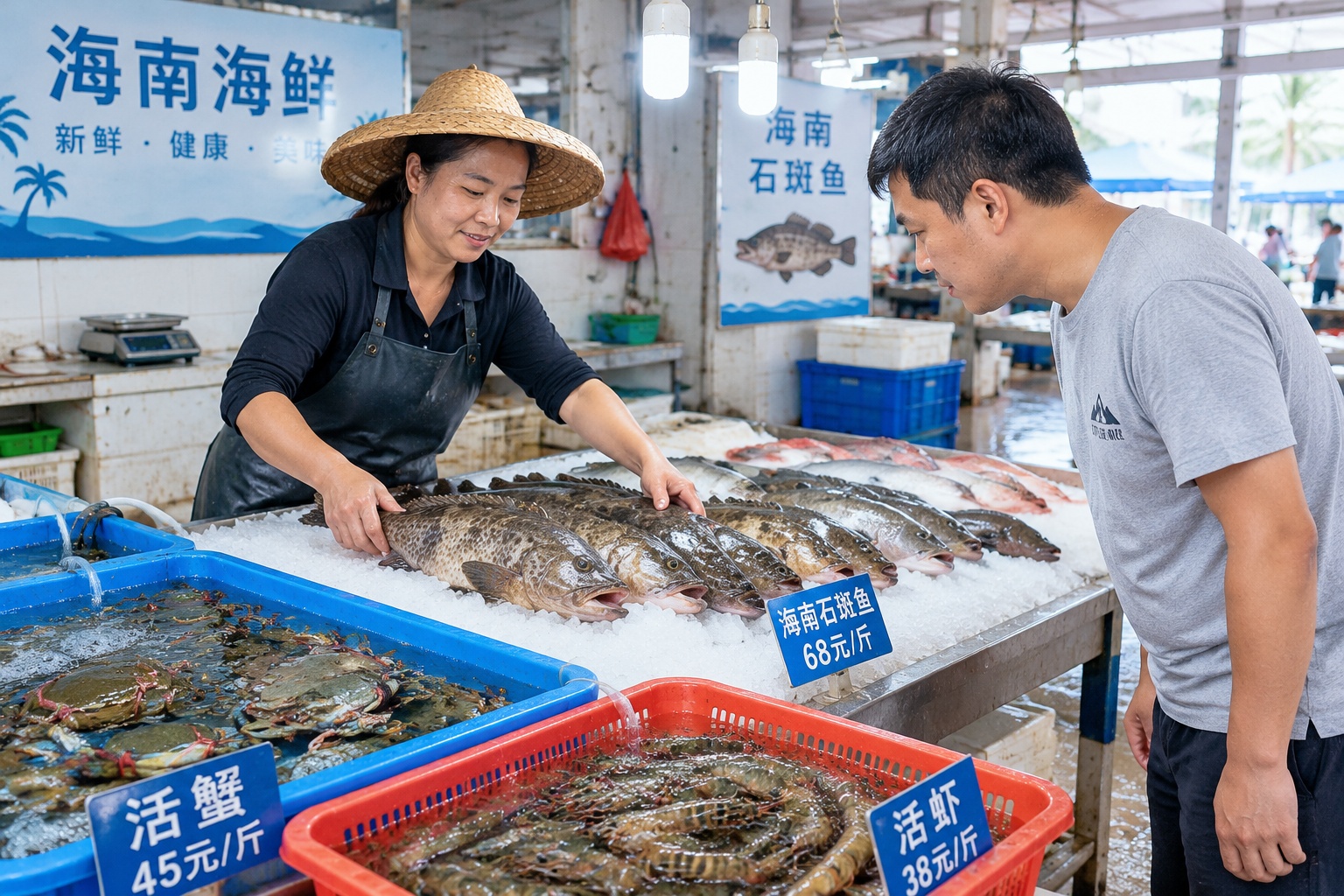
Regular customers get a “bonus” — a handful of ginger, a few extra clams, a cut of tuna that wasn’t quite sold. This is part of the unspoken contract of the market. As one stallholder puts it, “If you treat people well, they keep coming back. We’re not just selling fish; we’re building a relationship.” The market is a web of relationships that extends beyond the stalls. The fishmonger knows the cook’s preferences; the cook knows the fishmonger’s family. Trust is the currency that matters most.
Many of the vendors are women, and they bring a distinctive energy to the market. They banter, they scold, they laugh. A female seller in her fifties tells me she has been at the same stall for twenty years. “I raised my kids here,” she says, pointing to a concrete pillar against which a small cot once leaned. “The market is my home.” Her customers are not just buyers; they are neighbors, old friends, new parents holding a baby for the first time.
The Philosophy of Bargaining
To an outsider, the push-and-pull of haggling might seem like a battle. But in Hainan’s seafood markets, it’s closer to a game with unwritten rules. There’s the starting price, the expected discount, and the final handshake. The goal is not to win but to arrive at a price both sides can accept. This is a deeply human interaction — one that’s slowly becoming rare in a world of fixed prices and contactless payments.
But here’s the twist: bargaining is also a way of gathering information. The buyer who asks “Why so expensive?” learns about the day’s catch, the weather, the season. The fisher who asks “Where are you from?” measures the customer’s experience. Conversation flows in both directions, and by the time a price is agreed upon, both parties know more about each other than they did ten minutes earlier.
For many visitors, the idea of haggling feels intimidating. But in Hainan, it’s a friendly negotiation. A smile and a few phrases in the local dialect can go a long way. The trick is to show respect for the product and the person. You don’t insult the fish; you comment on its size and quality. You don’t walk away in anger; you shrug and make an offer. If the seller says no, you can always step back and try again, or simply move to the next stall.
In a way, bargaining is like a dance with words. It requires reading the other person’s body language and responding in kind. A seller who crosses her arms might be ready to make a deal. A buyer who glances at his watch is probably in a hurry, and everyone adjusts accordingly. The sum negotiated is often less important than the trust that is built. Once you’ve agreed on a price, you are no longer a stranger; you are a customer, maybe even a friend.
The Changing Market
Like everything in China, the seafood market is evolving. Digital payment is everywhere; most stalls have a QR code propped up among the fish scales. Some younger fishmongers use their phones to livestream sales, showing off tuna cuts and lobsters to customers hundreds of kilometers away. Online ordering platforms deliver fresh seafood to doorsteps across the island, and even the most traditional vendors now use WeChat to take pre-orders.
Yet the dawn pier still operates at its own pace. The morning catch is too perishable, too unpredictable, and too valuable to be fully standardized. A fish that was alive an hour ago doesn’t fit neatly into the logic of e-commerce. The negotiation ritual persists because it’s the most reliable way to judge quality and trust on the spot.
Even with all the convenience of modern shopping, many locals insist on visiting the market in person. “Online is easy, but I want to see the fish’s eyes,” says a shopper in her sixties. “I want to touch the flesh. And I want to chat with the seller. That’s how you know what’s really fresh.”
A New Generation at the Market
For the young generation, the market has become something of a cultural counterweight. College students on vacation come to watch, to photograph, and sometimes to try their hand at bargaining. A 22-year-old named Ah Jun told me he learned to bargain from his grandmother. “It’s not about the money,” he said. “It’s about talking to people, learning to read faces. That’s a skill no app can replace.”
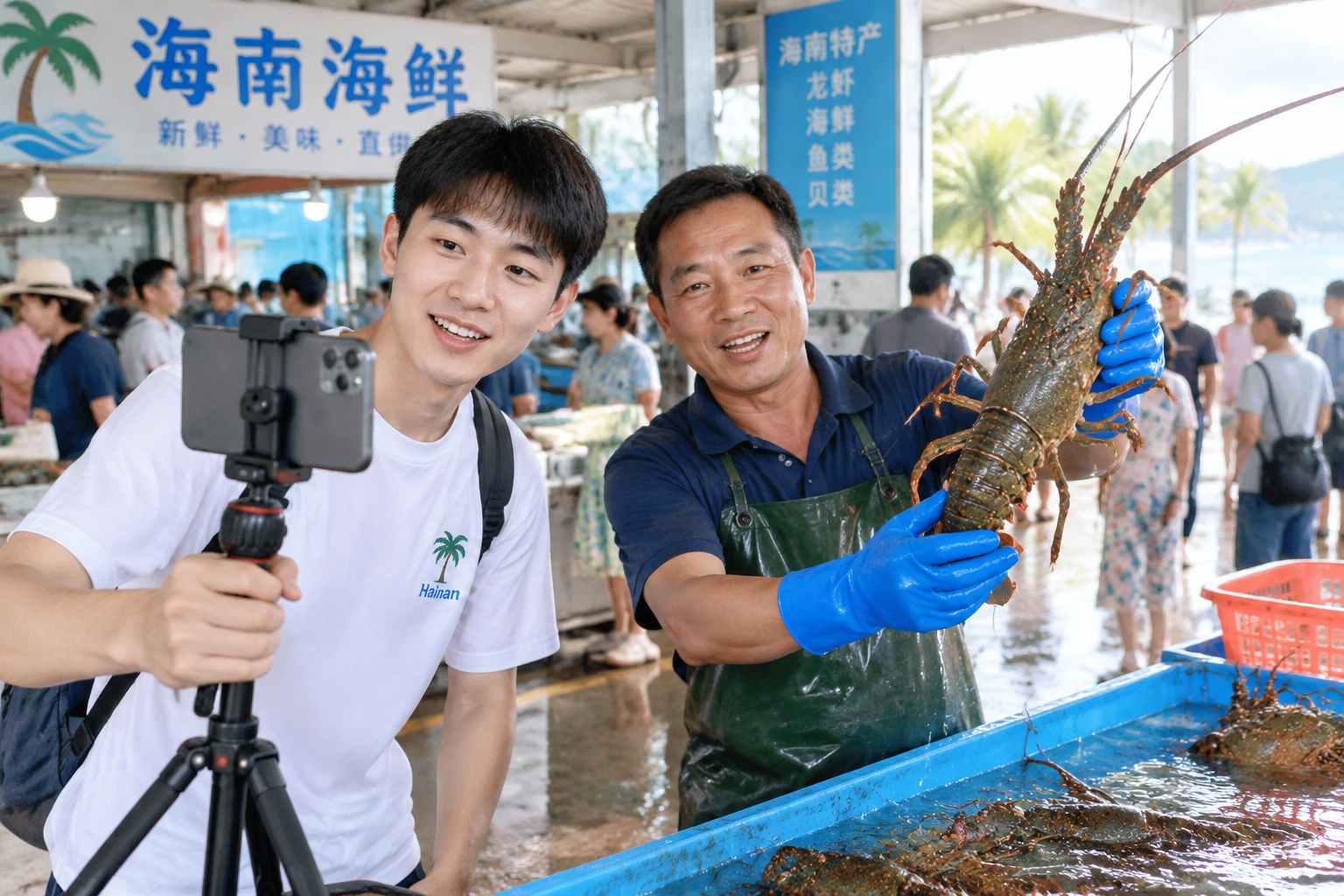
Some young people are even turning the market into a social experience. They bring friends from other cities, explain the rules of bargaining, and share a late-night seafood feast. The internet has made the market more visible, too. Short videos of dramatic negotiations — a buyer threatening to walk away, a seller pretending to be hurt — have gone viral on Chinese social media. The market is not dying; it’s being reinvented, one feed at a time.
Sunrise Over the Harbor
As the sun rises over the harbor, the crates empty and the crowds thin. The fishermen rinse their boats, the buyers carry their foam boxes back to cars and scooters. The market shuts its shutters, but only until early evening, when the second catch arrives. The bargaining will start again, just as it did yesterday, and just as it will tomorrow. In this corner of China, the ancient dance between buyer and seller is not a relic — it’s the daily reminder that some connections are best made face to face, with a fish on the ice and a flurry of numbers in the air.
Start the discussion at forum.chinacomes.com