

An Unexpected Encounter in a Qinghai Workshop
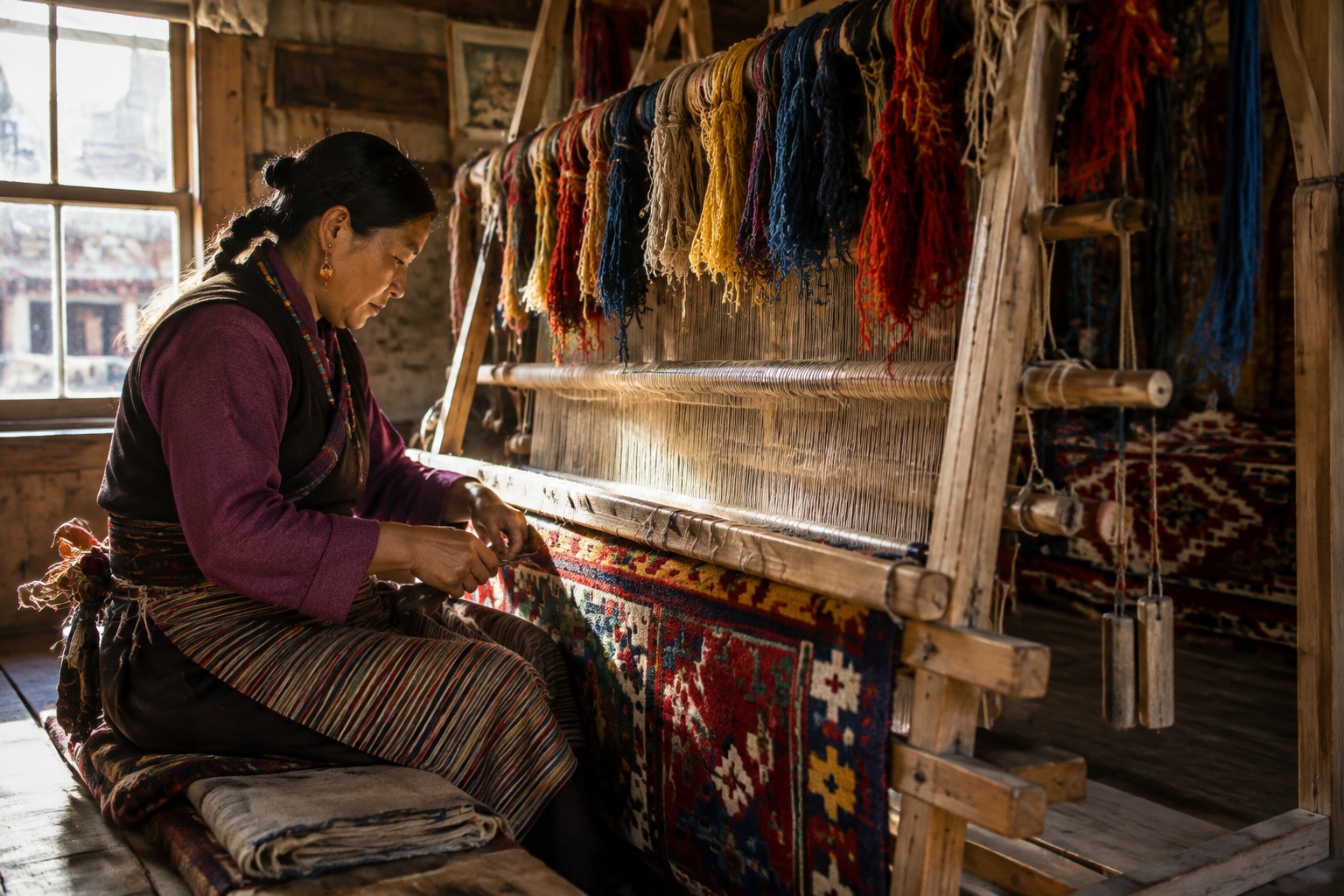
The first thing I noticed was the sound. Not the hum of machines, but the soft, rhythmic tap of a wooden comb against taut woolen threads. It was late afternoon in a small workshop on the outskirts of Xining, the capital of Qinghai Province in northwest China. Inside, a woman named Tashi Dolma sat cross-legged on a low wooden frame, her fingers moving with the precision of a pianist. She was tying Tibetan knots — one by one, thread by thread — for a carpet that would eventually end up in a living room somewhere in Copenhagen.
I had come to Qinghai to understand how a craft that dates back over a thousand years is surviving — and even thriving — in the age of mass production. What I found was a story about patience, cultural pride, and a quiet global revolution.
What Makes a Tibetan Rug Special?
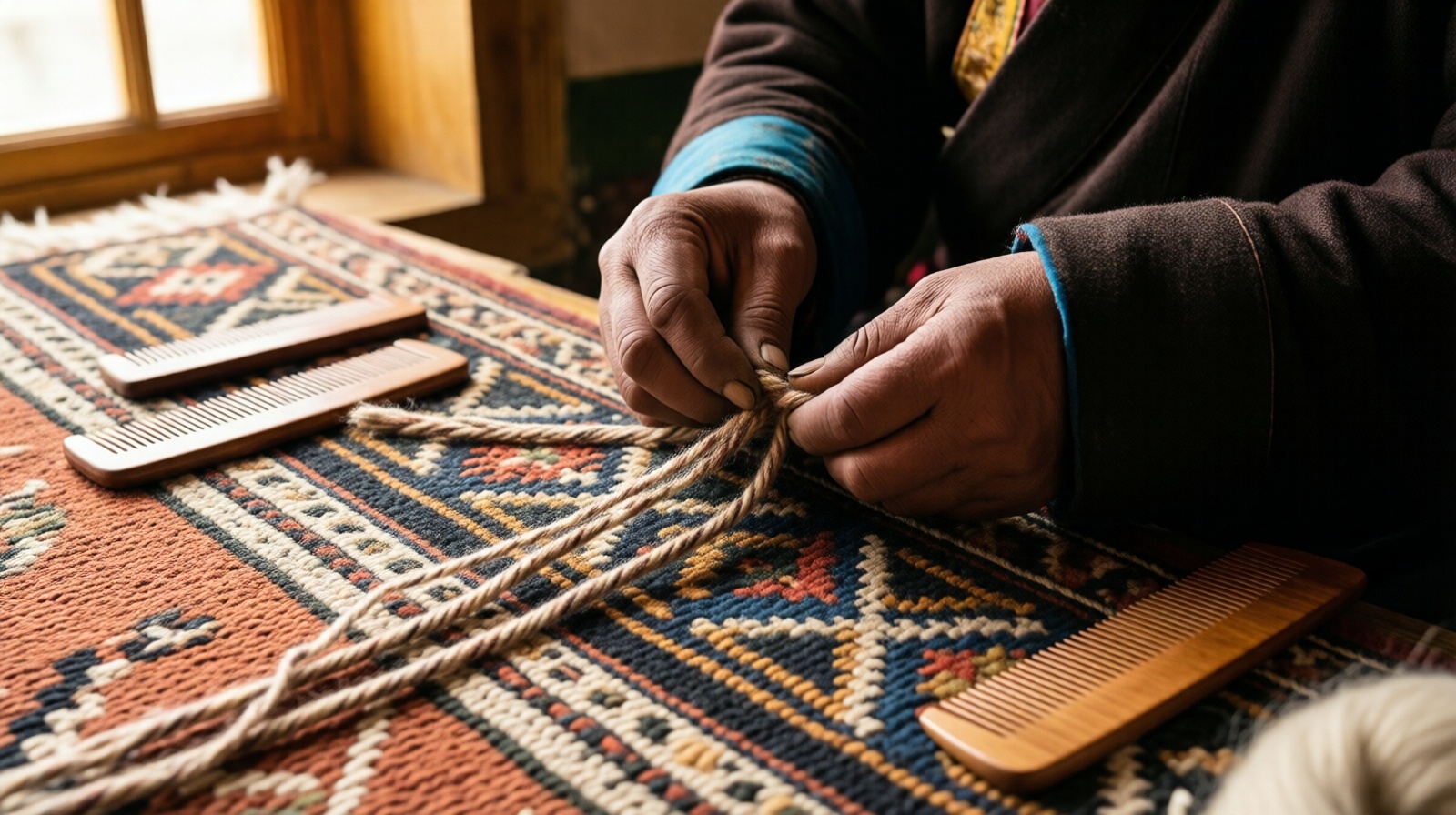
For those unfamiliar with Tibetan rugs, they are not your average floor covering. Handwoven from highland sheep wool, they are known for their dense pile, vivid natural dyes, and distinctive geometric patterns — often featuring dragons, clouds, lotus flowers, and the endless knot, a Buddhist symbol of harmony and longevity.
Unlike machine-made carpets, which can be produced in hours, a single Tibetan rug can take weeks or even months to complete. The weaver uses a technique called the Senne knot, which creates a soft, velvety texture that feels almost like touching a cloud. The wool itself comes from sheep raised at altitudes above 3,000 meters, where the harsh climate produces fibers that are both strong and remarkably soft.
But perhaps the most striking feature is the color. Many workshops still use natural dyes derived from local plants, roots, and minerals. The deep reds come from madder root; the bright yellows from a wildflower called chamomile; the rich blues from indigo. These colors do not just look beautiful — they age gracefully, developing a patina that machine-made carpets rarely achieve.
The Human Labor Behind Every Knot
Behind every Tibetan rug is an immense amount of human effort. A typical 2-by-3-meter rug may contain more than a million knots. Tashi Dolma, who has been weaving for over 30 years, can tie about 8,000 knots a day. That means a single rug takes her roughly five months of dedicated work.
“My grandmother taught me when I was twelve,” she told me, pausing to straighten a row of threads. “She said that a rug is not just a thing to step on. It carries the warmth of the sheep, the hands of the weaver, and the prayers of the family.” In traditional Tibetan culture, weaving was often accompanied by chanting or prayer, and many weavers still begin a new rug with a small ritual — a pinch of barley flour scattered on the loom for good fortune.
Yet the craft is not frozen in time. In the workshop I visited, young apprentices were learning the same techniques, but they also used digital design software to draft new patterns. Tashi Dolma admitted that she initially found the computers strange, but now she appreciates how they help her experiment with colors without wasting wool.
From Remote High-Altitude Villages to Global Living Rooms
So how did a craft practiced in remote Tibetan villages end up in a Danish living room? The answer lies in a combination of social enterprise, e-commerce, and a shift in consumer values.
In the past, Tibetan rugs were mostly made for local use — for monasteries, homes, and ceremonial occasions. The export market was thin, and many weavers struggled to make a living. But over the past two decades, a number of cooperative workshops and social enterprises have emerged in Qinghai, linking weavers directly with international buyers.
One such organization is Ngawa Tibetan Carpet Cooperative, based in the nearby Tibetan Autonomous Prefecture. It was founded in 2008 by a local entrepreneur named Dorje Tsering, who saw that younger Tibetans were leaving for city jobs, and the weaving tradition was at risk of dying out. His cooperative now employs over 200 weavers, mostly women, and exports rugs to more than 20 countries, including the United States, Germany, Japan, and Australia.
“The key was to make the craft economically viable,” Dorje told me over a cup of butter tea. “If a weaver can earn a decent income, they will stay. And if they stay, the tradition survives.” The cooperative pays weavers per knot, and a skilled weaver can now earn around 4,000 to 6,000 RMB per month — roughly double the local average wage. That is a significant change in a region where employment options are limited.
The Role of E-Commerce and Social Media
E-commerce has also played a transformative role. Platforms like Taobao, JD.com, and even international sites like Etsy have allowed small workshops to reach customers they could never have access to before. Some workshops now offer custom design services, where a customer in New York can order a rug with their family’s initials woven into the border.
Social media, particularly Instagram and Xiaohongshu (China’s version of Instagram), has helped tell the story behind the rugs. Short videos showing weavers at work — the rhythmic tapping, the vivid threads, the concentration in their eyes — have gone viral. Customers are no longer just buying a product; they are buying a piece of someone’s life and heritage.
Challenges and the Road Ahead
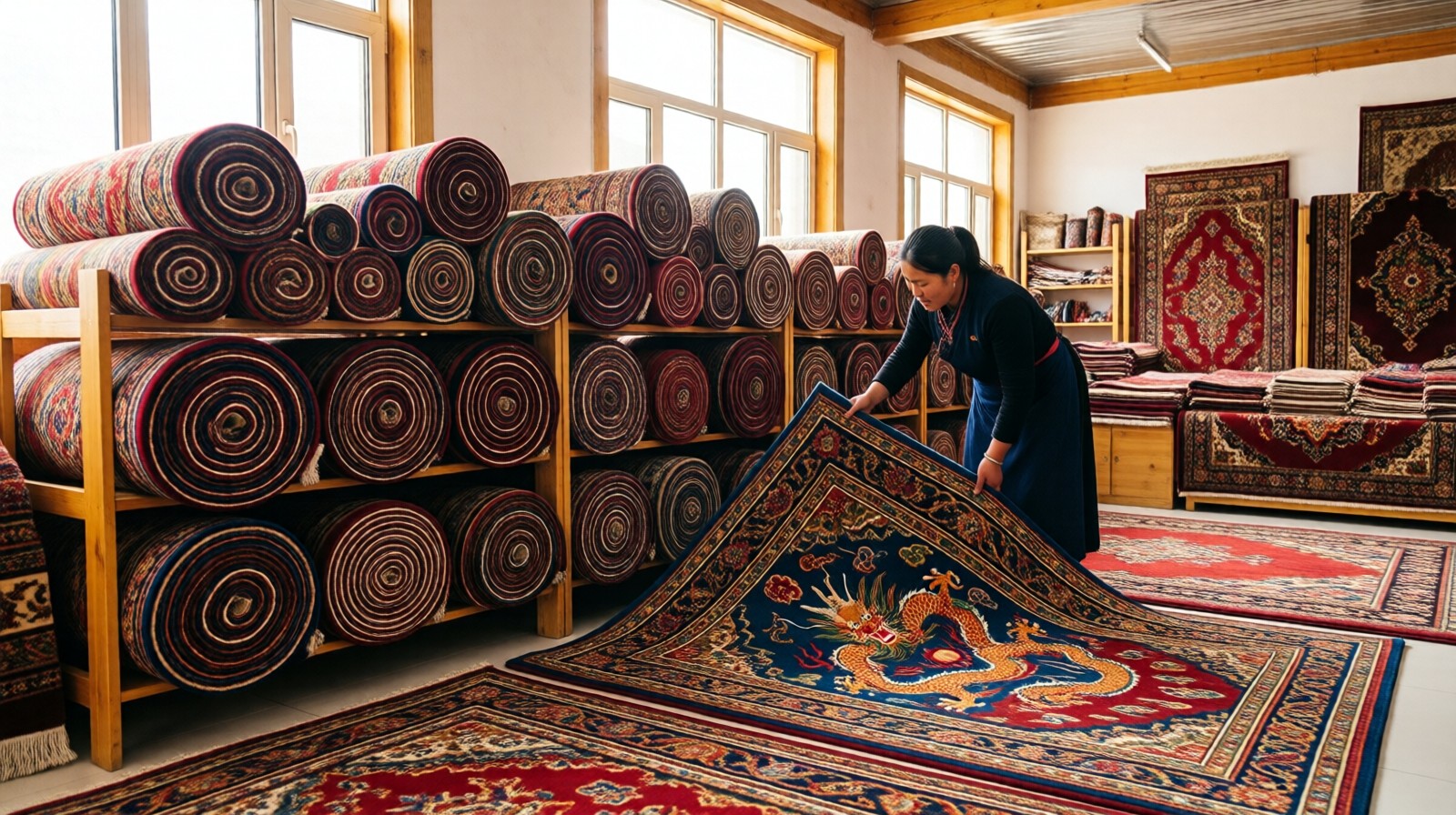
Despite the growing demand, the industry faces real challenges. The average age of weavers is rising. Many young Tibetans, even those trained in the craft, prefer to work in tourism or tech in larger cities. To address this, some cooperatives have set up training schools and offer apprenticeships that include a monthly stipend. Others have introduced “half-wool, half-cotton” blends to reduce costs and appeal to budget-conscious buyers, though purists argue this dilutes the authenticity.
There is also the question of scale. A truly handwoven Tibetan rug is expensive — a high-quality 2-by-3-meter rug can cost anywhere from $1,500 to $5,000. That limits the market to affluent consumers. But as more people become interested in sustainable, artisanal products, the demand is slowly growing. Some weavers are experimenting with smaller, cheaper items like cushion covers and wall hangings to attract new customers.
Why This Matters Beyond China
The story of Qinghai’s Tibetan rugs is not just about a regional craft. It is a microcosm of how traditional industries can adapt to globalization without losing their soul. In a world where fast fashion and disposable goods dominate, the idea of spending months on a single item feels almost radical. But it also feels deeply human.
When I left Tashi Dolma’s workshop, she gave me a small woven bracelet she had made from leftover threads. “Wear this,” she said, “and remember that something made with patience carries a different energy.” I have worn it ever since.
For anyone interested in experiencing this craft firsthand, Qinghai’s capital Xining is a good starting point. The city’s Tibetan Cultural Museum has an excellent collection of historic rugs, and several cooperative workshops welcome visitors. There are also annual craft fairs in neighboring towns where you can watch weavers at work and even try your hand at tying a few knots.
The next time you see a handwoven Tibetan rug — in a hotel lobby, a friend’s house, or an online store — take a moment to think about the hands that made it. They are not just weaving wool; they are weaving a thread between the ancient and the modern, between a remote high-altitude village and your living room.
Start the discussion at forum.chinacomes.com