
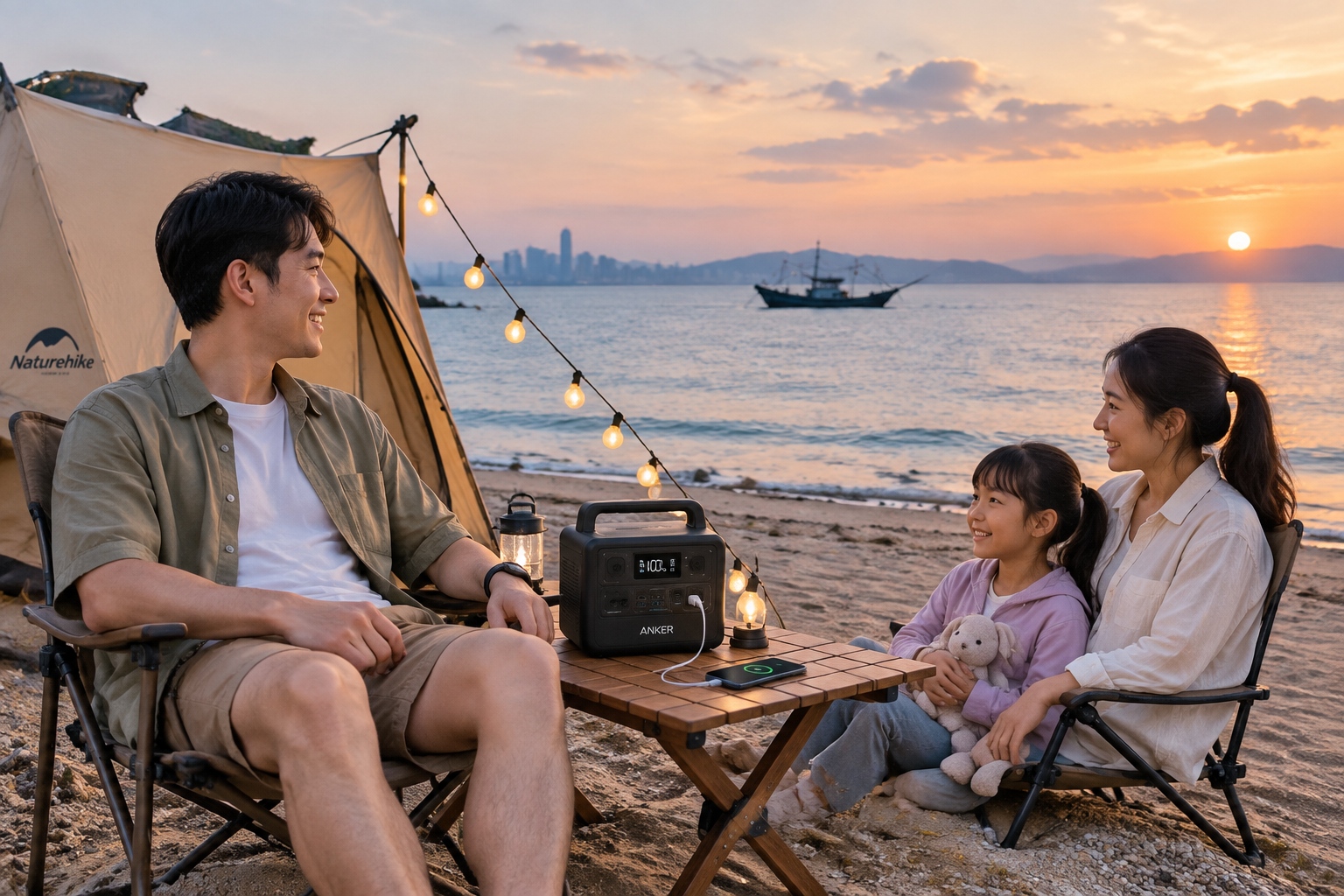

Last Saturday night, my friend Li Wei parked the family minivan beside a quiet beach on the outskirts of Shenzhen. No tent, no campfire. Instead, they set up a folding table and a little black box the size of a lunchbox — an EcoFlow River 2 portable power station. It ran a string of warm LED lights, charged two phones and a camera, and even helped power a small electric frying pan for the fish they had just bought. By midnight, the station had used only about half of its battery.
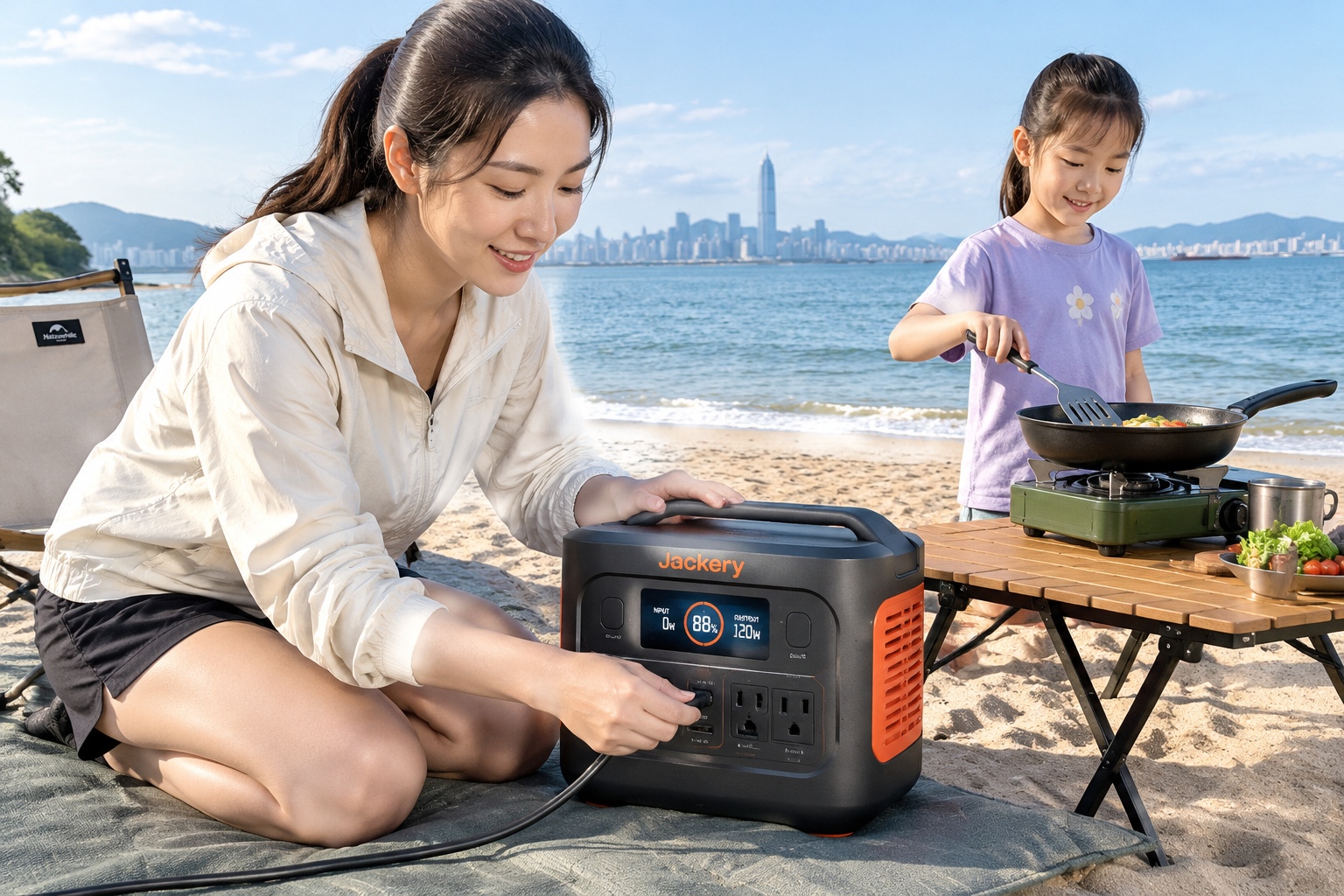
Portable power stations — essentially big rechargeable batteries with AC outlets built in — have become everyday gear in China. Campers use them to brew coffee, remote workers power laptops, and city families keep one tucked in a closet for typhoon-season blackouts. An entire ecosystem of brands has grown up around this demand, and their products now sell across the world. In fact, most of the top portable power stations on Amazon or at big-box retailers like Home Depot are made by Chinese manufacturers or Chinese-owned brands. This guide explains why that happened and, just as importantly, how to pick the right one for your own trips, emergencies, or van-life plans.
Why China Calls the Shots in Portable Power
You likely know Jackery or EcoFlow by name. Over the last few years, these brands have become the default recommendation on camping and overlanding forums in North America and Europe. But here is a lesser-known fact: their core technology and most of the production come from China. Jackery is closely tied to Anker Innovations, a Shenzhen-based company that designs and builds most of the hardware under that brand. EcoFlow, though founded in the United States, moved its core operations to Shenzhen and is now recognized as a Chinese power-solution company. Bluetti, another Shenzhen brand, has become a leading name in large home-backup systems.
What gives Chinese brands an edge? It is the same ecosystem that powers the global smartphone and electric vehicle industries. China produces the majority of the world’s lithium-ion battery cells, inverters, and power management chips. Factories in Shenzhen and Dongguan have perfected rapid prototyping and cost-efficient assembly. A new model can go from a concept sketch to an Amazon listing in just a few months, at a price that undercuts older Western electronics brands. Consumers get a fast-moving market with a constant flow of more powerful, safer, and cheaper devices.
But where a brand is based matters less than how the gear performs in your life. So let’s shift from geopolitics to hardware.
Key Specs Made Simple
Power stations are often sold with numbers that look intimidating: “350W”, “1,000Wh”, “LiFePO4”. Use the water-pipe metaphor to decode them.
Wattage (W): The Pipe Width
Watts measure how much power can flow through the unit at once. A 300W station can comfortably charge a 60W laptop and run a 40W fan, but it will not start a 1,000W microwave. Look for two numbers: continuous wattage and surge wattage. A 300W station might support a 600W surge for a few seconds, which is enough to kick-start a small refrigerator compressor.
Capacity (Wh): The Tank Size
Watt-hours tell you how much total energy you can store. As a rough rule, multiply Wh by 0.85 to see what is actually usable for USB/A/C appliances. A 500Wh station should run a 100W TV for roughly 4 to 5 hours. No power station is 100% efficient — inverters and cooling fans always consume some energy.
Battery Type: LiFePO4 vs. NMC
The battery chemistry decides how many full charge/discharge cycles you get, and how safe the unit feels when it sits in a hot car. Budget models often use NMC (lithium nickel manganese cobalt), which is light and cheap but usually lasts 500–800 cycles. High-end and newer models increasingly use Lithium Iron Phosphate (LiFePO4), which is heavier but typically handles 2,500–3,500 cycles and runs cooler. If you plan to keep and use a station for many years, pay the small price and weight penalty for LiFePO4.
Charging Speed and Inputs
AC recharging is the easiest way to fill up. Many new stations reach 80% in about an hour. Solar input is also common: smaller units accept up to 120W–240W of panels, while larger ones take 500W or more. Another feature that matters for van lifers is pass-through charging — running appliances and charging from solar at the same time. If that is your life, do not buy a unit without it.
A Field Test: Using Them Like a Normal Human
Rather than printing another lab-bench bar chart, I spent a weekend with a few popular models in a Shenzhen park and in a spare room at a friend’s apartment, listening for fans, checking for hot surfaces, and timing recharges. The numbers below are real and show how these units behave when you actually live with them.
- EcoFlow River 2 (~299Wh, 300W AC): It ran a 260W electric cooking pot for close to 40 minutes on a full charge. The cooling fan stayed around 45 dB, about as quiet as a household fridge. The chassis felt warm but never too hot to touch. Recharge from empty took only about an hour.
- Bluetti AC200L (2,400Wh, 2,400W AC): This heavy-duty unit ran a 1,500W electric kettle and a 100W speaker at the same time without flinching. The fan ramped up on high draw but went quiet within 20 seconds after. Even at full load, the body stayed around 40°C (104°F), so it’s safe to use indoors.
- Jackery Explorer 300: A classic, but it uses NMC cells and charges a little slower (around 2 hours). Surge capacity is not as generous as the EcoFlow River 2. That said, it is lighter and great for short overnight trips if you remember not to store it fully drained.
One clear pattern: a display that shows watts in, watts out, and time-to-full makes every unit easier to manage. Do not buy a station without a simple LCD or LED status panel.
Model Picks by Use Case
For Weekend Camping
A 200–600Wh station with a 500–700W continuous inverter is enough for lights, phones, cameras, and a small electric cooler. The EcoFlow River 2 Max and Jackery Explorer 500 are safe picks. You can run one or two small appliances at a time, but do not expect to use a microwave.
For Home Emergency Backup
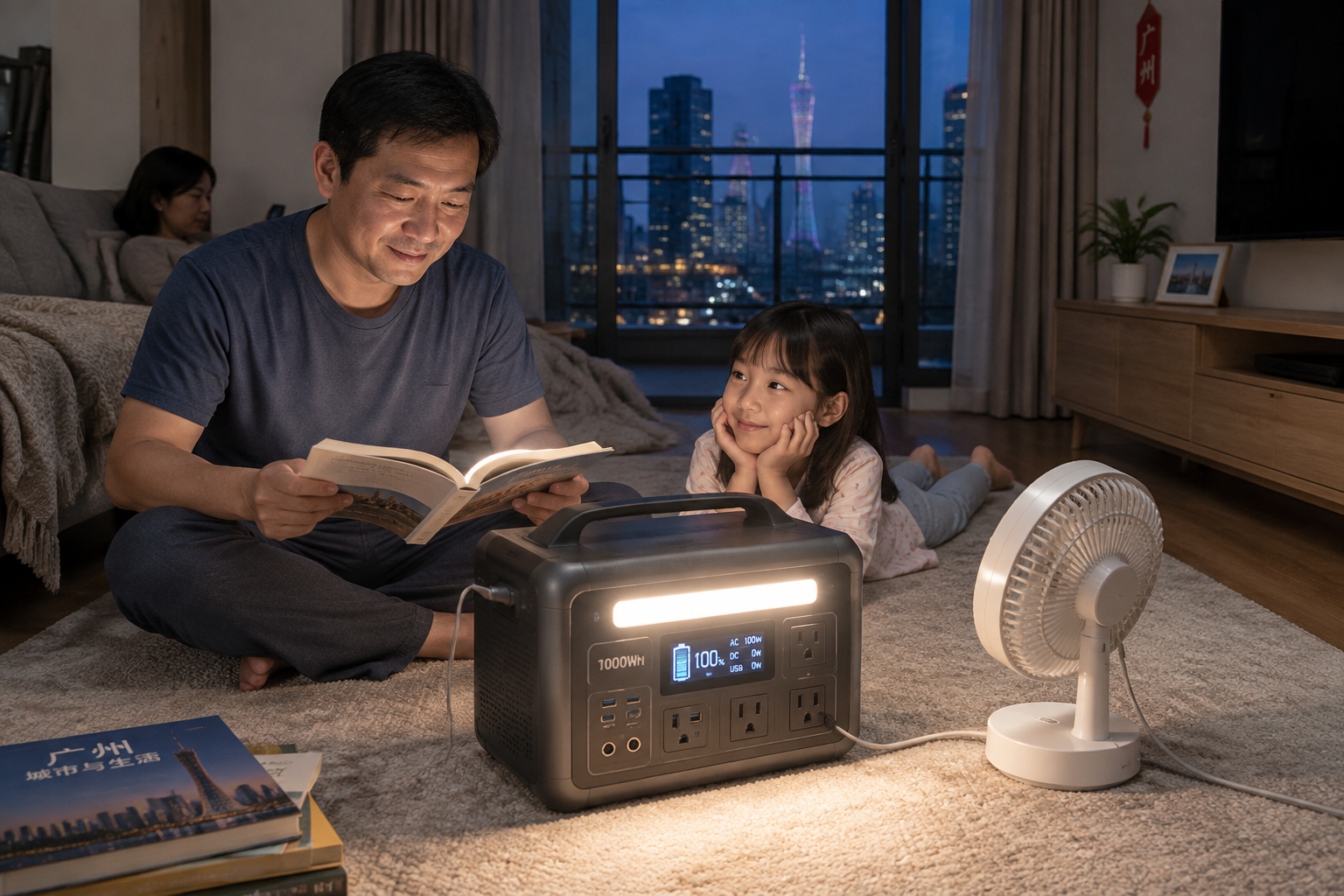
Go for at least 1,000Wh and, ideally, a LiFePO4 battery. A station in this class can power a fridge, a CPAP machine, radios, fans, and a few phone charges for an evening or two. The Bluetti AC180 and EcoFlow Delta 2 both deliver up to 1,800W continuous output and can be fully recharged by two or three 200W solar panels in four to six hours. They strike a nice balance between a small camping unit and a huge fixed home battery.
For Van or RV Life
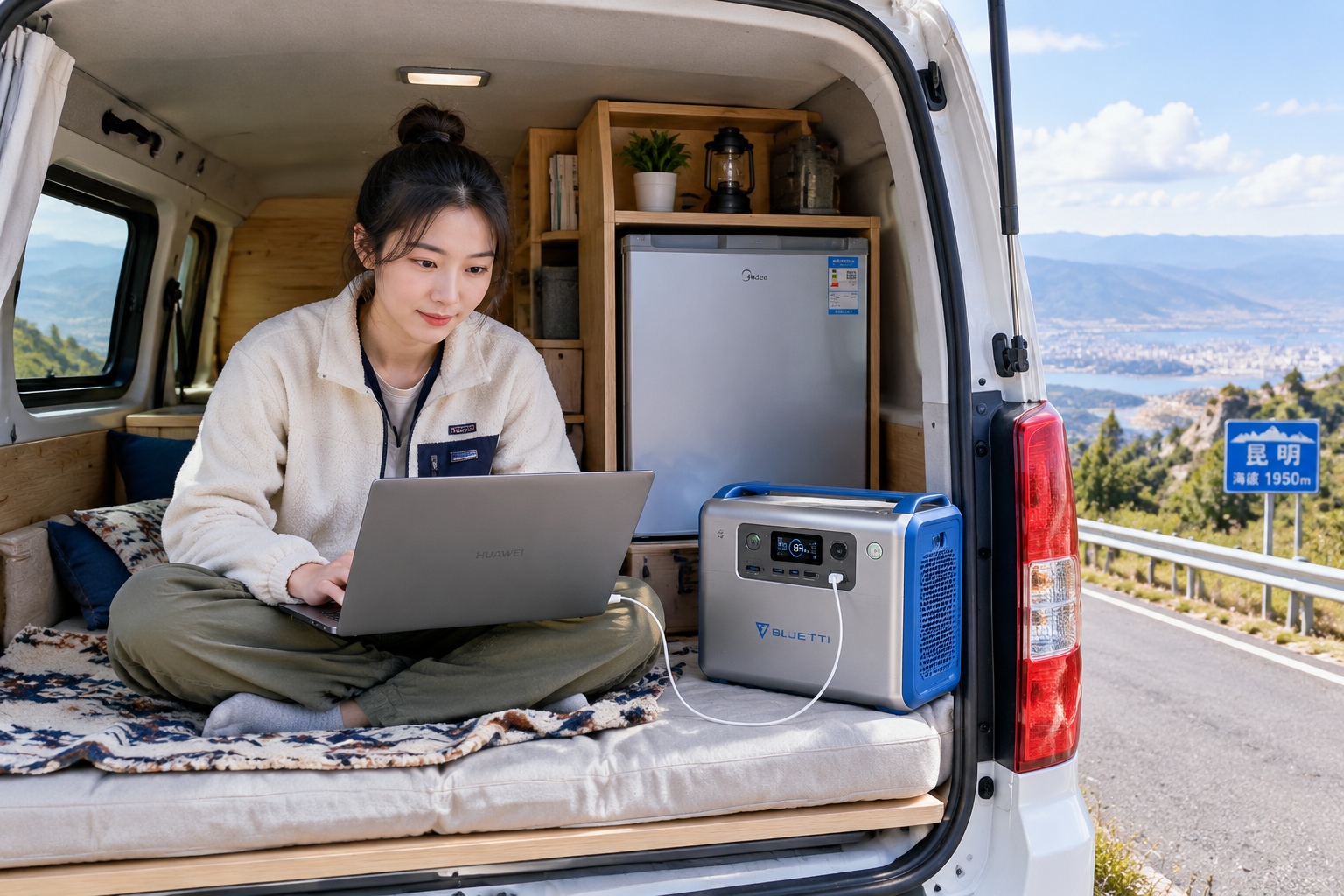
If you live on the road, your power station needs to handle a mini fridge, a water pump, laptops, and occasionally a microwave or an electric kettle. That puts you in the 2,000Wh to 3,600Wh class. Look at Bluetti AC200L or EcoFlow DELTA Pro. With 30A input, you can recharge from shore power in under two hours, or run enough solar to keep a rooftop fan going all night.
For Ultra-Portable / Backpacking
On the tiny end, a 200Wh unit like the Jackery Explorer 200 is fine to stick in a carry-on and will charge a phone ten times or a drone for a short afternoon. But if you want a station that can still feel useful after two years of occasional camping trips, skip the tiny sizes and go for at least a 500Wh model. The extra weight is a small trade for a much longer lifecycle.
Safety Certifications and Smart Maintenance
Chinese national standards are strict on electrical safety. However, you still want to see the designation from the market where you are using it. In North America, look for UL 2743 — the safety standard that specifically covers portable power stations. In Europe, check for CE marking, and for any outdoor use look for an IP rating like IP54 or higher, which means it is safe from splashes and dust.
Maintenance is straightforward:
- Update firmware regularly. Many brands improve charging algorithms and solar efficiency through mobile apps.
- If you store the station for more than a month, keep its charge level between 50% and 80%. Never leave it at 0% for long stretches.
- Clean the fan inlet/outlet once a month if you are in a dusty area.
- Do not push the inverter above its continuous rating for long periods. The unit will protect itself, but wearing it out faster is not good value.
Bottom Line
Chinese portable power stations have matured from cheap electronics into highly dependable everyday companions. A new 500Wh model costs around $300–$500, while a good 2,000Wh LiFePO4 station lands closer to $1,500. For most campers and first-time owners, the sweet spot is a 500–1,000Wh LiFePO4 station with a pure sine wave inverter (it shows as “AC Output Pure Sine Wave” on the spec sheet), room for solar expansion, and a clear app. This class can keep a fridge running through the night, run a fan on a hot blackout night, and still be light enough to toss into the back of a car. Those benefits are exactly why Chinese brands have become the go-to name in this growing category — no hype needed.
Next time you see one of those little black boxes at a campsite, ask the owner about its battery type and wattage. It might just be the single best thing they bought for their entire outdoor life.
Start the discussion at forum.chinacomes.com