
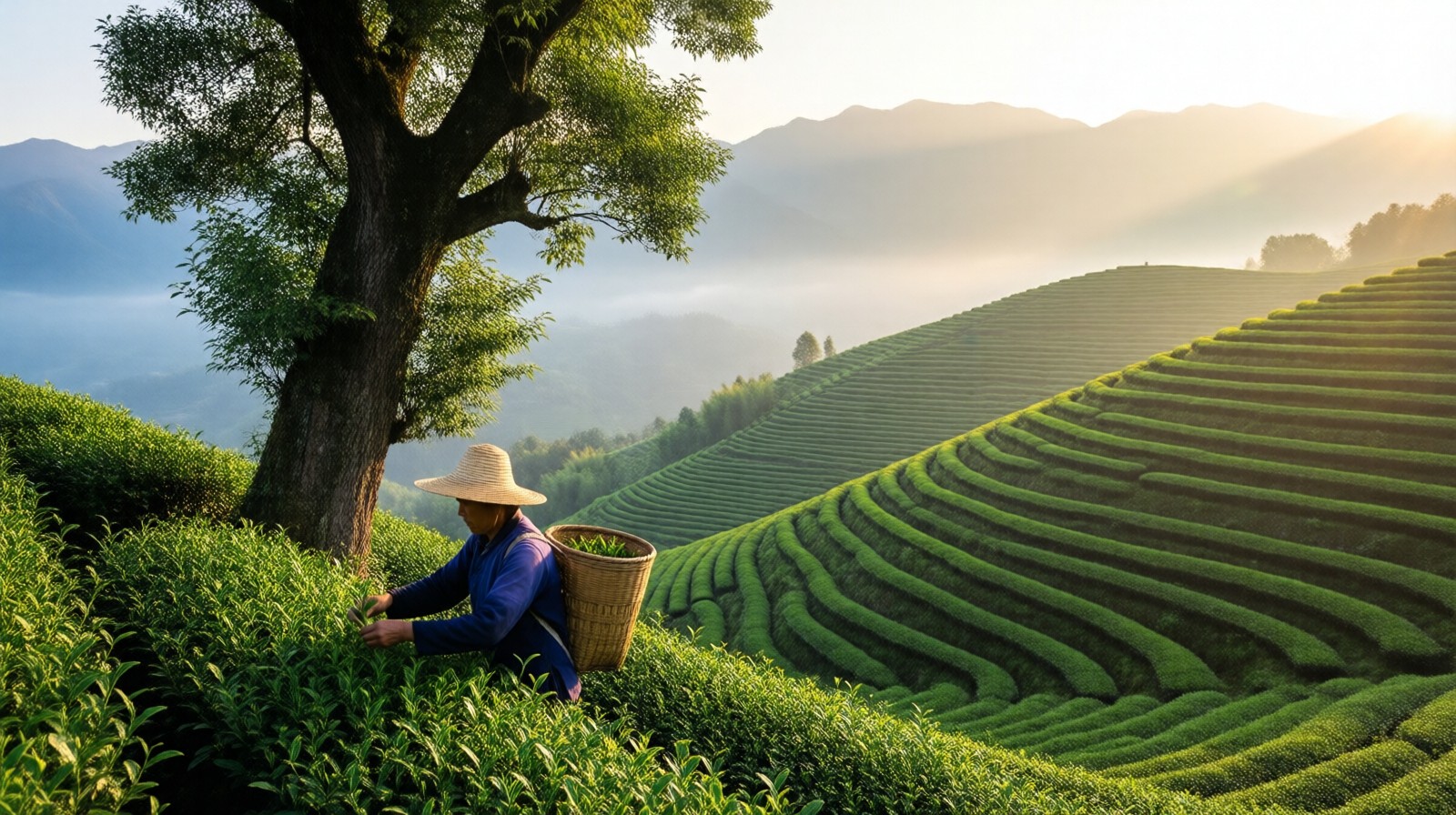

Morning Mist and a Farmer’s Hands
The sun had not yet topped the mountains when Sun Li wiped the dew off the old tree’s broad leaves. She picked each fresh bud carefully, dropping it into the woven basket strapped to her waist. “These trees are older than my grandmother,” she said. “They don’t need fertilizer or much water. They just give.” Her village, Nàkǎ, sits at 1,800 meters above sea level in Yunnan province, China’s deep southwest, where the high mountains and thick fog create the perfect conditions for what the world now calls Pu’er tea.
But for most of Sun Li’s life, the tea did not give enough. The leaves were sold to a local cooperative for a few yuan per kilo, barely enough to buy salt and cooking oil. The village had no paved road, no running water, and the young people left. “We had to walk two hours to the nearest market,” she recalled. “The tea was just tea. Nobody outside our valley knew what it was.”
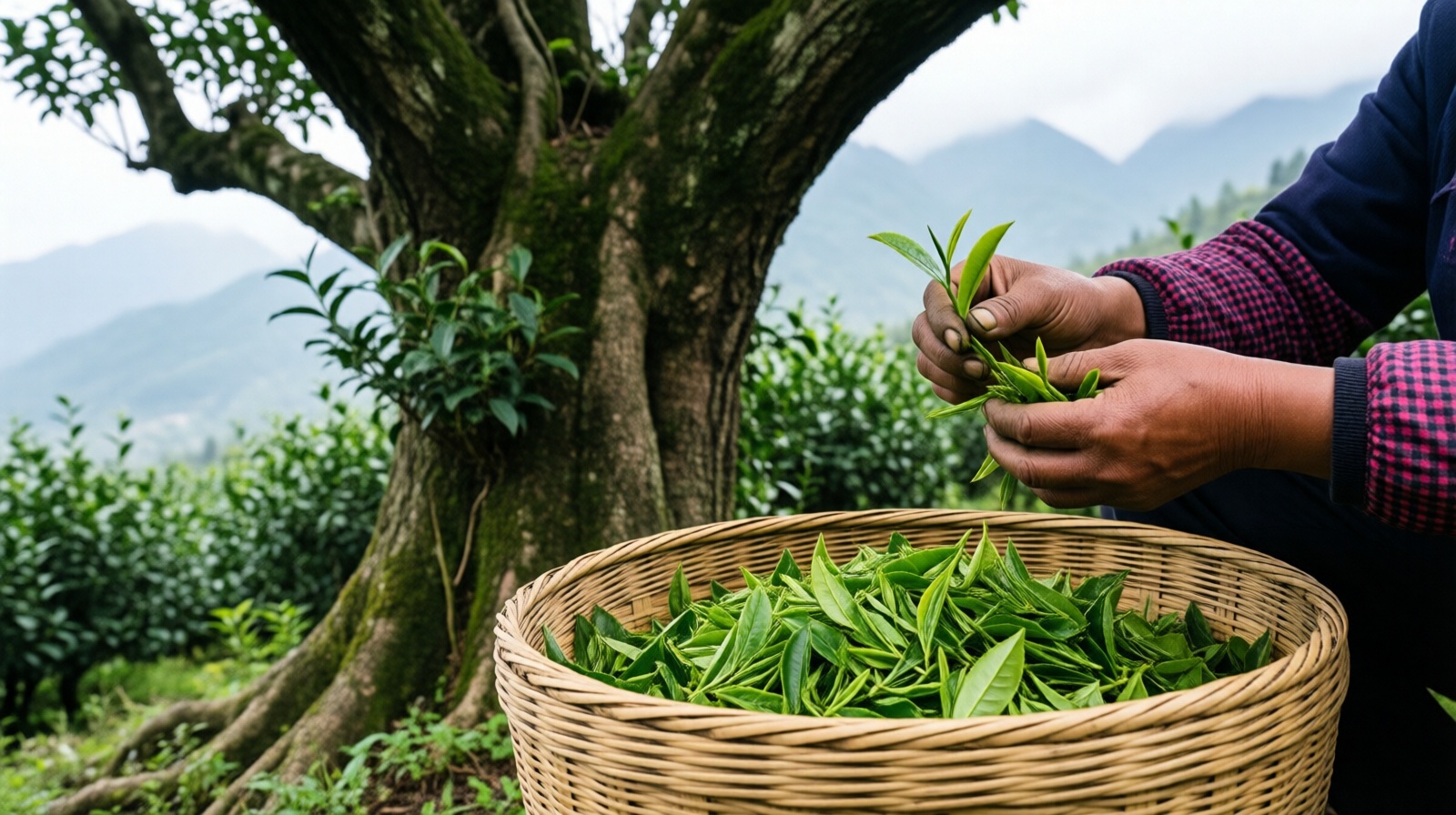
A Leaf That Pays the Bills
That changed in fits and starts during the 2000s, when China’s urban middle class began to search for something authentic and old. Pu’er tea, aged and fermented, became a symbol of status and taste. Tea shops on Beijing’s and Shanghai’s fancy streets began selling cakes of compressed leaves for thousands of yuan. News of the prices traveled back to the mountain villages.
In Nàkǎ, the first wave of buyers came from the city. They drove up the bumpy road in white vans, looked at the ancient trees, and offered to buy entire harvests in advance. A single tree could, at peak, yield leaves worth more than a small apartment in the county town. “We didn’t know how to price it,” Sun Li said with a laugh. “We only knew that if we kept picking the same way we always had, someone would pay four times what the cooperative gave us.”
The money flowed in quickly. First it bought new roofs, then motorcycles, then children’s school fees. The village built a concrete road in 2012, and the first stop for the newly built bus line was the tea processing shed. Sun Li’s family built two new rooms onto their wooden house, and her daughter, who had once planned to find factory work in Guangdong, decided to stay and learn the craft of hand-rolling tea.
From Poverty to Prosperity: The Numbers Behind the Story
The change in Nàkǎ mirrors a broader trend across Yunnan’s Pu’er producing areas. In the county of Menghai, which encompasses many famous tea mountains, the average annual income of tea farmers rose from roughly 2,000 yuan in 2005 to more than 15,000 yuan in 2023, according to local government reports. The number of registered tea cooperatives in Yunnan grew from a handful in the early 2000s to over 2,500 today. Behind these dry statistics are concrete things: brick houses replacing mud walls, clinics stocked with medicines, and primary schools where the morning reading is loud enough to be heard down the valley.
Perhaps more important is the reversal of migration. In many rural areas of China, the young leave for the coast. In tea villages, they are coming back. “I have friends who gave up jobs in Chengdu or Shenzhen to come home and manage the family tea business,” said a young man in his twenties who runs an online shop from a wooden desk in his parents’ courtyard. “Why rent a tiny apartment when you can sit on a mountain and have people buy your tea from a phone?”
The Taste of Place and the Price of Authenticity
What makes Pu’er tea so valued is not just caffeine or taste; it is the idea that a place can be condensed into a cup. The old trees grow on specific slopes, and their roots draw from the same soil and mist that give the tea a distinct flavor, often described as earthy, sweet, and resinous. This concept, called chayun (the poetry of tea), has turned geography into commerce. Terroir now matters the way it does in Bordeaux or Champagne.
But this popularity also creates pressure. There have been reports of unscrupulous dealers selling pressed leaves from other provinces as authentic ancient-tree Pu’er. In response, the villages have adopted traceability systems. Each batch of tea is now tagged with a code that records the harvest date, the mountain of origin, and the processing method. Sun Li showed me a small blue sticker on her tea cake box. “Scan it,” she said. “It tells you the tree, the weather, even the person who rolled the leaves. That’s my signature.”
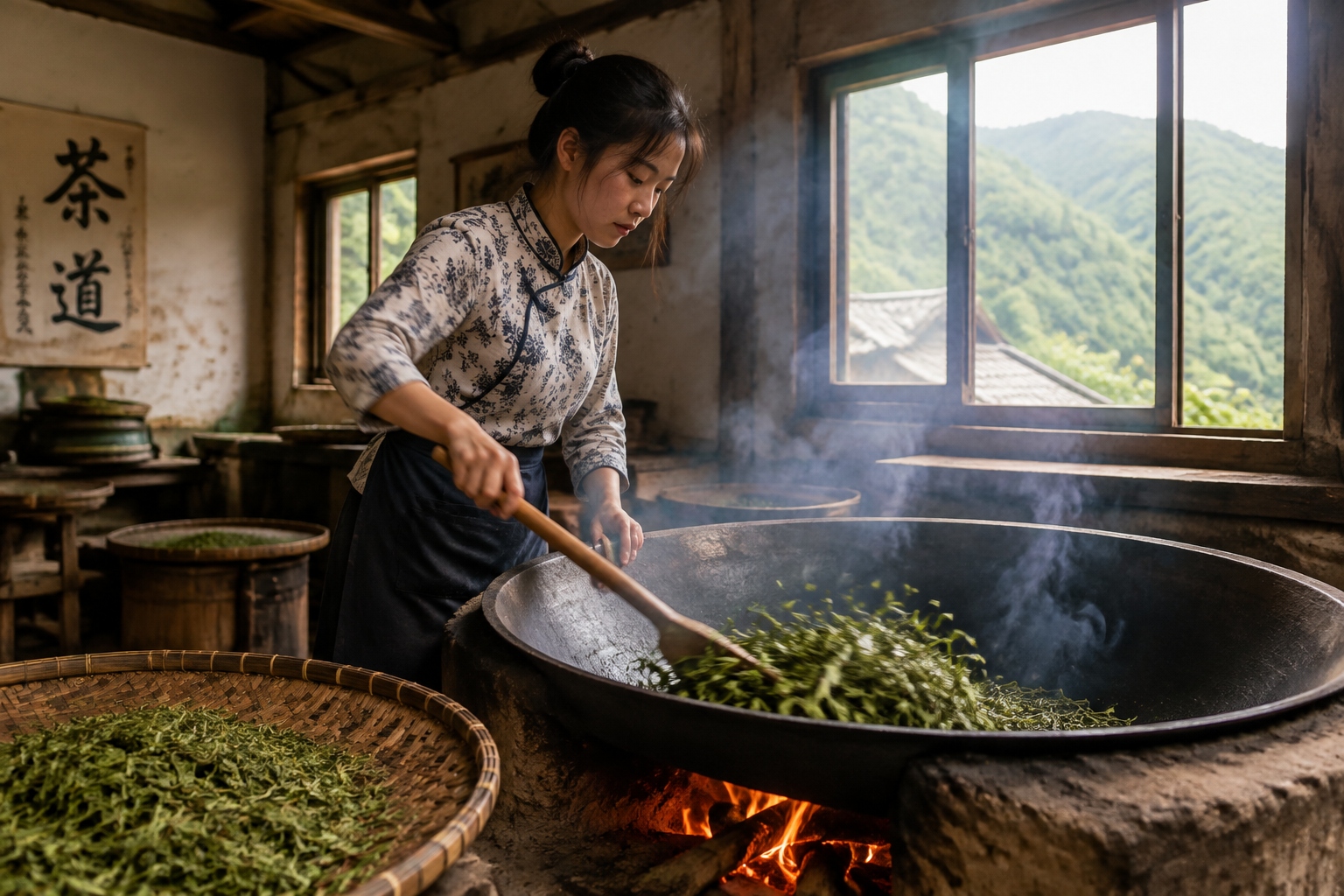
The Challenges Behind the Growth
Prosperity does not mean simplicity. The tea boom has brought its own complications. Land disputes occasionally arise between families over the ownership of old trees that were never formally registered. Overpicking can weaken ancient trees, and some conservationists worry that the demand for “old tree” tea pushes farmers to strip the forest of younger plants for land to plant new ones. Climate change, too, has made the rainy season less predictable, and a dry year can cut production by half.
The villagers are aware of these risks. Some have formed voluntary groups to patrol the forests and restrict harvest dates, letting the trees rest. Others are experimenting with organic fertilizers made from sheep dung and corn stalks. “We are not going to kill the tree that feeds us,” said Sun Li’s neighbor, an old man who has been picking tea for six decades. “We are only its custodians.”
A Cup That Travels
The transformation of this village is not an isolated miracle. It is happening wherever a local product connects with a global desire for authenticity and a camera brings the story directly. But the most telling sign is not in the export figures. It is in the way an old tree is talked about by people who once thought it was just firewood. Now it is an ancestral asset, a brand, a legacy.
As the fog lifts over the mountains, Sun Li loads a basket of fresh leaves onto the back of a motorbike and heads to the cooperative. The village school is just beside the road, and children in bright blue uniforms wave at her. This is the new economy of a mountain village: a single leaf, picked the same way it has been for generations, but now carrying the hopes of a family, a community, and a surprisingly thirsty world.
Start the discussion at forum.chinacomes.com