

An Electric Silence
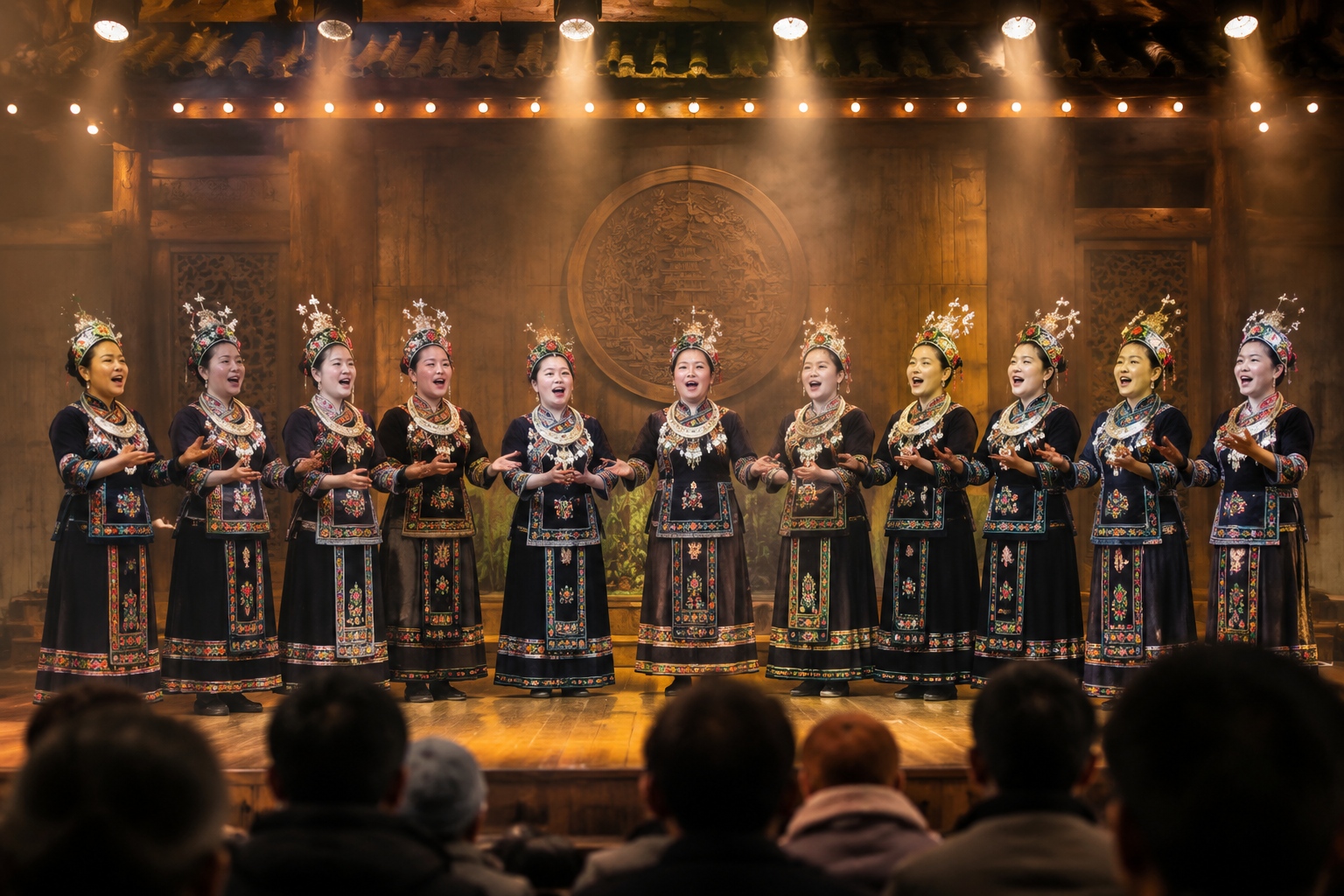
The backstage air in the Shanghai concert hall smelled of wood polish and fresh flowers. Wu Meiling, 26, was tightening her silver headdress. The strands of beads clicked like rain on leaves. Around her, eleven other young women and men from her Dong ethnic group were settling their pleated indigo skirts and embroidered vests. Their queue was just minutes away.
When they stepped onto the stage, the hush of a sold-out auditorium greeted them. Then Meiling opened her mouth and let out a single, pure line. A second voice wove in, then a third, then a dozen more, until a thick, shimmering canopy of sound hung above the audience. There were no instruments. Just the human voice, splitting and joining in ways most Western ears had never heard. The audience sat frozen, some with hands half-raised over their mouths.
That night, in a city eight hundred kilometers from her home village in Guizhou province, Meiling experienced what she calls “the electric silence” – a silence that comes when a whole hall is listening, not merely hearing. It was the same electricity she had felt in Paris, in Vienna, and at the United Nations headquarters in New York, where she had performed the Grand Song of the Dong (侗族大歌) before diplomats and delegates.
What Is the Grand Song of the Dong?
The Grand Song is a type of polyphonic choral music unique to the Dong, an ethnic minority group living in the mountainous areas of southern China, mainly in Guizhou, Hunan, and Guangxi. Unlike most traditional Asian singing, which is usually monophonic, the Dong Grand Song features two to three melodic lines, often imitating the sounds of nature – rivers, birds, bees, forests. It is performed without instruments or conducting. Songs are passed down orally from master to student, sometimes through decades of training.
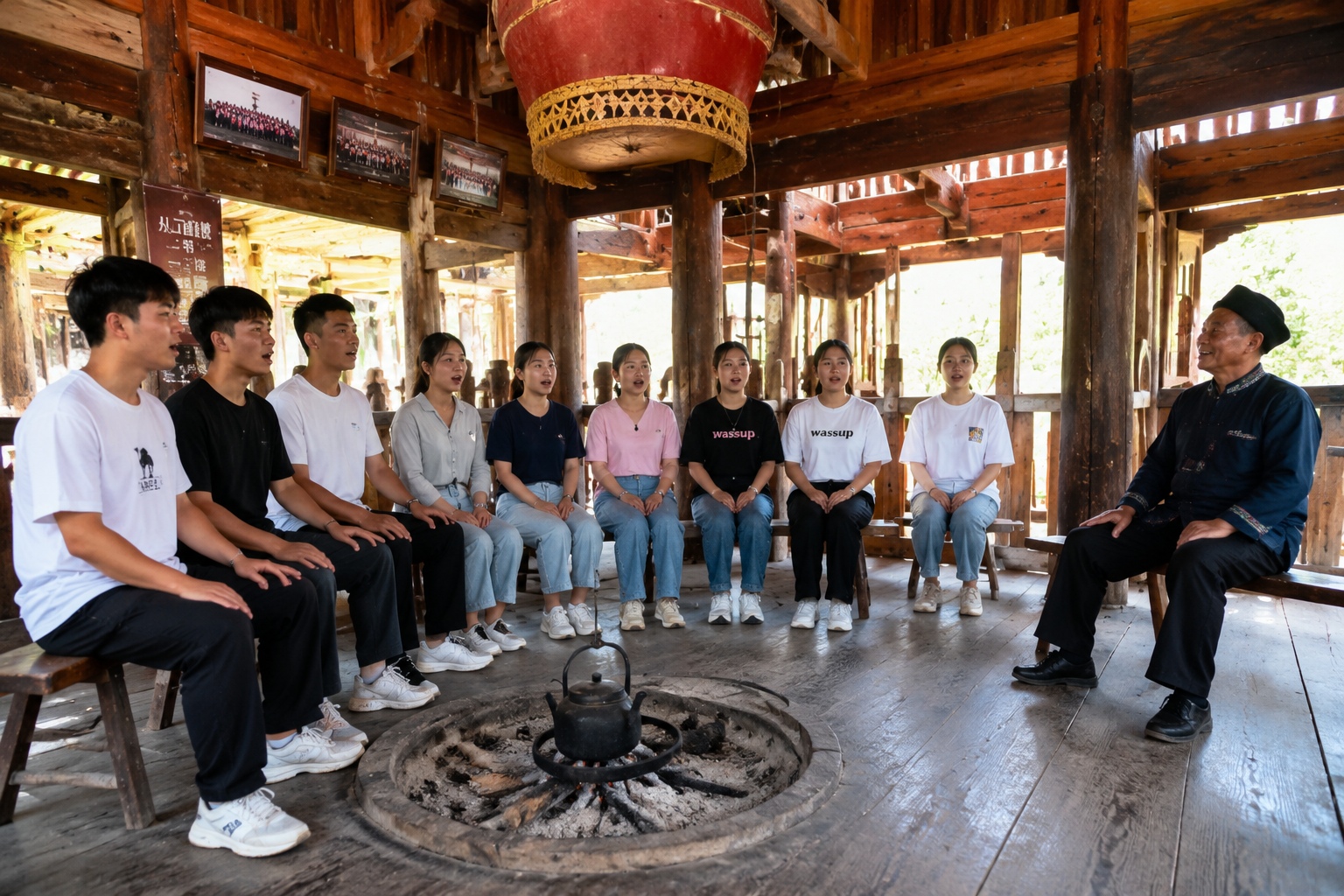
The music has been the centerpiece of communal life in Dong villages for centuries. It is sung at festivals, courtship rituals, and ceremonies inside the drum tower – the imposing wooden gathering place of every Dong village. In 2006, the Grand Song was listed as part of China’s national intangible cultural heritage, and in 2009, UNESCO recognized it as an Intangible Cultural Heritage of Humanity.
From Drum Tower to World Stage
The journey of the Grand Song out of the mountains began in earnest in 1986, when the Dong folk chorus performed in Paris at the Festival d’Automne – an event that allegedly stunned a French audience so deeply that they called it “the pearl of the East.” In the following decades, more ensembles traveled abroad to Europe, North America, and Asia. But it wasn’t until recently that the music became a regular feature on world-class concert hall programs, not just at folk festivals.
Part of the shift came from a new generation of Dong singers who grew up in the village but studied at urban conservatories and learned to present their music on global stages. Meiling is one of those. She was born in a village along the Guangxi border. She remembers learning the Grand Songs from her grandmother, who would sing in the dim light of the kitchen while roasting tea over a fire. At age nine, she was selected for the village youth choir. By thirteen, she was already performing in front of provincial delegations. At twenty, she was invited to join the Grand Song Choir of Guizhou, which now tours worldwide.
Meiling told me on the phone, her voice soft but firm: “In the village, we sing to communicate with our ancestors and with the fields. On the world stage, we sing to communicate with anyone who will listen. The core is still the same: we offer our hearts through our voices.”
An Unplugged Night
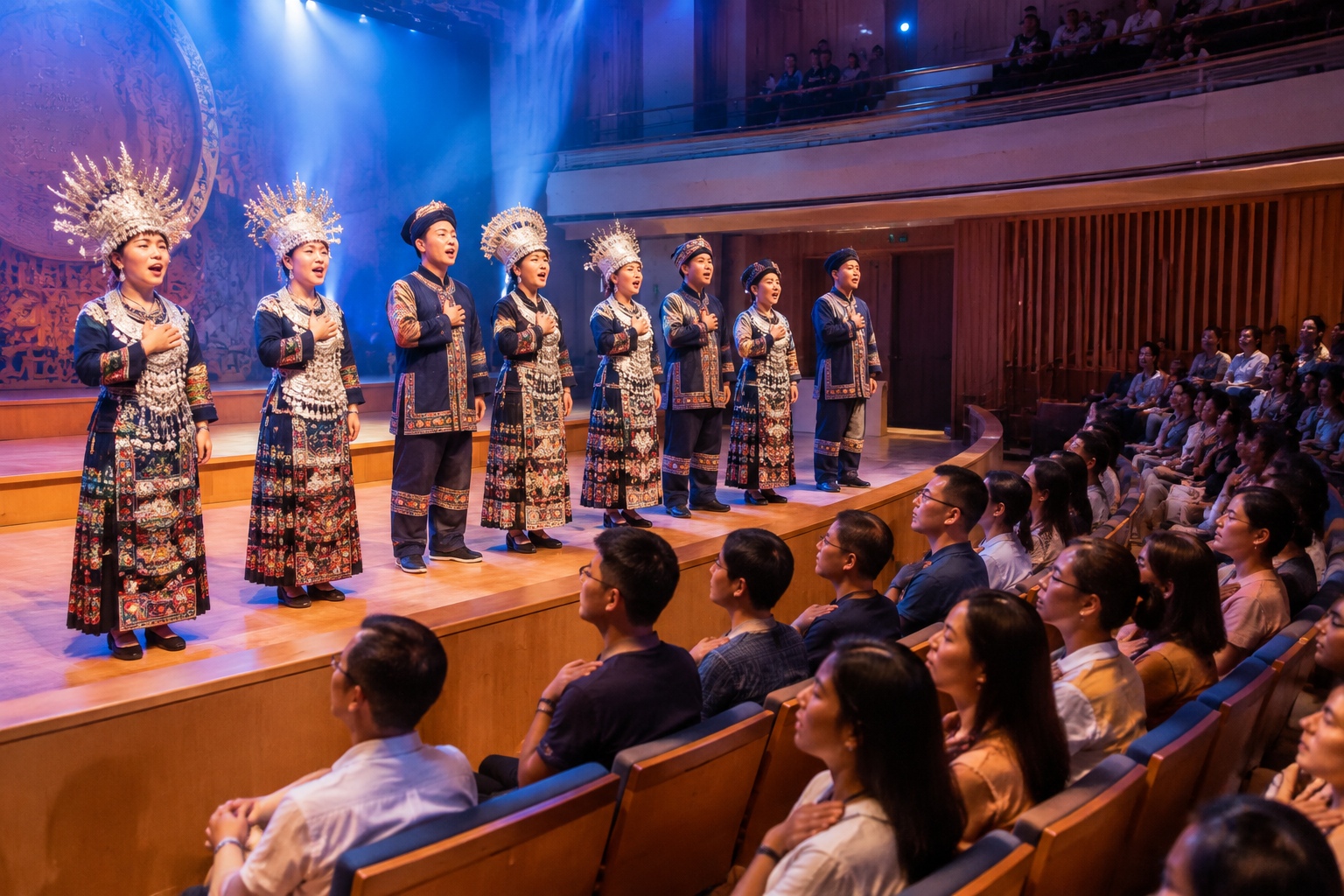
For the Shanghai performance, the ensemble had consciously avoided adding any modern stagecraft. No amplification, no backing tracks, no wash of colored lights. They wanted the audience to experience the Grand Song exactly as it would be heard under the roof of a drum tower: unadorned, direct, resonating against wood and stone.
The program opened with “The Sound of Cicadas,” a song that imitates the buzzing of summer cicadas, then moved to “Song of the Woods,” where voices stacked into dense forests of harmony. At one point, a soprano voice rose above the rest, clear as a bell, and then slowly descended, pulling the others into a gentle cadence. The effect was hypnotic.
After the final note, the hall stayed silent for a few seconds before erupting in applause. Then the audience did something unusual – they stood. Not for an encore. They stood to applaud the singers, refusing to leave.
Meiling later said that moment made her feel that the Grand Song had found a new home: “The applause is not for us. It is for the music. The music is older than us, and it will connect to people as long as it remains honest.”
Why Modern Listeners Respond
Musicologists have often compared the Grand Song to Western counterpoint. But there is a fundamental difference. Western polyphony usually aligns along a harmonic grid, with voices moving according to chords. The Dong Grand Song instead layers voices in a more fluid and spatial way, respecting natural rhythms and the irregular patterns of the sounds it imitates. This unfamiliarity creates a sense of openness – it sounds like a conversation between humans and nature, not between chords.
For many foreign listeners, the attraction also lies in its pure, unamplified humanity. In an age of autotune and studio production, hearing a dozen voices draw impossible polyphony out of thin air feels almost radical. It restores our sense of what the voice can do.
Dr. Emily Stevens, an ethnomusicologist at a British university who has worked with Dong singers, says: “When Western audiences encounter the Grand Song, they often describe it as ‘ancient’ or ‘mysterious’, but that’s a misunderstanding. The Dong are not singing in the past. They are singing about the present – about weather, love, work. The timing is always now. It just happens that the language of that present is not a market economy, but an ecosystem.”
Challenges and the Road Ahead
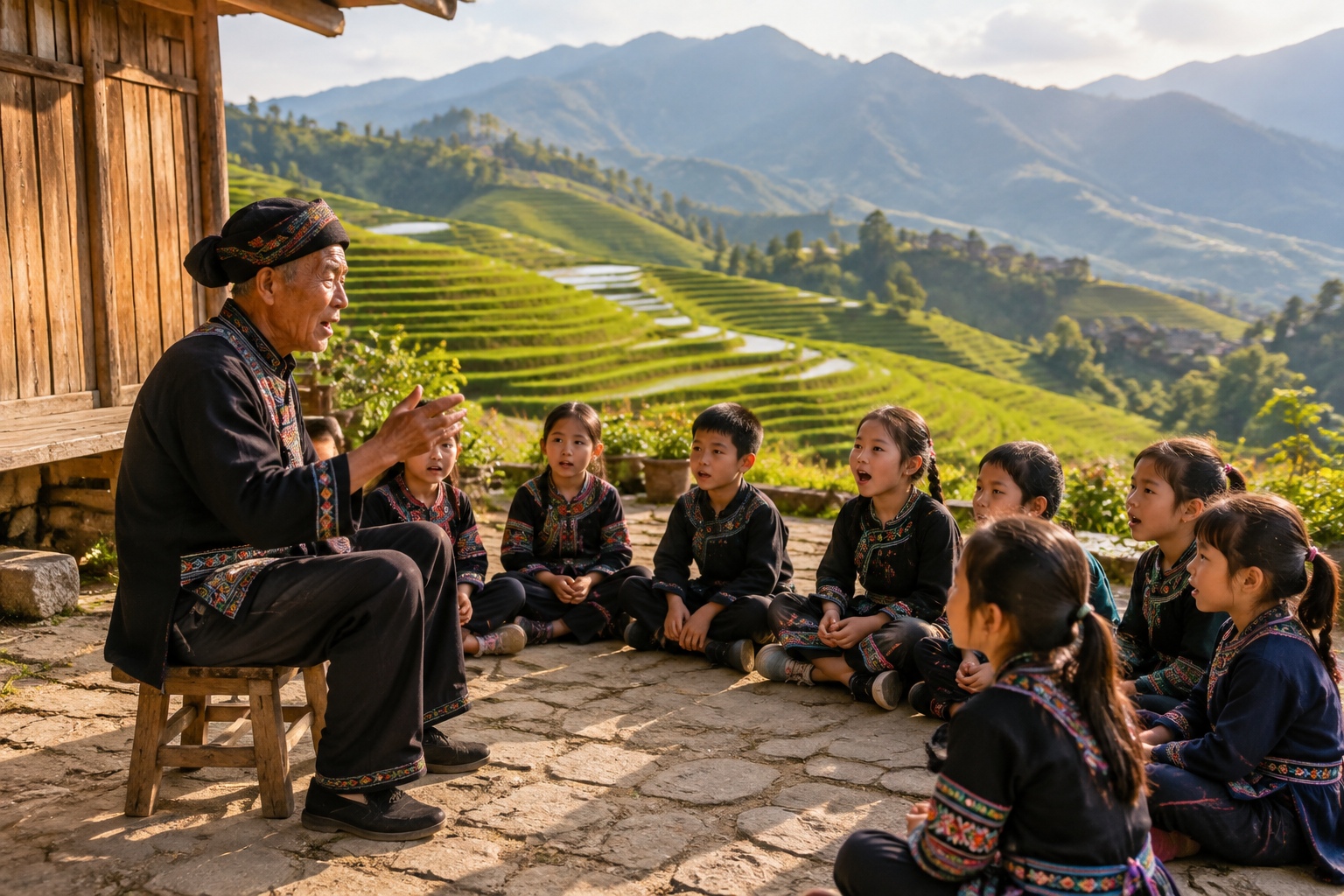
Despite this growing international interest, the Grand Song faces real challenges back home. Many young Dong people leave their villages for work in cities, and there are fewer children willing to spend years learning complex repertoires that require deep immersion. Some villages have tried to revive the practice through school programs and local festivals. In one village I visited near Liping county, Guizhou, an elderly song master named Yang Guanghua told me, “I have taught more than three hundred students. Only twenty still sing. But the sound of those twenty is enough to keep the river flowing.”
New technology and cross-cultural exchange are providing unexpected help. Appreciation of the Grand Song is growing on Chinese social media; some videos of Dong choirs have gained millions of views. Some younger singers have experimented with blending the Grand Song with other genres, such as ambient music or jazz improvisation, though Meiling is cautious: “We shouldn’t decorate it too much. If you mount gold on a lotus flower, you lose the lotus.”
Back to the Drum Tower
In the end, the Grand Song’s journey to world concert halls is a two-way exchange. The music leaves the village, gains new ears, and sometimes returns with new ideas. For Meiling, the most rewarding moment came not abroad, but on a recent trip home. She was sitting in the drum tower with her grandmother and a few old women when one of them started a familiar song. Meiling joined, remembering every pitch, every breath.
“I realized the thing we carry across the world is the same thing we leave behind,” she said. “It is not an object. It is the way our breathing makes a shape in the air. As long as people breathe together, the Grand Song will find its way to whoever needs it.”
As her plane rose from Guiyang airport, Meiling looked out the window at the green hills folded beneath clouds. She was already planning the next season of international concerts. And the next group of young students to teach.
That night at the Shanghai concert hall, after the audience had finally filtered out, Meiling stood alone on the darkened stage. She hummed a few bars of an old song, letting it fill the empty space. It was easy to imagine that same song echoing in a drum tower far away, in the mountains, where everything began.
Start the discussion at forum.chinacomes.com