

Introduction
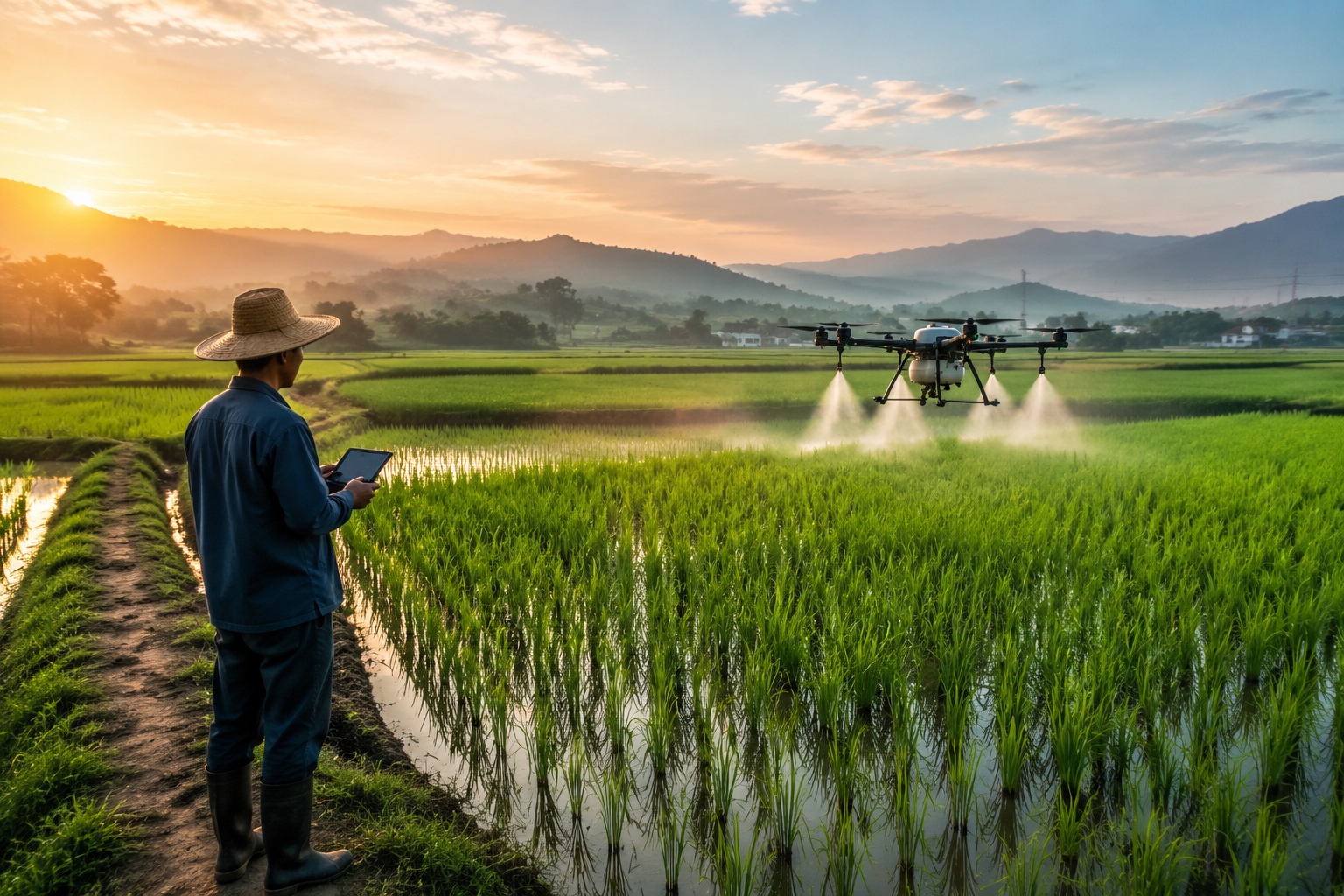
On a muggy July morning in Jianli County, on the Jianghan Plain of central Hubei, farmer Zhang Weimin guides a drone across his paddy field. The drone, loaded with biological pesticide, covers a two-acre plot in less than ten minutes. His grandfather would have spent two days doing this by hand, bent over in the muddy water. This small scene, repeated across thousands of villages, helps explain why a single Chinese province produces more rice than many countries.
Why Hubei’s Paddies Matter
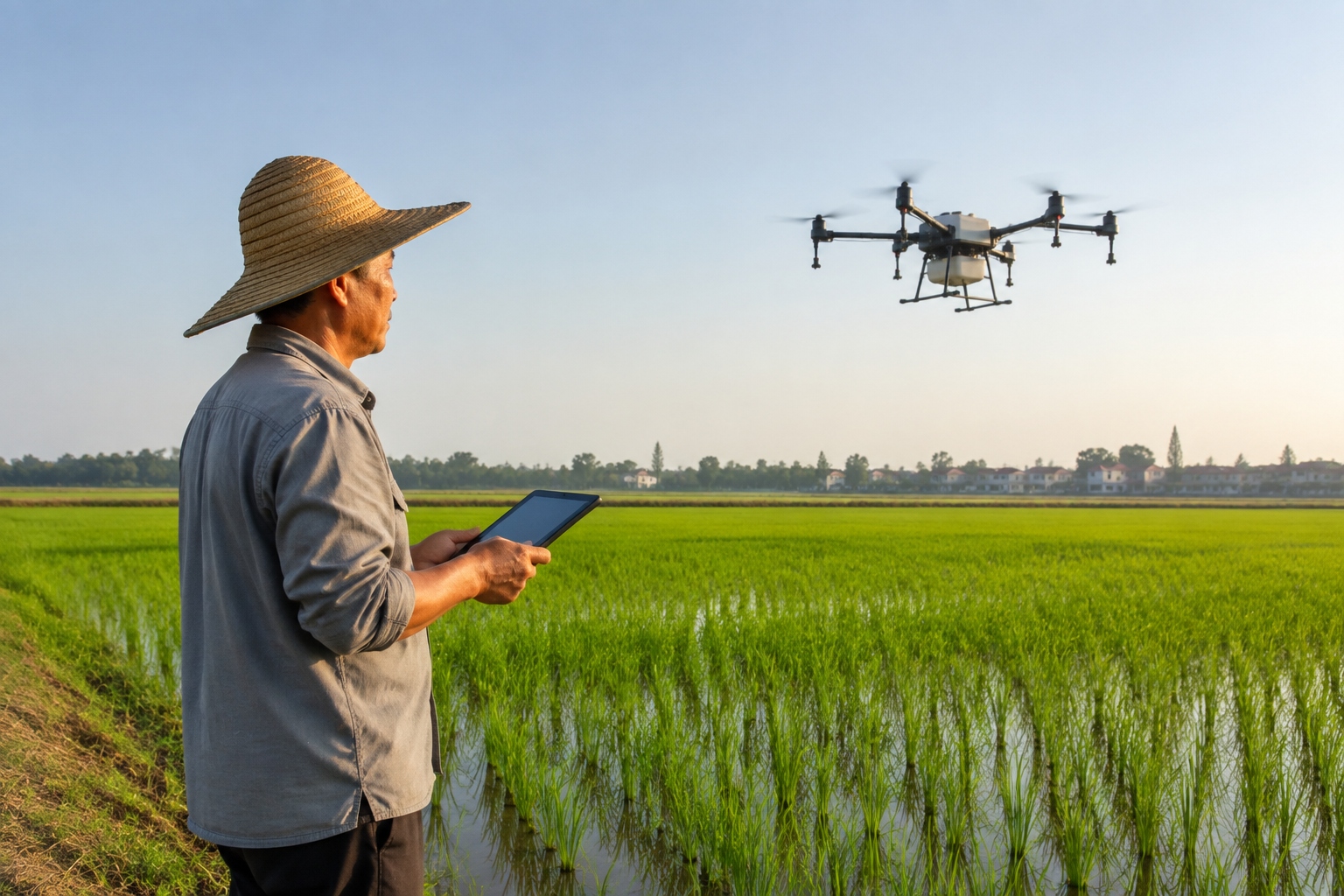
Hubei sits at the heart of China’s rice belt. The Yangtze River and its tributaries crisscross the province, along with more than a thousand lakes. The flat Jianghan Plain is natural paddy country. The province grows more than 50 billion jin (25 million metric tons) of grain each year, with rice accounting for roughly 75 percent. It is one of China’s top five rice producers and one of the few provinces that regularly sends surplus grain to other parts of the country.
For global observers, Hubei’s role is easy to understate. China must feed nearly a fifth of the world’s population with less than nine percent of its arable land. Any major disruption in a key growing province could ripple through global grain markets. That is why Beijing closely watches Hubei’s harvests, and why the province’s paddy fields are called a ‘ballast stone’ of national food security.
A Day in the Life of a Hubei Rice Farmer
Zhang Weimin, 46, has been farming for over twenty years. He manages about 80 acres, a mix of his own land and rented plots. This morning, he checks the water level in his field using a smartphone app connected to soil sensors. ‘I used to walk every corner of the field with a shovel,’ he says with a laugh. ‘Now I check from my bed.’
By midday, he has applied fertilizer through the irrigation system, a task that once consumed a full day of manual labor. In the afternoon, he talks with a cooperative manager about tomorrow’s harvest schedule. The cooperative, a grassroots organization common in China, provides machinery and marketing support for hundreds of farmers.
The Quiet Technology Revolution
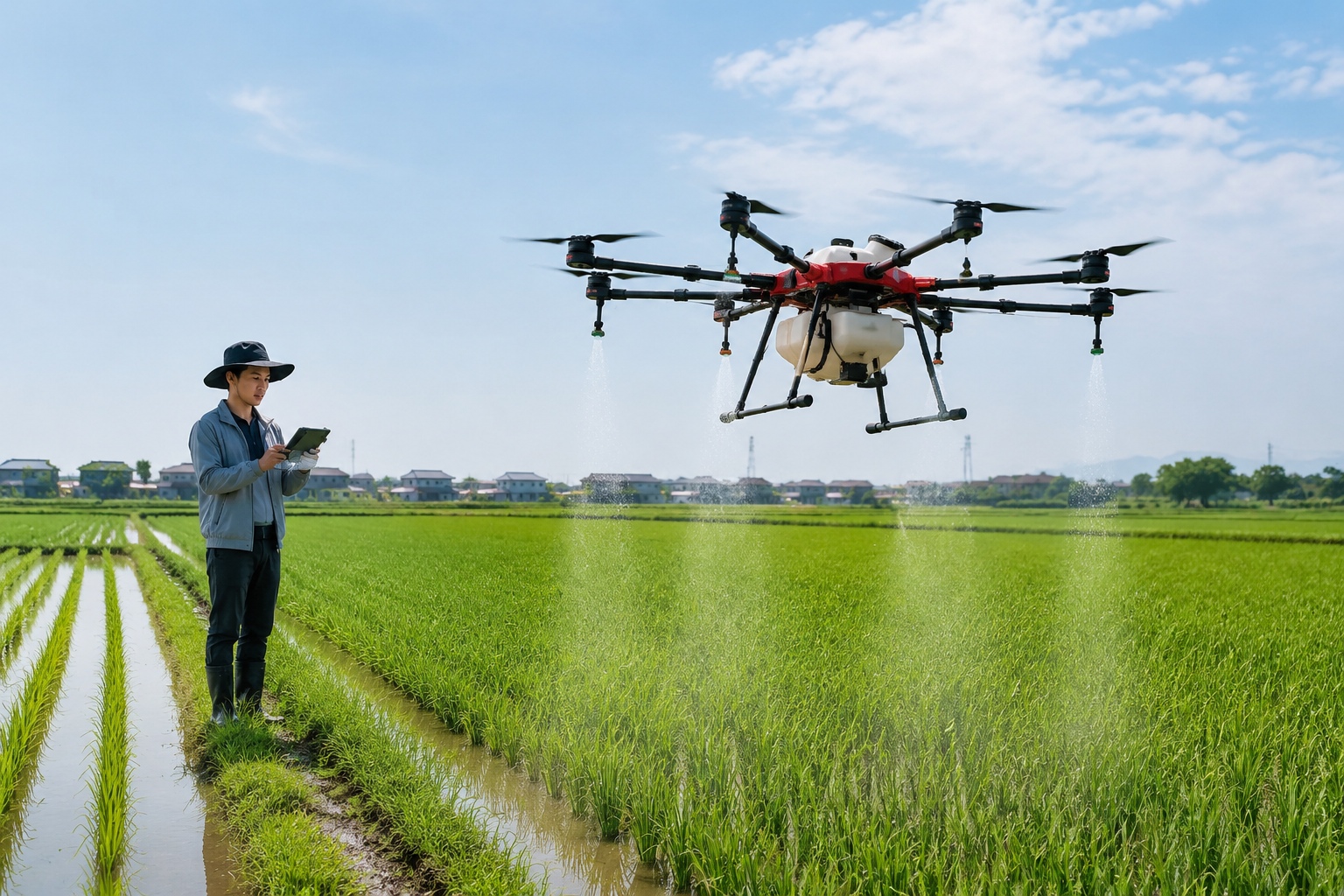
Behind Zhang’s routine lies a deeper transformation. Hubei’s agricultural mechanization rate now exceeds 75 percent. The province has adopted drones, satellite-guided tractors, and centralized rice nurseries that produce high-quality seedlings for replanting. In the past decade, the cost of these technologies has fallen sharply, making them accessible to family farms and cooperatives.
Younger farmers are also arriving. Zhang’s cooperative has 30 members under the age of 35, some trained in agricultural universities. They use data analytics to predict yields and decide exactly when to harvest. ‘We are not just growers anymore,’ says one young member. ‘We are food-system managers.’
When Nature Pushes Back
Nature does not make things easy. In 2020, severe flooding along the Yangtze damaged thousands of acres. Hubei has since invested heavily in high-standard farmland—levelled fields, better drainage, and reinforced embankments. By the end of 2023, more than half the province’s rice fields met this high-standard specification. Disease and insect pests remain a constant threat, but local agricultural services now use early-warning systems and integrated pest management to keep outbreaks under control.
The result is remarkable stability. Hubei’s grain output has grown or held steady in each of the last eight years, even as extreme weather events have become more frequent. This resilience is built not on luck, but on long-term planning and investment in rural infrastructure.
From Paddies to the Nation’s Rice Bowl
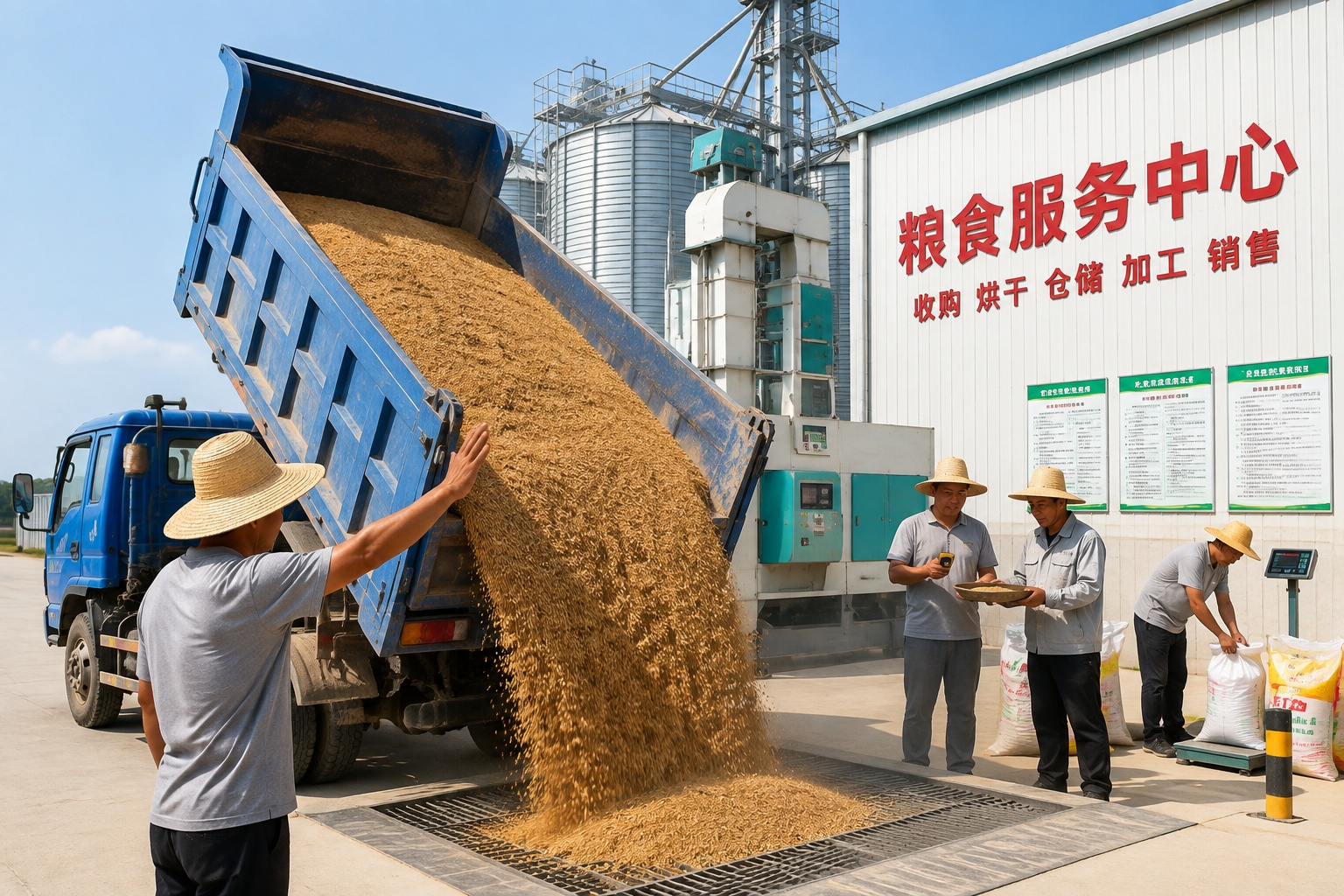
Once harvested, the grain moves quickly through a well-organized chain. Nearly every town has a grain service center with dryers and storage facilities. Buyers from state-owned grain reserve companies and private processors weigh, grade, and whisk the paddy to rice mills. Within days, the rice is on trucks heading to Guangdong, Shanghai, and other regions that cannot grow enough food for themselves.
Hubei exports more than 10 billion jin of grain annually, equivalent to the annual rations of 40 million people. The province’s ability to reliably supply this surplus is a key pillar of China’s food security. A national grain reserve system adds another layer: when prices fluctuate or disasters strike, stored grain is released to calm markets.
Why It Matters Beyond China
Hubei’s success touches global markets in direct and indirect ways. Stable yields in China reduce the need for massive grain imports, which would otherwise raise global prices and hurt import-dependent countries. China’s rice self-sufficiency rate has remained above 98 percent for decades, and Hubei is a big reason why.
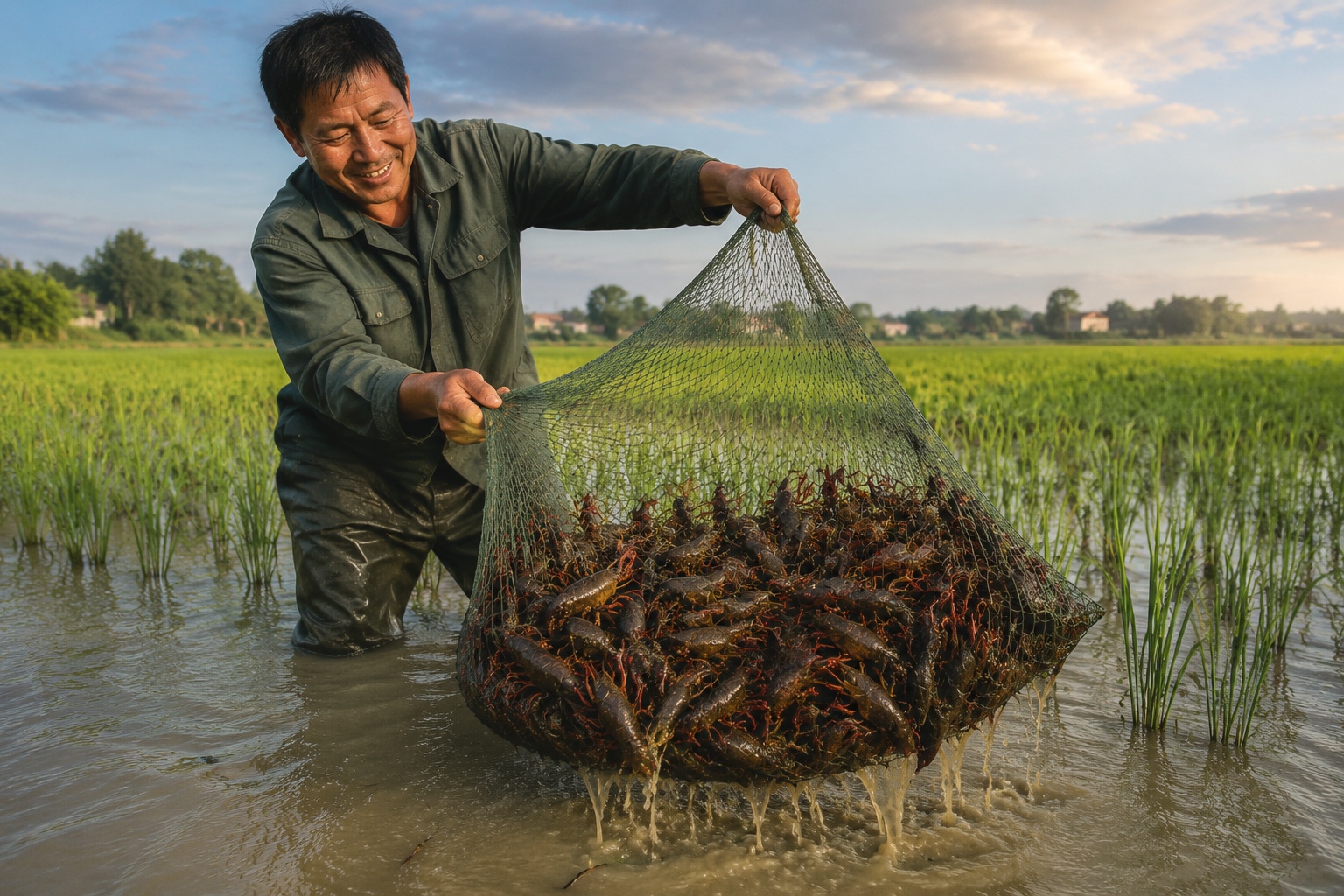
At the same time, Hubei’s experience offers lessons for other regions facing climate stress. The combination of flood control, precision agriculture, and cooperative farming shows how a large agricultural area can adapt to a more volatile climate. International agricultural researchers have watched Hubei’s integrated rice-shrimp farming model—where crayfish and rice share the same paddy—as a promising example of sustainable intensification.
What the Next Generation Brings
The rice-shrimp model has become a signature of Hubei agriculture, covering over 8 million mu (about 533,000 hectares). It uses fewer chemicals and gives farmers a second income, attracting younger people back to the countryside. Many new farmers are building online brands, selling premium rice and crayfish directly to consumers.
Ecological concerns also shape the way forward. The province has banned excessive fertilizer use and is working with universities to develop drought-tolerant and flood-resistant rice varieties. The goal is not only to produce more food, but to do so while keeping the soil healthy and the water clean.
Conclusion: A Grain of Rice, a Field, a Nation’s Resilience
Standing on his field, Zhang Weimin points at the rows of green shoots being readied for transplant. ‘In the end, the land responds to hard work and knowledge,’ he says. His story echoes millions of small farmers across China who, with the help of modern tools and strong rural networks, turn water, soil, and sunlight into the country’s most reliable foundation.
The paddies of Hubei are not a nostalgic landscape. They are a working system, continuously upgraded and tested. For anyone trying to understand China, following a single grain of rice from a farm in Hubei to a bowl in Shanghai—or to a port in Africa—reveals how discipline, technology, and human persistence keep a nation of 1.4 billion people fed.
Start the discussion at forum.chinacomes.com