
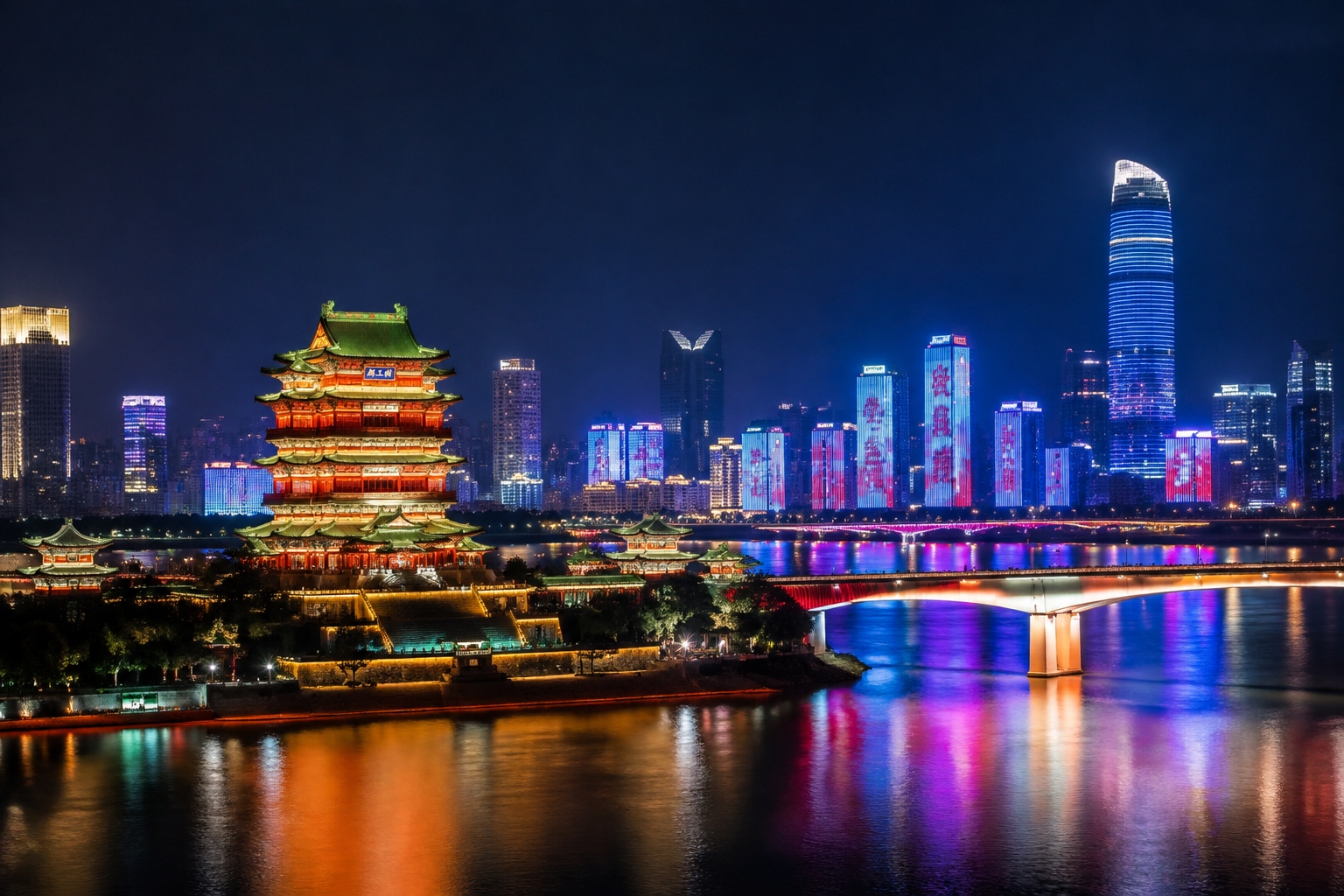

A City That Glows
Stand on the banks of the Gan River in Nanchang, capital of Jiangxi province in central China, and you’re surrounded by light. The ancient Tengwang Pavilion glows in golden LED, the bridges pulse with changing colors, and the skyline hums with digital displays. For most visitors, it’s just a beautiful cityscape. But for those who know lighting, this city is something more: Nanchang is one of the world’s most important hubs for LED technology, a place where a breakthrough in the lab became an industry that now lights up homes and streets across the globe.
Why Nanchang? The Power of a University
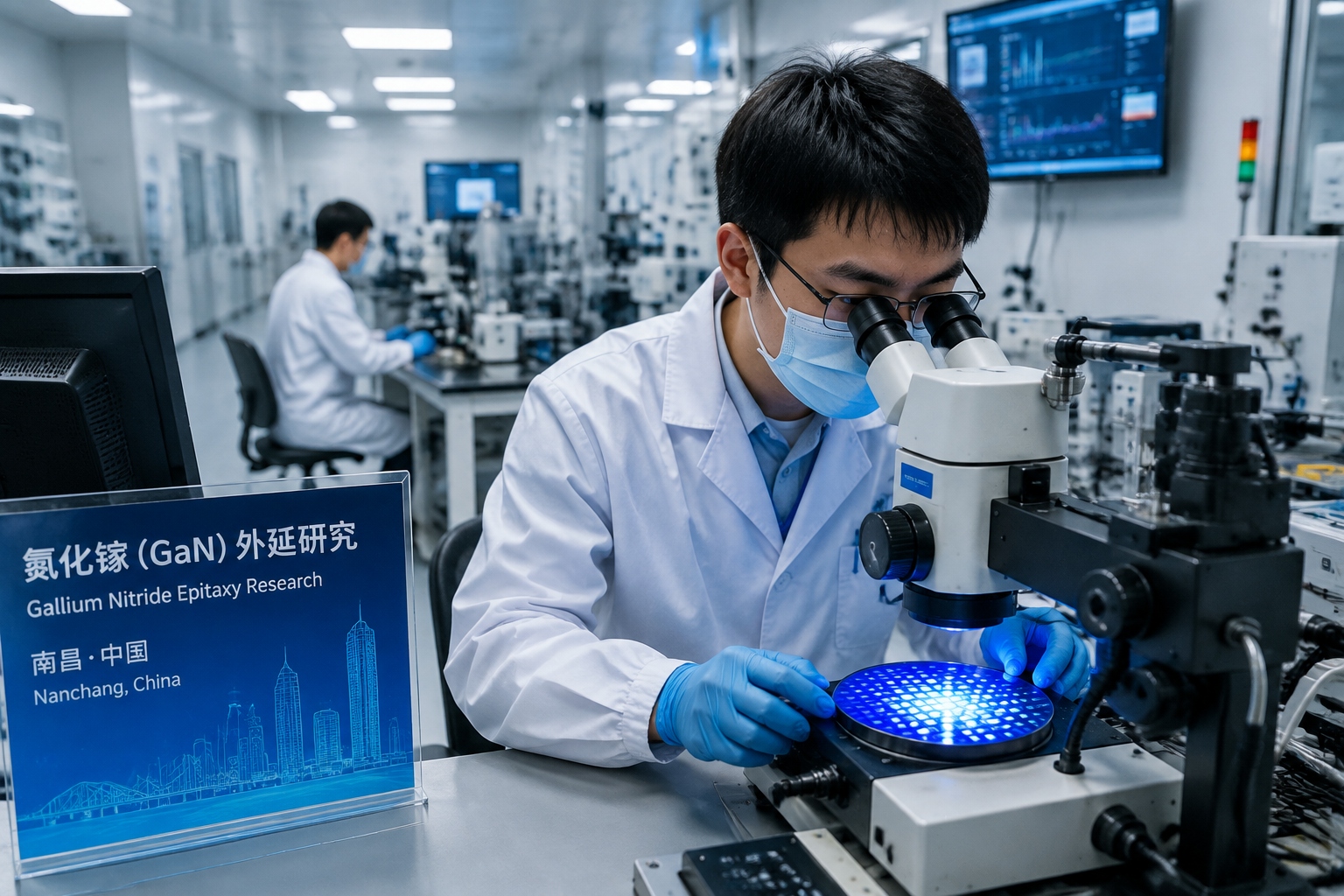
Nanchang wasn’t an obvious place for a high-tech industry. Unlike Shenzhen or Shanghai, it’s not known for venture capital or startup culture. What it had was a university with an unusual focus. In the 1990s, researchers at Nanchang University’s Institute of LED went against the global mainstream and chose to study silicon-based LED technology. Most LED makers then used sapphire as the substrate — the underlying layer on which the semiconductor crystal grows. Silicon was cheaper but far harder to work with, because the atomic structure and thermal properties of silicon don’t match gallium nitride, the material that emits light.
The university’s team, led by Professor Jiang Fengyi, spent years solving these problems. In 2003, they demonstrated a blue LED grown on a silicon substrate that worked — and in 2005, they made it brighter and more efficient. Their work was a global first. In 2015, the project won China’s State Technological Invention Award, the country’s top honor for innovation.
From Lab Notebook to Factory Floor
But a laboratory breakthrough doesn’t automatically become a product. The hard part is turning a small, glowing chip into something that can survive in a streetlight or a TV screen — and doing it at scale.
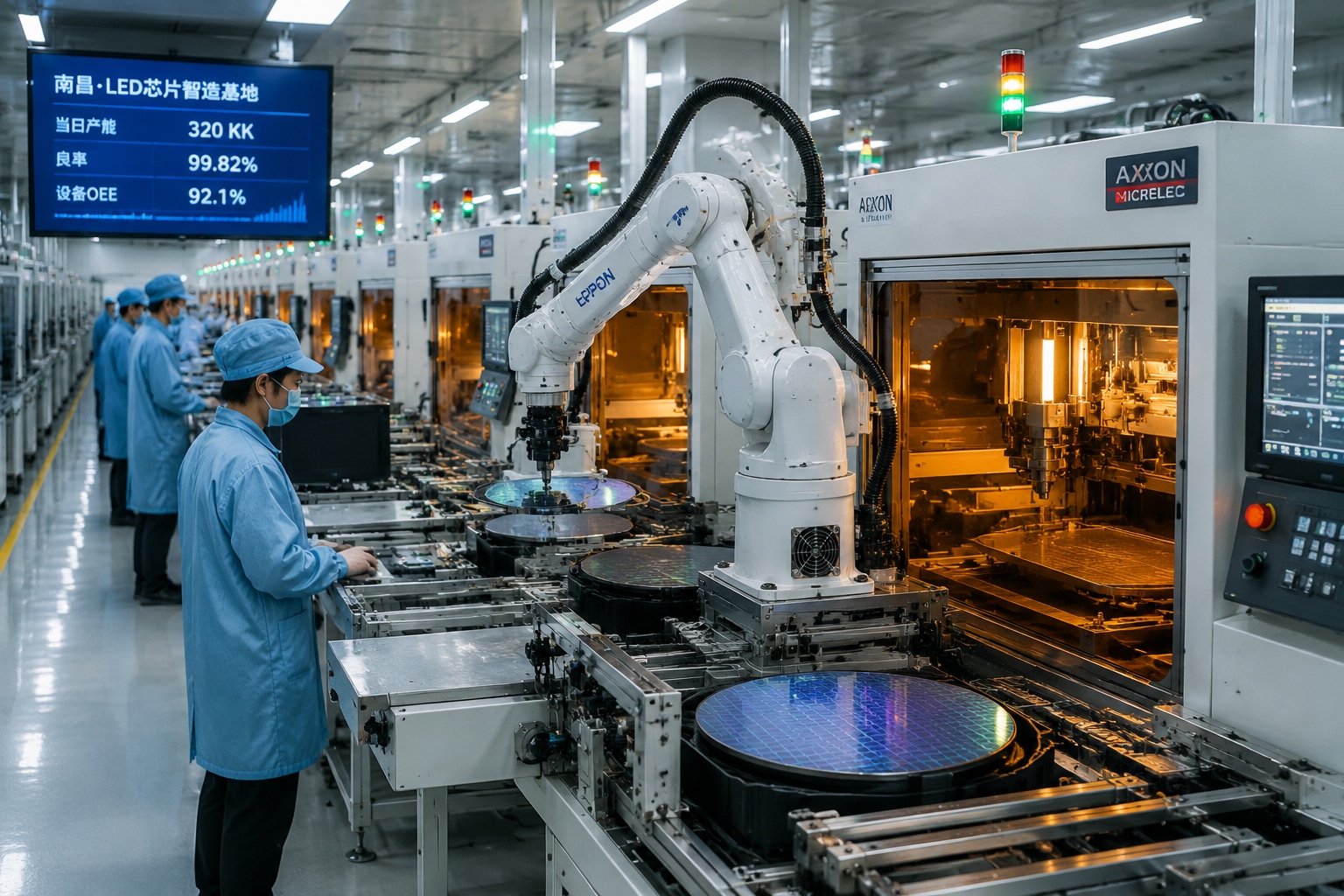
That’s where Lattice Power, now known as LatticePower Semiconductor, comes in. Founded in 2008 in Nanchang, it was the first company in the world to mass-produce silicon-based LED chips. The company’s engineers built production lines adapted to the unique chemistry of silicon wafers, instead of copying existing equipment designed for sapphire. It was risky. For years, sales were thin, and investors were skeptical. But the technology kept improving, and costs kept falling. Today, LatticePower produces billions of chips a year, supplying brands in lighting, displays, and automotive electronics.
How Silicon LEDs Change the Game
Why does the substrate matter? For one thing, cost. Silicon wafers are much cheaper than sapphire wafers, and the equipment used to process them is already mass-produced by the semiconductor industry. That means LED chips can be made at a lower price, especially for high-volume applications. Silicon wafers can also be made larger — 8 inches and beyond — while sapphire wafers max out at smaller sizes. That increases efficiency in the factory, reducing waste and energy.
These advantages have helped Chinese LED companies lower the global price of lighting. Cheap LEDs aren’t just about saving money — for the roughly 800 million people around the world who still lack access to reliable electricity, affordable off-grid solar lighting has become possible partly because of falling LED costs. Nanchang’s silicon LED technology is a piece of that global puzzle.
Nanchang’s LED Footprint Across the World
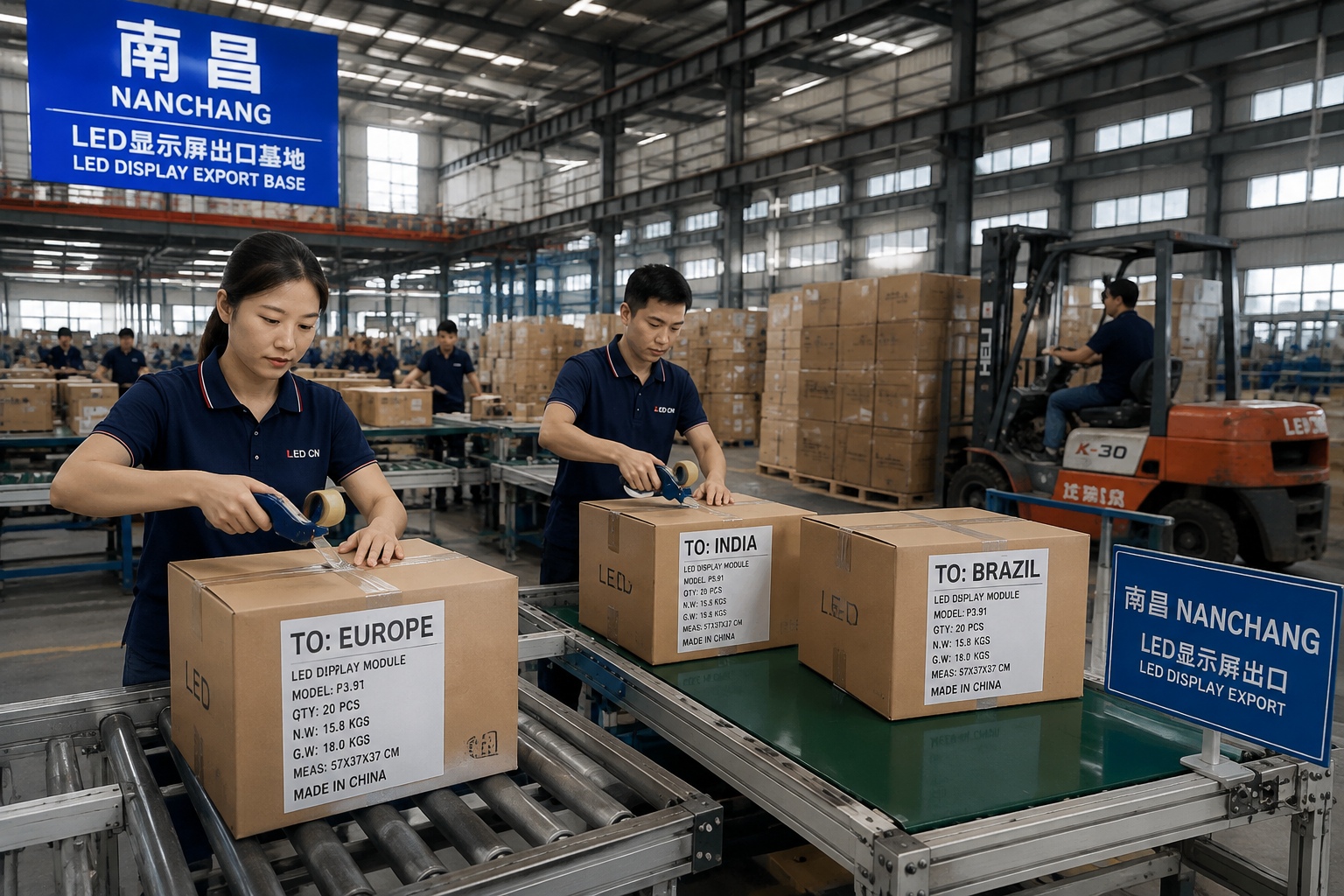
Today, Nanchang’s LED industry isn’t limited to chips. The city has built a full supply chain: from raw materials, chip manufacturing, packaging, to finished products like lamps, auto lights, and display screens. In the Nanchang High-Tech Development Zone, hundreds of firms work in the sector, many within walking distance of each other. This cluster model shortens supply time and encourages rapid prototyping.
Exports go to more than 100 countries. European cities use Nanchang-made LED modules in streetlights; Indian workshops install chips from Nanchang in inexpensive panels; American companies buy them for signage and industrial lighting. The technology has also enabled new applications. Researchers in agriculture use low-cost LEDs for plant growth studies; solar lantern makers in Africa rely on efficient LED chips to keep products affordable. In this way, a chip made in Nanchang can end up on a Nairobi street or a California highway.
The Everyday Revolution
Back in Nanchang, the LED industry has changed the city beyond its nightscape. The high-tech zone employs tens of thousands of workers, from line operators to optical engineers. Young professionals who might once have left for coastal cities now find jobs that allow them to stay. Local universities feed directly into the industry, with students working on real production problems during internships.
The light that comes from Nanchang is also in the homes of its residents. Streetlights are being retrofitted with smart LED systems that dim when streets are empty, saving electricity. Farmers in surrounding villages use LED grow lights to extend plant growth in winter. A generation of children has grown up assuming that bright, instant light is normal — but the road from the lab to that moment was far from instant.
What’s Next: Competition and Innovation
The LED market is not static. The next big battles are in Micro-LED and Mini-LED, which promise even better performance for displays. Nanchang’s companies are investing heavily in these areas. LatticePower, for example, has built a research center focused on Micro-LED—a technology that stacks microscopic LEDs to create ultra-bright, energy-efficient screens for phones, TVs, and AR glasses. There’s also growth in automotive lighting, where LED matrix beams are becoming a premium feature.
But the city faces strong competition. Shenzhen, East China’s Yangtze River Delta, and global players in Korea and Taiwan are all moving quickly. The advantage Nanchang still holds is its deep research base and vertical integration. The question is whether it can patent the next breakthroughs and build them into products before others do.
A City and a Technology Growing Together
The sign above the entrance to LatticePower’s factory reads: “Make the world brighter, silicon is our choice.” That sense of purpose reflects how a city’s identity can become intertwined with a technology. Nanchang is not the only place in China with LED companies, but it is arguably the one that built itself from the hardest technical path. The lab work of a few professors became a local industry, then a global one.
When you see an LED screen on the other side of the world, there is a real chance it has a piece of Nanchang inside it. And in Nanchang, that thought isn’t just pride — it’s a reminder that patient research, stubborn engineering, and a little bit of light can change a city.
Start the discussion at forum.chinacomes.com