

August in the Grape Country
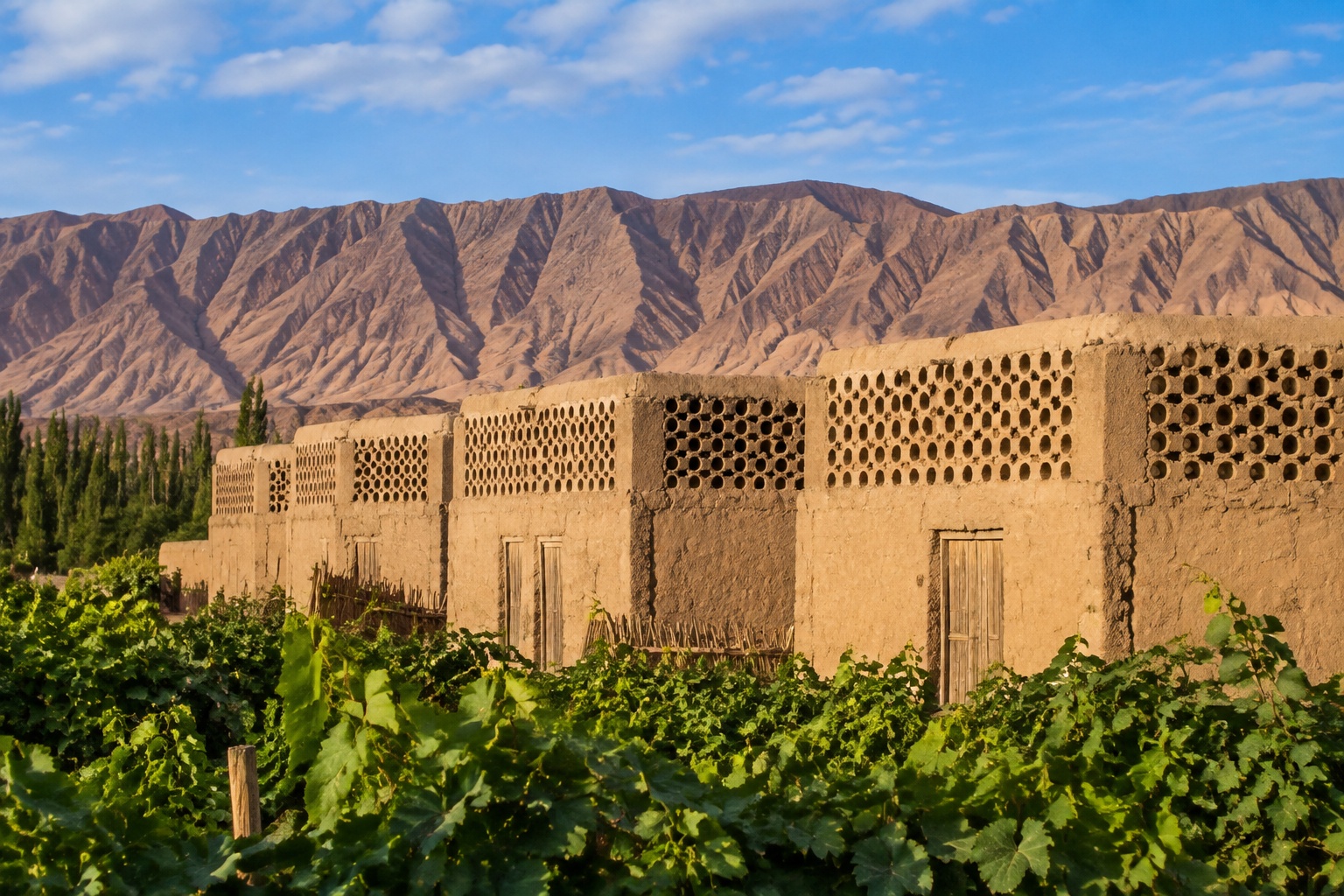
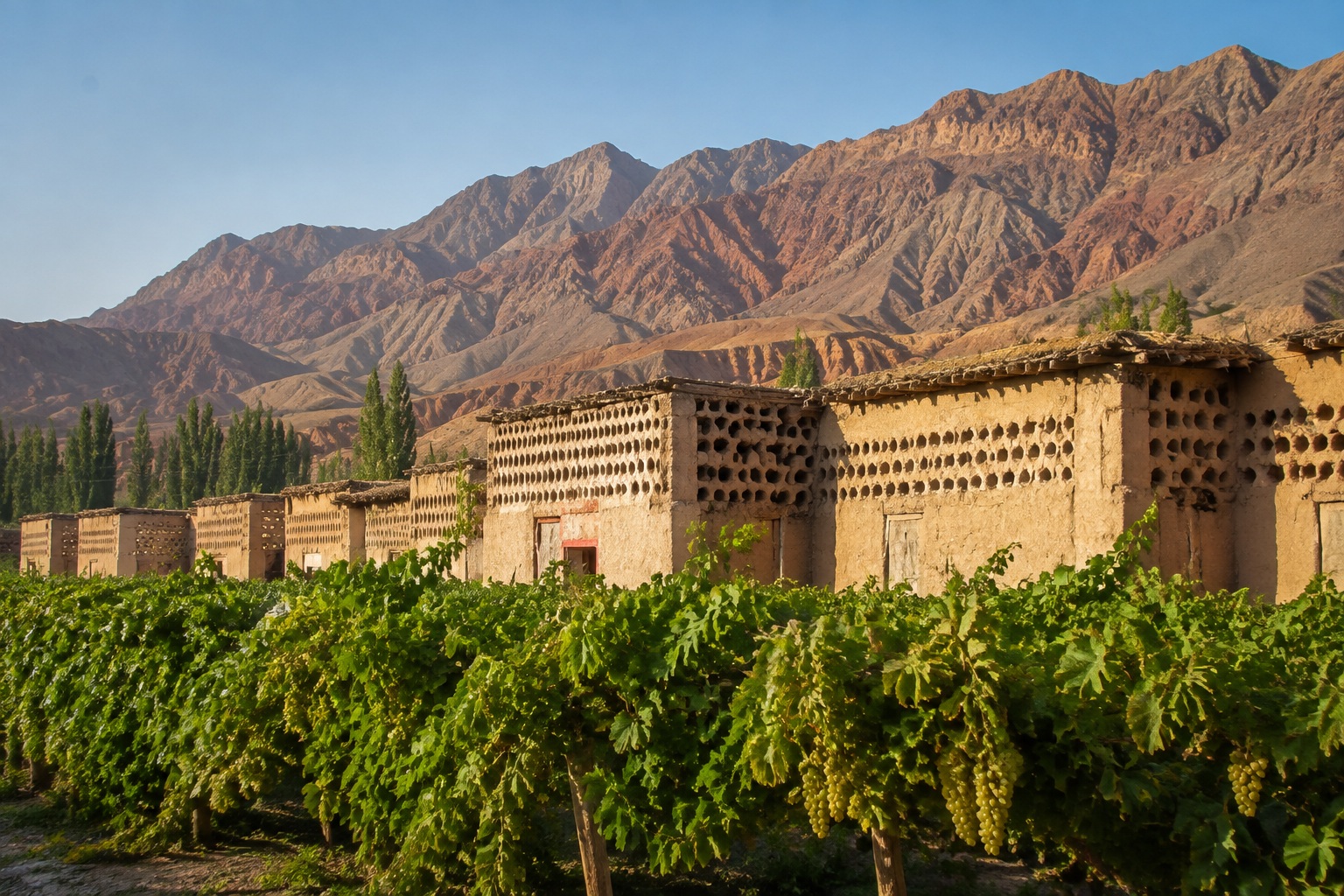
It’s just past dawn in the Turpan Basin, and Ayiguli is already climbing the ladder to the second floor of a squat, flat-roofed building made of mud bricks. She carries a basket of green grapes. Above her, the walls are covered with rows of rectangular holes, like a honeycomb. This is a chunke, a traditional drying hut that has transformed Xinjiang’s grapes into raisins for centuries.
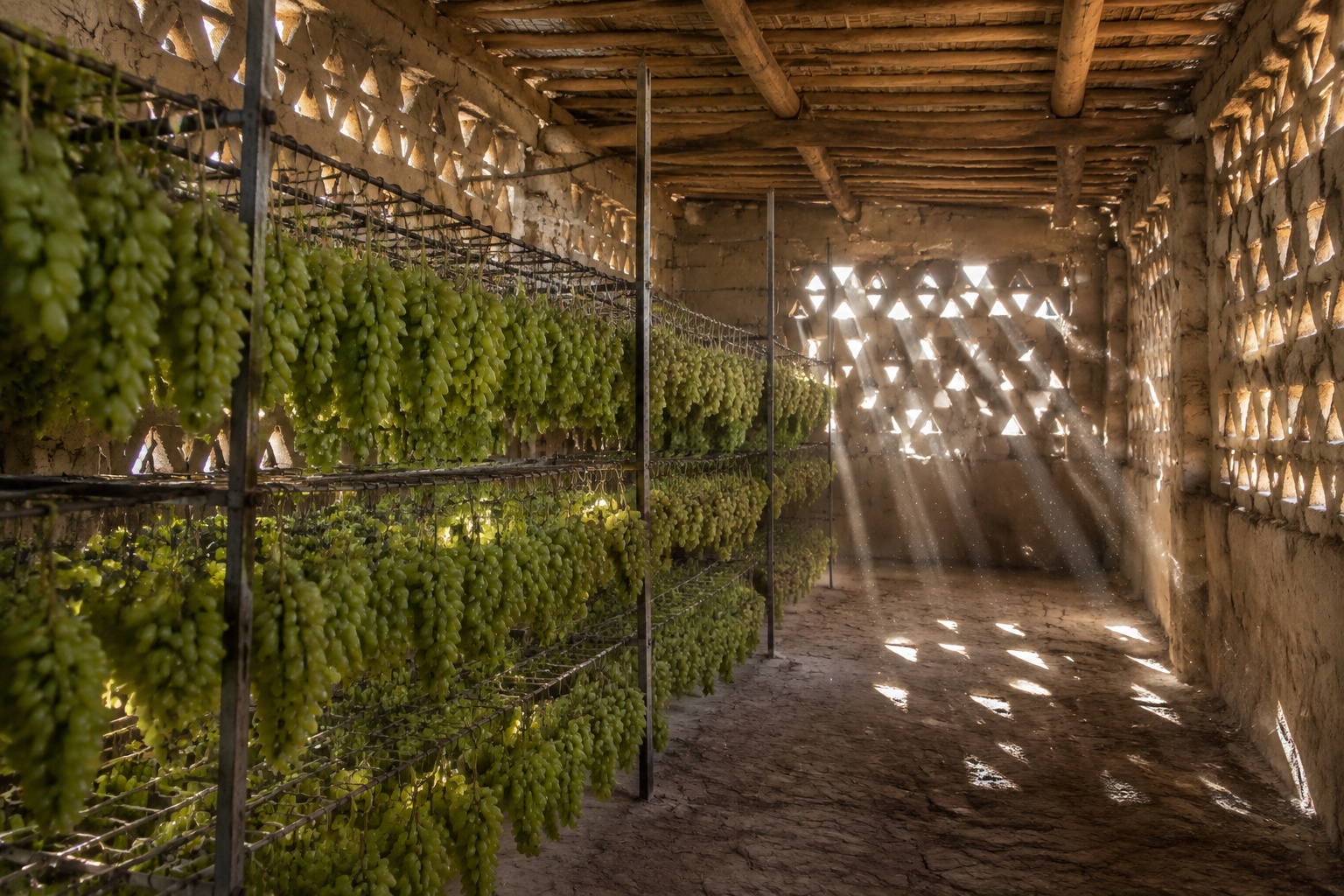
Ayiguli hooks each bunch onto horizontal steel wire racks. “The wind does the work,” she says. “We just hang them and wait.” In three to five weeks, the grapes lose about 80 percent of their water weight and become small, wrinkly, sweet gems.
The Heart of China’s Raisin Country
Xinjiang, in northwest China, produces more than 80 percent of the country’s raisins. The Turpan Basin, where Ayiguli lives, is the epicenter. It is one of the lowest and driest places on Earth, with summer temperatures that soar past 40°C and annual rainfall below 20 millimeters. That, combined with a long growing season and glacier-fed irrigation, creates ideal conditions for grape cultivation.
China as a whole grows roughly 20 percent of the world’s raisins, and Xinjiang’s vineyards contribute the bulk. Yet most of the harvest never leaves the country; the domestic market absorbs it in everything from bakery goods to breakfast cereals. Still, the export trade has grown steadily, with containers of packaged raisins heading to Southeast Asia, the Middle East, Europe, and beyond.
How a Mud-Brick Drying Hut Works
A traditional drying hut is a study in passive engineering. The walls are built with hollow brickwork and pierced by hundreds of vent holes, allowing hot, dry air to circulate freely. Grapes are hung on metal frames inside, spaced so that air touches every fruit. Unlike industrial dehydrators, which use artificial heat, the hut relies on the sun and the desert wind. The result is a slower process that preserves the fruit’s natural sweetness and green-gold color.
In recent years, some growers have added fans and solar panels to speed up the drying, but the basic design remains unchanged. “The old way still gives the best taste,” says Ayiguli. “If you dry them too fast, they lose their aroma.”
From Vine to Sorting Table
The journey to a consumer’s snack bowl starts with careful picking. Grapes are harvested at dawn and cleaned briefly before being carried to the drying huts. After drying, the raisins are shaken off the bunches and transported to processing plants.
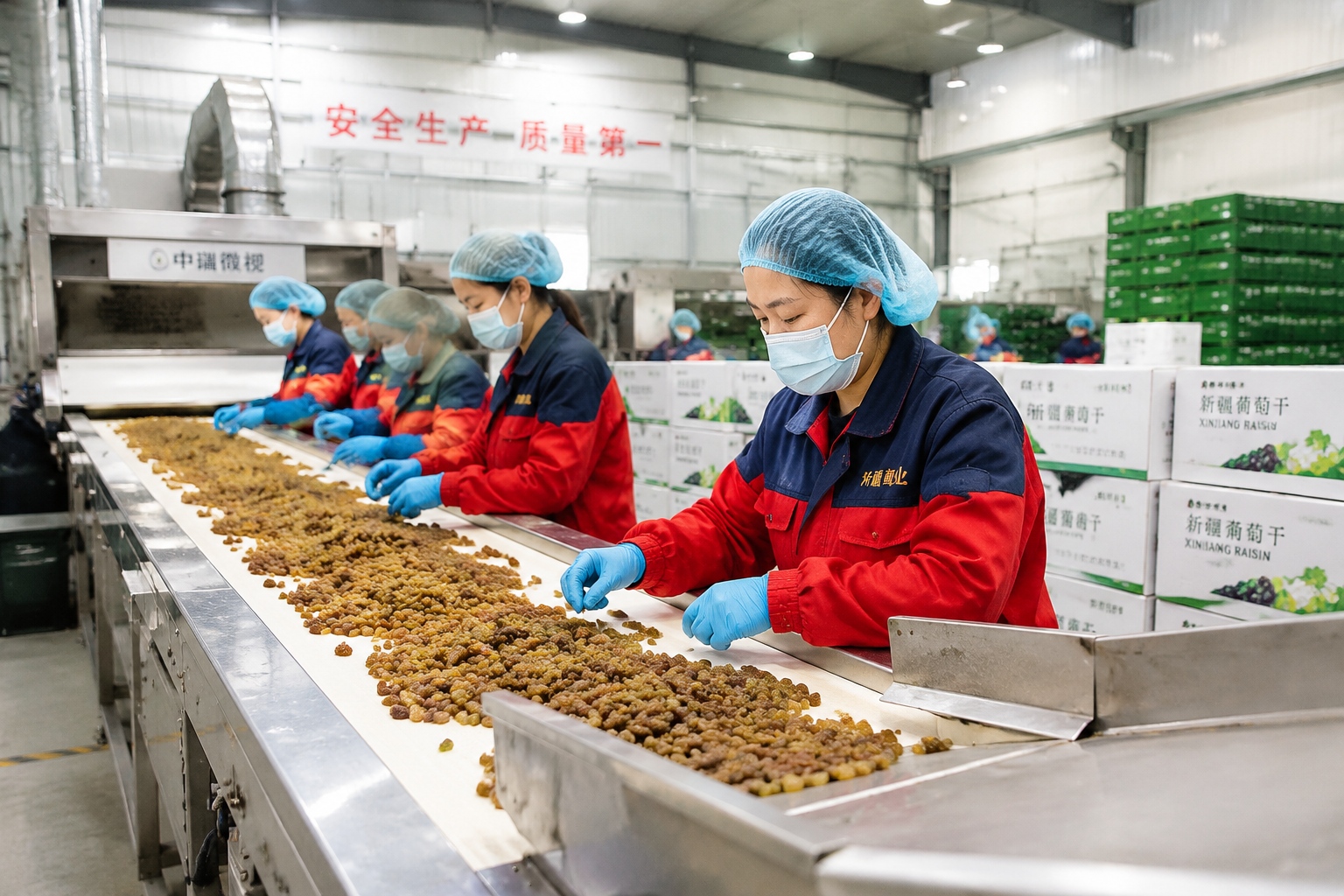
Inside a modern factory outside Turpan, workers pour bags of raisins onto a vibrating conveyor. Machines blow away stems and leaves, and an optical sorter scans every single raisin, ejecting any that are discolored or misshapen. Then the raisins pass through metal detectors and a water bath that removes dust. Finally, they are sprayed with a thin layer of food-grade oil to keep them from sticking, and packed into consumer-sized bags or bulk boxes.
This combination of hand labor and automated accuracy is what allows Xinjiang’s raisins to meet strict import standards in Japan, Europe, and the United States. For example, pesticide residue testing is done at independent labs, and exporters must provide certificates of origin and phyto-sanitary documentation.
The Numbers Behind the Export
China’s raisin production is a significant slice of the global pie. In recent years, the country produced around 300,000 metric tons of raisins annually, with Xinjiang contributing about 240,000 tons. Of that, an estimated 20,000 to 30,000 tons are exported each year, according to customs data.
The top destinations are as varied as the raisins themselves. Indonesia and Malaysia buy large quantities for their baking and snacking industries. The Middle East, especially the United Arab Emirates and Saudi Arabia, imports Chinese raisins for use in traditional sweets. European buyers, particularly in the UK, Germany, and the Netherlands, prefer Sun-Maid-style natural raisins or organic varieties. A smaller but growing market exists in North America, where Xinjiang raisins are often sold in Asian grocery stores.
A Local Industry With Global Reach
Raisin production is not just an export story; it’s a rural economic engine. In Turpan, more than 60 percent of rural households are involved in grape growing and processing. Villages have formed cooperatives that pool resources to build modern drying facilities and grading warehouses.
One such cooperative is in the village of Matag, where 34-year-old Erkin manages a team that packs raisins for a brand sold in Germany. “Ten years ago, we sold loose raisins to middlemen who paid very little,” he says. “Now we control the whole chain, from vine to container.”
The rise of e-commerce has also helped. Many small producers sell directly to consumers through platforms like Taobao and Pinduoduo, and some have started exporting via cross-border e-commerce sites. This has increased incomes and reduced dependence on a handful of buyers.
What Travelers See Today
Tourists visiting the Grape Valley near Turpan can wander through shadowy drying huts, sample raisins still warm from the sun, and watch as women package them into colorful sacks. The valley is a Unesco World Heritage site and a popular stop on the Silk Road trail.
For visitors, the experience is a tangible link to a tradition that has lasted centuries. As one guide puts it, “The raisins you buy in a supermarket in London or Tokyo may have started as a grape hanging in a hut just like this one.”
From Huts to Harbors
The journey from the mud-brick huts of Xinjiang to a breakfast table in Jakarta or Dubai is long, but it’s remarkably smooth. After packing, the boxes are loaded onto trucks that cross the border into Kazakhstan or travel east to China’s coastal ports. From there, container ships deliver them to destinations across Asia and Europe. A sealed container with raisins can reach the Middle East in about two weeks from the factory gate.
What makes this possible is not just infrastructure, but a supply chain built on trust. Growers follow protocols, processors test every batch, and exporters guarantee traceability. The raisins may be small, but the system behind them is vast.
Conclusion
It’s easy to forget, when you shake a handful of raisins into your oatmeal, that each one carries the story of a place and people. In Xinjiang, that story is written in mud bricks and wind, in calloused hands and optical sorters, and in the quiet pride of growers who have turned an ancient craft into a modern export industry. The next time you taste a raisin, consider its journey—it might have started in a sun-warmed hut on the edge of the Taklamakan Desert.
Start the discussion at forum.chinacomes.com