


It Started with a Small Problem
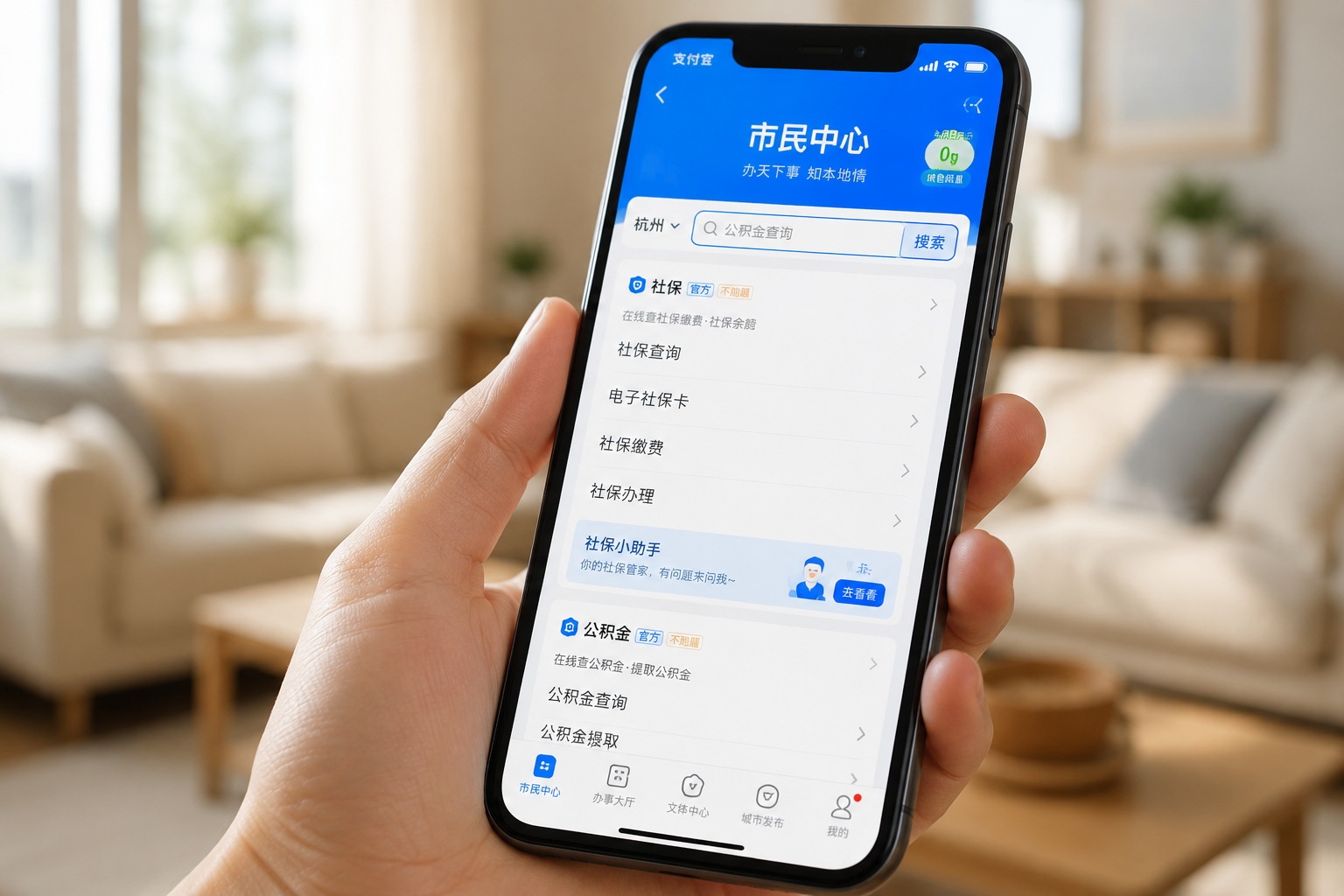
I had just moved to Hangzhou for a new job, and my social security account was still linked to my old city. To transfer it, I expected a long wait at a government office—paperwork, queues, maybe a half-day off work. Instead, a colleague told me: “Just open Alipay.” Within ten minutes, I had submitted the transfer request using the “市民中心” (Citizen Center) mini-program. No forms, no office visit. That was my first taste of Hangzhou’s digital government ecosystem.
Social Security: From Bureaucracy to Tap-and-Go
The social security system in China—known as 社保 (shebao)—covers pension, medical insurance, unemployment, work injury, and maternity benefits. In the past, changing jobs or cities meant a paperwork marathon. But in Hangzhou, most social security tasks can be done through the “浙里办” (Zhejiang Gov Service) app or inside Alipay’s Citizen Center.
What can you do on your phone? Check your contribution history, apply for a transfer, pay overdue premiums, even download official proofs. The interface is surprisingly clear: it uses facial recognition for identity verification, so no physical ID needed. For me, the whole process took less time than ordering a coffee. And if you’re self-employed, you can also sign up for basic social security right from the app.

Hospital Registration: Skip the Line, Keep Your Spot
Hangzhou’s public hospitals are big, busy, and often overwhelming. But the city has rolled out a unified online appointment system. Through the “健康杭州” (Healthy Hangzhou) app or Alipay, I can book an appointment at any major hospital days in advance. On the day, I just show up at the clinic a few minutes before my slot—no need to wait in registration queues.
The system even handles payments: after the doctor prescribes medicine, the bill appears on my phone. I pay with one click, and the pharmacy prepares my drugs. When I had a minor issue last month, I did the entire consultation, test, payment, and medication pickup without ever pulling out my wallet. The only time I needed my physical ID was to get the blood test.
For follow-ups, you can have video consultations—yes, through the same app. The doctor sees you on camera, writes a digital prescription, and the pharmacy delivers the medicine to your home. This is not a pilot; it’s standard procedure in Hangzhou for non-emergency cases.
Marriage Certificate: Tying the Knot with a QR Code
Now this one surprised even me. When my fiancée and I decided to get married, we assumed it would be a trip to the civil affairs bureau, paperwork, waiting. But we learned that in Hangzhou, you can register for marriage entirely online—up to the point of picking up the certificate.
We used the “浙里办” app again. The process: verify identities via facial recognition, fill in personal details, upload photos, and select a date and time slot. The system checks that you are not already married (that’s the fun part). Then on the chosen day, we went to the bureau for a 10-minute appointment. The clerk scanned the QR code we had generated, confirmed our IDs, printed the certificates, and we were done. Total physical presence required: 10 minutes. We even took our own photos at home to save the fee.

Why Does This Work in Hangzhou?
Hangzhou is the home of Alibaba, so the tech infrastructure is strong. But the real credit goes to the city government’s push for “数字政务” (digital government services). Since about 2017, they’ve been integrating databases across departments—social security, health, civil affairs, tax—so that a single login gives access to hundreds of services. The result is what they call “最多跑一次” (at most one visit). In many cases, you don’t need to visit at all.
For overseas readers, this might sound like a surveillance nightmare. But the privacy trade-offs are minimal: the apps use encryption and government-level security. Most people I know are happy to exchange a little data for the convenience of never standing in line again. And you can opt out of most advanced features—the old paper systems still exist.
Of course, not everything is perfect. Elderly people sometimes struggle with the apps (though there are helpers at service centers). The system relies on having a Chinese national ID and a local residency permit. But for those who are eligible, it’s transformative.

What This Means for Daily Life
Living in Hangzhou, the phone has become a remote control for everyday bureaucracy. I pay rent via the property management app, renew my residence permit through a text message link, and even vote in local elections via an official platform. The marriage certificate was the capstone—proof that digital identity can handle life’s most personal milestone.
I’m not an early adopter or a tech expert. I’m just a regular person who was pleasantly surprised by how much could be done without a single paper form. If you ever visit Hangzhou, try opening the Citizen Center on your phone—you’ll see what I mean.
Start the discussion at forum.chinacomes.com