

Introduction
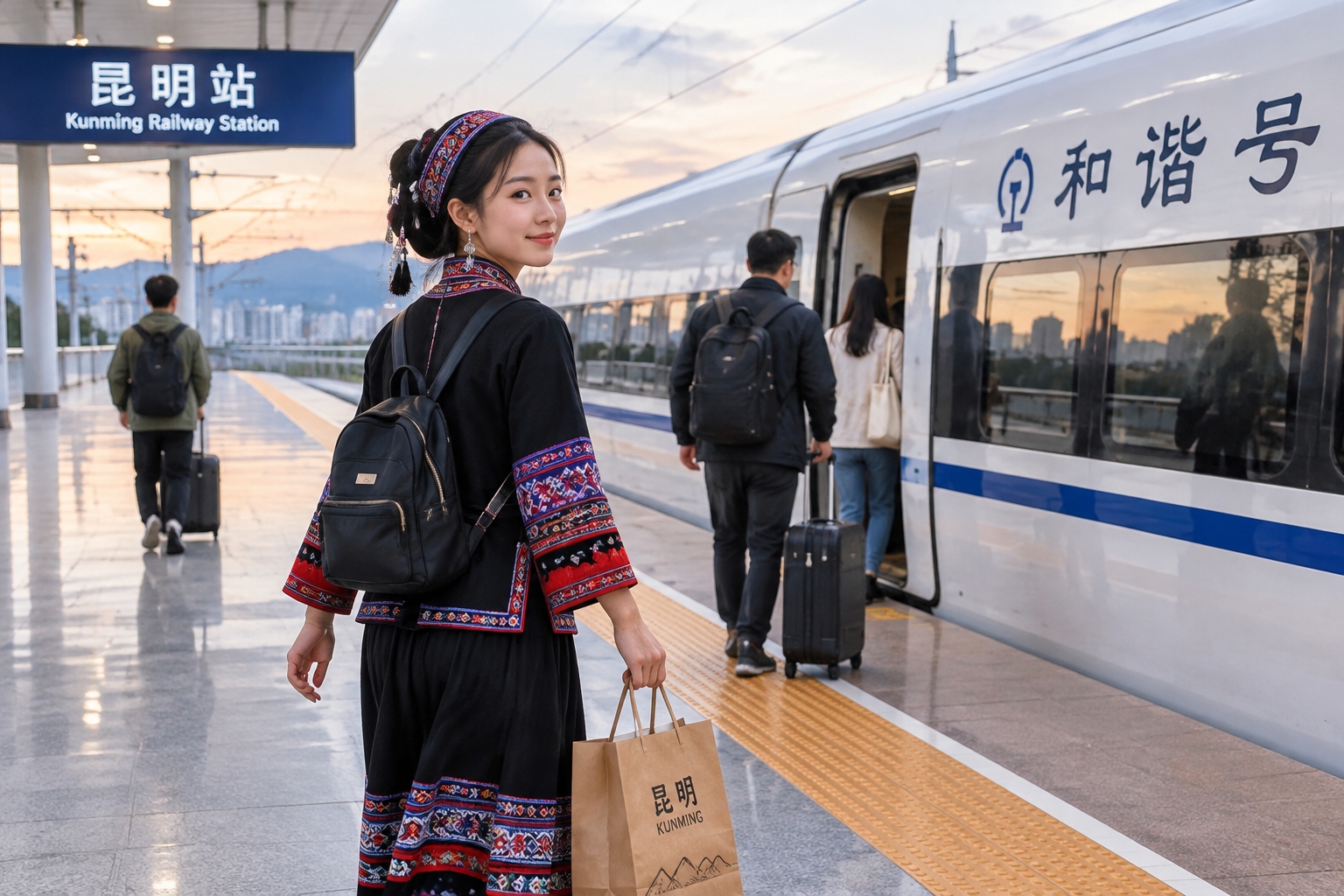
On a Friday evening in late July, A Zhuo, a 25-year-old graphic designer, squeezes onto a packed subway train in Kunming. She’s carrying a small backpack and a paper bag of pineapples—a gift for her grandmother. The train takes her to the high-speed rail station, where a two-hour ride will drop her off in Chuxiong, a Yi Autonomous Prefecture southwest of Kunming. Tomorrow is the Torch Festival, one of the most important festivals for the Yi people. Her mother has already sent a voice message: “Don’t bring too much. Just come home.”
A Zhuo is one of tens of thousands of young Yi people who have moved to Kunming, the capital of Yunnan Province, for work or school. They live in apartments, ride e-bikes, order delivery, and speak Mandarin at the office. But on festival days, many of them travel back to their home villages, put on embroidered clothes, and join fire-lit dances that have been passed down for centuries.
To understand how this generation balances urban life with cultural roots, I asked three young Yi professionals in Kunming to talk about their Torch Festival experiences and what it feels like to switch between two very different worlds.
“Fire Makes You Forget Your Phone”
A Zhuo is from a village in Chuxiong. She now rents a studio apartment in a trendy neighborhood in Kunming, where she designs packaging for coffee brands. On most weekends, she posts photos of hipster cafés and art exhibitions. But during the Torch Festival, her Instagram and WeChat feed changes completely.
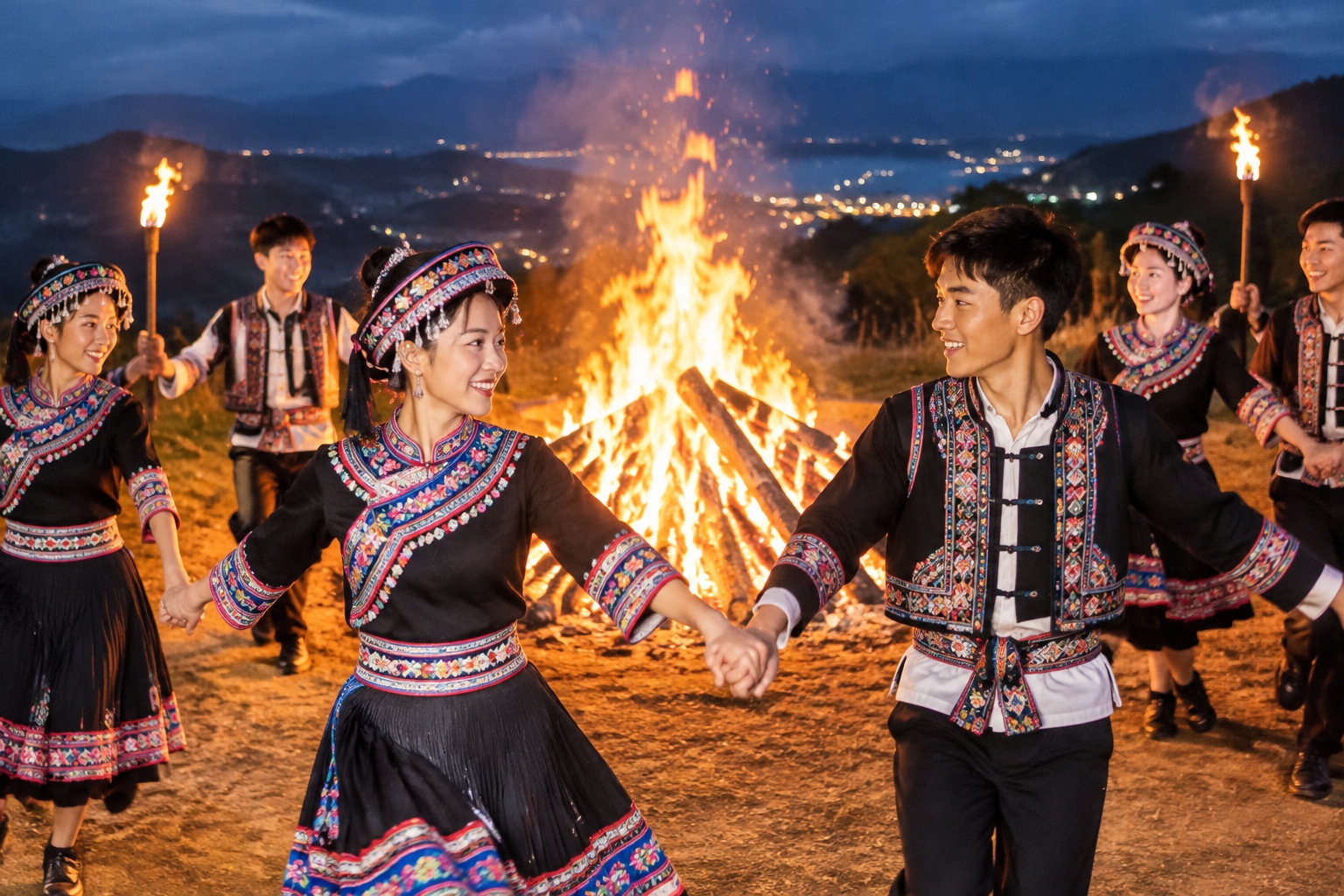
“The festival, for us, is not just a party,” she tells me over video call the day after she arrives home. “In the village, everyone comes out. The old people sit by the fire, the kids run around with torches, and the young people hold hands and dance in a circle. There’s so much smoke and heat. It’s a bit chaotic, but it feels alive. You forget your phone, forget deadlines.”
She pauses and laughs. “In the city, I think a lot about my career and rent. But at the festival, I’m just a daughter, a granddaughter, a neighbor’s child. It’s like a time machine.”
I ask her if she ever feels pressure to return. “My parents don’t force me, but if I don’t go, my grandmother gets really sad. So I try to go every year, even though the train tickets are hard to get during the holiday rush.”
“I’m the Only Yi in My Office”
Twenty-eight-year-old Xiao Gang grew up in a small town near the Sichuan-Yunnan border. He moved to Kunming eight years ago and now works as a software engineer at a tech company. He is the only Yi person on his team of twelve.
“At work, nobody knows anything about my culture,” he says. “One time, a colleague saw a photo of me in traditional clothing and asked if it was a costume for a wedding. I had to explain that it’s what we wear for festivals.”
Xiao Gang usually skips the journey home because his parents now live in Kunming too. Instead, he celebrates the festival at a large public event held in the city’s Ethnic Village, a theme park-like spot that showcases Yunnan’s minority cultures. “It’s different from the village,” he says. “There are stage performances and food stalls. It’s more commercial, but it still gives me a sense of belonging.”
He also mentions that the festival has become more popular among non-Yi people. “On the night of the festival, some Han Chinese friends ask me where to ‘see the fire.’ Last year I brought a few colleagues. They were amazed by the torch-lighting ceremony. They took videos and posted them online. I felt proud, but also a little weird—like my culture was being turned into a spectacle.”
That ambivalence is common among his peers. “I want people to know about us, but I also don’t want the festival to become just another tourist attraction. It’s not a show. It’s about family, memory, and the hope for a good harvest.”
“My WeChat Moments Show Two Worlds”
Twenty-three-year-old A Yi is a nurse at a hospital in Kunming. She grew up in a county outside Dali, but her family moved to the city when she was in high school. She has been to her ancestral village only a few times, but she still tries to observe the festival in her own way.
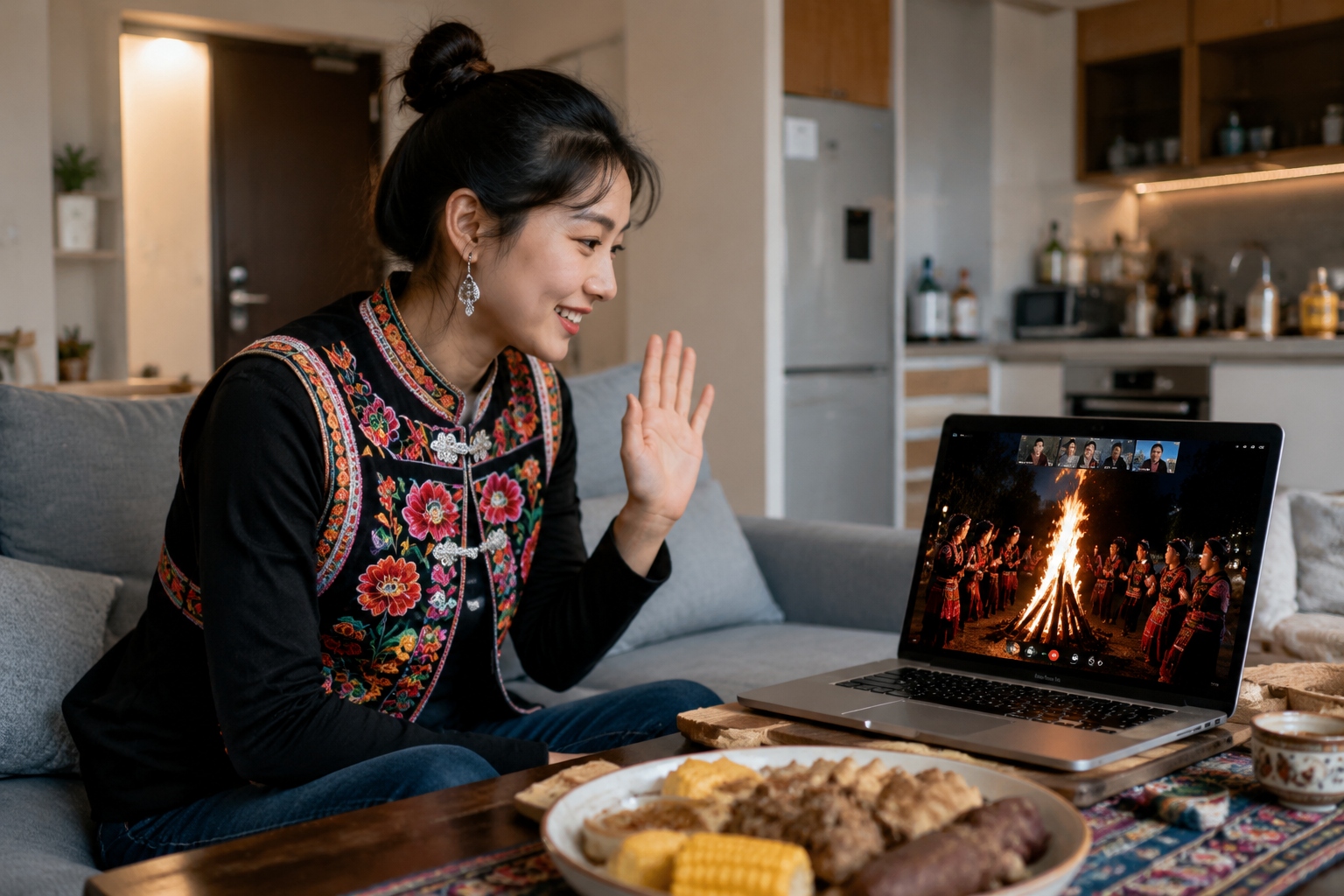
“In the city, I can’t light a huge bonfire in my apartment building,” she jokes. “But I cook a special meal with my roommates and put on my Yi vest. Usually, my mother joins us on a video call, showing us how to do the dances. It’s not the same, but it keeps the connection.”
She tells me a story from last year. “I showed a video of the bonfire dance to my co-worker. She said, ‘Wow, that’s like a rave but with fire.’ I didn’t know how to respond. Part of me was annoyed, but part of me thought, well, it is a little like a rave. But the meaning is deeper. It’s about burning away bad luck and welcoming the new year.”
I ask her about her identity. “I grew up in the city. I’m not fluent in the Yi language. I’ve never herded sheep. Does that make me less Yi?” She pauses. “I used to feel that way. But now I think the festival is a way to reconnect. It doesn’t matter if I do it perfectly. It matters that I remember where my family came from.”
What Young Yi People Want Outsiders to Know
I asked all three what they would say to someone who knows nothing about the Torch Festival. Here’s what they want you to know:
It’s Not Just One Day
The Torch Festival, or Huozba Jie in Chinese, is celebrated by the Yi, Bai, Naxi, and other ethnic groups in southwestern China. It falls on the 24th day of the sixth lunar month, usually in July or August. In some places, the celebration lasts for three days. People light torches, dance around bonfires, compete in horse races, wrestling, and bullfights, and pray for good crops and health.
It’s Not a Tourist Show
Yes, you can see paid performances in Yunnan, and many tourists enjoy them. But for Yi people, the festival is deeply personal. It’s a time to honor ancestors, visit family, and pass down traditions to children. When you participate, it’s best to do so with respect—not just as a photo opportunity.
Yes, They Live a “Modern” Life
All three young professionals say they often get the question: “How can you be into tech or fashion and also practice such an old tradition?” For them, there’s no contradiction. “My grandpa uses a smartphone to watch the torch festival livestreams,” says Xiao Gang. “Tradition doesn’t mean staying frozen in the past. It means carrying the fire in your own way.”
A Festival That Moves With Them
Back in Chuxiong, A Zhuo sends me a few photos from the festival. In one, her grandmother is lighting a torch made of pine wood. In another, A Zhuo is laughing, her face lit by the flames, wearing a silver neck ring and a black-and-blue embroidered vest that belongs to her mother.
“I’ll be back at my desk on Monday, staring at Pantone colors,” she says. “But tonight, I’m just here. And that’s enough.”
For many young Yi people in Kunming, the Torch Festival is not a fade away. It’s a way to bring a little fire into the city—and to remember the road that leads home.
Start the discussion at forum.chinacomes.com