
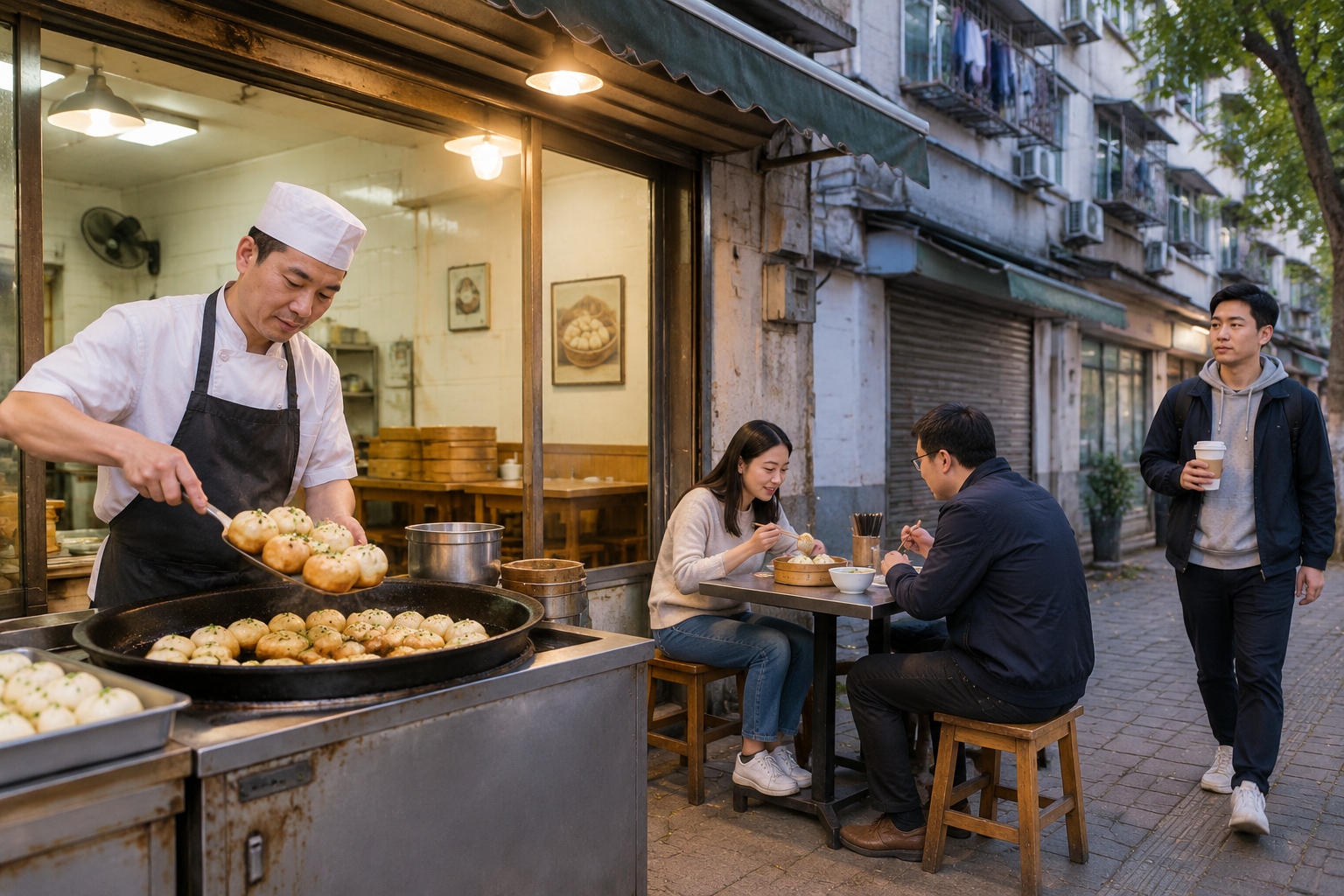

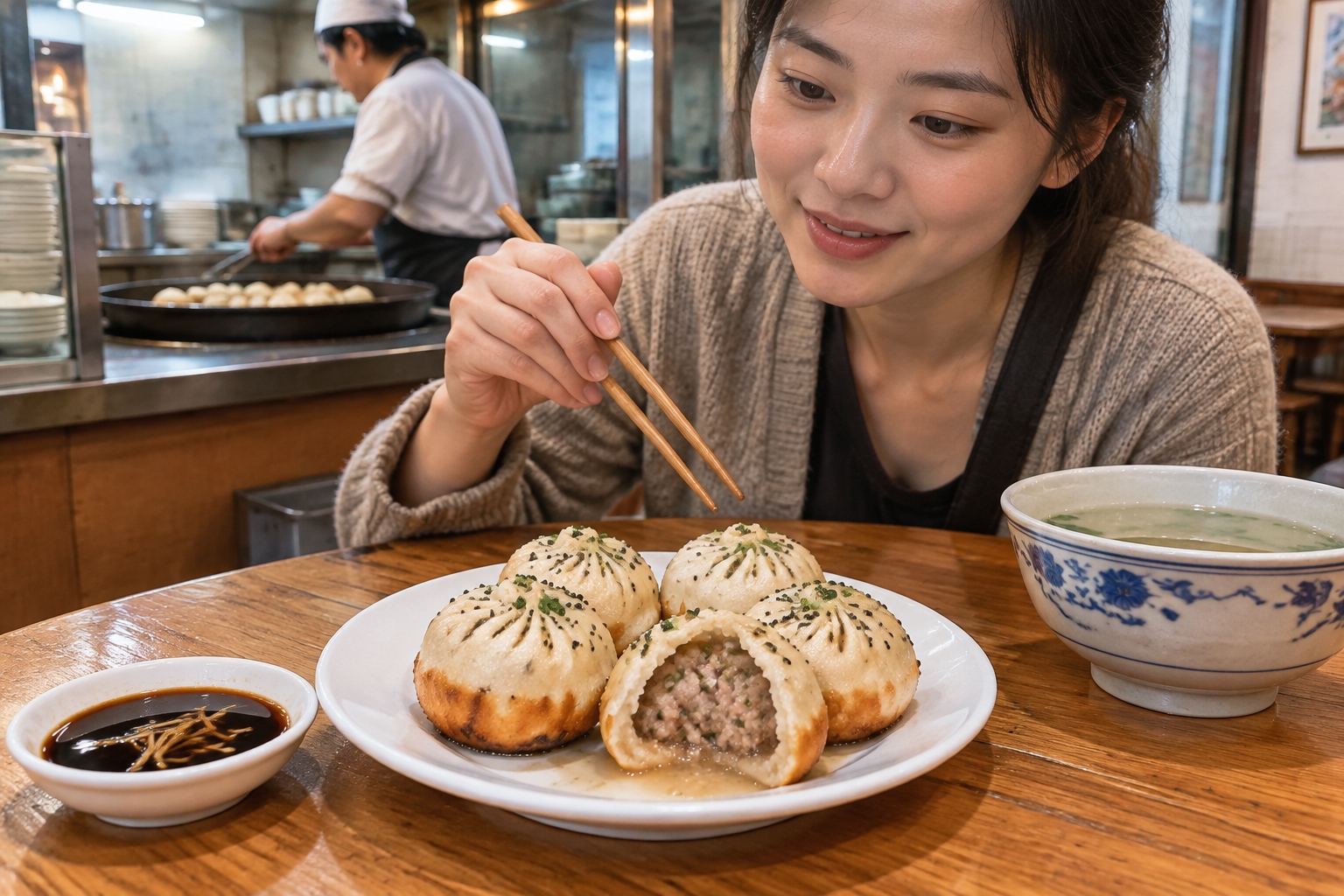
Bite a small opening in a freshly cooked shengjianbao, let the steam escape, then approach the hot broth inside. The crisp base can wait a moment. Eating these buns slows you down: first the heat, then the filling, then the browned underside.
That small pause offers a useful entrance to Shanghai nightlife. An evening here might involve supper after work, coffee with a friend, a riverside walk or groceries bought on the way home. Bars belong to the picture, alongside many quieter routines.
Reporting note: This is a practical cultural guide, not a record of a verified reporting trip. No firsthand interviews or live checks were available for this article. Prices below are planning estimates, not dated quotations; shop hours, transport schedules and payment requirements need checking before use. The suggested evening is an itinerary, not an observed journey.
What to eat: shengjianbao and late-night food in Shanghai
Shengjianbao are buns cooked in a shallow pan with oil and water: the bottoms fry while steam cooks the dough and filling. Pork is a familiar filling, often with hot juices inside; sesame seeds and chopped scallions commonly finish the surface. Dough thickness and juiciness vary between shops.
They differ from xiaolongbao, the small soup dumplings steamed in baskets. Shengjianbao generally have a sturdier wrapper and a browned base. With either, take care over the temperature. Make a small opening first, taste the juices cautiously and use the vinegar on the table if you like.
A modest order could be four buns, sometimes sold as one liang, with soup alongside. Liang is a traditional weight unit, but menu portions follow shop conventions: check the number of pieces rather than assuming a universal serving. Allow roughly RMB 12–25 for four pork buns and RMB 5–15 for a simple soup, as unverified planning ranges.
Availability is the bigger question after dark. Shengjianbao have a strong breakfast trade, and a busy morning shop may close well before supper. Search the individual branch, check its listed closing time and ask whether the kitchen still serves buns. A map listing alone does not establish that a fresh batch will be available.
If the pan is already cleaned, Shanghai’s late-night food options may include noodles, wontons, skewers or a convenience-store meal. Crayfish restaurants offer a different evening: shells accumulate, fingers get messy and a shared meal takes longer. Seasonal availability, portions and prices vary considerably.
Where coffee fits into an evening
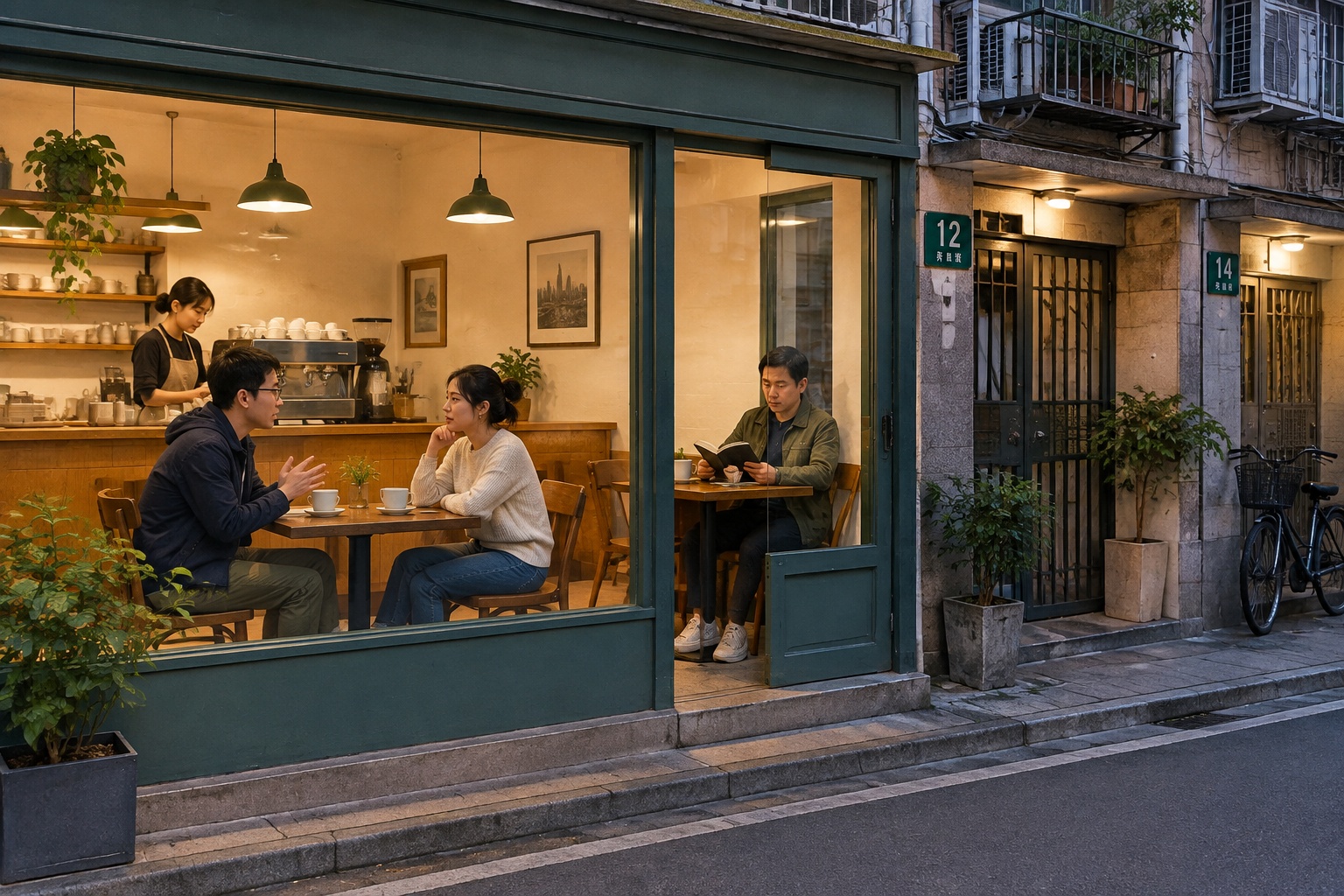
In parts of Jing’an, Xuhui and Huangpu, cafés give friends somewhere to meet without ordering dinner or alcohol. A small table can accommodate a long conversation, a book or an unfinished document. These districts contain many different streets, however; a café cluster does not describe every residential block.
Shanghai coffee culture spans inexpensive takeaway counters, chains and independent shops where the seat and setting form part of the purchase. For planning, allow approximately RMB 15–40 for a coffee, with specialty drinks sometimes higher. These are estimates, not verified menu prices. Check whether seating is available and whether the venue has a minimum order.
Evening opening and overnight opening are separate things. A café closing at 9 or 10 p.m. can support an after-dinner meeting but will not shelter someone waiting for the first train. Confirm the last order as well as the closing time. Some venues serve coffee by day and alcohol later, changing both the menu and atmosphere.
A paid seat also creates a threshold. Two drinks can cost more than a simple supper. For someone watching expenses, a takeaway cup or a walk may make more sense. Coffee is one way into young people’s social lives, with access shaped by money, location and free time.
What can you do without buying anything?
For a manageable evening, choose one area instead of crossing the city between famous stops. One possible route links supper around Jiangning Road, an optional nearby café and a walk toward an accessible section of the Suzhou Creek waterfront. Select the actual venues first, then check walking distances and the entrance you intend to use.
Suzhou Creek runs through densely built parts of Shanghai. Its waterfront paths provide room to walk beside older buildings, bridges and newer developments. The Huangpu River offers other walks on both banks, but those belong to a separate itinerary unless you want a longer transfer.
Walking on an accessible public promenade does not require a café purchase. Access hours, maintenance closures and individual facilities still need checking. Look for posted signs; do not assume every waterfront segment stays open overnight.
Community streets offer another scale of evening life: dog walking, errands, a brief conversation outside a shop. Convenience stores provide food and drinks, although seats and toilets are not guaranteed. Benches, lighting and an available restroom can determine how comfortably someone spends an hour outside.

Who keeps late-night service running?
A bowl of noodles depends on preparation, cooking, washing up and cleaning after the customer leaves. Delivery adds another sequence: an order reaches the kitchen, a rider collects it, and traffic, building access or an unavailable lift can affect the journey. Convenience for one person involves working time for someone else.
Without a consented interview, there is no basis here to assign a particular worker an income, shift length or feeling about the job. A rider waiting outside a restaurant might be collecting an order or taking a break; appearance cannot establish which.
Customers can make small, concrete choices: give a clear delivery address, remain reachable and avoid placing an elaborate order just before closing. Ask permission before photographing workers at close range. A late-night meal is also somebody’s workplace.
How much should you budget, and how do you get home?
For the suggested Jiangning Road–Suzhou Creek evening, an illustrative budget is RMB 17–40 for buns and soup, RMB 15–40 for an optional coffee, and nothing for the walk where public access is open. Allow roughly RMB 3–6 for a central metro journey, depending on the actual stations. That produces a planning total of RMB 35–86 with coffee and the metro; it is not a verified route quotation.
Leaving out coffee reduces that estimate to RMB 20–46. A taxi or ride-hailing trip changes the total substantially: distance, nighttime charges, traffic and demand matter. Obtain a live fare estimate once the destination is set. No collection date can be attached to these figures because they were not gathered from current menus or fare searches.
Check the last train for your station
Shanghai Metro has no single citywide last-train time. Line, station, direction and date matter, and an available first train does not guarantee a later connection. Check the official Shanghai Metro service information for the complete journey, including transfers, before settling into supper.
Night buses serve some corridors, with routes and intervals that differ from daytime services. Confirm the stop, direction and current timetable. Taxis and ride-hailing can cover journeys after rail service ends, but pickups may require waiting. Keep the destination in Chinese and choose a clear, legal pickup location.
Prepare payment before heading out
Alipay and Weixin Pay support eligible overseas bank cards, subject to their current requirements. Card linking, identity verification, supported transactions, limits and possible fees depend on the provider and account. Linking a card should not be treated as proof that every payment function will work.
Check each provider’s current visitor guidance, complete setup beforehand and test a small purchase. Carry some renminbi cash as backup. Cash acceptance is required in ordinary face-to-face retail settings, though obtaining change or resolving an unfamiliar checkout process can take time. This article has not live-verified payment terms.
Shanghai has more than one kind of late night
A restaurant street on Saturday can have a different rhythm from a nearby residential lane on Tuesday. Weather, shift patterns, rent and local operating rules all help shape what stays open. An attractive street photograph cannot tell you whether the kitchen is still taking orders.
At the end of the walk, the practical details return: the next crossing, the station entrance, whether there is time to sit down. Somewhere a pan is being scrubbed; elsewhere a café is stacking its chairs. Learning those different closing rhythms brings Shanghai local life into view, one meal and one journey home at a time.
Start the discussion at forum.chinacomes.com