

The invisible giant in your glasses
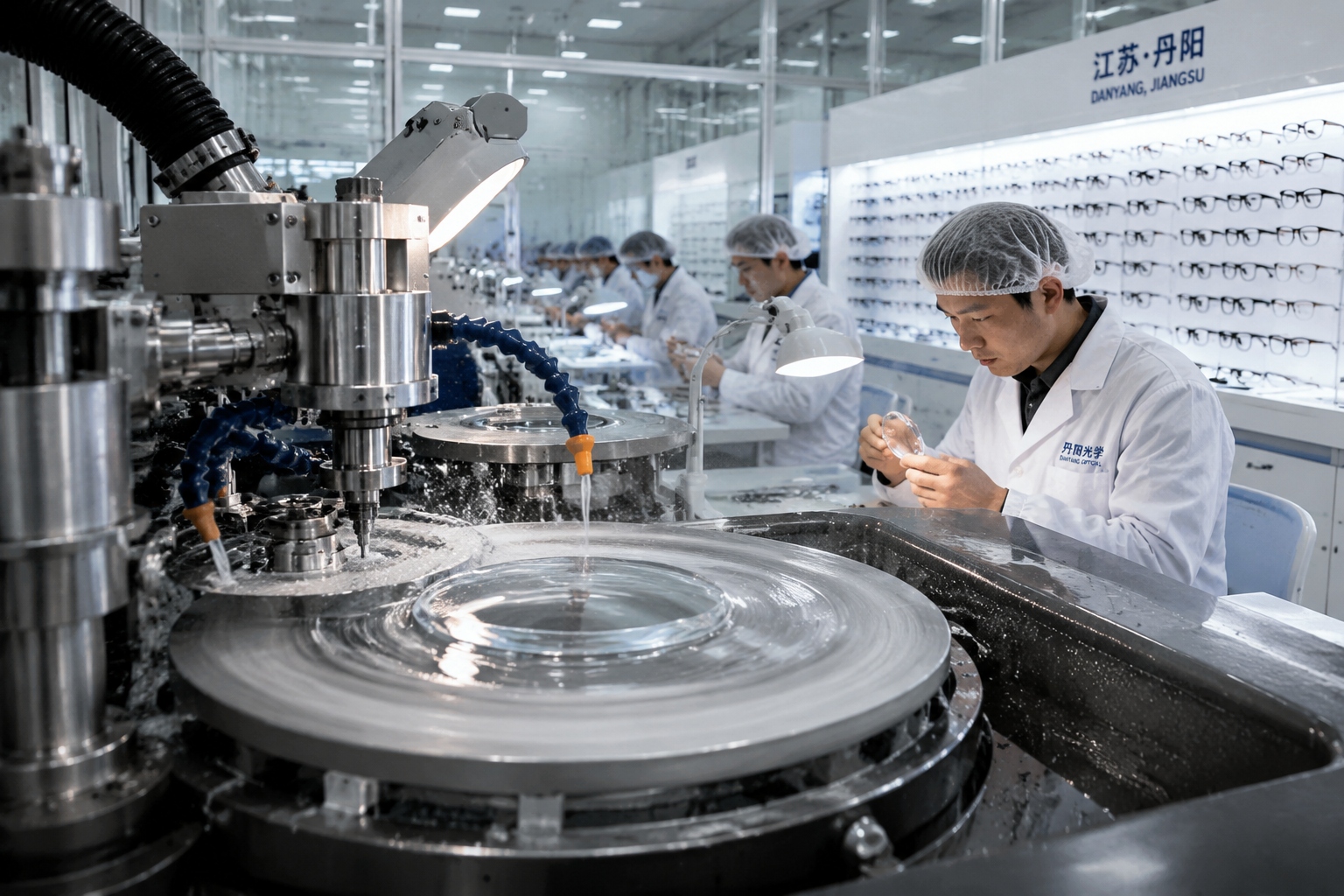
It’s a Tuesday morning in Danyang, a medium-sized city in Jiangsu province, about two hours west of Shanghai. In a modest workshop on the city’s outskirts, a skilled worker is polishing a rimless lens with a motion that looks almost meditative. Two hours later, that lens is packaged into a box labeled for a German optician. By the end of the week, it might be in your glasses.
Danyang is officially known as the “Glasses Capital of China,” but that title understates its global reach. According to the Danyang Glasses Industry Association, the city exports lenses and frames to more than 180 countries and territories. Industry analysts estimate that about 40% of the world’s ophthalmic lenses are produced in this area, making it one of the most concentrated optical manufacturing hubs on the planet. It is a classic hidden champion story, but with a Chinese twist.
What makes a ‘hidden champion’?
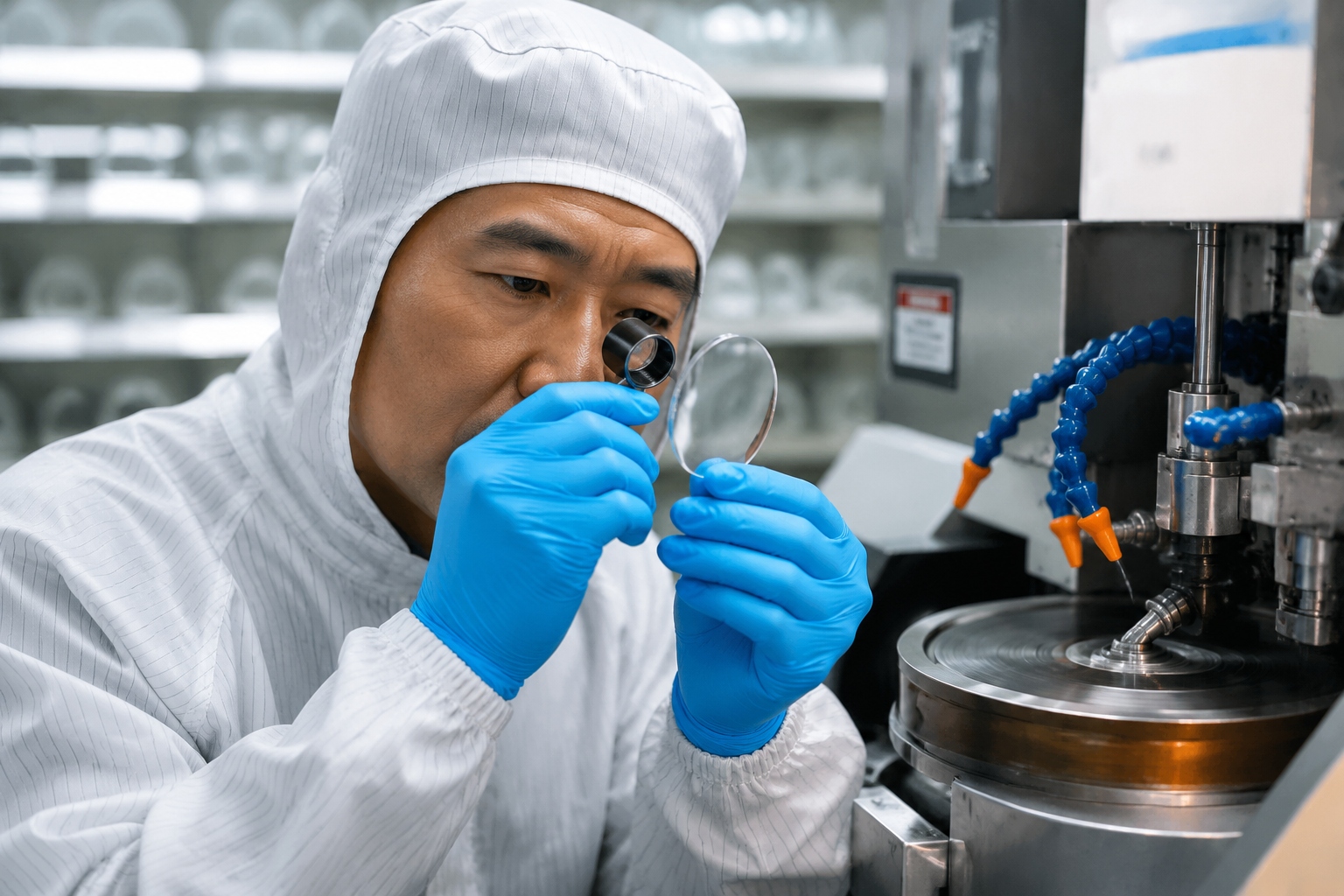
The term “hidden champion” was coined by German management expert Hermann Simon to describe little-known companies that dominate their market niches. In China, these firms are often called “Little Giants” (小巨人) or “specialized, sophisticated, distinctive, and innovative” enterprises (专精特新). They are typically small, sometimes family-owned, and yet they command an outsized global market share in a specific product category.
These companies have been around for decades, while others were founded by returning engineers who saw an opportunity in a niche that global corporations overlooked. They may not have a famous logo, but their products are often certified by the same standards that apply to major brands. That quiet reliability is what keeps customers coming back.
Danyang: a city that saw through the world
How did a city of about 800,000 people become an eyewear powerhouse? It starts with history. In the 1960s, state-owned optical plants were relocated to Danyang, bringing scientists, engineers, and a generation of skilled artisans. When China’s economic reforms kicked off in the 1980s, many of these workers left the state system to start their own workshops. They shared machines, swapped trade secrets, and slowly built a dense supply chain that now covers everything from resin pellets to optical coatings.
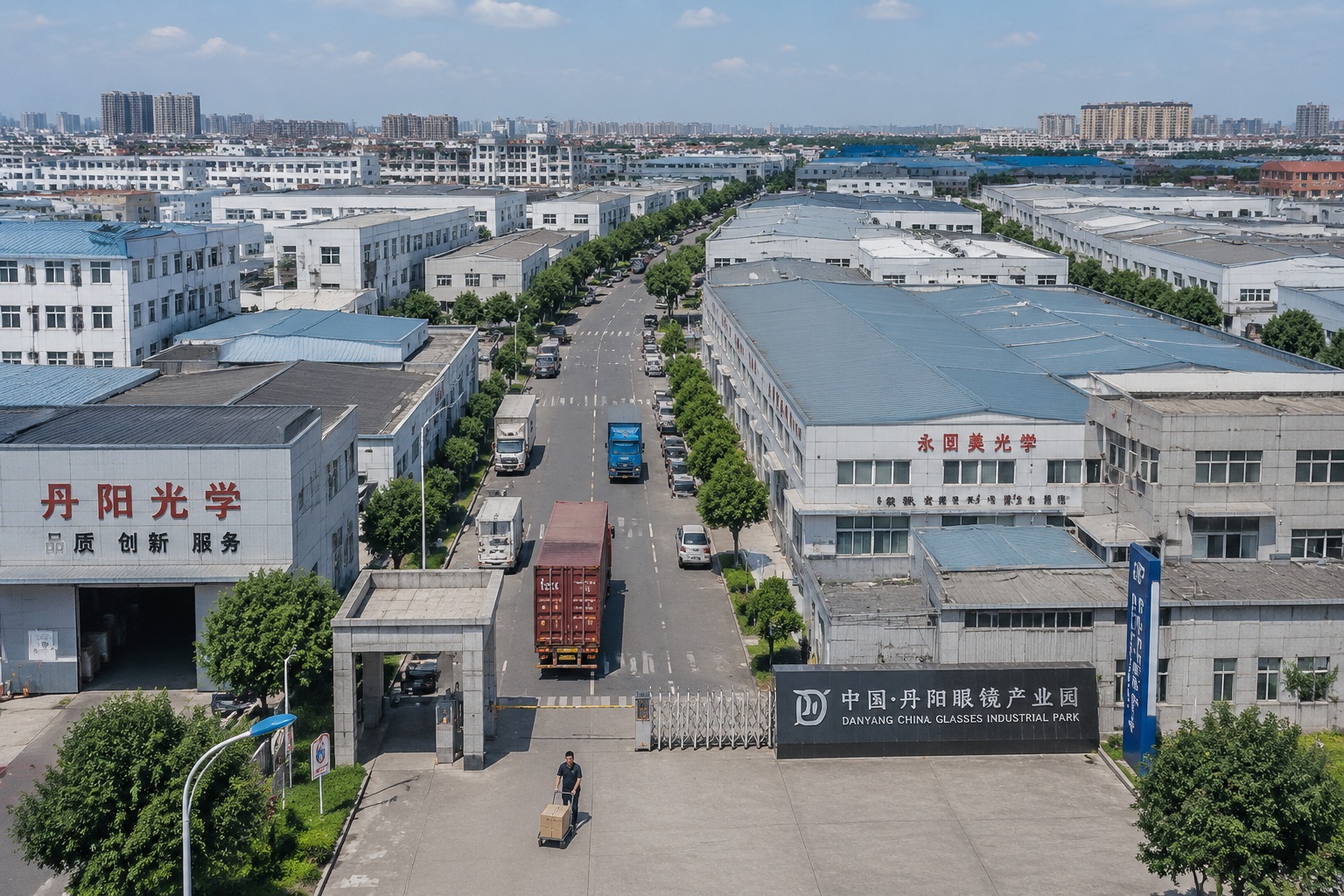
Today, the Danyang eyewear cluster includes more than 1,000 registered companies, from tiny family workshops to factories with hundreds of employees. They are all packed into a small radius, which gives the area a remarkable flexibility. A local lens maker might employ 300 people and stamp out 500,000 lenses a month, but the real advantage is speed. If a European customer requests a special anti-reflective finish, the factory can develop and deliver it within days—not weeks—because the entire component chain is nearby.
I once visited a typical factory in the city’s industrial park. The owner, Mr. Xu, is in his 50s and started as a boy grinding lenses by hand in his father’s workshop. Now he oversees a clean, automated floor with imported CNC polishers and coating machines. “We don’t need to be famous,” he told me. “We just need to be so good that other factories can’t compete.” What’s remarkable is that Danyang’s dominance is not the result of a master plan. It emerged organically from the collective memory of workers who learned the trade in the state era and passed it down to their children. Today, many factory owners have sons or daughters who studied in Europe or the United States and have come back to automate their parents’ lines and take the brands upmarket.
Why Jiangsu? The ecosystem advantage
Danyang’s eyewear industry is just one example of Jiangsu’s deeper economic logic. The province has become a magnet for specialized manufacturing for several reasons.
First, it sits at the heart of the Yangtze River Delta, with quick access to Shanghai’s seaport and airport. Second, local governments are extremely proactive. They offer land packages, tax rebates, and streamlined approval processes to companies that can show a niche focus. Third, and perhaps most importantly, there is a culture of “one town, one product” that goes back generations. In some towns, every family is involved in the same industry, from making sewing machine needles to producing high-end ceramic cups.
This is where China’s “Little Giant” program comes in. The national government, along with provincial and city authorities, has recognized thousands of these specialized firms, giving them access to funding, research partnerships, and certification. In Jiangsu, hundreds of companies have received this “specialized” title, including many with less than 500 employees. They are encouraged to go deeper, not broader, and to set their sights on global leadership from the start.
Other niche champions are scattered across the province. In Nantong, a family-owned factory makes a specific type of anchor chain used on offshore oil rigs and holds a significant share of the global market. In Taicang, a small county-level city near Shanghai, several companies produce finely machined components for high-speed elevators, supplying some of the largest lift manufacturers in Japan and Europe.
The new frontier: innovation and branding
China’s hidden champions are not resting on their advantages. Many are shifting from pure OEM (original equipment manufacturing) to developing proprietary technology and consumer brands. In Danyang, some lens makers have started selling their own “smart” glasses with blue-light filtering and adaptive tinting. Others are investing in direct-to-consumer e-commerce, bypassing decades-old distribution channels.
This transformation is not easy. Labor costs in Jiangsu are significantly higher than in inland China, and global buyers increasingly demand strict environmental and social compliance. Trade tensions have also disrupted supply chains, prompting some companies to move production to Southeast Asia. Yet the most resilient firms are doubling down on automation and R&D. For instance, one manufacturer near Changzhou has developed a proprietary coating that repels fingerprints on lenses, and now supplies a major luxury eyewear brand.
The COVID-19 pandemic was a stress test. Export logistics were severely disrupted, and orders were sometimes cancelled at the last minute. But many hidden champions adapted quickly, repurposing their precision manufacturing lines to make high-quality personal protective equipment or optical components for digital devices. That agility is a testament to the professional skills and problem-solving mindset that have become the hallmark of Jiangsu’s small factories.
Conclusion: lessons for the global economy
Jiangsu’s hidden champions offer a different way to understand modern China. They show that the country’s economic strength is not only in household tech names like Huawei or TikTok, but also in thousands of unglamorous factories that keep the world’s machines running and its people seeing clearly.
For global buyers, these enterprises are a reminder that supply chain resilience often depends on the depth of local clusters, not just the size of a company. For travelers, a stop in Danyang might not be on your itinerary. The next time you put on a pair of glasses, though, take a moment to wonder where the lens was truly made. It might just be this small, unassuming city in Jiangsu—where hidden champions do what they do best, with quiet precision.
Start the discussion at forum.chinacomes.com