
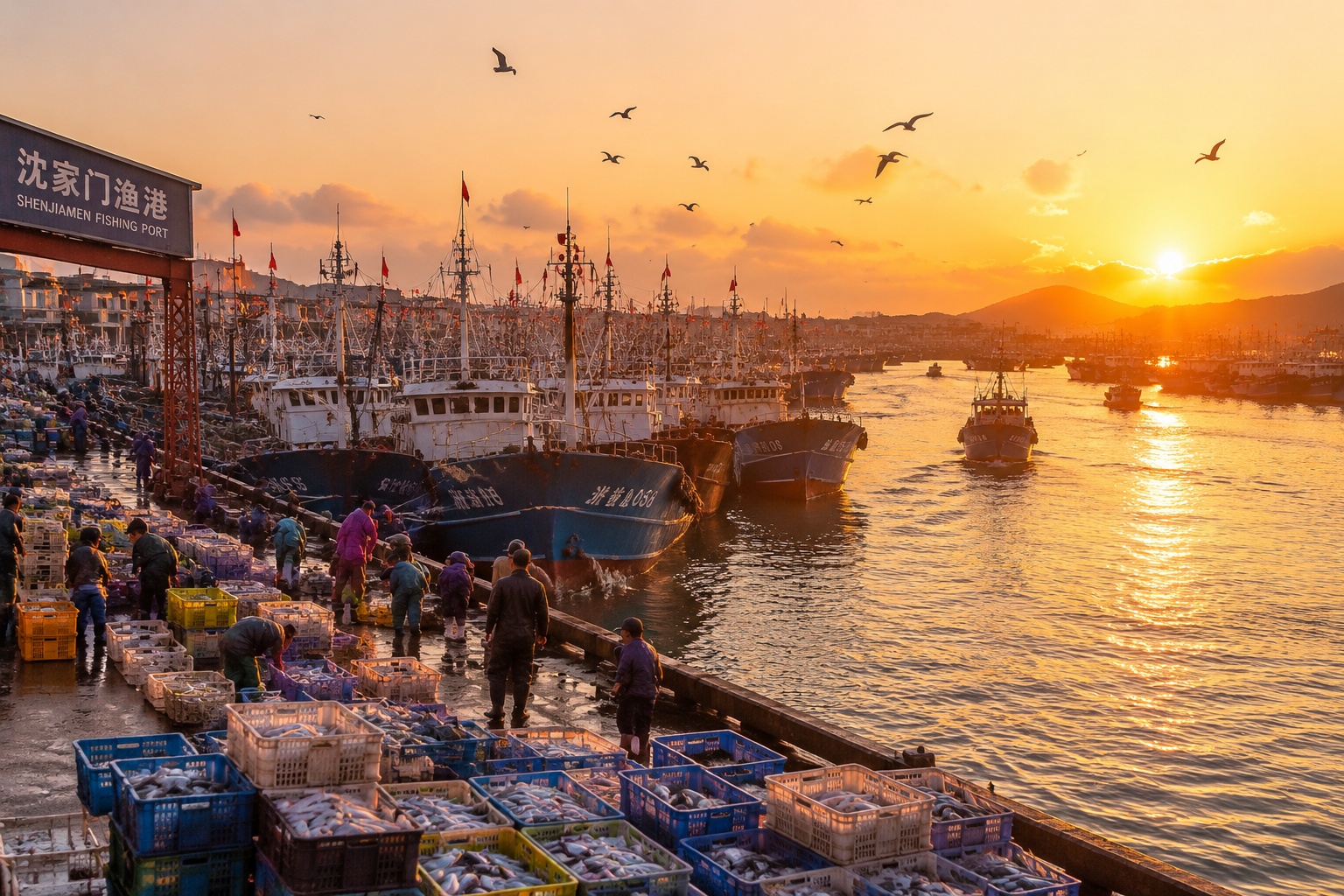

A Morning at Shenjiamen Fishing Port
At 5 a.m., the dock of Shenjiamen, the largest fishing port on China’s Zhoushan Archipelago, is already loud with engines and seagulls. Fisherman Wang Qiang and his crew are unloading baskets of mackerel and sea bream. Their boat, a 30-meter steel-hulled vessel, spent only 10 days at sea this month. “We used to stay out for more than a month,” Wang says, wiping his hands on an oil-stained towel. “Now we go out less, but we catch enough. The fish are bigger, too.”
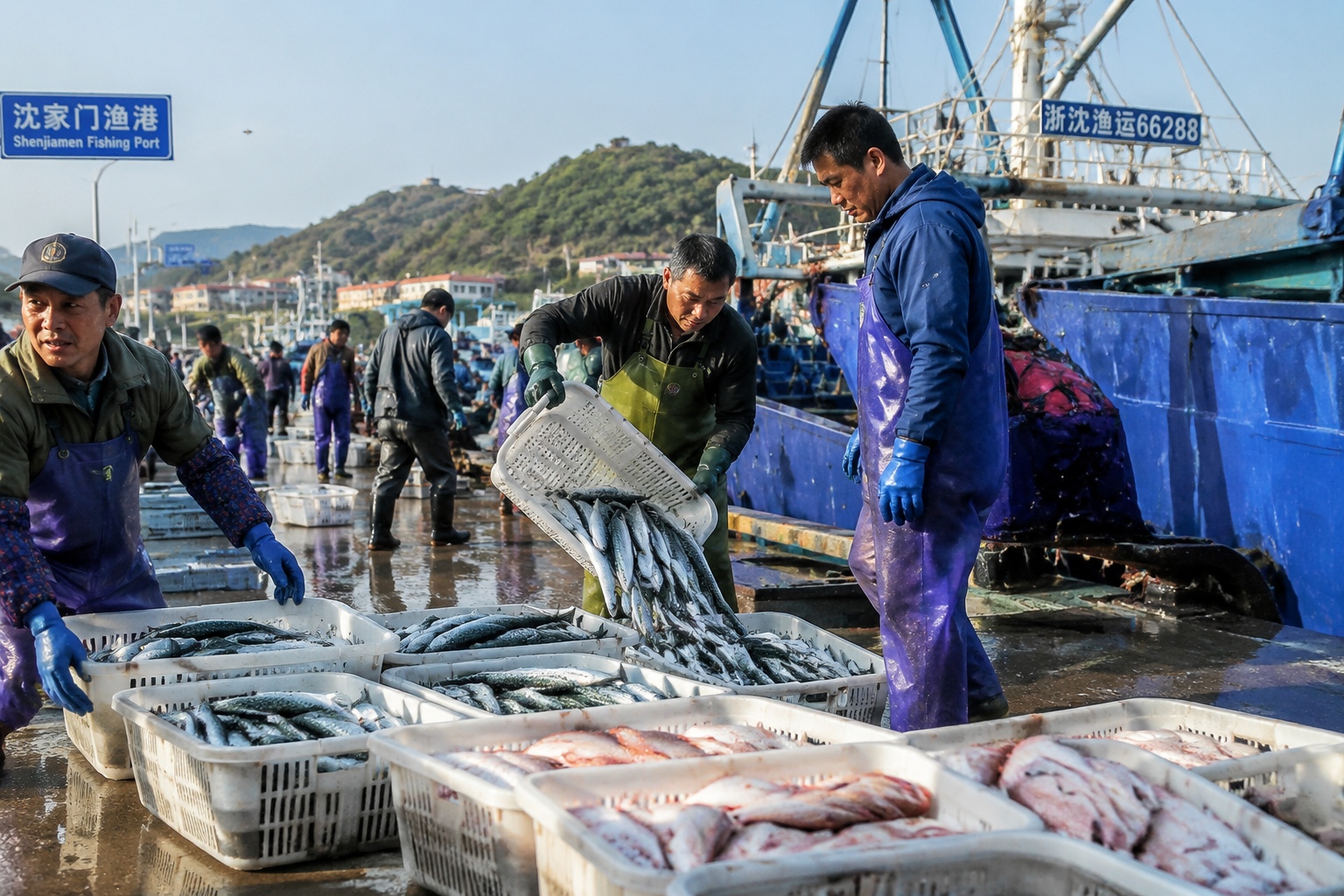
Shenjiamen is not the fading post-apocalyptic port you might expect after decades of overfishing warnings. It is a place in the middle of a careful experiment: transforming one of China’s oldest wild fisheries into a modern “blue economy.” The term sounds like a conference slogan, but here it means something concrete: getting value from the ocean without draining it empty. Zhoushan—a city of more than 1,300 islands just southeast of Shanghai—is testing how that works on a national scale.
The Rise and Fall of a Fishing Giant
For centuries, the waters off Zhoushan were described as China’s “fish bank.” The meeting of warm and cold ocean currents creates rich plankton, feeding anchovies, yellow croaker, hairtail, and dozens of other species. By the 1980s, huge diesel trawlers were sweeping the seabed, and catches peaked. Then, slowly, the bank stopped paying out. Some local scientists say the amount of yellow croaker caught today is a fraction of what it was in the 1970s.
China tried to stop the slide with classic measures: seasonal fishing bans, mandatory minimum mesh sizes, and licenses. Since 1995, every summer, a three-month ban has been in effect across the East China Sea. This gave fish a chance to spawn. But bans alone were not enough. The next move was more radical—to not only limit how much you can take, but to actively put things back.
A Different Blue: The Shift to a Blue Economy
In 2017, the central government designated Zhoushan as one of China’s first “blue economic development” pilot zones. That label came with funding and political support. It did not mean simply more fishing. It meant an ocean economy that includes sustainable aquaculture, marine tourism, renewable energy, and better management of what remains.
The most visible change is the shrinking fishing fleet. Hundreds of old boats were scrapped under a buyback program. Fishers were offered money to retire or retrain. Many took it. “The sea does not need more nets,” says a local fisheries officer we spoke to. “It needs better ones.” The fleet that remains is equipped with GPS, fish-finders, and better safety gear, and it is being tested for quota-based fishing in certain areas.
Farming the Deep Sea
If catching less is one half of the strategy, the other half is farming more. In the deep, exposed waters around Zhoushan, engineers are installing huge submerged cages. One of the most ambitious is the “Shengsi” platform, named after a northern island county. It looks like a cross between a ship and a floating greenhouse. It can hold thousands of tons of fish, mainly large yellow croaker and sea bass. The fish are raised from hatchlings in land-based nurseries, then transferred to the sea pens where they grow in semi-wild conditions.
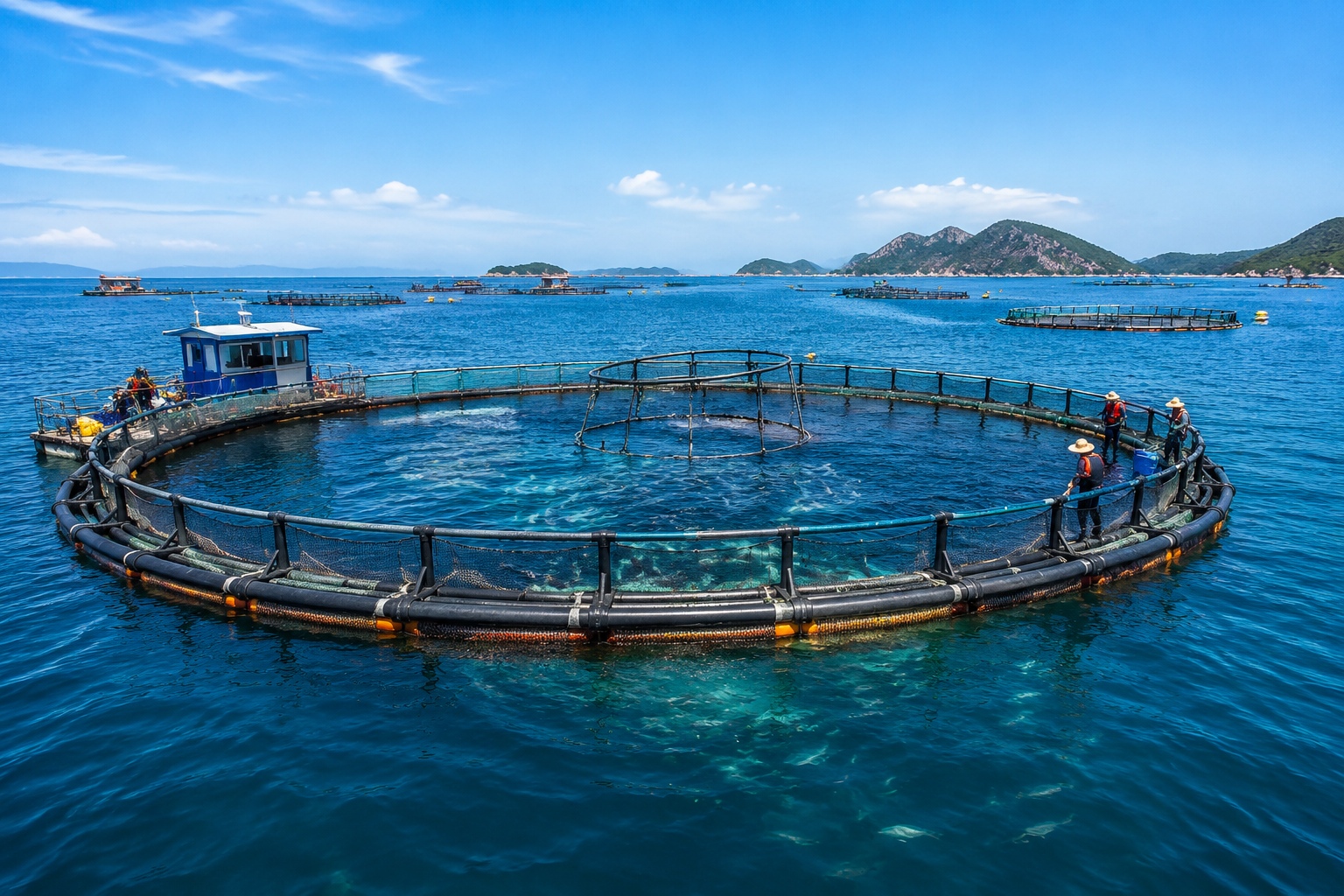
This is the model Norway perfected with salmon over 50 years. Zhoushan is doing it with species that Chinese diners want, and it is being copied from Shandong to Hainan. But there is a difference: Chinese fish farms tend to be smaller, and many are cooperatives owned by former wild-capture fishers. “We pool our money and share the risk,” says Zhou Li, a former trawler captain who now spends most of his time checking water quality on a tablet.
Sharing the Sea with Wind Turbines
Zhoushan is also a testing ground for mixing energy with food. Offshore wind turbines are rising across the East China Sea, in the same waters where fish migrate. That creates a conflict for space, but also an opportunity. Some pilots are placing fish cages between turbine foundations, using the structures as artificial reefs. The scouring around the piles attracts shellfish and small bait fish. Early studies suggest that no fishing zones near turbines are helping fish stocks recover, even as the turbines send power to Shanghai and beyond.
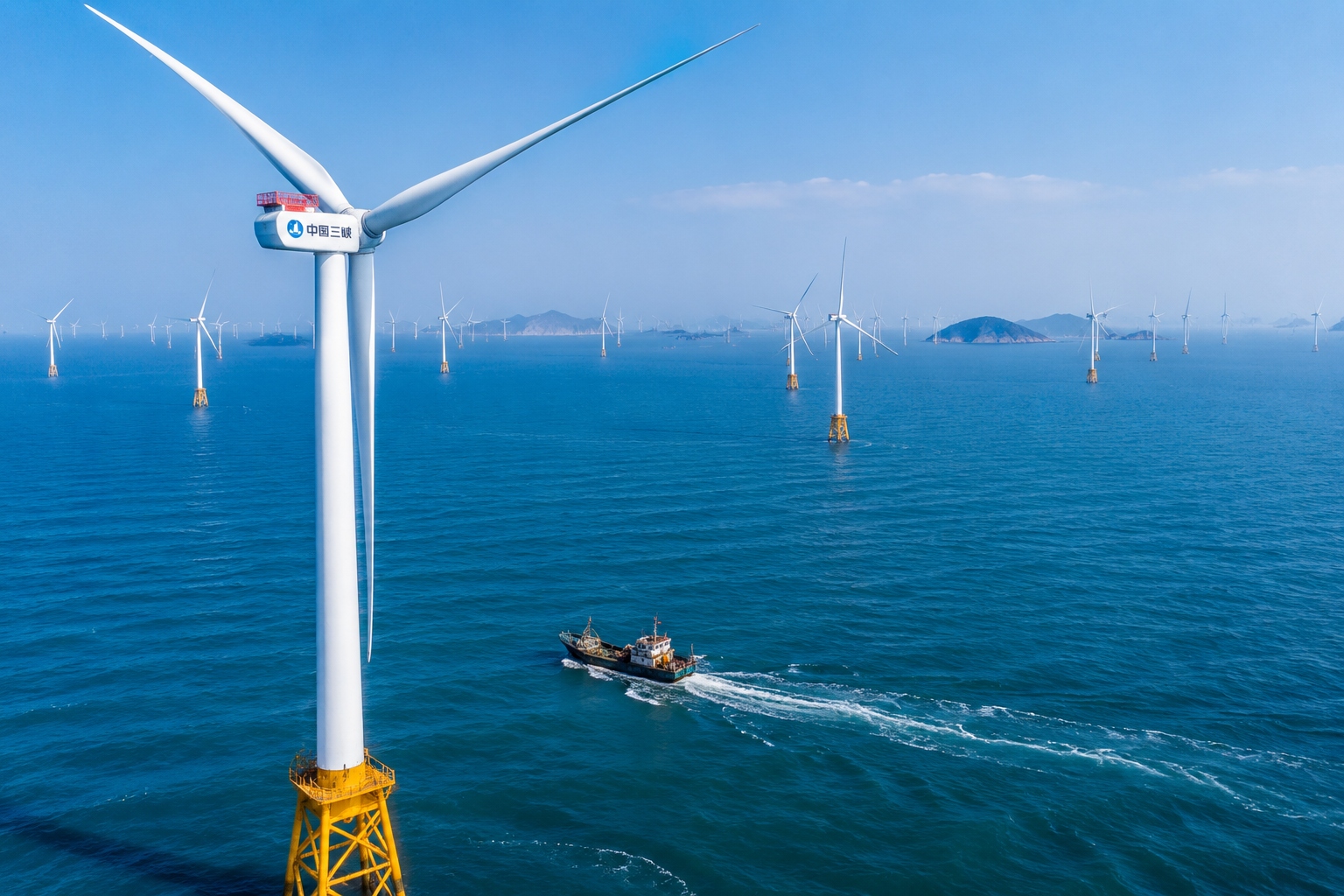
This is not unique to China—Denmark and the Netherlands have done similar experiments—but the scale is striking. One wind farm in Zhoushan, operated by state-owned China Three Gorges, has a capacity of over 300 megawatts. In the future, floating wind turbines could power large aquaculture platforms far offshore, making the whole operation carbon-neutral.
What Norway Taught Zhoushan (and What It Didn’t)
The comparison that comes up most often is Norway. Norway manages its fisheries with strict quotas, a mandatory fleet monitoring system, and a strong respect for marine science. It is also the world’s largest exporter of farmed salmon. Zhoushan officials have made more than one study trip to Bergen and Tromsø. They borrowed ideas like satellite tracking and the use of risk-based fish health rules.
But China cannot simply copy Norway. Norway has a population of five million and a coastline managed by a few big companies. Zhoushan has over a million residents, including several thousand independent fishermen who have been living off wild catch for generations. The social contract is different. In many villages, the fishing boat is a family’s entire asset and social insurance. Therefore, Zhoushan is designing a more community-based approach: local fishing cooperatives decide among themselves who can fish what, with help from the government. It’s messier and less efficient, but it preserves social stability.
The Road Ahead
The shift to a blue economy has not solved every problem. Illegal fishing using fine-mesh nets still happens at night, and coastal waters near tourist spots show signs of nutrient pollution. Some fishers complain that rising fuel costs eat into profits, even with subsidies. There is also a long way to go with aquaculture: disease outbreaks wipe out entire pens, and fishmeal for feed still comes from wild stocks in other seas.
But watch Wang Qiang at the dock. He now sells part of his catch directly to city restaurants through a phone app, and he is considering joining a cooperative that runs a marine ranch, where they release juvenile fish into protected areas and later catch only a fraction of them. “My father would call it a dream,” he says. “But we can’t just take from the sea anymore. We have to give back.” In that sense, Zhoushan is not just an old fishing port adapting to a blue economy. It is a preview of how the world’s oceans can be used—if we are willing to change.
Start the discussion at forum.chinacomes.com